- Home
- »
- Animal Health
- »
-
Europe Animal Health Market Size, Industry Report, 2033GVR Report cover
![Europe Animal Health Market Size, Share & Trends Report]()
Europe Animal Health Market (2026 - 2033) Size, Share & Trends Analysis Report By Product (Biologics, Pharmaceuticals, Diagnostics, Equipment & Disposables, Medicated Feed Additives), By Animal Type, By Distribution Channel, By End-use, By Country, And Segment Forecasts
- Report ID: GVR-4-68040-280-7
- Number of Report Pages: 150
- Format: PDF
- Historical Range: 2021 - 2024
- Forecast Period: 2026 - 2033
- Industry: Healthcare
- Report Summary
- Table of Contents
- Segmentation
- Methodology
- Download FREE Sample
-
 Download Sample Report
Europe Animal Health Market Summary
The Europe animal health market size was estimated at USD 18.0 billion in 2025 and is projected to reach USD 39.9 billion by 2033, growing at a CAGR of 10.6% from 2026 to 2033. The industry is experiencing growth driven by the rising prevalence of zoonotic and infectious diseases, the growth of the companion animal population and pet humanization,advancements in veterinary pharmaceuticals and biologics, and regulatory support and food safety standards.
Key Market Trends & Insights
- The UK animal health market held the largest revenue share of 18.0% in 2025.
- By product, the pharmaceuticals segment held the largest share of 43.2% market in 2025.
- By animal type, the production animals segment held the largest share in 2025.
- By distribution channel, the e-commerce segment is expected to grow at the fastest rate over the forecast period.
- By end-use, the point-of-care testing/in-house testing segment is expected to grow at the fastest rate over the forecast period.
Market Size & Forecast
- 2025 Market Size: USD 18.0 Billion
- 2033 Projected Market Size: USD 39.9 Billion
- CAGR (2026-2033): 10.6%
- UK animal health market: Largest market in 2025
- Poland animal health market: Fastest growing market
Increasing outbreaks of zoonotic and infectious diseases have raised concerns across Europe’s livestock and companion animal sectors. According to the French Agricultural Research Centre for International Development CIRAD, France has faced bluetongue virus (BTV) and epizootic hemorrhagic disease (EHD) outbreaks in 2023, with a new BTV strain spreading across Europe in 2024. This growing disease burden drives demand for advanced vaccines, diagnostics, and preventive solutions to ensure biosecurity and herd protection. This leads to greater investment in veterinary pharmaceuticals, surveillance systems, and R&D initiatives. Thus, companies and governments are prioritizing disease control strategies, strengthening the animal health market across Europe. Furthermore, lumpy skin disease (LSD) outbreaks have further intensified disease control efforts, with Spain confirming its 18th outbreak in Girona on 07 January 2026 and France reporting a new case in Pamiers, Ariège, on 02 January 2026, resulting in full culling of 113 susceptible animals. Conversely, Italy's Sardinia successfully eliminated LSD as of 07 January 2026 following a mandatory vaccination campaign covering approximately 300,000 cattle, recording zero active cases nationwide. These divergent outcomes across Europe continue to support the need for robust veterinary interventions, vaccination strategies, and disease surveillance infrastructure.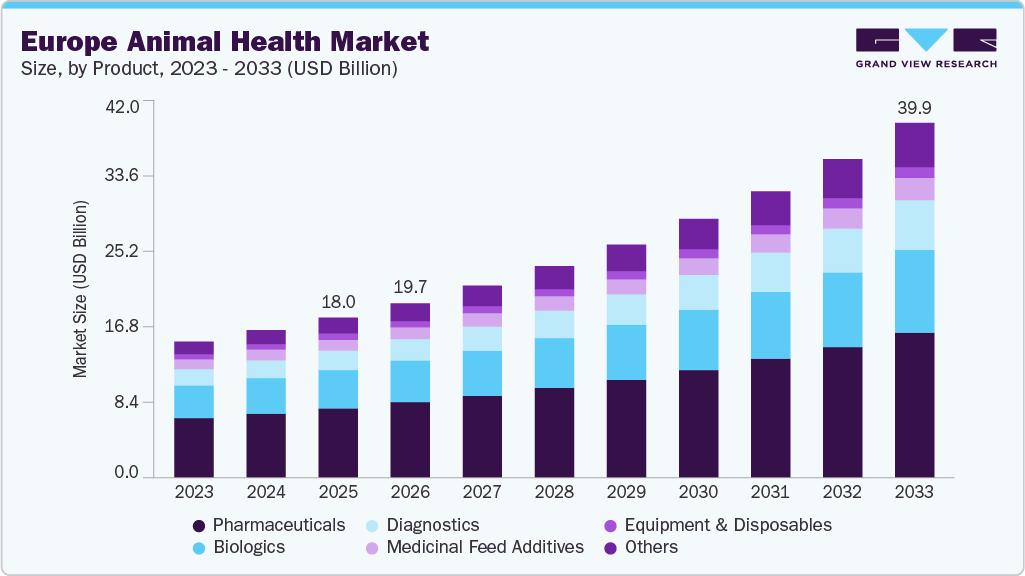
The rising pet ownership has increased demand for sophisticated veterinary treatment throughout Europe, strengthened by cultural movements toward pet humanization. Pet owners see their pets as part of the family rather than as possessions, thus increasing their expenditure on high-quality food, health programs, and preventative care. According to the Animal Health Europe report, the region places a high priority on caring for companion animals, as evidenced by the 28 billion euros spent on pet food, 25 billion on pet-related goods and services, and 4 billion on animal medications. Increased use of parasiticides, veterinary medications, diagnostic testing, and wellness products is fueled by this trend. Access to high-quality treatment is further supported by the prevalence of pet insurance in countries like the UK, Sweden, and Germany. As a result, the companion animal health sector is becoming one of the most dynamic growth areas, boosting overall market expansion.
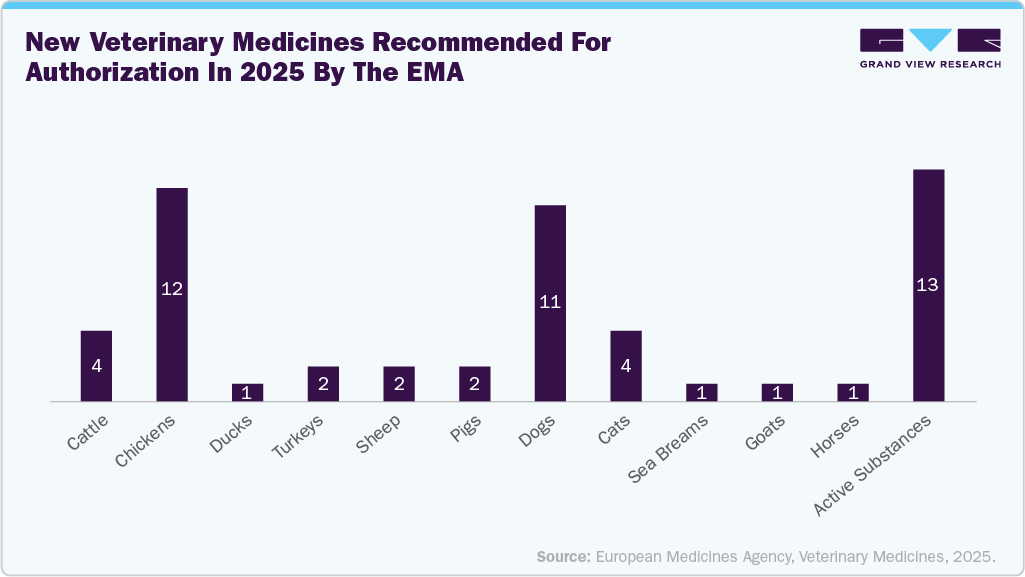
Continuous R&D investment in veterinary pharmaceuticals, vaccines, and biologics has enhanced treatment and prevention options for both livestock and companion animals. Disease management is changing as a result of innovations including next-generation vaccinations, long-acting injectable, and monoclonal antibodies. As per the report of Animal Health Europe, the animal medicines industry invested over USD 649 million in R&D in 2024. Similarly, in 2024, the European Medicines Agency authorized 25 new animal health products for veterinary use. These advancements improve treatment efficacy, reduce resistance issues, and expand preventive healthcare adoption. Companies introducing innovative therapies gain a strong competitive advantage, improving overall herd and pet health outcomes. This accelerates demand for biologics and pharmaceutical products, increasing steady revenue growth and strengthening the innovation pipeline in Europe’s animal health industry.
The European Union upholds stringent laws pertaining to food safety, antimicrobial use, and animal welfare to safeguard both customers and animals. Industry methods have changed as a result of initiatives like the EU's ban on regular antibiotic growth promoters and emphasis on sustainability. These regulations promote the use of probiotics, vaccinations, and sophisticated diagnostics in place of antibiotics. Furthermore, the manufacturers are encouraged to invest in advanced technologies that adhere to the strict safety and efficacy standards of the EU. This regulatory framework supports the long-term growth of the animal health industry in Europe, boosts market expansion, and increases public confidence in the food supply chain.
Market Concentration & Characteristics
The European animal health industry shows moderate to high concentration and the pace is accelerating. The market is dominated by multinational players like Zoetis, Boehringer Ingelheim, Elanco, and MSD Animal Health. These companies hold significant market share due to strong R&D, wide product portfolios, and regulatory expertise, while smaller regional firms compete in niche or generic segments.
Innovation in the industry is driven by advancements in vaccines, biologics, diagnostics, and digital monitoring tools. Innovation also targets antimicrobial resistance, creating safer alternatives to antibiotics. For instance, in April 2025, MSD Animal Health UK launched BRAVECTO TriUNO, a monthly chewable tablet protecting dogs from internal and external parasites, authorized by the Veterinary Medicines Directorate and available through veterinarians.
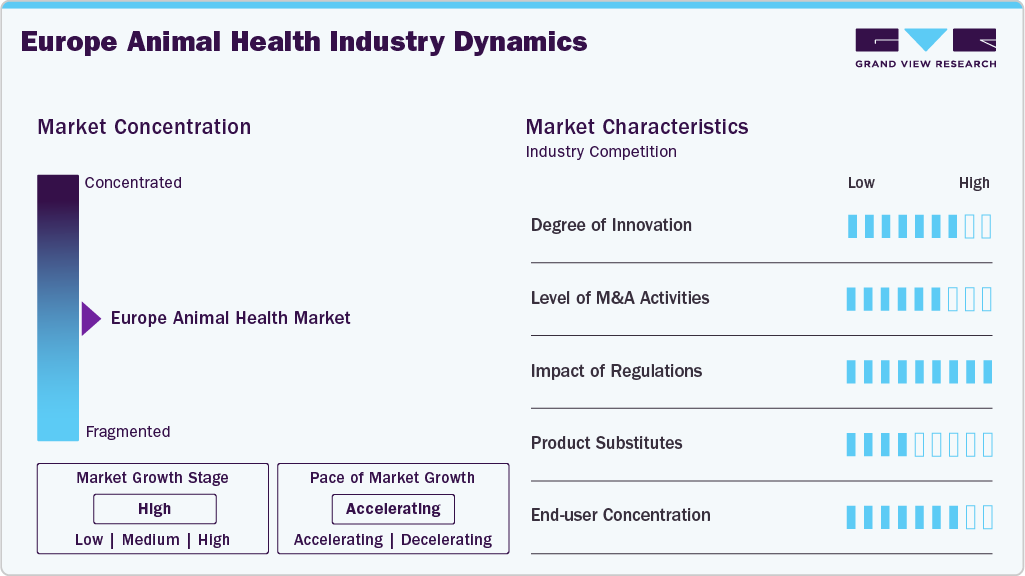
In order to broaden their portfolios, gain access to innovative technology, and strengthen their regional presence, significant players in the European animal health market frequently acquire smaller businesses through mergers and acquisitions. Collaborations demonstrate the increased interest in digital health solutions, nutrition, and diagnostics. For example, Boehringer Ingelheim and Eko Health collaborated in June 2025 to improve dog heart murmur diagnosis with artificial intelligence. The goal of this collaboration was to identify and diagnose canine cardiac conditions early.
Europe’s stringent regulatory framework significantly influences the animal health market. Strict approval requirements for veterinary medications' sustainability, efficacy, and safety are enforced by the European Medicines Agency (EMA). Antimicrobial resistance and environmental impact regulations encourage businesses to develop novel vaccines, biologics, and non-antibiotic treatments. Compliance raises expenses and also improves global competitiveness, product quality, and trust.
Substitutes in the industry arise from natural remedies, alternative therapies, and improved biosecurity practices, reducing reliance on conventional medicines. As antibiotic substitutes, vaccination, probiotics, and precision nutrition are gaining popularity. In addition to lowering the demand for pharmaceuticals, substitutes provide new avenues for innovation in integrated animal management, preventative healthcare, and holistic wellness methods in veterinary medicine.
End use concentration in the industry is relatively high, dominated by large veterinary clinic chains, livestock producers, and integrated farming enterprises. Companion animal care demand is concentrated in urban areas, while livestock products are driven by key producers across poultry, cattle, and swine. This concentration influences pricing strategies, distribution, and tailored service offerings.
Product Insights
On the basis of product, pharmaceuticals held the largest revenue share of 43.2% in 2025, driven by rising demand for effective treatments in livestock and companion animals. The market is being strengthened by innovations in veterinary medications, especially in the areas of antibiotics and antiparasitics that meet both therapeutic and preventive demands. For instance, Labiana's May 2025 introduction of a cephalexin-based antibiotic for dairy cattle that doesn't require milk withdrawal is a remarkable innovation. It increases farm output, adhering to EMA's prudent-use standards. This product further solidifies pharmaceuticals' market influence by reflecting the industry's emphasis on sustainable animal health management, food safety, and responsible antimicrobial usage.
The other segment, including veterinary telehealth, veterinary software, and livestock monitoring, is expected to emerge as the fastest-growing segment over the forecast period. Rising demand for remote veterinary consultations, digital herd management, and real-time livestock monitoring is driving adoption. Advances in IoT-enabled sensors, cloud-based farm management software, and AI-powered diagnostic tools are enhancing efficiency, animal welfare, and disease prevention. Furthermore, regulatory support, growing awareness of herd health, and the push for sustainable farming practices are accelerating investment in these technologies, positioning them as key growth engines within the European animal health landscape.
Animal Type Insights
On the basis of animal type, production animals held the largest revenue share in 2025, reflecting the importance of livestock health in food production and economic sustainability. Innovations in diagnostics and treatments are transforming this growth, enabling faster, field-ready solutions for farmers and veterinarians. For instance, in June 2025, Enalees launched Rhéa, a portable PCR test range that detects vector-borne diseases in cattle, sheep, and goats within 40 minutes, making it ideal for remote or urgent veterinary care. Livestock farming is increasingly embracing modern practices such as precision farming and enhanced biosecurity measures. In addition, farmers are adopting proactive approaches, including annual vaccinations and routine antibiotic use, to safeguard herd health.
Companion animals are the fastest-growing segment in Europe’s animal health market, fueled by rising pet ownership, urbanization, and increased awareness of pet wellness. Owners are prioritizing preventive care, including vaccinations, diagnostics, and nutritional supplements, to ensure longevity and quality of life for their pets. Technological advancements, such as telemedicine, wearable health monitors, and smart feeding systems, are enhancing veterinary services and pet management.
Distribution Channel Insights
On the basis of distribution channel, the hospital/clinic pharmacy segment held the largest revenue share in 2025, driven by the central role of veterinary clinics in diagnosis, treatment, and prescription drug dispensing. Veterinarians administer vaccines, injectables, and specialty medicines directly through clinical settings. Strong owner trust in professional recommendations and regular visits for preventive care sustain high demand for pharmaceuticals and biologics through this channel.
The e-commerce segment is expected to grow at the fastest rate over the forecast period. Growth is driven by increasing online purchases of pet healthcare products such as preventive medicines, supplements, and parasite-control treatments. Digital veterinary consultations, subscription services for routine medications, and convenient doorstep delivery are encouraging pet owners to shift toward online platforms for purchasing pet medicine products.
End-use Insights
On the basis of end use, veterinary hospitals & clinics held the largest revenue share in 2025, driven by the high volume of clinical consultations, diagnostics, vaccinations, and therapeutic treatments delivered in these facilities. Veterinarians manage chronic diseases, infectious conditions, and preventive care programs within clinical settings. Access to diagnostic equipment, specialized procedures, and prescription medicines positions hospitals and clinics as the primary treatment centers for animal healthcare.
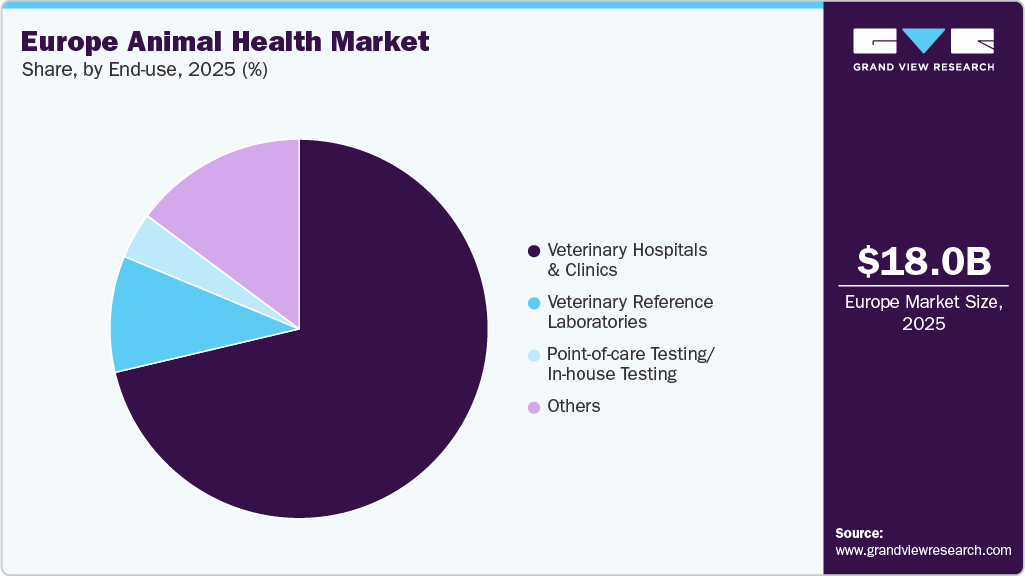
The point-of-care testing/in-house testing segment is emerging as the fastest-growing segment, driven by increasing adoption of rapid diagnostic tools within veterinary clinics that allow immediate disease detection and treatment decisions. In-house analyzers, molecular diagnostic platforms, and portable testing devices improve workflow efficiency, shorten diagnostic turnaround time, and support early detection of infectious, metabolic, and chronic conditions in pets.
Country Insights
UK Animal HealthMarket Trends
The UK animal health market is expanding with rising pet ownership and increasing focus on preventive veterinary care. Vaccination programs, parasite control treatments, and routine health screening are becoming more common across veterinary practices. Strong regulatory oversight from the Veterinary Medicines Directorate supports safe veterinary drug approvals and monitoring. Growth in pet insurance coverage and adoption of advanced diagnostics and specialty treatments is increasing demand for pharmaceuticals, biologics, and veterinary therapeutic products in the country.
Germany Animal HealthMarket Trends
The animal health market in Germany is witnessing dynamic growth, due to a combination of successful innovation ecosystems, strategic public investments, and regulatory reforms. European Commission approved USD 1.16 billion in state aid programs for boosting pig welfare by providing sizeable incentives for operational and facility renovations. Notable product advancements, including the FlexStar FLU H5N1 PCR kit from Altona Diagnostics, the multi-species Lateral Flow Reader from Myilab, and the AI-powered equine lameness diagnosis app from Boehringer Ingelheim, are driving the market growth. Global companies such as Enalees are increasing their diagnostic services for horses and other companion animals, while the veterinary clinic industry's consolidation trends are highlighted by VetPartners' purchase of Tierarztpraxis Kelberg.
Key Europe Animal Health Companies Insights
Europe animal health market is dominated by key players such as Zoetis, Boehringer Ingelheim, Elanco, Ceva Santé Animale, and Merck Animal Health. These companies lead in revenue through diversified portfolios spanning pharmaceuticals, vaccines, and diagnostics, collectively capturing a significant market share while driving innovation and expansion across the region. For instance, the strategic alliance between Animalcare Group plc and Belgian biotech firm YUN in July 2025, aimed at accelerating microbiome-based solutions in veterinary medicine. This partnership is set to enhance dermatological, gastrointestinal, and otic health offerings, placing the UK at the forefront of microbiome innovation in companion animals.
Key Europe Animal Health Companies:
- Ceva
- Vetoquinol S.A.
- Boehringer Ingelheim International GmbH
- Virbac
- B. Braun Vet Care
- Dechra Pharmaceuticals PLC
- Bimed Inc.
- Zoetic Inc.
- Elanco
- IDEXX Laboratories, Inc.
- MSD Animal Health
Recent Developments
-
In February 2026, MSD Animal Health and the Federation of Veterinarians of Europe (FVE) awarded the 2025 Veterinary Student Scholarship to 34 students selected from 132 applicants across 25 veterinary faculties in 17 European countries. Over the past decade, the joint program has collectively supported nearly 400 veterinary students and young professionals across Europe.
-
In January 2026, Ukraine made amendments to the Law on Veterinary Medicines and Animal Welfare, marking a systemic overhaul that aligns Ukraine's veterinary medicines framework with EU regulations (Regulation (EU) 2019/6), effective 1 March 2026. Key changes include a mandatory requirement for marketing authorisation holders to be Ukrainian legal entities, the introduction of GxP compliance standards, a new pharmacovigilance system, regulatory data exclusivity for veterinary medicines, and expanded licensing across the supply chain with staggered transitional periods extending through 2028.
-
In December 2025, The European Commission granted EU marketing authorization for ECOVAXXIN MS, ECO Animal Health's poultry vaccine against Mycoplasma synoviae. The vaccine provides active immunisation for future layer and breeder chickens from four weeks of age, helping reduce lesions and egg production losses.
-
In June 2025, dsm-firmenich introduced GutServ Biotix, a postbiotic solution aimed at boosting piglet gut integrity, reducing weaning stress, and promoting stronger early growth and resilience in commercial swine operations.
-
In June 2025, The University of León’s spin-off Aquilón Cyl developed Biobhyo, approved by the European Medicines Agency, which is the world’s first swine dysentery vaccine, showing 90% efficacy and EMA support, addressing antibiotic resistance and farm productivity.
Europe Animal Health Market Report Scope
Report Attribute
Details
Market size value in 2026
USD 19.7 billion
Revenue forecast in 2033
USD 39.9 billion
Growth rate
CAGR of 10.6% from 2026 to 2033
Actual data
2021 - 2024
Forecast period
2026 - 2033
Quantitative units
Revenue in USD million/billion, and CAGR from 2026 to 2033
Report coverage
Revenue forecast, company ranking, competitive landscape, growth factors, and trends
Segments covered
Product, animal type, distribution channel, end-use, country
Regional scope
Europe
Country scope
UK; Germany; France; Italy; Spain; Russia; Netherlands; Switzerland; Sweden; Ireland; Poland; Denmark; Norway
Key companies profiled
Ceva; Vetoquinol S.A.; Boehringer Ingelheim International GmbH; Virbac; B. Braun SE; Dechra Pharmaceuticals PLC; Bimeda Inc.; Zoetic Inc.; Elanco; IDEXX Laboratories, Inc.; MSD Animal Health.
Customization scope
Free report customization (equivalent up to 8 analysts working days) with purchase. Addition or alteration to country, regional & segment scope.
Pricing and purchase options
Avail customized purchase options to meet your exact research needs. Explore purchase options
Europe Animal Health Market Report Segmentation
This report forecasts revenue growth at the regional and country levels and provides an analysis of the latest industry trends in each of the sub-segments from 2021 to 2033. For this study, Grand View Research has segmented the Europe animal health market report based on product, animal type, distribution channel, end-use, and country.
-
Product Outlook (Revenue, USD Million, 2021 - 2033)
-
Biologics
-
Vaccines
-
Modified/ Attenuated Live
-
Inactivated (Killed)
-
Other Vaccines
-
-
Other Biologics
-
-
Pharmaceuticals
-
Parasiticides
-
Anti-infectives
-
Anti-inflammatory
-
Analgesics
-
Others
-
-
Diagnostics
-
Consumables, reagents and kits
-
Instruments and devices
-
-
Equipment & Disposables
-
Critical Care Consumables
-
Anesthesia Equipment
-
Fluid Management Equipment
-
Temperature Management Equipment
-
Rescue & Resuscitation Equipment
-
Research Equipment
-
Patient Monitoring Equipment
-
-
Medicinal Feed Additives
-
Others
-
Veterinary Telehealth
-
Veterinary Software
-
Livestock Monitoring
-
-
-
Animal Type Outlook (Revenue, USD Million, 2021 - 2033)
-
Production Animals
-
Poultry
-
Swine
-
Cattle
-
Sheep & Goats
-
Fish
-
-
Companion Animals
-
Dogs
-
Cats
-
Horses
-
Others
-
-
-
Distribution Channel Outlook (Revenue, USD Million, 2021 - 2033)
-
Retail
-
E-Commerce
-
Hospital/ Clinic Pharmacy
-
-
End-use Outlook (Revenue, USD Million, 2021 - 2033)
-
Veterinary Reference Laboratories
-
Point-of-care Testing/In-house Testing
-
Veterinary Hospitals & Clinics
-
Others
-
-
Country Outlook (Revenue, USD Million, 2021 - 2033)
-
UK
-
Germany
-
France
-
Italy
-
Spain
-
Russia
-
Netherlands
-
Switzerland
-
Sweden
-
Ireland
-
Poland
-
Denmark
-
Norway
-
Frequently Asked Questions About This Report
b. Some key players operating in the Europe animal health market include Ceva; Vetoquinol S.A.; Boehringer Ingelheim International GmbH; Virbac; B. Braun Vet Care; Dechra Pharmaceuticals PLC; Bimeda, Inc.; Zoetis Inc.; Elanco; IDEXX Laboratories, Inc.; MSD Animal Health
b. Factors such as an rising prevalence of zoonotic and infectious diseases, growth of the companion animal population and pet humanization, advancements in veterinary pharmaceuticals and biologics and regulatory support and food safety standards are driving the Europe animal health market growth
b. The Europe animal health market size was estimated at USD 18.0 billion in 2025 and is expected to reach USD 19.7 billion in 2026.
b. The Europe animal health market is expected to grow at a compound annual growth rate of 10.6% from 2026 to 2033 to reach USD 39.9 billion by 2033
b. On the basis of product, pharmaceuticals held the largest revenue share of 43.2% in 2025, driven by rising demand for effective treatments in livestock and companion animals. The market is being strengthened by innovations in veterinary medications, especially in the areas of antibiotics and antiparasitics that meet both therapeutic and preventive demands


Share this report with your colleague or friend.
Need a Tailored Report?
Customize this report to your needs — add regions, segments, or data points, with 20% free customization.


ISO 9001:2015 & 27001:2022 Certified
We are GDPR and CCPA compliant! Your transaction & personal information is safe and secure. For more details, please read our privacy policy.
Trusted market insights - try a free sample
See how our reports are structured and why industry leaders rely on Grand View Research. Get a free sample or ask us to tailor this report to your needs.