- Home
- »
- Animal Health
- »
-
Companion Animal Health Market Size, Industry Report 2033GVR Report cover
![Companion Animal Health Market Size, Share & Trends Report]()
Companion Animal Health Market (2026 - 2033) Size, Share & Trends Analysis Report By Animal (Dogs, Cats, Equine), By Product (Vaccines, Pharmaceuticals, Diagnostics), By Distribution Channel (Hospital Pharmacies, E-commerce, Retail), By End-use, By Region, And Segment Forecasts
- Report ID: GVR-2-68038-260-0
- Number of Report Pages: 150
- Format: PDF
- Historical Range: 2021 - 2025
- Forecast Period: 2026 - 2033
- Industry: Healthcare
- Report Summary
- Table of Contents
- Segmentation
- Methodology
- Download FREE Sample
-
 Download Sample Report
Companion Animal Health Market Summary
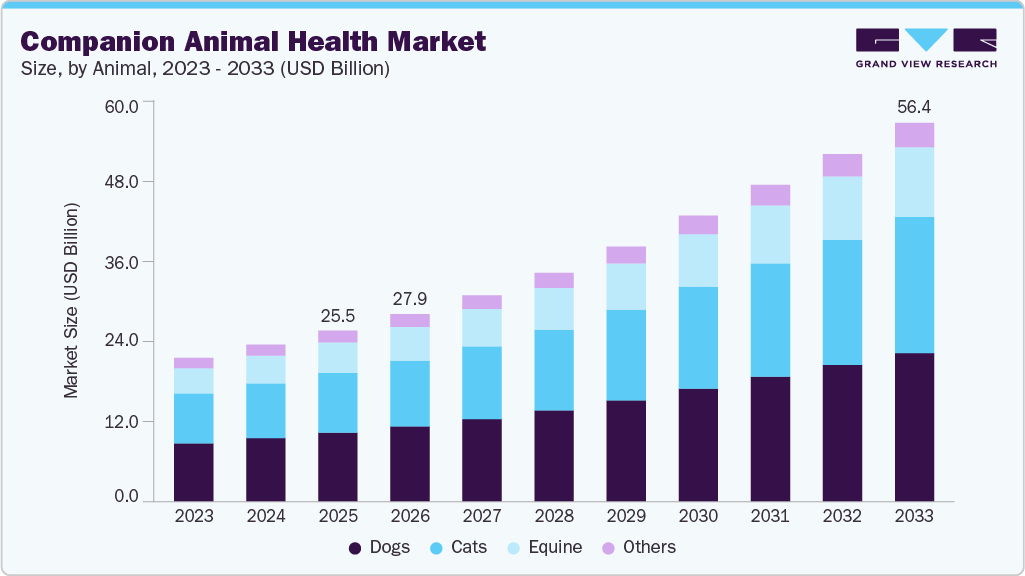
The global companion animal health market size was estimated at USD 25.46 billion in 2025 and is projected to reach USD 56.41 billion by 2033, growing at a CAGR of 10.6% from 2026 to 2033. The market is primarily driven by factors such as rapid advancements in the field of companion animal health, increase in zoonotic disease transfer from pets, evolving regulations, and rising R&D & procedural advancements.
Key Market Trends & Insights
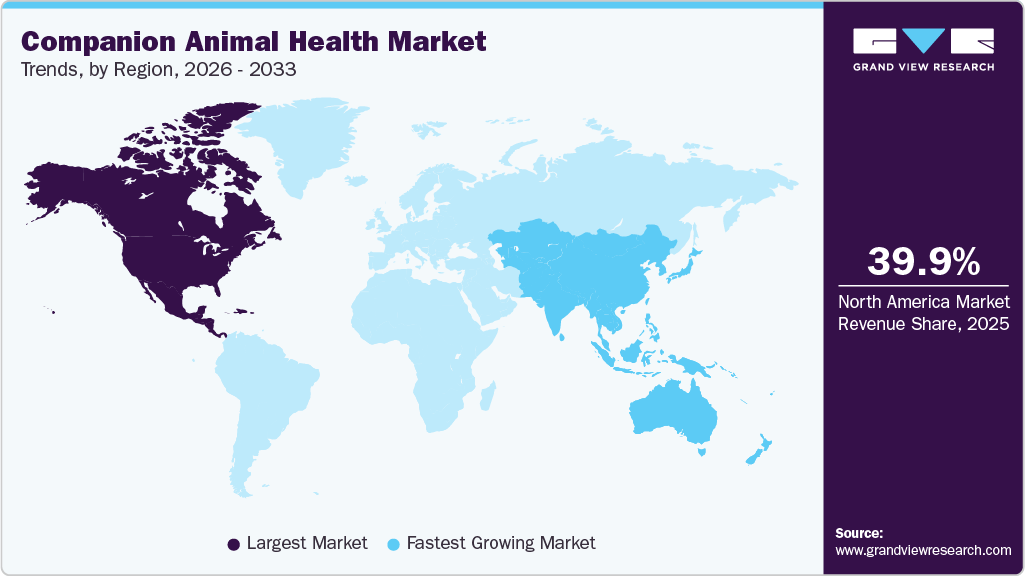
- North America companion animal health industry held the largest revenue share of 39.96% in 2025.
- U.S. dominated the North America region with the largest revenue share in 2025.
- By animal, the dogs segment held the largest revenue share of 40.30% of the market in 2025.
- By product, the pharmaceuticals segment held the largest revenue share in 2025.
- By distribution channel, the hospital pharmacies segment held the largest market share in 2025.
Market Size & Forecast
- 2025 Market Size: USD 25.46 Billion
- 2033 Projected Market Size: USD 56.41 Billion
- CAGR (2026-2033): 10.6%
- North America: Largest market in 2025
- Asia Pacific: Fastest growing market
Rapid innovation across therapeutics, diagnostics, and care delivery is transforming the companion animal health industry to resemble human healthcare in both complexity and value. Some of the advances in molecular biology, biologics, and formulation science enable targeted therapies that address specific disease pathways and support long-term disease management. Some of the regulatory actions, reflect growing acceptance of precision-driven veterinary medicines. For instance, the FDA, in April 2025, expanded treatment availability other than traditional pets by adding Faunamor to its Index of Legally Marketed Unapproved New Animal Drugs for Minor Species. Similarly, adoption of AI in diagnostics, regenerative medicine, and advanced referral infrastructure is improving clinical outcomes and operational efficiency.
The market is also driven by rising awareness of zoonotic diseases transmitted from pets to humans. As pets share indoor living spaces with families, risks associated with parasites, bacterial infections, and vector-borne diseases have moved into everyday public health conversations. Public health agencies such as the U.S. Centers for Disease Control and Prevention in their May 2025 publication highlighted that common pet-associated illnesses range from salmonellosis and ringworm to vector-borne infections transmitted through fleas and ticks, strengthening the need for preventive veterinary intervention at scale (CDC). This shift has incorporated preventive veterinary care such as routine vaccinations, parasite control, and regular screenings into standard pet ownership practices. Besides this, veterinarians emphasize year-round prevention and integrated wellness plans, driving recurring demand for pharmaceuticals, diagnostics, and vaccines.
Furthermore, evolving regulatory frameworks are playing a pivotal role in accelerating the growth of companion animal health industry by improving product approval efficiency, strengthening international cooperation, and modernizing outdated laws that historically slowed innovation. For instance, December 2025 updates from the U.S. FDA’s Center for Veterinary Medicine (CVM) show a steady stream of approvals for new animal drugs, such as treatments for congestive heart failure and novel antiseptic formulations, which reflects regulators’ willingness to evaluate and authorize important companion animal therapies in a timely manner. Similarly, industry groups adopt modernized regulatory pathways that reflect scientific complexity and innovation pace. A veterinary industry panel convened by the American Veterinary Medical Association in July 2025, highlighted the need for modernization of regulatory processes governing animal health products and nutrition, calling for enhancements in drug review efficiency and more agile frameworks that reflect the complexity of current innovations.
Moreover, increased R&D intensity and procedural innovation are strengthening the companion animal health ecosystem. Some of the advances include vaccines, pharmaceuticals, diagnostics, and technology-enabled care, including point-of-care hormone assays, wireless patient monitoring systems, and AI-powered assessment tools. In addition, new product launches in dermatology, dental care, reproductive health, and chronic disease management demonstrate translation of innovation into differentiated clinical value. For instance, in December 2025, Zomedica launched the TRUFORMA equine progesterone assay, expanding its point-of-care diagnostic platform into equine reproductive health. The in-clinic test delivers rapid quantitative progesterone results to support breeding timing, pregnancy monitoring, supplementation decisions, and overall reproductive management. In addition, preventive and procedural care models integrate digital tools and novel delivery formats, improving compliance and outcomes.
Some of the key clinical trials/product pipeline analysis
Trial Name
Application
Sponsor Name
Animal Type
Status
Enrollment End
Novel Monoclonal Antibody for Feline Atopic Skin Syndrome (FASS)
Feline atopic skin syndrome
NA
Cats
Ongoing
Not disclosed
Bedinvetmab (Librela/Beransa) client survey study
Pain management
Elemental Pet Vets
Dogs
Ongoing
Not disclosed
Evaluation of Spascupreel in chronic enteropathies
Gastrointestinal disorders
University of Georgia
Dogs
Ongoing
Not disclosed
Hymecromone (4MU) for pulmonary fibrosis
Pulmonary fibrosis
Tufts University
Dogs
Ongoing
Not disclosed
CAR T-cell and verdinexor therapy for glioma
Glioma tumor treatment
Colorado State University
Dogs
Ongoing
Dec 2028
CAR iNKT cells for metastatic osteosarcoma
Osteosarcoma
University of Pennsylvania
Dogs
Ongoing
Not disclosed
Infiltrative macrophages in soft tissue sarcomas
Soft tissue sarcoma
Ohio State University
Dogs
Ongoing
Not disclosed
STING agonist dose-escalation study
Solid tumor treatment
Michigan State University
Dogs
Ongoing
Not disclosed
ELIAS osteosarcoma trial (large-breed dogs)
Osteosarcoma
University of Missouri
Dogs
Ongoing
Not disclosed
Transdermal mirtazapine in cats with CKD
Chronic kidney disease
Ohio State University
Cats
Ongoing
Not disclosed
EPIC study (Exocrine Pancreatic Insufficiency Control)
Pancreatic insufficiency
Texas A&M University
Dogs
Ongoing
Not disclosed
Market Concentration & Characteristics
The industry is moderately concentrated and the rate of growth is accelerating, with a mix of niche specialty brands and a few expanding multinational players. Apart from some key companies such as Zoetis, Boehringer Ingelheim, Merck , Idexx, Elanco, etc., and many other smaller players. Growing investments in specialized nutrition, habitats, and healthcare products are enabling select innovators to capture increasing revenue share.
The companion animal health industry shows a high degree of innovation driven by advances in biologics, precision therapeutics, diagnostics, and digital health tools. Companies increasingly develop targeted medicines, AI-enabled diagnostics, and novel drug-delivery formats that mirror human healthcare innovation. For instance, in December 2025, Secured Health Canada approved Portela (relfovetmab) for treating osteoarthritis-associated pain in cats.
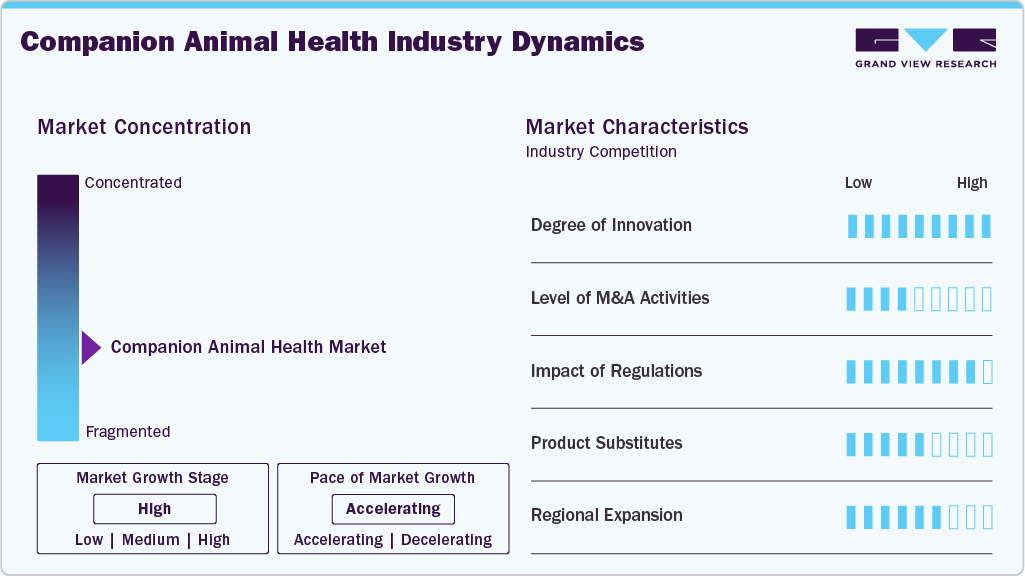
Large animal health companies actively acquire biotech firms, specialty drug developers, diagnostic platforms, and veterinary service providers to expand portfolios and accelerate innovation. For instance, in December 2025, Virbac S.A. acquired Felanorm (methimazole) Oral Solution from Norbrook Laboratories, strengthening its feline health portfolio, including treatment for hyperthyroidism.
Regulations strongly influence market dynamics by determining product approval timelines, safety standards, and market access. The sector is growing due to streamlined veterinary drug approvals and greater international regulatory cooperation that have reduced barriers to innovation.
Product substitutes in companion animal health include generics, compounded medicines, and non-pharmaceutical alternatives such as supplements or behavioral interventions. These substitutes offer cost advantages, whereas branded and prescription products maintain demand due to proven efficacy, safety, and veterinary endorsement.
Regional expansion remains a key growth strategy as companies target emerging pet care markets in Asia, Latin America, and Eastern Europe. Global players expand through partnerships, localized manufacturing, and customized product portfolios to capture regional growth opportunities.
Animal Insights
The dogs segment dominated the market with largest revenue share of 40.30% in 2025. This dominance is driven by rising dog ownership, higher preventive care spending, and strong focus on chronic and parasitic disease management. In addition, demand favors long-acting, high-efficacy therapies that reduce dosing frequency, particularly in urban settings. Besides this, clinical and regulatory momentum supports this trend. For instance, in July 2025, Merck Animal Health announced that the U.S. Food and Drug Administration approved BRAVECTO QUANTUM, a fluralaner extended release injectable suspension for dogs and puppies 6 months of age and older. Furthermore, digital health tools further support growth, as AI-based canine monitoring systems demonstrate strong alignment with veterinary diagnoses, supporting personalized, data-driven care.
The cats segment is projected to grow at the fastest CAGR over the forecast period, driven by rising awareness of preventive care and expanding access to advanced feline-specific therapies. In addition, vaccination programs and structured preventive guidelines transform the demand, supported by veterinary recommendations and improved vaccine safety and efficacy. Besides this, regulatory momentum also supports growth, exemplified by the FDA’s emergency authorization of Credelio CAT in November 2025 to treat New World screwworm in cats. Furthermore, updated WSAVA vaccination guidelines further support systematic care across life stages.
Product Insights
The pharmaceuticals segment dominated the market in 2025, supported by continued innovation in targeted and long-acting therapies. Besides this, regulatory approvals have strengthened its position, including FDA approval of Zenrelia, by Elanco in 2024, that demonstrated superior efficacy in managing canine skin disease while offering more competitive pricing than established alternatives. In addition, preventive care also advanced with FDA approval of BRAVECTO QUANTUM by Merck in July 2025, delivering year-long flea and tick protection through a single injectable dose. Thus, improved efficacy, extended duration, veterinary-supervised administration, and strategic pricing are driving strong adoption of pharmaceutical solutions.
The others segment is projected to grow at the fastest CAGR over the forecast period, 2026-2033, due to rising adoption of veterinary equipment, consumables, advanced biologics, and digital solutions. In addition, regenerative biologics, including stem cell and platelet-rich plasma therapies, are gaining traction for orthopedic and soft tissue conditions, offering minimally invasive alternatives. The demand increases as clinics modernize and expand advanced procedures such as surgery, emergency care, and intensive treatment, requiring anesthesia systems, monitoring devices, and critical care supplies. Moreover, digital tools such as practice management software, telehealth platforms, and remote monitoring systems further support efficiency, early diagnosis, and continuity of care, strengthening this segment’s growth trajectory.
Distribution Channel Insights
The hospital pharmacies segment held the largest revenue share in 2025, as veterinary hospitals emphasize structured medication management, safety, and accountability. For instance, in June 2025, Frontiers in Medicine reported that a pharmacist-driven antimicrobial stewardship program implemented at a Chinese tertiary hospital significantly reduced inpatient antibiotic consumption over a five-year period. Thus, similar models are being adopted in companion animal hospitals to manage complex cases, optimize antibiotic selection, dosing, and duration, and address antimicrobial resistance. In addition, hospital pharmacies also support cost optimization through formulary management and therapeutic substitution, positioning them as essential clinical and economic partners within modern veterinary care systems.
The E-commerce segment is expanding rapidly and is the fastest growing over the forecast period, as pet owners prioritize convenience, accessibility, and digital integration. Besides this, major retailers are strengthening omnichannel strategies. For instance, in October 2024, Walmart reported via its corporate press release that it had expanded its e-commerce and omnichannel pet care offerings to better serve pet owners and support online-to-offline engagement. Furthermore, e-commerce is also evolving due to strategic initiatives such as Walmart+ offering 24/7 virtual veterinary consultations through Pawp. These integrated product-and-service models enhance access to care, improve customer loyalty, and position e-commerce as a key distribution channel in companion animal health.
End Use Insights
The hospitals and clinics constituted the largest revenue segment in 2025 because veterinary facilities adopt advanced in-clinic diagnostics to improve speed, accuracy, and workflow efficiency. For instance, in January 2024, IDEXX launched the AI-powered inVue Dx Cellular Analyzer, delivering laboratory-quality results in minutes and accelerating clinical decision-making. In addition, hospitals and clinics serve as central points for pharmaceuticals, vaccines, parasite control, supplements, and biologics, enabling immediate treatment initiation. Furthermore, integration of AI diagnostics, electronic medical records, and decision-support tools standardizes therapy selection and dosing.
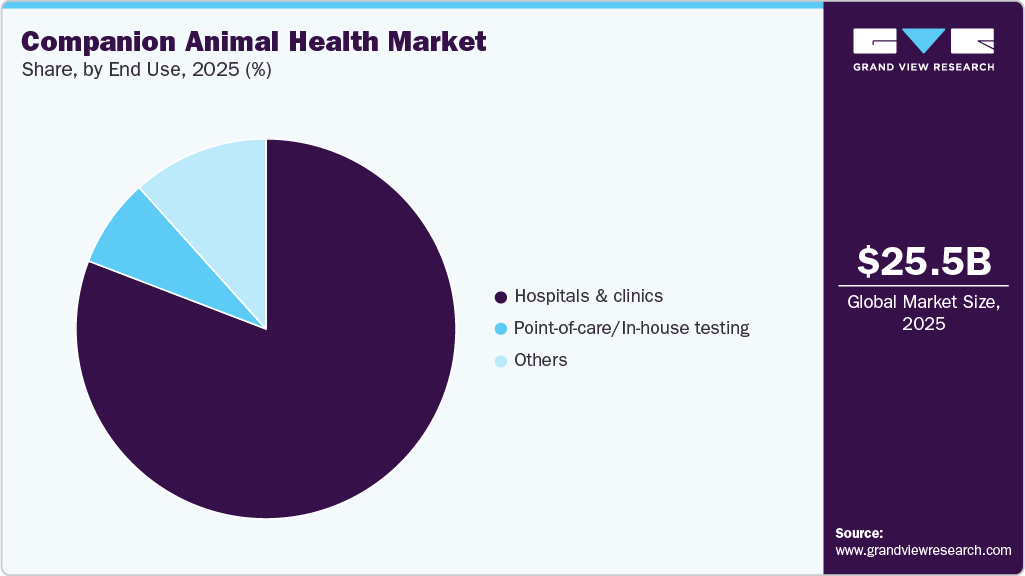
The point-of-care and in-house testing segment is expected to grow fastest as clinics prioritize rapid diagnostics and real-time decision-making. For instance, in June 2024, IDEXX expanded its Catalyst platform with the Pancreatic Lipase Test, delivering results in under 10 minutes across a global installed base of 70,000 analyzers. The efficiency gains are supported by Catalyst SmartQC, reducing quality control time. Moreover, innovation are transforming market growth. For instance, in December 2024, Zoetis announced via its corporate press release that it had prepared to launch its cartridge-based, point-of-care hematology analyzer Vetscan OptiCell by early 2025. In addition, clinical studies also highlight performance variability, reinforcing continued optimization and sustained investment in in-house diagnostics.
Regional Insights
North America companion animal health industry dominated the global market with the largest revenue share of 39.96% in 2025. The market is driven by rising demand for advanced therapies and preventive care. In the U.S., growth has been supported by FDA approvals such as Elanco’s Zenrelia in September 2024 for canine allergic dermatitis and Credelio Quattro in October 2024, a broad-spectrum monthly oral parasiticide. Preventive solutions and supplements, including Elanco’s Pet Protect line launched in February 2025, further strengthen adoption. In Canada and Mexico, market growth is supported by improving surveillance, vaccination needs, and innovative therapeutics. Some of the developments such as ongoing Canadian approvals, expanded vaccination demand in Mexico, and Zoetis’ Solensia reflect a regional shift toward structured, preventive, and advanced companion animal care.
U.S. Companion Animal Health Market Trends
The companion animal health industry in the U.S. accounted for the highest market share in the North America market, owing to rising demand for advanced prescription therapies for chronic and highly prevalent conditions. In addition, growth has been particularly strong in canine dermatology, where improved oral treatments have enhanced itch control, treatment adherence, and long-term disease management. Furthermore, preventive care fuels expansion through broad-spectrum parasiticides such as FDA-approval of Credelio Quattro in October 2024, that simplified monthly protection against multiple parasites. In addition, demand for veterinarian-formulated supplements, including Elanco’s Pet Protect line, reflects a growing focus on holistic, preventive wellness.
Canada companion animal health industry is expanding steadily, supported by the gradual development of surveillance and monitoring systems that track disease patterns and pet health trends. According to a November 2025 report of Preventive Veterinary Medicine, Canada had a limited but important surveillance infrastructure, with only a small number of systems operating nationally or jointly with the U.S., and many depending on veterinary submissions and diagnostic or electronic health record data. While gaps remain in scope and data integration, these systems are strengthening evidence-based care.
Europe Companion Animal Health Market Trends
The companion animal health industry in Europe is expected to drive market growth due to rising pet ownership, stronger preventive care awareness, and increased focus on antimicrobial resistance. In the UK, structured surveillance and long-term monitoring of zoonotic infections have strengthened veterinary practices and demand for vaccines and therapeutics. Some of the major markets such as Germany, Italy, and France are benefiting from increased emphasis on antimicrobial stewardship, advanced diagnostics, and preventive vaccination, including expanded leptospirosis protection in dogs. In addition, Northern and Southern European countries, including Denmark and Spain, are supporting growth through national AMR action plans, regulatory oversight, and hospital-based surveillance initiatives.
The companion animal health industry in the UK is strengthening through enhanced surveillance and monitoring of pet health and disease prevalence. In July 2025, the Veterinary Medicines Directorate announced a world-first national study assessing antibiotic resistance in healthy dogs and cats, generating new data on antimicrobial risks in shared human-pet environments. In addition, ongoing monitoring of zoonotic infections has further transformed veterinary practices, with UK Health Security Agency reports highlighting rising cases of hepatitis E and leptospirosis in 2024.
Germany companion animal health industry is expanding. The country’s growth is due to awareness of antimicrobial resistance that drives demand for effective infection management and preventive care. A 2025 veterinary hospital study reported high resistance and multidrug resistance rates in canine and feline urinary tract infections, highlighting the need for targeted therapies and antimicrobial stewardship. Pet owner engagement further supports market growth, with surveys showing frequent veterinary interactions for vaccination and parasite control, alongside strong demand for better education on zoonoses and antimicrobial resistance.
Asia Pacific Companion Animal Health Market Trends
Asia Pacific companion animal health industry is expected to grow at the fastest CAGR over the forecast period. The region's growth can be attributed to growing demand for advanced veterinary care and increasing awareness of antimicrobial resistance. In Japan, genomic surveillance of dogs and cats revealed high resistance rates, prompting investment in diagnostics, vaccines, and targeted therapeutics. China’s market growth is supported by strengthened regulatory oversight, standardized drug testing, and nationwide resistance monitoring, encouraging adoption of evidence-based products. India and Australia are also expanding through improved veterinary infrastructure, workforce engagement, and preventive care initiatives, including vaccination and deworming programs.
The companion animal health industry in China held the largest revenue share andis witnessing new growth opportunities by stronger regulatory oversight and rising expectations for veterinary drug quality and safety. Clearer approval and testing frameworks have encouraged pharmaceutical investment in compliant, companion animal-specific R&D while improving confidence among veterinarians and pet owners. For instance, in May 2024, the Ministry of Agriculture and Rural Affairs issued revised Veterinary Drug Comparative Test Requirements, that would be effective December 1, 2024, mandating bioequivalence and, where applicable, withdrawal testing using GMP-produced samples. Products meeting these standards receive official approval numbers and “Comparative Veterinary Drug” labeling, raising quality benchmarks and supporting wider adoption of evidence-based veterinary medicines.
The market for companion animal health in India is witnessing notable growth due to improvements in veterinary infrastructure and coordinated service delivery. In addition, strong collaboration among veterinarians, paraprofessionals, and community animal health workers has extended care beyond urban clinics, improving awareness, early disease detection, and compliance with vaccination and deworming. For instance, in July 2025, the World Organization for Animal Health highlighted India’s collaborative workforce model, including veterinarians, trained paraprofessionals, and community workers known as Pashu Sakhis, supporting vaccination and preventive programs. These efforts expanded access to formal veterinary care, increased uptake of vaccines and therapeutics, and strengthened long-term growth prospects through preventive, evidence-based companion animal healthcare.
Latin America Companion Animal Health Market Trends
Latin America companion animal health industry is experiencing consistent growth, fueled by rising pet ownership, urbanization, and increased awareness of preventive care. In countries such as Brazil and Argentina, pet owners are prioritizing routine veterinary visits, vaccinations, and diagnostics, which has boosted demand for pharmaceuticals, nutritional products, and specialized treatments. In addition, expansion of veterinary infrastructure in urban and semi-urban areas has improved access to care, while community outreach programs, spay and neutering campaigns, and municipal initiatives have further strengthened veterinary services in underserved regions. Furthermore, growing concern for zoonotic diseases and environmental health risks is prompting veterinarians to adopt evidence-based practices and preventive strategies, supporting sustained investment in the sector.
Brazil companion animal health industry is gaining momentum due to rising pet ownership, greater awareness of preventive care, and expanding veterinary services across urban and semi-urban areas. In addition, pet owners have been prioritizing routine visits, vaccinations, diagnostics, and nutrition, boosting demand for pharmaceuticals and specialized care. Besides this, increased concern over zoonotic and environmental risks has supported evidence-based veterinary practices. For instance, in June 2025, an NIH study on canine leptospirosis in flood-affected south of Brazil highlighted infection risks and underscored the importance of vaccination, diagnostics, and surveillance, further supporting market expansion and investment in preventive companion animal healthcare.
Middle East & Africa Companion Animal Health Market Trends
The MEA companion animal health industry is growing steadily, supported by rising pet ownership, urbanization, and increased awareness of animal welfare. In the UAE, increasing investments in veterinary clinics across Abu Dhabi and Dubai have strengthened access to diagnostics, preventive care, and treatment services, with pet owners seeking routine check-ups and vaccinations. For instance, Animals (Basel) reported a study documenting extended-spectrum beta-lactamase resistant Escherichia coli in 23.65% of domestic pets, highlighting emerging antimicrobial resistance concerns. This evidence is driving adoption of advanced diagnostics, antimicrobial stewardship programs, and rational pharmaceutical use, contributing to professionalization of veterinary practices and higher-value health solutions across the region.
South Africa companion animal health industry is growing steadily due to rising pet ownership, urbanization, and greater awareness of preventive veterinary care. in addition, pet owners prioritize routine check-ups, vaccinations, and diagnostics, driving demand for advanced clinical services and pharmaceuticals. Besides this, growing focus on zoonotic and antimicrobial-resistant infections has encouraged evidence-based treatment, antimicrobial stewardship, and stronger diagnostic capabilities. Furthermore, collaboration among veterinary practices, research institutions, and pharmaceutical companies has supported surveillance, regulatory alignment, and improved pet health outcomes.
Kuwait companion animal health industry is experiencing significant growth due to supported by rising urban pet ownership, stronger animal welfare awareness, and government involvement in animal population management. In addition, increased concern over zoonotic risks is driving demand for veterinary consultations, vaccinations, and preventive care. For instance, in November 2025, restrictions on commercial pet imports highlighted the scale of stray animal management, reinforcing the need for local veterinary services. Moreover, investments in shelters, sterilization programs, and clinics are strengthening structured healthcare delivery and supporting sustained demand for companion animal pharmaceuticals, diagnostics, and long-term care solutions.
Key Companion Animal Health Company Insights
The companion animal health industry is dominated by multinational players with strong R&D, broad product portfolios, and extensive distribution networks. Companies such as Zoetis, Elanco, Boehringer Ingelheim, Merck Animal Health, and Virbac collectively hold significant market share, driven by leadership in vaccines, parasiticides, diagnostics, and preventive care solutions. For instance, in September 2025, Elanco announced collaborations with IndyHumane, Medical Mutts Service Dogs, and other animal organizations, becoming exclusive provider of vaccines, therapeutics and canine parasiticides for shelter animals.
Key Companion Animal Health Companies:
The following key companies have been profiled for this study on the companion animal health market.
- Agrolabo S.p.A.
- Boehringer Ingelheim International GmbH
- Ceva
- Elanco
- IDEXX Laboratories, Inc.
- Indian Immunologicals Ltd.
- Merck & Co., Inc.
- Norbrook
- Vetoquinol
- Virbac
- Zoetis Services LLC
Recent Developments
-
In December 2025, Virbac S.A. acquired Felanorm (methimazole) Oral Solution from Norbrook Laboratories, strengthening its feline health portfolio, including treatment for hyperthyroidism.
-
In October 2025, Received European Commission marketing authorization for Portela (relfovetmab), a first-of-its-kind long-acting mAb therapy to alleviate osteoarthritis pain in cats.
-
In January 2025, Ceva Animal Health signed a long-term collaboration agreement with Touchlight to use dbDNA technology, enabling development of future DNA vaccines and therapeutics across animal health, supporting companion and broader animal markets
Companion Animal Health Market Report Scope
Report Attribute
Details
Market size value in 2026
USD 27.89 billion
Revenue forecast in 2033
USD 56.41 billion
Growth rate
CAGR of 10.6% from 2026 to 2033
Actual data
2021 - 2025
Forecast period
2026 - 2033
Quantitative units
Revenue in USD million and CAGR from 2026 to 2033
Report coverage
Revenue forecast, company ranking, competitive landscape, growth factors, and trends
Segments covered
Animal, product, distribution channel, end use, region
Regional scope
North America; Europe; Asia Pacific; Latin America; MEA
Country scope
U.S.; Canada; Mexico; UK; Germany; France; Italy; Spain; Denmark; Sweden; Norway; Japan; China; India; Thailand; South Korea; Australia; Brazil; Argentina; South Africa; UAE; Saudi Arabia; Kuwait; Qatar; Oman
Key companies profiled
Agrolabo S.p.A.; Boehringer Ingelheim International GmbH; Ceva; Elanco; IDEXX Laboratories, Inc.; Indian Immunologicals Ltd.; Merck & Co., Inc.; Norbrook; Vetoquinol; Virbac; and Zoetis Services LLC.
Customization scope
Free report customization (equivalent up to 8 analysts working days) with purchase. Addition or alteration to country, regional & segment scope.
Pricing and purchase options
Avail customized purchase options to meet your exact research needs. Explore purchase options
Global Companion Animal Health Market Report Segmentation
This report forecasts revenue growth at global, regional, and country levels and provides an analysis of the latest industry trends in each of the sub-segments from 2021 to 2033. For this study, Grand View Research has segmented the global companion animal health market report based on animal, product, distribution channel, end use and region:
-
Animal Outlook (Revenue, USD Million, 2021 - 2033)
-
Dogs
-
Equine
-
Cats
-
Others
-
-
Product Outlook (Revenue, USD Million, 2021 - 2033)
-
Vaccines
-
Pharmaceuticals
-
OTC
-
Prescription
-
-
Feed Additives
-
Diagnostics
-
Others
-
-
Distribution Channel Outlook (Revenue, USD Million, 2021 - 2033)
-
Retail
-
E-commerce
-
Hospital pharmacies
-
-
End Use Outlook (Revenue, USD Million, 2021 - 2033)
-
Point-of-care/In-house testing
-
Hospitals & clinics
-
Others
-
-
Regional Outlook (Revenue, USD Million, 2021 - 2033)
-
North America
-
U.S.
-
Canada
-
Mexico
-
-
Europe
-
UK
-
Germany
-
France
-
Italy
-
Spain
-
Denmark
-
Sweden
-
Norway
-
-
Asia Pacific
-
Japan
-
China
-
India
-
Australia
-
Thailand
-
South Korea
-
-
Latin America
-
Brazil
-
Argentina
-
-
Middle East & Africa
-
South Africa
-
UAE
-
Saudi Arabia
-
Kuwait
-
Qatar
-
Oman
-
-
Frequently Asked Questions About This Report
b. The global companion animal health market size was estimated at USD 25.46 billion in 2025 and is expected to reach USD 27.89 billion in 2026.
b. The global companion animal health market is expected to grow at a compound annual growth rate of 10.6% from 2026 to 2033 to reach USD 56.41 billion by 2033.
b. The dogs animal type segment dominated the global market with a revenue share of 40.30% in 2025. One of the primary factors promoting segment growth is the rising prevalence of chronic disorders in dogs.
b. The global companion animal health market was dominated by the pharmaceuticals segment in 2025 with overall revenue of over 45.17%.
b. The hospital pharmacies segment led the global companion animal health market and accounted for a revenue share of 44.83% in 2025.


Share this report with your colleague or friend.
Need a Tailored Report?
Customize this report to your needs — add regions, segments, or data points, with 20% free customization.


ISO 9001:2015 & 27001:2022 Certified
We are GDPR and CCPA compliant! Your transaction & personal information is safe and secure. For more details, please read our privacy policy.
Trusted market insights - try a free sample
See how our reports are structured and why industry leaders rely on Grand View Research. Get a free sample or ask us to tailor this report to your needs.