- Home
- »
- Animal Health
- »
-
Animal Health Market Size And Share, Industry Report, 2033GVR Report cover
![Animal Health Market Size, Share & Trends Report]()
Animal Health Market (2026 - 2033) Size, Share & Trends Analysis Report By Product (Biologics, Pharmaceuticals, Diagnostics), By Animal (Companion, Production), By Distribution Channel (Retail, E-Commerce), By End Use, By Region, And Segment Forecasts
- Report ID: GVR-1-68038-763-6
- Number of Report Pages: 250
- Format: PDF
- Historical Range: 2021 - 2025
- Forecast Period: 2026 - 2033
- Industry: Healthcare
- Report Summary
- Table of Contents
- Interactive Charts
- Methodology
- Download FREE Sample
-
 Download Sample Report
Animal Health Market Summary
The global animal health market size was estimated at USD 68.7 billion in 2025 and is projected to reach USD 156.0 billion by 2033, growing at a CAGR of 11.0% from 2026 to 2033. Factors driving the market growth include rising animal health expenditure, the increasing inculcation of Artificial Intelligence (AI), evolving regulatory scenario, prevalence of diseases in animals, concerns over zoonoses, initiatives by key companies, uptake of pet insurance, and pet humanization.
Key Market Trends & Insights
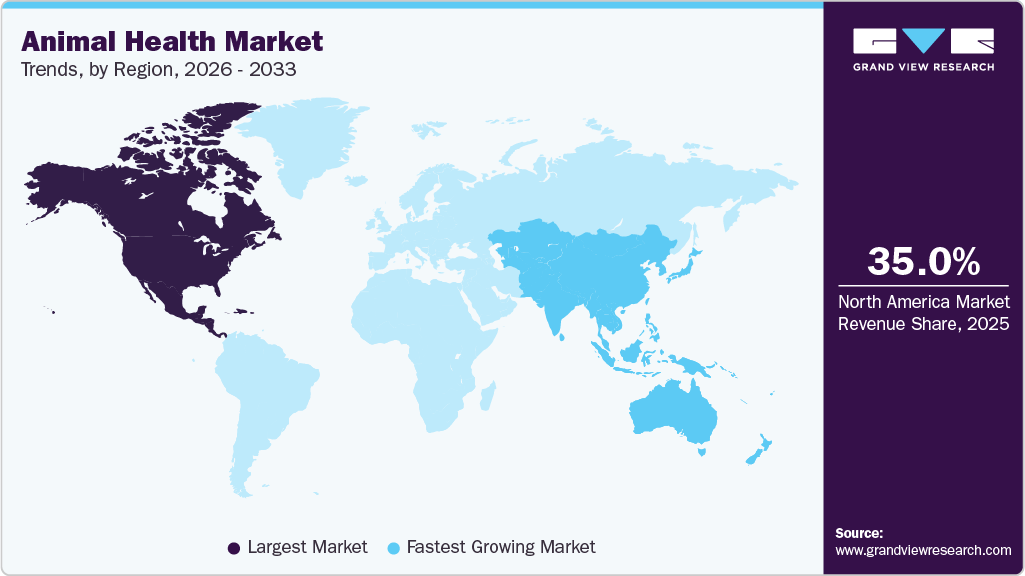
- North America animal health industry held the largest revenue share of more than 35% in 2025.
- U.S. dominated the North America region with the largest revenue share in 2025.
- By product, the pharmaceuticals segment held the largest share over 43.1% of the market in 2025
- By animal, the companion animal segment is expected to grow at the fastest CAGR over the forecast period.
- Based on distribution channel, the hospital/clinic pharmacy segment held the largest share in 2025.
- By end use, the veterinary hospitals & clinic segment held the largest share of more than 71% in 2025
Market Size & Forecast
- 2025 Market Size: USD 68.7 Billion
- 2033 Projected Market Size: USD 156 Billion
- CAGR (2026-2033): 11.0%
- North America: Largest market in 2025
- Asia Pacific region: Fastest growing market
However, the most dominant factor is the increasing inculcation of AI across multiple technologies in the animal health sector. One of the key drivers for the market is the inculcation of AI into various sectors within the animal health sector. The integration of artificial intelligence across the animal health sector is driving structural change in clinical practice, diagnostics, and herd management. Veterinary providers are adopting AI-enabled imaging tools that assist in detecting abnormalities during surgical and radiology procedures. According to February 2026 press release, research institutions such as the German Cancer Research Center are developing AI systems trained on animal data to improve imaging precision and surgical outcomes. In companion animal care, companies such as Zoetis are advancing diagnostic platforms that apply algorithm-based analysis to deliver faster and more accurate results. These developments are reducing diagnostic turnaround time, improving case management, and increasing demand for technology-enabled veterinary services.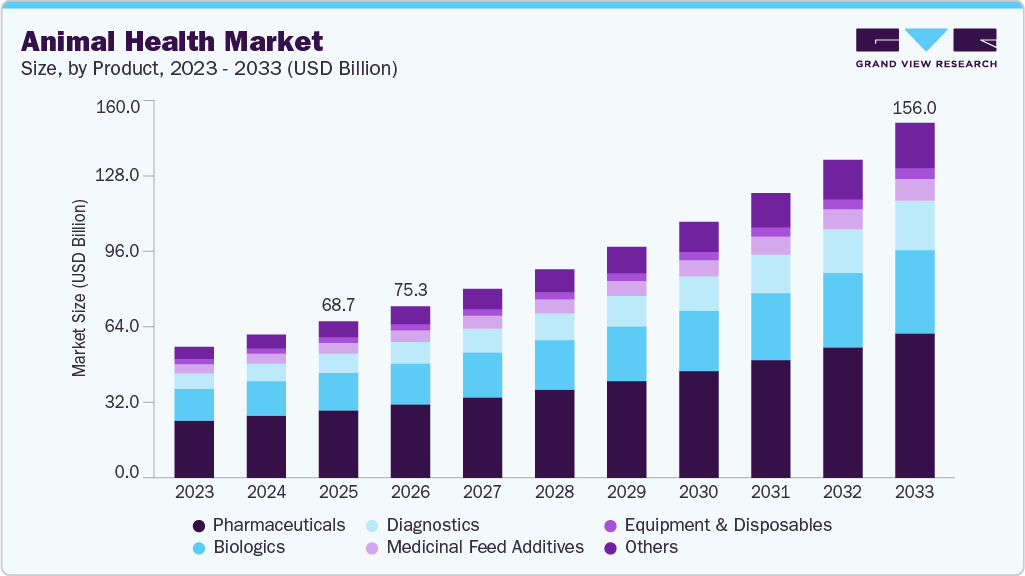
Infrastructure development is strengthening this transition. According to a February 2026 blog, academic institutions including Ross University School of Veterinary Medicine are incorporating AI-driven predictive analytics into veterinary education and clinical training. Furthermore, according to February 2026 article, national forums such as the conference hosted by Tamil Nadu Veterinary and Animal Sciences University are promoting collaboration between technology developers, veterinarians, and policymakers. Cross-border initiatives, including the India-Germany partnership reported by The Times of India in its February 2026 article are expanding research networks focused on AI-enabled veterinary solutions. In addition, in February 2026, livestock monitoring platforms such as FlockVision, developed by GD Animal Health, are applying behavior-detection algorithms to improve flock management and disease surveillance. These investments are building a data-driven ecosystem that supports scalable adoption.
Future growth opportunities are emerging across diagnostics, remote monitoring, and precision livestock management. AI-based tools are expected to expand into wearable devices, herd-level disease forecasting, and automated treatment planning. As data availability increases and cloud-based systems gain wider acceptance, veterinary practices are likely to integrate predictive models into routine workflows. This shift is positioning AI as a central growth catalyst within the global animal health industry. Such initiatives reflect a growing global focus on AI in animal health, aiming to improve animal welfare and support sustainable agricultural practices through innovative technologies.
Recent FDA Regulatory Updates for Veterinary Drugs -2026
Date
Update
18-Feb-2026
FDA issues Emergency Use Authorization for drugs to treat New World Screwworm in dogs and cats
12-Feb-2026
FDA finalizes guidance on defining durations of use for approved medically important antimicrobial drugs fed to food-producing animals
5-Feb-2026
FDA issues Emergency Use Authorization for over-the-counter injectable drug to prevent New World Screwworm in cattle
22-Jan-2026
FDA approves first generic Florfenicol and Flunixin Meglumine injection for bovine respiratory disease and associated pyrexia in beef and non-lactating dairy cattle
22-Jan-2026
FDA approves first generic Fenbendazole oral suspension dewormer for beef and dairy cattle, goats
21-Jan-2026
FDA grants full approval of a drug to control seizures in dogs with idiopathic epilepsy
16-Jan-2026
FDA grants full approval of first oral treatment for lymphoma in dogs
9-Jan-2026
FDA approves first generic drug for control of clinical signs of equine Cushing’s disease
9-Jan-2026
FDA approves first generic Robenacoxib tablet for postoperative pain and inflammation in cats
Market Concentration & Characteristics
The animal health sector shows moderate concentration at the global level, with a small group of multinational firms controlling a large revenue share across biologics, pharmaceuticals, diagnostics, and feed additives. These companies maintain broad portfolios that span production animals and companion animals, supported by established distribution networks and strong R&D spending. At the same time, the market remains structurally fragmented across animals and product niches. Poultry, swine, and cattle segments attract scale-driven players, whereas sheep, goats, and fish health feature more regional specialists. In companion animals, growth in telehealth, software, monitoring devices, and point-of-care diagnostics is drawing mid-sized and emerging firms. Retail and e-commerce channels are further lowering entry barriers, sustaining competitive intensity across categories.
Innovation intensity in the animal health sector is high and accelerating. Companies are expanding investment in AI-driven diagnostics, digital pathology, biologics, monoclonal antibodies, and precision livestock technologies. Data analytics platforms are supporting predictive disease modeling and workflow automation across clinics and farms. Integration of software with diagnostic instruments is increasing product differentiation. Continuous product upgrades and cross-disciplinary R&D collaborations are strengthening pipelines across pharmaceuticals, vaccines, monitoring systems, and veterinary software.
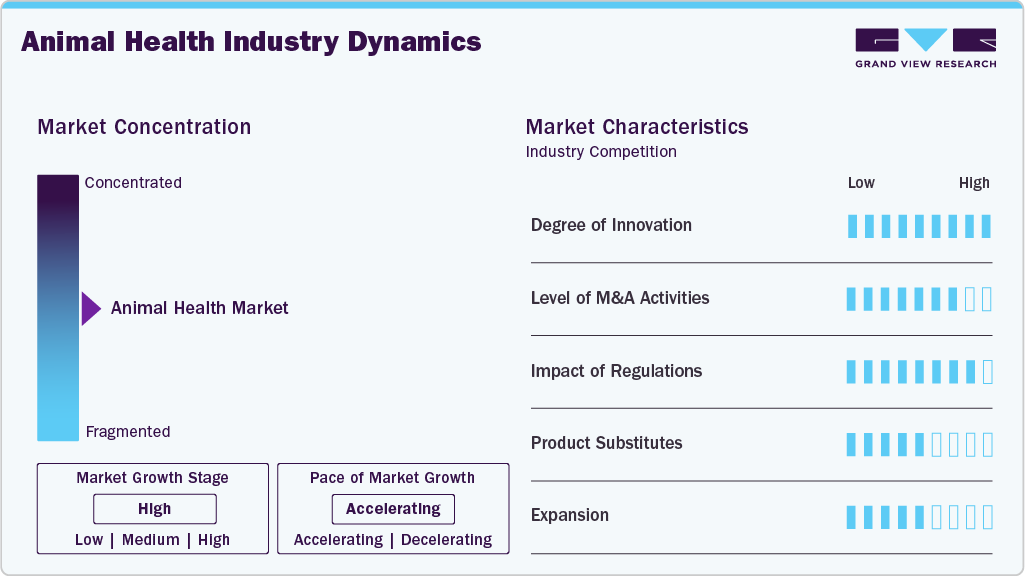
M&A intensity is moderate to high, driven by portfolio expansion and capability acquisition. Large multinational firms are targeting specialty biotech, vaccine developers, and animal health technology companies to broaden therapeutic depth and digital expertise. Transactions are strengthening geographic presence and expanding companion animal and livestock portfolios. Strategic acquisitions are reducing competitive fragmentation in selected subsegments, particularly biologics, diagnostics, and veterinary distribution networks.
Regulatory influence on the animal health sector remains high, especially for pharmaceuticals, vaccines, and biologics. Approval processes in North America and Europe involve detailed clinical evaluation, manufacturing audits, pharmacovigilance reporting, and batch release verification. Established companies benefit from experienced regulatory teams and validated global infrastructure, while emerging firms face prolonged entry timelines. Oversight is extending to digital health tools and AI-based diagnostics, including data governance, algorithm validation, and clinical performance standards. These requirements raise compliance complexity and create significant entry barriers across the market.
The threat from product substitutes in the animal health sector is moderate. At-home diagnostic kits, teleconsultation platforms, wearable devices, and wellness supplements are offering convenient alternatives for pet owners and livestock managers. Preventive nutrition, probiotics, and plant-based formulations are attracting segments seeking non-pharmaceutical options. Traditional diagnostics and therapeutics respond with bundled services, subscription-based care, and integrated platforms combining lab accuracy with digital monitoring. Substitution influences pricing strategies, product positioning, and service delivery, shaping competitive dynamics while maintaining core demand for conventional veterinary products.
Regional expansion intensity in animal health is moderate, with varying growth rates across geographies. North America and Western Europe remain mature markets supported by established veterinary infrastructure and high companion animal expenditure. Asia Pacific is accelerating adoption in livestock monitoring, farm therapeutics, and companion animal care due to rising protein demand and urbanization. Latin America shows steady progress in poultry and cattle health services, while parts of Africa are gradually improving veterinary access and disease surveillance. Infrastructure limitations in some regions moderate overall global expansion opportunities for industry players.
Product Insights
Based on products, the pharmaceutical segment dominated the market with a share of about 43.13% in 2025. This dominance persists due to ongoing innovation in veterinary drugs and broader therapeutic portfolios. Pharmaceuticals encompass anti‑infectives, anti‑inflammatories, parasiticides, and related compounds. Growing concern for disease prevention and long‑term care among pet owners, livestock producers, and animal caretakers is increasing demand. Continuous improvements in drug efficacy and safety are strengthening adoption across production and companion animals, supporting sustained segment leadership through the forecast period.
The other segment, comprising veterinary telehealth, veterinary software, and livestock monitoring solutions, is expected to grow the fastest at a CAGR of 14.4% in the near future. Digital adoption in animal care workflows has risen sharply, driven by demand for remote consultations, real‑time health tracking, and data analytics. New entrants and established providers are enhancing platforms that support virtual engagement, automated recordkeeping, and precision health insights. Increasing investment in connected diagnostics and cloud‑based veterinary systems is widening use cases and accelerating uptake across regions and animals.
Distribution Channel Insights
The hospital/clinic pharmacy segment accounted for the largest revenue share in 2025 in terms of distribution channels. The segment is driven by the growing number of veterinary hospitals and higher procedural volumes. On-site dispensing enables immediate access to prescription medicines, vaccines, and biologics during consultations. Integrated inventory management and in-clinic services enhance operational efficiency and ensure timely treatment. This convenience, combined with established trust in clinical settings, continues to support the segment’s dominant position in distribution channels.
The e-commerce segment is projected to register the fastest growth during the forecast period. E-commerce channels are expected to grow fastest due to convenience, wide product availability, and digital ordering capabilities. Online platforms allow preordering, automated restocking, and doorstep delivery, reducing dependency on intermediaries. They also improve access in remote regions and support subscription-based or bulk purchases. The efficiency and cost-effectiveness of e-commerce are attracting both pet owners and livestock producers, driving rapid adoption and accelerating growth across the veterinary pharmaceutical and product distribution landscape.
End Use Insights
By end use, the veterinary hospitals and clinics segment accounted for the largest revenue share in 2025 and is expected to continue the dominance. The extensive network of hospitals and clinics globally, combined with high patient footfall, supports strong revenue generation. These facilities offer comprehensive diagnostic and treatment services, including advanced imaging, therapeutic procedures, and vaccination programs. Certain specialized treatments and vaccines are primarily available at accredited veterinary centers, reinforcing the segment’s leading position and sustaining consistent demand from both companion and production animal owners.
The point-of-care testing/in-house testing segment, on the other hand, is projected to grow at the fastest CAGR from 2026 to 2033. Rising incidences of zoonotic and emerging animal diseases are increasing the demand for rapid, on-site diagnostic procedures. Awareness campaigns highlighting preventive care and early disease detection among pet owners and livestock managers are boosting adoption. Tests such as ELISA, lateral flow assays, and portable molecular diagnostics are increasingly used for heartworm, parvovirus, and other routine screenings, supporting expansion of in-house testing solutions across clinics and farms.
Animal Insights
In 2025, the production animal segment continues to hold the largest revenue share in the animal health industry. Its dominance is driven by rising awareness of food safety, sustainability, and animal welfare among farmers, regulators, and healthcare organizations. Modern livestock operations are increasingly adopting precision farming techniques, biosecurity protocols, and structured preventive programs, including routine vaccinations and health monitoring. These practices improve herd productivity, reduce disease outbreaks, and enhance product quality, sustaining strong demand for veterinary pharmaceuticals and biologics, which supports the segment’s continued market leadership throughout the forecast period.
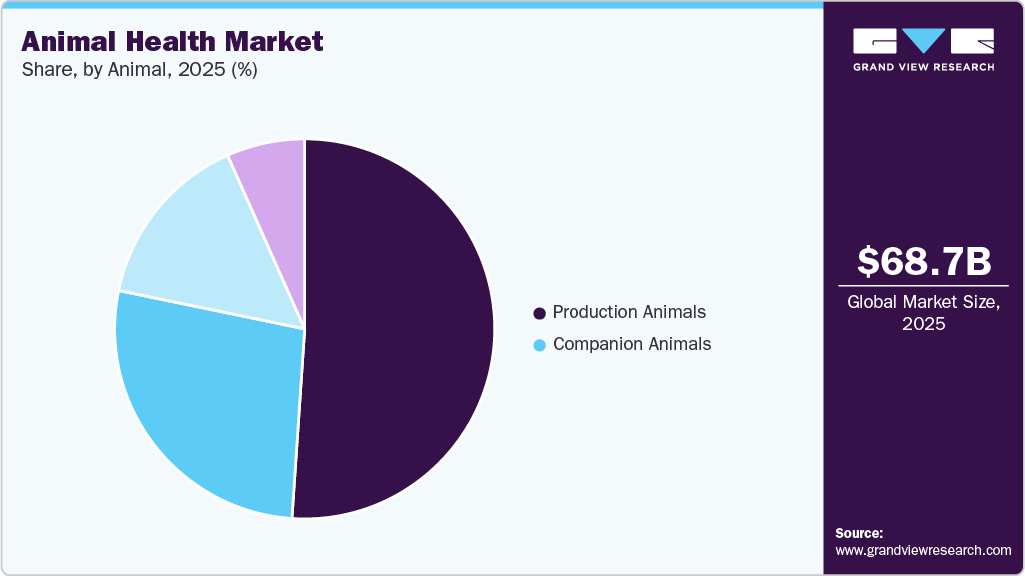
The companion animal segment is projected to register the fastest CAGR during the forecast period. Growth is driven by increasing pet ownership, higher medicalization rates, and spending patterns influenced by pet humanization trends. Pet owners are prioritizing preventive care, advanced diagnostics, and pharmaceutical treatments to maintain animal health and longevity. Rising interest in pet insurance and willingness to invest in premium veterinary services are further fueling demand. This combination of behavioral, economic, and healthcare factors is expected to drive rapid expansion in the companion animal segment globally.
Regional Insights
North America animal health industry held the largest share of about 36% in 2025. The dominant share can be attributed to the high prevalence of livestock and zoonotic diseases leading to large-scale animal deaths. In addition, the presence of prominent market players, advanced healthcare infrastructure, and high healthcare expenditure are some of the factors responsible for the significant share. Furthermore, the presence of healthcare programs and initiatives to promote animal health is believed to widen the growth potential in this region. For instance, the North American Pet Health Insurance Association is promoting awareness about pet health insurance coverage and developing & exploring partnerships to address the challenges affecting the animal health industry. Efficient measures taken by animal welfare organizations in the event of an emergency or rapid illness breakout are also thought to be significant causes for growth in this region.
U.S. Animal Health Market Trends
The animal health industry in the U.S. held the dominant share in the North American market in 2025. The dominant share can be attributed to a wide range of definitive measures adopted by the government animal care organizations consistently striving for overall improvement. For instance, the presence of Animal Health Emergency Management (AHEM) is aimed at ensuring food security and concentrates on aspects associated with animal products such as quality, safety, and affordability. In addition, these organizations also focus on the prevention of pathogenic agents, and management of sudden disease outbreaks and are involved in formulating strategies for efficient eradication and control of the disease.
Europe Animal Health Market Trends
The animal health industry in Europe held the second-largest share in 2025 and is expected to maintain steady growth over the forecast period. The region’s high population of production and companion animals drives consistent demand for pharmaceuticals, biologics, and preventive care solutions. Regulatory authorities are implementing initiatives to improve access to vaccines, streamline approval processes, and strengthen disease surveillance programs. Increasing awareness of animal welfare, preventive care, and public health considerations among farmers, pet owners, and veterinary professionals is expected to further support the adoption of veterinary products and services across Europe.
The UK animal health industry held the largest share in Europe in 2025. High rates of pet ownership and growing adoption are driving demand for companion animal healthcare services, preventive care, and pharmaceuticals. Pet owners are increasingly prioritizing health monitoring, diagnostics, and advanced veterinary treatments, while interest in pet insurance and wellness programs continues to grow. These factors, combined with rising awareness about preventive care and responsible pet ownership, are contributing to steady expansion of the UK animal health industry across pharmaceuticals, diagnostics, veterinary services, and preventive solutions.
The animal health industry in Germany is anticipated to grow at a steady pace during the forecast period. Strong livestock populations and increasing companion animal adoption drive demand for both production and pet health solutions. Investments in R&D, introduction of new products, and growing adoption of preventive care practices support market expansion. Awareness of animal welfare, herd health management, and disease prevention among farmers, veterinarians, and pet owners is increasing. These dynamics, combined with regulatory support and advanced veterinary infrastructure, are expected to sustain long-term growth in the German animal health industry.
Asia Pacific Animal Health Market Trends
The animal health industry in Asia Pacific is expected to grow at a lucrative CAGR during the forecast period. Market expansion is driven by rising investments in R&D by global and regional players, along with efforts to commercialize veterinary pharmaceuticals and vaccines at competitive prices. Increasing incidences of zoonotic diseases, livestock outbreaks, and public health concerns are prompting demand for preventive and therapeutic solutions. Rapid economic growth, changing food consumption patterns, and expansion of modern livestock farming are also supporting the adoption of advanced animal health products and veterinary services across the region.
The India animal health industry is witnessing robust growth, supported by rising awareness of animal welfare, disease prevention, and responsible veterinary care. Regulatory initiatives promoting prudent use of antibiotics and encouraging preventive health practices are shaping market dynamics. Investments in research, new product development, and portfolio expansion are strengthening the availability of veterinary pharmaceuticals, biologics, and diagnostic solutions. Increasing livestock populations, rising companion animal ownership, and demand for cost-effective, high-quality veterinary services are expected to drive continued adoption and growth across India’s animal health sector.
Latin America Animal Health Market Trends
The animal health industry in Latin America is expected to show growth over the forecast period owing to increasing reforms in the healthcare industry in this region. The rising incidence of chronic livestock diseases is a factor driving market growth. Furthermore, the rise in supportive government funding in countries such as Brazil is another contributing factor. The presence of untapped opportunities, economic development, and rising awareness levels are some of the factors that can account for the rapid growth of this region. Agriculture is an extensive practice in the region, and, as a result, animal husbandry practices are being increasingly adopted, which supports market growth.
Brazil animal health industry accounts for a higher revenue share in the region. This can mainly be attributed to the high number of pet owners in the country. Brazil has the exclusive distinction of having the greatest variety of animals—more than any country across the globe. The consumption of feed in the country is very high as it is a center for meat production worldwide.
Middle East & Africa Animal Health Market Trends
The animal health industry in the Middle East & Africa is anticipated to grow steadily during the forecast period. Rising incidences of infectious diseases, including influenza and viral outbreaks, along with increasing awareness of animal welfare, are driving demand for preventive and therapeutic solutions. Limited availability of effective treatments in certain regions is encouraging adoption of veterinary pharmaceuticals, vaccines, and diagnostics. Growing meat consumption, higher demand for protein-rich foods, and initiatives to improve livestock productivity are further supporting market expansion across both production and companion animals in MEA countries.
The South Africa animal health industry is expected to grow at a significant pace during the forecast period. Government programs focused on improving veterinary services, herd health, and preventive care are strengthening the sector. High livestock dependence for national income, growing poultry and meat production, and awareness of disease control measures are contributing to increased adoption of veterinary pharmaceuticals and vaccines. Investments in biosecurity, farm-level health monitoring, and modern veterinary infrastructure are expanding access to care and supporting overall growth in the South African animal health industry.
Key Animal Health Company Insights
The animal health industry is highly fragmented and competitive, with numerous players operating across pharmaceuticals, biologics, diagnostics, and related solutions. Companies that excel in product innovation, regulatory compliance, strategic decision-making, and market understanding maintain a stronger position and capture significant share. Market presence is influenced by product penetration, geographic coverage, portfolio diversity, and financial performance. Leading firms offer comprehensive veterinary solutions that address a wide range of companion and production animal needs, allowing them to strengthen customer trust and loyalty. Strategic initiatives such as market expansion, acquisitions, and development of advanced technologies further enhance competitiveness. Overall, established and innovative companies are better positioned to capitalize on growth opportunities in this dynamic and evolving industry.
Key Animal Health Companies:
The following key companies have been profiled for this study on the animal health market.
- Zoetis
- Ceva Santé Animale
- Merck & Co., Inc.
- Vetoquinol S.A.
- Boehringer Ingelheim Gmbh
- Elanco
- Virbac
- Mars Inc.
- Dechra Pharmaceuticals Plc
- Idexx Laboratories, Inc.
Recent Developments
-
In February 2026, Zenex Animal Health has acquired a majority stake in Netherlands‑based VievePharm, a specialist in natural animal nutrition, to accelerate its expansion into the sector. The deal establishes a dedicated manufacturing and sales hub for Zenex in Western Europe and provides access to VievePharm’s EU distribution network for its therapeutic and nutritional products.
-
In February 2026, Covetrus and MWI Animal Health agreed to an all‑share plus cash merger valued at about USD 3.5 billion, combining Covetrus’ technology‑enabled veterinary solutions with MWI’s strong supply‑chain and distribution capabilities in companion and production‑animal health
-
In February 2026, Mars’ Mars Impact Fund committed USD 726,000 to Humane World for Animals to expand veterinary care, sterilisation, and rabies‑vaccination services across India, including setting up the country’s first dedicated National Animal Birth Control Training Centre in Lucknow.
-
In February 2026, the U.S. FDA has approved NUMELVI (atinvicitinib) tablets from Merck Animal Health, a second‑generation JAK1‑inhibitor and the first and only treatment approved for controlling pruritus associated with allergic dermatitis in dogs six months of age and older, with U.S. availability expected in veterinary clinics in spring 2026.
Animal Health Market Report Scope
Report Attribute
Details
Market size value in 2026
USD 75.3 billion
Revenue forecast in 2033
USD 156.0 billion
Growth rate
CAGR of 11.0% from 2026 to 2033
Actual data
2021 - 2025
Base Year
2025
Forecast period
2026 - 2033
Quantitative units
Revenue in USD million/billion and CAGR from 2026 to 2033
Report coverage
Revenue forecast, company ranking, competitive landscape, growth factors, and trends
Segments covered
Product, distribution channel, animal, end use
Regional scope
North America; Europe; Asia Pacific; Latin America; MEA
Country scope
U.S.; Canada; Mexico; UK; Germany; France; Italy; Spain; Denmark; Sweden; Russia; Ireland; Norway; Netherlands; Switzerland; Poland; Japan; China; India; Australia; Thailand; South Korea; Philippines; Malaysia; Singapore; Indonesia; Brazil; Argentina; Colombia; South Africa; Saudi Arabia; UAE; Kuwait; Turkey; Egypt; Iran; Israel; Oman; Qatar
Key companies profiled
Zoetis; Ceva Santé Animale; Merck & Co., Inc.; Vetoquinol S.A.; Boehringer Ingelheim GmbH; Elanco; Virbac; Mars Inc.; Dechra Pharmaceuticals plc; IDEXX Laboratories, Inc.
Customization scope
Free report customization (equivalent up to 8 analysts working days) with purchase. Addition or alteration to country, regional & segment scope.
Pricing and purchase options
Avail customized purchase options to meet your exact research needs. Explore purchase options
Global Animal Health Market Report Segmentation
This report forecasts revenue growth at global, regional, and country levels and provides an analysis of the latest industry trends in each of the sub-segments from 2021 to 2033. For this study, Grand View Research has segmented the global animal health market report based on product, animal, distribution channel, end use, and region.
-
Animal Outlook (Revenue, USD Million, 2021 - 2033)
-
Production Animals
-
Poultry
-
Swine
-
Cattle
-
Sheep & Goats
-
Fish
-
-
Companion Animals
-
Dogs
-
Cats
-
Horses
-
Others
-
-
-
Product Outlook (Revenue, USD Million, 2021 - 2033)
-
Biologics
-
Vaccines
-
Modified/ Attenuated Live
-
Inactivated (Killed)
-
Other Vaccines
-
Other Biologics
-
-
Pharmaceuticals
-
Parasiticides
-
Anti-infectives
-
Anti-inflammatory
-
Analgesics
-
Others
-
-
-
Medicinal Feed Additives
-
Diagnostics
-
Consumables, reagents and kits
-
Instruments and devices
-
-
Equipment & Disposables
-
Critical Care Consumables
-
Anesthesia Equipment
-
Fluid Management Equipment
-
Temperature Management Equipment
-
Rescue & Resuscitation Equipment
-
Research Equipment
-
Patient Monitoring Equipment
-
-
Others
-
Veterinary Telehealth
-
Veterinary Software
-
Livestock Monitoring
-
-
-
Distribution Channel Outlook (Revenue, USD Million, 2021 - 2033)
-
Retail
-
E-Commerce
-
Hospital/ Clinic Pharmacy
-
-
End Use Outlook (Revenue, USD Million, 2021 - 2033)
-
Veterinary Reference Laboratories
-
Point-of-care Testing/In-house Testing
-
Veterinary Hospitals & Clinics
-
Others
-
-
Regional Outlook (Revenue, USD Million, 2021 - 2033)
-
North America
-
U.S.
-
Canada
-
Mexico
-
-
Europe
-
UK
-
Germany
-
France
-
Italy
-
Spain
-
Netherlands
-
Switzerland
-
Sweden
-
Denmark
-
Norway
-
Russia
-
Ireland
-
Poland
-
Rest of Europe
-
-
Asia Pacific
-
Japan
-
China
-
India
-
Indonesia
-
Thailand
-
Australia
-
South Korea
-
Philippines
-
Malaysia
-
Singapore
-
Rest of Asia Pacific
-
-
Latin America
-
Brazil
-
Argentina
-
Colombia
-
Rest of Latin America
-
-
Middle East & Africa
-
South Africa
-
Saudi Arabia
-
Turkey
-
UAE
-
Kuwait
-
Egypt
-
Iran
-
Israel
-
Qatar
-
Oman
-
Rest of MEA
-
-
Frequently Asked Questions About This Report
b. Key factors that are driving the animal health market growth include rising animal health expenditure, the increasing inculcation of Artificial Intelligence (AI), evolving regulatory scenario, prevalence of diseases in animals, concerns over zoonoses, initiatives by key companies, uptake of pet insurance, and pet humanization.
b. The global animal health market size was estimated at USD 68.7 billion in 2025 and is expected to reach USD 75.3 billion in 2026.
b. The global animal health market is expected to grow at a compound annual growth rate of 11% from 2026 to 2033 to reach USD 156.0 billion by 2033.
b. By region, North America held the highest share of about 36% of the market in 2025. The dominant share can be attributed to the high prevalence of livestock and zoonotic diseases leading to large-scale animal deaths. In addition, the presence of prominent market players, advanced healthcare infrastructure, and high healthcare expenditure are some of the factors responsible for the significant share.
b. Some key players operating in the animal health market include Zoetis; Ceva Santé Animale; Merck & Co., Inc.; Vetoquinol S.A.; Boehringer Ingelheim GmbH; Elanco; Virbac; Mars Inc.; Dechra Pharmaceuticals plc; and IDEXX Laboratories, Inc.


Share this report with your colleague or friend.
Need a Tailored Report?
Customize this report to your needs — add regions, segments, or data points, with 20% free customization.


ISO 9001:2015 & 27001:2022 Certified
We are GDPR and CCPA compliant! Your transaction & personal information is safe and secure. For more details, please read our privacy policy.
Trusted market insights - try a free sample
See how our reports are structured and why industry leaders rely on Grand View Research. Get a free sample or ask us to tailor this report to your needs.