- Home
- »
- Animal Health
- »
-
Veterinary Medicine Market Size, Industry Report, 2033GVR Report cover
![Veterinary Medicine Market Size, Share & Trends Report]()
Veterinary Medicine Market (2026 - 2033) Size, Share & Trends Analysis Report By Product (Biologics, Pharmaceuticals), By Animal, By Route Of Administration, By Drug Type, By Distribution Channel, By Region, And Segment Forecasts
- Report ID: GVR-3-68038-885-5
- Number of Report Pages: 150
- Format: PDF
- Historical Range: 2021 - 2025
- Forecast Period: 2026 - 2033
- Industry: Healthcare
- Report Summary
- Table of Contents
- Segmentation
- Methodology
- Download FREE Sample
-
 Download Sample Report
Veterinary Medicine Market Summary
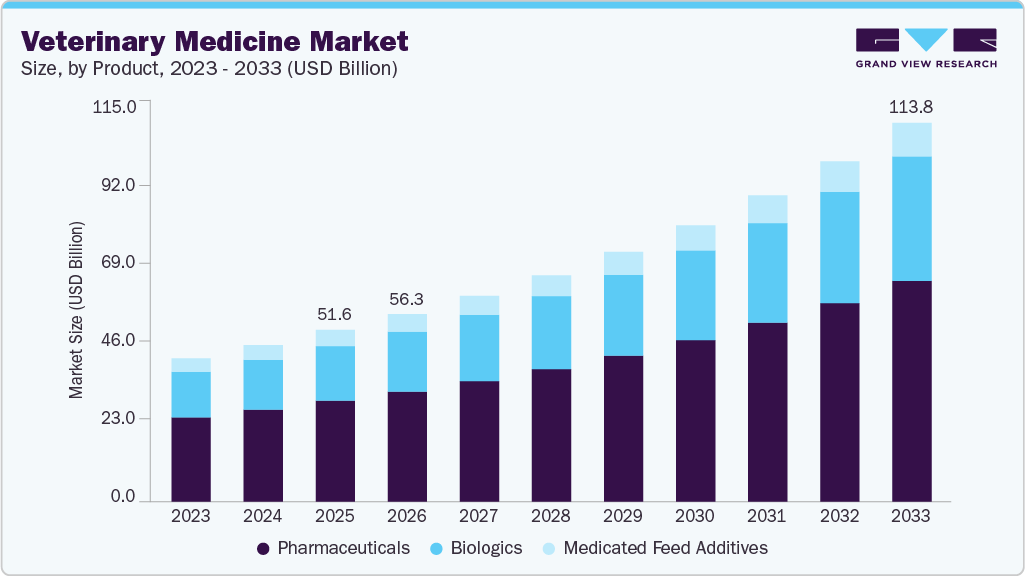
The global veterinary medicine market size was estimated at USD 51.56 billion in 2025 and is projected to reach USD 113.80 billion by 2033, growing at a CAGR of 10.57% from 2025 to 2033. The market is propelling due to rising livestock population and increasing pet ownership rates, increasing number of zoonotic & chronic diseases, rising R&D and procedural advancements and increasing consumption of meat and mandatory vaccination.
Key Market Trends & Insights
- North America veterinary medicine market held the largest revenue share of 35.90% in 2025.
- U.S. dominated the North America region with largest revenue share in 2025.
- By product, pharmaceuticals segment held the largest share of 58.77% of the market in 2025.
- By animal, production animals segment held largest in the market in 2025.
- Based on route of administration, injectable segment held the largest market share in 2025.
Market Size & Forecast
- 2025 Market Size: USD 51.56 Billion
- 2033 Projected Market Size: USD 113.80 Billion
- CAGR (2026-2033): 10.57%
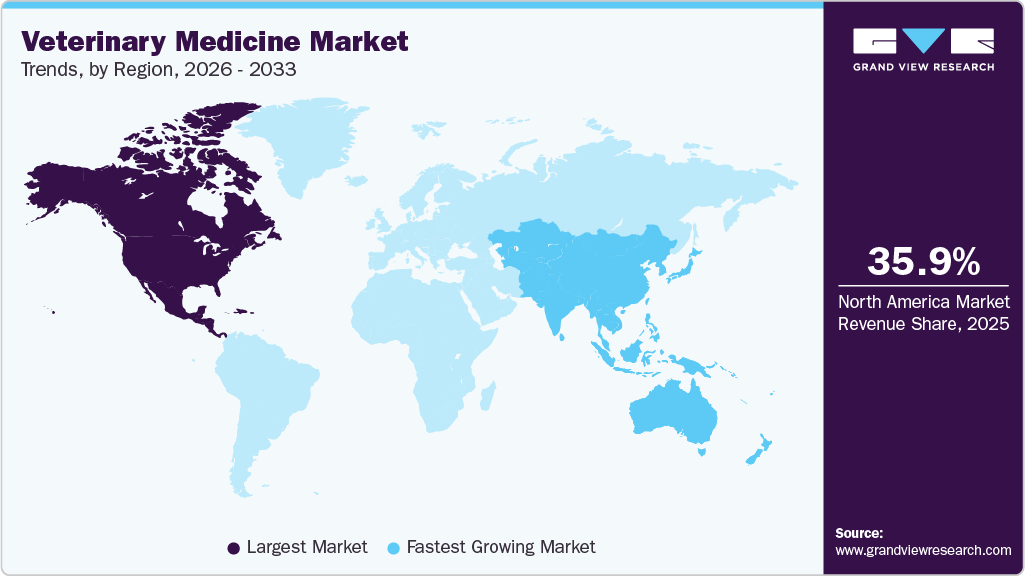
- North America : Largest market in 2025
- Asia Pacific : Fastest growing market
Global livestock populations and companion-animal ownership are expanding rapidly, driving demand for veterinary medicine. According to USDFDA report published in October 2025, in U.S., cattle and calves total accounted for approximately 94.2 million, whereas India’s livestock population reached over 535 million in 2019, with significant increases in sheep, goats, and dairy animals. This growth supports herd health management, reproductive monitoring, and preventive care. Similarly, pet ownership is surging worldwide; in the U.S., 71% of households own pets, with an estimated 471 million dogs and 373 million cats globally. Thus, this rising herd and pet numbers increase veterinary visits, preventive treatments, diagnostics, and wellness spending, fueling sustained growth in the veterinary medicine market across companion and production animals.In addition, rising prevalence of zoonotic and chronic diseases is boosting veterinary pharmaceutical and vaccine demand. Outbreaks of avian influenza, foot-and-mouth disease, and antimicrobial-resistant infections threaten livestock production, human health, and trade, highlighting the need for preventive interventions. Besides this, according to the October 2025 article by Hepper, companion animals are being affected by chronic conditions such as obesity, diabetes, kidney disease, and osteoarthritis, with up to 63% of cats and 30% of dogs overweight or obese. Hence, pet owners’ growing concern over health outcomes is driving higher expenditure on treatment, management, and preventive care. Thus, veterinary medicine adoption is accelerating globally, with vaccines, anti-infectives, and therapeutic solutions becoming critical for livestock and companion-animal health.
Furthermore, rising global meat consumption is increasing demand for livestock production and animal health interventions. The annual meat intake exceeds 350 million tons around the globe, with growth driven by Asia, Africa, and Latin America, particularly China. Expanding herds and flocks require effective disease prevention, prompting higher usage of vaccines, anti-infectives, and recombinant biological products. Many countries mandate routine vaccination of cattle and poultry to prevent foodborne illnesses. In addition, rising meat demand, coupled with antibiotic-free production trends, strengthens the need for animal health solutions that maintain herd productivity and biosecurity.
Moreover, veterinary vaccines and pharmaceuticals market is strongly innovation-driven, creating substantial growth opportunities, particularly in biologics. Some of the advancements in vaccine banks, laboratory networks, and veterinary health information systems are enhancing disease surveillance and response capabilities. Besides this, initiatives such as the Innovative Medicines Initiative (IMI) promote collaborative pharmaceutical research in Europe, whereas projects like MediLabSecure strengthen pathogen monitoring across Mediterranean and Black Sea regions. In addition, improved data sharing, laboratory integration, and communication systems are accelerating innovation, regulatory coordination, and product development, thereby supporting sustained market expansion.
Impact of Tariffs on Veterinary Practices
Impact Dimension
Independent Veterinary Practices
Corporate / Consolidated Veterinary Chains
Input cost exposure
High exposure on a per-unit basis. Independents purchase smaller volumes and face limited negotiating leverage, so tariff-driven cost increases quickly into operating expenses.
Lower per-unit exposure through scale purchasing and centralized procurement. Tariffs still raise total spend but are partially cushioned through volume contracts.
Pricing power
Limited pricing flexibility. Fee increases risk client attrition, deferred care, or lower visit frequency, especially in price-sensitive markets.
Greater pricing discipline and ability to spread increases across services, regions, or bundled care models.
Service fee translation
Tariff effects tend to translate directly into higher consultation fees, diagnostics, and medication mark-ups over time. Absorption capacity is limited.
Tariff impact is often diluted across a broader service mix. Price adjustments may appear slower but are applied more systematically.
Supply risk
Higher vulnerability to shortages of tariff-affected drugs and consumables. Limited ability to secure alternate suppliers on short notice.
Greater resilience through multi-supplier frameworks and inventory pooling across locations.
Margin absorption capacity
Thin margins restrict the ability to absorb sustained tariff-driven cost inflation. Profitability erosion is immediate.
Higher margin buffers and cross-practice cost sharing allow partial absorption, delaying visible price escalation.
Market Concentration & Characteristics
The veterinary medicine market is moderately concentrated, with competitive intensity remaining high among established multinational corporations. While consolidation among top-tier players continues through acquisitions and strategic alliances, the market also features numerous regional and mid-sized firms that compete through specialized offerings, localized manufacturing, and cost-focused strategies. However, emerging regional manufacturers and generics producers are gradually intensifying price competition, particularly in developing markets where affordability and localized distribution networks are critical.
The veterinary medicine industry demonstrates a high degree of innovation, particularly in biologics, recombinant vaccines, long-acting injectables, precision parasiticides, and advanced drug-delivery platforms. Companies are investing in sustained-release technologies, monoclonal antibodies, immunotherapies, and digital diagnostic tools that enhance treatment outcomes and compliance. For instance, in November 2025, Zoetis launched Vanguard Recombishield, a recombinant pertactin-based Bordetella vaccine for dogs, enhancing comfort and immune response, strengthening product innovation dominance in the market.
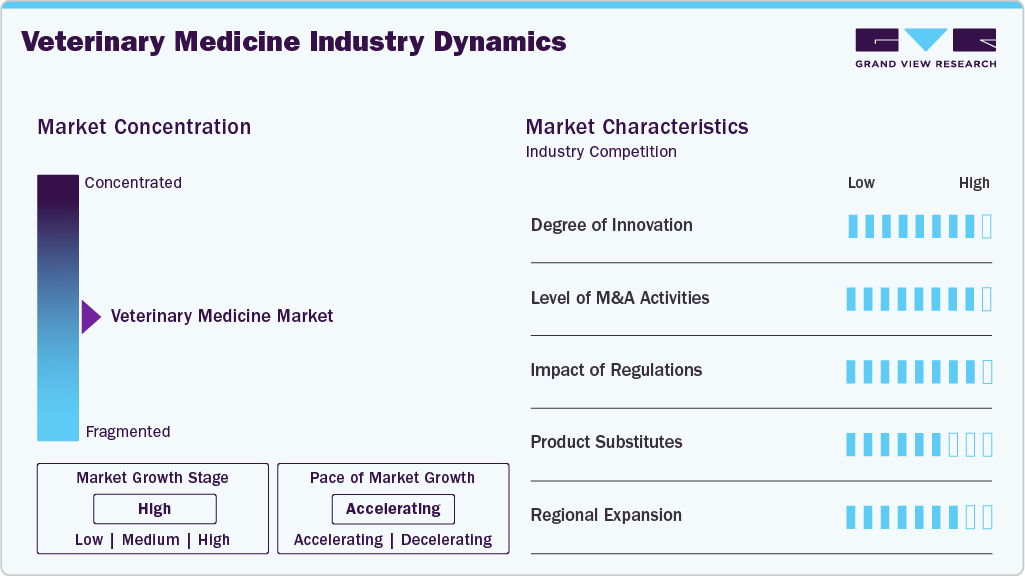
The veterinary medicine industry demonstrates a high degree of innovation, particularly in biologics, recombinant vaccines, long-acting injectables, precision parasiticides, and advanced drug-delivery platforms. Companies are investing in sustained-release technologies, monoclonal antibodies, immunotherapies, and digital diagnostic tools that enhance treatment outcomes and compliance. In addition, vertical integration strategies, including investments in API production and localized manufacturing, help manage cost volatility and regulatory risks.
Regulatory frameworks significantly influence veterinary medicine, ensuring product safety, efficacy, and quality. Strict approval processes for vaccines, biologics, and pharmaceuticals require extensive clinical validation, quality control, and pharmacovigilance compliance, increasing development timelines and capital intensity. Compliance with regional guidelines, such as USDA, EMA, and CDSCO, affects product labeling, dosage, and distribution.
The presence of substitutes in the veterinary medicine market remains relatively low to moderate, particularly for essential vaccines and regulated biologics where therapeutic equivalence is limited. However, alternatives such as nutraceuticals, probiotics, phytonutrients, herbal remedies, and functional feed additives are gaining popularity as preventive or complementary solutions, especially in livestock systems emphasizing antibiotic reduction and sustainability.
Geographic expansion is a key growth strategy, as companies target emerging markets in Asia Pacific, Latin America, and Africa. Besides this, rising livestock populations, growing pet ownership, and increased veterinary spending drive regional demand. Global players establish subsidiaries, joint ventures, and distribution networks to enhance accessibility, comply with local regulations, and customize products to regional disease profiles, strengthening market penetration and long-term revenue growth.
Product Insights
On the basis of product, pharmaceuticals segment dominated the market with largest revenue share of 58.77% in 2025. The segment is comprised of anti-inflammatories, parasiticides, antibiotics, and other drugs. The segment is driven by rising incidences of zoonotic and food-borne diseases, which create clinical demand for targeted therapies. Increasing companion animal ownership further boosts adoption as owners seek to extend pet longevity. A highly competitive landscape with numerous market players stimulates innovation, whereas growing funding initiatives accelerate R&D. For instance, in January 2025, the AVMF and VPRF awarded over USD 59,000 in research grants to develop and evaluate novel therapeutics, enhancing drug efficacy, safety, and adoption, thereby driving overall growth in the veterinary pharmaceuticals segment.
The biologics segment is growing with the fastest CAGR over the forecast period, driven by rising companion animal populations and the increasing demand for preventive healthcare through vaccines. Some of the key companies such as Merck & Co., Boehringer Ingelheim, Zoetis, Virbac, and Ceva offer vaccines for numerous companion and livestock diseases, fueling market expansion. Besides this, advances in manufacturing and supply chains further support growth; for instance, in August 2024, Elanco invested USD 130 million to expand its Kansas biologics facility by 25,000 sq ft, boosting monoclonal antibody production for canine parvovirus and enabling development of new therapies.
Animal Insights
On the basis of animal, production animal segment dominated with largest revenue share in 2025, driven by growing focus on food safety, sustainability, and evidence-based livestock health management. This segment includes poultry, pigs, cattle, sheep & goats and other production animals. Some institutions such as the University of Helsinki, in collaboration with Helsinki One Health, enhances disease prevention, diagnostics, and treatment effectiveness advancing research. In addition, rising global demand for animal protein, particularly in emerging economies, increases livestock production and healthcare spending. For instance, according to an article published by USDA in July 2025, in U.S., farm expenditures rose from USD 452.5 billion in 2022 to USD 477.6 billion in 2024, enabling greater investment in vaccines, pharmaceuticals, reproductive technologies, and herd-health solutions, boosting market growth.
The companion animal segment is projected to grow fastest in the market, driven by rising pet ownership, awareness, and demand for quality care. According to the APPA, by end of 2025, around 94 million U.S. households are expected to own pets, reflecting their health and psychological benefits. In addition, increased adoption encourages spending on preventive and therapeutic care. Furthermore, expanding availability of canine and feline pharmaceuticals, supported by robust R&D pipelines, further propels growth. For instance, in 2024, Elanco launched Zenrelia for canine dermatitis, and Dechra introduced Furosoral for fluid retention in cats and dogs, demonstrating the focus on innovative treatments and improved pet health outcomes.
Route Of Administration Insights
On the basis of route of administration, injectable segment held the largest revenue share in 2025, owing to its rapid absorption, immediate onset, and suitability for acute and chronic treatments. Injectables are ideal for antibiotics, vaccines, anesthetics, biologics, and long-acting formulations that maintain consistent drug levels, improving compliance in large herds or hard-to-handle animals. In companion animals, therapies such as Zoetis’ Cytopoint for canine atopic dermatitis and long-acting pain relievers have gained momentum for convenience and sustained efficacy. In addition, widespread immunization programs in poultry, cattle, and pets further drive demand, making injectables the preferred choice across veterinary applications.
The other routes include inhalational route and controlled release implant represents the fastest growing in the market over the forecast period with highest CAGR, driven by increasing availability of products and growing adoption of alternative modes of delivery by livestock farmers & parents. The inhalation route of administration is increasingly contributing to veterinary medicine market growth due to its ability to deliver fast, targeted, and non-invasive treatment for respiratory conditions, one of the most prevalent health issues in both companion animals and livestock. This growing need is driving pharmaceutical innovation, leading to the development of specialized veterinary inhalers, nebulization systems, and aerosolized medications. For instance, metered-dose inhalers and nebulizers explicitly designed for cats and horses have enabled more effective long-term management of asthma and airway inflammation
Drug Type Insights
On the basis of drug type, branded segment dominated the market in 2025, supported by early innovation, regulatory exclusivity, and strong veterinarian trust. Originator firms invested extensively in clinical trials, species-specific approvals, and long-term safety validation, reinforcing prescribing loyalty across companion and livestock segments. Besides this, established field networks, education initiatives, and premium positioning further strengthened market control, while strict regulatory pathways limited rapid generic entry and preserved pricing power. In addition, branded companies will sustain leadership through focus on complex biologics, long-acting formulations, advanced delivery systems, and digital integration, leveraging diversified sourcing and manufacturing scale to withstand tariff and cost pressures.
The generic veterinary medicines segment is projected to register the fastest CAGR during the forecast period, driven by rising cost sensitivity among pet owners and livestock producers. Patent expiries of widely used molecules and streamlined bioequivalence pathways have expanded entry opportunities for manufacturers. Besides this, veterinarians prescribe labeled generics in large numbers for routine and chronic therapies, particularly in herd-level disease management where clinical differentiation is minimal. In addition, economic pressures, tighten farm margins, and expanding pet populations in emerging markets favor lower-priced alternatives. Furthermore, regional manufacturing, distribution partnerships, and localized API sourcing strengthen competitiveness.
Distribution Channel Insights
On the basis of distribution channel, hospitals and clinics constituted the largest revenue segment in 2025. They offer a wide range of advanced veterinary treatment services, including prescribed medications, to ensure the most effective treatment for pet owners. Veterinary clinics are crucial for pet healthcare, as they help pet owners understand the proper dosage of medicine and receive timely diagnoses. As most medicine brands require mandatory veterinary observation before use, admission rates in veterinary clinics have increased significantly. For instance, some famous dog dewormer brands, such as Panacur and Safe-Guard by Merck & Co., Inc., require a standard veterinary prescription before use.
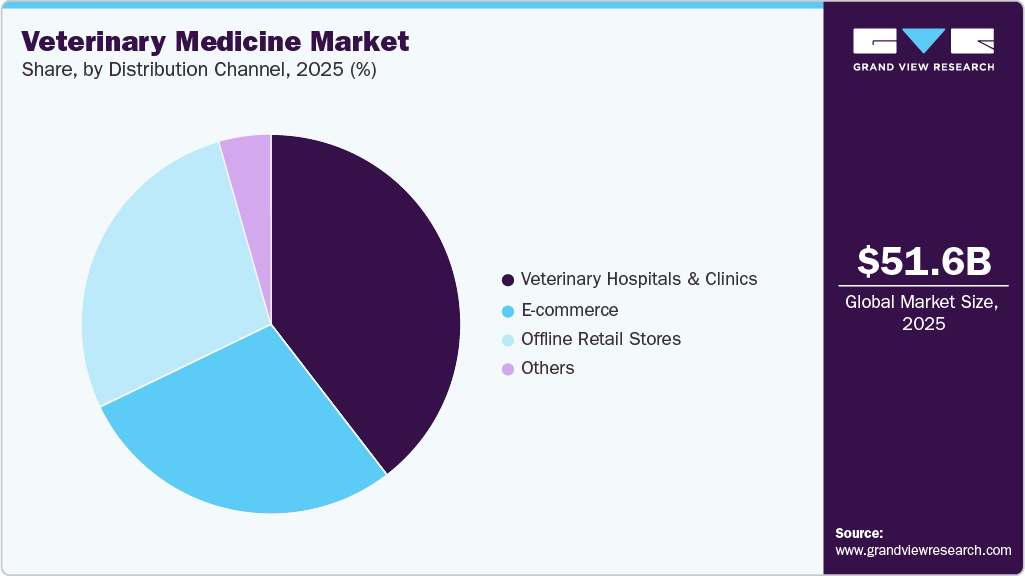
E-commerce segment is expected to grow at the fastest CAGR over the forecast period. The increasing pet ownership, growing expenditure on pet healthcare, rising significance of pet pharmaceuticals, and increasing preference for convenient ordering of veterinary medications on online websites have contributed to the rapid growth of e-commerce platforms. Moreover, e-commerce offers competitive pricing, accessibility to a wide range of product selections, and discounts, saving the time & effort of consumers compared to traditional in-person shopping. It also provides detailed information on manufacturers and the source & quality of medications. Likewise, the ease of access to veterinary medicines in rural or remote areas drives the segment growth.
Regional Insights
North America dominated the market with largest revenue share of 35.90% in 2025.The market is driven by rising pet ownership, increasing concerns around zoonotic and emerging diseases, innovation in pharmaceuticals and vaccines, and a shift toward preventive and sustainable animal care. The U.S., Canada, and Mexico are all contributing significantly to this momentum through strategic partnerships, investments, and regulatory advancements that enhance both livestock and companion animal health.
Furthermore, the ongoing healthcare programs and initiatives aimed at promoting animal health are expected to widen the growth potential in this region. For instance, the North American Pet Health Insurance Association is promoting awareness about pet health insurance coverage and developing & exploring partnerships to address the challenges affecting the veterinary medicine industry
U.S. Veterinary Medicine Market Trends
The veterinary medicine market in the U.S. accounted for the highest market share in the North America market, owing to rising pet adoption, innovation in companion animal drugs, and increasing livestock production. Higher meat and milk consumption concerns over food-borne diseases and growing pet chronic conditions such as diabetes are boosting demand. In addition, advancements in diagnostics, personalized treatments, and strong industry presence further support growth. Furthermore, initiatives from organizations such as Petco Love and Blue Buffalo contributing USD 20 million to pet cancer research continue to strengthen market development.
The Canada veterinary medicine market is expected to grow at a significant CAGR during the forecast periodpropelled by large pet population, rising disease incidence, strong veterinary services, and ongoing vaccine innovation. Key efforts include a 2025 multivalent PED vaccine project co-funded by Swine Cluster 4 partners to lower costs and expand protection. In addition, the University of Saskatchewan’s new Streptococcus zooepidemicus vaccine addresses a previously unmet need, reducing antimicrobial use and supporting swine health. These advancements strengthen Canada’s livestock sector and enhance long-term industry competitiveness.
Europe Veterinary Medicine Market Trends
The veterinary medicine market in Europe is expected to drive market growth due to growing pet insurance uptake, rising pet ownership, and increasing demand for advanced veterinary care and pharmaceuticals. According to FEDIAF 2024, 50% of European households own pets, supporting sustained market growth. Chronic conditions in pets, including trauma, obesity, and joint disorders, further fuel demand for treatments and surgeries. Furthermore, regulatory support also strengthens the market. In 2024, the European Medicines Agency approved 25 veterinary medicines the highest annual total including two with novel active ingredients, enhancing therapeutic innovation across the region.
The veterinary medicine market in UK is expected to grow significantly over the forecast period. The market is characterized by rising pet ownership, higher spending on companion animal care, and increasing infectious disease prevalence. Bovine Viral Diarrhoea Virus remains a major economic burden, with vaccines such as Bovela supporting disease control. Market growth is further boosted by industry innovation, such as MSD Animal Health’s April 2025 launch of BRAVECTO TriUNO, a monthly chew offering broad protection against parasites.
The Germany veterinary medicine market held significant share in 2025. The country’s growth is influenced by increasing obesity in pets, strong healthcare infrastructure, and technological advancements that encourage continuous product innovation. In addition, growing orthopedic needs and new launches, for instance in January 2024, TheraVet’s BIOCERA-VET, further stimulate demand. Furthermore, rising cattle disease incidence, including Germany’s 2025 Foot and Mouth Disease case, has accelerated investment in rapid vaccine production and advanced pharmaceuticals.
Asia Pacific Veterinary Medicine Market Trends
Asia Pacific is expected to grow at a fastest CAGR over the forecast period.The region's growth can be attributed to growing awareness of animal health, increasing livestock populations, and a higher burden of animal diseases. Besides this, expanding healthcare expenditure and improved access to veterinary services further support market expansion. China and India together account for over 30% of the global cattle population, boosting demand for livestock medicines due to rising meat and dairy production. In addition, the increasing number of veterinary hospitals and clinics, along with strategic partnerships, expansions, and product launches by regional players, continues to propel the market forward.
The veterinary medicine market in China held the largest revenue share andis witnessing new growth opportunities due its expanding manufacturing base, growing veterinary facilities, and increasing capital investments from major industry players. Besides this, rising regional healthcare expenditure is further enhancing veterinary infrastructure and supporting advanced product introductions. In addition, the growing prevalence of animal diseases is boosting demand for veterinary medicines. For instance, in May 2024, China’s Ministry of Agriculture confirmed 275 cases of H5 bird flu in wild birds in Qinghai province, highlighting the need for stronger disease surveillance and control measures.
The market for veterinary medicine in India is driven by growing livestock population and rising government regulations. Livestock provides vital supplementary income, and veterinary medicine plays a key role in supporting animal husbandry, where species share is 50% livestock, 40% poultry, and 5% companion animals. However, regulatory actions are influencing market dynamics. For instance, in January 2025, the government banned veterinary use of Nimesulide and Diclofenac due to risks to wildlife, especially vultures. These restrictions may raise treatment costs, reduce disease-management efficiency, and increase expenses for livestock farmers and pet owners.
Latin America Veterinary Medicine Market Trends
The veterinary medicine market in Latin America is driven by ongoing healthcare reforms, rising cases of chronic livestock diseases, and increasing government support, particularly in countries like Brazil. Besides this, expanding animal husbandry practices, economic development, and greater awareness of animal health are further accelerating demand. In 2024, industry players strengthened their regional footprint through strategic initiatives. For instance, in August 2024, Zomedica partnered with SIRE Veterinario in Costa Rica, appointing it as the exclusive distributor to equip nearly 3,000 veterinarians with advanced tools to enhance pet care.
Brazil veterinary medicine market is gaining momentum due to rising demand for animal protein and strong export activity. In addition, increasing consumption of meat and dairy, alongside Brazil’s position as a top beef and poultry exporter, necessitates advanced livestock health management. Producers are investing in veterinary care, vaccination, and disease-prevention systems to maintain productivity and meet global standards. Strong trade partnerships, especially with China, further support growth. For instance, in April 2025, poultry export revenues rose 2.7% year-on-year, reinforcing Brazil’s role as a reliable, disease-free supplier.
Middle East & Africa Veterinary Medicine Market Trends
Veterinary medicine market in MEA is anticipated to grow at a lucrative rate, due to the high incidence of diseases such as animal influenza and viral diseases, such as foot-and-mouth disease, coupled with rising awareness. These factors led to an increase in the need for effective management of the aforementioned chronic diseases in regions such as South Africa. The rising urgency can be attributed to inadequate treatment alternatives present in this region. The growing consumer preference for a healthy lifestyle is also fueling the market. The MEA countries aim at decreasing the prevalence of malnutrition. Hence, increasing consumption of meat & growing demand for protein-rich animal food are among the factors boosting the market demand in MEA.
South Africa veterinary medicine market held the largest revenue share and is expanding, due to rising infectious diseases in animals are increasing the need for veterinary medicines, particularly antibiotics. The South Africa veterinary medicine market is set for strong growth, supported by government-led animal health programs such as the EU-funded Integrated Control of Neglected Zoonosis Africa initiative targeting diseases such as rabies.
Saudi Arabia veterinary medicine market is experiencing significant growth due to increasing need for veterinary medicines, especially antibiotics. South Africa’s veterinary medicine market is poised for strong growth, supported by government-led initiatives such as the EU-funded Integrated Control of Neglected Zoonosis Africa program targeting rabies. The livestock population contributes up to 25% of national income, highly competitive poultry production the region witnesses expanding government efforts to boost the poultry sector further drive demand for advanced veterinary health solutions.
Key Veterinary Medicine Company Insights
The veterinary medicine market is moderately consolidated, with global leaders such as Zoetis, Merck Animal Health, Boehringer Ingelheim, Elanco, and Virbac maintaining substantial market shares through diversified product portfolios, advanced R&D pipelines, and well-established global distribution networks. These companies leverage scale advantages, biologics expertise, and strategic acquisitions to sustain competitive differentiation. Meanwhile, specialized firms including Dechra, Ceva Santé Animale, Phibro Animal Health, Bimeda, and Biogénesis Bagó strengthen positions in niche therapeutic categories and regional markets. Ongoing investments in next-generation vaccines, long-acting therapeutics, and precision animal health solutions are expected to further reinforce the dominance of leading multinational players while sustaining market dynamism.
Key Veterinary Medicine Companies:
The following key companies have been profiled for this study on the veterinary medicine market.
- Zoetis Inc.
- Boehringer Ingelheim International Gmbh
- Merck & Co., Inc.
- Elanco
- Dechra Pharmaceuticals PLC
- Ceva Santé Animale
- Phibro Animal Health Corporation
- Virbac
- Bimeda Corporate
- Biogénesis Bagó
Recent Developments
-
In January 2026, Dechra announced FDA approval of Zygolide (pergolide tablets) as a bioequivalent option to treat Equine Cushing’s Disease (PPID). The product aims to expand access with features like scoring and a peppermint flavor for easier dosing.
-
In November 2025, Dechra launched Solovecin, a long-acting injectable antibiotic addressing major skin infections in dogs and cats, improving compliance and expanding treatment access. This strengthens its U.S. therapeutic portfolio and service breadth.
-
In October 2025, Merck began constructing a USD 3 billion pharmaceutical manufacturing Center of Excellence in Virginia, marking a major expansion of U.S. capacity to support R&D growth and strengthen domestic operational infrastructure.
Veterinary Medicine Market Report Scope
Report Attribute
Details
Market size value in 2026
USD 53.32 billion
Revenue forecast in 2033
USD 113.80 billion
Growth rate
CAGR of 10.57% from 2026 to 2033
Actual data
2021 - 2025
Forecast period
2026 - 2033
Quantitative units
Revenue in USD million/billion, and CAGR from 2026 to 2033
Report coverage
Revenue forecast, company ranking, competitive landscape, growth factors, and trends
Segments covered
Product, animal, route of administration, distribution channel, drug type, regional
Regional scope
North America; Europe; Asia Pacific; Latin America; MEA
Country scope
U.S.; Canada; Mexico; UK; Germany; France; Italy; Spain; Denmark; Sweden; Norway; Japan; China; India; Thailand; South Korea; Australia; Brazil; Argentina; South Africa; UAE; Saudi Arabia; Kuwait; Qatar; Oman
Key companies profiled
Zoetis Inc.; Boehringer Ingelheim International Gmbh; Merck & Co., Inc.; Elanco; Dechra Pharmaceuticals PLC; Ceva Santé Animale; Phibro Animal Health Corporation; Virbac; Bimeda Corporate; Biogénesis Bagó
Customization scope
Free report customization (equivalent up to 8 analysts working days) with purchase. Addition or alteration to country, regional & segment scope.
Pricing and purchase options
Avail customized purchase options to meet your exact research needs. Explore purchase options
Global Veterinary Medicine Market Report Segmentation
This report forecasts revenue growth at global, regional, and country levels and provides an analysis of the latest industry trends in each of the sub-segments from 2021 to 2033. For this study, Grand View Research has segmented the veterinary medicine market report based on product, animal, route of administration, distribution channel, drug type, and region.
-
Product Outlook (Revenue, USD Million, 2021 - 2033)
-
Biologics
-
Vaccines
-
Modified/ Attenuated Live
-
Inactivated (Killed)
-
Other Vaccines
-
-
Other Biologics
-
-
Pharmaceuticals
-
Parasiticides
-
Anti-infectives
-
Anti-inflammatory
-
Analgesics
-
Others
-
-
Medicated Feed Additives
-
-
Animal Outlook (Revenue, USD Million, 2021 - 2033)
-
Production Animals
-
Poultry
-
Pigs
-
Cattle
-
Sheep & Goats
-
Others
-
-
Companion Animals
-
Dogs
-
Cats
-
Horses
-
Others
-
-
-
Route of Administration Outlook (Revenue, USD Million, 2021 - 2033)
-
Oral
-
Injectable
-
Topical
-
Other Routes
-
-
Drug Type Outlook (Revenue, USD Million, 2021 - 2033)
-
Branded
-
Generics
-
-
Distribution Channel Outlook (Revenue, USD Million, 2021 - 2033)
-
Veterinary Hospitals & Clinics
-
E-commerce
-
Offline Retail Stores
-
Others
-
-
Region Outlook (Revenue, USD Million, 2021 - 2033)
-
North America
-
U.S.
-
Canada
-
Mexico
-
-
Europe
-
UK
-
Germany
-
France
-
Italy
-
Spain
-
Denmark
-
Sweden
-
Norway
-
-
Asia Pacific
-
Japan
-
China
-
India
-
Australia
-
Thailand
-
South Korea
-
-
Latin America
-
Brazil
-
Argentina
-
-
Middle East & Africa
-
South Africa
-
UAE
-
Saudi Arabia
-
Kuwait
-
Qatar
-
Oman
-
-
Frequently Asked Questions About This Report
b. Some key players operating in the veterinary medicine market include Zoetis Inc.; Boehringer Ingelheim International Gmbh; Merck & Co., Inc.; Elanco; Dechra Pharmaceuticals PLC; Ceva Santé Animale; Phibro Animal Health Corporation; Virbac; Bimeda Corporate; Biogénesis Bagó.
b. The global veterinary medicine market size was estimated at USD 51.56 billion in 2025 and is expected to reach USD 53.32 billion in 2026.
b. The global veterinary medicine market is expected to grow at a compound annual growth rate of 10.57% from 2026 to 2033 to reach USD 113.80 billion by 2033.
b. By region, North America dominated the market in 2025. The market is driven by rising pet ownership, increasing concerns around zoonotic and emerging diseases, innovation in pharmaceuticals and vaccines, and a shift toward preventive and sustainable animal care.
b. Key factors that are driving the veterinary medicine market growth include rising livestock population and increasing pet ownership rates, increasing number of zoonotic & chronic diseases, rising R&D and procedural advancements and increasing consumption of meat and mandatory vaccination.


Share this report with your colleague or friend.
Need a Tailored Report?
Customize this report to your needs — add regions, segments, or data points, with 20% free customization.


ISO 9001:2015 & 27001:2022 Certified
We are GDPR and CCPA compliant! Your transaction & personal information is safe and secure. For more details, please read our privacy policy.
Trusted market insights - try a free sample
See how our reports are structured and why industry leaders rely on Grand View Research. Get a free sample or ask us to tailor this report to your needs.