
- Home
- »
- Consumer F&B
- »
-
Probiotics Market Size, Share, Growth, Industry Report 2033GVR Report cover
![Probiotics Market Size, Share & Trends Report]()
Probiotics Market (2026 - 2033) Size, Share & Trends Analysis Report By Product (Probiotic Food & Beverages, Probiotic Dietary Supplements, Animal Feed Probiotics), By End-use (Human, Animal), By Region (North America, Europe, Asia Pacific, Latin America, MEA), And Segment Forecasts
- Report ID: 978-1-68038-093-4
- Number of Report Pages: 139
- Format: PDF
- Historical Range: 2026 - 2033
- Forecast Period: 2026 - 2033
- Industry: Consumer Goods
- Report Summary
- Table of Contents
- Segmentation
- Methodology
- Download FREE Sample
-
 Download Sample Report
Probiotics Market Summary
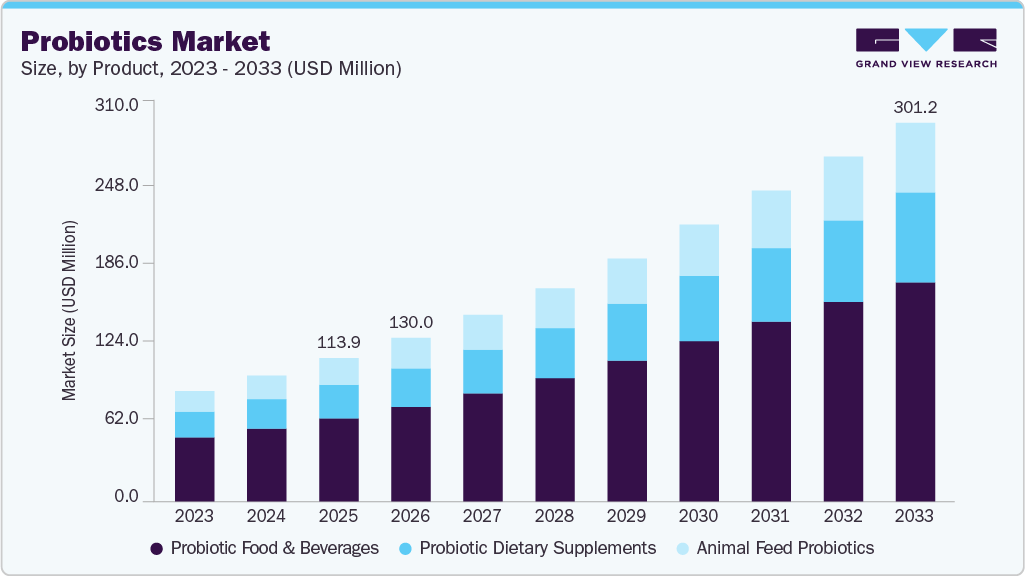
The global probiotics market size was estimated at USD 113.97 billion in 2025 and is projected to reach USD 301.17 billion by 2033, growing at a CAGR of 12.8% from 2026 to 2033. Probiotics are known to promote the growth of beneficial gut bacteria, such as lactobacilli and bifidobacteria, which contribute to improved digestion, enhanced immunity, and better overall health.
Key Market Trends & Insights
- By region, Asia Pacific led the market with a share of 39.1% in 2025.
- The probiotics market in China is projected to grow at a significant CAGR over the forecast period.
- By product, the probiotic food & beverages segment led the market and accounted for a share of 57.9% in 2025.
- By end use, the human probiotics segment led the market and accounted for a share of 81.4% in 2025.
Market Size & Forecast
- 2025 Market Size: USD 113.97 Billion
- 2033 Projected Market Size: USD 301.17 Billion
- CAGR (2026-2033): 12.8%
- Asia Pacific: Largest market in 2025
In addition, probiotics play a critical role in maintaining a healthy gut microbiome, producing essential nutrients, and supporting metabolic functions like energy balance, weight management, and appetite regulation.The consumption of probiotics in various forms, including supplements and fortified foods, aids in energy regulation, calorie utilization, and appetite control, contributing to effective weight management. This trend is particularly prominent among working professionals who seek to counter the effects of sedentary lifestyles. The growing awareness of the importance of digestive health and its link to overall well-being is expected to propel the demand for probiotic products across diverse consumer segments.
Fast-paced lifestyles have led to rising health issues and gut problems, compelling consumers to increasingly focus on preventive healthcare. Consumers are also shifting to diets that aid in disease prevention, and this is one of the most important factors driving the inclusion of probiotics in functional foods and nutraceuticals. Other factors contributing to the intake of probiotics as a preventive healthcare measure include increased disposable income, improved living standards, and growth in the elderly population.
According to the study published in Frontiers in Nutrition (2024), regular consumption of probiotics—particularly through food-based sources such as probiotic yogurt is associated with improved liver health outcomes. The analysis, based on data from the U.S. National Health and Nutrition Examination Survey (NHANES 2011-2016), indicates that individuals who consumed probiotics had a significantly lower prevalence of hepatic steatosis after controlling for demographic, lifestyle, and metabolic risk factors. The study further highlights that probiotic foods demonstrated a stronger and more consistent inverse association with fatty liver disease compared to probiotic supplements, suggesting that the food matrix may enhance probiotic efficacy.
The expansion of the pharmaceutical and nutraceutical sectors is also significantly driving market growth by enabling the development of highly specialized probiotic supplements. As these industries grow, they increasingly focus on creating products that address specific health concerns, such as enhancing immunity, supporting women's health, and promoting pediatric wellness. These targeted probiotics are formulated with strains that have been researched and proven to provide specific benefits, making them appealing to consumers looking for practical solutions to their health needs. For instance, immunity-boosting probiotics are becoming particularly popular due to global health challenges as people seek to strengthen their immune systems. Probiotics designed for women may focus on maintaining vaginal health or balancing hormones, while pediatric probiotics are developed to support the digestive and immune systems of children.
Consumers have been seeking alternatives to conventional pharmaceutical interventions, and this has driven the demand for natural and holistic health solutions. This trend has compelled probiotic companies to develop probiotic strains that can address specific health concerns and provide natural solutions to consumers. Simultaneously, the field of probiotics has seen significant research advancements, leading to a better understanding of the mechanisms of action and potential health benefits of different strains. This scientific progress has fueled the interest of probiotic companies in leveraging this knowledge to develop strains with specific attributes and functionalities. For instance, in March 2023, England-based pharmaceutical company, FERRYX LTD, announced the launch of the FX-856 strain that helps reduce the symptoms of diarrhea, constipation, bloating, and ulcerative colitis.
Manufacturers are increasingly fortifying food and beverage products with enzymes, probiotics, and prebiotics. This is attributed to consumer demand for food items with higher nutritional and fiber content. In response to consumer demand, companies are introducing new probiotic formats beyond traditional yogurt and supplements. For example, probiotic drinks, snack bars, functional foods, and even plant-based and dairy-free options are becoming increasingly popular. This allows manufacturers to cater to a broader range of dietary preferences, including those of vegetarians, vegans, and individuals with lactose intolerance or dairy allergies. These innovations help make probiotics more accessible and appealing to a wider audience, thereby fueling market expansion.
Supplement manufacturers are also increasingly incorporating functional ingredients into products to increase their nutritional value. Ingredient suppliers and supplement manufacturers are focusing on product innovation to expand their portfolio of probiotics and probiotic-based foods and better cater to the specific nutritional conditions of consumers with digestive health problems. The numerous new product launches are indicative of rising demand for probiotic food and beverages.
Product Insights
Probiotic food & beverages accounted for the largest revenue share of 57.9% in 2025. The market for probiotic food and beverages is rising as consumers increasingly associate everyday nutrition with preventive health and long-term wellness. Growing awareness of the role of the gut microbiome in digestion, immunity, and overall metabolic health has encouraged consumers to incorporate probiotics into their daily diets in convenient, food-based formats rather than relying solely on supplements. Probiotic-enriched yogurts, fermented drinks, and functional beverages are perceived as natural, easy-to-consume solutions that support digestive balance while fitting seamlessly into regular eating habits. In addition, rising interest in clean-label, low-sugar, and functional foods, particularly among millennials and health-conscious urban consumers, has further accelerated demand.
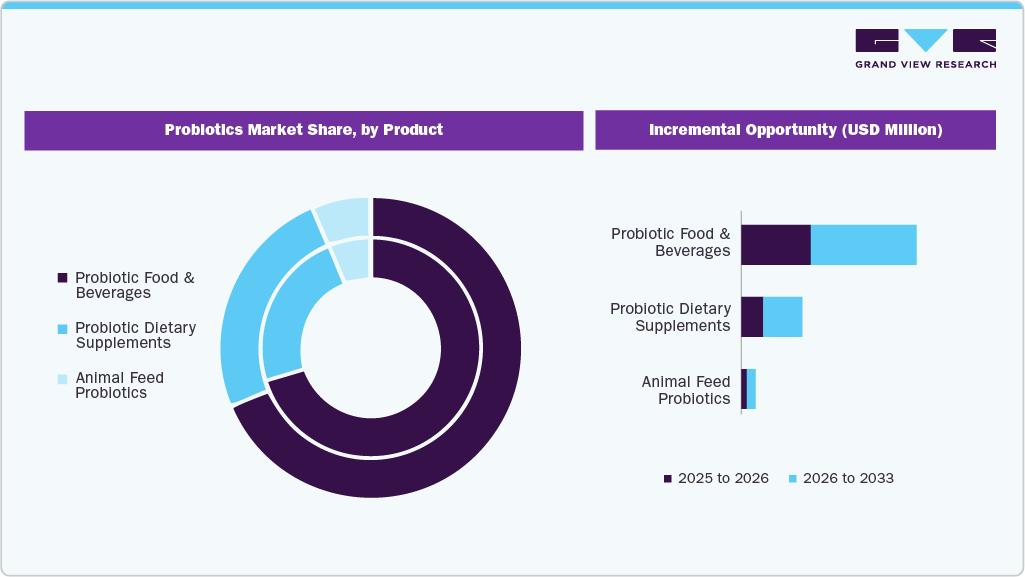
Probiotic dietary supplements are expected to grow at a CAGR of 12.9% from 2026 to 2033. Growing awareness of the link between the gut microbiome and digestion, immunity, and even mental health has encouraged consumers to proactively incorporate probiotics into their daily routines. This trend is further supported by rising incidences of digestive disorders, lifestyle-related health issues, and antibiotic use, which have heightened the perceived need for gut microbiome restoration. In addition, the convenience of probiotic supplements in capsule, powder, and chewable formats, along with increasing availability through pharmacies and online channels, has made them an accessible and preventive health solution for a broad consumer base.
End-use Insights
Human probiotics accounted for the largest revenue share of 81.4% in 2025. The market for human probiotics is rising as consumers become increasingly aware of the strong link between gut health and overall well-being, including digestion, immunity, and mental health. The growing prevalence of digestive disorders, lifestyle-related health issues, stress, and frequent antibiotic use has encouraged consumers to adopt probiotics as a preventive and daily wellness solution rather than a therapeutic product. In addition, rising health consciousness across age groups, supported by greater access to scientific information and clinical evidence around specific probiotic strains, is strengthening consumer trust in these products.
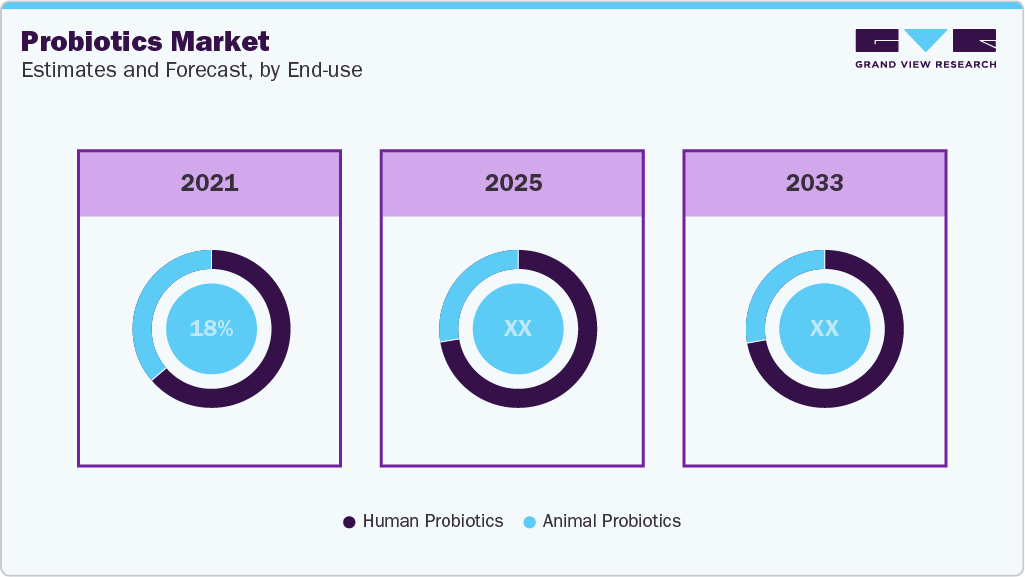
Animal probiotics are expected to grow at a CAGR of 12.5% from 2026 to 2033. The market for animal probiotics is rising as consumers increasingly demand safer, healthier, and more sustainably produced animal-based foods, particularly meat, milk, eggs, and aquaculture products. Growing awareness around the negative effects of antibiotic overuse in livestock, such as antimicrobial resistance and chemical residues in food, has accelerated the shift toward probiotics as a natural alternative for improving gut health, immunity, and feed efficiency in animals. Regulatory pressure to reduce antibiotic growth promoters, combined with the need to improve productivity and animal welfare in intensive farming systems, further supports adoption.
Regional Insights
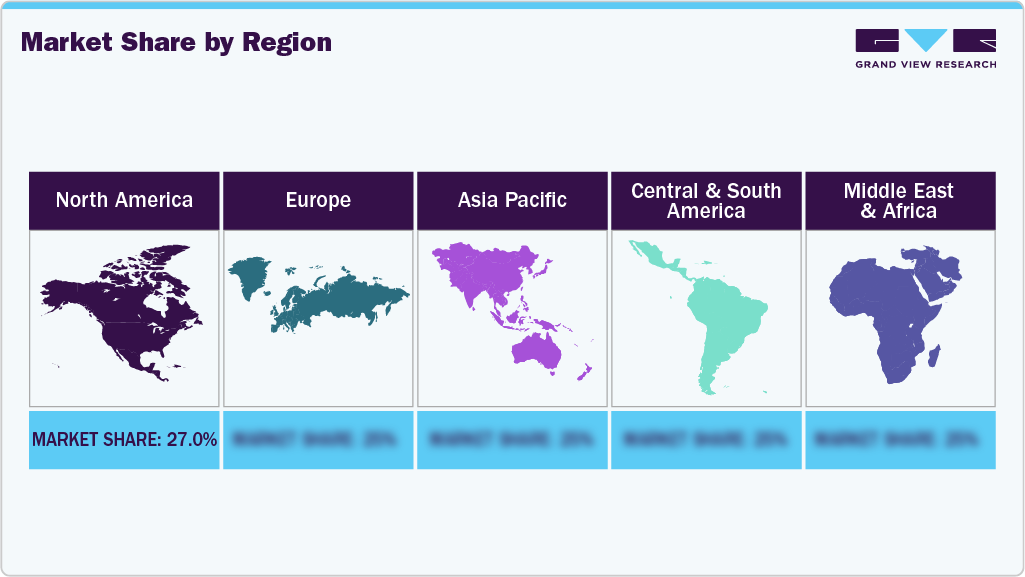
The probiotics market in North America is projected to grow at a CAGR of 11.9% from 2026 to 2033. The increasing prevalence of digestive disorders, antibiotic usage, and lifestyle-related health issues has encouraged consumers to adopt probiotics as part of their daily preventive healthcare routines. In addition, product innovation across functional foods, beverages, dietary supplements, and gummies, along with clear strain-specific labeling and clinical positioning, has strengthened consumer trust and regular usage, particularly among health-conscious adults and aging populations.
Europe Probiotics Market Trends
The probiotics market in Europe is projected to grow at a CAGR of 12.0% from 2026 to 2033. Growing awareness of digestive health, driven by lifestyle-related issues such as stress, poor diets, and antibiotic use, has encouraged European consumers to proactively incorporate probiotics into their daily routines. This demand is further supported by a strong preference for preventive healthcare, an aging population seeking digestive and immune support, and high trust in science-backed, clinically validated ingredients. In addition, Europe’s well-established functional food culture, particularly in fermented dairy products like yogurt, kefir, and cultured drinks, has made probiotics a familiar and accepted category.
Asia Pacific Probiotics Market Trends
The probiotics market in the Asia Pacific dominated the global market, accounting for a share of 39.1% in 2025. The market for probiotics is rising among consumers in the Asia Pacific as growing health awareness drives demand for products that support digestive health, immunity, and overall well-being. Rapid urbanization, increasing disposable incomes, and greater access to health information have led more consumers to adopt preventive health measures, including functional foods and supplements. In addition, rising incidences of lifestyle-related digestive issues and a strong cultural emphasis on holistic health have accelerated the integration of probiotics into daily diets through yogurts, beverages, and fortified products across the region.
Key Probiotics Company Insights
Some of the key companies in the market include Arla Foods, BioGaia, DuPont De Nemours, Inc., Mother Dairy Fruit & Vegetable Pvt. Ltd., and others. Companies are focusing on innovative and flavorful probiotic offerings to increase the consumer base. Therefore, key players are taking several strategic initiatives, such as mergers and acquisitions, and partnerships with other major companies.
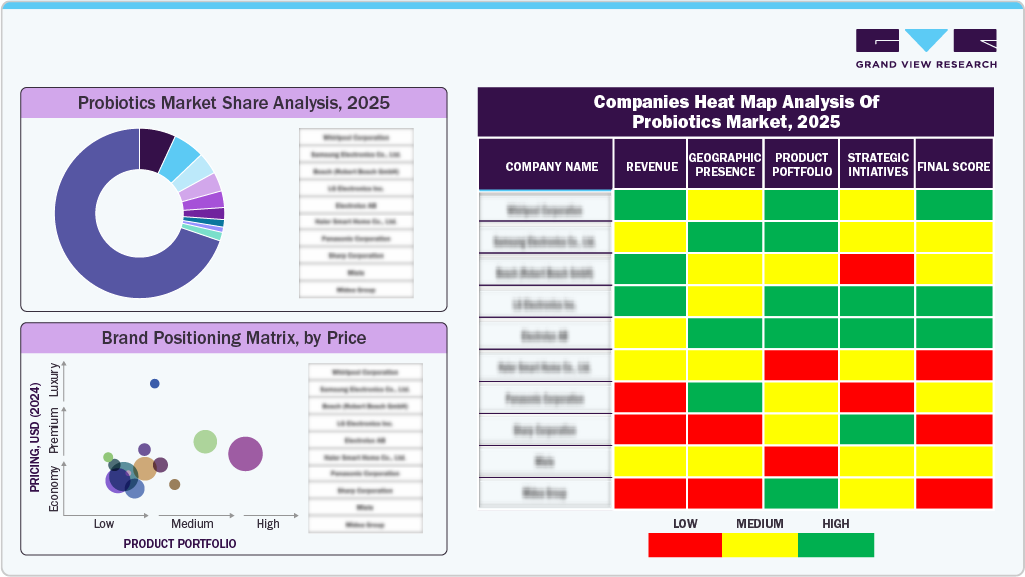
Key Probiotics Companies:
The following key companies have been profiled for this study on the probiotics market.
- Arla Foods
- BioGaia
- Hansen Holding A/S
- Danone
- DuPont de Nemours, Inc.
- General Mills, Inc.
- i-Health, Inc.
- Lallemand Inc.
- Lifeway Foods Inc.
- Nestlé S.A.
Recent Developments
-
In January 2026, Karma is reintroduced its popular Pineapple Coconut flavor as a new Pineapple Coconut Probiotic Water, featuring 2 billion CFU of BC30 probiotics, 100% daily value of six essential vitamins, no artificial sweeteners, colors, or flavors, and its nutrient-preserving Push Cap technology, with the product debuting at the 2026 Winter Fancy Faire Show before rolling out on Amazon and select U.S. retailers including Aldi later in 2026.
-
In July 2025, PepsiCo launched its first-ever prebiotic cola in the traditional cola category, blending familiar cola taste with added gut-health benefits through prebiotic fiber and lower sugar. The move reflects a broader shift toward functional, clean-label sodas as younger, health-conscious consumers turn away from high-sugar soft drinks and embrace products that offer both enjoyment and nutritional value.
Probiotics Market Report Scope
Report Attribute
Details
Market value size in 2026
USD 130.00 billion
Revenue forecast in 2033
USD 301.17 billion
Growth rate (revenue)
CAGR of 12.8% from 2026 to 2033
Actual data
2021 - 2025
Forecast period
2026 - 2033
Quantitative (revenue) units
Revenue in USD million/billion, and CAGR from 2026 to 2033
Report coverage
Revenue forecast, company ranking, competitive landscape, growth factors, and trends
Segments covered
Product, end-use, region
Regional Scope
North America; Europe; Asia Pacific; Latin America; MEA
Country scope
U.S.; Canada; Mexico; UK; Germany; France; Italy; Spain; China; India; Japan; Australia & New Zealand; Brazil; South Africa
Key companies profiled
Arla Foods; BioGaia; Hansen Holding A/S; Danone; DuPont de Nemours, Inc.; General Mills, Inc.; i-Health, Inc.; Lallemand Inc.; Lifeway Foods Inc.; Nestle S.A.
Customization scope
Free report customization (equivalent up to 8 analysts’ working days) with purchase. Addition or alteration to country, regional & segment scope.
Pricing and purchase options
Avail customized purchase options to meet your exact research needs. Explore purchase options
Global Probiotics Market Report Segmentation
This report forecasts revenue growth at global, regional & country levels and provides an analysis of the industry trends in each of the sub-segments from 2021 to 2033. For this study, Grand View Research has segmented the global probiotics market report based on product, end-use, and region:
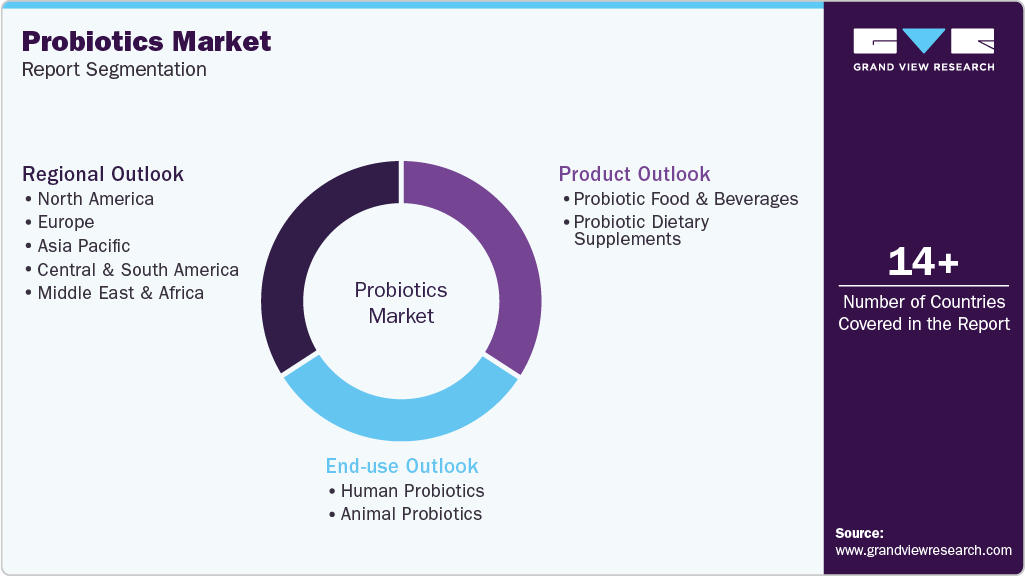
-
Product Outlook (Revenue, USD Million, 2021 - 2033)
-
Probiotic Food & Beverages
-
Dairy
-
Non-dairy
-
Cereals
-
Baked Food
-
Fermented Meat
-
Dry Food
-
-
Probiotic Dietary Supplements
-
Food Supplements
-
Nutritional Supplements
-
Specialty Supplements
-
Infant Formula
-
-
Animal Feed Probiotics
-
-
End-use Outlook (Revenue, USD Million, 2021 - 2033)
-
Human Probiotics
-
Animal Probiotics
-
-
Regional Outlook (Revenue, USD Million, 2021 - 2033)
-
North America
-
U.S.
-
Canada
-
Mexico
-
-
Europe
-
UK
-
Germany
-
France
-
Italy
-
Spain
-
-
Asia Pacific
-
China
-
India
-
Japan
-
South Korea
-
Australia & New Zealand
-
-
Central & South America
-
Brazil
-
-
Middle East & Africa
-
South Africa
-
-
Frequently Asked Questions About This Report
b. The global probiotics market is expected to witness 12.8% revenue growth from 2026 to 2033 to reach USD 301.17 billion by 2033.
b. The global probiotics market size was estimated at USD 113.97 billion in 2025 and is expected to reach USD 130.00 billion in 2026.
b. The probiotic food & beverage market accounted for the largest share of 61.36% of the revenue in 2025 due to rising consumer demand for food items with higher nutritional and fiber content.
b. The key market players in the probiotics market include Arla Foods; BioGaia; Chr. Hansen Holding A/S; Danone; DuPont De Nemours, Inc.; General Mills, Inc.; i-Health, Inc.; Lallemand Inc.; Lifeway Foods Inc.; Mother Dairy Fruit & Vegetable Pvt. Ltd.
b. Growth in the probiotics market is being primarily driven by growing consumer awareness about the importance of gut health and its connection to overall well-being.


Share this report with your colleague or friend.
Need a Tailored Report?
Customize this report to your needs — add regions, segments, or data points, with 20% free customization.


ISO 9001:2015 & 27001:2022 Certified
We are GDPR and CCPA compliant! Your transaction & personal information is safe and secure. For more details, please read our privacy policy.
Trusted market insights - try a free sample
See how our reports are structured and why industry leaders rely on Grand View Research. Get a free sample or ask us to tailor this report to your needs.












