- Home
- »
- Animal Health
- »
-
Companion Animal Regenerative Medicine Market, 2033GVR Report cover
![Companion Animal Regenerative Medicine Market Size, Share & Trends Report]()
Companion Animal Regenerative Medicine Market (2026 - 2033) Size, Share & Trends Analysis Report By Product (Stem Cells, Platelet-Rich Plasma (PRP)), By Animal (Dogs, Cats, Horses), By Application (Orthopedics, Trauma/Wound Care), By End Use, By Region, And Segment Forecasts
- Report ID: GVR-4-68040-871-3
- Number of Report Pages: 150
- Format: PDF
- Historical Range: 2021 - 2025
- Forecast Period: 2026 - 2033
- Industry: Healthcare
- Report Summary
- Table of Contents
- Segmentation
- Methodology
- Download FREE Sample
-
 Download Sample Report
Companion Animal Regenerative Medicine Market Summary
The global companion animal regenerative medicine market size was estimated at USD 1.14 billion in 2025 and is projected to reach USD 2.28 billion by 2033, growing at a CAGR of 9.38% from 2026 to 2033. The market is growing significantly due to increasing technological breakthroughs in stem cell engineering and translational research, rising commercial adoption and veterinary demand for advanced therapies and growing awareness and demand for regenerative medicine in companion animals.
Key Market Trends & Insights
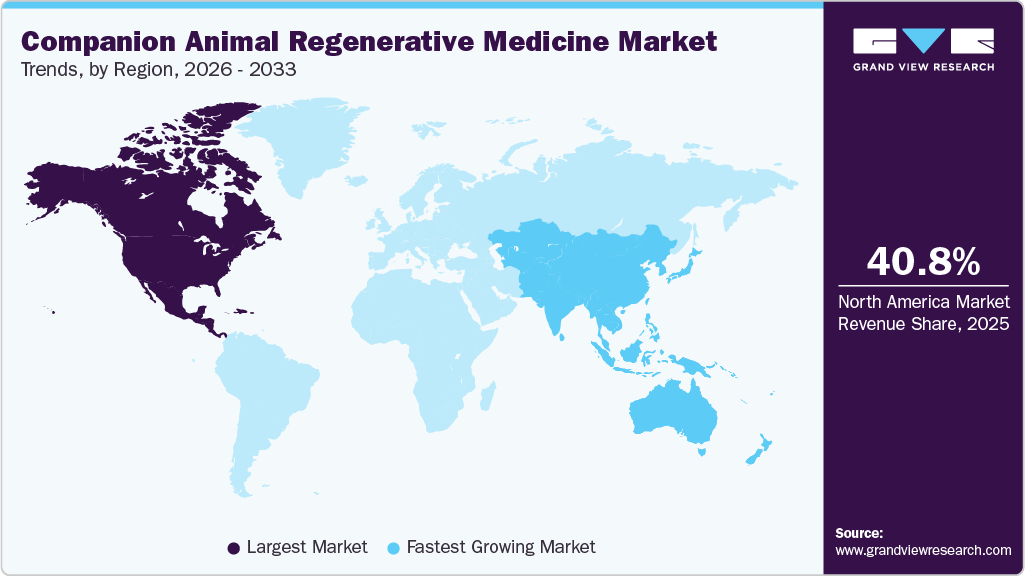
- North America companion animal regenerative medicine industry held the largest revenue share of 40.81% in 2025.
- U.S. dominated the North America region with the largest revenue share in 2025.
- By product, the stem cells segment held the largest share of 55.60% in 2025.
- By animal, the dogs segment held the largest revenue share in 2025.
- By application, the orthopedics segment held the largest market share in 2025.
Market Size & Forecast
- 2025 Market Size: USD 1.14 Billion
- 2033 Projected Market Size: USD 2.28 Billion
- CAGR (2026-2033): 9.38%
- North America region: Largest revenue share market in 2025
- Asia Pacific region: Fastest Growing Market
Technological progress in stem cell biology and regenerative engineering is significantly advancing therapeutic capabilities in companion animal healthcare. Some of the innovations such as in cell culture systems, differentiation control, and functional tissue generation are enabling the development of highly specialized regenerative treatments. Besides this, breakthroughs allowing stem cells to transform into functional cardiac and other tissue-specific cells are expanding applications in disease modeling, drug testing, and precision therapies. For instance, in November 2025, researchers at Osaka Metropolitan University developed a new culture medium enabling canine iPS stem cells to reliably differentiate into functional, contracting heart muscle cells, advancing regenerative medicine research and veterinary drug discovery applications. These advancements improve treatment reliability, reproducibility, and scalability, strengthening clinical translation from research to veterinary practice. Moreover, translational research leveraging similarities between human and animal diseases is accelerating innovation pipelines, enhancing therapeutic effectiveness, and supporting long-term growth of regenerative medicine applications across multiple companion animal disease areas.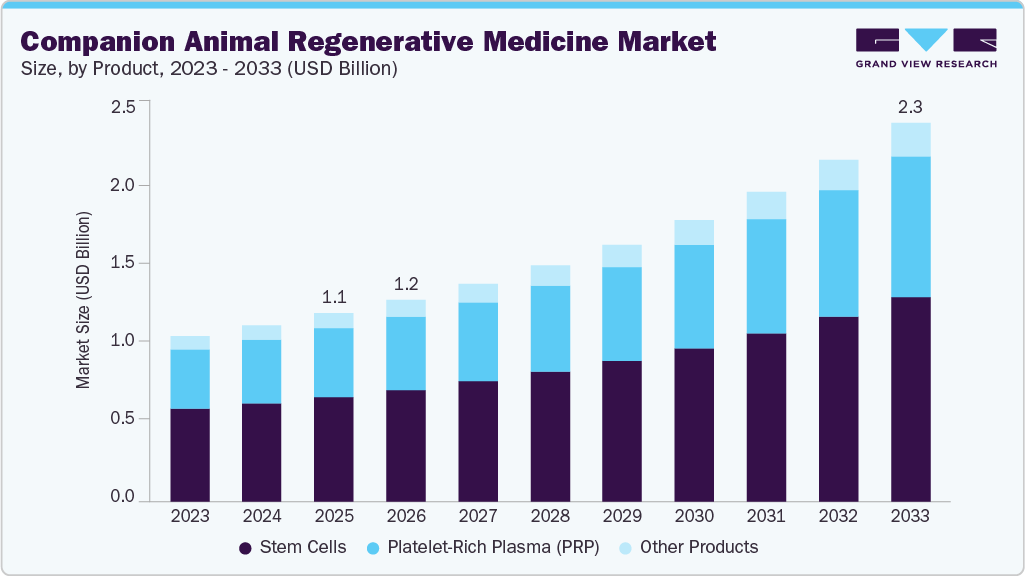
Moreover, the companion animal regenerative medicine industry is being propelled by increasing commercial deployment of innovative therapeutic platforms across veterinary practices. The growing numbers of certified treatment centers and expanding service networks are improving accessibility to advanced regenerative solutions. Besides this, the rising volume of administered therapies across multiple animal species reflects accelerating clinical adoption and operational scalability. In addition, veterinary institutions are integrating regenerative procedures into treatment protocols for oncology, orthopedic injuries, and chronic degenerative conditions in large number. According to a report of January 2025, a University of Missouri clinical trial used CAR T-cell therapy to treat lymphoma in a dog, reducing tumor swelling and showing promising potential for advancing cancer treatment in animals. This trend is further supported by industry initiatives focused on improving treatment affordability, enhancing clinical outcomes documentation, and expanding practitioner training programs.
Furthermore, rising awareness among veterinarians and pet owners regarding regenerative therapies is increasing significantly, driving market expansion. The growing recognition of stem cell based treatments as viable alternatives for conditions where conventional therapies are limited is encouraging adoption. Similarly, rising education efforts, clinical case reporting, and positive treatment outcomes are strengthening confidence in regenerative approaches. Besides this, increasing demand for advanced, minimally invasive treatment options that improve recovery, functionality, and quality of life in companion animals is accelerating its adoption. Moreover, expanding availability of specialized veterinary centers offering regenerative procedures and the growing willingness of pet owners to invest in advanced care are reinforcing sustained market demand and supporting broader commercialization of regenerative medicine solutions.
Market Concentration & Characteristics
The market is growing at a moderate growth and the pace is accelerating, led by specialized veterinary biotech firms, academic research institutions, and emerging regenerative therapy providers. The industry growth is driven by stem cell therapy innovation, expanding clinical adoption, and increasing investment. Some of the companies compete through proprietary technologies, clinical validation, treatment outcomes, and partnerships with veterinary hospitals and specialty care networks.
Innovation is high, driven by advancements in stem cell therapy, platelet-rich plasma, gene-modified cells, and tissue engineering for companion animals. In addition, research focuses on improving cell sourcing, differentiation control, and therapeutic consistency. For instance, in July 2025, BioAdaptives launched Pawpa Regen, a canine supplement promoting regenerative healing by stimulating stem cell release, following early results showing improved mobility, vitality, and overall wellness in aging dogs. Similarly, integration of regenerative biomaterials and precision medicine approaches further enhances treatment outcomes, positioning innovation as a primary competitive differentiator in veterinary regenerative medicine development and commercialization.
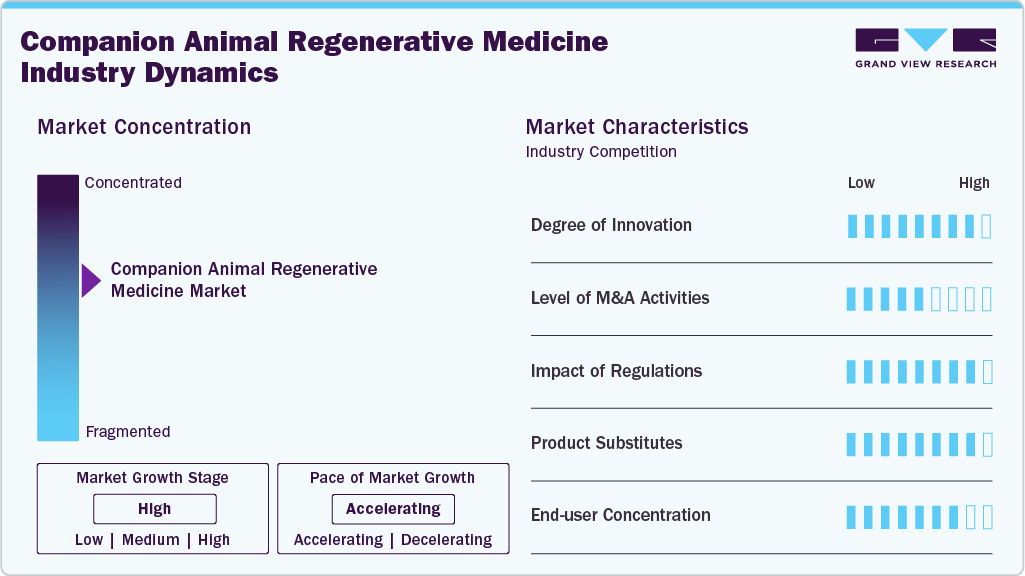
Mergers and acquisitions are increasing as veterinary biotech companies seek to expand technological capabilities, intellectual property portfolios, and geographic presence. Strategic collaborations between research institutions, therapy developers, and veterinary service providers are common.
Regulatory frameworks significantly influence industry growth by governing cell sourcing, manufacturing standards, clinical application, and safety requirements. Some of the authorities emphasize product quality, traceability, and therapeutic consistency, whereas regulatory oversight ensures treatment credibility and patient safety, evolving guidelines create compliance challenges, making regulatory expertise a key differentiator for companies developing and commercializing regenerative therapies for companion animals.
Conventional treatments such as surgery, pharmaceuticals, radiation therapy, and physical rehabilitation act as substitutes for regenerative therapies. These established options are widely accessible and clinically validated, often preferred for cost or familiarity reasons. However, regenerative medicine offers potential long-term healing and tissue restoration benefits, gradually positioning itself as a complementary or alternative therapeutic approach.
End users are concentrated among veterinary specialty hospitals, academic veterinary centers, and advanced referral clinics equipped to administer regenerative therapies. Adoption is highest in urban regions with advanced veterinary infrastructure and higher pet healthcare spending.
Product Insights
Based on product, the stem cells segment dominated the market with the largest revenue share of 55.60% in 2025, due to their broad therapeutic applicability and strong clinical demand. These therapies are widely used for osteoarthritis, ligament injuries, wound healing, and inflammatory conditions in dogs and cats. Besides this, autologous and allogeneic mesenchymal stem cells offer anti-inflammatory, immunomodulatory, and tissue-repair capabilities, improving mobility and recovery outcomes. In addition, expanding veterinary adoption, growing evidence of safety and efficacy in research, and increasing availability of ready-to-use cell products support market dominance. For instance, in June 2025, researchers at Osaka Metropolitan University developed a method to generate high-quality canine mesenchymal stem cells from induced pluripotent stem cells, enabling scalable, consistent production to advance regenerative therapies in veterinary medicine.
The other products segment is anticipated to register the fastest CAGR over the forecast period. This segment includes gene therapy amniotic-derived biomaterials, and tissue-based regenerative solutions. The growth is driven by expanding clinical applications in wound healing, orthopedic repair, and chronic disease management. These therapies offer minimally invasive treatment options, faster recovery, and improved therapeutic outcomes. Some of the recent innovations are boosting market growth. For instance, in February 2025, Equus Innovations and AlphaLogix launched AlphaFlo, a cryopreserved canine amniotic tissue allograft that is designed to support tissue healing, and offers anti-inflammatory, antimicrobial, antifibrotic, and regenerative properties which has been made available in the market.
Animal Insights
Based on animal, the dogs segment dominated with the largest revenue share in 2025. This large share is due to the rising pet ownership, increased spending on advanced treatments, and growing awareness of regenerative therapies. Some of the conditions such as osteoarthritis, ligament injuries, and chronic wounds in small animals are treated with platelet-rich plasma (PRP), mesenchymal stem cells (MSCs), and other biologics. Besides this, the pet owners’ willingness to invest in high-quality, minimally invasive solutions boosts adoption. In addition, veterinary clinics are expanding regenerative offerings for small animals, supported by ongoing clinical research and technological advancements, positioning this segment as the primary growth engine of the market.
The cats segment is anticipated to be the fastest growing segment over the forecast period, which is driven by increasing feline ownership and rising awareness of chronic conditions such as osteoarthritis, gingivostomatitis, and kidney disease. Furthermore, growing clinical research, improved diagnostic capabilities, and expanding veterinary adoption of regenerative treatments are accelerating demand for innovative, minimally invasive therapeutic solutions tailored specifically for feline patients.
Application Insights
Based on application, the orthopedics segment held the largest revenue share in 2025, driven by the high prevalence of musculoskeletal disorders such as osteoarthritis, ligament injuries, and joint degeneration in companion and performance animals. Some of the advancements in product innovation, such as allogeneic “off-the-shelf” solutions, are further expanding accessibility. For instance, in April 2025, Transcend Biologics launched TropoVet PRP, a one-step platelet purification system enabling on-site regenerative therapy, accelerating healing, reducing pain, and improving recovery across veterinary orthopedic, musculoskeletal, and soft-tissue treatments in companion animals. This dominance is enhanced by strong clinical adoption and increasing investment in orthopedic focused veterinary research.
The other applications segment is expected to be the fastest growing segment over the forecast period. This growth is attributed to the rising cases of corneal injuries, periodontal disease, and oral tissue damage in pets, which are accelerating demand for advanced biologics, tissue generation and stem cell based therapies. For instance, in June 2025, PRN Pharmacal launched ReGum Vet in the U.S., a biodegradable dental scaffold for dogs’ periodontal defects, supporting natural tissue repair with easy application in conic or flat shapes. Such advances in the market offer innovative, easy-to-use periodontal repair, driving adoption of biomaterial-based therapies for dogs with advanced gum disease.
End Use Insights
Based on end use, veterinary clinics & hospitals dominated the market in 2025, as they are serving as key centers for advanced therapies like stem cell treatments, PRP, and tissue engineering. Their dominance is driven by broad accessibility, specialized equipment, and skilled professionals capable of delivering complex regenerative procedures. These facilities boost adoption through integrated diagnostics, treatment, and follow-up care, catering to both companion and large animals. In addition, growing collaborations with biotech firms and rising demand for minimally invasive, long-term solutions for osteoarthritis, injuries, and chronic conditions reinforce their pivotal role in market expansion.
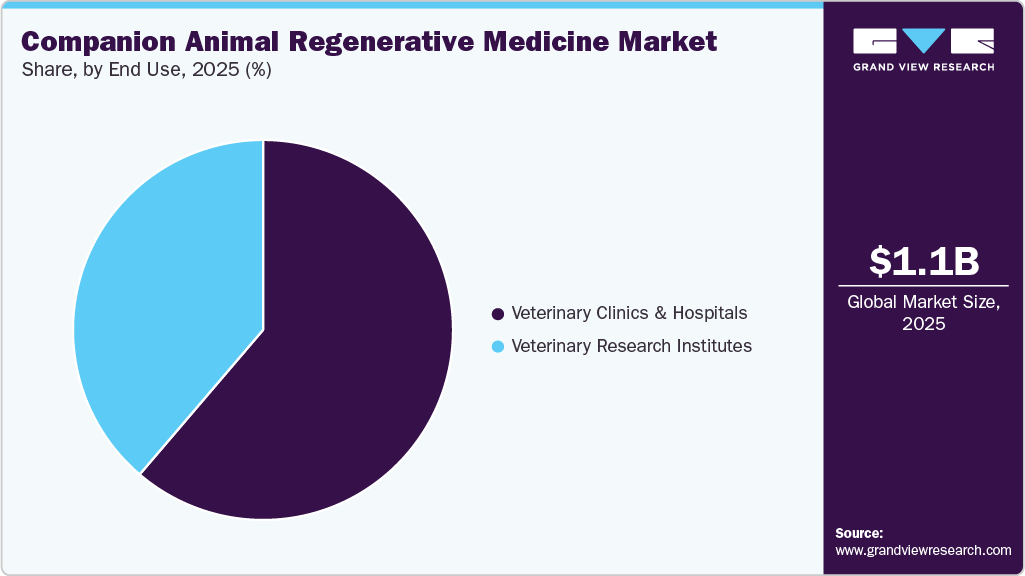
Veterinary research institutes are projected to be the fastest-growing segment over the forecast period, driven by increasing investment in advanced therapies, innovative biomaterials, and translational studies. These institutes focus on developing and validating stem cell therapies, platelet-rich plasma (PRP) applications, and tissue engineering solutions for companion animals. In addition, collaborations with biotech companies and academic centers accelerate clinical adoption, while ongoing research on minimally invasive and long-term treatments for conditions such as osteoarthritis, injuries, and chronic diseases positions these institutes as key drivers of market growth and innovation.
Regional Insights
North America Companion Animal Regenerative Medicine Market Trends
North America companion animal regenerative medicine industry dominated the global market with the largest revenue share of 40.81% in 2025driven by the high prevalence of canine osteoarthritis and limitations of conventional treatments. Nearly 40% of dogs in the U.S. are affected, creating significant clinical and welfare concerns. Thus, regenerative medicine, particularly FDA-approved stem cell therapies, offers an advanced solution by promoting joint repair and tissue regeneration.
These therapies address arthritis, ligament injuries, cartilage damage, and bone fractures, improving mobility and quality of life. In addition, growing clinical adoption, strong veterinary infrastructure, and increasing pet healthcare expenditure continue to support regional market expansion.
U.S. Companion Animal Regenerative Medicine Market Trends
The companion animal regenerative medicine industry in the U.S. accounted for the largest market share in the North America region, owing to rising pet ownership, increasing prevalence of osteoarthritis and chronic conditions, and strong demand for advanced therapies that improve mobility and quality of life. In addition, expanding clinical research, veterinary adoption, and pet owner spending support market expansion. Some of the key players such as VetStem Biopharma, Ardent Animal Health, and Vivos Inc. are advancing stem cell-based and biologic therapies. Besides this, the regulatory landscape is transformed by oversight from the U.S. Food and Drug Administration, emphasizing product safety, manufacturing standards, and clinical validation for veterinary regenerative treatments.
Canada companion animal regenerative medicine industry is expected to grow at a significant CAGR during the forecast period,propelled by strong veterinary adoption of advanced biologics for pain management and tissue repair and growing of specialty veterinary clinics. Besides this, regulatory support and product approvals are accelerating innovation and clinical uptake. For instance, in October 2025, Health Canada approved Lenivia, a long-acting anti-nerve growth factor monoclonal antibody from Zoetis Inc. for canine osteoarthritis pain. Such approvals strengthen confidence in advanced therapies, support commercialization pathways, and encourage continued investment in regenerative treatment solutions across Canada’s veterinary care ecosystem.
Europe Companion Animal Regenerative Medicine Market Trends
The companion animal regenerative medicine industry in Europe was identified as a lucrative region, driven by several factors, including rising pet healthcare spending, strong veterinary infrastructure, and growing adoption of advanced biologics and cell-based therapies. In addition, supportive regulatory pathways and approvals, such as those governed by the European Commission, enhance commercialization prospects, strengthen clinical confidence, and accelerate innovation in regenerative treatment options for companion animals.
The companion animal regenerative medicine industry in the UK is expected to grow significantly over the forecast period. The market is characterized by strong academic-industry collaboration, rising demand for minimally invasive therapies and growing aging animal population. Besides this, a supportive regulatory environment led by the Veterinary Medicines Directorate ensures product quality, safety, and clinical oversight, enabling structured approval pathways and fostering innovation, clinical adoption, and commercialization of regenerative treatments.
Germany companion animal regenerative medicine industry held the largest revenue share in 2025 in the Europe region. The country’s growth is influenced by leading companies that are strengthening market positions through product launches, acquisitions, and capability expansion, with firms such as Boehringer Ingelheim International GmbH contributing significantly to industry growth. Besides this, rising adoption of animal stem cell therapy, which utilizes autologous cells to support tissue repair and improve longevity, is accelerating demand. In addition, increasing incidence of arthritis, degenerative joint disorders, and ligament and tendon injuries in companion animals is further driving the need for advanced regenerative treatment solutions, supporting continued market expansion.
Asia Pacific Companion Animal Regenerative Medicine Market Trends
Asia Pacific companion animal regenerative medicine industry is expected to grow at the fastest CAGR over the forecast period.The region's growth can be attributed to rising number of veterinary facilities providing regenerative medicine services and the growing population of pets in the region. The increased spending on companion animals and the development of veterinary healthcare infrastructure are other factors anticipated to further market expansion in this region. In addition, in some Asian countries with a strong interest in equestrian sports and racing, as well as dog sports, there is a demand for regenerative therapies to help maintain and enhance the performance of these animals.
The companion animal regenerative medicine industry in China held the largest revenue share in the Asia Pacific region andis witnessing new growth opportunities due to rapid growth in pet ownership, rising veterinary expenditure, and expanding availability of advanced biologic and cell-based therapies. In addition, government support for biotechnology innovation and translational research further accelerates development. Besides this, regulatory oversight by the Ministry of Agriculture and Rural Affairs emphasizes product safety, manufacturing standards, and clinical validation, supporting structured commercialization pathways and increasing confidence in regenerative veterinary treatments.
The companion animal regenerative medicine industry in India is witnessing notable growth due to rising companion animal care, advances in stem cell research, and government-backed biotech initiatives. Besides this, regulatory oversight and innovation support are strengthening clinical adoption of advanced therapies. For instance, in August 2025, the nation’s first animal stem cell biobank was inaugurated at National Institute of Animal Biotechnology under the Department of Biotechnology, enhancing stem cell preservation, research capabilities, and commercialization pathways for regenerative veterinary treatments across the country.
Latin America Companion Animal Regenerative Medicine Market Trends
The companion animal regenerative medicine industry in Latin America is supported by rising pet ownership, increasing demand for advanced veterinary care, and growing awareness of regenerative therapies. Some of the companies such as VetBR, BioCell, and Regenvet are contributing to development. In addition, progress in stem cell and PRP treatments, along with expanding veterinary hospital capabilities, is accelerating adoption by providing cost effective solutions for orthopedic conditions, wound repair, and chronic disease management in companion animals.
Brazil companion animal regenerative medicine industry is gaining momentum due to growing veterinary demand for advanced biologics, expanding research capabilities, and increasing pet healthcare awareness. Some of the advancements, alongside biomaterial development and academic research expansion, are strengthening clinical adoption and commercialization pathways nationwide for instance, in May 2025, Brazilian scientists at the Federal University of Piaui achieved full mammary-gland regeneration in dogs using autologous stem cells, highlighting innovation in affordable cellular therapies.
Middle East & Africa Companion Animal Regenerative Medicine Market Trends
The companion animal regenerative medicine industry in MEA is anticipated to grow at a lucrative CAGR over the forecast period, due to expansion of private veterinary healthcare providers, increasing investment in animal health infrastructure and growth of veterinary training and skill development. Besides this, technological advancements such as progress in stem cell processing, platelet-rich plasma applications, and biomaterial based tissue repair solutions is driving the market growth.
South Africa companion animal regenerative medicine industry is growing due to rising pet ownership and increasing demand for advanced orthopedic treatments. Stem cell therapies dominate the market, while emerging regenerative products are expanding rapidly. Some of the providers such as Valley Farm Animal Hospital, in collaboration with VetRenew, and Blue Hills Veterinary Hospital are improving treatment accessibility, reflecting a strengthening, innovation-led regional market.
Saudi Arabia companion animal regenerative medicine industryis fueled by the country’s significant investment in veterinary healthcare, improving veterinary infrastructure, and growing government investment in biotechnology research. Besides this, biologics and regenerative therapies are emerging as the fastest growing segments, strengthened by collaborations with international partners. Some of the organizations such as VetStem, Arti-Cell Forte, and regional biotech innovators are advancing stem cell and PRP applications for companion animals and livestock, reflecting a developing, innovation-driven ecosystem.
Key Companion Animal Regenerative Medicine Company Insights
The companion animal regenerative medicine industry features a mix of specialized veterinary biotechnology firms, research institutions, and emerging therapy providers. Market share is influenced by proprietary stem cell technologies, clinical outcomes, strategic partnerships, and distribution networks. Furthermore, competitive positioning depends on innovation capability, regulatory compliance, treatment accessibility, and expanding veterinary adoption globally.
Key Companion Animal Regenerative Medicine Companies:
The following key companies have been profiled for this study on the companion animal regenerative medicine market.
- Boehringer Ingelheim International GmbH
- Zoetis Services LLC
- Dechra
- Integra Lifesciences
- Vetherapy
- Vetstem, Inc.
- Ardent
- Enso Discoveries
- Animal Cell Therapies, Inc.
- Vetbiologics
- Medrego
- Vivos Inc (IsoPet)
Recent Developments
-
In September 2025, Gallant received FDA Target Animal Safety completion for sonruvetcel, an off-the-shelf stem cell therapy for feline FCGS. This advances commercialization, strengthens clinical confidence, and accelerates regenerative treatment adoption in companion animals.
-
In September 2025, Zoetis Inc. research showed orthobiologic therapies maintain efficacy in horses with endocrine disorders. Findings strengthen evidence-based adoption of regenerative biologics, supporting broader clinical use across veterinary musculoskeletal disease management.
-
In February 2025, researchers at Osaka Metropolitan University generated feline embryonic stem cells capable of multi-lineage differentiation. This breakthrough expands research tools, improves therapy development precision, and supports long-term innovation in companion animal regenerative medicine.
Companion Animal Regenerative Medicine Market Report Scope
Report Attribute
Details
Market size value in 2026
USD 1.22 billion
Revenue forecast in 2033
USD 2.28 billion
Growth rate
CAGR of 9.38% from 2026 to 2033
Actual data
2021 - 2025
Forecast period
2026 - 2033
Quantitative units
Revenue in USD million/billion and CAGR from 2026 to 2033
Report coverage
Revenue forecast, company ranking, competitive landscape, growth factors, and trends
Segments covered
Product, animal, application, end use, region
Regional scope
North America; Europe; Asia Pacific; Latin America; MEA
Country scope
U.S.; Canada; Mexico; UK; Germany; France; Italy; Spain; Denmark; Sweden; Norway; Japan; China; India; Thailand; South Korea; Australia; Brazil; Argentina; South Africa; UAE; Saudi Arabia; Kuwait; Qatar; Oman
Key companies profiled
Boehringer Ingelheim International GmbH; Zoetis Services LLC; Dechra; Integra LifeSciences; Vetherapy; VetStem, Inc.; Ardent; Enso Discoveries; Animal Cell Therapies, Inc.; Vetbiologics; Medrego; Vivos Inc (IsoPet).
Customization scope
Free report customization (equivalent up to 8 analysts working days) with purchase. Addition or alteration to country, regional & segment scope.
Pricing and purchase options
Avail customized purchase options to meet your exact research needs. Explore purchase options
Companion Animal Regenerative Medicine Market Report Segmentation
This report forecasts revenue growth at global, regional, and country levels and provides an analysis of the latest industry trends in each of the sub-segments from 2021 to 2033. For this study, Grand View Research has segmented the companion animal regenerative medicine market report based on product, animal, application, end use, and region.
-
Product Outlook (Revenue, USD Million, 2021 - 2033)
-
Stem Cells
-
Platelet-Rich Plasma (PRP)
-
Other Products
-
-
Animal Outlook (Revenue, USD Million, 2021 - 2033)
-
Dogs
-
Cats
-
Horses
-
Others
-
-
Application Outlook (Revenue, USD Million, 2021 - 2033)
-
Orthopedics
-
Trauma/Wound Care
-
Other Applications
-
-
End Use Outlook (Revenue, USD Million, 2021 - 2033)
-
Veterinary Clinics & Hospitals
-
Veterinary Research Institutes
-
-
Regional Outlook (Revenue, USD Million, 2021 - 2033)
-
North America
-
U.S.
-
Canada
-
Mexico
-
-
Europe
-
UK
-
Germany
-
France
-
Italy
-
Spain
-
Denmark
-
Sweden
-
Norway
-
-
Asia Pacific
-
Japan
-
China
-
India
-
Australia
-
Thailand
-
South Korea
-
-
Latin America
-
Brazil
-
Argentina
-
-
Middle East & Africa
-
South Africa
-
UAE
-
Saudi Arabia
-
Kuwait
-
Qatar
-
Oman
-
-
Frequently Asked Questions About This Report
b. The global companion animal regenerative medicine market was estimated at USD 1.14 billion in 2025 and is projected to reach USD 1.22 billion by 2026.
b. Some of the key players include Boehringer Ingelheim International GmbH, Zoetis Services LLC, Dechra, Integra LifeSciences, Vetherapy, VetStem, Inc., Ardent, Enso Discoveries, Animal Cell Therapies, Inc., Vetbiologics, Medrego, Vivos Inc (IsoPet).
b. The companion animal regenerative medicine market is growing significantly due to increasing technological breakthroughs in stem cell engineering and translational research, rising commercial adoption and veterinary demand for advanced therapies and growing awareness and demand for regenerative medicine in companion animals.
b. By product, pharmaceuticals segment held the largest share of 55.60% of the market in 2025, due to their broad therapeutic applicability and strong clinical demand. These therapies are widely used for osteoarthritis, ligament injuries, wound healing, and inflammatory conditions in dogs and cats.
b. The global companion animal regenerative medicine market is projected to reach USD 2.28 billion by 2033, growing at a CAGR of 9.38% from 2026 to 2033.


Share this report with your colleague or friend.
Need a Tailored Report?
Customize this report to your needs — add regions, segments, or data points, with 20% free customization.


ISO 9001:2015 & 27001:2022 Certified
We are GDPR and CCPA compliant! Your transaction & personal information is safe and secure. For more details, please read our privacy policy.
Trusted market insights - try a free sample
See how our reports are structured and why industry leaders rely on Grand View Research. Get a free sample or ask us to tailor this report to your needs.