- Home
- »
- Biotechnology
- »
-
Platelet Rich Plasma Market Size, Industry Report, 2033GVR Report cover
![Platelet Rich Plasma Market Size, Share & Trends Report]()
Platelet Rich Plasma Market (2026 - 2033) Size, Share & Trends Analysis Report By Type (Pure PRP, Leukocyte Rich PRP), By Application (Orthopedics, Sports Medicine, Cosmetic Surgery, Dermatology, Ophthalmic Surgery), By End-use, By Region, And Segment Forecasts
- Report ID: GVR-1-68038-869-5
- Number of Report Pages: 150
- Format: PDF
- Historical Range: 2021 - 2024
- Forecast Period: 2026 - 2033
- Industry: Healthcare
- Report Summary
- Table of Contents
- Segmentation
- Methodology
- Download FREE Sample
-
 Download Sample Report
Platelet Rich Plasma Market Summary
The global platelet rich plasma market size was estimated at USD 650.13 million in 2025 and is projected to reach USD 1,751.45 million by 2033, growing at a CAGR of 13.2% from 2026 to 2033. Platelet-rich plasma (PRP) usage is witnessing growth owing to the increasing participation in sporting events, leading to an increasing number of cases of sports injuries and an upsurge in cosmetic surgery.
Key Market Trends & Insights
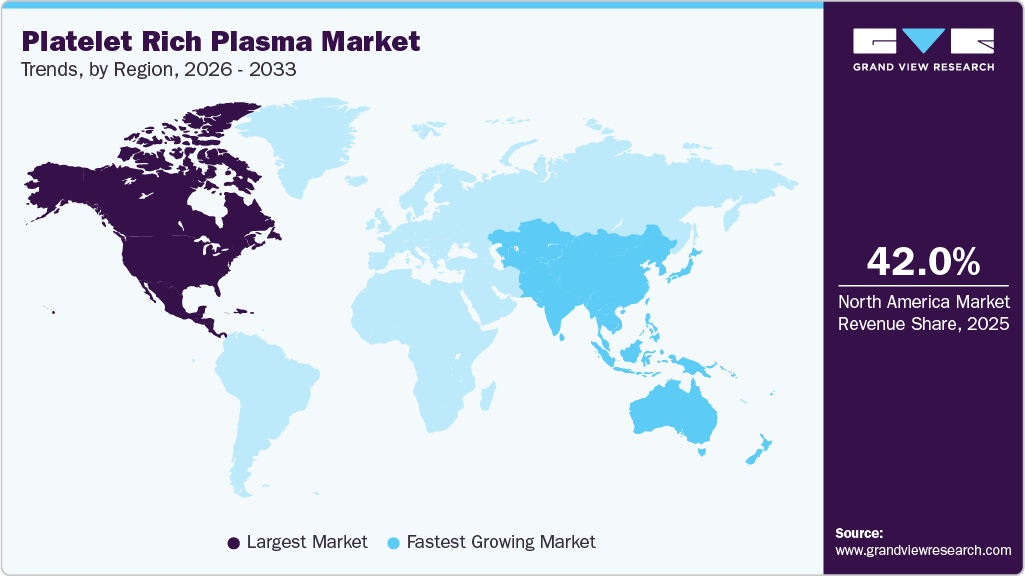
- North America dominated the platelet rich plasma market with the largest revenue share of 42.00% in 2025.
- The platelet rich plasma market in the U.S. is expected to grow at a significant CAGR over the forecast period.
- By type, the pure PRP segment accounted for the largest revenue share of 51.12% in 2025.
- By application, the orthopedics segment accounted for the largest revenue share of 25.38% in 2025.
- By end use, hospitals segment accounted for the largest revenue share of 48.58% in 2025.
Market Size & Forecast
- 2025 Market Size: USD 650.13 Million
- 2033 Projected Market Size: USD 1,751.45 Million
- CAGR (2026-2033): 13.2%
- North America: Largest market in 2025
- Asia Pacific: Fastest growing market
The Platelet Rich Plasma (PRP) market is expanding steadily as clinicians and patients increasingly favor autologous, minimally invasive therapies across orthopedics, sports medicine, dermatology, aesthetics, and wound care. PRP’s appeal lies in its use of a patient’s own blood components, which lowers immunogenic risk and aligns with broader healthcare trends toward outpatient procedures and biologic-adjacent therapies without the complexity of cell or gene treatments. Adoption is driven by rising musculoskeletal disorders, sports injuries, age-related degeneration, and aesthetic demand, particularly in private care settings where procedural flexibility is higher.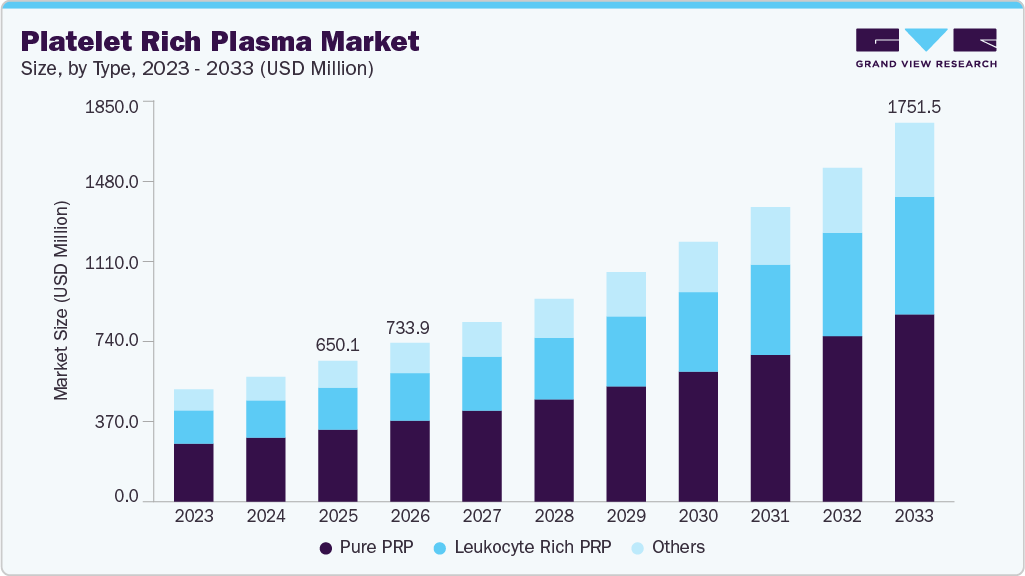
Clinical standardization and professional guidance are playing an important role in sustaining adoption. For instance, in 2025, the American Academy of Orthopaedic Surgeons continued to reference PRP within its evidence-based discussions on tendon and joint disorders, reflecting ongoing evaluation of PRP’s role in musculoskeletal care rather than dismissal as an experimental intervention. This reinforces physician confidence and supports continued procedural use, even as outcomes vary by indication and protocol.
At the same time, growth in aesthetic and dermatologic applications is reinforcing the market’s diversification beyond orthopedics. For instance, in 2025, the International Society of Aesthetic Plastic Surgery highlighted PRP as one of the commonly performed non-surgical regenerative adjuncts in procedures such as facial rejuvenation and hair restoration in its global practice insights. This reflects sustained patient demand for natural, biologically derived treatments and supports recurring procedural volumes in private clinics.
Market Concentration & Characteristics
The degree of innovation in the PRP market is moderate, with development primarily centered on device and process optimization rather than biological breakthroughs. Manufacturers focus on improving centrifugation efficiency, platelet yield consistency, and closed-system designs to reduce contamination risk and procedural variability. Automation and point-of-care usability are key innovation themes, enabling broader adoption in outpatient and clinic-based settings. Clinical innovation is largely physician-led, involving protocol customization by indication rather than standardized therapeutic regimens, which limits disruptive change but supports steady incremental improvement.
Barriers to entry are moderate but increasing. While PRP devices face lower development complexity than pharmaceuticals or cell therapies, compliance with medical device regulations, quality systems, and sterility standards still requires capital investment. Market access depends heavily on physician education, training programs, and brand trust, creating soft barriers that favor established players. Additionally, fragmented reimbursement and inconsistent clinical guidelines constrain rapid scale-up for new entrants without strong commercial infrastructure.
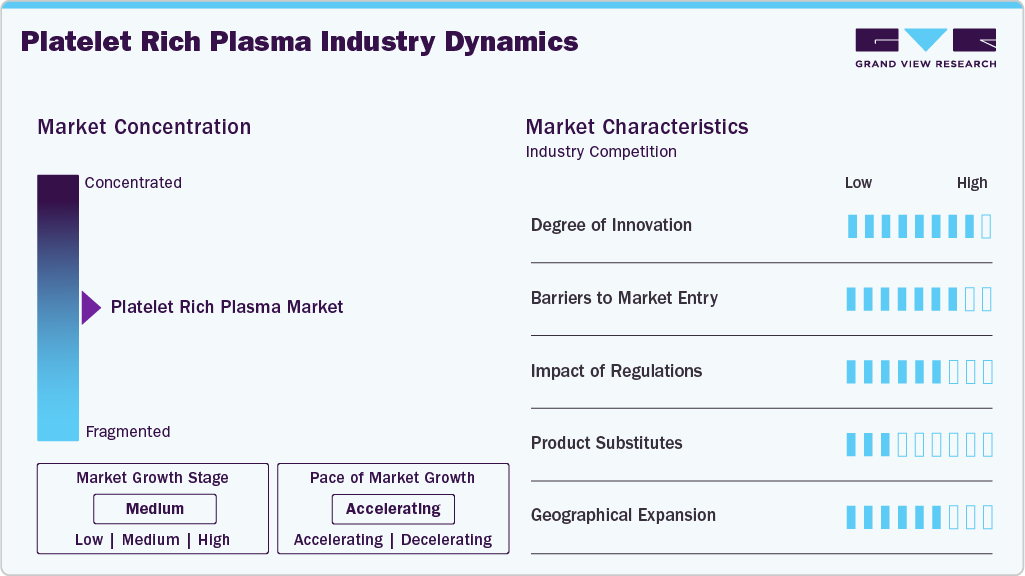
Regulatory impact on the PRP market is moderate and nuanced. PRP is typically regulated through oversight of blood processing devices rather than as a standalone therapeutic product, reducing approval timelines. However, regulatory scrutiny intensifies when PRP is promoted for non-homologous uses or combined with additives, creating compliance risk. This regulatory flexibility supports innovation and adoption but also contributes to variability in clinical practice and outcome consistency across regions.
The threat of product substitutes is moderate and indication dependent. In orthopedics, PRP competes with corticosteroid injections, hyaluronic acid injections, physical therapy, and surgical intervention. In aesthetics, substitutes include dermal fillers, botulinum toxin, and energy-based devices. While these alternatives may offer faster symptom relief or more predictable outcomes, PRP’s autologous profile, safety perception, and regenerative positioning reduce full substitution, particularly among patients seeking non-synthetic options.
Geographical expansion potential is moderate to high, driven by growing private healthcare infrastructure and rising demand for elective procedures. North America and Europe represent mature markets with established physician familiarity, while Asia Pacific, Latin America, and the Middle East are experiencing accelerated adoption through private clinics, sports medicine centers, and medical tourism. Expansion is constrained by reimbursement variability, regulatory heterogeneity, and uneven clinician training, necessitating education-led and partnership-driven market entry strategies.
Type Insights
The pure PRP segment dominated the market with the largest revenue share of 51.12% in 2025, as it represents the most clinically accepted and operationally scalable PRP formulation. Pure PRP, which is leukocyte-poor, is favored across orthopedics, sports medicine, dermatology, and aesthetic procedures because it reduces inflammatory response while supporting tissue regeneration, making it suitable for repeated and elective treatments. Its strong alignment with standardized, closed-system preparation kits improves procedural consistency and clinic workflow efficiency, particularly in outpatient and private practice settings. For instance, in 2025, Arthrex continued to emphasize leukocyte-poor (pure) PRP systems within its regenerative medicine portfolio for musculoskeletal applications, reinforcing clinician confidence and accelerating routine adoption of Pure PRP over leukocyte-rich alternatives.
The Leukocyte Rich PRP segment is projected to grow at the fastest CAGR of 13.7% over the forecast period, supported by increasing clinical recognition of formulation-specific PRP use. LR-PRP, which contains higher leukocyte concentrations, is gaining traction in indications where controlled inflammation and immune response are considered advantageous, such as chronic tendinopathies, ligament injuries, and refractory musculoskeletal conditions. As clinical practice moves away from uniform PRP use toward indication-tailored formulations, demand for LR-PRP is rising in sports medicine and orthopedic specialty centers. For instance, in 2025, EmCyte continued to expand its leukocyte-rich PRP system offerings and clinician training programs for orthopedic and sports medicine applications, supporting broader adoption of LR-PRP and contributing to its faster projected growth.
End-use Insights
The hospitals segment dominated the platelet rich plasma market with a share of 48.57% in 2025, reflecting the concentration of PRP use in settings that manage high patient volumes and complex musculoskeletal cases. Hospitals offer integrated orthopedic and sports medicine departments, imaging support, sterile processing, and standardized clinical governance, enabling consistent and repeat PRP utilization. Their ability to invest in advanced PRP systems and comply with procedural oversight further strengthens adoption versus standalone clinics. For instance, in 2025, Hospital for Special Surgery continued to expand orthobiologic services, including PRP, within hospital-based orthopedic and sports medicine care pathways, reinforcing hospitals as the dominant end use setting.
The Clinics segment is projected to grow at a CAGR of 13.36% over the forecast period, driven by the rapid expansion of outpatient, specialty, and private practice settings offering PRP procedures. Clinics benefit from lower operating costs, faster patient throughput, and greater procedural flexibility compared with hospitals, making PRP an attractive cash-pay and elective service. Growth is particularly pronounced in sports medicine, dermatology, and aesthetic clinics, where repeat treatments and patient-driven demand support volume expansion. For instance, in 2025, Athletico Physical Therapy continued to broaden regenerative and orthobiologic services across its clinic network, supporting rising PRP adoption and accelerating the growth of clinic-based PRP delivery.
Application Insights
The Orthopedics segment dominated the market with the largest revenue share of 25.38% in 2025, as musculoskeletal conditions represent the most established and recurrent use case for PRP therapies. PRP is widely utilized in orthopedics for tendon injuries, osteoarthritis, ligament repair, and sports-related trauma, where demand for minimally invasive alternatives to surgery is high. High procedure volumes, repeat treatments, and strong adoption in outpatient and sports medicine settings reinforce revenue concentration in this segment. For instance, in 2025, Smith+Nephew continued to integrate PRP and biologics solutions within its sports medicine and orthopedic portfolio, supporting routine clinical use and sustaining orthopedics as the leading application segment.
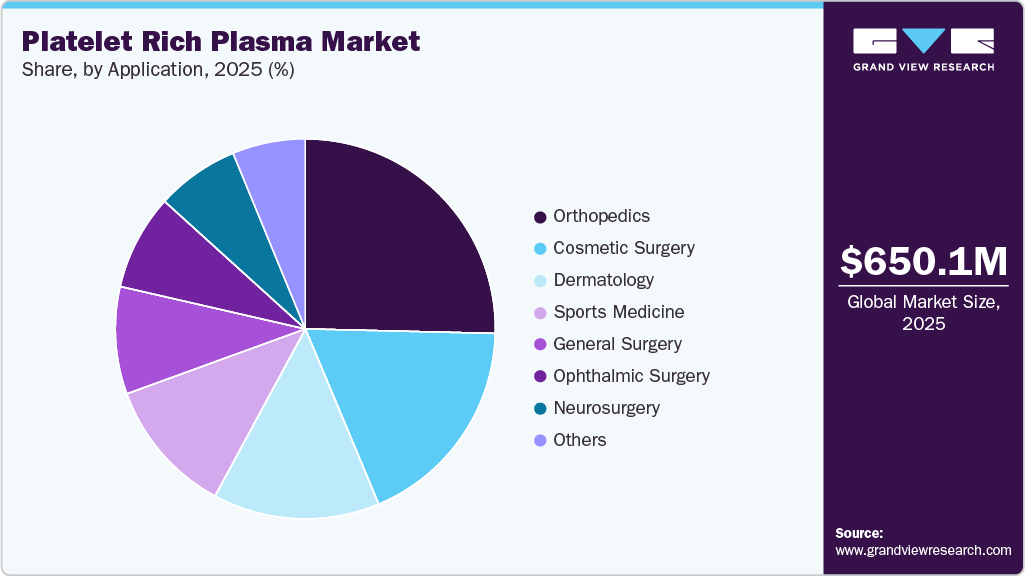
The Dermatology segment is projected to grow at the fastest CAGR of 14.62% over the forecast period, driven by expanding use of PRP in skin rejuvenation, acne scar management, chronic wound care, and hair restoration. Rising demand for minimally invasive aesthetic procedures and regenerative skin therapies, particularly in private clinics and medical spas, is accelerating adoption. Dermatology applications benefit from repeat treatment cycles, strong cash-pay acceptance, and increasing patient preference for biologically derived therapies over synthetic fillers. For instance, in 2025, International Society of Aesthetic Plastic Surgery continued to highlight PRP as a widely performed non-surgical regenerative adjunct in facial and hair procedures, reinforcing growing dermatologic utilization and supporting its fastest projected growth trajectory.
Regional Insights
North America platelet rich plasma marketheld the largest share of the global PRP market in 2025, accounting for 42.00% of global revenue, supported by high adoption in orthopedics, sports medicine, and aesthetics. Strong physician awareness, widespread availability of PRP preparation systems, and a large outpatient care base drive procedural volume. While reimbursement remains limited, cash-pay acceptance and private insurance coverage in select indications sustain utilization. The presence of leading device manufacturers and advanced training programs further reinforces regional leadership.
U.S. Platelet Rich Plasma Market Trends
The U.S. drives regional dominance due to high sports injury incidence, aging demographics, and strong demand for minimally invasive musculoskeletal treatments. PRP is widely used in orthopedic, sports medicine, dermatology, and aesthetic clinics, particularly in outpatient and private practice settings. Hospital-based orthobiologic programs and specialty clinics continue to expand PRP offerings despite variable payer coverage, supporting steady market growth.
Europe Platelet Rich Plasma Market Trends
Europe’s PRP market is characterized by moderate adoption and strong regulatory oversight. Utilization is concentrated in orthopedics, rehabilitation, and sports medicine, supported by public healthcare systems and specialist centers. Growth is steady but restrained by reimbursement limitations and conservative clinical guidelines in some countries. However, rising interest in regenerative medicine and outpatient procedures supports gradual expansion.
UK Platelet Rich Plasma (PRP) marketis driven primarily by private clinics and specialist orthopedic centers rather than broad NHS reimbursement. Demand is strongest in sports medicine, tendon injuries, and aesthetics. Clinical usage is cautious and guideline-driven, resulting in controlled but consistent growth, particularly in self-pay and private healthcare settings.
Platelet Rich Plasma (PRP) market in Germany is one of the leading PRP markets in Europe, supported by strong orthopedic care infrastructure and high physician acceptance of regenerative therapies. PRP is commonly used in musculoskeletal and rehabilitation settings, with growing uptake in outpatient clinics. Regulatory clarity around medical devices supports system availability, while reimbursement variability limits mass adoption.
France Platelet Rich Plasma (PRP) marketis moderate but steadily expanding, supported by a strong orthopedic and sports medicine ecosystem and a high concentration of specialist physicians. PRP utilization is most prominent in musculoskeletal disorders, tendon injuries, and rehabilitation, with growing adoption in dermatology and aesthetic medicine through private clinics. Public healthcare reimbursement for PRP remains limited, which constrains large-scale hospital adoption; however, private-pay procedures and supplementary insurance coverage support consistent demand. Regulatory oversight is well defined for medical devices, enabling access to PRP systems, while conservative clinical guidelines result in controlled, evidence-led growth rather than rapid commercialization.
Asia Pacific Platelet Rich Plasma Market Trends
Asia Pacific is the fastest-growing PRP region, driven by expanding private healthcare infrastructure, rising medical tourism, and increasing aesthetic procedure volumes. Countries such as China, Japan, South Korea, and India are witnessing growing PRP adoption in orthopedics, dermatology, and sports medicine. Growth is supported by large patient populations and improving access to advanced procedural care.
Platelet Rich Plasma (PRP) market in Japan is shaped by an aging population and high prevalence of degenerative musculoskeletal conditions. Adoption is supported by physician familiarity with regenerative medicine and structured healthcare delivery. Growth is steady, with increasing use in orthopedics and rehabilitation, although strict regulatory oversight moderates’ rapid expansion.
China Platelet Rich Plasma (PRP) marketrepresents a high-growth due to rapid expansion of private hospitals, orthopedic clinics, and aesthetic centers. Rising healthcare spending, sports participation, and acceptance of regenerative procedures support demand. Domestic manufacturing of PRP systems and improving regulatory pathways are enhancing accessibility and adoption.
Latin America Platelet Rich Plasma Market Trends
Latin America shows moderate PRP market growth, driven by private healthcare providers and sports medicine clinics. Brazil leads the region, supported by a large population, an active sports culture, and a growing aesthetic demand. Limited reimbursement and uneven access constrain broader penetration, but private-pay procedures support steady expansion.
Platelet Rich Plasma (PRP) market in Brazil is one of the leading PRP markets in Latin America, driven by a large population base, strong sports culture, and expanding private healthcare sector. PRP adoption is concentrated in orthopedics, sports medicine, and aesthetic applications, particularly within private hospitals and specialty clinics. Limited reimbursement under the public healthcare system constrains widespread institutional use; however, cash-pay and private insurance-supported procedures sustain demand. Growing physician familiarity with regenerative therapies and increasing patient preference for minimally invasive treatments continue to support steady PRP market expansion in Brazil.
Middle East & Africa Platelet Rich Plasma Market Trends
The Middle East & Africa PRP market is emerging, with growth concentrated in private hospitals and specialty clinics. Adoption is strongest in orthopedic and aesthetic applications, supported by medical tourism and healthcare investment in urban centers. The market development remains uneven across countries due to infrastructure and access gaps.
Platelet Rich Plasma (PRP) market in Saudi Arabia is a key PRP growth market within the Middle East, supported by healthcare modernization initiatives and expansion of private and specialty care. Rising demand for sports medicine, orthopedic treatments, and aesthetic procedures is accelerating PRP adoption, particularly in hospital and clinic-based regenerative medicine services.
Key Platelet Rich Plasma Company Insights
Major players are opting for strategies such as geographical expansion, new product launches, partnerships, mergers, and acquisitions in key regions. For instance, in May 2023, Dr John Kahen, the founder of Beverly Hills Med Spa received U.S. patent for Smart PRP therapy. Smart PRP is majorly used for hair restoration and other applications such as skin rejuvenation, skin scarring, pigmentation, and texture.
Key Platelet Rich Plasma Companies:
The following key companies have been profiled for this study on the platelet rich plasma (PRP) market.
- Johnson & Johnson Services, Inc.
- Arthrex, Inc.
- EmCyte Corporation
- Dr PRP USA LLC
- Juventix Regenerative Medical, LLC.
- Terumo Corporation
- Zimmer Biomet
- Stryker
- Apex Biologix
- Celling Biosciences, Inc.
Recent Developments
-
In August 2025, Athletico Physical Therapy broadened regenerative and orthobiologic services, including PRP, across its outpatient clinic network, highlighting the accelerating shift of PRP delivery toward clinic-based, cash-pay, and minimally invasive care settings.
-
In April 2025, Arthrex continued to emphasize leukocyte-poor PRP systems within its orthobiologics portfolio, underscoring clinician preference for Pure PRP formulations in musculoskeletal applications that require reduced inflammatory response and repeat treatment compatibility.
-
In January 2025, the American Academy of Orthopaedic Surgeons continued to reference platelet-rich plasma within its evidence-based discussions for select tendon and joint disorders, reinforcing PRP’s clinical legitimacy and supporting sustained orthopedic adoption despite ongoing outcome variability across indications.
Platelet Rich Plasma Market Report Scope
Report Attribute
Details
Market size value in 2026
USD 733.90 million
Revenue forecast in 2033
USD 1,751.45 million
Growth rate
CAGR of 13.2% from 2026 to 2033
Base year for estimation
2025
Historical data
2021 - 2024
Forecast period
2026 - 2033
Quantitative units
Revenue in USD million/million, and CAGR from 2026 to 2033
Report coverage
Revenue forecast, company ranking, competitive landscape, growth factors, trends
Segments covered
Type, application, end-use, region
Regional scope
North America; Europe; Asia Pacific; Latin America; Middle East & Africa
Country scope
U.S.; Canada; Mexico; UK; Germany; France; Italy; Spain; Denmark; Sweden; Norway; China; Japan; India; Australia; South Korea; Thailand; Brazil; Argentina; South Africa; Saudi Arabia; UAE; Kuwait
Key company profiled
Johnson & Johnson Services, Inc.; Arthrex, Inc.; EmCyte Corporation; Dr PRP USA LLC; Juventix Regenerative Medical LLC.; Terumo Corporation; Zimmer Biomet; Stryker; Apex Biologix; Celling Biosciences, Inc.
Customization scope
Free report customization (equivalent up to 8 analysts working days) with purchase. Addition or alteration to country, regional & segment scope.
Pricing and purchase options
Avail customized purchase options to meet your exact research needs. Explore purchase options
Global Platelet Rich Plasma Market Report Segmentation
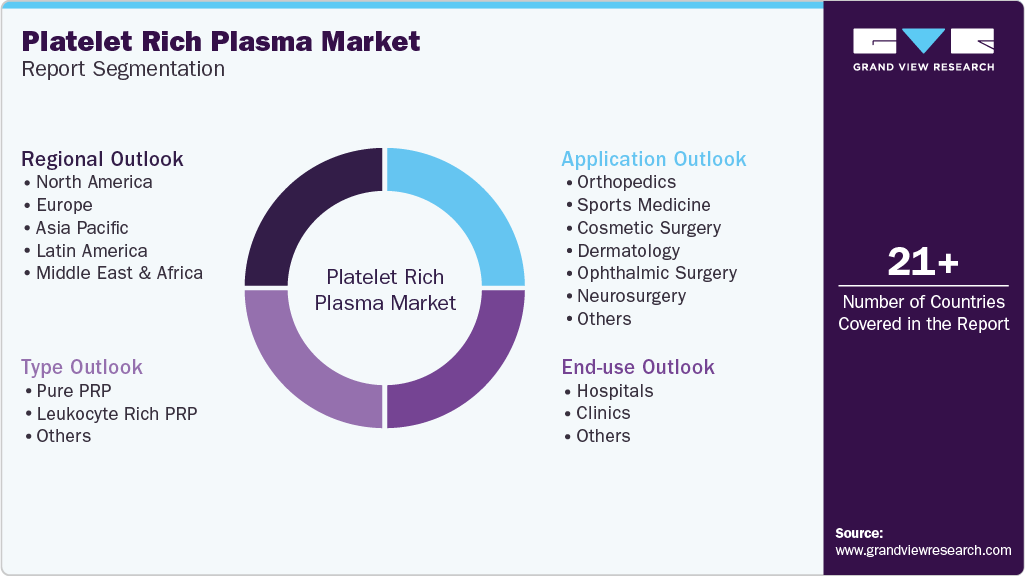
This report forecasts revenue growth at global, regional, and country levels and provides an analysis of the latest industry trends in each of the sub-segments from 2021 to 2033. For this study, Grand View Research has segmented the global platelet rich plasma (PRP) market report based on type, application, end-use, and region:
-
Type Outlook (Revenue, USD Million, 2021 - 2033)
-
Pure PRP
-
Leukocyte Rich PRP
-
Others
-
-
Application Outlook (Revenue, USD Million, 2021 - 2033)
-
Orthopedics
-
Sports Medicine
-
Cosmetic Surgery
-
Dermatology
-
Ulcer Healing
-
Venous Ulcer
-
Traumatic Ulcer
-
Diabetic Ulcer
-
Pyoderma Gangrenosum Ulcer
-
Trophic Ulcer
-
Vasculitic Ulcer
-
Others
-
-
Others
-
-
Ophthalmic Surgery
-
Neurosurgery
-
General Surgery
-
Others
-
-
End-use Outlook (Revenue, USD Million, 2021 - 2033)
-
Hospitals
-
Clinics
-
Others
-
-
Regional Outlook (Revenue, USD Million, 2021 - 2033)
-
North America
-
U.S.
-
Canada
-
Mexico
-
-
Europe
-
UK
-
Germany
-
France
-
Italy
-
Spain
-
Denmark
-
Sweden
-
Norway
-
-
Asia Pacific
-
Japan
-
China
-
India
-
Australia
-
South Korea
-
Thailand
-
-
Latin America
-
Brazil
-
Argentina
-
-
Middle East & Africa
-
South Africa
-
Saudi Arabia
-
UAE
-
Kuwait
-
-
Frequently Asked Questions About This Report
b. The global platelet rich plasma market size was estimated at USD 650.13 million in 2025 and is expected to reach USD 733.90 million in 2026.
b. The global platelet rich plasma market is expected to grow at a compound annual growth rate of 13.23% from 2026 to 2033 to reach USD 1,751.45 million by 2033.
b. The Pure PRP segment dominated the market with the largest revenue share of 51.12% in 2025, as it represents the most clinically accepted and operationally scalable PRP formulation.
b. Key factors driving the platelet rich plasma market growth include the growing geriatric population, rising orthopedic conditions, and huge investments by government bodies encouraging plasma therapy development.
b. Some key players operating in the platelet rich plasma market include Johnson & Johnson Services, Inc, Arthrex, Inc., EmCyte Corporation, Dr PRP USA LLC, Juventix Regenerative Medical, LLC., Terumo Corporation, Zimmer Biomet, Stryker, Apex Biologix, Celling Biosciences, Inc.


Share this report with your colleague or friend.
Need a Tailored Report?
Customize this report to your needs — add regions, segments, or data points, with 20% free customization.


ISO 9001:2015 & 27001:2022 Certified
We are GDPR and CCPA compliant! Your transaction & personal information is safe and secure. For more details, please read our privacy policy.
Trusted market insights - try a free sample
See how our reports are structured and why industry leaders rely on Grand View Research. Get a free sample or ask us to tailor this report to your needs.