U.S. Probiotic Dietary Supplement Market Summary
The U.S. probiotic dietary supplement market size was estimated at USD 2.52 billion in 2024 and is projected to reach USD 3.53 billion by 2030, growing at a CAGR of 5.6% from 2025 to 2030. The increasing awareness of gut health, fueled by rising digestive and immune health concerns, drives market growth.
Key Market Trends & Insights
- By form, the tablets & softgels segment held the largest market share of 38.3% in 2024.
- The chewables & gummies segment is expected to grow at a CAGR of 7.2% from 2025 to 2030.
- By application, the gastrointestinal health segment dominated the market with a revenue share of 64.2% in 2024.
- By end use, the adults segment held the largest revenue share of 56.1% in 2024.
Market Size & Forecast
- 2024 Market Size: USD 2.52 Billion
- 2030 Projected Market Size: USD 3.53 Billion
- CAGR (2025-2030): 5.6%
In addition, expanding e-commerce and the growing influence of health-focused social media have enhanced accessibility and consumer adoption, supporting market growth. Consumers in the U.S. have become more proactive about maintaining digestive balance and strengthening their body’s natural defenses, positioning probiotics as an essential part of daily wellness routines. Scientific validation further strengthens consumer confidence and drives demand in the U.S. probiotic dietary supplement industry. The National Center for Complementary and Integrative Health (NCCIH) describes probiotics as live microorganisms that may provide health benefits when consumed in adequate amount. The agency highlights that probiotics show promise for certain uses, but also notes that more research is needed to determine which specific strains and dosages are most effective for particular populations and purpose. This balanced scientific perspective promotes transparency, motivating manufacturers to invest in clinical validation and encouraging consumers to choose products backed by credible research, thereby driving steady market expansion.
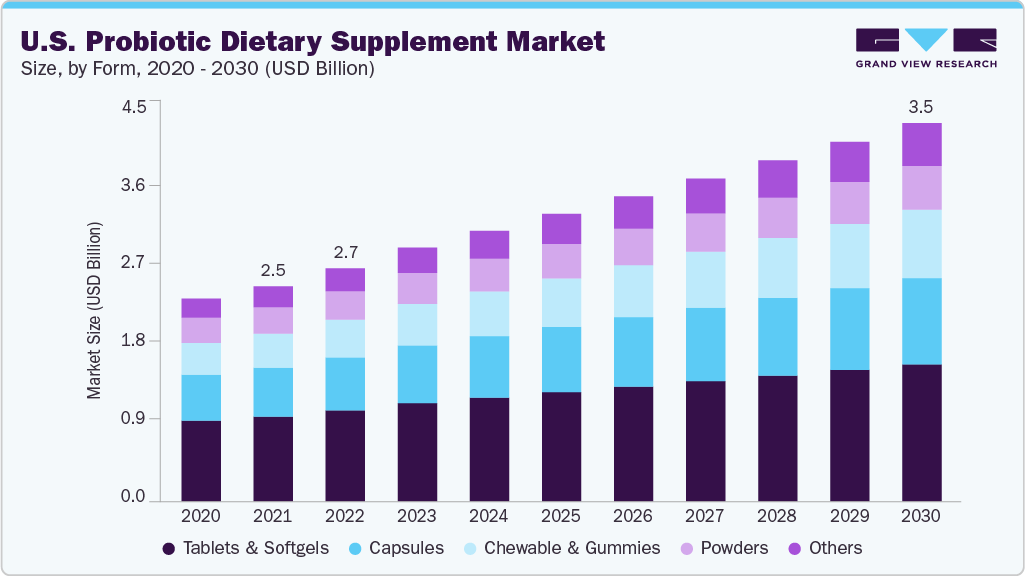
Product innovation continues to drive the U.S. market expansion, with companies introducing diverse probiotic supplement forms, such as capsules, gummies, powders, and chewables, to enhance convenience and compliance. Manufacturers develop formulations with clinically supported strains, multi-strain blends, and added functional ingredients such as prebiotics or vitamins to improve efficacy. This shift toward user-friendly, evidence-based, and lifestyle-oriented products, strengthens consumer trust and encourages sustained use, especially among younger and health-conscious demographics.
Consumer Insights
In the U.S., consumers are increasingly turning to probiotic dietary supplements as part of a proactive approach to digestive and immune health. According to the NCCIH, probiotics are among the most commonly used dietary supplements by American adults. Many consumers consume probiotics daily to maintain gut balance, reduce bloating, or support immunity, reflecting a shift toward preventive wellness rather than reactive treatment. The growing popularity of personalized nutrition and clean-label supplements also influences purchasing decisions, as users increasingly seek transparent ingredient lists and clinically validated strains. The evolving health awareness, combined with easy retail availability across pharmacies and online platforms, continues to drive consistent product adoption across varied demographic groups in the U.S.
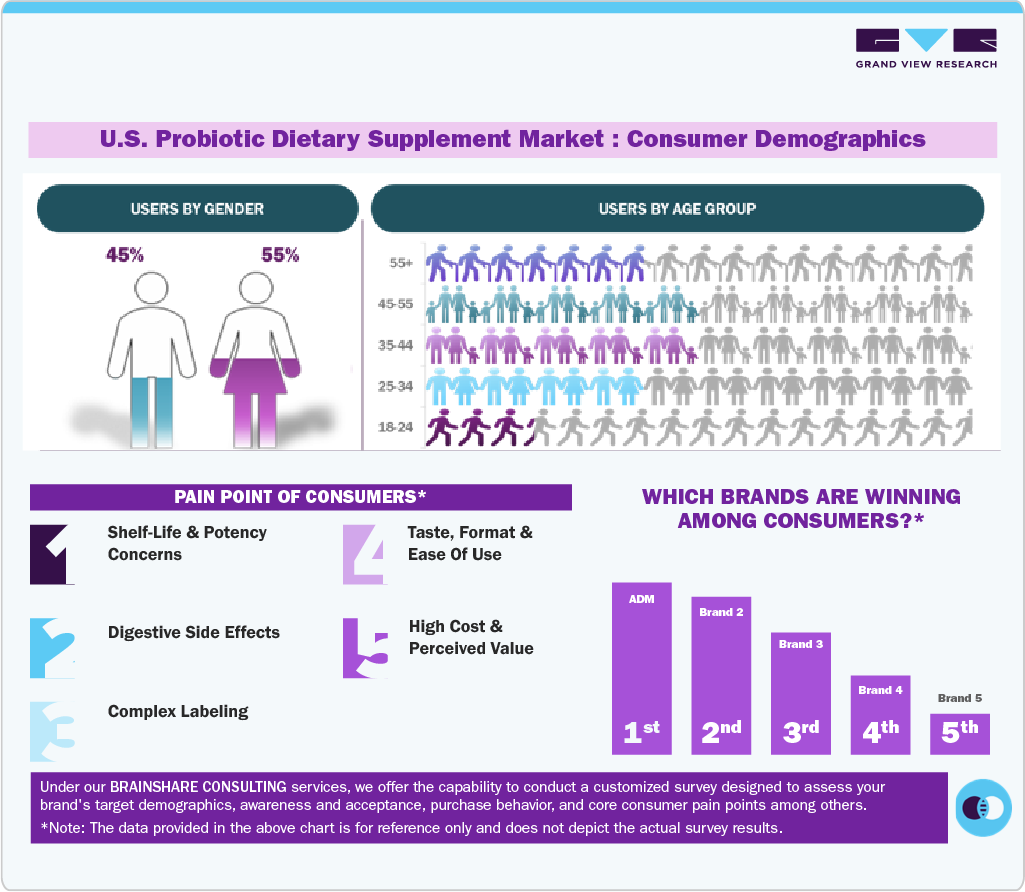
The U.S. probiotic dietary supplement industry attracts consumers across a diverse range of age and gender groups. Adult consumers form the core segment, motivated by digestive wellness, immune support, and overall preventive health. Women often represent a slightly larger share of users, reflecting a higher propensity for dietary supplement adoption and health-conscious behaviors. Younger adults show growing interest in convenient formats such as gummies and powders. Middle-aged and older adults focus on clinically supported formulations that promote long-term gut and immune health. Parents are increasingly giving probiotics to children and infants to support early digestive and immune development. The market spans all life stages, encompassing individuals seeking general wellness, targeted health benefits, and functional nutrition solutions.
Form Insights
The tablets & softgels segment held the largest market revenue share of 38.3% in 2024. The probiotics dietary supplements segment, encompassing tablets and softgels, appeals to consumers seeking convenient, reliable, and scientifically validated probiotic intake. Tablets are preferred by those who favor a solid, often smaller, and easily portable dosage form, offering precise probiotic titration. In contrast, softgels stand out due to their enhanced bioavailability and encapsulated liquid or semi-solid probiotic formulations, which cater to individuals looking for easy swallowing and rapid digestion. Both tablets and softgels benefit from advanced encapsulation technologies that improve the viability of probiotic strains and ensure their targeted delivery to the gut.
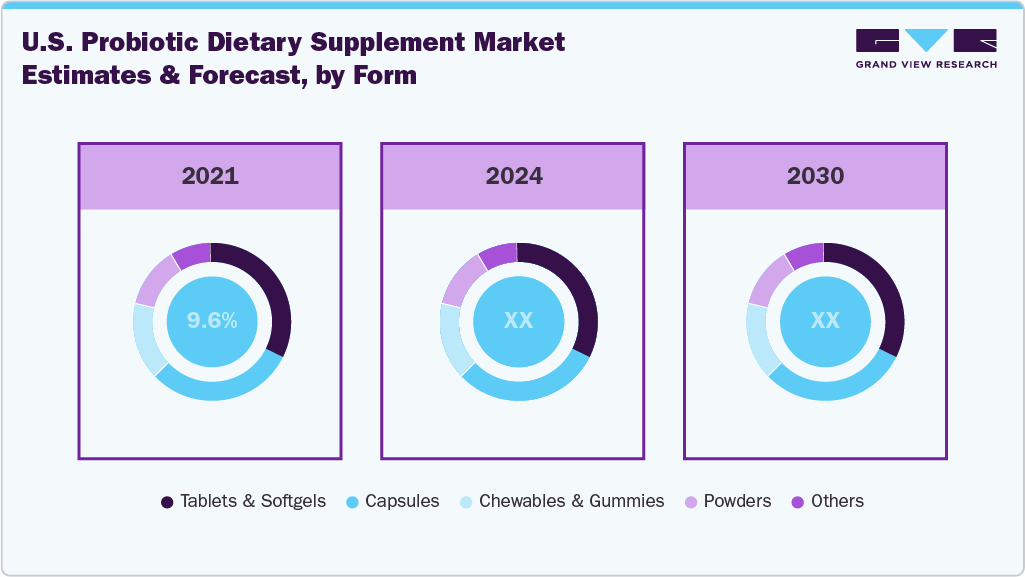
The chewables & gummies segment is expected to grow at a CAGR of 7.2% over the forecast period. One of the primary drivers is the increasing consumer preference for convenient and palatable alternatives to traditional pill-based supplements. Gummy supplements offer a tasty and easy-to-consume format, making them particularly appealing to children and adults who may find swallowing pills challenging. This shift towards more enjoyable supplement formats aligns with the broader trend of consumers seeking functional foods that support overall wellness. The chewable and gummy formats also align well with increasing health awareness and lifestyle trends demanding functional yet enjoyable health products.
Application Insights
The gastrointestinal health segment dominated the market with a revenue share of 64.2% in 2024. The dominance of this segment is primarily driven by the increasing prevalence of digestive disorders and a growing consumer focus on gut health. Conditions such as antibiotic-associated diarrhea, irritable bowel syndrome (IBS), and inflammatory bowel disease (IBD) have increased awareness about the significance of maintaining a healthy gut microbiome. Probiotics are well-regarded for maintaining a balance of gut bacteria, improving digestion, and enhancing overall gastrointestinal function. This growing recognition has led to a significant rise in consumer interest in probiotic supplements focused on gut health, shaping the industry's product development and marketing strategies. Consequently, gastrointestinal health remains a key factor driving growth and innovation in the U.S. market.
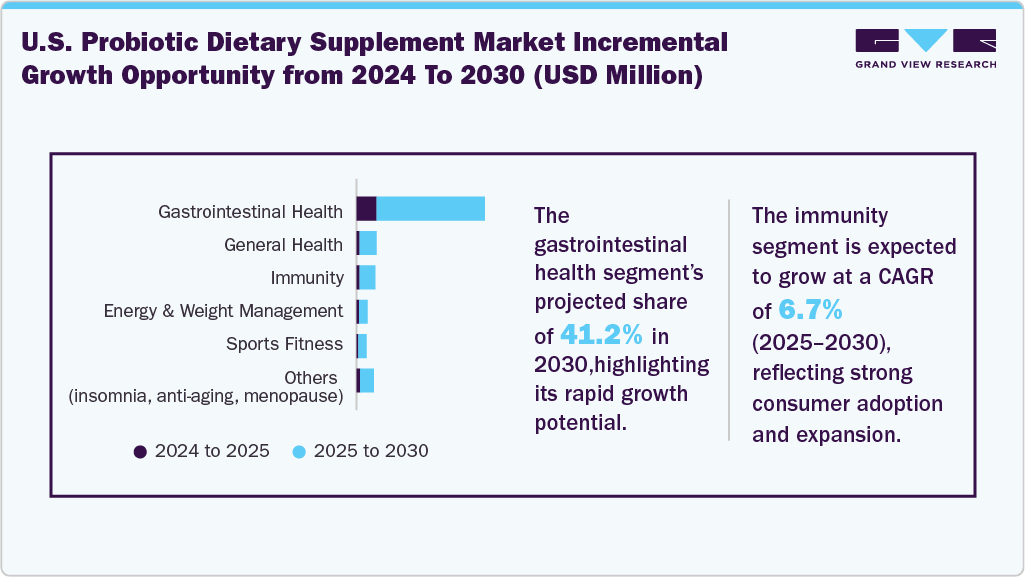
The immunity segment is expected to grow at the fastest CAGR over the forecast period. The segment's rapid growth is primarily driven by increasing consumer awareness of the critical role of gut health in overall immune function. Probiotics, particularly strains such as Lactobacillus rhamnosus and Bifidobacterium lactis, are recognized for their potential to enhance the body's natural defenses by promoting a balanced gut microbiome. The health landscape has further strengthened this awareness, leading to a surge in demand for supplements that support immune health.
End Use Insights
The adult segment accounted for the largest revenue share of 56.1% in 2024. Lifestyle-focused health management and the desire for convenient daily wellness solutions are key factors contributing to the growth of this segment. Adults increasingly seek supplements to support digestive balance, immune function, and overall vitality amid busy routines and dietary gaps. The availability of distinct product formats, such as tablets, softgels, gummies, and powders, allows consumers to choose options that fit their preferences and schedules, encouraging consistent use. This combination of convenience, targeted benefits, and lifestyle alignment has positioned adults as the fastest-growing consumer group in the market.
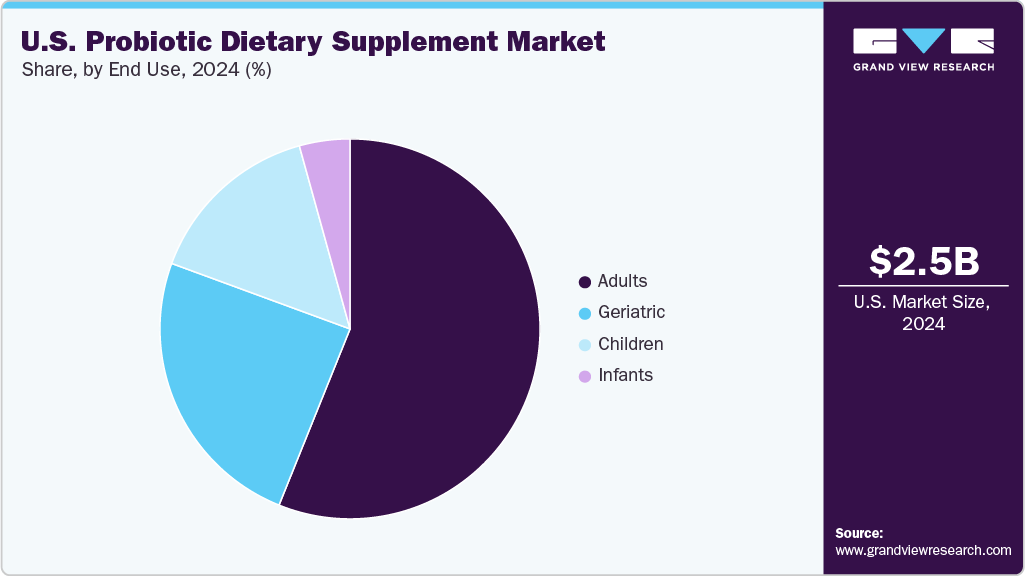
The infants segment is projected to grow at the fastest CAGR over the forecast period, driven by increasing parental focus on early-life digestive health and immune system support. Caregivers seek probiotics that can promote healthy gut microbiota, alleviate colic, and reduce the risk of gastrointestinal discomfort in infants. Products designed for this age group, such as liquid drops and powders, offer easy administration and age-appropriate dosing, ensuring safety and convenience for parents.
Key U.S. Probiotic Dietary Supplement Company Insights
Some key companies in the U.S. probiotic dietary supplement industry include Vitakem Nutraceutical Inc., BIOHMHealth, and NOW Foods.
- Vitakem Nutraceutical, Inc., specializes in custom nutraceutical solutions. The company offers powders, capsules, tablets, gummies, softgels, and more, tailored to consumers' needs.
Key U.S. Probiotic Dietary Supplement Companies:
- BASF SE
- Vitakem Nutraceutical Inc.
- dsm-firmenich
- BIOHMHealth
- Novonesis Group
- ADM
- ProbioFerm
Recent Developments
-
In October 2025, Lemme introduced Lemme Purr Lollipops and announced that it was launching its innovative Lemme Purr Probiotic Lollipops, exclusively at Target on October 26th, building on its status as the top vaginal probiotic gummy brand. The lollipops include the SNZ 1969 probiotic strain, real pineapple extract, and vitamin C, which turns feminine self-care into a delicious daily ritual.
-
In October 2024, ADM introduced a platform offering over 25 market-ready food and supplement concepts tailored for users of GLP-1 and other anti-obesity medications (AOMs).
U.S. Probiotic Dietary Supplement Market Report Scope
|
Report Attribute
|
Details
|
|
Market size value in 2025
|
USD 2.68 billion
|
|
Revenue forecast in 2030
|
USD 3.53 billion
|
|
Growth rate
|
CAGR of 5.6% from 2025 to 2030
|
|
Base year for estimation
|
2024
|
|
Historical data
|
2018 - 2023
|
|
Forecast period
|
2025 - 2030
|
|
Quantitative units
|
Revenue in USD million/billion and CAGR from 2025 to 2030
|
|
Report coverage
|
Revenue forecast, company ranking, competitive landscape, growth factors, trends
|
|
Segments covered
|
Form, application, end use
|
|
Key company profiled
|
Vitakem Nutraceutical Inc.; dsm-firmenich; BIOHMHealth; Novonesis Group; ADM; ProbioFerm, NOW Foods
|
|
Customization scope
|
Free report customization (equivalent to 8 analysts working days) with purchase. Addition or alteration to country & segment scope.
|
|
Pricing and purchase options
|
Avail customized purchase options to meet your exact research needs. Explore purchase options
|
U.S. Probiotic Dietary Supplement Market Report Segmentation
This report forecasts revenue growth at the country level and provides an analysis of the latest industry trends and opportunities in each of the sub-segments from 2018 to 2030. For this study, Grand View Research has segmented the U.S. probiotic dietary supplement market report based on form, application, and end use.
-
Form Outlook (Revenue, USD Million, 2018 - 2030)
-
Chewable & Gummies
-
Capsules
-
Powders
-
Tablets & Softgels
-
Others
-
Application Outlook (Revenue, USD Million, 2018 - 2030)
-
Sports Fitness
-
Energy & Weight Management
-
General Health
-
Bone & Joint Health
-
Gastrointestinal Health
-
Immunity
-
Cardiac Health
-
Diabetes
-
Anti-cancer
-
Skin/Hair/Nails
-
Brain/Mental Health
-
Others (Insomnia, Anti-aging, Menopause)
-
End Use Outlook (Revenue, USD Million, 2018 - 2030)
-
Infants
-
Children
-
Adults
-
Geriatric
Frequently Asked Questions About This Report
b. The U.S. probiotic dietary supplements market size was estimated at USD 2.52 billion in 2024 and is expected to reach USD 2.68 billion in 2025.
b. The U.S. probiotic dietary supplements market is expected to grow at a compounded annual growth rate of 5.6% from 2025 to 2030 to reach USD 3.53 billion by 2030.
b. The tablets & softgels segment held the largest market revenue share of 38.3% in 2024. The probiotics dietary supplements segment, encompassing tablets and softgels, appeals to consumers seeking convenient, reliable, and scientifically validated probiotic intake.
b. Some key players operating in the U.S. probiotic dietary supplements market include dsm-firmenich; BIOHMHealth; Novonesis Group; NOW Foods; ProbioFerm; Amway; Abbott; Nestle Health Science; Glanbia PLC; and BioGaia.
b. The increasing awareness of gut health, fueled by rising digestive and immune health concerns, drives market growth.

 Download Sample Report