- Home
- »
- Consumer F&B
- »
-
U.S. Frozen Fruits Market Size, Share, Industry Report, 2033GVR Report cover
![U.S. Frozen Fruits Market Size, Share & Trends Report]()
U.S. Frozen Fruits Market (2026 - 2033) Size, Share & Trends Analysis Report By Product (Strawberries, Raspberries, Blueberries, Blackberries, Peaches, Cherries, Apricots, Apples), By Distribution Channel (Traditional Grocery Stores), By Region, And Segment Forecasts
- Report ID: GVR-4-68040-873-7
- Number of Report Pages: 109
- Format: PDF
- Historical Range: 2021 - 2025
- Forecast Period: 2026 - 2033
- Industry: Consumer Goods
- Report Summary
- Table of Contents
- Segmentation
- Methodology
- Download FREE Sample
-
 Download Sample Report
U.S. Frozen Fruits Market Summary
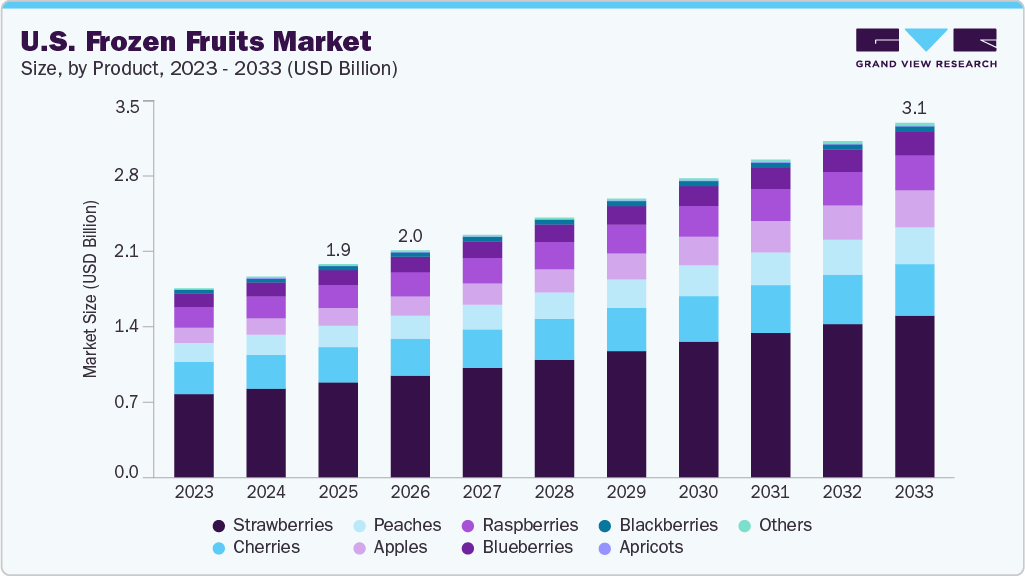
The U.S. frozen fruits market size was estimated at USD 1.89 billion in 2025 and is projected to reach USD 3.14 billion by 2033, growing at a CAGR of 6.6% from 2026 to 2033. The market growth is driven by the extended shelf life, convenience, and year-round availability offered by frozen fruit products, which align well with the increasingly time-constrained lifestyles of U.S. consumers.
Key Market Trends & Insights
- The Northeast region accounted for the largest revenue share of 16.30% in 2025.
- The South Central region is growing at the fastest CAGR of 9.2% during the forecast period.
- By product, the strawberries segment held the largest revenue share of 44.72% in 2025.
- By distribution channel, the online segment is expected to grow at a CAGR of 10.7% from 2026 to 2033.
Market Size & Forecast
- 2025 Market Size: USD 1.89 Billion
- 2033 Projected Market Size: USD 3.14 Billion
- CAGR (2026-2033): 26.6%
- Northeast U.S.: Largest market in 2025
- South Central U.S.: Fastest growing market
In addition, the rising popularity of smoothies, plant-based diets, and healthy snacking is fueling demand for frozen fruits in both household and foodservice applications. Consumers are increasingly incorporating frozen berries, mangoes, and mixed fruit blends into breakfast bowls, beverages, and desserts, further supporting market expansion. Advancements in freezing technologies that preserve nutritional value and flavor are also contributing to the growing adoption of frozen fruits across the U.S. market.Many households are increasingly seeking foods that reduce preparation time and minimize food waste, which is supporting demand in the frozen fruits & vegetables market. Frozen products offer extended shelf life without spoilage and provide versatile applications across meals, including smoothies, baking, desserts, and ready-to-blend beverages, without the perishability concerns associated with fresh produce.
In fact, 94% of U.S. households purchase frozen fruits and vegetables, with convenience, longer storage, and reduced food waste cited as key factors driving adoption. These benefits continue to strengthen the position of frozen products within the frozen fruits & vegetables market, particularly among consumers seeking practical and nutritious ingredient options.
A significant portion of the U.S. population does not meet dietary recommendations for fruit intake. According to the USDA’s Economic Research Service, about 80% of U.S. consumers consume less fruit than the Dietary Guidelines for Americans suggest, which include fresh, canned, frozen, and juice forms. This persistent gap in fruit consumption highlights an opportunity for frozen fruits to serve as a convenient way to help individuals increase overall fruit intake, since frozen products are readily available year-round and can be integrated into daily meals with minimal preparation.
Public health messaging and nutrition guidelines emphasize the importance of fruit consumption for chronic disease prevention and overall wellness. While many Americans fall short of those guidelines, frozen fruits retain much of the nutritional quality of fresh produce and can help people meet recommended nutrient intakes. Diets higher in fruits and vegetables, including frozen options, are associated with improved nutritional profiles and higher intake of key nutrients such as potassium. This strengthens consumer perception of frozen fruits as a health-oriented choice.
The rising popularity of plant-based diets and functional foods in the U.S. is supporting increased demand within the U.S. frozen food market. Many consumers, particularly younger demographics, are incorporating plant-based ingredients into their daily diets for health, ethical, and environmental reasons.
Frozen fruits, especially antioxidant-rich berries, align well with these evolving dietary preferences and are widely used in smoothies, breakfast bowls, and other functional food applications that emphasize nutrient density and convenience. As a result, frozen fruits continue to gain traction as a versatile and health-oriented category within the U.S. frozen food market.
The annual availability of frozen fruit in the U.S. has grown substantially over previous decades, with a 61 % increase in supply to about 4.8 pounds per person, largely driven by frozen berries, a core category in retail frozen fruit offerings. This long-term expansion underscores the gradual integration of frozen fruit into American diets and the channel’s adaptability to consumer preferences.
The broader availability of frozen fruits through mainstream retail, e-commerce, and foodservice channels has made these products more accessible to U.S. consumers. Retailers are increasingly stocking a wide assortment of frozen fruit SKUs, and online grocery platforms offer delivery of frozen produce directly to households. This enhanced distribution infrastructure supports purchase frequency and makes frozen fruits a convenient option regardless of season or geographic location.
Consumer Insights for the U.S. Frozen Fruits Market:
U.S. consumers are increasingly integrating frozen fruits into their dietary habits as a way to support health-oriented eating without compromising on convenience. A large majority of American households, about 94%, purchase frozen fruits and vegetables, with many shoppers noting that having them on hand makes it easier to increase overall fruit intake and reduce food waste due to longer shelf life and flexible portioning. This reflects a broader tendency toward practical nutrition solutions where busy lifestyles and limited food preparation time drive preference for products that can be used directly in smoothies, desserts, and other meals with minimal effort. In addition, frozen fruit is often used as a viable substitute between fresh produce shopping trips, which appeals especially to consumers managing time and budget constraints.
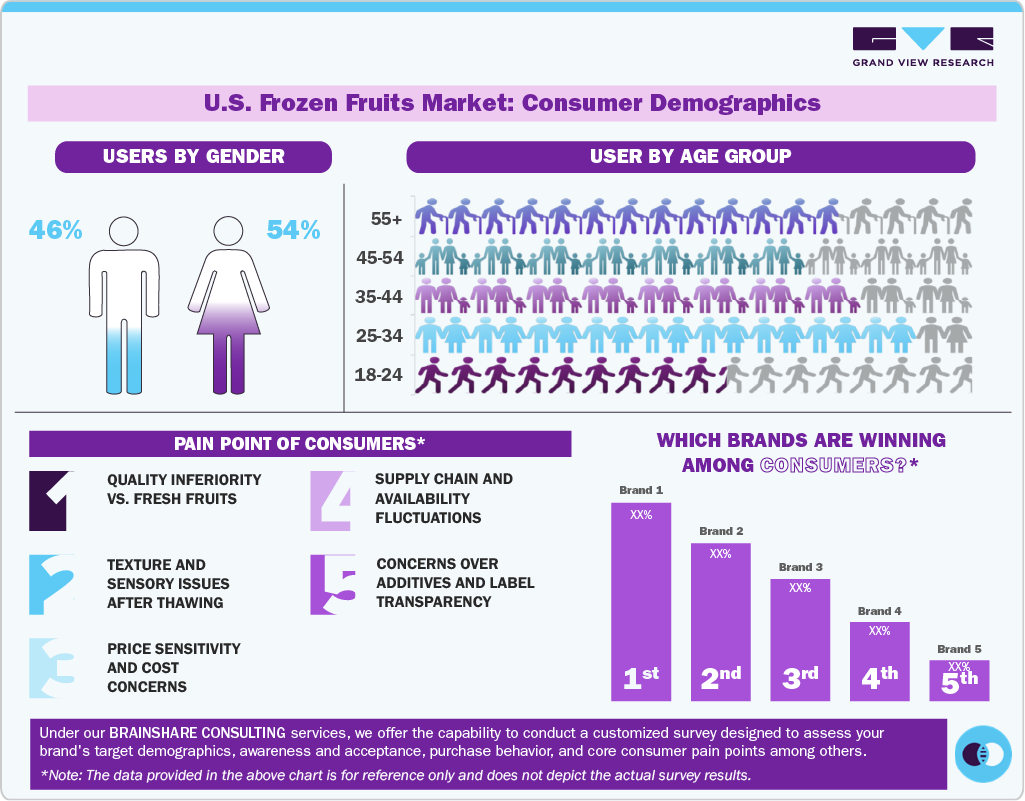
At the same time, consumer preferences are shifting toward authenticity and sustainability within the frozen fruits category. Health-focused shoppers are showing strong interest in options that align with organic, non-GMO, and clean-label attributes, representative of a wider trend toward transparent ingredient sourcing and environmentally conscious consumption. Preferences for organic and sustainably sourced frozen fruit are growing as part of this trend, influenced by health awareness and environmental concern among Millennials and Gen Z shoppers. There is also a clear leaning toward product formats that support convenient eating patterns, such as pre-cut, ready-to-blend packs and online grocery offerings, suggesting that digital purchasing behavior and ease of use are becoming integral to how frozen fruits are chosen in the U.S. market.
Product Insights
The frozen strawberries market accounted for a share of 44.72% of the U.S. revenue in 2025. Strawberries are widely consumed not only as snacks but also as ingredients in smoothies, yogurts, desserts, and baking, creating sustained year-round demand even when fresh fruit prices spike during off-seasons. U.S. imports of over 180,000 metric tons of frozen strawberries in 2023, much of which feeds yogurt and smoothie manufacturing, illustrate this structural demand for strawberry products in both retail and foodservice applications. The fruit’s natural sweetness and perceived nutritional value (rich in vitamins and antioxidants) further support its preference among health-oriented consumers who use frozen berries as convenient, ready-to-blend ingredients.
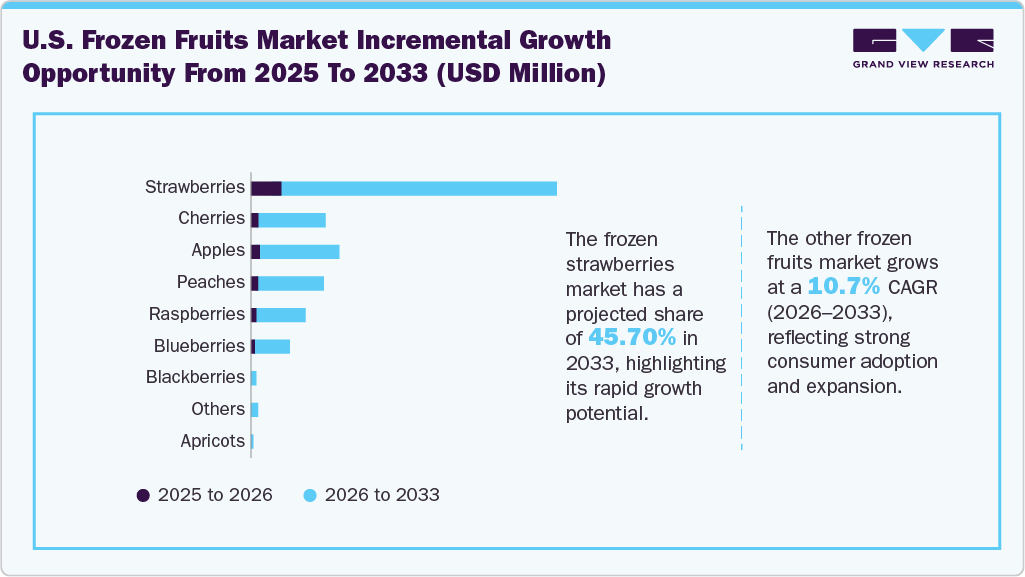
The frozen apples market is projected to grow at a CAGR of 10.7% from 2026 to 2033, supported by evolving consumer preferences and expanding culinary applications beyond traditional fruit categories. Frozen apples are increasingly incorporated into smoothie bowls, baked desserts, breakfast items, and functional food recipes, aligning with growing interest in plant-forward diets and convenient, ingredient-based cooking.
Rising consumer demand for nutrient-dense, versatile fruit ingredients is encouraging greater adoption in both household kitchens and foodservice establishments. In addition, frozen formats provide year-round availability, extended shelf life, and minimal preparation, making them a practical option for recipes that require consistent quality regardless of seasonal apple production.
Distribution Channel Insights
Sales of frozen fruits through traditional grocery stores accounted for a 37.78% revenue share in 2025. Supermarkets and big-box retailers remain key purchasing channels, allowing consumers to inspect products directly and access a wide variety of frozen food options. Major retailers such as Walmart, Kroger, and Costco dominate food sales in the U.S., leveraging extensive frozen aisle space, private label offerings, and promotional pricing to attract value-driven shoppers.
Despite the growth of online grocery platforms, brick-and-mortar stores continue to account for the majority of food retail sales, as many consumers prefer in-person product selection, impulse purchases, and one-stop shopping for both food and household essentials. This strong retail presence highlights how frozen fruits remain closely integrated into regular grocery shopping routines, particularly among households purchasing ingredients for multiple meals in a single trip.
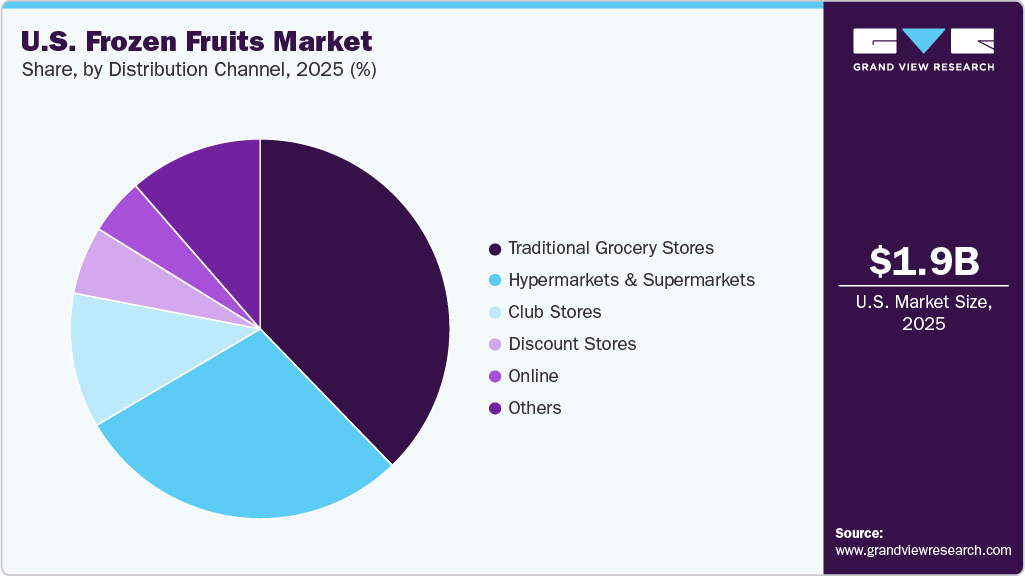
Sales of frozen fruits through online retail channels is expected to grow at a CAGR of 10.7% over the forecast period, driven by broader shifts in U.S. grocery behavior, where digital ordering and home delivery have gained traction following the pandemic. E-commerce for groceries, including frozen foods, has been projected to expand markedly, with online grocery sales climbing from under double-digit shares to potentially over 20% of total U.S. grocery sales by 2025 as infrastructure and consumer comfort increase. Retailers are responding by enhancing cold-chain logistics, adding same-day or next-day delivery options, and integrating frozen produce into convenient digital shopping experiences. For instance, Amazon’s expansion of perishable delivery services to include frozen items, available in thousands of U.S. cities, makes it easier for consumers to order items such as frozen strawberries alongside everyday groceries and receive them at home quickly. These convenience enhancements are reshaping purchase preferences, particularly among urban and time-pressed consumers who value speed, contactless shopping, and seamless integration of perishables into online carts.
Regional Insights
Northeast U.S. Frozen Fruits Market Trends
The Northeast U.S. frozen fruits market accounted for a share of 16.30% of the U.S. revenue in 2025. The Northeast U.S. region’s frozen fruits demand is driven by dense urban populations and time-compressed lifestyles, which make year-round, ready-to-use frozen produce attractive for busy households. Urban centers such as New York, Boston, and Philadelphia have large commuter populations and high concentrations of professionals who often prioritize convenience without sacrificing nutrition; frozen fruits offer a quick way to add fruit to smoothies, breakfast bowls, and desserts without the prep time required for fresh produce, a key factor as urban consumers increasingly seek simplified meal components that save time.
Seasonal variability also plays a role in the Northeast: cold winters and shorter local growing seasons limit fresh fruit availability and raise prices for seasonal produce, which can encourage consumers to choose frozen alternatives that are consistently available and cost-effective even during off-peak months. The region’s strong retail penetration and high income levels support demand for premium frozen fruit varieties, including organic and functional formats, as consumers there tend to value health-oriented food options while navigating limited seasonal fresh supply.
South Central U.S. Frozen Fruits Market Trends
The South Central U.S. frozen fruits market is projected to grow at a CAGR of 9.2% from 2026 to 2033. The South Central U.S., including fast-growing states such as Texas and Arkansas, benefits from rapid population growth and shifting demographic patterns that support rising frozen fruits consumption. Metropolitan areas like Northwest Arkansas have been among the fastest-growing in the nation, driven by corporate expansion and in-migration, which increases demand for convenient grocery solutions as families and young workers balance busy schedules and limited preparation time at home.
In this region, economic diversification and expanding retail infrastructure, from big-box supermarkets to regional grocery chains, make frozen fruits increasingly accessible to a wide base of consumers. South Central consumers often prioritize value and convenience, especially as urbanization increases and dual-income households seek food options that reduce meal preparation time; this enhances the appeal of frozen fruits as a nutritious, ready-to-use ingredient that can be easily incorporated into breakfasts, snacks, and quick meals.
Key U.S. Frozen Fruits Company Insights
The U.S. frozen fruits market is populated by large multinational agrifood companies and established domestic processors that leverage scale, distribution reach, and diversified product portfolios. Brands such as Dole Food Company and Del Monte Foods are prominent because of their global sourcing networks, long-standing retail relationships, and broad frozen fruit offerings that range from berries to mixed fruit blends, making them household names in both conventional and value retail channels. These companies emphasize product consistency and year-round availability, which maintains shelf space in major grocery chains.
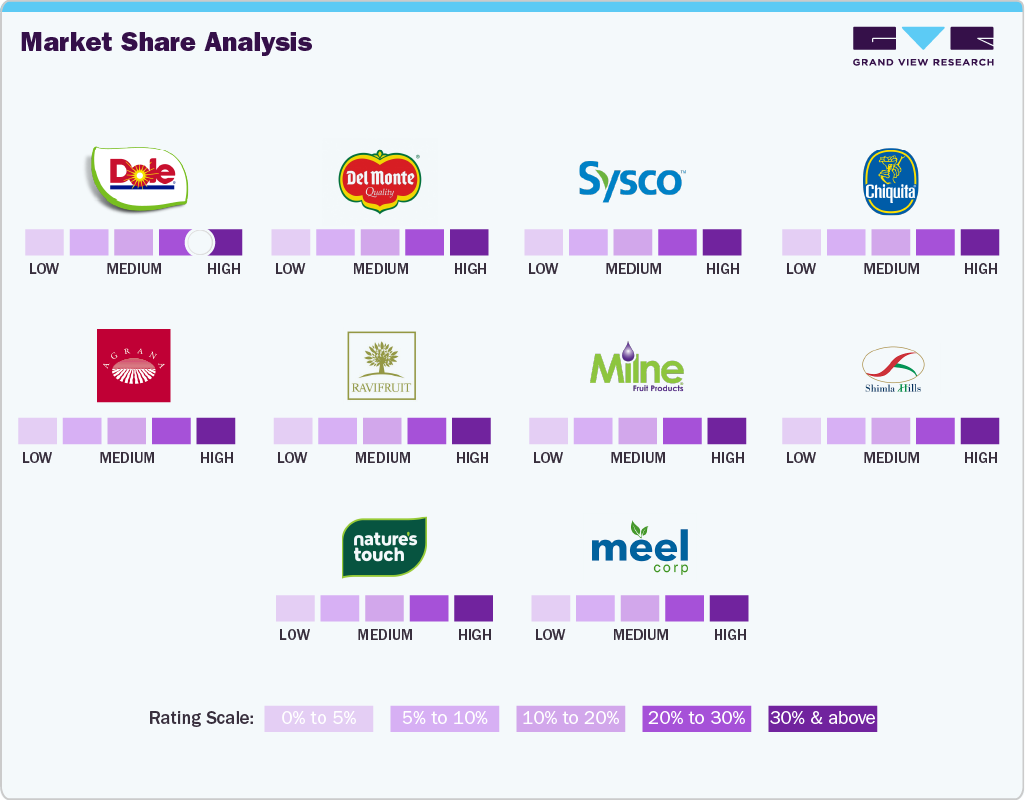
Key U.S. Frozen Fruits Companies:
- Dole Food Company, Inc.
- Fresh Del Monte Produce, Inc.
- Sysco Corporation
- Chiquita Group
- AGRANA Beteiligungs-AG (Dirafrost)
- Kerry Group plc. (Ravifruit)
- Milne Fruit Products Inc.
- ShimlaHills
- Nature's Touch
- Meel Corporation
Recent Developments
-
In May 2025, Tru Fru introduced Frozen Bananas in Peanut Butter & Milk Chocolate, a new icy dessert product combining banana slices with chocolate and peanut butter, designed for the freezer aisle and sold at major retailers including Target, Whole Foods, and H-E-B.
-
In June 2025, Dole Packaged Foods expanded its frozen products into grocery store freezers with Dole Whip fruit-first treat cups in pineapple and mango flavors, aimed at delivering bold fruit flavor with a convenient, single-serve format. These dairy-free frozen treats were rolled out nationally in 2025 to tap into demand for better-for-you frozen indulgences.
-
In April 2025, Pitaya Foods launched a Regenerative & Organic Frozen Fruit line featuring strawberries, blueberries, and mangoes made from fruit grown using regenerative agriculture practices. This new lineup was introduced nationwide through Whole Foods Market and other major retailers, emphasizing sustainability and quality.
U.S. Frozen Fruits Market Report Scope
Report Attribute
Details
Market value size in 2026
USD 2.01 billion
Revenue Forecast in 2033
USD 3.14 billion
Growth rate (Revenue)
CAGR of 6.6% from 2026 to 2033
Actual data
2021 - 2025
Forecast period
2026 - 2033
Quantitative (Revenue) units
Revenue in USD Million/Billion, and CAGR from 2026 to 2033
Report coverage
Revenue forecast, company ranking, competitive landscape, growth factors, and trends
Segments covered
Product, distribution channel, region
Regional Scope
Southeast, Northeast, Great Lakes, Mid-South, South Central, West, California, Plains
Country scope
U.S.
Key companies profiled
Dole Food Company, Inc.; Fresh Del Monte Produce, Inc.; Sysco Corporation; Chiquita Group; AGRANA Beteiligungs-AG (Dirafrost); Kerry Group plc. (Ravifruit); Milne Fruit Products Inc.; ShimlaHills; Nature's Touch; Meel Corporation
Customization scope
Free report customization (equivalent up to 8 analysts’ working days) with purchase. Addition or alteration to country, regional & segment scope.
Pricing and purchase options
Avail customized purchase options to meet your exact research needs. Explore purchase options
U.S. Frozen Fruits Market Report Segmentation
This report forecasts revenue growth at the regional and country levels and provides an analysis of the latest industry trends and opportunities in each of the sub-segments from 2021 to 2033. For this study, Grand View Research has segmented the U.S. frozen fruits market report based on product, distribution channel, and region.
-
Product Outlook (Revenue, USD Million, 2021 - 2033)
-
Strawberries
-
Raspberries
-
Blueberries
-
Blackberries
-
Peaches
-
Cherries
-
Apricots
-
Apples
-
Others
-
-
Distribution Channel Outlook (Revenue, USD Million, 2021 - 2033)
-
Traditional Grocery Stores
-
Hypermarkets & Supermarkets
-
Club Stores
-
Discount Stores
-
Online
-
Others
-
-
Regional Outlook (Revenue, USD Million, 2021 - 2033)
-
Southeast
-
Northeast
-
Great Lakes
-
Mid-South
-
South Central
-
West
-
California
-
Plains
-
Frequently Asked Questions About This Report
b. The U.S. frozen fruits market was valued at USD 1.89 billion in 2025 and is expected to reach USD 2.01 billion by 2026
b. The U.S. frozen fruits market is expected to reach USD 3.14 billion by 2033, growing at a compound annual growth rate (CAGR) of 6.6% from 2026 to 2033.
b. The frozen strawberries segment accounted for a share of 44.72% of the U.S. revenue in 2025. Strawberries are widely consumed not only as snacks but also as ingredients in smoothies, yogurts, desserts, and baking, creating sustained year-round demand even when fresh fruit prices spike during off-seasons.
b. Dole Food Company, Inc.; Fresh Del Monte Produce, Inc.; Sysco Corporation; Chiquita Group; AGRANA Beteiligungs-AG (Dirafrost); Kerry Group plc. (Ravifruit); Milne Fruit Products Inc.; ShimlaHills; Nature's Touch; Meel Corporation
b. Frozen fruits’ extended shelf stability and ease of use appeal to U.S. consumers’ increasingly time-constrained lifestyles. Many households are seeking foods that reduce preparation time and food waste, and frozen fruits provide both extended storage without spoilage and a broad range of versatile applications, from smoothies to baking, without the perishability concerns that fresh produce can present.


Share this report with your colleague or friend.
Need a Tailored Report?
Customize this report to your needs — add regions, segments, or data points, with 20% free customization.


ISO 9001:2015 & 27001:2022 Certified
We are GDPR and CCPA compliant! Your transaction & personal information is safe and secure. For more details, please read our privacy policy.
Trusted market insights - try a free sample
See how our reports are structured and why industry leaders rely on Grand View Research. Get a free sample or ask us to tailor this report to your needs.