- Home
- »
- Consumer F&B
- »
-
Frozen Food Market Size And Share, Industry Report, 2033GVR Report cover
![Frozen Food Market Size, Share & Trends Report]()
Frozen Food Market (2026 - 2033) Size, Share & Trends Analysis Report By Product (Fruits & Vegetables, Potatoes), By Freezing Technology (Individual Quick Freezing, Blast Freezing, Belt Freezing), By Distribution Channel (Food Service, Retail), By Region, And Segment Forecasts
- Report ID: 978-1-68038-280-8
- Number of Report Pages: 110
- Format: PDF
- Historical Range: 2021 - 2025
- Forecast Period: 2026 - 2033
- Industry: Consumer Goods
- Report Summary
- Table of Contents
- Segmentation
- Methodology
- Download FREE Sample
-
 Download Sample Report
Frozen Food Market Summary
The global frozen food market size was valued at USD 531.46 billion in 2025 and is expected to reach USD 841.48 billion by 2033, growing at a CAGR of 5.9% from 2026 to 2033. The increasing popularity of shelf-stable foods among consumers on a global level is expected to boost industry growth over the next few years.
Key Market Trends & Insights
- The North America region accounted for the largest market share of 37.50% in 2025.
- The U.S. frozen food market led the North American region and held the largest revenue share in 2025.
- Based on product, the frozen desserts segment dominated the market with a revenue share of over 23.2% in 2025.
- Based on freezing technology, the blast freezing segment held the largest revenue market share of 53.0% in 2025.
- Based on the distribution channel, the frozen food sold through the retail channel is expected to grow at a CAGR of 6.3% during the forecast period of 2026 to 2033.
Key Market Trends & Insights
- 2025 Market Size: USD 531.46 Billion
- 2033 Projected Market Size: USD 841.48 Billion
- CAGR (2026-2033): 5.9%
- North America: Largest market in 2025
- Asia Pacific: Fastest growing market
For instance, 56% of consumers in the U.S. believe frozen foods provide a more convenient way to manage mealtime, as per the NFRA survey report 2023. Consumers today are seeking convenient meal solutions that fit into their fast-paced lives. The frozen food industry has responded to this demand by introducing a wide range of ready-to-eat and easy-to-prepare frozen meals that require minimal effort in cooking or preparation. This aligns with the demand for quick and hassle-free food options, resonating with individuals and families balancing multiple responsibilities.The increasing demand for convenient meal options has led to the expansion of ready-to-eat frozen meals, such as single-serve entrees, microwavable dishes, and snack-sized portions. Consumers seeking quick, hassle-free meal solutions are driving the growth of these products. In January 2022, research conducted by the American Frozen Food Institute (AFFI) revealed that frozen foods have gained prominence in American households, with 30% of shoppers expanding their freezer capacity since the beginning of the pandemic.
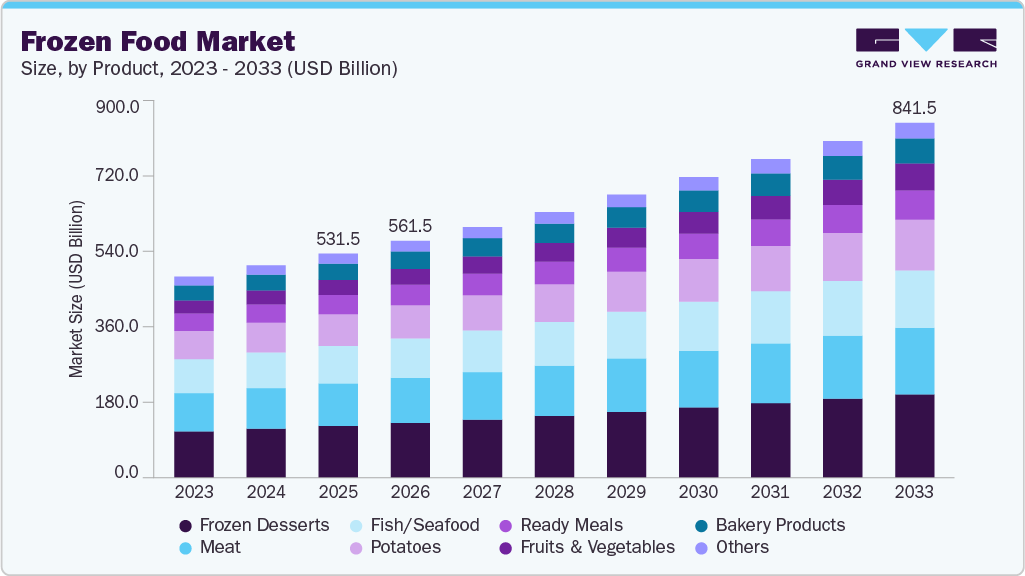
The frozen food industry has responded to the demand for convenience by introducing a wide range of frozen meals that require minimal preparation. From frozen pizzas to complete frozen dinners, these products offer a quick and hassle-free meal solution for consumers. Frozen breakfast items such as breakfast sandwiches, waffles, frozen bites, and pancakes cater to consumers looking for a convenient morning meal that can be prepared quickly.
The advancements in freezing technologies have played a pivotal role in enhancing the overall quality, taste, and texture of frozen food products, subsequently contributing to their reputation as convenient and reliable meal options. Quick freezing methods such as blast freezing or cryogenic freezing have significantly improved the quality of frozen food. These rapid freezing techniques help preserve the natural texture, flavor, and nutrients of the ingredients, ensuring that the end product closely resembles fresh alternatives.
In January 2024, Air Products highlighted the Freshline Smart Technology, which allows customers to control and monitor food manufacturing processes remotely, at the International Production & Processing Expo (IPPE) at the Georgia World Congress Center in Atlanta.
Furthermore, frozen food producers are integrating advanced packaging technologies to enhance shelf life. In February 2023, Preferred Packaging, a division of C-P Flexible Packaging, joined forces with Northwest Frozen LLC to create and introduce a fresh range of refrigerated, ready-to-eat meals with extended shelf life for retail distribution. The innovative packaging ensures hermetically sealed meals with a tailored, low-oxygen environment inside the package to preserve the freshness of the food.
Consumer Insights for Frozen Food Market
Consumer trends and preferences in the frozen food market have undergone significant shifts in recent years, driven by changing lifestyles, evolving dietary habits, and advancements in food technology. One prominent trend is the growing demand for healthier frozen food options. Consumers are increasingly seeking products that offer convenience without compromising on nutritional value. This has led to a surge in the popularity of frozen fruits and vegetables, as well as minimally processed meals with clean ingredient lists.
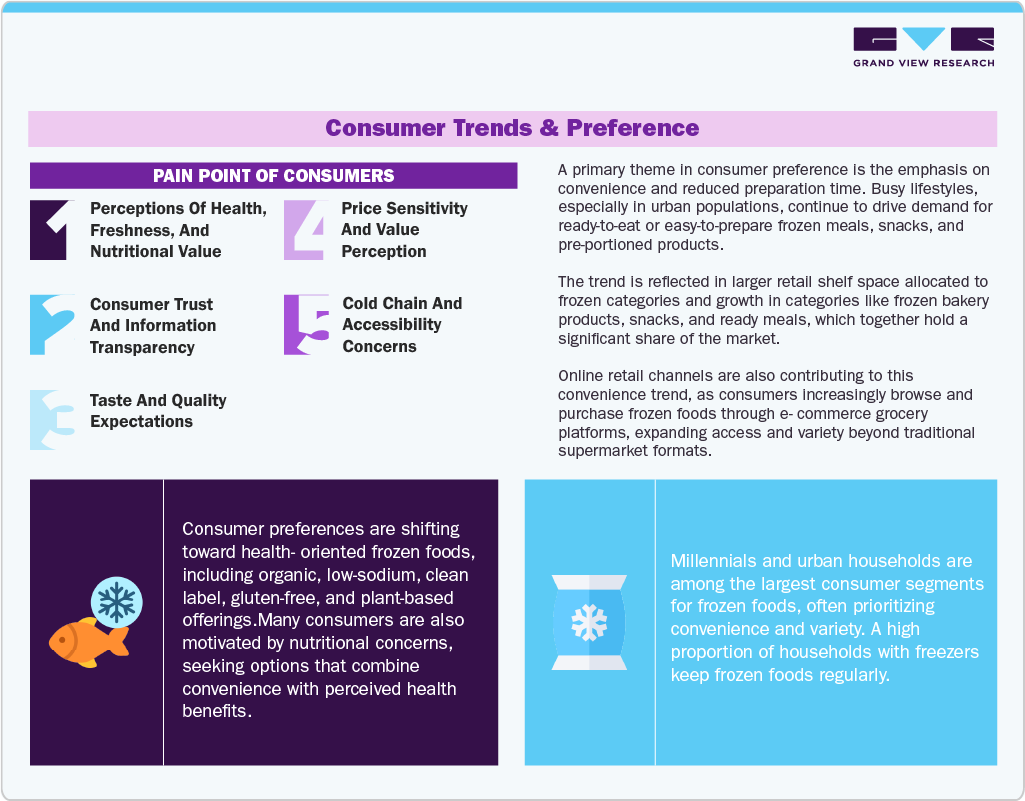
According to The Future of Frozen Food 2024 Report by Conagra Brands, an American consumer packaged goods holding company, U.S. consumers eat frozen food products an average of four times a week. In addition, Americans have a strong liking for ice cream, with 55% having it in their freezers. Consumers are increasingly looking to satisfy indulgences, with sales of convenient desserts from the frozen food department growing. Notably, frozen pies have seen a spike in innovation, with the number of new products tripling in comparison to 2022.
Product Insights
The frozen desserts market accounted for the largest revenue share of 23.2% in 2025, primarily driven by rising consumer demand for convenient, indulgent treats with diverse and innovative flavors. Increasing health awareness has boosted interest in low-fat, dairy-free, and low-sugar options. In addition, premiumization and sustainability efforts in ingredients and packaging attract more buyers. Furthermore, the market benefits from urbanization, busy lifestyles, and advances in freezing technology that enhance quality and shelf life. Moreover, the expanding retail and online channels further support market growth worldwide.
The frozen fruits & vegetables market is expected to grow at a CAGR of 7.7% over the forecast period. Consumers are shifting to these products as they do not need peeling, washing, or chopping. Bloated stomach and diarrhea are caused by eating infected or unclean food. In line with this, manufacturers are launching unique product variants, incorporating herbs and spices from local produce, to widen their portfolio and attract a large consumer base. In January 2021, Mother Dairy launched two new frozen vegetables under the Safal brand, including Drumsticks and Cut Okra.
Freezing Technology Insights
The blast freezing segment led the market and held the largest revenue share of 53.0% in 2025. This growth is attributed to enabling rapid freezing of large food volumes, which preserves texture, flavor, and nutritional value while minimizing ice crystal formation and cellular damage. In addition, this technology significantly reduces the risk of bacterial growth, extends shelf life, and maintains food safety, making it ideal for meats, seafood, produce, and prepared meals. Furthermore, its efficiency in handling bulk quantities and maintaining product quality supports increased productivity and waste reduction for commercial food businesses worldwide.
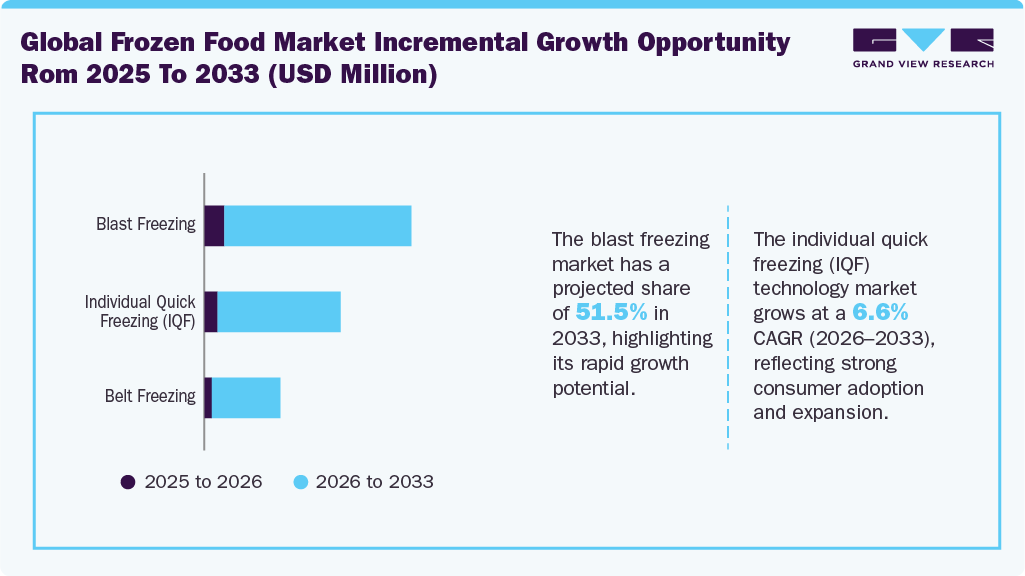
The individual quick freezing (IQF) technology segment is expected to grow at the fastest CAGR of 6.6% over the forecast period, owing to its versatility, which supports a wide range of products, from fruits and vegetables to seafood and meats, while its speed minimizes microbial growth and spoilage. In addition, fast freezing individual pieces of food, ensuring each retains its original texture, shape, and nutritional content after thawing, also contributes to the market growth. Furthermore, the extended shelf life and superior quality appeal to consumers and food service providers seeking convenience and freshness, driving the segment’s growth in the global market.
Distribution Channel Insights
Foodservice held the dominant position in the market, with the largest revenue share of 70.0% in 2025, driven by enabling quick-service restaurants, hotels, and catering businesses to meet high customer demand with consistent quality and taste efficiently. Frozen ingredients help reduce food waste, streamline inventory management, and ensure menu availability year-round. The convenience and extended shelf life of frozen products allow food service providers to offer a wider variety of dishes while maintaining operational efficiency, supporting the expansion of frozen food usage across diverse hospitality and institutional settings.
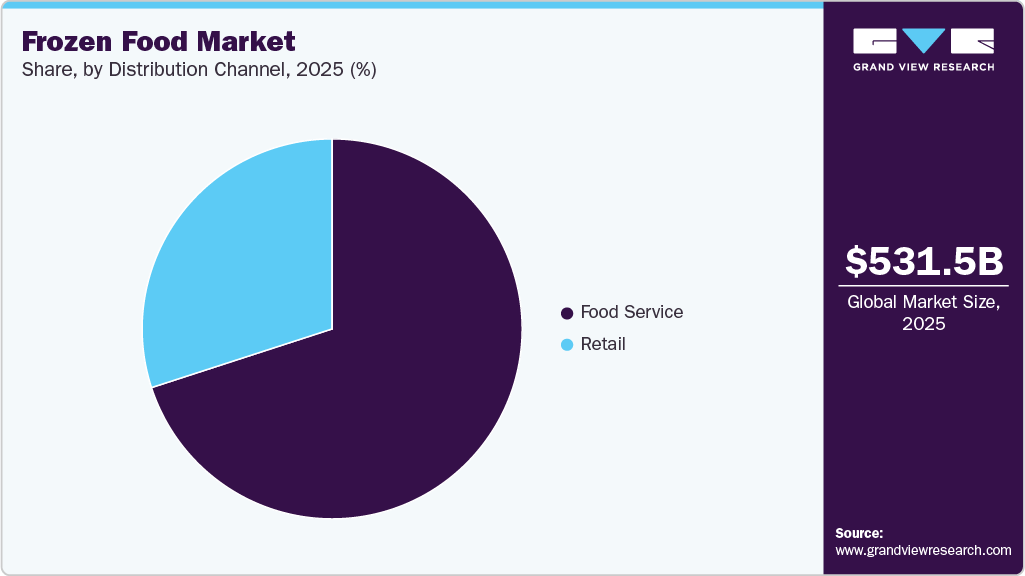
The retail distribution channel is expected to grow at a CAGR of 6.3% from 2026 to 2033, driven by expanding product visibility and accessibility through supermarkets, hypermarkets, and convenience stores. In addition, enhanced retail infrastructure, attractive in-store displays, and wide product assortments encourage impulse psurchases and cater to diverse consumer preferences. The proliferation of organized retail, especially in emerging markets, supports the broader distribution and availability of frozen foods. Furthermore, retailers are also responding to health and wellness trends by stocking organic, plant-based, and clean-label frozen products, further boosting consumer interest and market expansion.
Regional Insights
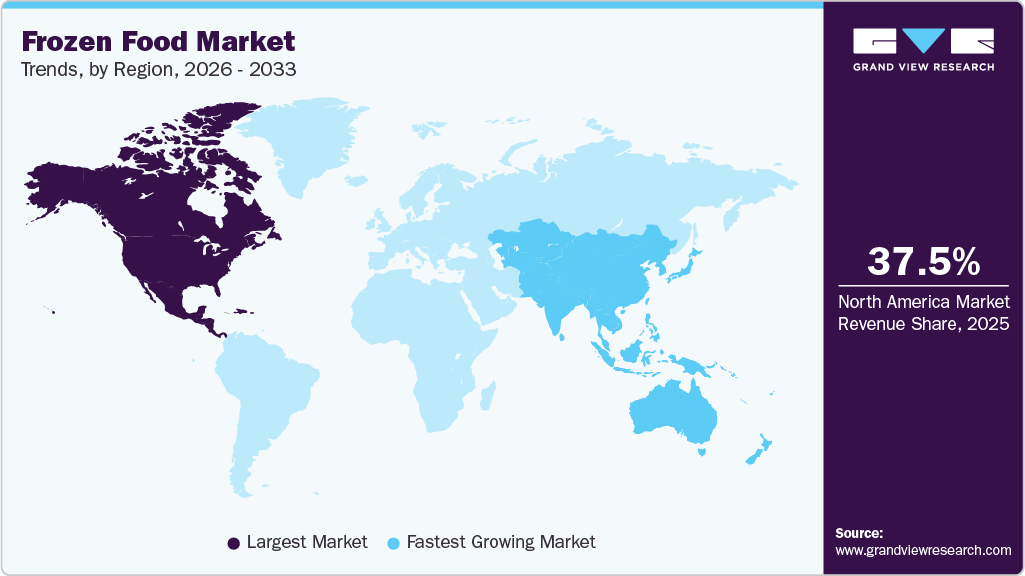
North America frozen foods market accounted for the largest market share of 37.50% in 2025. The growing popularity of frozen foods among consumers in this region, especially among millennials, due to single-serving options and ease of preparation, is expected to drive market growth. In addition, key manufacturers leverage innovation in product offerings, such as plant-based and clean-label frozen foods, to attract diverse consumer segments. Furthermore, the presence of well-established brands and increasing demand for quick, nutritious options further stimulate market expansion.
U.S. Frozen Food Market Trends
The frozen food market in the U.S. led the North American region and held the largest revenue share in 2025. As a result of the increasing consumer focus on healthier eating habits, there is a demand for frozen foods that are perceived as nutritious, natural, and free from additives. In addition, the rise of e-commerce platforms and grocery delivery services has made it simpler for busy consumers to purchase frozen foods, benefiting from detailed product information, reviews, and promotions in the country.
Europe Frozen Food Market Trends
The frozen food market in Europe is expected to grow significantly over the forecast period, due to changing lifestyles that drive demand for convenient meal options, the introduction of healthier and more diverse frozen food products to cater to consumer preferences, and sustainable practices within the industry. In addition, high demand for convenience foods, a well-established cold chain network, and strong consumer trust in product safety and quality. Countries such as Germany, the UK, and France are major contributors, with consumers seeking traditional and innovative frozen meal solutions.
Increasing multiculturalism in the U.K. has spurred the demand for frozen ethnic foods, including Asian, Mediterranean, and Middle Eastern cuisines. Consumers are gravitating toward healthier frozen food options, such as plant-based alternatives, low-calorie meals, and products free from artificial additives and preservatives. The British Frozen Food Federation (BFFF) announced increased growth for the sector during the second quarter of 2023. According to the BFFF, frozen meat and poultry, frozen vegetables, potato products, pizza, and savory foods were the primary drivers of this increase in sales volume.
Asia Pacific Frozen Food Market Trends
The frozen food market in Asia Pacific is expected to grow at the fastest CAGR of 6.8% during the forecast period. The increasing number of cold chain facilities in developing countries across the Asia Pacific region is playing a crucial role in the development of the. Cold chain facilities are crucial for preserving frozen foods and ensuring their quality and safety. With the growing demand for frozen foods, there has been a significant increase in the number of cold chain facilities in countries like India, China, and Indonesia. This has not only improved the availability of frozen foods in these countries but has also increased the shelf life of these products, making them more attractive to consumers. Furthermore, the availability of preserved foods and free sample offerings through online retailers is also playing a significant role in the growth of the frozen food market in the Asia Pacific.
The demand for prepared foods, also known as yùzhì cài in China, has traditionally been limited to corporate cafeterias, schools, and other commercial and institutional consumers. However, in recent years, there has been a significant increase in the demand for these foods among general consumers. Popular options include pre-cooked retort foods and frozen dishes like fried rice, beef bowls, and dumplings. Moreover, the Chinese government has recognized the potential of this market and has included it in its 14th Five-Year Plan (2021-2025) for cold-chain logistics development. The cold-chain logistics system ensures the safe and efficient transportation of perishable goods, including prepared foods, from the point of origin to the point of consumption.
Key Frozen Food Company Insights
-
Nestlé S.A. is a Swiss multinational food and drink processing conglomerate corporation. It has been the largest publicly held food company in the world since 2014, measured by revenue and other metrics. In 2023, the company was ranked 50th in the Forbes Global 2000. The company has around 270,000 employees, more than 2,000 brands, and a presence in 188 countries. The company aims to reduce its carbon footprint by 50% by the end of 2030. The company has the following product segments: Powdered and Liquid Beverages, PetCare, Nutrition and Health Science, Prepared Dishes and Cooking Aids, Milk Products and Ice Creams, Confectionery and Water.
-
General Mills, Inc. is one of the leading American producers of packaged consumer foods, especially flour, breakfast cereals, snacks, prepared mixes, and similar products. It is also one of the largest food service manufacturers in the world. It was incorporated in 1928 to acquire Washburn Crosby Company, a flour-milling company formed in 1866, and four other milling companies. Specializing in cereals and flour products, the company grew as a food processor through the years. Some of the notable brands in its portfolio are Cheerios, Pillsbury, Betty Crocker, Nature Valley, Old El Paso, Blue Buffalo, and Häagen-Dazs.
Key Frozen Food Companies:
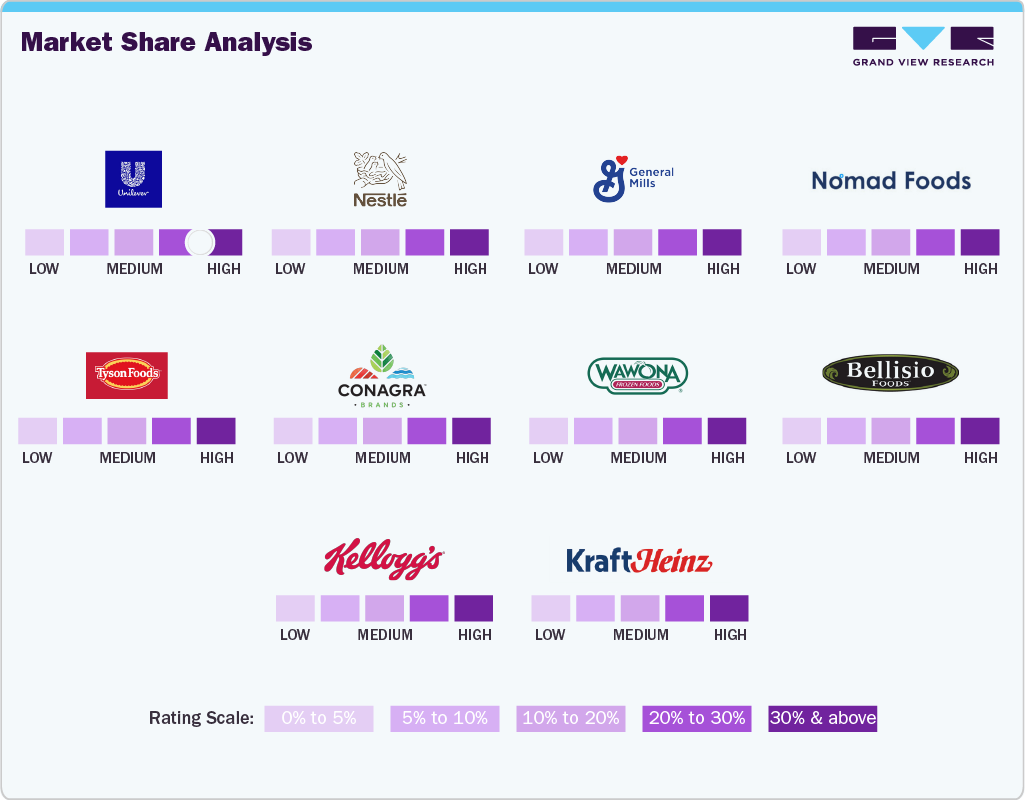
The following key companies have been profiled for this study on the frozen food market.
- Unilever PLC
- Nestlé S.A.
- General Mills, Inc.
- Nomad Foods Ltd.
- Tyson Foods Inc.
- Conagra Brands Inc.
- Wawona Frozen Foods
- Bellisio Parent, LLC
- The Kellogg Company
- The Kraft Heinz Company
Recent Developments
-
In February 2026, Blue Bell introduced Honey Vanilla, marking its first new ice cream flavor launch of the year.
-
In April 2024, Magnum, Unilever’s ice cream brand, launched Magnum Pleasure Express, innovative and mood-inspired flavored ice creams. Magnum also put up 3D action billboards to promote these ice creams. It collaborated with Mindshare, LOLA MullenLowe, DOOH.com, and Kinetic to deliver the innovative live-action billboard in London, U.K. The Pleasure Express 3D OOH creative shows off the brand’s summer campaign to support the launch of NPD Magnum Euphoria Pink Lemonade and Magnum Chill Blueberry Cookie flavored ice creams.
-
In March 2024, Nestlé Maggi entered the frozen food category with frozen pops, kebabs, and pockets in India. Maggi in India would be competing with brands such as McCain, ITC Master Chef, and Gadre within the frozen snacks category in the country.
Frozen Food Market Report Scope
Report Attribute
Details
Market value size in 2026
USD 561.54 billion
Revenue Forecast in 2033
USD 841.48 billion
Growth rate
CAGR of 5.9% from 2026 to 2033
Actual data
2021 - 2025
Forecast period
2026 - 2033
Quantitative (revenue) units
Revenue in USD million/billion, and CAGR from 2026 to 2033
Report coverage
Revenue forecast, company ranking, competitive landscape, growth factors, and trends
Segments covered
Product, freezing technology, distribution channel, region
Regional scope
North America, Europe, Asia-Pacific, Central & South America, Middle East & Africa
Country scope
U.S.; Canada; Mexico; Germany; UK; France; Italy; Spain; China; Japan; Australia; India; South Korea; Brazil; Saudi Arabia
Key companies profiled
Unilever PLC; Nestlé S.A.; General Mills, Inc.; Nomad Foods Ltd.; Tyson Foods Inc.; Conagra Brands Inc.; Wawona Frozen Foods; Bellisio Parent, LLC; The Kellogg Company; The Kraft Heinz Company
Customization scope
Free report customization (equivalent up to 8 analysts’ working days) with purchase. Addition or alteration to country, regional & segment scope.
Pricing and purchase options
Avail customized purchase options to meet your exact research needs. Explore purchase options
Global Frozen Food Market Report Segmentation
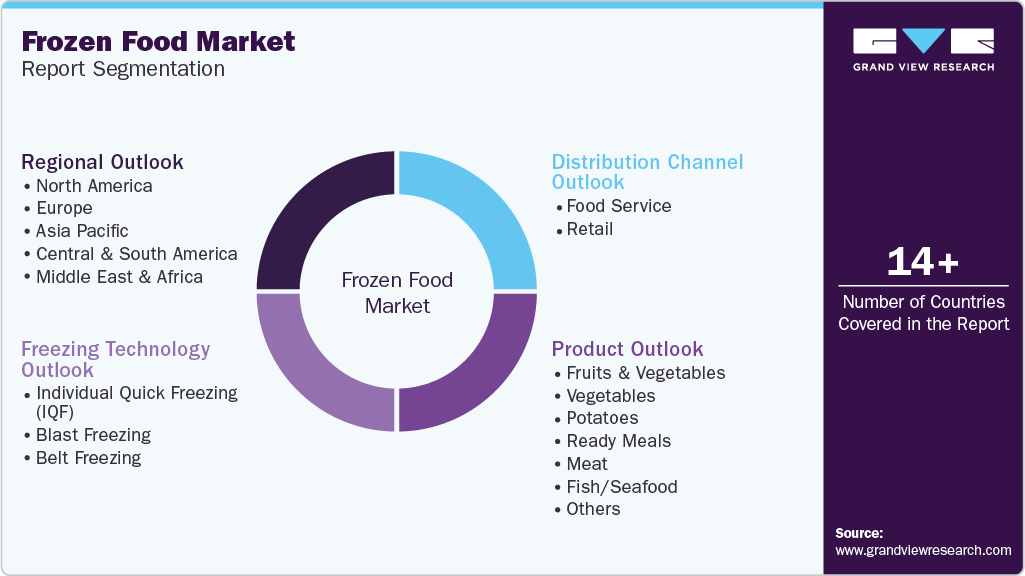
This report forecasts revenue growth at the global, regional, and country levels and provides an analysis of the latest industry trends and opportunities in each of the sub-segments from 2021 to 2033. For this study, Grand View Research has segmented the global frozen food market report on the basis of product, freezing technology, distribution channel, and region:
-
Product Outlook (Revenue, USD Million, 2021 - 2033)
-
Fruits & Vegetables
-
Fruits
-
Berries
-
Tropical Fruits
-
Citrus Fruits
-
Grapes
-
Stone Fruits
-
Others
-
-
Vegetables
-
Peas
-
Broccoli
-
Cauliflower
-
Carrot
-
Bell Paper
-
Beans
-
Mushroom
-
Avocado
-
Corn
-
Others
-
-
-
Potatoes
-
Ready Meals
-
Meat
-
Fish/Seafood
-
Frozen Desserts
-
Bakery Products
-
Others
-
-
Freezing Technology Outlook (Revenue, USD Million, 2021 - 2033)
-
Individual Quick Freezing (IQF)
-
Blast Freezing
-
Belt Freezing
-
-
Distribution Channel Outlook (Revenue, USD Million, 2021 - 2033)
-
Food Service
-
Retail
-
Hypermarkets & Supermarkets
-
Convenience Stores
-
Online
-
Others
-
-
-
Regional Outlook (Revenue, USD Million, 2021 - 2033)
-
North America
-
U.S.
-
Canada
-
Mexico
-
-
Europe
-
UK
-
Germany
-
France
-
Italy
-
Spain
-
-
Asia Pacific
-
Japan
-
India
-
China
-
Australia
-
South Korea
-
-
Central & South America
-
Brazil
-
-
Middle East & Africa
-
Saudi Arabia
-
-
Frequently Asked Questions About This Report
b. North America accounted for the largest market share of 37.50% in 2025. The growing popularity of frozen foods among consumers in this region, especially among millennials, due to single-serving options and ease of preparation, is expected to drive market growth.
b. Some of the key market players in the frozen food market are Unilever PLC; Nestlé S.A.; General Mills, Inc.; Nomad Foods Ltd.; Tyson Foods Inc.; Conagra Brands Inc.; Wawona Frozen Foods; Bellisio Parent, LLC; The Kellogg Company; The Kraft Heinz Company.
b. The increasing popularity of shelf-stable foods among consumers on a global level is expected to boost industry growth over the next few years.
b. The global frozen food market is expected to reach USD 841.48 billion by 2033 and is projected to grow at a compound annual growth rate (CAGR) of 5.9% from 2026 to 2033.
b. The global frozen food market was valued at USD 531.46 billion in 2025 and is expected to reach USD 561.54 billion by 2026.


Share this report with your colleague or friend.
Need a Tailored Report?
Customize this report to your needs — add regions, segments, or data points, with 20% free customization.


ISO 9001:2015 & 27001:2022 Certified
We are GDPR and CCPA compliant! Your transaction & personal information is safe and secure. For more details, please read our privacy policy.
Trusted market insights - try a free sample
See how our reports are structured and why industry leaders rely on Grand View Research. Get a free sample or ask us to tailor this report to your needs.