- Home
- »
- Beauty & Personal Care
- »
-
U.S. Azelaic Acid Cosmetics Market, Industry Report, 2033GVR Report cover
![U.S. Azelaic Acid Cosmetics Market Size, Share & Trends Report]()
U.S. Azelaic Acid Cosmetics Market (2026 - 2033) Size, Share & Trends Analysis Report By Product (Creams & Lotions, Gels & Foams, Serums, Ampoules & Essences, Masks & Peels), By Concentration, By End-user, By Skin Type, By Distribution Channel, And Segment Forecasts
- Report ID: GVR-4-68040-882-6
- Number of Report Pages: 80
- Format: PDF
- Historical Range: 2021 - 2024
- Forecast Period: 2026 - 2033
- Industry: Consumer Goods
- Report Summary
- Table of Contents
- Segmentation
- Methodology
- Download FREE Sample
-
 Download Sample Report
U.S. Azelaic Acid Cosmetics Market Summary
The U.S. azelaic acid cosmetics market size was estimated at USD 74.0 million in 2025 and is projected to reach USD 155.6 million by 2033, growing at a CAGR of 9.5% from 2026 to 2033. Growing consumer awareness of active skincare ingredients is significantly shaping demand in the U.S. azelaic acid cosmetics industry.
Key Market Trends & Insights
- By product, creams & lotions accounted for a market share of 30.6% in 2025. correct
- By concentration, moderate concentration (5%-10%) accounted for a market share of 47.1% in 2025
- By end use, women accounted for a market share of 75.5% in 2025
- By skin type, demand across consumers with oily/acne-prone skin type accounted for a market share of 36.5% in 2025
- By distribution channel, sales through online/e-commerce accounted for a market share of 39.7% in 2025
Market Size & Forecast
- 2025 Market Size: USD 74.0 Million
- 2033 Projected Market Size: USD 155.6 Million
- CAGR (2026-2033): 9.5%
Consumers increasingly evaluate skincare products based on ingredient transparency, dermatological effectiveness, and formulation safety before purchasing. This shift toward ingredient-focused skincare routines is strengthening demand for scientifically supported actives that address multiple skin concerns simultaneously. Azelaic acid has gained strong traction in this environment because it can help treat acne, rosacea, hyperpigmentation, and uneven skin tone while remaining suitable for sensitive skin types. As consumers increasingly adopt targeted skincare routines focused on treatment and prevention, azelaic acid is becoming an important ingredient in serums, creams, and corrective skincare products within the azelaic acid-based cosmetics market.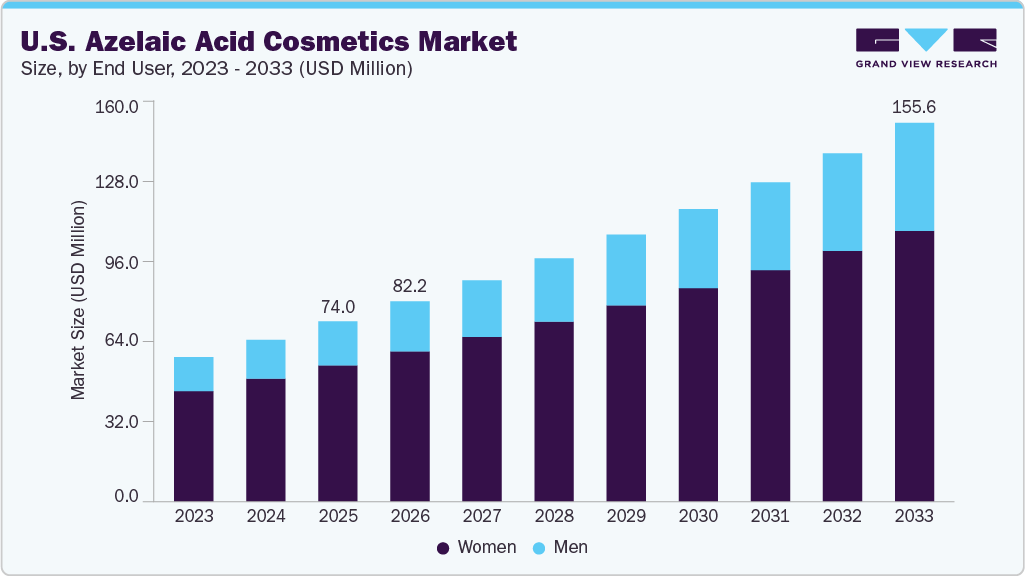
Rising consumer spending on beauty and personal care products is also supporting market expansion in the U.S. According to a February 2025 article published by CosmeticsDesign, beauty spending continues to be driven by younger consumers, with Gen Z and millennials accounting for a significant share of category growth, while men represent one of the fastest-growing consumer segments in beauty purchases. In addition, the Kearney Prestige Beauty Consumer Index highlights that more than 40% of U.S. consumers report increasing their spending on prestige beauty products, reflecting a growing willingness to invest in premium skincare formulations that deliver clinically supported results. This shift toward higher-value skincare products is creating favorable conditions for treatment-focused ingredients such as azelaic acid.
The growing emphasis on clean beauty and ingredient transparency is another factor supporting the development of the U.S. azelaic acid cosmetics market. According to Personal Care Insights, consumer surveys indicate that around 70% of shoppers consider ingredient transparency and clean formulations important when purchasing personal care products. This trend reflects a broader industry movement toward products formulated with clearly labeled ingredients and scientifically supported benefits. Azelaic acid aligns well with these preferences because dermatologists widely recognize it as an effective yet gentle ingredient for treating inflammatory skin concerns and pigmentation issues.
Digital influence and global beauty trends are also contributing to the expansion of the azelaic acid-based cosmetics market in the U.S. According to eMarketer, the growing popularity of Korean beauty products is influencing U.S. skincare habits, with over half of U.S. beauty consumers reporting interest in K-beauty products due to their ingredient innovation and advanced skincare routines. Online skincare communities, dermatology content creators, and social media platforms are helping consumers understand how active ingredients work and how to incorporate them into skincare routines, further strengthening demand for ingredient-focused products such as azelaic acid.
Brands are responding to these evolving preferences through retail expansion and new product introductions. For instance, in September 2025, Korean skincare brand Torriden officially entered Sephora stores across the U.S., expanding its retail footprint and introducing its ingredient-focused skincare portfolio to a wider consumer base. The launch reflects the growing popularity of Korean skincare innovations and ingredient-driven formulations within the U.S. beauty industry. Such developments demonstrate how brands are increasingly focusing on science-backed skincare ingredients and targeted formulations to meet evolving consumer expectations in the U.S. azelaic acid cosmetics industry.
Brand Market Share Insights
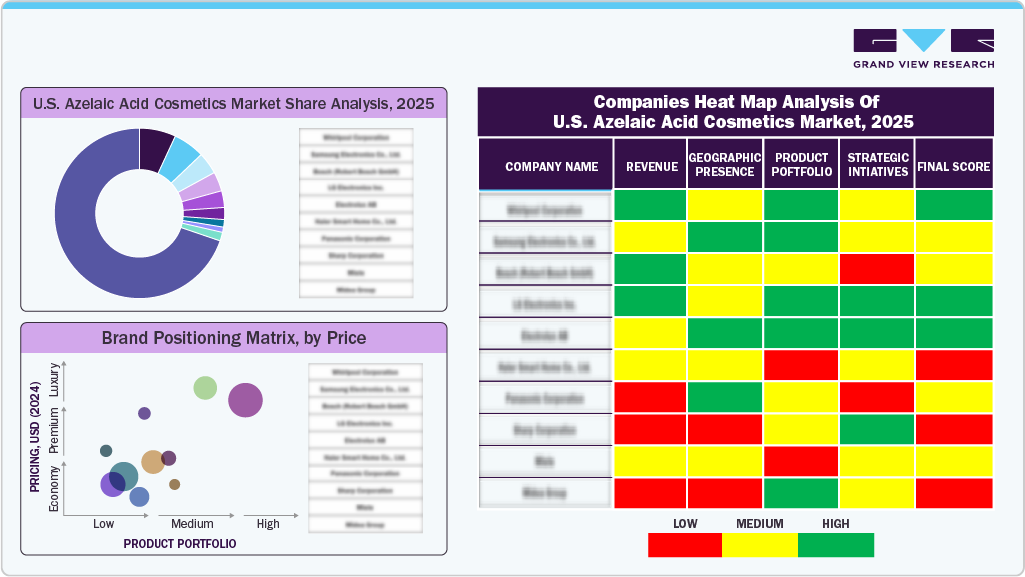
The U.S. azelaic acid cosmetics market features a dynamic competitive environment shaped by pharmaceutical skincare companies, dermatologist-backed brands, and rapidly growing ingredient-focused beauty startups. Established manufacturers leverage strong clinical research capabilities and established retail partnerships to maintain visibility across dermatology clinics, pharmacies, specialty beauty retailers, and online platforms. Companies such as L'Oréal, Estée Lauder Companies, Procter & Gamble, Unilever, and Shiseido are expanding their treatment-focused skincare portfolios with products designed to address acne, pigmentation concerns, and sensitive skin conditions. At the same time, smaller skincare brands are strengthening competition by focusing on dermatologist-inspired formulations, minimalist ingredient lists, and targeted skincare treatments. The continued growth of specialty beauty retailers, pharmacy chains, and digital commerce platforms in the U.S. is further enabling brands to launch new azelaic acid-based products and reach a wider consumer base across the market.
Consumer Insights
Consumer behavior in the U.S. azelaic acid cosmetics industry is increasingly influenced by growing awareness of skincare ingredients and their dermatological benefits. Consumers today actively evaluate product formulations based on ingredient transparency, clinical effectiveness, and compatibility with different skin types before making purchasing decisions. Azelaic acid has gained popularity as a multifunctional cosmetic ingredient because it can treat several skin concerns simultaneously, including acne, rosacea, and hyperpigmentation, while remaining suitable for sensitive skin. The ingredient’s antibacterial, anti-inflammatory, and pigmentation-regulating properties make it widely used in treatment-oriented skincare products such as serums, creams, and targeted treatments. At the same time, consumer interest in ingredient education and dermatologist-backed skincare solutions is encouraging brands to develop targeted formulations that combine azelaic acid with complementary actives designed to improve skin clarity and overall skin health.
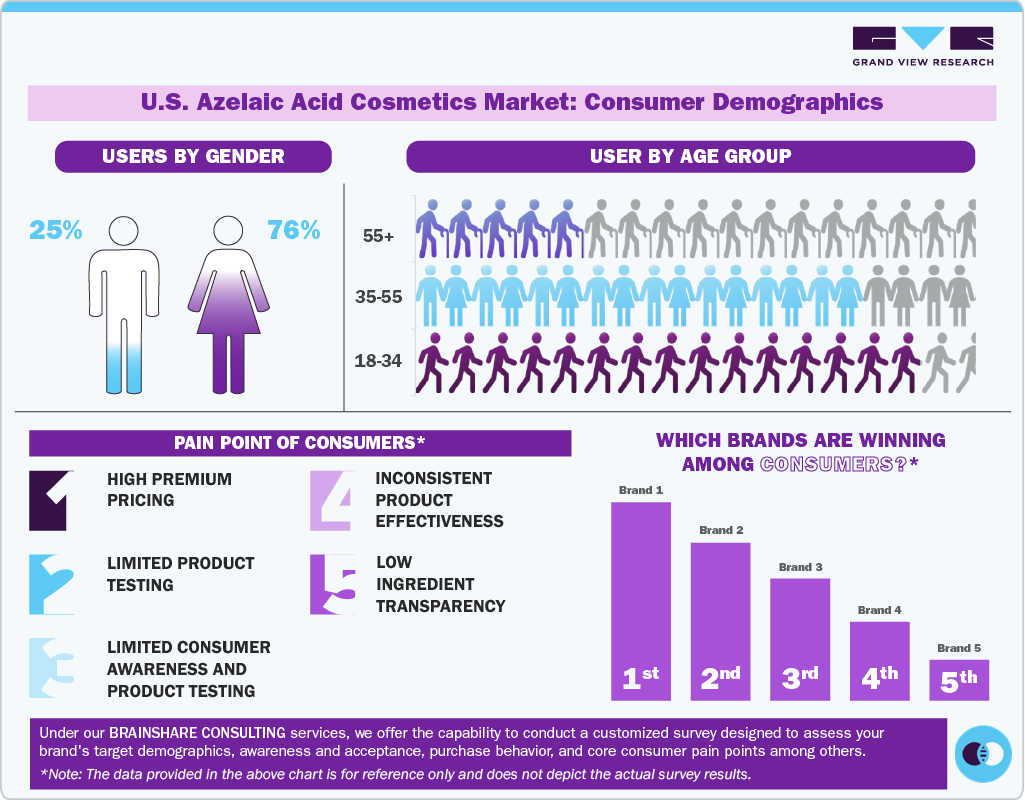
Younger consumers are also playing a major role in shaping purchasing behavior in the U.S. skincare market. According to an article published by Cosmetics Business, Gen Z teens spend an average of about USD 324 per year on beauty products, highlighting the strong purchasing power of this demographic in the cosmetics category. The study also shows that Sephora accounts for roughly 28% of Gen Z teen beauty spending, making it one of the most influential beauty retailers among younger consumers. As Gen Z consumers increasingly research ingredients and skincare benefits before purchasing products, demand is rising for science-backed formulations and active ingredients such as azelaic acid. The growing influence of ingredient-focused skincare education, social media content, and dermatologist-led product recommendations is therefore strengthening consumer adoption of targeted skincare treatments and supporting the continued expansion of the U.S. azelaic acid cosmetics market.
Product Insights
Creams & lotions accounted for the largest market share of 30.6% in 2025, supported by strong consumer demand for treatment-focused skincare products that address concerns such as acne, rosacea, post-inflammatory hyperpigmentation, and uneven skin tone. These formulations remain popular because they allow controlled and gradual delivery of azelaic acid while maintaining skin hydration, making them suitable for daily use in both morning and nighttime skincare routines. Creams and lotions are also widely recommended in dermatology-led skincare regimens, as they help reduce the risk of irritation compared with higher-concentration formulations. In addition, many brands are introducing moisturizing azelaic acid creams formulated with complementary ingredients such as ceramides, niacinamide, and soothing botanical extracts to support skin barrier health and improve overall skin comfort, further strengthening the demand for this product segment in the U.S. azelaic acid cosmetics market.
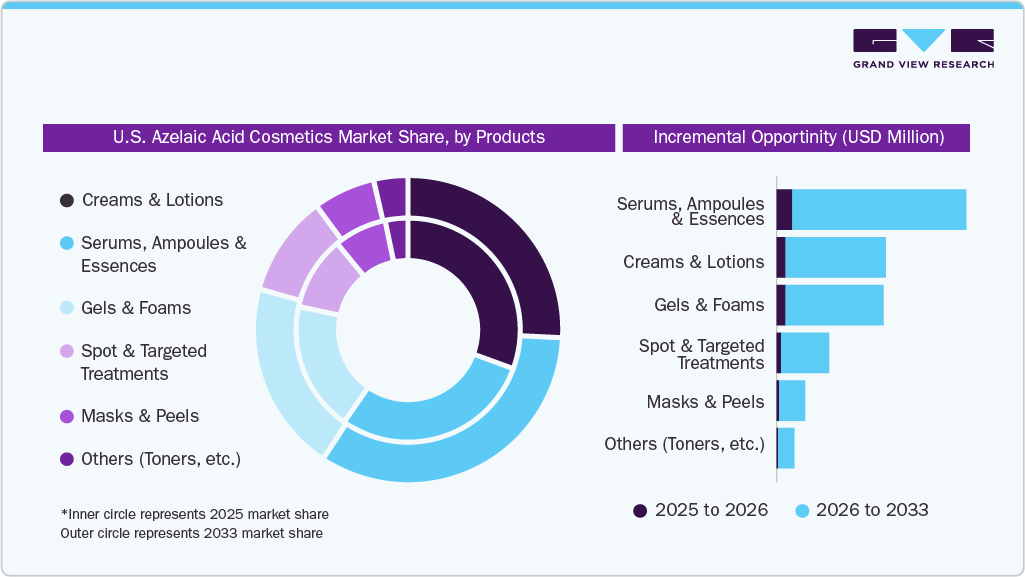
The serums, ampoules & essences segment is anticipated to grow at a CAGR of 11.5% from 2026 to 2033, supported by increasing consumer preference for high-performance skincare products that deliver concentrated active ingredients for targeted treatment. These lightweight formulations are widely used to address concerns such as acne scars, pigmentation, and skin redness because they allow deeper skin penetration and faster absorption than heavier formulations. The segment is also benefiting from the growing popularity of personalized skincare routines, where consumers select products based on specific skin concerns and ingredient functionality.
Concentration Insights
Moderately concentrated azelaic acid cosmetics accounted for 47.1% share of the U.S. azelaic acid cosmetics market in 2025, supported by strong consumer demand for skincare formulations that provide effective treatment while remaining suitable for regular use. Many consumers prefer moderate-strength formulations because they deliver visible improvements for concerns such as acne, redness, and uneven skin tone without causing excessive dryness or irritation. These products are also commonly recommended as an entry point for consumers beginning active-ingredient skincare routines. In addition, the wide availability of moderately concentrated azelaic acid products across pharmacies, dermatology clinics, and online beauty platforms has improved accessibility.
The medical-grade cosmetic azelaic acid cosmetics segment is expected to grow at a CAGR of 10.6% from 2026 to 2033, supported by rising consumer interest in clinical skincare solutions that deliver stronger corrective benefits for persistent skin concerns. These formulations are often positioned as advanced treatment products designed to manage conditions such as inflammatory acne, rosacea, and stubborn pigmentation. As more consumers adopt dermatologist-guided skincare routines, demand is rising for professional-strength products that bridge the gap between pharmaceutical treatments and everyday cosmetic skincare. In addition, the expanding network of aesthetic clinics, dermatology centers, and medical spas across the U.S. is encouraging the use of medical-grade topical treatments as part of post-procedure care and long-term skin management programs, further supporting the growth of this segment in the U.S. azelaic acid cosmetics market.
End User Insights
The demand for women’s azelaic acid cosmetics accounted for a market share of 75.5% in 2025. Many women actively explore new skincare formulations and treatment products designed to improve skin brightness, texture, and overall complexion. The growing availability of multifunctional skincare products that combine azelaic acid with brightening agents and calming extracts is also encouraging wider adoption. In addition, premium skincare brands and dermatology-focused cosmetic companies are launching specialized formulations tailored to women’s skincare needs, while extensive marketing campaigns and product sampling programs are further driving consumer engagement and product trial across the U.S. azelaic acid cosmetics market.
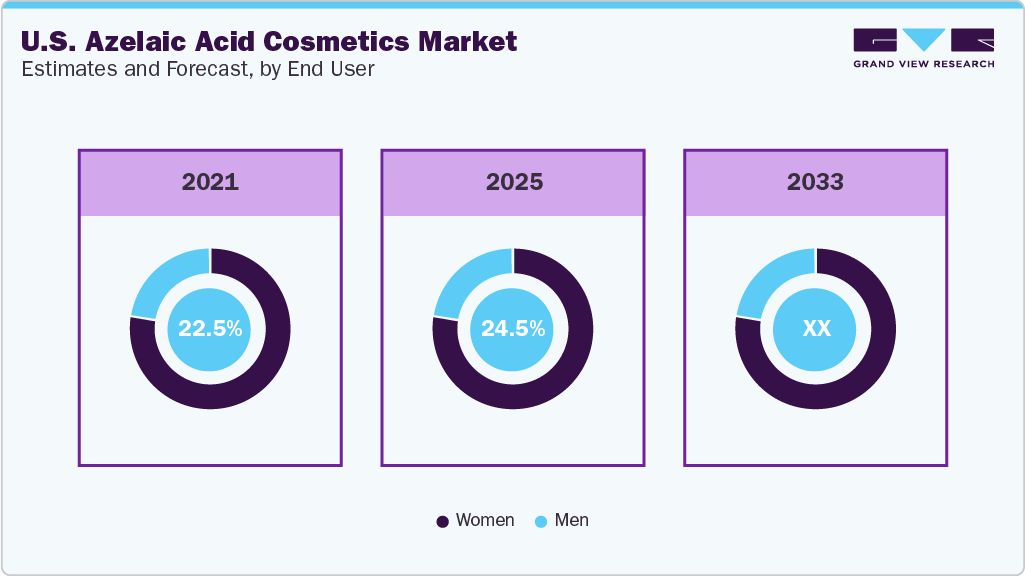
The demand for U.S. azelaic acid cosmetics among men is expected to grow at a CAGR of 12.6% from 2026 to 2033, supported by the increasing adoption of specialized skincare products within male grooming routines. Many male consumers are becoming more conscious of maintaining clear, healthy skin, which is driving the use of treatment-focused products that address concerns such as acne breakouts, excess oil production, and uneven skin tone. Azelaic acid is gaining popularity among male consumers because it helps manage inflammation and improve skin clarity while remaining gentle enough for regular use.
Skin Type Insights
The U.S. azelaic acid cosmetics for oily / acne-prone skin accounted for 36.5% share of the U.S. azelaic acid cosmetics market in 2025. Consumers with oily skin increasingly prefer gel-based creams, fluid serums, and oil-free moisturizers that do not leave heavy residue or contribute to shine throughout the day. Azelaic acid is commonly incorporated into these formulations because it fits well within non-comedogenic product systems that maintain a breathable skin feel. The segment is also benefiting from the expanding availability of skincare products tailored specifically for combination and oily skin profiles, particularly across pharmacy skincare brands and dermatology-inspired cosmetic lines. In addition, increased product segmentation by skin type across beauty retailers and online skincare platforms is making it easier for consumers to identify solutions formulated specifically for oily and acne-prone skin.
The U.S. azelaic acid cosmetics for dry skin are expected to grow at a CAGR of 11.9% from 2026 to 2033, supported by the increasing consumer focus on improving skin radiance and tone among individuals with dehydrated or dull-looking skin. Many consumers with dry skin experience uneven complexion and visible pigmentation, encouraging the adoption of treatment-oriented products that can brighten the skin while maintaining comfort. Azelaic acid is gaining attention in this segment because it can support skin tone correction without the harsh exfoliation associated with stronger chemical treatments. The segment is also benefiting from the expansion of advanced skincare formulations that incorporate encapsulation technologies and slow-release delivery systems, allowing active ingredients to work effectively while minimizing dryness-related discomfort.
Distribution Channel Insights
The sale of azelaic acid cosmetics through online/e-commerce channels in the U.S. accounted for 39.7% share of the U.S. azelaic acid cosmetics industry in 2025, supported by the increasing shift toward digital-first beauty purchasing behavior among consumers. Many shoppers prefer online platforms because they offer convenient access to specialized skincare products that may not be widely available in traditional retail outlets. E-commerce channels also allow consumers to discover niche dermatology-inspired brands, new product launches, and international skincare formulations that feature active ingredients such as azelaic acid. In addition, online beauty retailers often offer skincare quizzes, personalized product recommendations, and algorithm-driven suggestions to help consumers identify suitable treatment products based on their skin concerns.
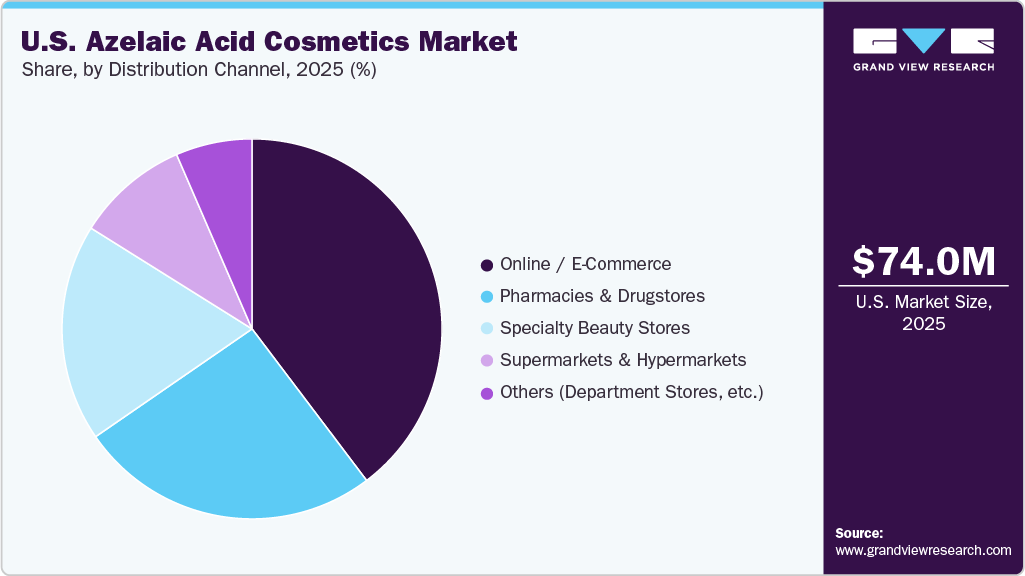
The sale of azelaic acid cosmetics through pharmacies & drugstores in the U.S. is expected to grow at a CAGR of 11.7% from 2026 to 2033, supported by the strong presence of nationwide pharmacy chains such as CVS Pharmacy, Walgreens, and Rite Aid that stock dermatologist-oriented skincare products. These retailers play a key role in the U.S. skincare market by offering accessible treatment products, positioned in pharmacy skincare sections, that emphasize clinically supported ingredients and skin-conditioning solutions. Many consumers prefer purchasing azelaic acid formulations from these stores because they can access pharmacist guidance and browse dedicated skincare aisles that focus on acne, redness, and pigmentation treatments.
Key U.S. Azelaic Acid Cosmetics Companies:
- L'Oréal S.A.
- Estée Lauder Companies
- Shiseido Company
- Procter & Gamble
- Unilever
- Beiersdorf AG
- Johnson & Johnson
- The Ordinary (Deciem)
- Paula's Choice Skincare
- Naturium
Recent Developments
-
In October 2025, Good Molecules launched a 10% Azelaic Acid Treatment designed to help reduce the appearance of post-acne marks and uneven skin tone. The product is formulated to gently refine skin texture, dissolve dead skin cells, and smooth the complexion while calming redness associated with acne. By using azelaic acid, an ingredient known for its anti-inflammatory and brightening properties, the treatment aims to support clearer and more even-looking skin for users dealing with lingering blemish marks.
-
In February 2025, AV Laboratories expanded its product range with the launch of Face Cream Rich and Eye Cream, designed to provide hydration and support skin firmness and texture. The products use the brand’s patented AVL SOM3 longevity technology, developed through stem cell research to promote skin rejuvenation and barrier health. With these additions, the company aims to strengthen its presence in the science-driven skincare segment.
U.S. Azelaic Acid Cosmetics Market Report Scope
Report Attribute
Details
Market size value in 2026
USD 82.2 million
Revenue forecast in 2033
USD 155.6 million
Growth rate
CAGR of 9.5% from 2026 to 2033
Base year for estimation
2025
Historical data
2021 - 2024
Forecast period
2026 - 2033
Quantitative units
Revenue in USD million and CAGR from 2026 to 2033
Report coverage
Revenue forecast, company ranking, competitive landscape, growth factors, and trends
Segments covered
Product, concentration, end user, skin type, distribution channel
Country scope
U.S.
Key companies profiled
L'Oréal S.A.; Estée Lauder Companies; Shiseido Company; Procter & Gamble; Unilever; Beiersdorf AG; Johnson & Johnson; The Ordinary (Deciem); Paula's Choice Skincare; Naturium
Customization scope
Free report customization (equivalent up to 8 analysts working days) with purchase. Addition or alteration to country, regional & segment scope.
Pricing and purchase options
Avail customized purchase options to meet your exact research needs. Explore purchase options
U.S. Azelaic Acid Cosmetics Market Report Segmentation
This report forecasts revenue growth at the country level and provides an analysis of the latest trends and opportunities in each of the sub-segments from 2021 to 2033. For this study, Grand View Research has segmented the U.S. azelaic acid cosmetics market report based on product, concentration, end user, skin type, and distribution channel:
-
Product Outlook (Revenue, USD Million, 2021 - 2033)
-
Creams & Lotions
-
Gels & Foams
-
Serums, Ampoules & Essences
-
Masks & Peels
-
Spot & Targeted Treatments
-
Others (Toners, etc.)
-
-
Concentration Outlook (Revenue, USD Million, 2021 - 2033)
-
Low Concentration (≤5%)
-
Moderate Concentration (5%-10%)
-
High Concentration (10%-15%)
-
Medical-Grade Cosmetic (15%-20%)
-
-
End User Outlook (Revenue, USD Million, 2021 - 2033)
-
Men
-
Women
-
-
Skin Type Outlook (Revenue, USD Million, 2021 - 2033)
-
Oily / Acne-Prone Skin
-
Dry Skin
-
Combination Skin
-
Sensitive Skin
-
Normal Skin
-
-
Distribution Channel Outlook (Revenue, USD Million, 2021 - 2033)
-
Supermarkets & Hypermarkets
-
Pharmacies & Drugstores
-
Specialty Beauty Stores
-
Online / E-Commerce
-
Others (Department Stores, etc.)
-
Frequently Asked Questions About This Report
b. The U.S. azelaic acid cosmetics market was estimated at USD 74.0 million in 2025 and is expected to reach USD 82.2 million in 2026.
b. The U.S. azelaic acid cosmetics market is expected to grow at a compound annual growth rate of 9.5% from 2026 to 2033 to reach USD 155.6 million by 2033.
b. Creams & lotions accounted for the largest market share of 30.6 in 2025, due to their ease of application, better skin absorption, and suitability for daily use in treating acne, rosacea, and hyperpigmentation. Their widespread availability across dermatology-recommended and over-the-counter formulations further supports higher consumer adoption.
b. Some key players operating in the U.S. azelaic acid cosmetics market include L'Oréal S.A.; Estée Lauder Companies; Shiseido Company; Procter & Gamble; Unilever; Beiersdorf AG; Johnson & Johnson; The Ordinary (Deciem); Paula's Choice Skincare; Naturium
b. The U.S. azelaic acid cosmetics market is driven by a high prevalence of acne, rosacea, and pigmentation concerns, supported by strong consumer reliance on dermatologist-backed skincare solutions. Widespread availability of OTC treatments, growing adoption of clinical-grade formulations, and increasing influence of digital skincare communities are further accelerating demand.


Share this report with your colleague or friend.
Need a Tailored Report?
Customize this report to your needs — add regions, segments, or data points, with 20% free customization.


ISO 9001:2015 & 27001:2022 Certified
We are GDPR and CCPA compliant! Your transaction & personal information is safe and secure. For more details, please read our privacy policy.
Trusted market insights - try a free sample
See how our reports are structured and why industry leaders rely on Grand View Research. Get a free sample or ask us to tailor this report to your needs.