- Home
- »
- Nutraceuticals & Functional Foods
- »
-
UAE Dietary Supplements Market Size, Industry Report 2033GVR Report cover
![UAE Dietary Supplements Market Size, Share & Trends Report]()
UAE Dietary Supplements Market (2026 - 2033) Size, Share & Trends Analysis Report By Ingredient (Single Ingredient, Multi-Ingredients), By Application (Vitamin, Minerals, Botanical Extracts, Marine Extracts), By Age Group, By Form, By Type, By Distribution Channel, And Segment Forecasts
- Report ID: GVR-4-68040-674-9
- Number of Report Pages: 110
- Format: PDF
- Historical Range: 2021 - 2025
- Forecast Period: 2026 - 2033
- Industry: Consumer Goods
- Report Summary
- Table of Contents
- Segmentation
- Methodology
- Download FREE Sample
-
 Download Sample Report
UAE Dietary Supplements Market Summary
The UAE dietary supplements market size was estimated at USD 618.1 million in 2025 and is projected to reach USD 1,440.1 million by 2033, growing at a CAGR of 11.2% from 2026 to 2033. Consumers in the UAE are increasingly focused on preventive health, driven by higher awareness of non-communicable diseases (diabetes, obesity, heart disease) and general wellness trends, so routine use of vitamins, minerals, and immunity-support supplements has grown as people seek to reduce future health risk.
Key Market Trends & Insights
- By ingredients, the vitamin segment accounted for the largest share of 27.2% in 2025.
- By type, over-the-counter (OTC) dietary segment accounted for the largest revenue share of 78.1% in 2025
- By form, tablet segment accounted for the largest revenue share of 32.0% in 2025.
- By end use, adults segment dominated the market, with a share of 64.7% in 2025.
Market Size & Forecast
- 2025 Market Size: USD 618.1 Million
- 2033 Projected Market Size: USD 1,440.1 Million
- CAGR (2026-2033): 11.2%
A growing number of residents in the UAE are turning to vitamins, minerals, and dietary supplements, especially multivitamins, vitamin C, D, zinc, omega-3s, and immunity-focused products, which has directly driven the expansion of the overall dietary supplements market. A population-based survey by Springer Nature in the UAE found that vitamins were the most commonly used health supplements (87.9%), followed by minerals (10.5%) and sports nutrition products (10.5%). The most common ingredients reported were Vitamins A, D, and E.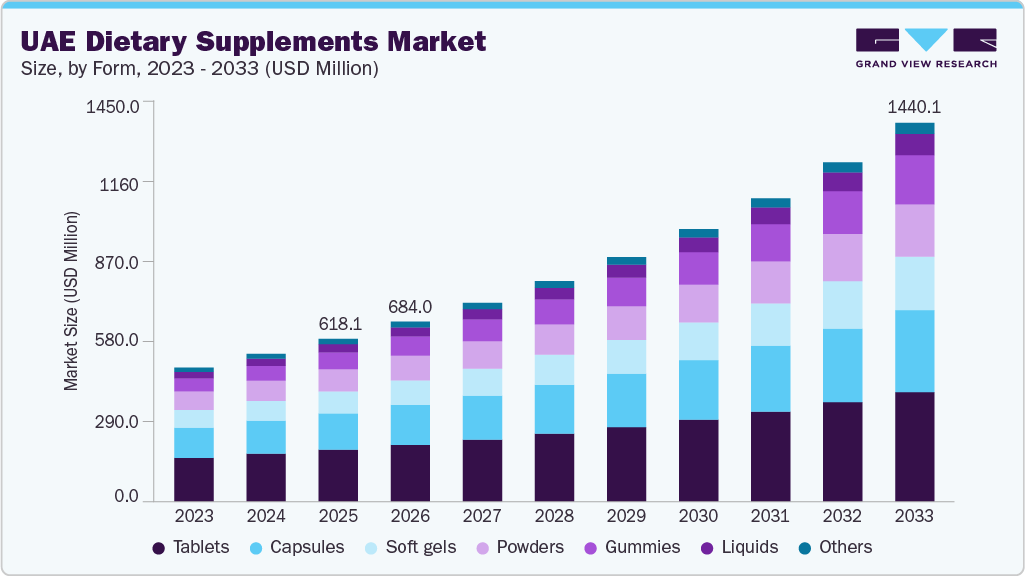
Moreover, rising obesity prevalence in the United Arab Emirates (UAE) has created a clear, sustained demand for weight-management solutions such as dietary supplements. In 2022, the obesity rates in the UAE were substantially above regional averages, with nutrition profiles estimating obesity among adults at roughly 31% for men and 44% for women. This has changed consumer behaviour: more individuals and households now treat weight management as an ongoing, everyday need rather than a short-term problem solved only by clinical intervention.
Consumer Insights
There has been a higher prevalence of dietary supplements among women driven by multivitamin use, aesthetic/beauty supplements, and health-maintenance motives; men are more likely to consume sports-nutrition products. This gender split has clear product and channel implications: female consumers respond strongly to wellness, beauty-from-within, and family-health propositions sold through pharmacies, specialized health retailers, and lifestyle e-commerce; male consumers are more responsive to performance and bodybuilding assortments often sold through sports retailers and online specialty channels. Marketing segmentation (creative, influencers, in-store education) should therefore be gender-targeted and channel-optimized.
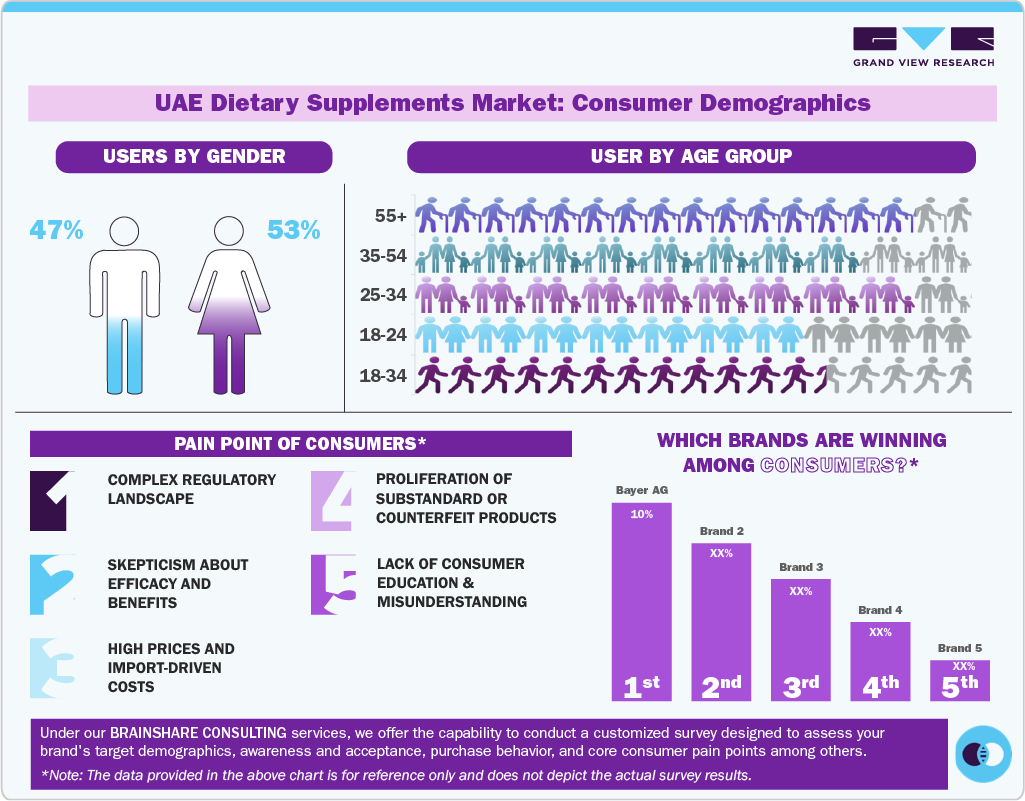
The UAE consumers are pursuing wellness in ways that are both global and locally specific. Rising health awareness, driven by public campaigns addressing obesity, diabetes, and heart disease, pushes consumers toward vitamins, minerals, omega-3s, probiotics, and functional foods that promise tangible outcomes (better sleep, heart health, gut health, immunity). The pandemic accelerated interest in immune-support supplements, while an emerging younger cohort is orienting to fitness, sports nutrition, and beauty-from-within products (collagen, botanical complexes).
Ingredient Insights
The vitamin segment accounted for the largest revenue share of 27.2% in 2025. The demand for vitamins in the UAE is driven by persistently low vitamin status in the population, especially vitamin D, by gaps in public knowledge, and the need for targeted nutrition for children, women, and pregnant women. Recent clinical and population studies show high rates of vitamin D insufficiency among Emirati children and adolescents and low awareness of vitamin D benefits among adult women, which supports ongoing demand for accessible, high-potency D3, and age-specific or sex-specific formulations. Pregnant and postpartum populations also exhibit notable vitamin D and B12 deficiencies in hospital-based data, indicating a need for prenatal/postnatal formulations, as well as clearer clinical guidance on supplementation.
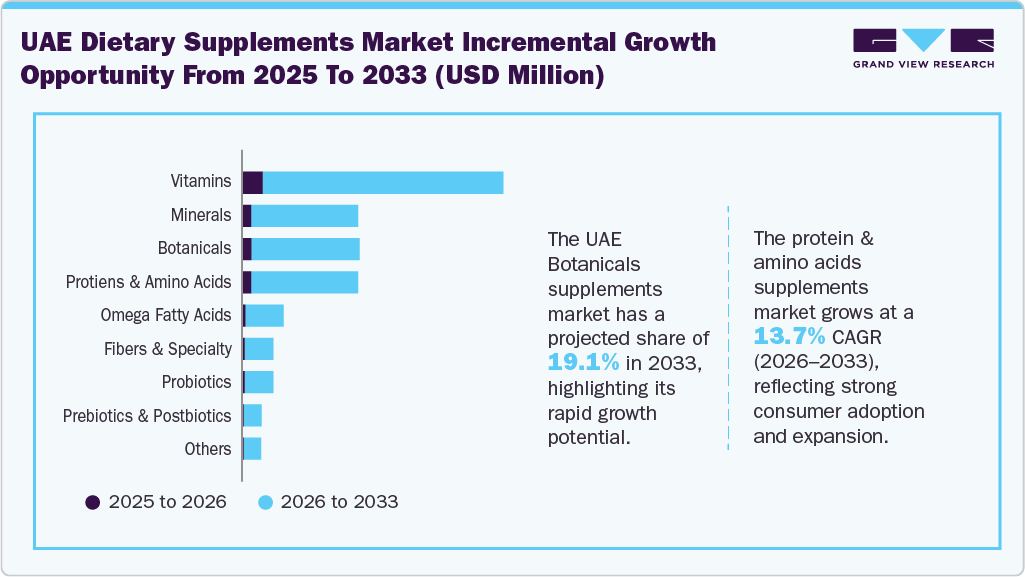
The protein & amino acid supplements segment is expected to grow at a CAGR of 13.7% from 2026 to 2033, driven by a strong fitness culture and rising interest in “beauty from within” products. Consumers use proteins for muscle recovery, weight management, and improving skin, hair, and joint health. High disposable incomes and busy urban lifestyles further contribute to the demand for convenient formats of amino acid and protein supplements, including powders, ready-to-drink shakes, and single-serve sachets, that retailers and e-commerce platforms can supply quickly. Increasing gym memberships and the adoption of digital fitness routines are other key factors promoting the use of protein supplements.
Type Insights
Over-the-counter (OTC) dietary segment accounted for the largest revenue share of 78.1% in 2025, driven by strong consumer demand for preventive wellness and everyday nutrition, supported by broad retail access across the UAE. Factors contributing to the growth of this segment are rising health consciousness, higher disposable incomes, and widespread use of smartphones. Convenient formats, such as gummies and sachets, are gaining popularity among younger consumers, accelerating both trial and repeat purchase. Product assortment expansions by retailers and cross-border e-commerce are making a wider range of OTC products available to consumers in the UAE.
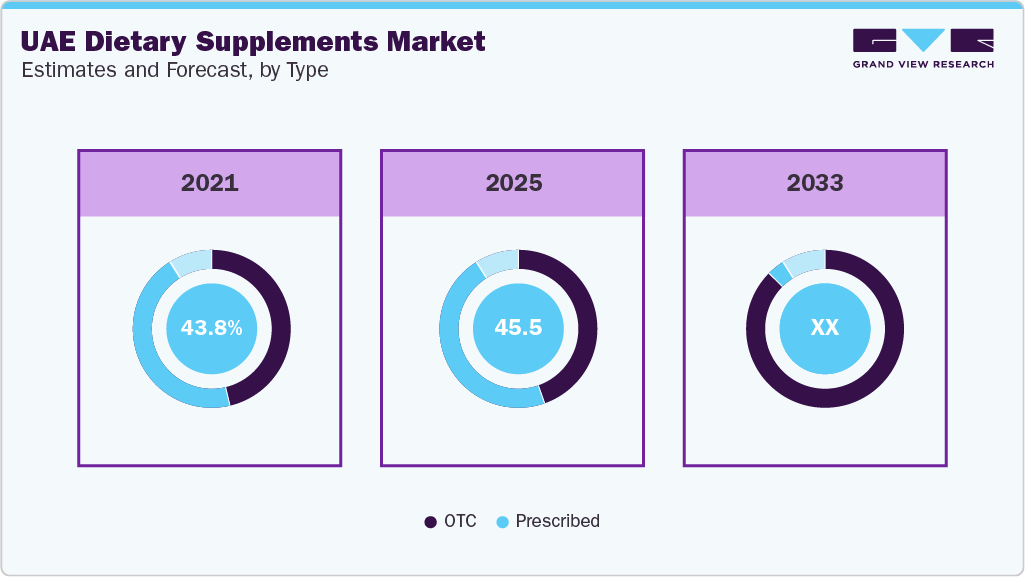
The prescribed dietary segment is projected to grow at a CAGR of 10.4% from 2026 to 2033. The growth of this segment is also driven by an aging population, increased cardiometabolic and deficiency-related conditions, stronger clinical evidence for specific formulations, and increased trust of physicians in regulated prescription products. Patients with chronic conditions often prefer prescriptions due to perceptions of quality, traceability, and supervision. Regulatory authorities have greater control over the OTC channels. Federal reforms, Emirates Drug Establishment oversight, formal prescription and dispensing controls enforced by health authorities, and advanced payer mechanisms are supporting the growth of this segment. Clearer approval pathways are encouraging manufacturers to register clinically dosed supplements and prescription-labelled nutraceuticals for specialist use in the UAE. Electronic prescription systems and controlled dispensing further increase clinician confidence.
Form Insights
Tablet supplements market accounted for the largest revenue share of 32.0% in 2025. Tablets are widely used in the UAE dietary supplement market because they last longer, provide consistent doses, and are easy to transport. Both consumers and pharmacists trust tablets for daily multivitamins and minerals, as they are durable and can handle heat. Manufacturers also favor tablets since they are efficient to produce in large quantities and are easy to register, which keeps prices competitive. Tablets are also preferred for products that support disease management or joint health, where accurate dosing is critical.
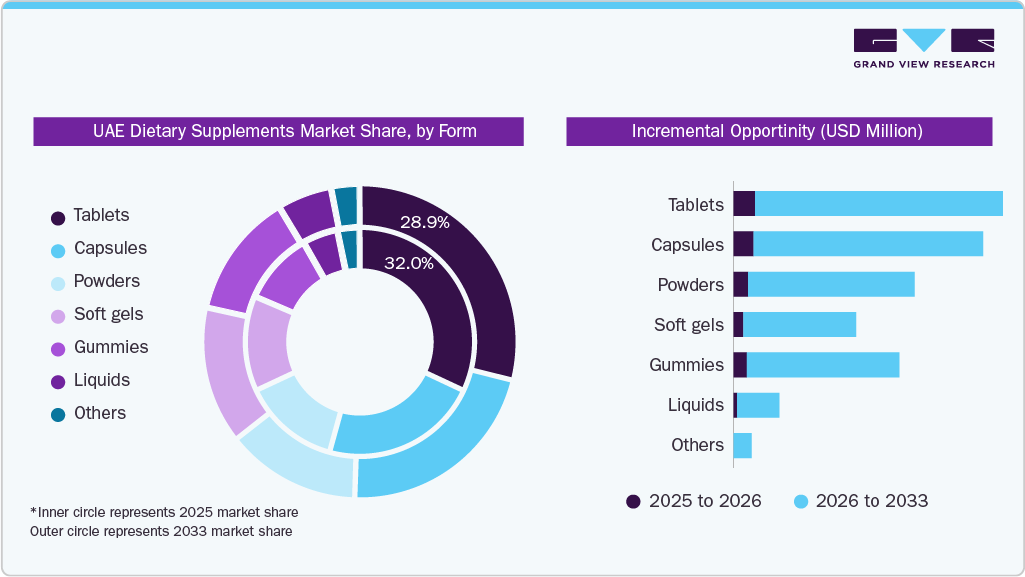
The gummy segment is projected to grow at a CAGR of 14.4% from 2026 to 2033. The gummies segment is growing rapidly because they taste good and are easy to take daily. They assist children and adults who do not like pills stick to their routines, and let brands market supplements as part of a lifestyle instead of just a medical need. New sugar-free recipes, vegan pectin, and added nutrients help gummies appeal to more people. More retail options and strong direct-to-consumer marketing encourage urban shoppers to try and buy them again.
Application Insights
The immunity segment accounted for a revenue share of 21.6% in 2025 in the UAE, driven by rising health consciousness, post-pandemic vigilance, and high demand for daily protective nutrition. Consumers across all age groups, especially families and working professionals, regularly purchase vitamin C, vitamin D3, zinc tablets, elderberry extracts, echinacea capsules, and antioxidant blends to support the immune system. Brands with specialized immune-support formulations that combine immunity-boosting essential micronutrients with botanical extracts dominate the shelves. Holland & Barrett Retail Limited offers various immunity supplements, including vitamin C, zinc, elderberry, echinacea, and multi-ingredient formulas such as Triple Action Immune Support capsules.
Prenatal health segment is projected to grow at a CAGR of 14.5% from 2026 to 2033. This growth is fueled by greater awareness of maternal nutrition, more planned pregnancies among families, and strong advice from gynecologists to use preventive supplements. Women are increasingly opting for prenatal vitamins to help fetal development, lower the risk of congenital anomalies, and support their own health during pregnancy. Essential nutrients in this category include folic acid, iron, DHA omega-3, choline, vitamin D3, and calcium. Pregnacare, under Vitabiotics, offers multiple products for pregnant women, such as original tablets, before conception, omega-3, breastfeeding, and more, with a balance of multiple vitamins & minerals.
End User Insights
Dietary supplements for adults accounted for a revenue share of 64.7% in 2025. This group includes working professionals, fitness enthusiasts, and health-conscious expatriates between 25 and 54 years old. In June 2025, the adult population reached 7.28 million, accounting for 64.12% of the total population. Long work hours, high stress, and irregular eating habits are contributing to rising consumption of supplements that help with energy, immunity, digestion, weight control, and beauty routines. As a result, there is strong demand for multivitamins, probiotics, omega-3, collagen, and stress-relief products. GNC offers Mega Men/Women caplets infused with vitamins, minerals, and antioxidants that protecting against free radicals, improve calorie burning, and aid in maximizing energy levels.
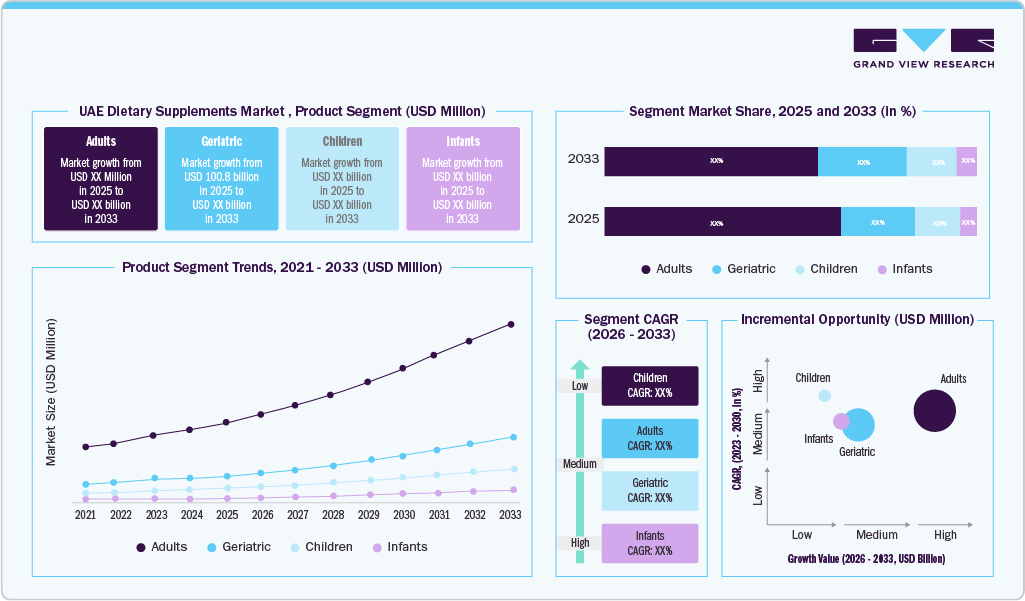
Dietary supplements for infants segment is projected to grow at a CAGR of 13.7% from 2026 to 2033, shaped by strong pediatric oversight, high parental awareness, and a population that prioritizes early-life nutrition. At such an early stage of life, nutrition plays a vital role in the growth and development of the baby. Supplements for infants up to 24 months mainly help with immunity, bone growth, gut health, and filling nutrient gaps. Common supplements developed for infants include infant formulas with calcium phosphate, which are substitutes for breast milk, vitamin D3 drops, lactoferrin supplements, DHA omega-3, and probiotic drops. For instance, Zarbee’s offers Baby Vitamin D, which contains 400 IU of vitamin D per serving that helps infants absorb calcium and supports the development of strong bones and teeth. They help with growth, especially for breastfed babies who might need extra nutrients.
Distribution Channel Insights
The sales of dietary supplements through offline channels accounted for a share of 76.1% in 2025. The offline channel is popular among consumers in the UAE dietary supplements market. Shoppers value immediate availability, in-store advice, and the ability to compare formulations face-to-face. Other factors driving the growth include increased foot traffic at malls and grocery stores, a wide presence of pharmacy networks, and improved shelf presence in hypermarkets. In-store sampling and demonstrations, and attractive loyalty programs that encourage repeat purchases, are also contributing to the growth of this segment. Retailers with large store footprints are providing national reach quickly for new SKUs.
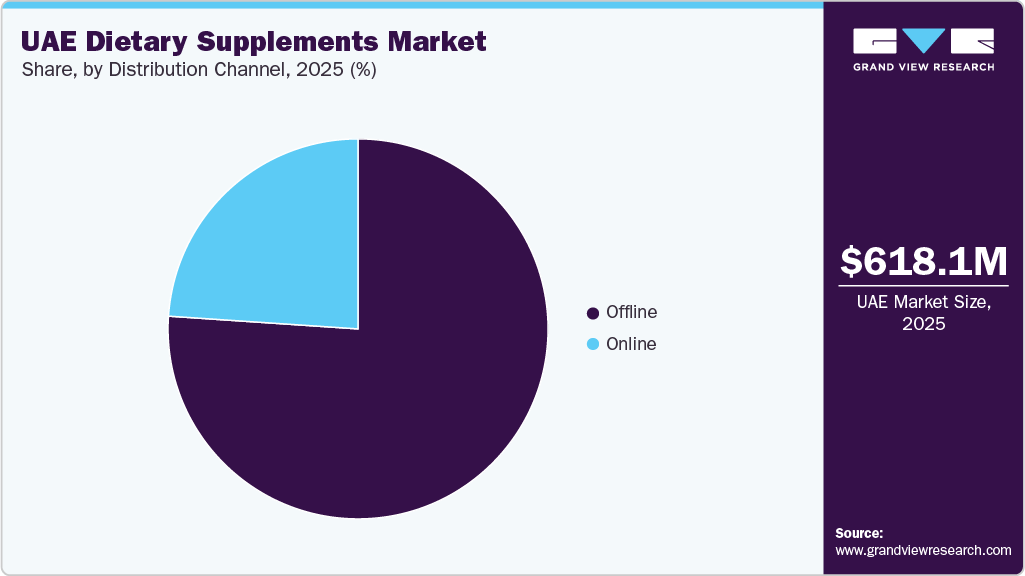
The sales of dietary supplements through online channels is projected to grow at a CAGR of 12.9% from 2026 to 2033. The online channel is rapidly growing owing to increasing consumer preference for convenience. Broad product assortments and fast delivery options help boost the sales of dietary supplements through this channel. High smartphone and internet penetration, marketplace catalogues with search and filter facilities, and subscription or auto-replenishment options are further driving the growth of this segment. Most consumers try products based on online user reviews and ratings, where digital marketing plays a crucial role. Online shopping saves time and enables easy price comparison for value-seeking shoppers.
Key UAE Dietary Supplements Company Insights
The UAE dietary supplements industry is becoming increasingly competitive as established companies and emerging players focus on product innovation, quality assurance, and strategic pricing to capture consumer attention and market share. Companies invest heavily in advanced manufacturing technologies, automation, and skilled workforce development to maintain high production standards, enhance operational efficiency, and comply with evolving regulatory requirements to remain competitive. This investment-intensive environment raises the entry barrier while pushing innovation forward.
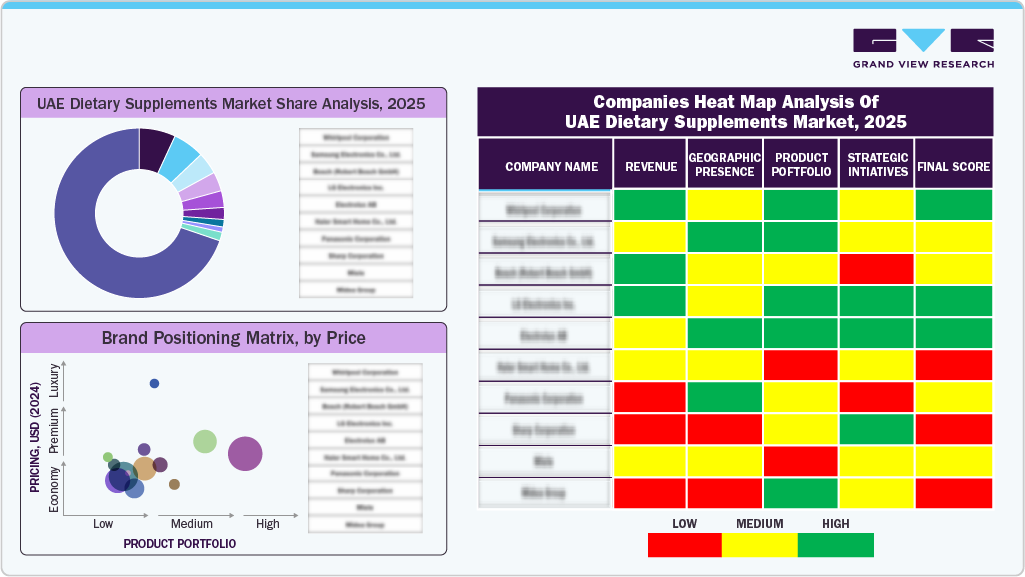
Key UAE Dietary Supplements Companies:
- Herbalife International of America, Inc.
- Bayer AG
- Pfizer Inc.
- Amway Corp
- Abbott
- NU Skin
- Jamjoom Pharma
- Glanbia PLC
- H&H Group
- Mega Lifesciences
Recent Developments
-
In September 2025, myAster, Aster DM Healthcare's omnichannel healthcare superapp, expanded its 24x7 express delivery (90 minutes) of health supplements, vitamins, beauty care, skincare, and wellness essentials to Abu Dhabi, RAK, Ajman, and Sharjah beyond Dubai.
-
In July 2025, Nooria, a premium Swiss dietary supplement brand, launched its personalized supplement program in the UAE, offering tailor-made, Halal-certified, plant-based shots crafted in Switzerland based on a 20-30 minute online lifestyle assessment for personal goals, including energy, focus, stress reduction, and immunity.
-
In March 2025, Herbalife was launched in the UAE to cater to the fast-paced, fitness-focused lifestyle with convenient meal replacement shakes, high-protein supplements for weight management or muscle gain, and hydration drinks, such as CR7 Drive, suited to the hot climate.
-
In February 2025, Revive Collagen, a British liquid marine collagen supplement brand, launched across 100+ Supercare stores and online in the UAE, marking a key step in its global expansion as demand for natural, ingestible beauty products rises.
UAE Dietary Supplements Market Report Scope
Report Attribute
Details
Market size value in 2026
USD 684.0 million
Revenue forecast in 2033
USD 1,440.1 million
Growth rate
CAGR of 11.2% from 2026 to 2033
Actual data
2021 - 2025
Forecast period
2026 - 2033
Quantitative units
Revenue in USD million/billion and CAGR from 2026 to 2033
Report coverage
Revenue forecast, company ranking, competitive landscape, growth factors, and trends
Segments covered
Product, ingredient, type, form, application, end-user, distribution channel
Country scope
UAE
Key companies profiled
Herbalife International of America, Inc.; Bayer AG; Pfizer Inc.; Amway Corp; Abbott; NU Skin; Jamjoom Pharma; Glanbia PLC; H&H Group; Mega Lifesciences
Customization scope
Free report customization (equivalent up to 8 analysts working days) with purchase. Addition or alteration to country, regional & segment scope.
Pricing and purchase options
Avail customized purchase options to meet your exact research needs. Explore purchase options
UAE Dietary Supplements Market Report Segmentation
This report forecasts revenue growth at country levels and provides an analysis of the latest trends and opportunities in each of the sub-segments from 2021 to 2033. For this study, Grand View Research has segmented the UAE dietary supplements market report based on ingredient, type, form, application, end user, and distribution channel:
-
Ingredient Outlook (Revenue, USD Million, 2021 - 2033)
-
Vitamin
-
Multivitamin
-
Vitamin A
-
Vitamin B
-
Vitamin C
-
Vitamin D
-
Vitamin K
-
Vitamin E
-
-
Botanicals
-
Minerals
-
Calcium
-
Potassium
-
Magnesium
-
Iron
-
Zinc
-
Others (selenium, chromium, copper)
-
-
Proteins & Amino Acids
-
Collagen
-
Others
-
-
Fibers & Specialty Carbohydrates
-
Omega Fatty Acids
-
Probiotics
-
Prebiotics & Postbiotics
-
Others
-
-
Form Outlook (Revenue, USD Million, 2021 - 2033)
-
Tablets
-
Capsules
-
Soft Gels
-
Powders
-
Gummies
-
Liquid
-
Others
-
-
Type Outlook (Revenue, USD Million, 2021 - 2033)
-
OTC
-
Prescribed
-
-
Application Outlook (Revenue, USD Million, 2021 - 2033)
-
Energy & Weight Management
-
General Health
-
Bone & Joint Health
-
Gastrointestinal Health
-
Immunity
-
Cardiac Health
-
Diabetes
-
Anti-cancer
-
Lungs Detox/Cleanse
-
Skin/ Hair/ Nails
-
Sexual Health
-
Brain/Mental Health
-
Insomnia
-
Menopause
-
Anti-aging
-
Prenatal Health
-
Others
-
-
End User Outlook (Revenue, USD Million, 2021 - 2033)
-
Adults
-
Millennials
-
Male
-
Female
-
Pregnant Women
-
Non-pregnant Women
-
-
Gen X
-
Male
-
Female
-
Pregnant Women
-
Non-pregnant Women
-
-
Gen Z
-
Male
-
Female
-
Pregnant Women
-
Non-pregnant Women
-
-
Boomers
-
Male
-
Female
-
-
-
Geriatric
-
Children
-
Infants
-
-
Distribution Channel Outlook (Revenue, USD Million, 2021 - 2033)
-
Offline
-
Hypermarkets/Supermarkets
-
Pharmacies
-
Specialty Stores
-
Direct Sales (MLM)
-
D2C
-
Practitioner
-
Others
-
-
Online
-
Frequently Asked Questions About This Report
b. Vitamin supplements accounted for the largest revenue share of 27.2% in 2025. The demand for vitamins in the UAE is driven by persistently low vitamin status in the population, especially vitamin D, by gaps in public knowledge, and the need for targeted nutrition for children, women, and pregnant women
b. Some of the key market players in the UAE dietary supplements market are Herbalife International of America, Inc.; Bayer AG; Pfizer Inc.; Amway Corp; Abbott; NU Skin; Jamjoom Pharma; Glanbia PLC; H&H Group; and Mega Lifesciences.
b. Consumers in the UAE are increasingly focused on preventive health, driven by higher awareness of non-communicable diseases (diabetes, obesity, heart disease) and general wellness trends, so routine use of vitamins, minerals, and immunity-support supplements has grown as people seek to reduce future health risk
b. The UAE dietary supplements market was estimated at USD 618.1 million in 2025 and is expected to reach USD 684.0 million in 2026.
b. The UAE dietary supplements market is expected to grow at a compound annual growth rate of 11.2% from 2026 to 2033 to reach USD 1,440.1 million by 2033.


Share this report with your colleague or friend.
Need a Tailored Report?
Customize this report to your needs — add regions, segments, or data points, with 20% free customization.


ISO 9001:2015 & 27001:2022 Certified
We are GDPR and CCPA compliant! Your transaction & personal information is safe and secure. For more details, please read our privacy policy.
Trusted market insights - try a free sample
See how our reports are structured and why industry leaders rely on Grand View Research. Get a free sample or ask us to tailor this report to your needs.