- Home
- »
- Nutraceuticals & Functional Foods
- »
-
South Korea Dietary Supplements Market Size Report, 2033GVR Report cover
![South Korea Dietary Supplements Market Size, Share & Trends Report]()
South Korea Dietary Supplements Market (2026 - 2033) Size, Share & Trends Analysis Report By Product (Single Ingredient, Multiple Ingredients/Blends), By Ingredient (Vitamin, Botanicals), By Application, By Form, By Type, By Distribution Channel, By End Use, And Segment Forecasts
- Report ID: GVR-4-68040-649-2
- Number of Report Pages: 110
- Format: PDF
- Historical Range: 2021 - 2024
- Forecast Period: 2026 - 2033
- Industry: Consumer Goods
- Report Summary
- Table of Contents
- Segmentation
- Methodology
- Download FREE Sample
-
 Download Sample Report
South Korea Dietary Supplements Market Summary
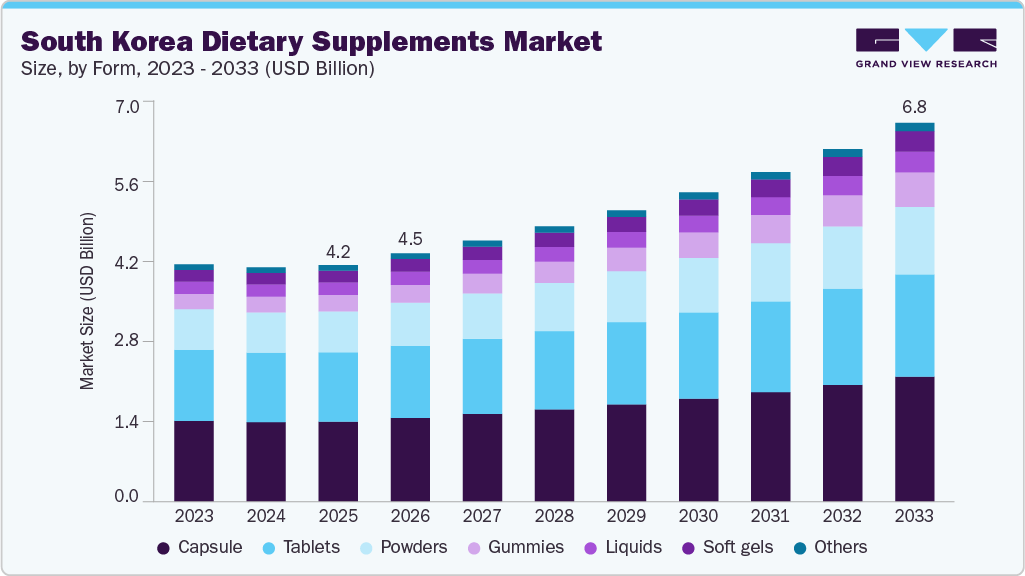
The South Korea dietary supplements market size was estimated at USD 4.24 billion in 2025 and is projected to reach USD 6.80 billion by 2033, growing at a CAGR of 6.2% from 2026 to 2033. The market growth can be attributed to the significant socio-demographic shifts and a heightened focus on proactive, preventative health maintenance.
Key Market Trends & Insights
- By product, the multi-ingredients/blends segment led the market with the largest revenue share of 53.89% in 2025.
- By ingredients, the vitamin supplements market led the market with the largest revenue share of 30.8% in 2025.
- By form, the capsule supplements segment led the market with the largest revenue share of 33.9% in 2025.
- By end use, the adults segment led the market with the largest revenue share of 65.2% in 2025.
Market Size & Forecast
- 2025 Market Size: USD 4.24 Billion
- 2033 Projected Market Size: USD 6.80 Billion
- CAGR (2026-2033): 6.2%
Furthermore, the residual health consciousness stemming from the pandemic has solidified immunity-boosting products, particularly high-quality Korean Red Ginseng and specialized probiotics, as daily essentials rather than seasonal purchases. Convenience is also a key factor, with consumers increasingly favoring 'on-the-go' formats like liquid pouches, jelly sticks, and chewable gummies over traditional pill forms, integrating supplementation seamlessly into their busy lifestyles.South Korea’s transition into a “super-aged society” has become one of the most defining forces shaping its health and wellness trend, with significant implications for the South Korea food supplements market. As longevity increases and chronic lifestyle-related conditions become more prevalent, consumers, especially older adults, are increasingly inclined toward preventive health practices.
The cultural shift toward “managing health before illness occurs” is accelerating demand for vitamins, minerals, probiotics, omega-3 oils, and functional ingredients designed to support immunity, mobility, cognition, and overall vitality. This merging of demographic aging with a proactive health culture has elevated dietary supplements from optional products to essential components of daily wellness routines, turning preventive health into a powerful long-term growth driver for the sector.
South Korea dietary supplement industry is increasingly shaped by an evolving consumer mindset that connects beauty with holistic health, and nutricosmetics are riding that wave. The domestic appeal of K‑Beauty and its emphasis on skin, hair, and overall aesthetics has conditioned consumers to treat beauty care not just as a topical treatment but as a daily wellness practice. Consumers in South Korea remain deeply committed to beauty-care routines, and many consider skincare an integral part of their self-care and health maintenance.
Consumer Insights
South Korea dietary supplements industry is strongly shaped by its rapidly aging population, which became a “super-aged society” in 2024 with more than 20% of citizens aged 65 and above. Older adults represent the largest consumer base for health-functional foods, driven by rising concerns about immunity, bone and joint health, cognitive decline, and chronic lifestyle diseases.
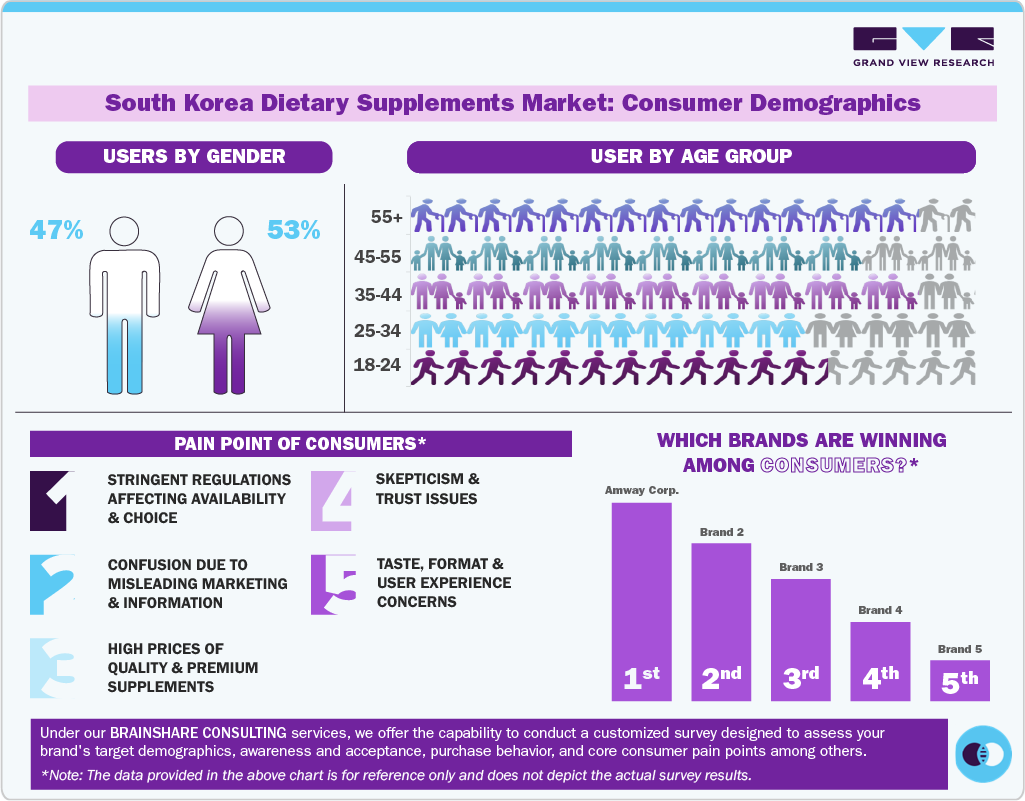
This demographic exhibits the highest spending levels and the most consistent purchase frequency, as evidenced by national surveys showing that households regularly buy red ginseng, probiotics, omega-3s, vitamins, and minerals. Seniors prefer trusted formats capsules, pills, and traditional ingredients, such as red ginseng, while also increasingly adopting targeted products like eye, bone, and memory-support supplements.
Consumers in South Korea continue to view dietary supplements not only as back-up nutrition but as integral components of a broader “well-being and lifestyle” regime. One prominent demand driver is body-fat reduction and weight management, a historically strong and “evergreen” category. The demand remains robust despite macroeconomic headwinds, with industry experts pointing out that weight management, immune support, joint health, and healthy ageing remain among the top consumer concerns.
Product Insights
The multiple ingredients/blends dietary supplements segment led the market with the largest revenue share of 53.9% in 2025 and is projected to grow at the fastest CAGR during the forecast period. Growing health awareness and a preventive-care mindset are encouraging consumers to focus on overall wellness rather than just addressing deficiencies, making supplements that combine vitamins, minerals, herbal extracts, or functional ingredients increasingly attractive. Companies in South Korea, known for their skin care culture and various skin care brands, are venturing into the dietary supplements space.
For instance, Cell Fusion C, a South Korean skin care brand, entered the dietary supplements space by launching edible sun care products in grapefruit flavor, offering protection against skin damage caused by UV rays and fine dust. Formulations include ingredients such as vitamins (C, A, E, K, B5), peptides, hyaluronic acid, and botanical extracts to enhance UV protection, anti-aging, or skin brightening.
The single-ingredient segment is projected to grow at a significant CAGR of 5.5% from 2026 to 2033, driven by changing lifestyles, rising health and wellness awareness, and convenience factors. Korean consumers are now building their supplement routine similar to their skincare routines. Consumers are shifting their purchasing patterns toward products containing a single ingredient, which are targeted at addressing specific health issues.
Modern lifestyles characterized by long working hours, stress, irregular meals, and high screen time are prompting individuals to fill nutritional gaps with vitamin supplements such as Vitamin C, Vitamin D, and multivitamins. In 2024, 83.2% of Korean consumers reported purchasing healthy functional foods, demonstrating a strong shift toward proactive health management and daily wellness routines.
Ingredient Insights
The vitamin supplements segment led the market with the largest revenue share of 30.8% in 2025. Vitamins are gaining popularity in South Korea, providing solutions for stronger immunity, increased energy, better bone and skin health, and overall wellness. Vitamin deficiencies have become common among South Koreans, leading to various chronic conditions such as type 2 diabetes, hypertension, and cardiovascular diseases. These issues are primarily prompting people to seek nutritional benefits through various vitamin supplements. This demand for vitamin supplements extends to a large group of adults and working professionals who have less time to focus on health and therefore seek supplements in the form of gummies and tablets.
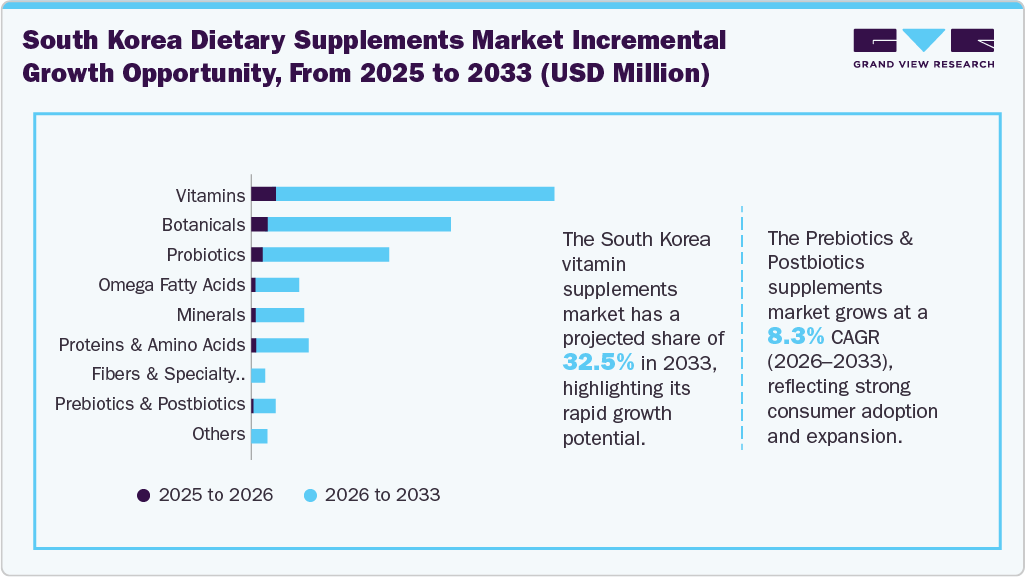
The prebiotic & postbiotic supplements segment is expected to grow at the fastest CAGR of 8.3% from 2026 to 2033, driven by increasing consumer focus on digestive health, immunity, and overall wellness through preventive nutrition. South Korea is renowned for its fermented foods, such as kimchi, doenjang, and gochujang, which are consumed on a regular basis which naturally introducing beneficial bacteria and promoting strong awareness of gut health. This familiarity has increased acceptance of prebiotic and postbiotic supplements that support gut Various brands, such as Olive Young, focus on increasing the good bacteria while reducing the bad bacteria through their products. Chong Kun Dang Healthcare provides prebiotics Fructooligosaccharide (FOS) in stick form as a supplement, which contributes to building a healthy environment in the intestines and helps strengthen the immune system. The widespread availability of prebiotic and postbiotic products is encouraging their purchase for maintaining good gut health.
Type Insights
The over-the-counter (OTC) dietary supplements segment led the market with the largest revenue share of 84.0% in 2025 and is projected to grow at the fastest CAGR during the forecast period. Dietary supplements in South Korea are widely available through pharmacies, drugstores, convenience stores, and online platforms, making them convenient to purchase. OTC supplements do not require a doctor’s prescription, and consumers can easily access them over the counter in South Korea. South Koreans are adopting a self-directed approach to health, preferring to manage everyday issues such as fatigue, immunity, digestion, and skin health without visiting a hospital.
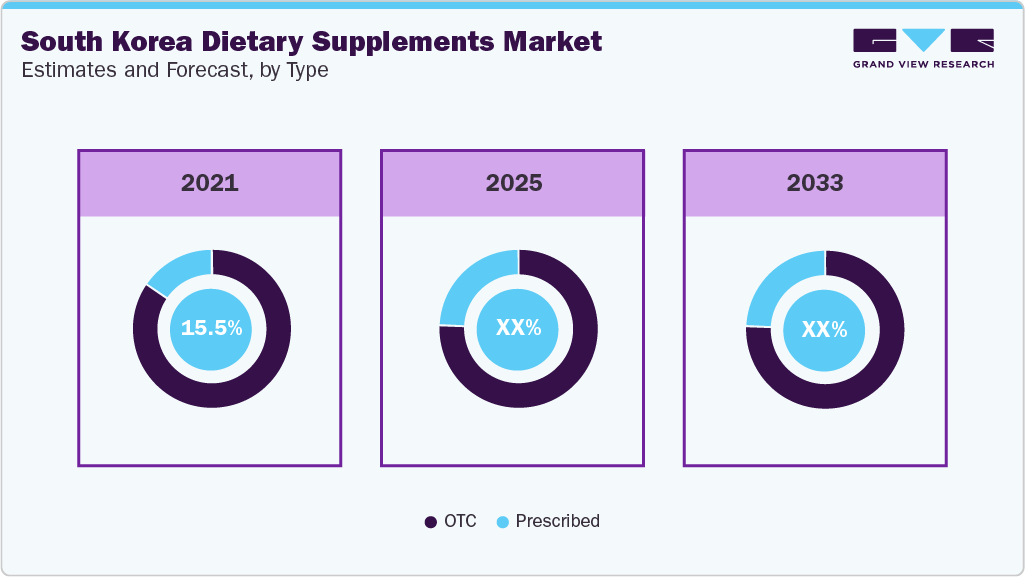
The prescribed dietary supplements segment is projected to grow at a significant CAGR of 5.6% from 2026 to 2033, driven by the increasing number of people undergoing regular health checkups and receiving medical diagnoses. The rising aging population in Korea is creating a significant demand for dietary supplements among the old, aged people. In 2024, the population aged 65 years and older reached 10.24 million, representing 20% of the country’s 51 million people. As a result, older adults frequently receive medical recommendations or prescriptions for vitamin D, B-complex, omega-3 fatty acids, calcium, joint supplements, and probiotics to manage deficiencies and chronic conditions, fueling the South Korea dietary supplement industry.
Form Insights
The capsule supplements segment led the market with the largest revenue share of 33.9% in 2025. The demand for capsules is growing in the South Korean market, as they offer ease of swallowing, enhanced absorption, and consistent dosing. Capsules protect sensitive ingredients, such as probiotics, omega-3s, and herbal extracts, improving stability and absorption. While the demand for supplements was concentrated among people in the age group of 51 and above, it is now increasing among children under 10 and adults in the age group of 20 to 40. Premium brands are expanding their reach in South Korea, with a highly health-conscious consumer base having strong purchasing power. Coupang, a U.S. wellness brand, is expanding in South Korea, offering 13 of Lemme’s most-loved products, including bestselling gummies and capsules.
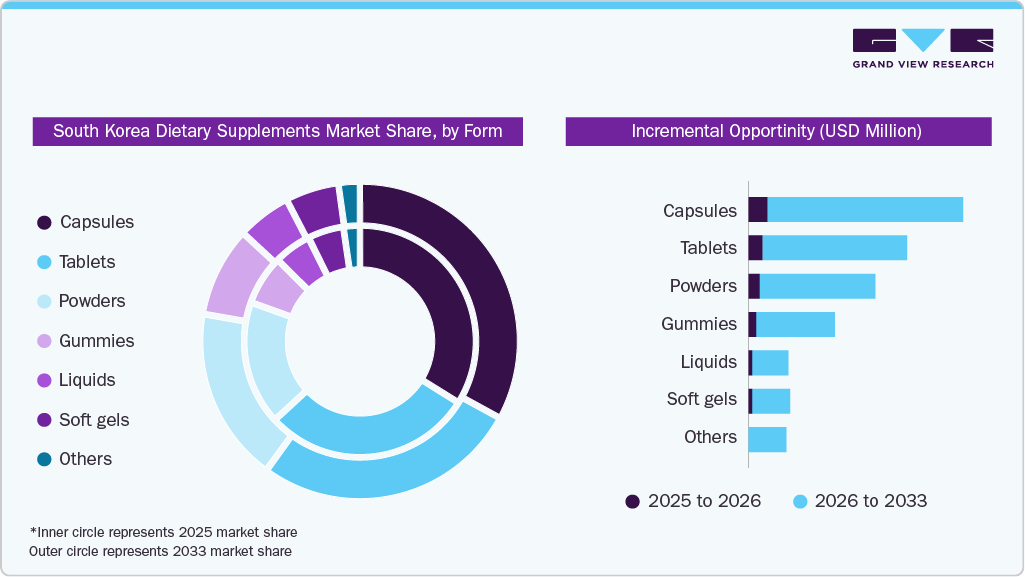
The gummy supplements segment is projected to grow at the fastest CAGR of 9.9% from 2026 to 2033. Innovation-driven supplement formats are becoming increasingly essential for attracting South Korean consumers, who prefer enjoyable, convenient, and flavor-forward nutrition options. Gummies have emerged as a key growth segment, offering an appealing alternative to tablets or capsules through their pleasant taste and ability to deliver targeted nutrients. This format is particularly popular among young professionals seeking both flavor and functionality in their daily routines. Reflecting this shift, in April 2021, Wicked Lab launched BeVeg certified pink gummy bear containing 10 different vitamins and minerals.
Application Insights
The immunity supplements segment led the market with the largest revenue share of 19.2% in 2025. This is attributed to factors such as the growing inclination among urban users toward immunity boosters, increasing awareness of the significance of immune health for human well-being, and the rising availability of products specifically developed to improve immunity. Access to innovation-based products offered by global brands such as NATURE'S BOUNTY by Nestlé Health Science also adds to the growth potential of this segment. For instance, NATURE'S BOUNTY offers chewable multivitamin gummies developed for women. These gummies contain ingredients to improve energy metabolism, immunity, and bone health.
The skin/hair/nails supplements segment is projected to grow at the fastest CAGR of 8.4% from 2026 to 2033, driven by factors such as innovation-based product formulation, inclination among users to include edible products in skin care routines for improved results, and availability of extensive product portfolios offered by global companies and Korean skin care industry participants. For example, VITALBEAUTIE by AMOREPACIFIC CORPORATION offers Super Collagen 28ea, containing collagen peptides. This fat-absorbed liquid collagen is provided in easy-to-carry packaging, which adds to the convenience of customers.
End Use Insights
The adults segment led the market with the largest revenue share of 65.2% in 2025. This is primarily attributed to increasing inclination among working adults toward the consumption of supplements that boost immunity, enhance vitality, and help attain improved longevity. Rising work stress, long travel times, modern lifestyles comprising excessive screen time, and exposure to risk of various chronic conditions such as diabetes, hypertension, and others have developed a strong awareness among adults regarding the role of nutrients in human health. Innovation-based product formations, such as mood enhancer gummies, powder-to-drink supplements, and others, have also contributed to the growth potential of this segment.
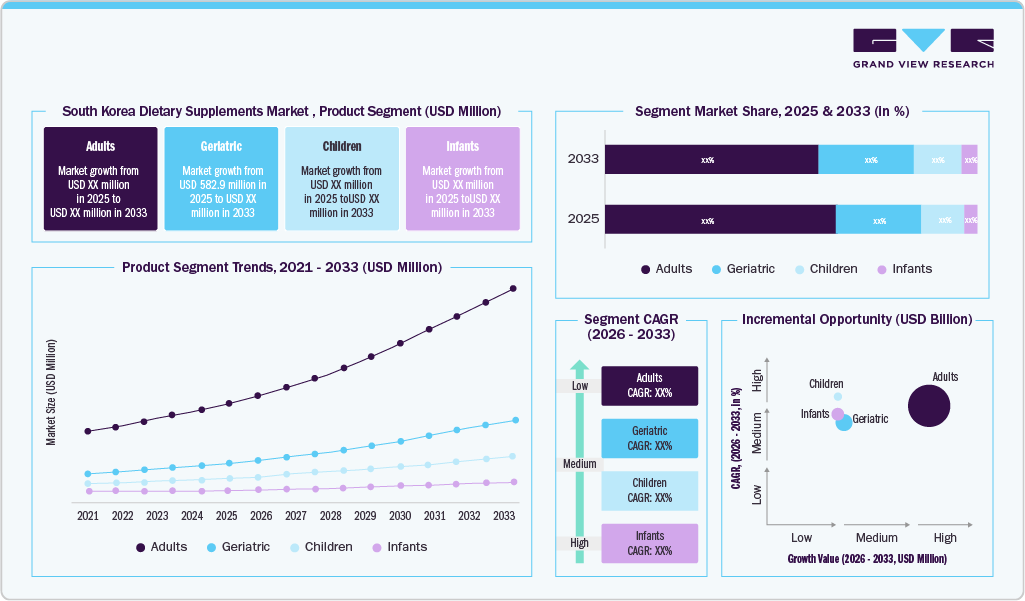
The children segment is projected to grow at the fastest CAGR of 7.9% from 2026 to 2033. Dietary supplements developed for children are increasing chosen by parents in South Korea as a preferred method for meeting the nutritional needs. Changing taste preferences of children, growing nutrient requirements, identified gaps in nutrition, increasing prevalence of deficiencies, and rising awareness regarding the role of nutrient-rich diet in the overall well-being of children are some of the key factors leading to the growing demand for these supplements.
Distribution Channel Insights
The online segment led the market with the largest revenue share of 58.9% in 2025. This is attributed to factors such as the increasing ubiquity of smartphones, the growing presence of health and wellness brands on e-commerce platforms, and the rising consumer inclination toward a hassle-free online shopping experience. Online shopping ensures discretion and provides a trouble-free experience for customers, with multiple brand products available on a single platform. The availability of detailed product descriptions, brief reviews from previous buyers, and ingredient and contents information contributes to the popularity of this segment.
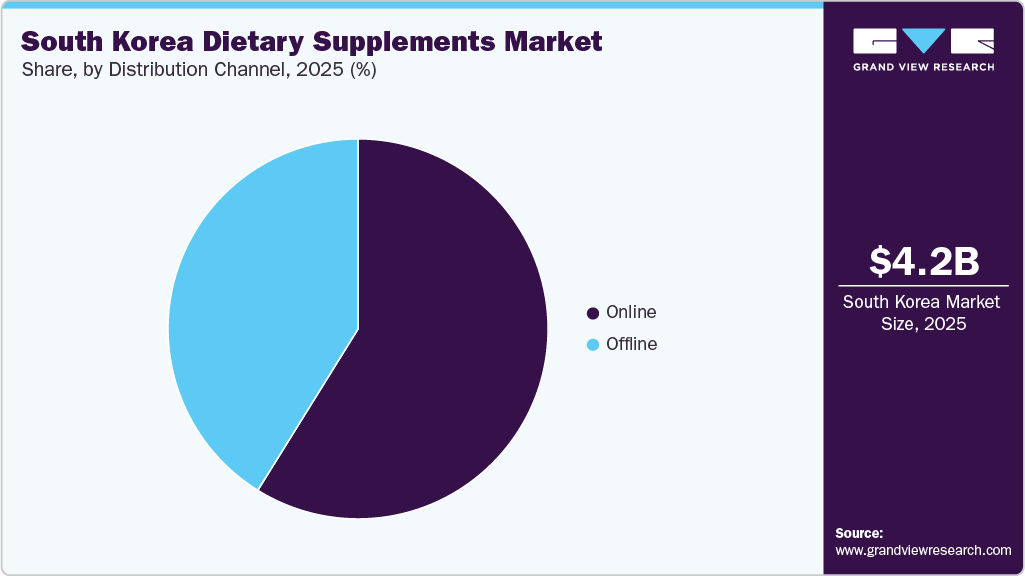
The offline segment is projected to grow at the fastest CAGR of 5.2% from 2026 to 2033. Brands have relied on offline distribution strategies for many years, as the presence of products across the shelves of international and domestic retail chains enhances their brand visibility. In addition, the effective distribution of products through convenience stores, grocery marts, and pharmacies enhances their reach and improves the possibility of new customer engagements. Consumers prefer buying supplements from pharmacies in their vicinity, hypermarkets, and other stores, as a physical shopping experience allows them to examine the packaging, supplement form, and other product details in person.
Key South Korea Dietary Supplements Company Insights
The South Korea dietary supplements industry is becoming increasingly competitive as established companies and emerging players focus on product innovation, quality assurance, and strategic pricing to capture consumer attention and market share. Companies invest heavily in advanced manufacturing technologies, automation, and skilled workforce development to maintain high production standards, enhance operational efficiency, and comply with evolving regulatory requirements to remain competitive. This investment-intensive environment raises the entry barrier while driving innovation.
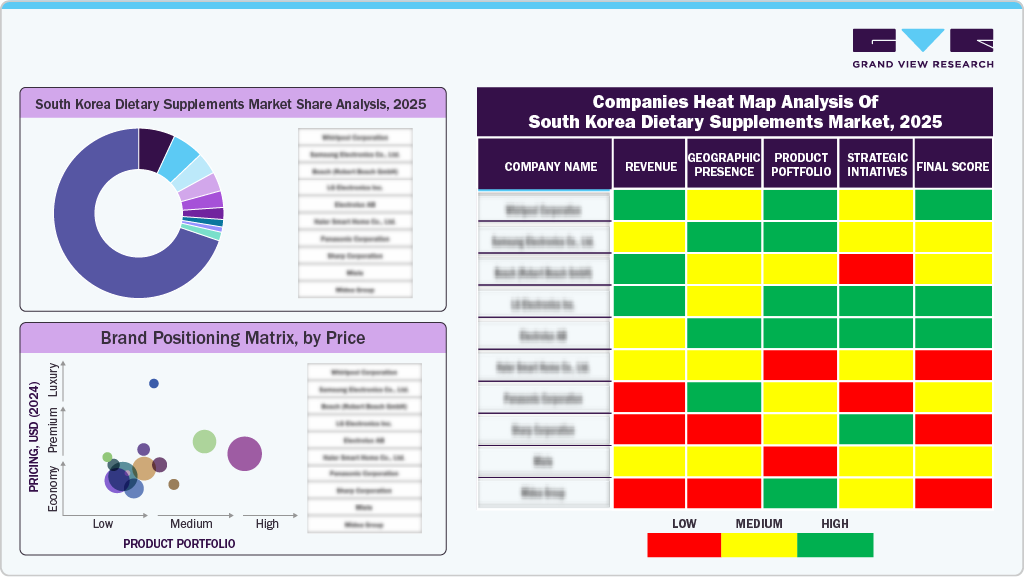
Key South Korea Dietary Supplements Companies:
- Amway Corp.
- Korea Ginseng Corp.
- Chong Kun Dang pharmaceutical Corp.
- CJ CHEILJEDANG CORP.
- Herbalife International of America, Inc.
- DAESANG Wellife
- Haleon Group of Companies.
- YUHAN
- BLACKMORES
- GNC Holdings, LLC
Recent Developments
-
In November 2025, KGC announced the launch of G1899, a premium ingredient brand. This marks its entry into the business-to-business (B2B) health ingredients industry. Through this launch, the company aims to expand its identity beyond the finished products market.
-
In June 2025, DAESANG Wellife announced its progress in digital enhancement of its official website and strengthening its brand identity as a healthcare company providing nutrition solutions customized to lifestyle and life cycle. This included improvements in overall brand content, diversification of customer acquisition channels, and enhanced information accessibility. It also enabled three languages, including Korean, English, and Chinese, on its websites for users.
-
In December 2024, JUNG KWAN JANG, a premium flagship brand by Korea Ginseng Corp., announced that its blood sugar-focused health supplements line, GL Pro, launched in October 2024, sold over 20,000 units in the first month of sale.
-
In July 2024, Amway Korea announced the opening of a new Ace Station in the Jeonju branch. This station has a large training room with a capacity of 150 people, as well as smaller meeting rooms. A newly designed wellness lifestyle experience space concept for Amway Business Owners (ABOs) in Korea was launched at Konkuk University Station in Seoul in 2022.
South Korea Dietary Supplements Market Report Scope
Report Attribute
Details
Market size value in 2026
USD 4.45 billion
Revenue forecast in 2033
USD 6.80 billion
Growth rate
CAGR of 6.2% from 2026 to 2033
Base year for estimation
2025
Historical data
2021 - 2024
Forecast period
2026 - 2033
Quantitative units
Revenue in USD million/billion, and CAGR from 2026 to 2033
Report coverage
Revenue forecast, company ranking, competitive landscape, growth factors, and trends
Segments covered
Product, ingredient, type, form, application, end use, distribution channel
Country scope
South Korea
Key companies profiled
Amway Corp.; Korea Ginseng Corp.; Chong Kun Dang Pharmaceutical Corp.; CJ CHEILJEDANG CORP.; Herbalife International of America, Inc.; DAESANG Wellife; Haleon Group of Companies.; YUHAN; BLACKMORES; GNC Holdings, LLC
Customization scope
Free report customization (equivalent up to 8 analysts working days) with purchase. Addition or alteration to country, regional & segment scope.
Pricing and purchase options
Avail customized purchase options to meet your exact research needs. Explore purchase options
South Korea Dietary Supplements Market Report Segmentation
This report forecasts revenue growth at country levels and provides an analysis of the latest trends and opportunities in each of the sub-segments from 2021 to 2033. For this study, Grand View Research has segmented the South Korea dietary supplements market report based on the product, ingredient, type, form, application, end use, and distribution channel:
-
Product Outlook (Revenue, USD Million, 2021 - 2033)
-
Single Ingredient
-
Multiple Ingredients/Blends
-
-
Ingredient Outlook (Revenue, USD Million, 2021 - 2033)
-
Vitamin
-
Multivitamin
-
Vitamin A
-
Vitamin B
-
Vitamin C
-
Vitamin D
-
Vitamin K
-
Vitamin E
-
-
Botanicals
-
Minerals
-
Calcium
-
Potassium
-
Magnesium
-
Iron
-
Zinc
-
Others (selenium, chromium, copper)
-
-
Proteins & Amino Acids
-
Collagen
-
Others
-
-
Fibers & Specialty Carbohydrates
-
Omega Fatty Acids
-
Probiotics
-
Prebiotics & Postbiotics
-
Others
-
-
Form Outlook (Revenue, USD Million, 2021 - 2033)
-
Tablets
-
Capsules
-
Soft Gels
-
Powders
-
Gummies
-
Liquid
-
Others
-
-
Type Outlook (Revenue, USD Million, 2021 - 2033)
-
OTC
-
Prescribed
-
-
Application Outlook (Revenue, USD Million, 2021 - 2033)
-
Energy & Weight Management
-
General Health
-
Bone & Joint Health
-
Gastrointestinal Health
-
Immunity
-
Cardiac Health
-
Diabetes
-
Anti-cancer
-
Lungs Detox/Cleanse
-
Skin/ Hair/ Nails
-
Sexual Health
-
Brain/Mental Health
-
Insomnia
-
Menopause
-
Anti-aging
-
Prenatal Health
-
Others
-
-
End Use Outlook (Revenue, USD Million, 2021 - 2033)
-
Adults
-
Millennials
-
Male
-
Female
-
Pregnant Women
-
Non-pregnant Women
-
-
Gen X
-
Male
-
Female
-
Pregnant Women
-
Non-pregnant Women
-
-
Gen Z
-
Male
-
Female
-
Pregnant Women
-
Non-pregnant Women
-
-
Boomers
-
Male
-
Female
-
-
-
Geriatric
-
Children
-
Infants
-
-
Distribution Channel Outlook (Revenue, USD Million, 2021 - 2033)
-
Offline
-
Hypermarkets/Supermarkets
-
Pharmacies
-
Specialty Stores
-
Direct Sales
-
D2C
-
Practitioner
-
Others
-
-
Online
-
-
Type-Distribution Channel Outlook (Revenue, USD Million, 2021 - 2033)
-
OTC
-
Offline
-
Hypermarkets/Supermarkets
-
Pharmacies
-
Specialty Stores
-
Direct Sales (MLM)
-
D2C
-
Practitioner
-
Others
-
-
Online
-
-
Prescribed
-
Offline
-
Online
-
-
-
Type-Ingredient Outlook (Revenue, USD Million, 2021 - 2033)
-
OTC
-
Vitamin
-
Multivitamin
-
Vitamin A
-
Vitamin B
-
Vitamin C
-
Vitamin D
-
Vitamin K
-
Vitamin E
-
-
Botanicals
-
Minerals
-
Calcium
-
Potassium
-
Magnesium
-
Iron
-
Zinc
-
Others (selenium, chromium, copper)
-
-
Proteins & Amino Acids
-
Collagen
-
Others
-
-
Fibers & Specialty Carbohydrates
-
Omega Fatty Acids
-
Probiotics
-
Prebiotics & Postbiotics
-
Others
-
-
Prescribed
-
Vitamin
-
Multivitamin
-
Vitamin A
-
Vitamin B
-
Vitamin C
-
Vitamin D
-
Vitamin K
-
Vitamin E
-
-
Botanicals
-
Minerals
-
Calcium
-
Potassium
-
Magnesium
-
Iron
-
Zinc
-
Others (selenium, chromium, copper)
-
-
Proteins & Amino Acids
-
Collagen
-
Others
-
-
Fibers & Specialty Carbohydrates
-
Omega Fatty Acids
-
Probiotics
-
Prebiotics & Postbiotics
-
Others
-
-
-
Type-Form Outlook (Revenue, USD Million, 2021 - 2033)
-
OTC
-
Tablets
-
Capsules
-
Soft Gels
-
Powders
-
Gummies
-
Liquid
-
Others
-
-
Prescribed
-
Tablets
-
Capsules
-
Soft Gels
-
Powders
-
Gummies
-
Liquid
-
Others
-
-
-
End Use-Distribution Channel Outlook (Revenue, USD Million, 2021 - 2033)
-
Adults
-
Millennials
-
OTC
-
Offline
-
Hypermarkets/Supermarkets
-
Pharmacies
-
Specialty Stores
-
Direct Sales (MLM)
-
D2C
-
Practitioner
-
Others
-
-
Online
-
-
Prescribed
-
Offline
-
Online
-
-
-
Gen X
-
OTC
-
Offline
-
Hypermarkets/Supermarkets
-
Pharmacies
-
Specialty Stores
-
Direct Sales (MLM)
-
D2C
-
Practitioner
-
Others
-
-
Online
-
-
Prescribed
-
Offline
-
Online
-
-
-
Gen Z
-
OTC
-
Offline
-
Hypermarkets/Supermarkets
-
Pharmacies
-
Specialty Stores
-
Direct Sales (MLM)
-
D2C
-
Practitioner
-
Others
-
-
Online
-
-
Prescribed
-
Offline
-
Online
-
-
-
Boomers
-
OTC
-
Offline
-
Hypermarkets/Supermarkets
-
Pharmacies
-
Specialty Stores
-
Direct Sales (MLM)
-
D2C
-
Practitioner
-
Others
-
-
Online
-
-
Prescribed
-
Offline
-
Online
-
-
-
-
Geriatric
-
OTC
-
Offline
-
Hypermarkets/Supermarkets
-
Pharmacies
-
Specialty Stores
-
Direct Sales (MLM)
-
D2C
-
Practitioner
-
Others
-
-
Online
-
-
Prescribed
-
Offline
-
Online
-
-
-
Children
-
OTC
-
Offline
-
Hypermarkets/Supermarkets
-
Pharmacies
-
Specialty Stores
-
Direct Sales (MLM)
-
D2C
-
Practitioner
-
Others
-
-
Online
-
-
Prescribed
-
Offline
-
Online
-
-
-
Infants
-
OTC
-
Offline
-
Hypermarkets/Supermarkets
-
Pharmacies
-
Specialty Stores
-
Direct Sales (MLM)
-
D2C
-
Practitioner
-
Others
-
-
Online
-
-
Prescribed
-
Offline
-
Online
-
-
-
Frequently Asked Questions About This Report
b. The South Korea dietary supplements market was estimated at USD 4.24 billion in 2025 and is expected to reach USD 4.45 billion in 2026.
b. The South Korea dietary supplements market is expected to grow at a compound annual growth rate of 6.2% from 2026 to 2033 to reach USD 6.79 billion by 2033.
b. Vitamin supplements accounted for the largest revenue share of 30.8% in 2025. Vitamins are gaining popularity in South Korea, providing solution for higher immunity, energy, bone health, skin health, and overall wellness in South Korea
b. Some of the key market players in the South Korea dietary supplements market are Amway Corp.; Korea Ginseng Corp.; Chong Kun Dang pharmaceutical Corp.; CJ CHEILJEDANG CORP.; Herbalife International of America, Inc.; DAESANG Wellife; Haleon Group of Companies.; YUHAN; BLACKMORES; and GNC Holdings, LLC
b. The market growth can be attributed to the significant socio-demographic shifts and a heightened focus on proactive, preventative health maintenance.


Share this report with your colleague or friend.
Need a Tailored Report?
Customize this report to your needs — add regions, segments, or data points, with 20% free customization.


ISO 9001:2015 & 27001:2022 Certified
We are GDPR and CCPA compliant! Your transaction & personal information is safe and secure. For more details, please read our privacy policy.
Trusted market insights - try a free sample
See how our reports are structured and why industry leaders rely on Grand View Research. Get a free sample or ask us to tailor this report to your needs.