- Home
- »
- Nutraceuticals & Functional Foods
- »
-
Saudi Arabia Dietary Supplements Market Size Report, 2033GVR Report cover
![Saudi Arabia Dietary Supplements Market Size, Share & Trends Report]()
Saudi Arabia Dietary Supplements Market (2026 - 2033) Size, Share & Trends Analysis Report By Ingredient (Single Ingredient, Multi-ingredients), By Application, By End-use, By Form, By Type, By Distribution Channel, And Segment Forecasts
- Report ID: GVR-4-68040-700-5
- Number of Report Pages: 110
- Format: PDF
- Historical Range: 2021 - 2025
- Forecast Period: 2026 - 2033
- Industry: Consumer Goods
- Report Summary
- Table of Contents
- Segmentation
- Methodology
- Download FREE Sample
-
 Download Sample Report
Saudi Arabia Dietary Supplements Market Summary
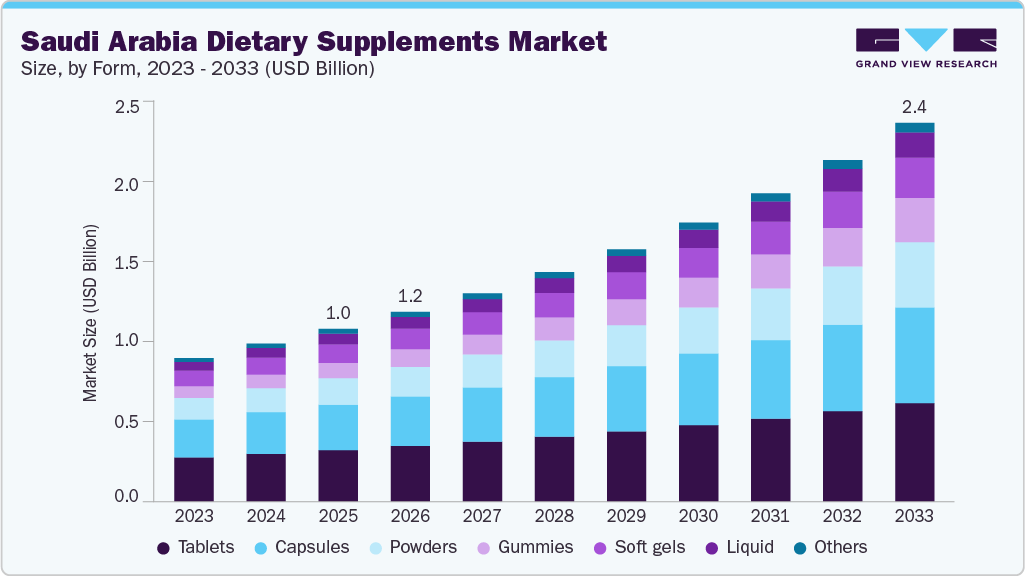
The Saudi Arabia dietary supplements market size was estimated at USD 1,081.9 million in 2025 and is projected to reach USD 2,373.1 million by 2033, growing at a CAGR of 10.4% from 2026 to 2033. Growth in the Saudi Arabia dietary supplements market has been driven by the Kingdom’s accelerated shift toward preventive healthcare.
Key Market Trends & Insights
- By ingredients, the vitamin supplements market accounted for the largest share of 29.2% in 2025.
- By form, tablet supplements accounted for the largest revenue share of 29.8% in 2025.
- By end user, dietary supplements for adults dominated the dietary supplements market, with a share of 54.9% in 2025.
Market Size & Forecast
- 2025 Market Size: USD 1,081.9 Million
- 2033 Projected Market Size: USD 2,373.1 Million
- CAGR (2026-2033): 10.4%
The Saudi Ministry of Health’s annual wellness initiatives highlighted nutrition awareness programs to reduce chronic disease prevalence. The demographic structure, characterized by a young, urban, digitally engaged population, has contributed to high supplement experimentation rates, while increasing disposable income levels have enabled greater spending on imported and premium nutraceutical brands.The increasing use of dietary supplements among athletes in Saudi Arabia is driving the growth of the KSA dietary supplements market. In Saudi Arabia, a 2024 survey of adult athletes attending fitness centers found that 73.9% reported using dietary supplements (DS), primarily to address self-reported perceived vitamin/mineral deficiencies (62.0%) and to enhance energy availability (45.8%). The most frequently reported DS ingredients used by the responded were vitamins and minerals (77.3%), followed by fish oils (57.3%) and proteins (42.7%).
Moreover, population expansion in Saudi Arabia has been recognized as a fundamental catalyst for increasing demand within consumer-health categories, including dietary supplements. The national population has been viewed as a direct contributor to the enlargement of the total addressable consumer base. The national population of Saudi Arabia is reported at more than 35 million in 2024 by the General Authority for Statistics, and 42 million to 44 million people are expected to be living in Saudi Arabia by 2033.
Consumer Insights
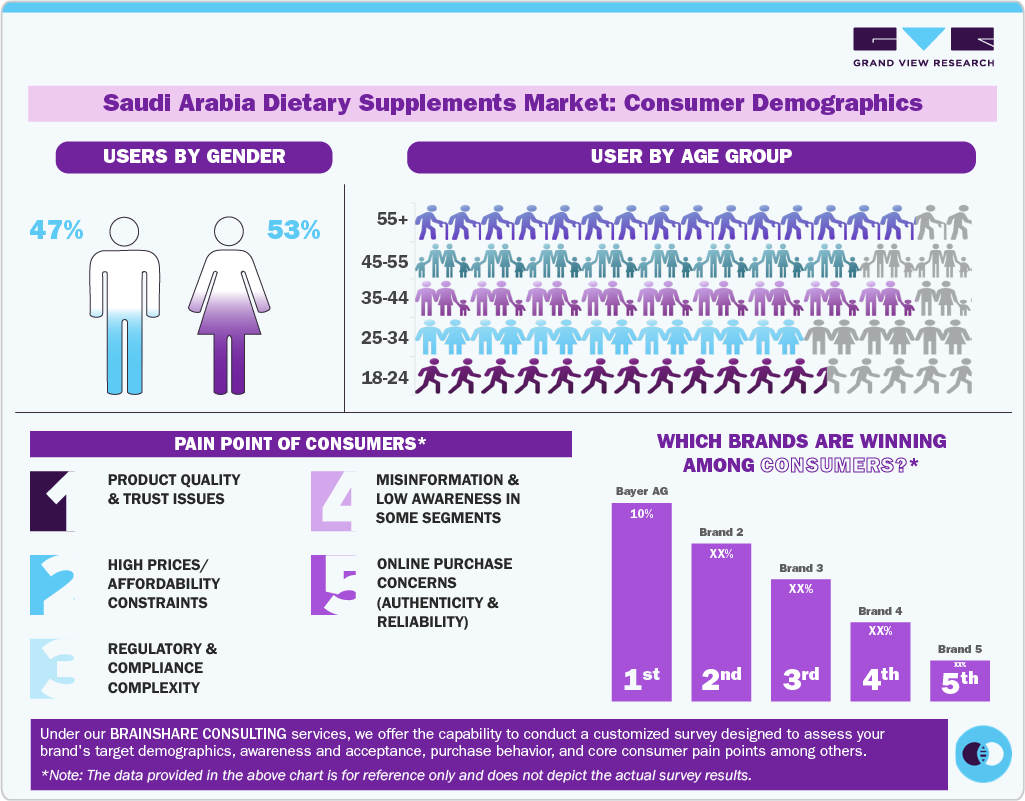
Younger generation (Gen Z and Millennials) are observed to be the primary adopters of convenience-oriented formats and lifestyle supplements; demand for ready-to-consume formats (gummies, RTDs) and fitness-oriented products (protein powders, pre/post-workout formulas) has been elevated among these groups. By contrast, older cohorts (middle-aged and older adults) are reported to purchase supplements with a prevention and chronic-disease management framing, such as bone-health, cardiovascular, and multivitamin formulations.
According to a survey by BMC Women’s Health, “Prevalence of dietary supplement use and associated factors among female college students in Saudi Arabia”, dietary supplements are primarily taken as needed, with notable variation across categories. Beta-carotene (54.2%) and chamomile (54.2%) show the highest as-needed usage, followed closely by glucosamine (53.8%) and garlic capsules (42.3%). Moderate usage is observed for supplements such as active protein (42.9%), folic acid (34.1%), chromium (36.8%), magnesium (33.3%), Ginkgo biloba (33.3%), and vitamin B group (30.6%).
Ingredient Insights
The vitamin supplements market accounted for the largest revenue share of 29.2% in 2025. Vitamins are gaining popularity in Saudi Arabia as consumers seek for convenient avenue to maintain immunity, energy levels, and overall well-being. Adults and working professionals in Saudi Arabia turn to supplements to fill nutritional gaps caused by busy lifestyles and limited diets. For example, a study published in the National Library of Medicine in March 2021, 443 participants from across Saudi Arabia completed a survey, revealing that 44% used dietary supplements. Vitamin D (28%) and melatonin (20%) were the most frequently reported supplements for mental health purposes.
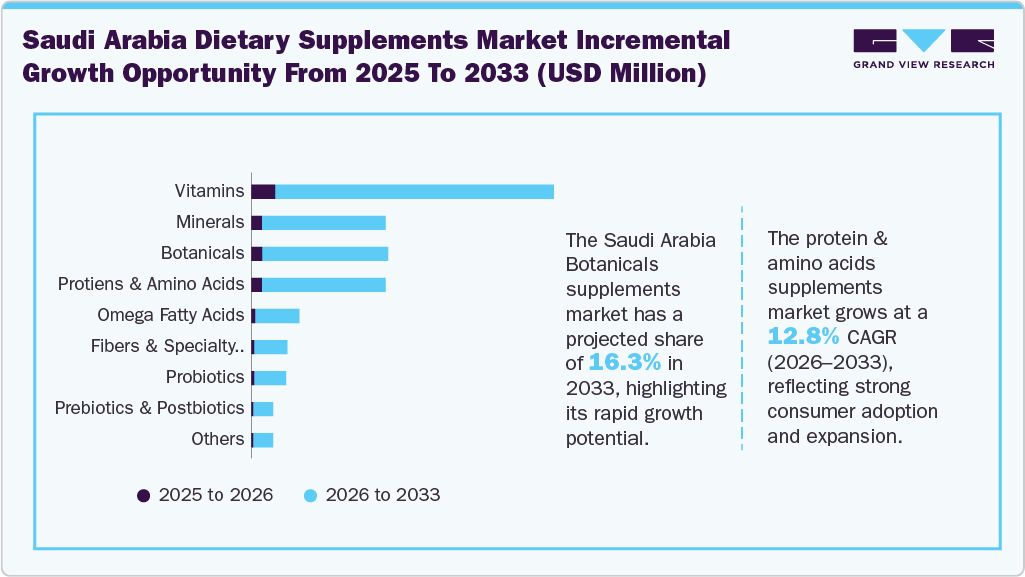
The protein & amino acids supplements market is expected to grow at a CAGR of 12.8% from 2026 to 2033. Rising consumer emphasis on fitness, muscle development, and overall wellness supports this growth. Fitness enthusiasts and health-conscious individuals rely on protein powders, amino-acid supplements, and fortified functional foods to fulfill their daily protein requirements. The growing focus on preventive health and body optimization has further amplified demand across various age groups, especially among younger populations. For instance, as per the bulletin released by the General Authority for Statistics in December 2024, it reported that 58.5% of individuals aged 18 and above in Saudi Arabia engage in at least 150 minutes of physical activity per week, while 18.7% of children and adolescents aged 5 to 17 participate in 60 minutes or more daily. Companies are launching innovative products to cater to the rising demand, and introducing specialized protein products, such as plant-based proteins, whey blends, and amino-acid formulations, are driving further product innovation.
Type Insights
Over-the-counter (OTC) dietary supplements market accounted for the largest revenue share of 77.0% in 2025. The OTC segment in Saudi Arabia is expanding as consumers place a stronger emphasis on easily accessible and self-managed health solutions. Higher awareness of immunity, general wellness, pain relief, and preventive care has encouraged individuals to choose products that are available without a prescription and offer reliable support for day-to-day health needs. The convenience of OTC products, supported by wider availability across pharmacies, supermarkets, and online platforms, has strengthened the consumer preference for quick and independent health management solutions.
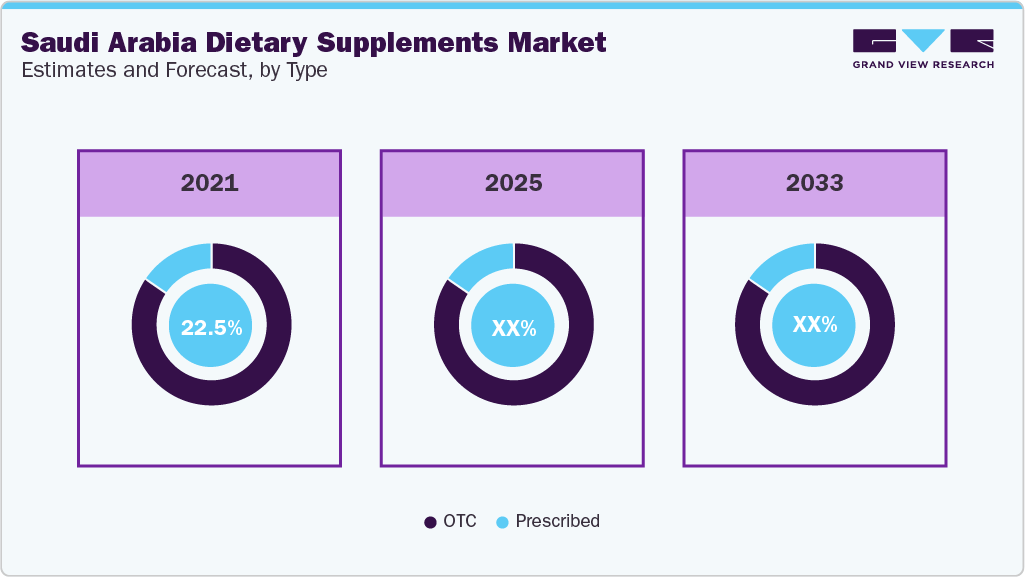
The prescribed dietary supplements market is projected to grow at a CAGR of 11.5% from 2026 to 2033, because physicians and clinical nutrition specialists have a strong influence on consumer choices. Hospitals and primary care centers conduct frequent screenings for vitamin D deficiency, anemia, and metabolic risks, resulting in an increasing number of individuals receiving medical advice to take specific supplements. As chronic lifestyle conditions remain widespread, patients depend on clinically validated formulations that are prescribed by formal medical channels. The expansion of this market is fueled by increased recommendations from physicians and nutritionists to use dietary supplements for various health concerns or as a preventative strategy.
Form Insights
The tablet supplements market accounted for the largest revenue share of 29.8% in 2025. In Saudi Arabia, tablets are the preferred form of dietary supplements as they ensure precise dosing, with each intake consisting of an accurate amount of active ingredients, which is important for vitamins, minerals, and other functional components. Tablets have a longer shelf life compared to liquid or soft-gel formats, making it easier to store and transport them without significant degradation of potency. Due to their compact size, tablets can be easily consumed anytime, anywhere, thus helping consumers continue supplementation while traveling or in the middle of busy schedules.
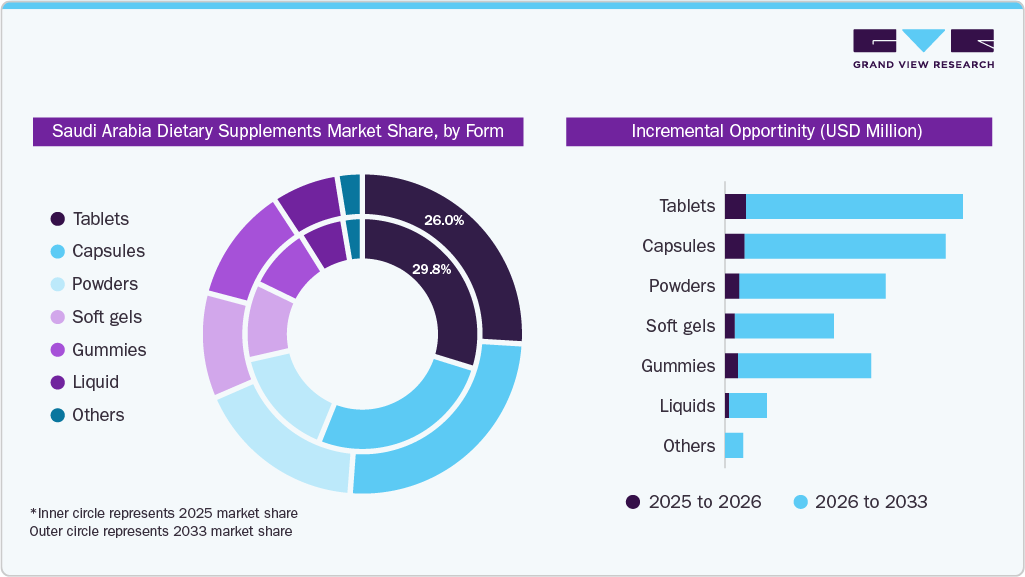
The Gummy supplements market is projected to grow at a CAGR of 14.1% from 2026 to 2033. Gummies have emerged as a key growth segment in the market due to their convenience, palatable taste, and ease of consumption, making supplementation more appealing across all age groups. Consumers, especially children and working adults with busy lifestyles, are increasingly preferring gummies as a fun way to consume vitamins, minerals, and other functional ingredients. The format also supports innovation, allowing brands to combine multiple nutrients, herbal extracts, or probiotics into a single, easy-to-consume serving. The growing availability of these products through pharmacies, supermarkets, and e-commerce channels, coupled with rising awareness of preventive healthcare, is driving the adoption of this form of supplements. These factors are expected to favor the growth of gummies segment in the country’s dietary supplements landscape over the coming years.
Application Insights
The immunity supplements market accounted for a revenue share of 23.5% in 2025 in Saudi Arabia. Immunity-support supplements play a vital role in daily health habits as many people prioritize resilience and overall well-being. Longer workdays, inconsistent eating patterns, and regular exposure to changing environments influence everyday energy levels, creating a need for consistent nutritional support. This environment promotes the use of supplements that fit easily into daily routines and offer dependable support for maintaining internal strength and stability.
The prenatal health supplements market is projected to grow at a CAGR of 12.7% from 2026 to 2033. Prenatal supplement usage is increasing as pregnant women seek structured nutritional support during early and mid-pregnancy. Formulas that combine essential vitamins and minerals into a single daily intake are valued for their convenience, helping users manage key nutrient requirements without relying on multiple products. Broader access to maternity-focused information through clinics, pharmacies, and digital platforms has further strengthened routine adoption through clearer guidance on nutrient intake across different pregnancy stages.
End-user Insights
Dietary supplements for adults accounted for a revenue share of 54.9% in 2025. Adults remain the most influential end-user group in Saudi Arabia’s dietary supplements market, as rising health consciousness, long working hours, and clearer awareness of micronutrient gaps drive steady product adoption. The country’s high burden of vitamin D deficiency and metabolic concerns, highlighted in national clinical literature, has reinforced the reliance of adults on supplements for immunity, digestive comfort, energy balance, and metabolic support. According to a study published in the Journal of Clinical Medicine in 2024, 73.9% of adult athletes in Saudi Arabia attending fitness centers reported using dietary supplements, with vitamins/minerals, fish oil, and protein products emerging as the most preferred categories.
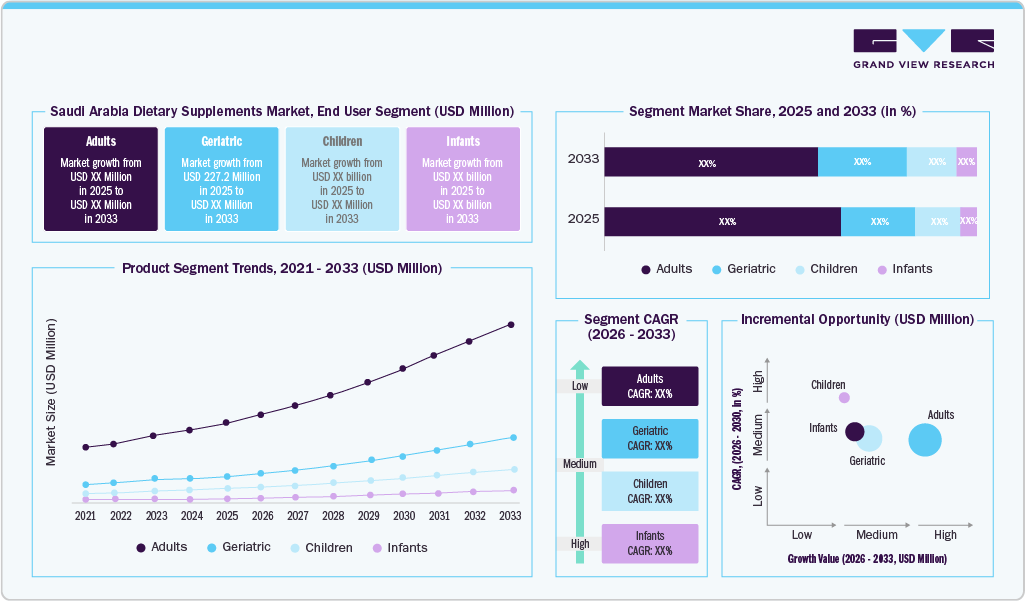
Dietary supplements for infants are projected to grow at a CAGR of 12.6% from 2026 to 2033, driven by rising focus on early-life nutrition and growing awareness of the importance of essential nutrient intake. Feeding patterns in the first year can involve low appetite, limited sun exposure, and occasional digestive discomfort, creating concerns about maintaining adequate levels of vitamin D, iron, and probiotics. These conditions prompt many families to consult pediatricians for supplement options that support growth, immunity, and digestive balance.
Distribution Channel Insights
The sales of dietary supplements through offline channels accounted for a share of around 73.5% in 2025. The dominance of this segment is supported by the rising consumer dependence on pharmacies, hypermarkets, and specialty health stores, as they are the preferred purchase points for dietary supplements in Saudi Arabia. Consumers place a high value on professional guidance, product authenticity, and regulatory assurance when selecting health-related products. Manufacturers are expanding regional production to improve supply stability and strengthen market reach through offline sales channels.
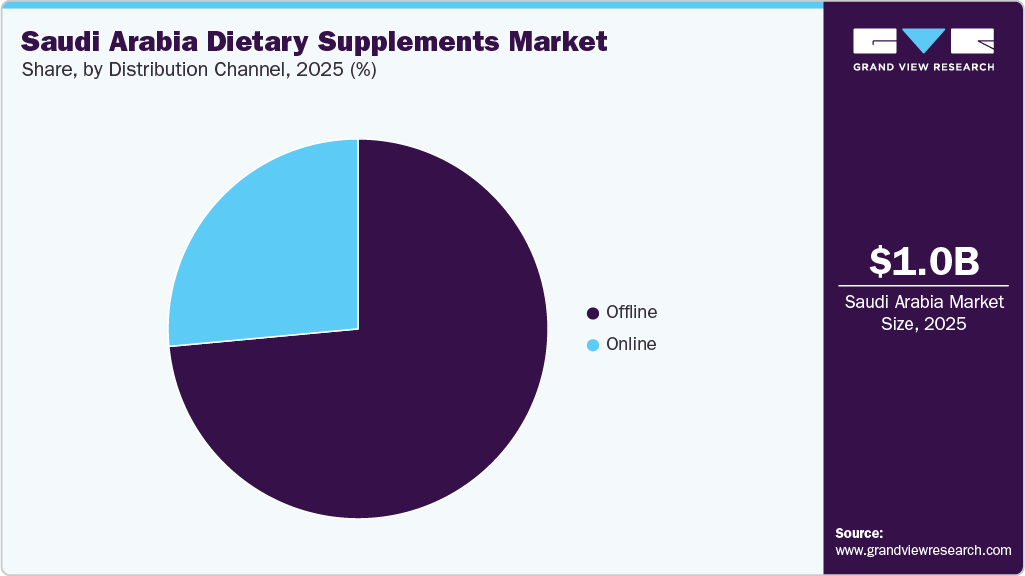
The sales of dietary supplements through online channels are projected to grow at a CAGR of 12.0% from 2026 to 2033. The growth of this distribution channel is supported by rising digital engagement and changing consumer purchasing behavior. The country has experienced strong internet penetration and is witnessing continued improvement in digital infrastructure, which is contributing to the accelerated expansion of the e-commerce sector. Consumers increasingly prefer online channels due to the convenience of doorstep delivery, easy and 24x7 accessibility, and time-efficient shopping. Digital platforms offer a wider portfolio of dietary supplements, including global brands and premium formulations, that are available through physical retail. The availability of verified reviews and detailed product descriptions further strengthens the confidence of buyers, thereby increasing the popularity of the online channel.
Key Saudi Arabia Dietary Supplements Company Insights
The Saudi Arabia dietary supplements industry is becoming increasingly competitive as established companies and emerging players focus on product innovation, quality assurance, and strategic pricing to capture consumer attention and market share. Companies invest heavily in advanced manufacturing technologies, automation, and skilled workforce development to maintain high production standards, enhance operational efficiency, and comply with evolving regulatory requirements to remain competitive. This investment-intensive environment raises the entry barrier while pushing innovation forward.
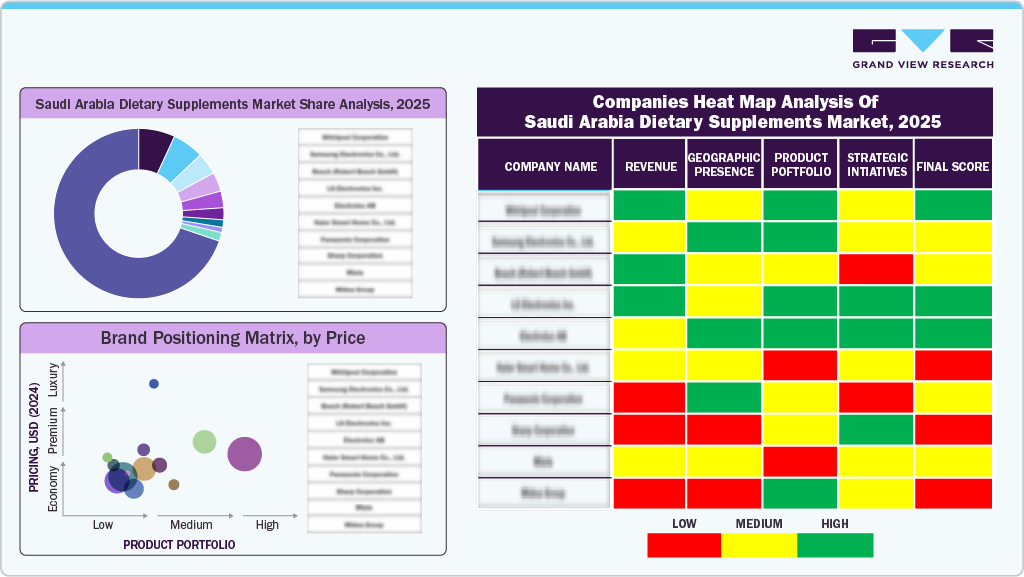
Key Saudi Arabia Dietary Supplements Companies:
- Herbalife International of America, Inc.
- Bayer AG
- Pfizer Inc.
- Amway Corp
- Abbott
- NU Skin
- Jamjoom Pharma
- Glanbia PLC
- H&H Group
- Mega Lifesciences
Recent Developments
-
In December 2023, MGC Pharmaceuticals Ltd.’s product ArtemiC received approval from the Saudi Food & Drug Authority, enabling its over-the-counter launch in Saudi Arabia and marking a notable development for the company in the dietary supplements market.
-
In February 2023, Sprout Organic expanded into Saudi Arabia, marking a strategic growth that strengthened the company’s regional presence and consumer reach in the Kingdom. The company offers a range of plant-based infant formulas,
-
In January 2023, Nutrigums entered the market through a multi-million-pound deal, introducing its functional gummy vitamin range and marking a significant expansion for the UK-based brand in the Kingdom’s dietary supplements sector.
Saudi Arabia Dietary Supplements Market Report Scope
Report Attribute
Details
Market size value in 2026
USD 1,188.8 million
Revenue forecast in 2033
USD 2,373.1 million
Growth rate
CAGR of 10.4% from 2026 to 2033
Actual data
2021 - 2025
Forecast period
2026 - 2033
Quantitative units
Revenue in USD million/billion, and CAGR from 2026 to 2033
Report coverage
Revenue forecast, company ranking, competitive landscape, growth factors, and trends
Segments covered
Product, ingredient, type, form, application, end-user, distribution channel
Country scope
Saudi Arabia
Key companies profiled
Herbalife International of America, Inc.; Bayer AG; Pfizer Inc.; Amway Corp; Abbott; NU Skin; Jamjoom Pharma; Glanbia PLC; H&H Group; Mega Lifesciences
Customization scope
Free report customization (equivalent up to 8 analysts working days) with purchase. Addition or alteration to country, regional & segment scope.
Pricing and purchase options
Avail customized purchase options to meet your exact research needs. Explore purchase options
Saudi Arabia Dietary Supplements Market Report Segmentation
This report forecasts revenue growth at country levels and provides an analysis of the latest trends and opportunities in each of the sub-segments from 2021 to 2033. For this study, Grand View Research has segmented the Saudi Arabia dietary supplements market report on the basis of product, ingredient, type, form, application, end-user, and distribution channel.
-
Product Outlook (Revenue, USD Million, 2021 - 2033)
-
Single Ingredient
-
Multiple Ingredients/Blends
-
-
Ingredient Outlook (Revenue, USD Million, 2021 - 2033)
-
Vitamin
-
Multivitamin
-
Vitamin A
-
Vitamin B
-
Vitamin C
-
Vitamin D
-
Vitamin K
-
Vitamin E
-
-
Botanicals
-
Minerals
-
Calcium
-
Potassium
-
Magnesium
-
Iron
-
Zinc
-
Others (selenium, chromium, copper)
-
-
Proteins & Amino Acids
-
Collagen
-
Others
-
-
Fibers & Specialty Carbohydrates
-
Omega Fatty Acids
-
Probiotics
-
Prebiotics & Postbiotics
-
Others
-
-
Form Outlook (Revenue, USD Million, 2021 - 2033)
-
Tablets
-
Capsules
-
Soft Gels
-
Powders
-
Gummies
-
Liquid
-
Others
-
-
Type Outlook (Revenue, USD Million, 2021 - 2033)
-
OTC
-
Prescribed
-
-
Application Outlook (Revenue, USD Million, 2021 - 2033)
-
Energy & Weight Management
-
General Health
-
Bone & Joint Health
-
Gastrointestinal Health
-
Immunity
-
Cardiac Health
-
Diabetes
-
Anti-cancer
-
Lungs Detox/Cleanse
-
Skin/ Hair/ Nails
-
Sexual Health
-
Brain/Mental Health
-
Insomnia
-
Menopause
-
Anti-aging
-
Prenatal Health
-
Others
-
-
End-user Outlook (Revenue, USD Million, 2021 - 2033)
-
Adults
-
Millennials
-
Male
-
Female
-
Pregnant Women
-
Non-pregnant Women
-
-
Gen X
-
Male
-
Female
-
Pregnant Women
-
Non-pregnant Women
-
-
Gen Z
-
Male
-
Female
-
Pregnant Women
-
Non-pregnant Women
-
-
Boomers
-
Male
-
Female
-
-
-
Geriatric
-
Children
-
Infants
-
-
Distribution Channel Outlook (Revenue, USD Million, 2021 - 2033)
-
Offline
-
Hypermarkets/Supermarkets
-
Pharmacies
-
Specialty Stores
-
Direct Sales (MLM)
-
D2C
-
Practitioner
-
Others
-
-
Online
-
-
Type-Distribution Channel Outlook (Revenue, USD Million, 2021 - 2033)
-
OTC
-
Offline
-
Hypermarkets/Supermarkets
-
Pharmacies
-
Specialty Stores
-
Direct Sales (MLM)
-
D2C
-
Practitioner
-
Others
-
-
Online
-
-
Prescribed
-
Offline
-
Online
-
-
-
Type-Ingredient Outlook (Revenue, USD Million, 2021 - 2033)
-
OTC
-
Vitamin
-
Multivitamin
-
Vitamin A
-
Vitamin B
-
Vitamin C
-
Vitamin D
-
Vitamin K
-
Vitamin E
-
-
Botanicals
-
Minerals
-
Calcium
-
Potassium
-
Magnesium
-
Iron
-
Zinc
-
Others (selenium, chromium, copper)
-
-
Proteins & Amino Acids
-
Collagen
-
Others
-
-
Fibers & Specialty Carbohydrates
-
Omega Fatty Acids
-
Probiotics
-
Prebiotics & Postbiotics
-
Others
-
-
Prescribed
-
Vitamin
-
Multivitamin
-
Vitamin A
-
Vitamin B
-
Vitamin C
-
Vitamin D
-
Vitamin K
-
Vitamin E
-
-
Botanicals
-
Minerals
-
Calcium
-
Potassium
-
Magnesium
-
Iron
-
Zinc
-
Others (selenium, chromium, copper)
-
-
Proteins & Amino Acids
-
Collagen
-
Others
-
-
Fibers & Specialty Carbohydrates
-
Omega Fatty Acids
-
Probiotics
-
Prebiotics & Postbiotics
-
Others
-
-
-
Type-Form Outlook (Revenue, USD Million, 2021 - 2033)
-
OTC
-
Tablets
-
Capsules
-
Soft Gels
-
Powders
-
Gummies
-
Liquid
-
Others
-
-
Prescribed
-
Tablets
-
Capsules
-
Soft Gels
-
Powders
-
Gummies
-
Liquid
-
Others
-
-
-
End-User-Distribution Channel Outlook (Revenue, USD Million, 2021 - 2033)
-
Adults
-
Millennials
-
OTC
-
Offline
-
Hypermarkets/Supermarkets
-
Pharmacies
-
Specialty Stores
-
Direct Sales (MLM)
-
D2C
-
Practitioner
-
Others
-
-
Online
-
-
Prescribed
-
Offline
-
Online
-
-
-
Gen X
-
OTC
-
Offline
-
Hypermarkets/Supermarkets
-
Pharmacies
-
Specialty Stores
-
Direct Sales (MLM)
-
D2C
-
Practitioner
-
Others
-
-
Online
-
-
Prescribed
-
Offline
-
Online
-
-
-
Gen Z
-
OTC
-
Offline
-
Hypermarkets/Supermarkets
-
Pharmacies
-
Specialty Stores
-
Direct Sales (MLM)
-
D2C
-
Practitioner
-
Others
-
-
Online
-
-
Prescribed
-
Offline
-
Online
-
-
-
Boomers
-
OTC
-
Offline
-
Hypermarkets/Supermarkets
-
Pharmacies
-
Specialty Stores
-
Direct Sales (MLM)
-
D2C
-
Practitioner
-
Others
-
-
Online
-
-
Prescribed
-
Offline
-
Online
-
-
-
Geriatric
-
OTC
-
Offline
-
Hypermarkets/Supermarkets
-
Pharmacies
-
Specialty Stores
-
Direct Sales (MLM)
-
D2C
-
Practitioner
-
Others
-
-
Online
-
-
Prescribed
-
Offline
-
Online
-
-
-
Children
-
OTC
-
Offline
-
Hypermarkets/Supermarkets
-
Pharmacies
-
Specialty Stores
-
Direct Sales (MLM)
-
D2C
-
Practitioner
-
Others
-
-
Online
-
-
Prescribed
-
Offline
-
Online
-
-
-
Infants
-
OTC
-
Offline
-
Hypermarkets/Supermarkets
-
Pharmacies
-
Specialty Stores
-
Direct Sales (MLM)
-
D2C
-
Practitioner
-
Others
-
-
Online
-
-
Prescribed
-
Offline
-
Online
-
-
-
-
Frequently Asked Questions About This Report
b. The Saudi Arabia dietary supplements market was estimated at USD 1,081.9 million in 2025 and is expected to reach USD 1,188.8 million in 2026.
b. The Saudi Arabia dietary supplements market is expected to grow at a compound annual growth rate of 10.4% from 2026 to 2033 to reach USD 2,373.1 million by 2033.
b. Vitamin supplements accounted for the largest revenue share of 29.2% in 2025. Vitamins are gaining popularity in Saudi Arabia as consumers seek for convenient avenue to maintain immunity, energy levels, and overall well-being.
b. Some of the key market players in the Saudi Arabia dietary supplements market are Herbalife International of America, Inc.; Bayer AG; Pfizer Inc.; Amway Corp; Abbott; NU Skin; Jamjoom Pharma; Glanbia PLC; H&H Group; and Mega Lifesciences.
b. Growth in the Saudi Arabia dietary supplements market has been driven by the Kingdom’s accelerated shift toward preventive healthcare. The Saudi Ministry of Health’s annual wellness initiatives highlighted nutrition awareness programs to reduce chronic disease prevalence.


Share this report with your colleague or friend.
Need a Tailored Report?
Customize this report to your needs — add regions, segments, or data points, with 20% free customization.


ISO 9001:2015 & 27001:2022 Certified
We are GDPR and CCPA compliant! Your transaction & personal information is safe and secure. For more details, please read our privacy policy.
Trusted market insights - try a free sample
See how our reports are structured and why industry leaders rely on Grand View Research. Get a free sample or ask us to tailor this report to your needs.