- Home
- »
- Healthcare IT
- »
-
Radiology Information Systems Market Size Report, 2033GVR Report cover
![Radiology Information Systems Market Size, Share & Trends Report]()
Radiology Information Systems Market (2026 - 2033) Size, Share & Trends Analysis Report By Product (Integrated RIS, Standalone RIS), By Deployment Mode (Web Based, Cloud Based), By End Use (Hospitals & Clinics, Outpatient Department Clinics), By Region, And Segment Forecasts
- Report ID: 978-1-68038-854-1
- Number of Report Pages: 120
- Format: PDF
- Historical Range: 2018 - 2025
- Forecast Period: 2026 - 2033
- Industry: Healthcare
- Report Summary
- Table of Contents
- Segmentation
- Methodology
- Download FREE Sample
-
 Download Sample Report
Radiology Information Systems Market Summary
The global radiology information systems market size was valued at USD 1.19 billion in 2025 and is projected to reach USD 2.64 billion by 2033, growing at a CAGR of 10.49% from 2026 to 2033. Growing government initiatives to promote the use of RIS have resulted in increased investments in healthcare infrastructure.
Key Market Trends & Insights
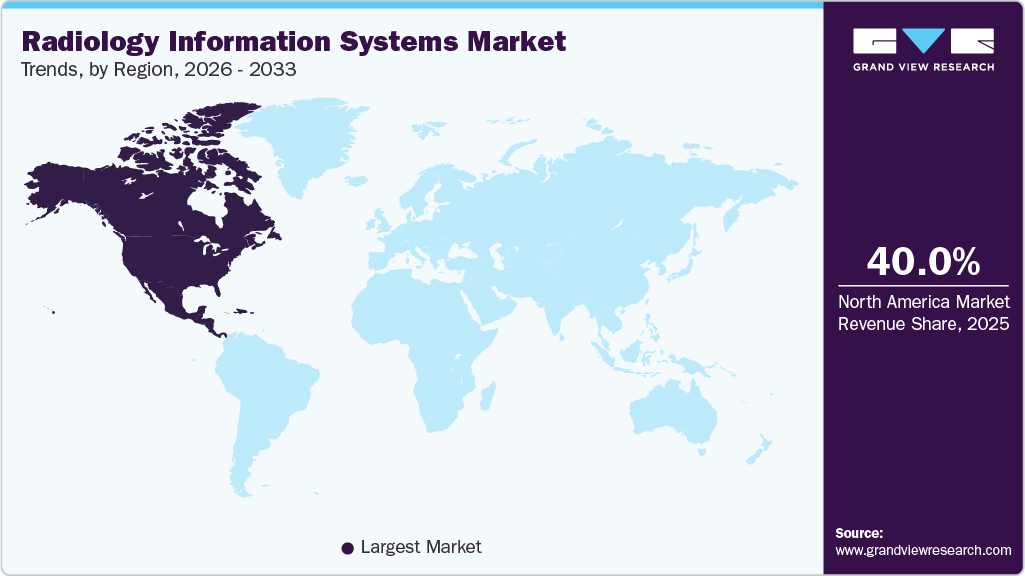
- North America radiology information systems market held the largest share of over 40% of the global market in 2025.
- The radiology information systems industry in the U.S. is expected to grow significantly over the forecast period.
- Based on product, the Integrated RIS segment held the largest market share of over 67% in 2025.
- Based on deployment mode, the cloud-based segment held the highest market share of over 10.59% in 2025.
- Based on end use, the hospitals & clinics segment held the largest market share of over 80% in 2025.
Market Size & Forecast
- 2025 Market Size: USD 1.19 Billion
- 2033 Projected Market Size: USD 2.64 Billion
- CAGR (2026-2033): 10.49%
- North America: Largest market in 2025
In addition, the number of radiology professionals and practices has increased, and there is a growing preference for cloud-based solutions in the industry. Moreover, the number of patients suffering from chronic diseases such as cancer, COPD, arthritis, osteoporosis, and others has increased significantly in recent years. This is increasing the demand for medical imaging, thereby driving the radiology information system (RIS) market growth. Computerized medical imaging provides secure and convenient interactive documents that can be accessed across various healthcare departments.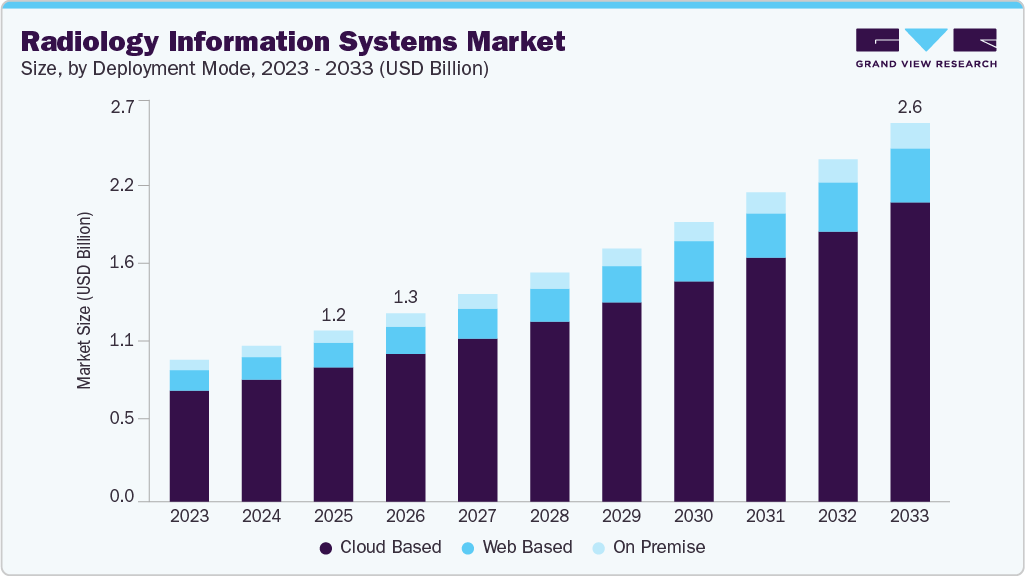
Radiology Information System (RIS) serves as a communication link between primary physicians and imaging departments, facilitating better care coordination, which is beneficial for the timely diagnosis or treatment of the patients.
The rising number of radiology procedures and increased accessibility to these services have led to the development of new systems to meet the demand. For instance, in June 2025, CIVIE launched RadPod, an artificial intelligence (AI)-driven on-demand radiology platform that enables radiologists to interpret scans anytime, anywhere, with real-time compensation. Features AI-powered PACS, voice recognition, instant payments, custom worklists, web access, and automated QA. Furthermore, hospitals are increasingly using cloud technology and related services to improve operational efficiency.
“Radiology as a whole has been facing brutal challenges for the past couple of decades. Radiologists don't want to be bound by shifts and schedules or hindered by inefficiencies like technology gaps and unclear requirements from referring physicians. By bringing together our decades of radiology experience, CIVIE delivers what radiologists have been craving: a state-of-the-art solution that allows them to read medical scans at will and on their terms.”
- Dhruv Chopra, CEO of CIVIE.
In addition, substantial investments by medical institutions are boosting market growth. For instance, in June 2024, Konica Minolta Healthcare Americas partnered with Apollo Enterprise Imaging Corp. to provide the Exa Platform. This platform integrates RIS, PACS, and Billing solutions with a single database across all modules. The solution enables secure management, acquisition, and access of clinical content throughout the enterprise via Arc, benefiting customers with improved connectivity and interoperability across all clinical departments. The partnership aims to unify patient information across clinical specialties, including non-DICOM devices, to create a comprehensive, image-enabled electronic medical record (EMR).
Market Concentration & Characteristics
The chart below illustrates the relationship between market concentration, industry characteristics, and industry participants. The x-axis represents the level of industry concentration, ranging from low to high. The y-axis represents various industry characteristics, including industry competition, impact of regulations, level of partnerships & collaborations activities, degree of innovation, and regional expansion. The RIS market is fragmented, with the presence of several emerging service providers dominating the market. The degree of innovation is high, the level of partnership & collaborations activities, the impact of regulations on the industry is high, and the regional expansion of the industry is high.
The degree of innovation in the industry is high. The integration of advanced technologies, particularly artificial intelligence (AI) is greatly enhancing RIS's capabilities. This integration improves diagnostic effectiveness and expands the scope for innovation within the market. For instance, in July 2024, MIM Software Inc., a medical imaging analysis and AI solutions provider, launched MIM Symphony HDR Prostate. This new solution is designed to assist with high dose-rate (HDR) brachytherapy. The aim is to enhance clinician confidence and improve patient outcomes by enabling direct visualization of tumors from MRI scans in ultrasound procedures for HDR prostate treatments.
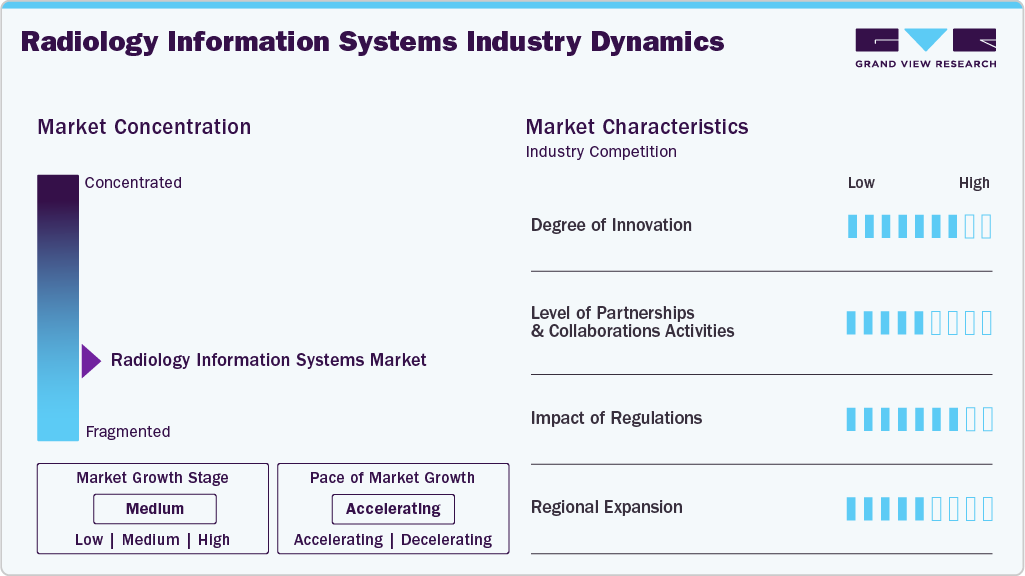
The level of partnerships & collaborations in the industry is high. This is due to improving patient care by enhancing the efficiency and effectiveness of radiology workflows. For instance, in March 2025, RamSoft partnered with Alpha Nodus to integrate its Gravity AI platform into PowerServer RIS, automating prior authorizations, cost estimates, scheduling, and document processing.
Regulations, such as the HIPAA in the U.S. establish standards for safeguarding patient data privacy and security. Compliance with these regulations is crucial for AI applications in healthcare to ensure the safe and secure handling of patient information, reducing the risk of data breaches and unauthorized access.
The level of regional expansion in the industry is high, owing to increasing healthcare investments, the growing demand for efficient diagnostic imaging solutions, and technology advancements. For instance, in June 2024, Incepto Medical and DeepHealth partnered to deliver expanded access to DeepHealth clinical AI and radiology informatics software in Europe. This collaboration offers access to an expanded AI-powered portfolio, including integrated AI clinical solutions and workflow tools, to help address the challenges encountered by radiologists and staff throughout Europe.
Deployment Mode Insights
Based on deployment mode, the cloud-based segment held the largest revenue share of 78.44% in 2025. In addition, this segment is anticipated to grow at the fastest CAGR during the forecast period. This segment enables remote processing, centralized data storage, and scalable deployment of AI algorithms across imaging networks. Cloud architecture reduces on-device computational requirements and supports continuous software updates without hardware replacement. Hospitals and diagnostic imaging centers benefit from multi-site integration and standardized performance across distributed facilities.
Moreover, real-time decision support and automated triage functions enhance workflow efficiency and reduce reporting turnaround times. Integration with PACS, RIS, and electronic health records ensures seamless clinical implementation. For instance, in January 2026, QT Imaging announced a collaboration with Olea Medical to integrate advanced visualization, quantitative analytics, and AI-ready imaging into its cloud-based SaaS platform. Delivered via InteleShare PACS, it supports clinical interpretation, research workflows, and multimodal breast imaging (QT Acoustic, mammography, MRI).
Product Insights
Based on product, the integrated RIS segment held the largest revenue share of 67.74% in 2025 and is anticipated to grow at the fastest CAGR over the forecast year. The demand for efficient workflow processes in radiology departments has led to the development of integrated RIS that combines Picture Archiving and Communication Systems (PACS) into a unified solution. This integrated approach simplifies the management of images and associated data, reducing the need for manual coordination between separate systems and improving workflow efficiency. Moreover, the increasing use of EHR platforms and digitized imaging has highlighted the need for integrated systems that seamlessly manage the clinical workflow across the entire medical facility.
The standalone segment is anticipated to grow significantly over the forecast year, owing to its tailored approach to meet the specific operational needs of radiology departments. These standalone solutions offer cost-effectiveness, ease of implementation, and the ability to efficiently manage patient scheduling, tracking, and reporting independently of other hospital systems. In addition, it provides scalability and customization options that cater to the varying sizes and workflow demands of different facilities.
End Use Insights
Based on end use, the hospitals & clinics segment dominated the market with revenue share of 81.19% in 2025. The growth of this segment is attributed to the increasing demand for streamlined workflows and improved patient care. Hospitals and clinics face constant pressure to enhance diagnostic accuracy while reducing the time and costs associated with radiological procedures. Implementing RIS helps these institutions manage patient data and imaging files efficiently, schedule appointments effectively, and improve communication between radiologists and other healthcare professionals.
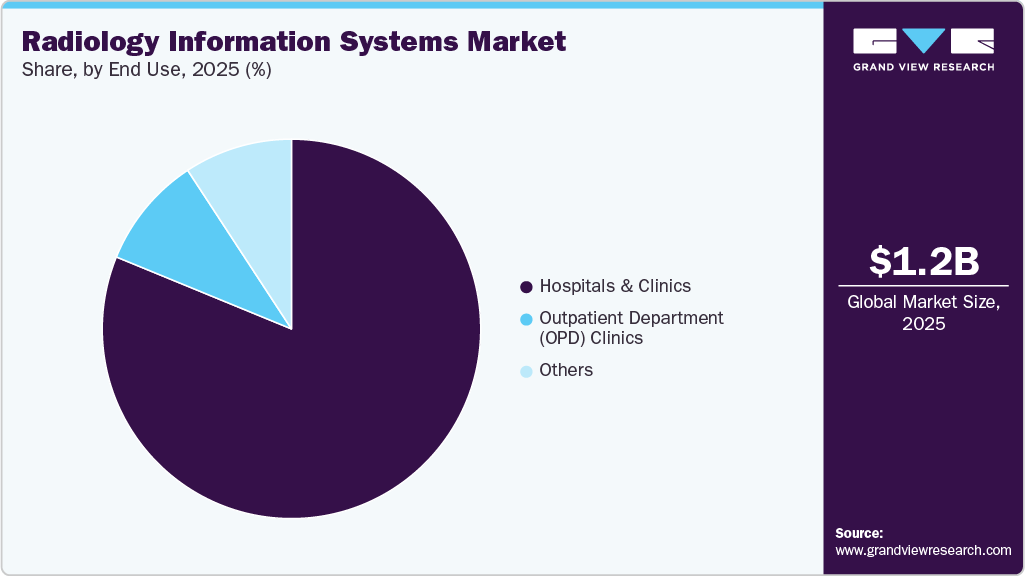
The outpatient department (OPD) clinics segment is anticipated to grow at the fastest growth rate over the forecast year, driven by an increasing number of outpatient visits. Moreover, a gradual shift of patients towards outpatient settings and improving health coverage are favoring the growth of the segment.
Regional Insights
North America region held the largest share of over 40% in 2025. This is due to the advancements in RIS, strong healthcare infrastructure, and the introduction of new software systems by current providers. The launch of comprehensive RIS with integrated PACS has made the process more systematic and easier, resulting in better patient compliance and driving regional growth.
U.S. RIS Market Trends
The U.S. RIS market held the largest share in 2025, owing to the shift from a volume-based to a value-based care model, which emphasizes the efficiency and quality of care. Radiology information systems help achieve these goals by streamlining radiology department operations and improving patient care coordination. For instance, in August 2025, CIVIE partnered with Upson Regional Medical Center in Thomaston, Georgia, to implement RadPod, its cloud-native radiology platform.
Europe RIS Market Trends
The Europe RIS market is anticipated to grow significantly due to the increasing adoption of RIS by healthcare providers and clinics in many European countries. This adoption aims to improve workflow within healthcare systems. Additionally, there is a shift towards cloud-based solutions, increased integration with PACS and EHR, and the incorporation of advanced technologies like AI and ML to improve the diagnostic capabilities and operational efficiency of radiologists and service providers, which is expected to drive market growth.
UK RIS market held a significant market share in 2025, owing to a rise in demand for modern medical imaging departments to enhance the effectiveness and efficiency of radiology services due to a large number of diagnostic imaging tests being performed in the UK. For instance, in January 2024, Vertex in Healthcare, a healthcare technology provider, launched VRIS, a radiology information system in the UK. This system is designed to assist imaging departments in reducing bottlenecks and improving the efficiency of diagnostic report processing.
Germany RIS market held the largest market share in 2025, owing to the government's strong commitment to healthcare digitalization. This commitment is exemplified by legislative measures such as the Krankenhauszukunftsgesetz (Hospital Future Act), which earmarks significant financial investments for the modernization of digital infrastructure in hospitals. By focusing on the enhancement of hospital IT systems and the efficiency of patient care through advanced technologies, this act facilitates the accelerated deployment and widespread integration of Radiology Information Systems (RIS) within German healthcare facilities.
Asia Pacific RIS Market Trends
Asia Pacific RIS market is expected to witness the fastest growth over the forecast period. The expansion of healthcare infrastructure, particularly in emerging economies, and the increasing investment in healthcare IT solutions to improve the quality of patient care are significant drivers. The demand for digital and integrated radiology information systems is also being boosted by the need to manage the growing volume of medical images and data efficiently.
China RIS market held the largest share in 2025 driven by the increasing demand for effective and efficient management of medical imagery and associated data. The rapid growth in the number of diagnostic imaging procedures performed in China, coupled with the rising prevalence of chronic diseases, necessitates robust systems for managing the vast volumes of radiological data generated.
India RIS market is driven by the increasing digitization of healthcare records and processes within the rapidly expanding healthcare sector of the country. This is accompanied by a growing demand for streamlined diagnostic processes, improved patient care, and efficient management of medical images and associated data.
Latin America RIS Market Trends
Latin America RIS market is anticipated to grow significantly due to the advancing need for efficient healthcare IT systems to enhance patient care and workflow efficiency. This is further supported by the rising emphasis on reducing diagnostic errors, increasing healthcare expenditure, and the growing adoption of electronic medical records (EMRs) across the region's healthcare facilities.
Middle East & Africa RIS Market Trends
Middle East & Africa RIS market is expected to grow significantly over the forecast period. The market is characterized by a dynamic landscape driven by the growing adoption of technologically advanced medical devices, increasing healthcare expenditures, and supportive government policies. Significant integration of AI in healthcare technology across the region contributes to market growth further. Countries such as Saudi Arabia and the UAE are integrating AI into healthcare infrastructure under strategic visions such as Saudi Vision 2033 and the UAE National Strategy for Artificial Intelligence 2031.
Key Radiology Information Systems Company Insights
Key players operating in the radiology information systems market are undertaking various initiatives to strengthen their market presence and increase the reach of their products and services. Strategies such as new product launches and partnerships play a key role in propelling market growth.
Key Radiology Information Systems Companies:
The following key companies have been profiled for this study on the radiology information systems market.
- DeepHealth
- Epic Systems Corporation
- GE Healthcare
- Merative
- Koninklijke Philips N.V.
- Mckesson Corporation
- MedInformatix, Inc.
- Oracle
- Pro-Medicus, Ltd.
- Siemens Healthineers AG
- Veradigm LLC
Recent Developments
-
In June 2025, Soliton IT and xWave partnered to improve NHS radiology workflow by embedding xWave’s AI-powered clinical decision support into Soliton’s Radiology+ RIS. The integrated solution automates referral vetting, flags incomplete/low-value requests, streamlines imaging pathways, reduces manual workload, and supports better reporting efficiency and patient outcomes without disrupting existing NHS infrastructure.
“Our priority has always been to provide radiology departments with intuitive, high-performance systems that streamline imaging workflows without disrupting established processes”.
“Our collaboration with xWave Technologies enhances our existing capabilities by embedding intelligent clinical decision support directly into our radiology information systems (RIS) solutions.”
-Bob Childe, sales and commercial manager at Soliton IT
-
In April 2025, Konica Minolta launched the next-generation Exa Platform with advanced Exa PACS|RIS, featuring a new API for partner integrations and native Exa Advanced Imaging.
-
In July 2024, DeepHealth, a subsidiary of RadNet, Inc. and a provider of AI-powered health and radiology informatics, opened a new office in Bengaluru to expand into the Indian market. This technology hub drives innovative advancements and support DeepHealth's mission to revolutionize care delivery.
-
In June 2024, DeepHealth, a subsidiary of RadNet, Inc., launched its integrated portfolio in Italy. The portfolio includes the innovative cloud-native DeepHealth OS, which unifies clinical data and personalizes AI-powered workspaces. The solutions focus on improving patient outcomes in lung, breast, prostate health, and brain, with the aim of enhancing disease detection through large-scale screening and diagnosis programs in the U.S. and Europe.
-
In February 2024, Pro Medicus, Ltd. launched Visage Ease VP for Apple Vision Pro. This launch enhances spatial, immersive experiences for diagnostic imaging and multimedia and provides end users with an imaging experience unlike any other application.
Radiology Information Systems Market Report Scope
Report Attribute
Details
Market size value in 2025
USD 1.34 billion
Revenue forecast in 2033
USD 2.64 billion
Growth rate
CAGR of 10.49% from 2026 to 2033
Actual data
2018 - 2025
Forecast period
2026 - 2033
Quantitative units
Revenue in USD million/billion and CAGR from 2026 to 2033
Report coverage
Revenue forecast, company ranking, competitive landscape, growth factors, and trends
Segments covered
Deployment mode, product, end use, region
Regional scope
North America; Europe; Asia Pacific; Latin America; Middle East & Africa
Country scope
U.S.; Canada; Mexico; UK; Germany; France; Russia; Italy; Spain; Netherlands; Switzerland; Belgium; Norway; Denmark; Sweden; China; Japan; India; South Korea; Australia; Thailand; Singapore; Philippines; Malaysia; Indonesia; Brazil; Argentina; Saudi Arabia; South Africa; UAE; Kuwait
Key companies profiled
Veradigm LLC; Oracle; Epic Systems Corporation; Mckesson Corporation; DeepHealth; Siemens Healthineers AG; Koninklijke Philips N.V.; Pro Medicus, Ltd.; MedInformatix, Inc.; GE Healthcare; Merative
Customization scope
Free report customization (equivalent up to 8 analysts working days) with purchase. Addition or alteration to country, regional & segment scope.
Pricing and purchase options
Avail customized purchase options to meet your exact research needs. Explore purchase options
Global Radiology Information Systems Market Report Segmentation
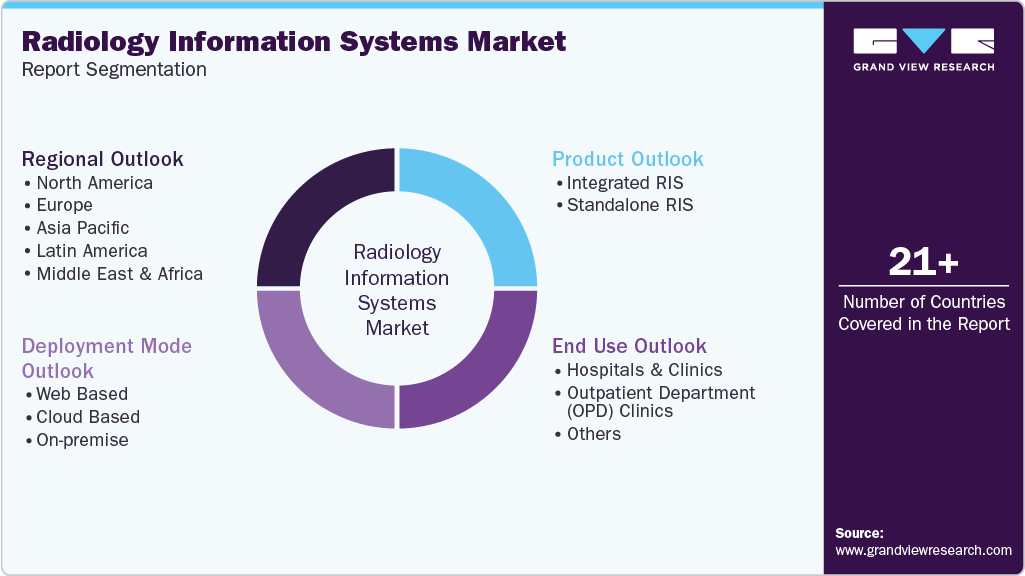
This report forecasts revenue growth at global, regional, and country levels and provides an analysis of the latest industry trends in each of the sub-segments from 2018 to 2033. For this study, Grand View Research has segmented the global radiology information systems (RIS) market report based on deployment mode, product, end use, and region:
-
Deployment Mode Outlook (Revenue, USD Million, 2018 - 2033)
-
Web-based
-
Cloud-based
-
On-premise
-
-
Product Outlook (Revenue, USD Million, 2018 - 2033)
-
Integrated RIS
-
Standalone RIS
-
-
End Use Outlook (Revenue, USD Million, 2018 - 2033)
-
Hospitals & Clinics
-
Outpatient Department (OPD) Clinics
-
Others
-
-
Regional Outlook (Revenue, USD Million, 2018 - 2033)
-
North America
-
U.S.
-
Canada
-
Mexico
-
-
Europe
-
UK
-
Germany
-
France
-
Russia
-
Italy
-
Spain
-
The Netherlands
-
Switzerland
-
Belgium
-
Norway
-
Denmark
-
Sweden
-
-
Asia Pacific
-
Japan
-
China
-
India
-
Australia
-
South Korea
-
Thailand
-
Singapore
-
Philippines
-
Malaysia
-
Indonesia
-
-
Latin America
-
Brazil
-
Argentina
-
-
Middle East and Africa (MEA)
-
South Africa
-
Saudi Arabia
-
UAE
-
Kuwait
-
-
Frequently Asked Questions About This Report
b. The global radiology information systems market size was estimated at USD 1.19 billion in 2025 and is expected to reach USD 1.31 billion in 2026.
b. The global radiology information systems market is expected to grow at a compound annual growth rate of 10.49% from 2026 to 2033 to reach USD 2.64 billion by 2033.
b. North America dominated the radiology information systems market with a share of 40.29% in 2025. This is due to the advancements in RIS, strong healthcare infrastructure, and the introduction of new software systems by current providers. The launch of comprehensive RIS with integrated PACS has made the process more systematic and easier, resulting in better patient compliance and driving regional growth.
b. Some key players operating in the radiology information systems market Veradigm LLC; Oracle; Epic Systems Corporation; Mckesson Corporation; DeepHealth; Siemens Healthineers AG; Koninklijke Philips N.V.; Pro Medicus, Ltd.; MedInformatix, Inc.; GE Healthcare; Merative
b. Key factors that are driving the market growth growing government initiatives to promote the use of RIS, increasing healthcare investments and rising number of radiology professionals and practices.


Share this report with your colleague or friend.
Need a Tailored Report?
Customize this report to your needs — add regions, segments, or data points, with 20% free customization.


ISO 9001:2015 & 27001:2022 Certified
We are GDPR and CCPA compliant! Your transaction & personal information is safe and secure. For more details, please read our privacy policy.
Trusted market insights - try a free sample
See how our reports are structured and why industry leaders rely on Grand View Research. Get a free sample or ask us to tailor this report to your needs.