- Home
- »
- Healthcare IT
- »
-
Electronic Health Records Market, Industry Report, 2033GVR Report cover
![Electronic Health Records Market Size, Share & Trends Report]()
Electronic Health Records Market (2026 - 2033) Size, Share & Trends Analysis Report By Product (On-premises, Web & Cloud-Based EHR), By Type (Acute, Outpatient), By Business Model, By Application (Cardiology, Neurology, Oncology), By End-use, By Region, And Segment Forecasts
- Report ID: 978-1-68038-394-2
- Number of Report Pages: 150
- Format: PDF
- Historical Range: 2021 - 2025
- Forecast Period: 2026 - 2033
- Industry: Healthcare
- Report Summary
- Table of Contents
- Interactive Charts
- Methodology
- Download FREE Sample
-
 Download Sample Report
Electronic Health Records Market Summary
The global electronic health records market size was estimated at USD 35.89 billion in 2025 and is projected to reach USD 53.11 billion by 2033, growing at a CAGR of 5.10% from 2026 to 2033. The growing emphasis on interoperability and health information exchange, the integration of EHRs with clinical decision support and analytics tools, and the increasing number of national digital health initiatives promoting EHR adoption are key factors driving market growth.
Key Market Trends & Insights
- The North America electronic health records (EHR) market held the largest revenue share of over 43.0% in 2025.
- The U.S. electronic health records industry held the largest revenue share in 2025.
- Based on product, the web and cloud-based EHR segment dominated the EHR market, accounting for 83.68% of revenue in 2025.
- Based on type, the acute segment dominated the electronic health records industry, accounting for a revenue share of 45.57% in 2025.
- Based on business model, the professional services segment dominated the market with a revenue share of 32.60% in 2025.
Market Size & Forecast
- 2025 Market Size: USD 35.89 Billion
- 2033 Projected Market Size: USD 53.11 Billion
- CAGR (2026-2033): 5.10%
- North America: Largest market in 2025
- Asia Pacific: Fastest growing market
In addition, the growing adoption of telehealth and remote care platforms is further propelling market growth. For instance, My Health Record is a national digital health record platform in Australia. Every Australian citizen has a “My Health Record” unless they have chosen not to have one. The agency claims that by the end of 2022, all healthcare providers in the country will be able to contribute to and use healthcare information available on the platform. Moreover, the introduction of technologically advanced healthcare services is also expected to drive the electronic health record (EHR) market growth. In addition, integration of artificial intelligence into EHR systems fuels market growth.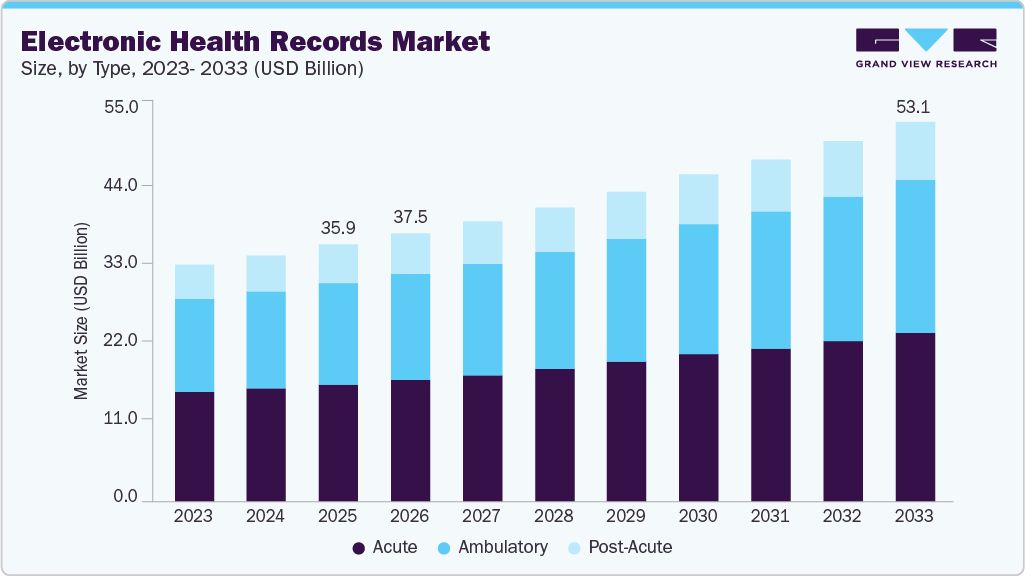
Rising demand for centralization & streamlining of healthcare administration is anticipated to drive the growth of the electronic health records industry. Centralization of health information management is driven by a value-based model that aims to streamline operations, standardize processes, reduce costs, and improve the quality of care, resulting in patient satisfaction. For instance, in December 2025, Saint Peter's Healthcare System selected Epic as its centralized EHR partner to enhance the patient experience and clinical workflows by providing a single, integrated record across inpatient, outpatient, emergency, and physician practices. The platform provides full transparency of tests, medications, summaries, and appointments via the Epic MyChart patient portal.
“The integration of Epic will elevate Saint Peter’s delivery of care while allowing for improved efficiency to manage revenue cycles across the entire health-care system continuum, and most importantly, allow us to better serve our patients, no matter which services they access,”
-Dr. Jordan Tannenbaum, PgC Healthcare Informatics, vice president/chief information officer and chief medical information officer at Saint Peter’s Healthcare System.
“Having Epic will be a game-changer for Saint Peter’s and will mark a major step forward in improving quality, safety and the coordination of care,”
-Leslie D. Hirsch, president and CEO of Saint Peter’s Healthcare System.
In addition, an increasing number of partnerships & collaborations by market players is also boosting market growth. For instance, in July 2023, NextGen Healthcare announced the expansion of its collaboration with the American Podiatric Medical Association (APMA). As per this collaboration, the ‘NextGen Office’ cloud-based small practice EHR and practice management solution is the sole platform to incorporate blueprints exclusively developed with APMA. These podiatry blueprints address several issues, including diabetes, dermatitis, infection, and injuries.
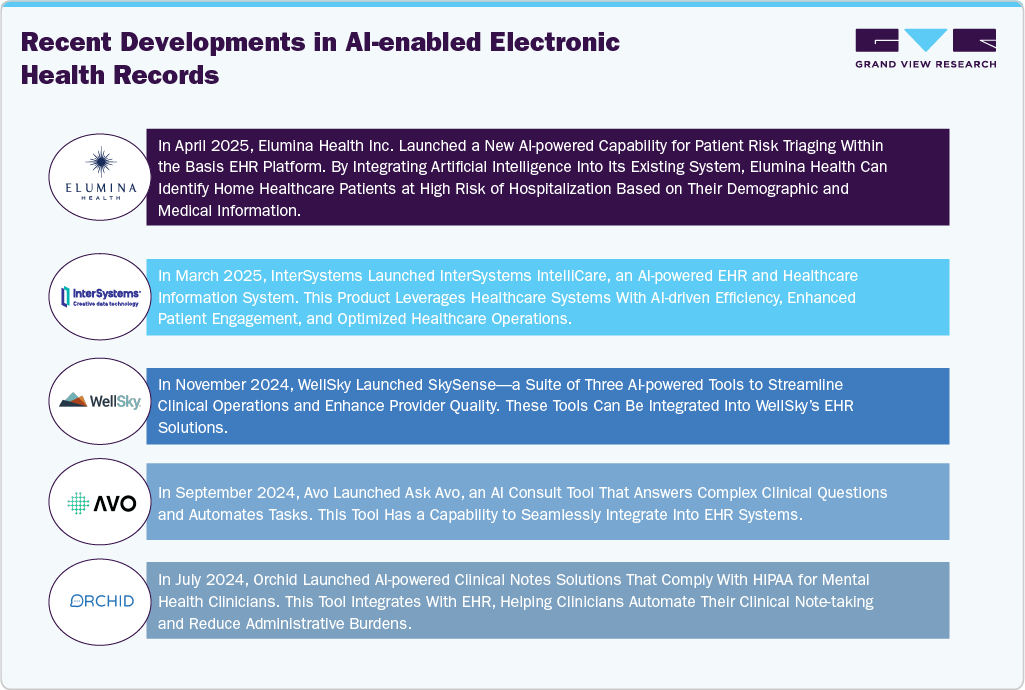
Integration of Artificial Intelligence in Electronic Health Records
The integration of Artificial Intelligence (AI) into Electronic Health Records (EHR) is transforming the global healthcare landscape, enhancing efficiency, accuracy, and patient outcomes. AI streamlines repetitive administrative functions such as data entry, billing, and coding. This automation reduces human error and allows healthcare professionals to focus more on patient care.
Moreover, by analyzing vast amounts of patient data, AI provides predictive insights and personalized treatment recommendations, helping clinicians make informed decisions. In addition, it facilitates seamless data sharing across different healthcare systems, enhancing collaboration among healthcare providers and ensuring comprehensive patient care.
Furthermore, a significant development in the Electronic Health Records (EHR) market is the emergence of AI agents within EHR systems. AI agents transcribe patient-clinician interactions into structured clinical notes in real-time, reducing the documentation burden on healthcare providers. They also assist in scheduling appointments, sending reminders, and providing information, improving patient communication and adherence to care plans.
For instance, Oracle Health has developed a Clinical AI Agent that provides a comprehensive mobile solution to help physicians navigate workflow challenges, supporting time- and cost-efficient operations by combining clinical automation, note generation, integrated dictation, and proposed actions in a unified experience.
"I truly believe that Oracle Health Clinical AI Agent is going to be a game changer for reduction of [the] burden of EHRs, not just for physicians...for all clinicians, and I can't wait to see what's going to happen in this space."
-Tania Tajirian, Chief Health Information Officer, Centre for Addiction and Mental Health
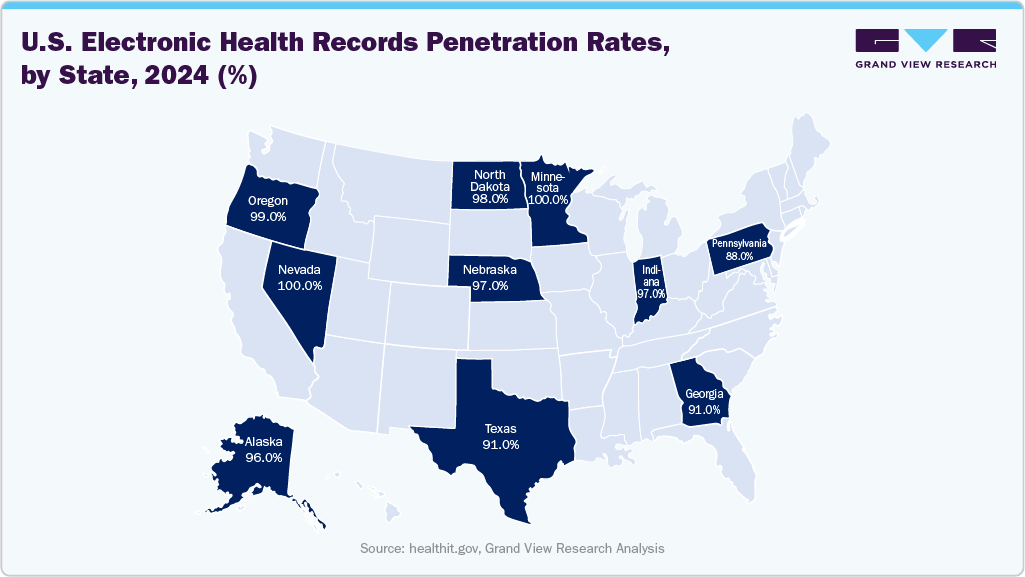
Note: The penetration analysis is available for the years 2008, 2011, 2015, 2017, and 2024 at the 50-state level.
Market Characteristics & Concentration
The chart below illustrates the relationship between the concentration, characteristics, and participants in the electronic health records market. The x-axis represents the level of industry concentration, ranging from low to high. The y-axis represents various market characteristics, including industry competition, new product launches, regulatory impact, levels of mergers and acquisitions, and geographic expansion.
The impact of new product launches is high, owing to the market players in the electronic health records industry launching new products to expand their reach and increase availability in different regions. For instance, in September 2025, Evidently launched Ask Evidently, the first EHR-embedded AI chat interface deployed at scale across major U.S. health systems. It reads the full patient record (structured/unstructured) and enables natural queries. Reduces chart review; verifiable outputs via knowledge graph.
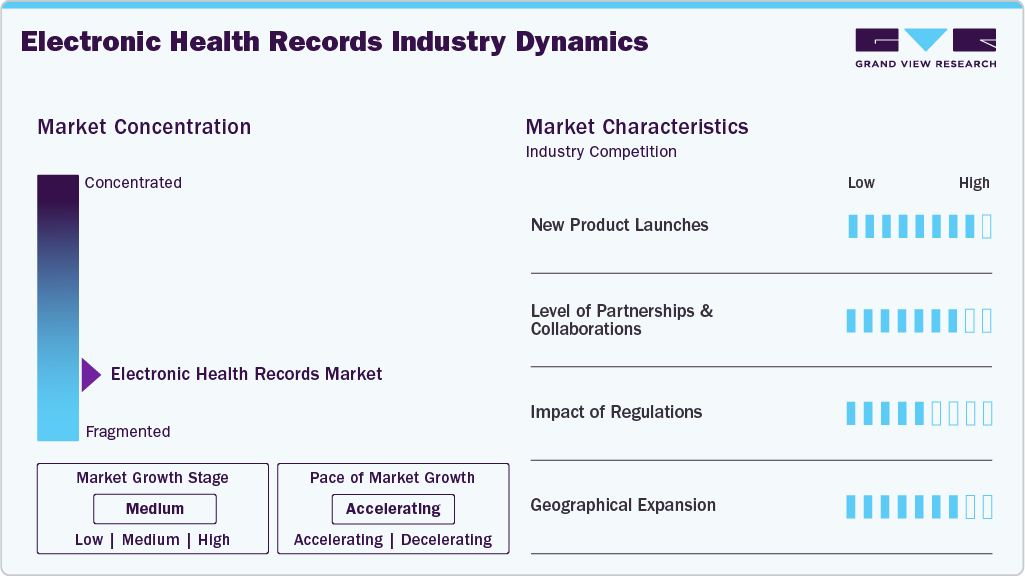
The Impact of mergers and acquisitions on the EHR industry is high. Mergers and acquisitions in the electronic health records (EHR) market are increasing, with several companies partnering with other players to strengthen their market positions, expand product portfolios, and improve capabilities. For instance, in August 2025, Avo partnered with MEDITECH to integrate its AI Scribe into the Expanse EHR platform, providing native ambient listening for documentation support.
The impact of regulations on the hospital electronic health records market is moderate. Regulations for EHRs are evolving globally, with strong government support through regulatory reforms that favor market growth. In Europe, government bodies are driving the development and implementation of EHR in healthcare facilities. In the U.S., the HITECH Act established the Medicare and Medicaid EHR Incentive Programs to incentivize healthcare providers to adopt and use certified EHR technology.
The level of geographic expansion in the electronic health records industry is moderate. Several market players are engaged in geographical expansion to enhance capabilities and establish a direct presence in high-demand countries.
Case Study
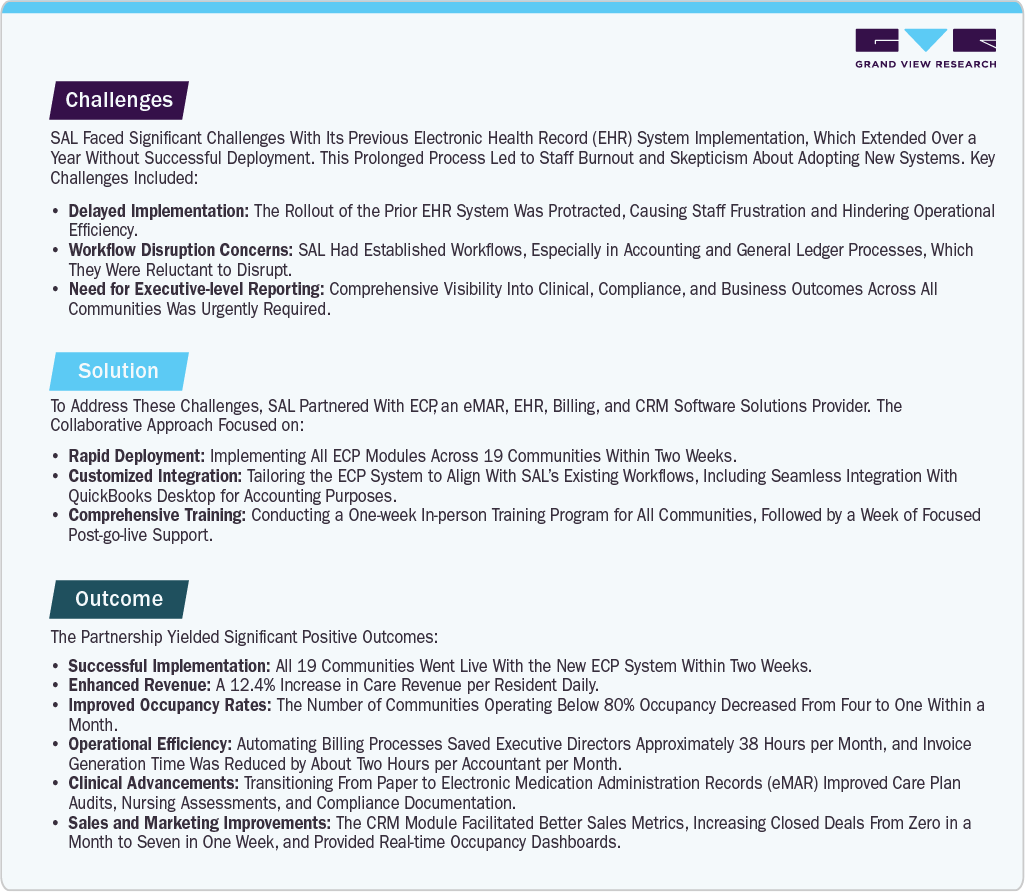
SAL Management Group operates 19 assisted living communities across Utah and is dedicated to providing safe, home-like environments with exceptional care experiences. The following case study emphasizes how strategic collaboration and tailored solutions can overcome implementation challenges, enhance operational efficiency, improve resident care, and increase revenue in the assisted living sector.
Product Insights
The web and cloud-based EHR segment dominated the EHR market, accounting for 83.68% of revenue in 2025, and is anticipated to grow at the fastest CAGR during the forecast period. The growth is driven by the popularity of electronic health records among physicians and smaller-scale healthcare providers. This is because web-based EHRs can be installed & used without in-house servers and can offer a wide range of improvements & customizations tailored to the customers’ needs.
In addition, the low requirement of hardware infrastructure decreases the installation cost. Cloud & web-based EHRs also require less maintenance. Subscription-based web-based EHRs offer integrated interoperability, making them convenient for small- to medium-sized medical professionals.
Moreover, major EHR vendors are launching new web-based solutions and expanding their services to cater to the growing demand, which is anticipated to boost the segment growth during the forecast period. For instance, in March 2022, MEDITECH expanded the availability of its practice management solution and web-based EHR system, Expanse Ambulatory, to independent & physician-owned practices without the requirement for an Expanse EHR in a hospital setting.
Type Insights
The acute segment dominated the electronic health records industry, accounting for a revenue share of 45.57% in 2025. The growth is attributed to the government initiatives for the adoption of EHRs in small-scale facilities. For instance, acute care hospitals in the U.S. that are covered under the inpatient prospective payment system (IPPS) are eligible for the Medicare Incentive Payment System.
The ambulatory EHR segment is expected to grow at the fastest CAGR during the forecast period. Ambulatory EHRs are meant for use in outpatient care facilities and small practices. Government support for the adoption of ambulatory EHRs is expected to boost market growth. Easy usage as compared to the inpatient EHRs is expected to drive the market growth. These EHRs focus on a single practice and its patients, rather than a complex web of hospital departments.
Post-acute EHRs primarily document the rehabilitation services patients receive after a stay in an acute care hospital. Post-acute care facilities consist of inpatient rehabilitation centers & hospitals, home health agencies, and long-term care hospitals. Rising spending on post-acute care facilities is anticipated to boost the market growth.
Business Model Insights
The professional services segment dominated the EHR market, accounting for a revenue share of 32.60% in 2025, and is expected to grow at the fastest CAGR during the forecast period. Professional services help healthcare systems in the implementation of information systems in their organizations. They are usually in the form of project management, technical & application expertise, clinical process optimization, regulatory consulting, and end-user training for the design and implementation of EHR systems.
Moreover, within the technology resale segment, licensed software is bundled with IPs of other companies in the form of sublicenses for creating complete technology solutions for healthcare systems. Licensed software includes application software, architecture, executable & referential knowledge, and data & algorithms. Other business models include managed services, support & maintenance, and other such services.
Application Insights
The cardiology segment held the largest share of the electronic health records industry in 2025. The growth of this segment is driven by the increasing incidence of hospitalization of patients diagnosed with cardiovascular diseases such as coronary heart disease and stroke. Cardiology EHR software seamlessly integrates data from Electrocardiograms (EKGs), echocardiograms, cardiac catheterization, and other diagnostic instruments into the patient's electronic record. This eliminates the time-consuming task of hunting for misplaced studies, enhancing clinical efficiency.
The neurology segment is anticipated to showcase significant growth over the forecast period, owing to the growing adoption of EHR in the neurology segment, include the increasing incidence of neurological diseases and the rising need for high-quality healthcare services. According to the World Health Organization data published in October 2025, neurological disorders cause more than 11 million deaths globally each year. This is expected to drive the demand for advanced neurology EHR software solutions. Moreover, the widespread adoption of EHR software in the region and continuous technological advancements in healthcare IT solutions, coupled with government efforts to promote digital healthcare, are among the key factors propelling the market growth.
End-use Insights
The hospital segment dominated the electronic health records market, accounting for a revenue share of 52.84% in 2025. Increase in the adoption of EHR in hospitals for improving clinical, financial, & administrative efficiency, and the rising need for enhancing information systems in hospitals are some of the key factors expected to drive market growth. The shift from volume-based care to value-based care is leading to an increase in the demand for EHR in hospitals.
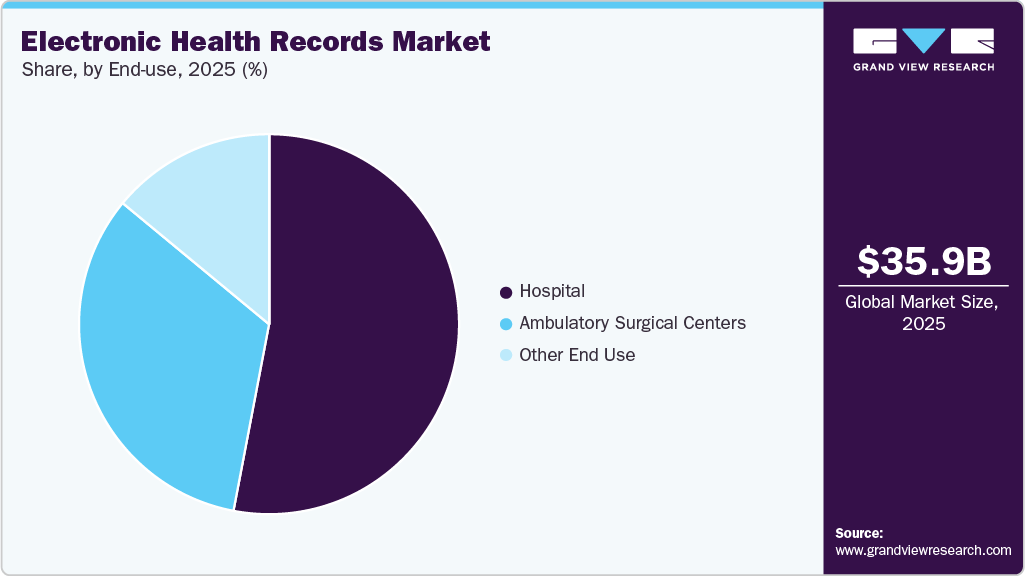
The ambulatory surgery centers segment is anticipated to grow at the fastest CAGR during the forecast period. The segment is expected to witness growth due to the need for seamless healthcare information exchange, technological advancements, increased adoption in developed markets, and government initiatives to improve patient health record portals.
Regional Insights
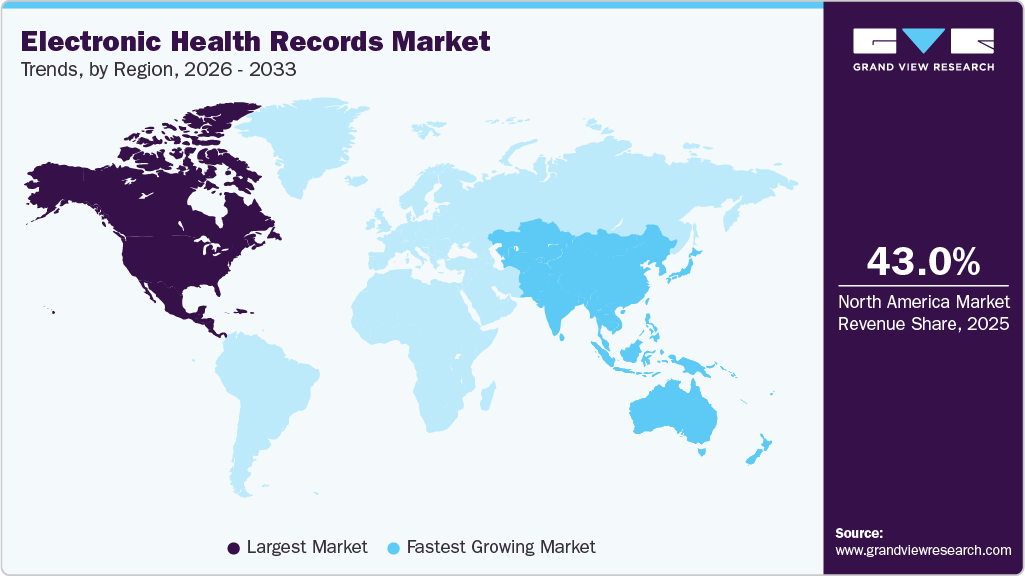
North America dominated the electronic health records market, accounting for a revenue share of over 43.0% in 2025. The major factor contributing to the growth of this region is the policies that support the adoption of electronic health records & the availability of infrastructure with high digital literacy. Furthermore, favorable government regulations and acts for monitoring the safety of healthcare IT solutions are expected to fuel the electronic health record market in the U.S.
U.S. Electronic Health Records Market Trends
The U.S. electronic health records industry accounted for the largest revenue share in 2025, driven by growing demand for improved healthcare technology, regulatory requirements, and the rising need for interoperability among EHR systems. Many companies offer EHR systems in the U.S., including large established companies such as Epic Systems, NextGen Healthcare, eClinicalWorks, Oracle, and Veradigm LLC. These companies compete on factors such as system functionality, ease of use, cost, and customer support. For instance, in August 2025, Oracle introduced an artificial intelligence-driven electronic health record (EHR) system for ambulatory providers in the U.S. The platform is voice-first, cloud-based on Oracle Cloud Infrastructure (OCI), and incorporates contextual agents that provide insights into laboratory results and medications, along with automated workflows and documentation.
“The availability of the ambulatory EHR highlights Oracle’s fundamental focus on delivering an immersive, AI-first, and cloud-based solution designed to optimize clinical workflows and reimagine clinician and patient experiences.”
-Mutaz Shegewi, Senior Research Director, Worldwide Healthcare Provider AI, Platforms and Technologies, IDC.
Europe Electronic Health Records Market Trends
The Europe electronic health records industry is anticipated to grow significantly over the forecast period, driven by improvements in healthcare efficiency and patient outcomes through digital transformation. The presence of developed economies such as Germany, the UK, France, Spain, & Italy is expected to fuel the EHR market in Europe during the forecast period.
The UK electronic health records market is expected to grow rapidly over the forecast period. This growth can be attributed to rising per capita income, increasing healthcare costs, and the growing prevalence of chronic disorders, which increase the need for the adoption of analytics services.
The electronic health records market in Germany is anticipated to grow rapidly over the forecast period. In Germany, curbing healthcare costs is one of the major factors promoting the adoption of interoperable systems, allowing information sharing through the implementation of healthcare IT systems.
Asia Pacific Hospital Electronic Health Records Market Trends
Asia Pacific is anticipated to grow at the fastest CAGR during the forecast period, driven by the ever-increasing demand for quality standards & services, which is boosting the digitalization of healthcare in the region. The Ministry of Health in China has defined an action plan for the use of e-health services across the country, encompassing broad areas of medical services and insurance plans, with a large focus on the adoption of electronic records and systems to enable data sharing across the national healthcare system.
The China electronic health records market held the largest share in 2025. Favorable government initiatives are anticipated to increase the demand for electronic health records in the nation. Moreover, rapid expansion of hospital infrastructure and diagnostic capacity, rising patient volumes in urban tertiary and secondary hospitals, and the expansion of telemedicine are further driving market growth.
The electronic health records market in India is anticipated to grow at the fastest CAGR during the forecast period. The growth of the EHR market in India is expected to be driven by favorable government initiatives that increase demand for electronic health records.
Latin America Electronic Health Records Market Trends
The Latin America electronic health records industry is anticipated to grow significantly over the forecast period, due to rapid economic growth in these countries, which is one of the key factors propelling the market growth during the forecast period. Furthermore, increasing the adoption of cloud-based services in healthcare organizations has fueled the market in the region.
The Brazil electronic health records market is anticipated to grow significantly during the forecast period, owing to the rising demand among healthcare providers to enhance decision-making through data analytics and improve patient engagement and satisfaction, which also contributes to the rising demand for EHRs in Brazil.
Middle East & Africa Hospital Electronic Health Records Market Trends
The market in the Middle East and Africa is anticipated to grow significantly due to the growing awareness among people, leading to a rise in the number of hospitals and a rise in government investment in interoperability and AI efforts to better leverage EHRs in hospitals.
The South Africa electronic health records market is anticipated to grow significantly in the coming years, driven by the increased workload on caregivers resulting from the large volume of patient data generated in hospitals and medical centers. The rising mortality from noncommunicable diseases is expected to create new opportunities for market players.
Key Electronic Health Records Company Insights
The market leaders are involved in expansions, product launches, partnerships & collaborations, and mergers & acquisitions to sustain the competition. Established organizations and small players are investing in mergers & acquisitions to gain a competitive edge. For instance, in August 2023, WellSky acquired Experience Care, a technology company offering EHR software solutions for long-term care and post-acute providers. Experience Care's electronic health record platform, NetSolutions, has served 150 long-term care clients with 850 facilities. The acquisition will help providers increase efficiency, improve performance, and advance resident care by turning data into meaningful information.
Key Electronic Health Records Companies:
The following key companies have been profiled for this study on the electronic health records market.
- Oracle
- GE Healthcare
- Veradigm LLC
- Epic Systems Corporation
- eClinicalWorks
- Greenway Health, LLC
- NextGen Healthcare, Inc.
- Medical Information Technology, Inc. (Meditech)
- CPSI
- AdvancedMD, Inc.
- CureMD Healthcare
- McKesson Corporation
Recent Developments
-
In December 2025, athenahealth partnered with Microsoft to embed Dragon Copilot in athenaOne EHR's Ambient Notes.
-
In October 2025, WellSky launched AI-powered ambient listening in its Specialty Care EHR, enabled by Suki, for behavioral health, rehabilitation, and long-term acute care providers.
“Bringing artificial intelligence capabilities like ambient listening into our Specialty Care EHR marks a transformative technological milestone for providers and a massive leap forward for a better patient experience.”
-Bill Miller, chairman and CEO of WellSky
-
In October 2025, Nabla launched Nabla Connect, a plug-and-play ambient AI module for EHR vendors to integrate advanced AI in days, bypassing in-house development costs and risks.
-
In March 2025, Juno Health partnered with Avo to integrate AI Scribe into its ONC-certified, cloud-based EHR for acute/behavioral health, using HL7 FHIR/USCDI standards. HIPAA-secure ambient listening supports 50+ languages, transcribes multi-participant interactions in real-time, and cuts documentation time by 5-10 min/note.
"We are thrilled to partner with Juno Health to empower their customers with ambient technology at the point of care. By integrating Avo's proven AI Scribe as a part of their EHR platform, Juno is demonstrating its commitment to improving clinician well-being and driving reimbursement potential for its customer base."
- Dr. Joongheum Park, cofounder and head of product at Avo, said.
-
In November 2024, CarolinaEast launched the Epic Electronic Health Record System to enhance care delivery in the U.S.
“November 30, 2024 marks CarolinaEast Health System’s most significant technological step forward in our 61-year history. Transitioning to Epic electronic health record will allow patients to move seamlessly across our entire system, as well as the country. I also look forward to bringing Epic to everyone in our medical community to provide the same experience for all patients in the region.”
-Michael Smith, President and Chief Executive Officer, CarolinaEast Health System
-
In October 2024, Athenahealth launched athenaOne, a comprehensive EHR, revenue, practice management, and patient engagement solution for orthopedics.
-
In May 2024, Athenahealth launched customizable EHRs for specialty providers such as women's health practices and urgent care centers.
-
In November 2023, Thoma Bravo acquired NextGen Healthcare, Inc., a leading EHR systems manufacturer, to expand its capabilities in the market.
-
In June 2023, CPSI and the MidCoast Health System expanded their four-year partnership through the implementation of CPSI’s EHR, accounts receivable services, and IT-managed services at the Crockett Medical Center, a critical access hospital in Texas. Other MidCoast Health System hospitals to successfully implement CPSI healthcare solutions in recent years include the El Campo Memorial Hospital and the Palacios Community Medical Center, among others.
Electronic Health Records Market Report Scope
Report Attribute
Details
Market size value in 2026
USD 37.49 billion
Revenue forecast in 2033
USD 53.11 billion
Growth rate
CAGR of 5.10% from 2026 to 2033
Actual data
2021 - 2025
Forecast period
2026 - 2033
Quantitative units
Revenue in USD million/billion and CAGR from 2026 to 2033
Report coverage
Revenue forecast, company ranking, competitive landscape, growth factors, and trends
Segments covered
Product, business model, type, application, end-use, region
Regional scope
North America; Europe; Asia Pacific; Latin America; MEA
Country scope
U.S.; Canada; Mexico; Germany; UK; France; Italy; Spain; Norway; Denmark; Sweden; China; Japan; India; South Korea; Australia; Thailand; Brazil; Argentina; Saudi Arabia; South Africa; UAE; Kuwait
Key companies profiled
Oracle; GE Healthcare; Veradigm LLC; Epic Systems Corporation; eClinicalWorks; Greenway Health, LLC; NextGen Healthcare, Inc.; Medical Information Technology, Inc. (Meditech); CPSI; AdvancedMD, Inc.; CureMD Healthcare; McKesson Corporation
Customization scope
Free report customization (equivalent up to 8 analysts working days) with purchase. Addition or alteration to country, regional & segment scope.
Pricing and purchase options
Avail customized purchase options to meet your exact research needs. Explore purchase options
Global Electronic Health Records Market Report Segmentation
This report forecasts revenue growth at the global, regional, and country levels and provides an analysis of the latest industry trends in each of the sub-segments from 2021 to 2033. For this study, Grand View Research has segmented the global electronic health records market report based on product, type, business model, application, end-use, and region:
-
Product Outlook (Revenue, USD Million, 2021 - 2033)
-
On-premises
-
Web & Cloud-Based EHR
-
-
Type Outlook (Revenue, USD Million, 2021 - 2033)
-
Acute
-
Outpatient
-
Post-Acute
-
-
Business Model Outlook (Revenue, USD Million, 2021 - 2033)
-
Licensed Software
-
Technology Resale
-
Subscriptions
-
Professional Services
-
Others
-
-
Application Outlook (Revenue, USD Million, 2021 - 2033)
-
Cardiology
-
Neurology
-
Radiology
-
Oncology
-
Mental and Behavioral Health
-
Nephrology and Urology
-
Gastroenterology
-
Pediatrics
-
General Medicine
-
Physical Therapy and Rehabilitation
-
Others
-
-
End-use Outlook (Revenue, USD Million, 2021 - 2033)
-
Hospital
-
Ambulatory Surgical Centers
-
Other End-use
-
-
Regional Outlook (Revenue, USD Million, 2021 - 2033)
-
North America
-
U.S.
-
Canada
-
Mexico
-
-
Europe
-
UK
-
Germany
-
France
-
Italy
-
Spain
-
Denmark
-
Sweden
-
Norway
-
-
Asia Pacific
-
China
-
Japan
-
India
-
South Korea
-
Australia
-
Thailand
-
-
Latin America
-
Brazil
-
Argentina
-
-
Middle East and Africa (MEA)
-
South Africa
-
Saudi Arabia
-
UAE
-
Kuwait
-
-
Frequently Asked Questions About This Report
b. The global electronic health records market size was estimated at USD 35.89 billion in 2025 and is expected to reach USD 37.49 billion in 2025.
b. The global electronic health records market is expected to grow at a compound annual growth rate of 5.10% from 2026 to 2033 to reach USD 53.11 billion by 2033.
b. Cloud & web-based EHR segment dominated the market with a revenue share of 83.68% in 2025 and is anticipated to grow at the fastest rate during the forecast period, owing to its popularity among physicians and healthcare providers, which operate on a smaller scale.
b. Acute EHR segment dominated the market in 2025 with a revenue share of 45.57%. The growth is attributed to the government initiatives for the adoption of EHRs in small-scale facilities.
b. Key players operating in the EHR market include OOracle; GE Healthcare; Veradigm LLC; Epic Systems Corporation; eClinicalWorks; Greenway Health, LLC; NextGen Healthcare, Inc.; Medical Information Technology, Inc. (Meditech); CPSI; AdvancedMD, Inc.; CureMD Healthcare; McKesson Corporation.


Share this report with your colleague or friend.
Need a Tailored Report?
Customize this report to your needs — add regions, segments, or data points, with 20% free customization.


ISO 9001:2015 & 27001:2022 Certified
We are GDPR and CCPA compliant! Your transaction & personal information is safe and secure. For more details, please read our privacy policy.
Trusted market insights - try a free sample
See how our reports are structured and why industry leaders rely on Grand View Research. Get a free sample or ask us to tailor this report to your needs.