- Home
- »
- Pharmaceuticals
- »
-
Parenteral Nutrition Market Size, Industry Report, 2033GVR Report cover
![Parenteral Nutrition Market Size, Share & Trends Report]()
Parenteral Nutrition Market (2026 - 2033) Size, Share & Trends Analysis Report By Nutrient Type (Carbohydrates, Parenteral Lipid Emulsion, Vitamins & Minerals), By Stage Type (Adult, Pediatric), By Indication, By Sales Channel (Online, Retail), By Region, And Segment Forecasts
- Report ID: 978-1-68038-867-1
- Number of Report Pages: 190
- Format: PDF
- Historical Range: 2021 - 2025
- Forecast Period: 2027 - 2033
- Industry: Healthcare
- Report Summary
- Table of Contents
- Segmentation
- Methodology
- Download FREE Sample
-
 Download Sample Report
Parenteral Nutrition Market Summary
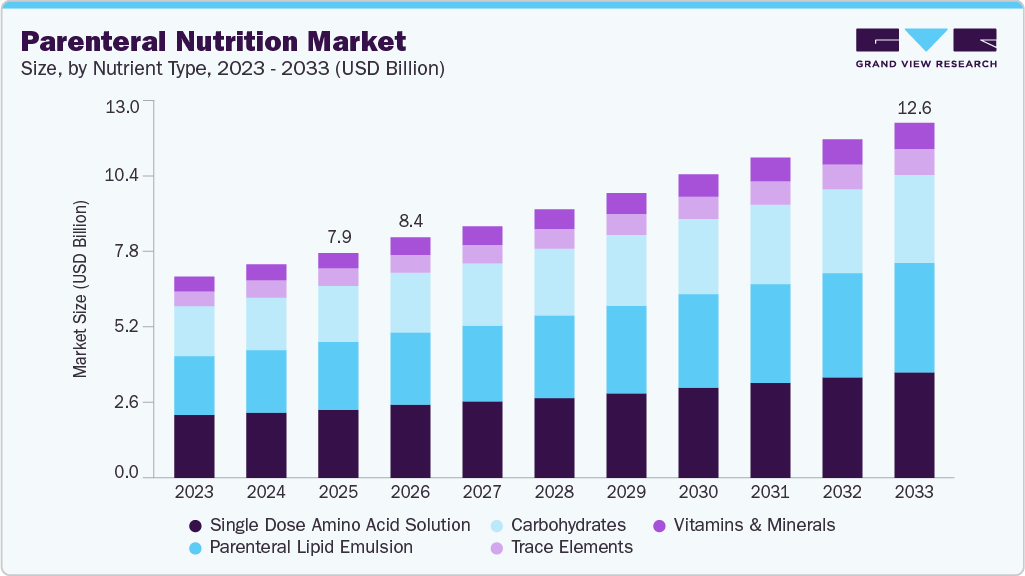
The global parenteral nutrition market size was estimated at USD 7.97 billion in 2025 and is projected to reach USD 12.59 billion by 2033, growing at a CAGR of 5.87% from 2026 to 2033. This growth is attributed to the rising prevalence of gastrointestinal disorders, increasing premature births, and the growing incidence of chronic diseases such as cancer.
Key Market Trends & Insights
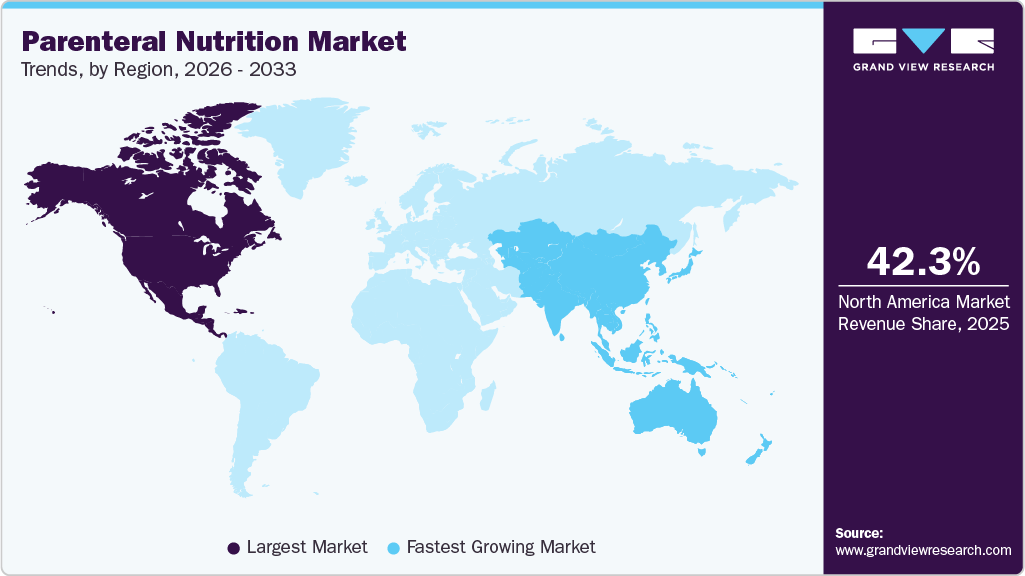
- North America dominated the global parenteral nutrition market with the largest revenue share of 42.26% in 2025.
- The parenteral nutrition market in the U.S. held the largest revenue share in 2025.
- By nutrient type, the single-dose amino acid solution segment accounted for the largest market share of 30.56% in 2025.
- By stage type, the adult segment held the largest market share in 2025.
- By indication type, the cancer care segment dominated the market in 2025.
Market Size & Forecast
- 2025 Market Size: USD 7.97 Billion
- 2033 Projected Market Size: USD 12.59 Billion
- CAGR (2025-2033): 5.87%
- North America: Largest market in 2025
- Asia Pacific: Fastest growing market
Expanding hospital infrastructure, advancements in nutrient formulations, and increasing adoption of home parenteral nutrition further support market growth globally. Moreover, the rising prevalence of chronic conditions, particularly cancer and disease-related malnutrition, is driving demand for parenteral nutrition, as these patients often experience gastrointestinal dysfunction or treatment-related complications that limit oral or enteral feeding. Cancer therapies such as chemotherapy and radiation frequently necessitate intravenous nutritional support; for instance, the National Cancer Institute estimates 2,114,850 new cancer cases and 626,140 cancer deaths in the U.S. in 2026, highlighting the growing patient base requiring parenteral nutrition.Numerous benefits accompany parenteral nutrition, including ease of use, stimulation of stomach blood flow, efficient nutrient delivery, and preservation of muscle catabolism. Globally, various health awareness campaigns, with a particular emphasis on nutrition, are underway, along with diverse initiatives promoting health and social care, expected to bolster market growth. For example, India observed POSHAN Maah in September 2023, mirroring the Government of India's flagship program, POSHAN Abhiyaan, aimed at raising awareness and enhancing nutritional outcomes for pregnant women, children under six years of age, and lactating mothers.
PN also has applications for infants and children suffering from a disease or medical condition, thereby requiring special nutritional management. In 2023, Specialized Nutrition Europe (SNE) estimated that nearly 300,000 EU children are anticipated to require medical nutrition for their special medical needs in early life stages, which supports growth and development. The study further reveals that about 40% of hospitalized adult patients are malnourished and need medical nutrition to manage the disease-related malnutrition condition, thereby reducing the duration of hospital stay. PN lowers the infection risk and underdevelopment, thereby promoting its adoption worldwide.
Parenteral nutrition providers are increasingly focusing on ready-to-use multi-chamber bags, advanced lipid emulsions, and patient-specific formulations to improve safety, efficiency, and clinical outcomes. Companies like Baxter and Fresenius Kabi offer specialized solutions such as Numeta for neonates, Kabiven for adults, and SMOFlipid/Omegaven lipid emulsions enriched with mixed oils and omega-3s to support metabolic function and reduce complications. There is also a growing emphasis on tailored neonatal and pediatric PN, home parenteral nutrition, and streamlined infusion workflows, reflecting the industry’s shift toward protocol-driven, patient-centric nutrition management across hospital and outpatient settings.
Many premature babies experience low weight and underdeveloped immunity, placing them at significant risk. There is extensive focus from individuals and healthcare authorities on reducing mortality associated with preterm birth, which drives the utilization of parenteral lipid emulsions. According to the U.S. Centers for Disease Control and Prevention (CDC), the preterm birth rate in the country was approximately 10.4% in 2022. In addition, during the same period, the preterm birth rate for African American women was around 14.6%. These elevated preterm birth rates are expected to bolster market expansion.
Market Concentration & Characteristics
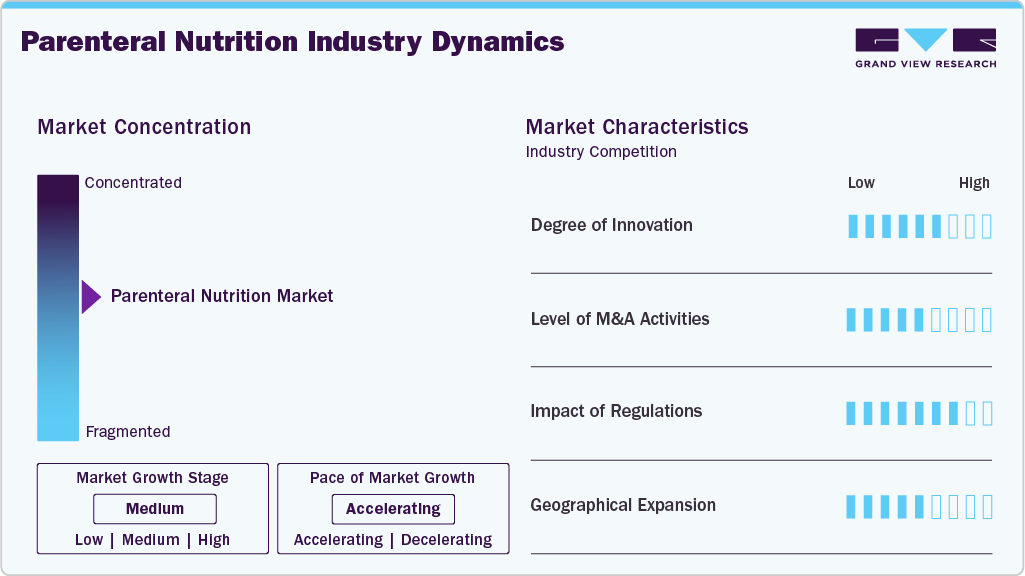
The market growth is moderate, and the pace of the market growth is accelerating. The parenteral nutrition industry is characterized by the growing aging population, increasing focus on the development of advanced parenteral nutrition, evolving government policies and regulations, and increasing prevalence of chronic diseases.
The market is characterized by a medium degree of innovation owing to the increasing focus on the development of technologically advanced solutions, owing to the increasing demand for parenteral nutrition in different age groups. Key players are implementing strategic initiatives, such as product launches, geographical expansion, mergers and acquisitions, collaborations, partnerships, and R&D activities, to strengthen their market presence. For instance, in November 2024, Otsuka Pharmaceutical Factory announced the launch of KIDPAREN Injection, a 3-chamber total parenteral nutrition product that combines amino acids, glucose, electrolytes, fats, and multivitamins to provide high-calorie IV nutrition for patients with chronic kidney disease who cannot be fed orally or enterally.
Regulations play a crucial role in the parental nutritional market. According to the Federal Food, Drug, and Cosmetic Act (FD&C Act), for a product to be classified as a medical food, it must be labeled for the dietary management of a specific disease condition with discrete nutritional requirements and must be intended for oral or tube feeding. In addition, the product must be intended for use under specific medical supervision. It is necessary for market players to comply with the regulations of regulatory bodies.
The threat of substitutes for parenteral nutrition is expected to be low, as it serves as a go-to solution for patients with critically compromised digestive systems. Similarly, the ongoing development in the market is further expected to strengthen PN’s position. Moreover, it offers a customizable way for delivering nutrients to the patient based on specific needs.
Geographical expansion in the parenteral nutrition industry is moderately driven by increasing healthcare investments, improving hospital infrastructure, and rising awareness of clinical nutrition in emerging economies. Companies are expanding distribution networks and strengthening presence in the Asia Pacific, Latin America, and the Middle East to capture growing demand.
Nutrient Type Insights
The single-dose amino acid solution segment accounted for the largest market share of 30.56% in 2025. This can be attributed to the increased usage of amino acid solutions, which can be related to an increase in the influx of regulatory-approved solutions. Moreover, newly available amino acid solutions possess fewer side effects, thereby enhancing patient benefits. Aminosyn (by Hospira, Inc.) and Nirmin (by Nirlife Pharma) are a few of the single-dose amino acid solutions available in the market. Formulations of mixed amino acids provide essential and nonessential amino acids; hence, the standard component acts as comprehensive parenteral nutrition for the overall biological functioning.
The parenteral lipid emulsion segment is anticipated to register the fastest CAGR growth of 6.44% during the forecast period. This can be attributed to parenteral lipid emulsions having potential benefits as a drug delivery vehicle. It is mainly used to administer drugs that prevent thrombophlebitis and reduce irritation & pain. Moreover, the development of hybrid parenteral lipid emulsions using mixed lipid emulsions of fish oil and olive oil is growing adoption of parenteral nutrition, owing to its advantages, such as shorter hospital stays and reduced risk of infection, which is further boosting the demand for parenteral lipid emulsions, thereby driving the segment growth.
Stage Type Insights
The adult segment held the largest market share in 2025. This can be attributed to the growing adult population, which has led to an increased prevalence of chronic disorders, such as Alzheimer’s disease, sarcopenia, cancer, and diabetes. According to the United Nations, by 2050, one in six people in the world will be over age 65 years. This is expected to drive the market as these formulas are frequently used by patients when they are unable to consume food and nutrients naturally.
Moreover, the increasing adoption by pregnant women is significantly contributing to the segment’s growth. Severe malnutrition in pregnant women is associated with factors such as intrauterine growth restriction, preterm delivery, congenital malformations, low birth weight, and perinatal mortality. Thus, parenteral nutrition is advisable for pregnant women whose nutritional requirements are not being fulfilled by enteral intake.
The pediatric segment is anticipated to witness high growth owing to increased consumption of parenteral nutrition among preterm neonates in their initial life after birth. This is due to their intolerance to fully enteral nutrition and the benefits of parenteral nutrition, which provides a relatively safe means for preventing nutritional deficiency. Moreover, the increasing prevalence of preterm births has also significantly contributed to the segment’s growth.
Indication Type Insights
The cancer segment dominated the market with a share in 2025. Parenteral nutrition is crucial for addressing the nutritional needs of cancer patients, particularly in combating malnutrition, which significantly impacts their quality of life and survival rates. According to an Elsevier Inc. article of 2021, around10%- 20% of oncology patients succumb to the effects of malnutrition rather than the cancer itself, underscoring the growing demand for parenteral nutrition among these patients. In addition, PN aids in tissue repair and healing, helps maintain weight and muscle mass, supports immune function, and enhances tolerance to cancer treatments. This is expected to drive the segment growth over the forecast period.
However, the dysphagia segment is anticipated to witness the fastest growth rate over the forecast period due to its rising prevalence. According to an article published in MDPI in 2022, the prevalence of dysphagia among elderly nursing home residents was around 58.69%, which was evaluated by the Standard Swallowing Assessment (SSA). Also, the prevalence of dysphagia in the combined community-dwelling elderly was around 30.52%. Furthermore, aspiration pneumonia due to dysphagia is a major complication of this condition, which boosts the need for parenteral nutrition.
Sales Channel Insights
The institutional sales channel segment dominated the market with a share in 2025, owing to the increasing chronic disease population and the growing number of private and public healthcare institutions. In addition, parenteral nutrition is often delivered in specialized care settings under the guidance of healthcare professionals, which further contributes to the segment growth.
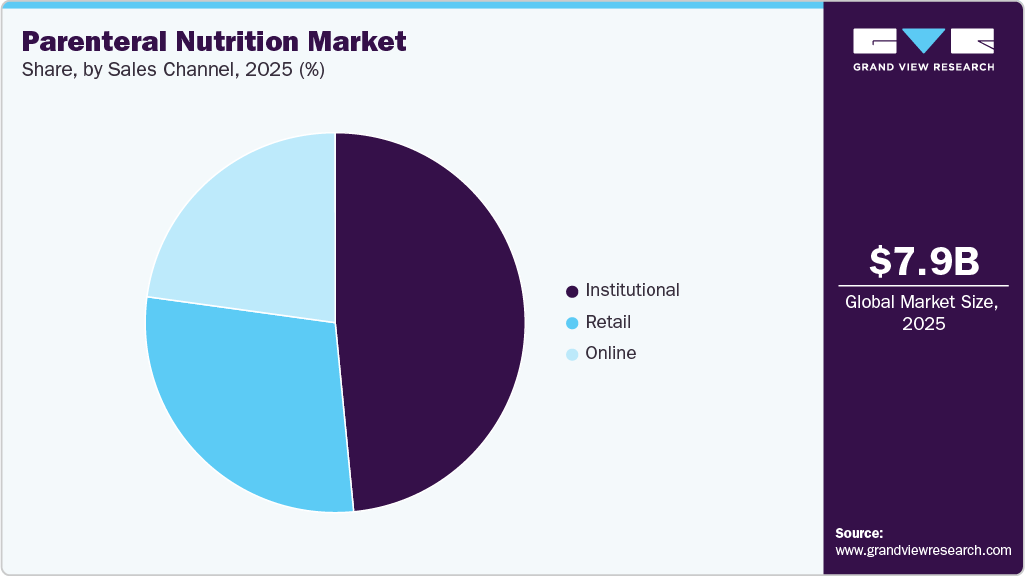
The online sales channel is expected to witness the fastest growth rate owing to a shift in the trend toward direct selling to customers via e-commerce platforms. The preference for online purchase of parenteral nutrition is rising owing to the convenience offered by this sales channel. Although consumed under medical surveillance, these products are intended for long-term nutrition management, resulting in growing sales through e-commerce. Moreover, these channels can offer better accessibility to products that might not be readily available at conventional sales channels. Thus, with the penetration of e-commerce, there is a gradual shift toward the online purchase of enteral nutrition, thereby offering lucrative market opportunities.
Regional Insights
North America accounted for the largest market share of more than 42.26% in 2025. Key factors responsible for its highest market share include high research expenditure by private entities & government agencies in the healthcare sector, technologically advanced medical devices, and collaborations among the medical device industry, regulatory authorities, universities, and others. In addition, the growing prevalence of various chronic diseases, such as cancer and malnutrition, in the region is also significantly contributing to the demand for PN in the region.
U.S. Parenteral Nutrition Market Trends
The parenteral nutrition market in the U.S. held the largest revenue share in 2025. This can be attributed to the increasing geriatric population, technological advancements, and a compatible regulatory framework in the country. Moreover, several market players are developing solutions to enhance their presence in the U.S. market. For instance, in May 2024, Baxter announced U.S. FDA approval for the expanded indication of Clinolipid, allowing its use in pediatric patients, including term and preterm neonates. Clinolipid has been available for adults in the U.S. since 2019 and is now approved for use across all age groups.
“Improving patient outcomes inspires our work every day, and we are proud to continue to address the unique nutritional needs of neonatal and pediatric patients through innovative products and therapies. Expanding access to Clinolipid for this critical and vulnerable patient population offers clinicians versatility in choosing the product that best meets their patients’ needs when it matters most.”
- Cecilia Soriano, President of Baxter’s Global Infusion Therapies and Technologies Division.Canada parenteral nutrition market is anticipated to grow at a significant rate owing to an increase in the number of people suffering from malnutrition who require enteral nutrition support and increasing initiatives to decrease the prevalence of malnutrition in the country. For instance, Canada has established the Canadian Malnutrition Task Force, which carries out several conferences and spreads education about malnutrition in several parts of the country. Such initiatives are expected to increase the awareness of malnutrition in the country, thereby contributing to market growth in Canada.
Europe Parenteral Nutrition Market Trends
The parenteral nutrition market in Europe is growing steadily due to high rates of malnutrition, an aging population, and increasing prevalence of cancer, gastrointestinal disorders, and critical care admissions. For instance, according to a September 2024 WHO article, around 40% of inpatients lose weight. Strong clinical guidelines and advanced healthcare systems across countries such as Germany, France, and the UK support the timely use of parenteral nutrition in hospitals and ICUs, while expanding home parenteral nutrition programs are reducing hospital stays and costs.
Germany parenteral nutrition market is shaped by strong clinical adherence, widespread hospital adoption in oncology, surgery, ICU, and neonatology, and a growing shift toward home and outpatient parenteral nutrition supported by structured reimbursement. According to the European Cancer Inequalities Registry, nearly 530,000 new cancer cases were reported in 2022, sustaining consistent demand for intravenous nutritional support during intensive treatment and recovery.
The parenteral nutrition market in France is supported by established clinical use in oncology, ICU, gastrointestinal care, and neonatology, with rising preference for ready-to-use multichambered products. In addition, initiatives such as France’s Malnutrition Awareness Week 2025, which aims to raise awareness, promote action against malnutrition, improve patient care, and strengthen legislative initiatives, support earlier nutrition intervention and broader adoption of parenteral nutrition alongside a growing shift toward home-based care.
Asia Pacific Parenteral Nutrition Market Trends
The parenteral nutrition market in the Asia Pacific is anticipated to register the fastest CAGR during the forecast period. The rising demand for cost-effective treatments and the growing prevalence of chronic diseases due to unhealthy eating habits are some of the factors expected to drive the Asia Pacific regional market growth. Moreover, low awareness about nutrition and an increasing population, coupled with poverty in the region, are leading to malnutrition, which is driving the demand for parenteral nutrition in the region.
Japan parenteral nutrition market is expected to grow significantly over the forecast period. This can be attributed to the rapidly increasing geriatric population of the country. According to the data published by the World Economic Forum in September 2023, more than 1 in every 10 people in the country were aged above 80, and around 1/3rd of the country’s population, i.e., 36.23 million people, were aged above 65. This rise in the geriatric population of the country is expected to drive the market growth.
The parenteral nutrition market in China held a significant market share in 2025 owing to factors such as the increasing geriatric population, increasing healthcare expenditure, and growing prevalence of cancers in the country. According to the World Bank data, the per capita healthcare expenditure of China has increased from 393.78 USD in 2015 to 583.43 in 2020. This trend of increasing per capita healthcare expenditure can contribute to the market growth. In addition, the growing incidence of preterm births and malnutrition is driving the adoption of parenteral nutrition, thereby fueling the market growth. An increase in malnutrition and diabetes is expected to drive the market in India over the forecast period. According to a study published by the Indian Council of Medical Research, India Diabetes (ICMR INDIAB) in 2023, around 101 million people in the country had diabetes. In addition, the Indian government is taking significant initiatives to create awareness about malnutrition in the country, which is expected to fuel market growth.
Middle East & Africa Parenteral Nutrition Market
The parenteral nutrition market in the Middle East & Africa is attributed to an increase in the geriatric population and the growing prevalence of chronic diseases and gastrointestinal disorders. In addition, increasing the natality rate, rising number of premature births, risk of malnutrition, and rising awareness about the importance of proper nutritional support have further boosted the demand for parenteral nutrition, thereby positively boosting the market growth.
Latin America Parenteral Nutrition Market
The parenteral nutrition market in Latin America is growing steadily, driven by expanding ICU capacity, increasing surgical procedures, and rising preterm births. Adoption of parenteral nutrition solutions is focused in hospital and neonatal care settings, with a shift toward ready-to-use formulations to improve safety and efficiency, while limited healthcare infrastructure and cost pressures continue to moderate growth.
Key Parenteral Nutrition Company Insights
Key players are adopting new product development, partnership, and merger & acquisition strategies to increase their market share. The development of new drugs by these companies and their entry into untapped markets to expand their reach are anticipated to further stimulate market growth.
Key Parenteral Nutrition Companies:
The following key companies have been profiled for this study on the parenteral nutrition market.
- Baxter
- Otsuka Pharmaceutical Factory, Inc.
- Grifols, S.A.
- B. Braun Melsungen AG
- Vifor Pharma (Acquired by CSL)
- Fresenius Kabi AG
- Sichuan Kelun Pharmaceutical Co., Ltd.
- Pfizer Inc. (Hospira Inc.)
- ICU Medical, Inc.
- JW Pharmaceutical
- Aculife
Recent Developments
-
In April 2024, Fresenius Kabi Korea launched two new high-amino-acid nutritional injection products, Ntense Injection and Ntense EF Injection, designed to supply calories, amino acids, essential fatty acids, and omega-3s for adults and children requiring intravenous nutrition.
-
In June 2022, Fresenius Kabi UK announced the launch of a new website designed to assist healthcare professionals working in the field of parenteral nutrition. This site was developed to guide healthcare professionals through the company’s range of multi-chamber bags and to support product selection for parenteral nutrition in various healthcare settings.
-
In March 2022, American Regent announced the launch of Selenious Acid Injection, USP in a 12 mcg/2 mL single-dose vial, designed to provide selenium as a trace element for parenteral nutrition in adult, pediatric, and neonatal patients, especially those under 7 kg who cannot receive sufficient oral or enteral nutrition.
Parenteral Nutrition Market Report Scope
Report Attribute
Details
Market size value in 2026
USD 8.45 billion
Revenue forecast in 2033
USD 12.59 billion
Growth rate
CAGR of 5.87% from 2026 to 2033
Actual data
2021 - 2025
Forecast period
2026 - 2033
Quantitative units
Revenue in USD million/billion and CAGR from 2026 to 2033
Report coverage
Revenue forecast, company ranking, competitive landscape, growth factors, and trends
Segments covered
Nutrient type, stage type, indication, sales channel, region
Regional scope
North America; Europe; Asia Pacific; Latin America; MEA
Country scope
U.S.; Canada; Mexico; Germany; UK; France; Italy; Spain; Sweden; Denmark; Norway; China; Japan; India; South Korea; Australia; Thailand; Brazil; Argentina; UAE; South Africa; Saudi Arabia; Kuwait
Key companies profiled
Baxter; Otsuka Pharmaceutical Factory, Inc.; Grifols, S.A.; B. Braun Melsungen AG; Vifor Pharma (Acquired by CSL); Fresenius Kabi AG; Sichuan Kelun Pharmaceutical Co., Ltd.; Pfizer Inc. (Hospira Inc.); ICU Medical, Inc.; JW Pharmaceutical; Aculife
Customization scope
Free report customization (equivalent up to 8 analysts working days) with purchase. Addition or alteration to country, regional & segment scope.
Pricing and purchase options
Avail customized purchase options to meet your exact research needs. Explore purchase options
Global Parenteral Nutrition Market Report Segmentation
This report forecasts revenue growth at global, regional, and country levels and provides an analysis of the latest industry trends in each of the sub-segments from 2021 to 2033. For this study, Grand View Research has segmented the global parenteral nutrition market report based on nutrient type, stage type, indication, sales channel, and region:
-
Nutrient Type Outlook (Revenue, USD Million, 2021 - 2033)
-
Carbohydrates
-
Parenteral Lipid Emulsion
-
Single Dose Amino Acid Solution
-
Trace Elements
-
Vitamins & Minerals
-
-
Stage Type Outlook (Revenue, USD Million, 2021 - 2033)
-
Adult
-
Pediatrics
-
-
Indication Outlook (Revenue, USD Million, 2021 - 2033)
-
Alzheimer’s
-
Nutrition Deficiency
-
Cancer Care
-
Diabetes
-
Chronic Kidney Diseases
-
Orphan Diseases
-
Dysphagia
-
Pain Management
-
Malabsorption/GI Disorder/Diarrhea
-
Others
-
-
Sales Channel Outlook (Revenue, USD Million, 2021 - 2033)
-
Online
-
Retail
-
Institutional
-
-
Regional Outlook (Revenue, USD Million, 2021 - 2033)
-
North America
-
U.S.
-
Canada
-
Mexico
-
-
Europe
-
UK
-
Germany
-
France
-
Italy
-
Spain
-
Sweden
-
Norway
-
Denmark
-
-
Asia Pacific
-
China
-
India
-
Japan
-
Thailand
-
Australia
-
South Korea
-
-
Latin America
-
Brazil
-
Argentina
-
-
MEA
-
South Africa
-
Saudi Arabia
-
UAE
-
Kuwait
-
-
Frequently Asked Questions About This Report
b. The single-dose amino acid solution segment accounted for the largest market share of 30.56% in 2025. This can be attributed to the increased usage of amino acid solutions, which can be related to an increase in the influx of regulatory-approved solutions. Moreover, newly available amino acid solutions possess fewer side effects, thereby enhancing patient benefits.
b. Some key players operating in the parenteral nutrition market include Baxter, Otsuka Pharmaceutical Factory, Inc., Grifols, S.A., B. Braun Melsungen AG, Vifor Pharma (Aquired by CSL), Fresenius Kabi AG, Sichuan Kelun Pharmaceutical Co., Ltd., Pfizer Inc. (Hospira Inc.), ICU Medical, Inc., JW Pharmaceutical, Aculife
b. Key factors that are driving the parenteral nutrition market growth include the the rising prevalence of gastrointestinal disorders, increasing premature births, and growing incidence of chronic diseases such as cancer.
b. The global parenteral nutrition market size was estimated at USD 7.97 billion in 2025 and is expected to reach USD 8.45 billion in 2026.
b. The global parenteral nutrition market is expected to grow at a compound annual growth rate of 5.87% from 2026 to 2033 to reach USD 12.59 billion by 2033.


Share this report with your colleague or friend.
Need a Tailored Report?
Customize this report to your needs — add regions, segments, or data points, with 20% free customization.


ISO 9001:2015 & 27001:2022 Certified
We are GDPR and CCPA compliant! Your transaction & personal information is safe and secure. For more details, please read our privacy policy.
Trusted market insights - try a free sample
See how our reports are structured and why industry leaders rely on Grand View Research. Get a free sample or ask us to tailor this report to your needs.