- Home
- »
- Pharmaceuticals
- »
-
Clinical Nutrition Market Size & Share, Industry Report, 2033GVR Report cover
![Clinical Nutrition Market Size, Share & Trends Report]()
Clinical Nutrition Market (2026 - 2033) Size, Share & Trends Analysis Report By Product (Parenteral, Enteral, Oral), By Application (Malabsorption/GI Disorder/Diarrhea, Cancer Care), By Sales Channel, By Region, And Segment Forecasts
- Report ID: GVR-4-68040-200-1
- Number of Report Pages: 270
- Format: PDF
- Historical Range: 2021 - 2025
- Forecast Period: 2026 - 2033
- Industry: Healthcare
- Report Summary
- Table of Contents
- Segmentation
- Methodology
- Download FREE Sample
-
 Download Sample Report
Clinical Nutrition Market Summary
The global clinical nutrition market size was estimated at USD 34.04 billion in 2025 and is projected to reach USD 51.47 billion by 2033, growing at a CAGR of 5.27% from 2026 to 2033. This growth is driven by the rising prevalence of malnutrition, increasing demand for post-cancer care, and a consumer shift toward plant-based options, along with the launch of such solutions by notable players such as Nutricia and Nestlé.
Key Market Trends & Insights
- North America dominated the market for clinical nutrition with a share of 34.82% in 2024.
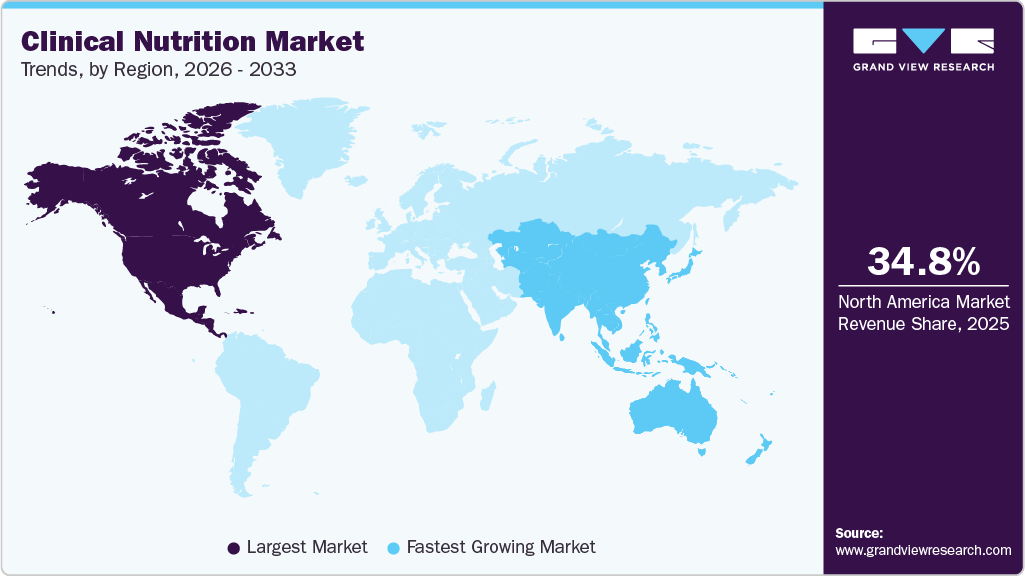
- Asia Pacific is estimated to be the fastest-growing region over the forecast period.
- By product, the oral segment held the largest market share of 54.06% in 2025.
- By application, the cancer care segment held the largest revenue share in the market in 2025.
- By end use, the institutional sales channel segment held the largest revenue share in the market in 2025.
Market Size & Forecast
- 2025 Market Size: USD 34.04 Billion
- 2033 Projected Market Size: USD 51.47 Billion
- CAGR (2026-2033): 5.27%
- North America: Largest market in 2025
- Asia Pacific: Fastest growing market
According to the World Health Organization, around 512 million people could be chronically undernourished by 2030, with 60% of them from Africa. This rising prevalence of malnutrition and undernutrition is expected to significantly drive demand for clinical nutrition solutions, as governments, NGOs, and healthcare providers focus on addressing nutritional deficiencies and improving health outcomes in vulnerable populations. The growing need for specialized nutritional support in both pediatric and adult groups, particularly in low- and middle-income countries, is further accelerating investments in therapeutic nutrition products, fortified supplements, and enteral and parenteral nutrition, positioning clinical nutrition as a critical component in combating the global burden of malnutrition.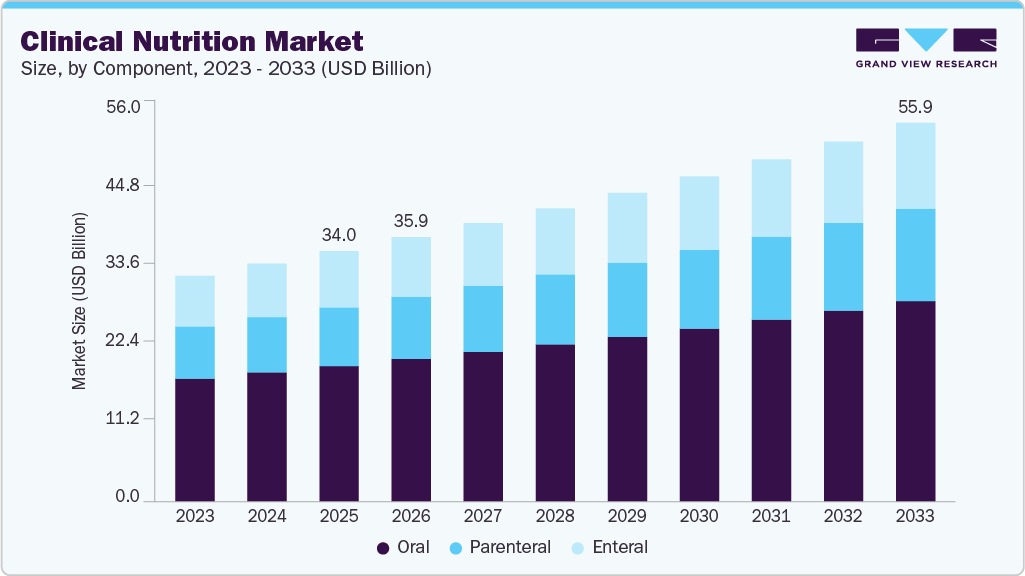
There has been a constant increase in the prevalence of chronic diseases, such as Alzheimer's disease, Attention Deficit Hyperactivity Disorder (ADHD), osteoporosis, osteoarthritis, central nervous system disorders, and other diseases that require clinical dietary management. For instance, as per the data published by the Centers for Disease Control and Prevention (CDC) in August 2023, ADHD ranks among the most prevalent mental conditions in children, with approximately 6 million children aged 3 to 17 years having received a diagnosis at some point.
Clinical Nutrition Importance in Special Cases
Patient Category
Driver
Instance
Non-intubated patient
Prevent malnutrition and ensure safe swallowing
Reduce aspiration risk
Maintain nutrition if EN unsafe
Elderly post-stroke given supplements and texture-modified meals
Dysphagia patient on nasoenteral feeding
Recurrent aspiration pneumonia patient supported with PN
Surgical patient
Support healing & gut recovery
Maintain gut integrity
Avoid stressing leaks/fistulas
Provide nutrition if EN not possible
Prevent electrolyte imbalance
Post-esophagectomy patient on EN within 24h
Abdominal surgery patient kept on EN despite mild ileus
Jejunal fistula patient fed distally
Bowel obstruction patient initiated on PN
Ileostomy patient managed with chyme infusion
Trauma patient
Reduce infections and boost immune function
Polytrauma patient started on EN within 48h
Septic patient
Provide immune/metabolic support once stable
Ensure nutrition if EN not tolerated
Septic shock patient started on EN after vasopressor reduction
Septic ileus patient maintained on PN until gut motility restored
Obese patient
Preserve lean body mass, avoid overfeeding
Preventing metabolic complications
Ensure adequate protein for recovery
ICU patient monitored with nitrogen balance
120 kg patient’s EN calculated on adjusted weight
Bariatric surgery patient prescribed 1.3 g/kg/day protein
Market Concentration & Characteristics
The chart below illustrates the relationship between market concentration, industry characteristics, and industry participants. The x-axis represents the level of industry concentration, ranging from low to high. The y-axis represents various industry characteristics, including industry competition, impact of regulations, level of partnerships & collaborations activities, degree of innovation, and regional expansion. For instance, the market is consolidated steadily moving towards fragmentation, with many product & service providers entering the market. The degree of innovation, the level of partnerships & collaboration activities, and the impact of regulations on the industry is high. However, the regional expansion observes moderate growth.
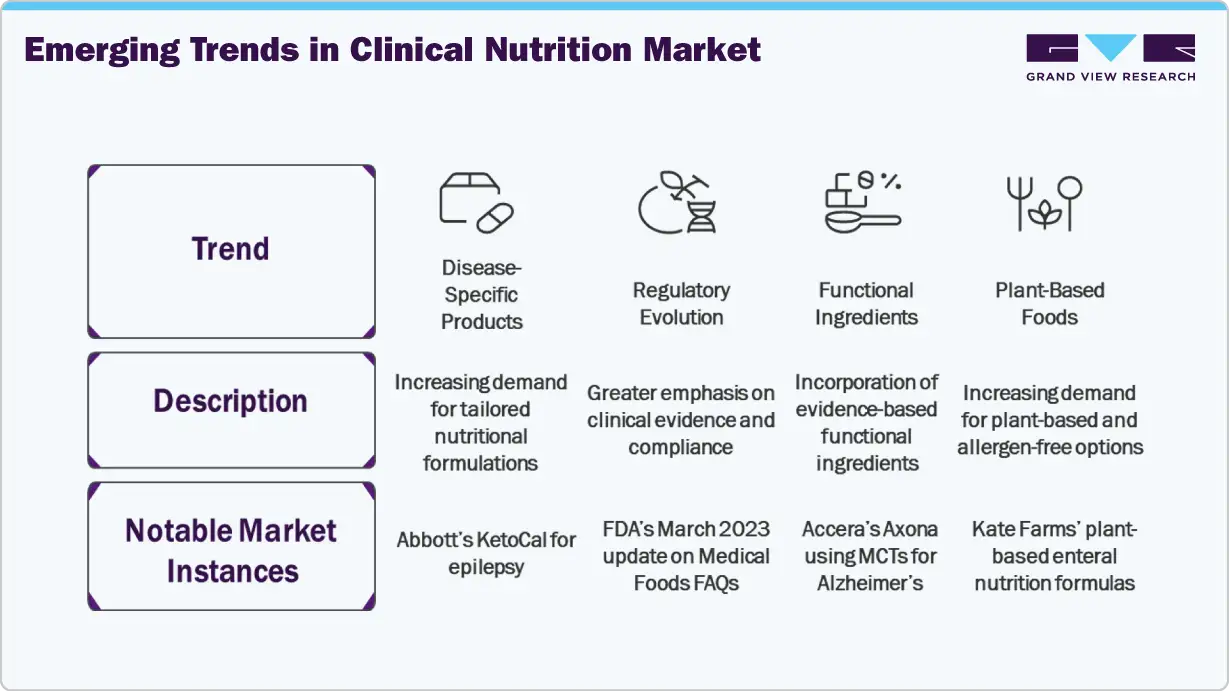
The market for clinical nutrition is experiencing a substantial degree of innovation, with companies increasingly focusing on sustainable formulations, patient-centric design, and inclusivity in dietary options. In November 2025, Abbott launched an upgraded formulation of Ensure Diabetes Care, featuring a triple care system with higher myo-inositol, low-glycemic carbohydrates, protein, and fiber to support blood sugar control, metabolic health, cholesterol management, and weight control in people with diabetes.
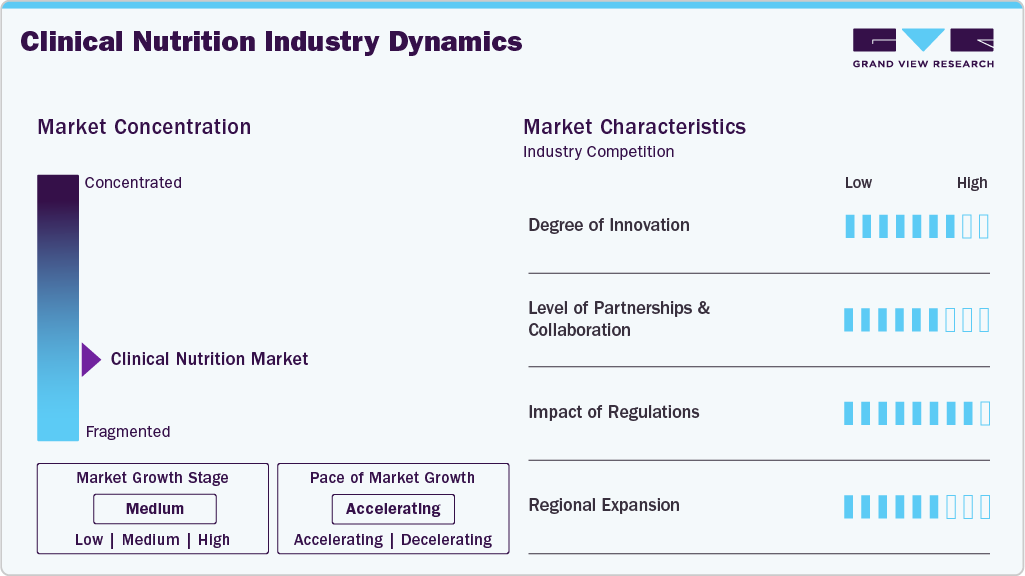
The level of partnerships and collaborations in the clinical nutrition industry is growing as market players increasingly join forces with healthcare, digital health, and research organizations to expand access and enhance patient outcomes. For instance, in January 2026, Fresenius Kabi and the European Society of Intensive Care Medicine (ESICM) reinforced their partnership to advance medical nutrition in critical care by supporting research through a USD 23,926.2 (Euro 20,000) award and offering education and fellowship opportunities that help clinicians optimize nutrition therapy and outcomes in intensive care settings.
The impact of regulation on the market is high. In the U.S., clinical nutrition is regulated under the provisions of the Federal Food, Drugs, & Cosmetics Act and the Fair Packaging & Labeling Act. Manufacturers are required to comply with all applicable laws as per these acts. According to the Federal Food, Drug, & Cosmetic Act, for a product to be classified as a medical food. On the other hand, the enteral nutrition products in the UK are regulated as FSMP in the UK. Since December 2020, the Food for Specific Purposes has been regulated under Regulation No. 609/2013, retained after Brexit in the UK. The Food Standards Scotland (FSS), the Department of Health & Social Care (DHSC), and the Welsh government govern the country’s FSS. Moreover, the FSMP is regulated under the retained Commission Delegated Regulation 2016/128 and came into law in February 2019 and for infants, it was implemented in February 2020.
The market for clinical nutrition is witnessing moderate regional expansion, driven by the rising prevalence of malnutrition, the growing aging populations, and increasing healthcare investments in emerging economies. Companies are scaling operations, introducing new product portfolios, and partner with regional players to improve accessibility and address diverse cultural and dietary needs. This global reach contributes to the faster adoption of clinical nutrition solutions while supporting equitable access to advanced nutritional care.
Product Insights
The oral nutrition segment held the largest revenue share of 54.06% in 2025. The rising prevalence of malnutrition among the adult population and the increasing instances of obesity and chronic diseases such as cancer and diabetes are some of the major factors boosting the market growth. Market leaders and innovators are involved in novel product launches to enhance productivity, durability, quality, and improve the nutritional value of the food products. Along with the nutritional value, the manufacturers of clinical nutrition products are working to enhance and improve the taste of the products by incorporating different flavors. Due to this, the demand for oral clinical nutrition products is rising, thereby driving the global market.
The parenteral nutrition segment is expected to grow at the fastest CAGR over the forecast period. Development of technically advanced parenteral nutrition (PN) products with barcode assistance, growing preference for PN over enteral nutrition in patients, shorter hospital stays, and reduced risk of infection are some of the factors boosting the product demand, thereby driving the segment growth.
Application Insights
The cancer care segment held a share of 15.10% in 2025. The rising prevalence of cancer is the primary factor driving the segment growth. For instance, according to the American Cancer Society, 2,041,910 new cancer cases and 618,120 cancer-related deaths are projected to occur in the United States in 2025. By 2050, it is anticipated that the global burden of cancer is anticipated to increase to around 35 million new cases, with a significant uprise expected in low-income and middle-income countries. Cancer weakens immunity and leads to energy loss, resulting in malnutrition in 40% to 80% of cases. This affects the response to the treatment as well as increases treatment-related toxicity. Hence, to maintain nutrition and positive nitrogen balance, various types of clinical nutrition, such as tube feeding, are used.
The malabsorption/GI Disorder/Diarrhea segment is anticipated to grow at the fastest CAGR over the forecast period. Malabsorption typically means difficulty in digesting nutrients that are provided through food. Certain conditions are known to cause malabsorption, such as short bowel syndrome, cystic fibrosis, chronic pancreatitis, and Crohn’s disease. It can also lead to other illnesses if proper nutrients are unavailable in the body. In these cases, enteral nutrition via oral or tube/enteral feeding plays a vital role. It provides the body with necessary nutrients and helps in improving gut immunity.
Sales Channel Insights
The institutional sales channel segment held the largest market share in 2025. Institutions that purchase clinical nutrition products include hospitals, long-term care centers, hospices, and disability facilities. The purchase decision of enteral or parenteral nutrition is influenced by doctors. Furthermore, the growing number of private and public institutions and the increasing chronic disease patient population across the globe are propelling the segment.
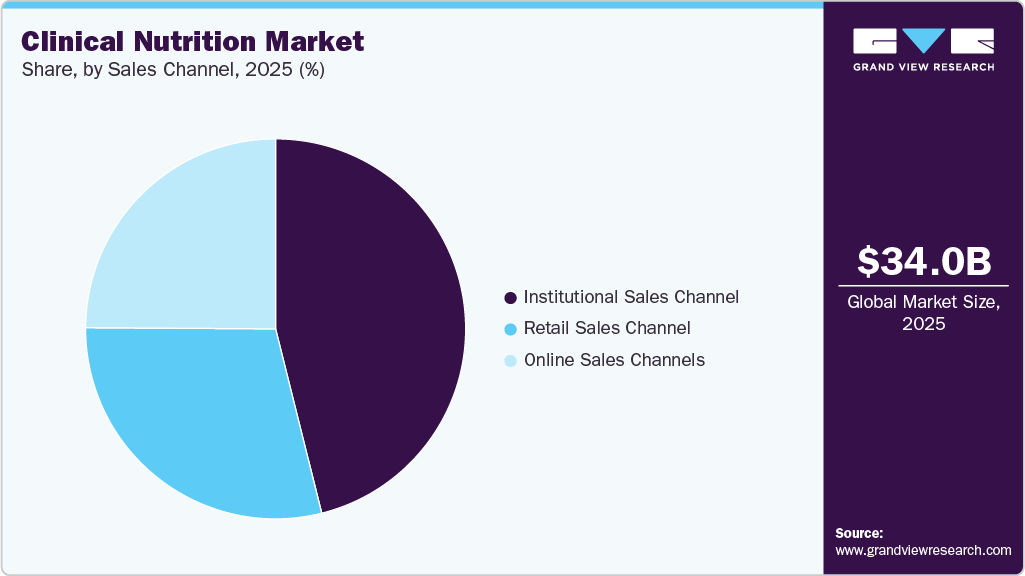
The online sales channel segment is anticipated to witness the fastest growth during the forecast period. There is a shift in the trend of direct selling to customers via e-commerce platforms. The preference for online purchase of enteral feeding formula is rising owing to the convenience offered by this sales channel. Although consumed under medical surveillance, these products are intended for long-term nutrition management, resulting in growing sales through e-commerce.
Regional Insights
North America clinical nutrition industry dominated the global market and accounted for a 32.8% revenue share in 2025. This can be attributed to the increasing geriatric population, which is more susceptible to chronic diseases, such as gastrointestinal disorders, metabolic disorders, and neurological disorders. According to the United Health Foundation, in 2022, about 17.3% of the population in the U.S. was aged 65 and above. Furthermore, around 56 million elderly people are expected to depend on clinical nutrition to fulfill their nutritional needs in the U.S. by 2030. Moreover, the growing number of premature infants in critical care is a major factor driving market growth. For instance, according to March of Dimes in 2023, there were 373,902 preterm births in the United States, representing 10.4% of live births.
U.S. Clinical Nutrition Market Trends
The U.S. clinical nutrition industry accounted for the largest market share in the North American region owing to the increasing prevalence of head & neck cancer across the U.S. For instance, the American Cancer Society estimated that in 2026, around 60,480 new cases of oral cavity or oropharyngeal cancer and about 13,150 deaths from oral cavity or oropharyngeal cancer will register in the U.S. Moreover, the growing incidence of various chronic diseases, such as neurological diseases, is anticipated to improve the adoption of clinical nutrition during the forecast period. According to the Alzheimer’s Association’s 2025 Report in the U.S., around 7.2 million individuals age 65 and older lived with Alzheimer’s disease in 2025. Moreover, this number is expected to reach 13 million by 2050.
Europe Clinical Nutrition Market Trends
The clinical nutrition industry in Europe is expanding steadily, supported by the region’s aging population, rising prevalence of chronic diseases, and strong focus on advanced nutritional care. For instance, according to an article published by NIH Annual, the CKD-related healthcare costs exceed USD 165.8 billon (€140 billion) annually excluding productivity loss. According to the article, CKD affects around 100 million people, with projections indicating that it is expected to become the fifth leading cause of global mortality by 2025 in the region This growing disease burden underscores the critical role of clinical nutrition in managing chronic conditions, improving patient outcomes, and reducing healthcare costs, thereby driving demand for specialized nutritional solutions across Europe.
The clinical nutrition industry in the UK is driven by an aging population, increasing prevalence of chronic diseases, and rising hospital admissions requiring nutritional support. The National Health Service (NHS) strongly emphasizes addressing malnutrition, particularly among elderly and long-term care patients, creating consistent demand for enteral and parenteral nutrition products. In addition, the UK’s focus on innovation, adoption of plant-based and sustainable formulations, and integration of clinical nutrition into home care settings are further supporting market expansion
The clinical nutrition industry in Germany is growing due to its aging population, high prevalence of chronic diseases, and strong healthcare infrastructure. Rising demand for enteral and parenteral nutrition, along with increasing adoption of specialized therapies in hospitals and home care, continues to drive market growth.
Asia Pacific Clinical Nutrition Market Trends
The clinical nutrition industry in Asia Pacific is expected to witness significant growth over the forecast period. The region has a large patient pool and geriatric population. Lifestyle changes are leading to an increase in the prevalence of various diseases, such as cancer, diabetes, gastrointestinal disorders, and autoimmune diseases. As a result, the demand for clinical nutrition for the dietary management of chronic diseases is expected to increase.
The clinical nutrition industry in Japanis expected to grow significantly due to the country's increasing aging population. According to the data published by the Ministry of Internal Affairs and Communications in October 2023, the number of people aged 65 and above as of September 15, 2023, stood at 36.2 million. Furthermore, supportive legislative changes in the country are also expected to impact the market positively. The Ministry of Health, Labour, and Welfare in Japan has established exclusive enteral and parenteral nutritional clinical guidelines for clinical nutrition. This is expected to drive the market over the forecast period.
The China clinical nutrition industry is driven by the increasing geriatric population, rising per capita healthcare expenditure, and the growing prevalence of esophageal cancer. For instance, according to a UN report, the elderly population in China is expected to increase twofold from 10% in 2017 to 20% by 2037. The rising incidence of neurological disorders, such as Alzheimer’s disease and multiple sclerosis, is further supporting market expansion. In addition, regulatory strengthening is shaping product development, with the release of GB 25596-2025, the updated Food Safety National Standard for FSMP Infant Formula, which replaces the 2010 standard and will come into effect in March 2027, reinforcing quality, safety, and compliance requirements across the clinical nutrition landscape.
Latin America Clinical Nutrition Market Trends
The Latin America clinical nutrition industry growth is driven by the constant efforts undertaken by the government to improve healthcare access and treatment. In addition, the increasing prevalence of chronic diseases, improving reimbursement scenarios, growing need for nutrition by geriatric & pediatric populations and increasing investments aimed at advancements in the healthcare industry are some of the factors contributing to the market's growth.
Middle East & Africa Clinical Nutrition Market Trends
The Middle East clinical nutrition industry is growing, with a high prevalence of malnutrition, a rising burden of chronic diseases, expanding healthcare infrastructure, and a growing elderly population. For instance, according to the Global Nutrition Report, the UAE faces a major nutrition challenge, with 44.2% of women and 30.9% of men aged 18 and older classified as obese.
Key Clinical Nutrition Company Insights
Key players in the clinical nutrition industry are adopting innovative strategies, focusing on specialized formulations for chronic diseases, plant-based and sustainable nutrition, and patient-tailored solutions to improve outcomes and adherence. Expansion into homecare settings, integration of digital health tools for monitoring nutritional status, and collaborations with healthcare providers and research institutions are further driving adoption and strengthening market presence.
Oral and Enteral Nutrition Company Market Share Analysis Insights, 2025
In the Oral and Enteral Nutrition segment of the clinical nutrition industry, the competitive landscape is characterized by a few large multinational players, with Abbott as the market leader, holding a 20.48% - 26.48% share. The company’s dominant position is driven by its broad, well-established portfolio of adult and pediatric nutrition products, strong penetration across hospital, institutional, and home care channels, and an extensive geographic presence supported by mature distribution and clinician trust. Other key participants, including Nestlé, Danone, Fresenius Kabi, and Mead Johnson & Company (Reckitt), contribute to market consolidation; however, Abbott’s scale, brand equity, and long-standing focus on clinical nutrition continue to differentiate it and sustain its leading share in this segment.
Notable Companies
Estimated Company Market Share, 2025 (%)
Abbott
20.48% - 26.48%
Nestle
(Note: Detailed analysis around the market share and insights will be provided in the final deliverable )
Danone
Fresenius Kabi
Mead Johnson & Company, LLC (acquired by Reckitt Benckiser Group PLC)
Others (Meiji Holdings. Co., Ltd., Ausnutria Dairy Corporation Ltd., etc.)
Parenteral Nutrition Company Market Share Analysis Insights, 2025
In the parenteral nutrition segment, the competitive landscape is moderately concentrated, with a small number of global companies accounting for a large share of revenues. Baxter leads the market with the largest share in 2025 driven by its broad parenteral nutrition portfolio, strong hospital presence, and well-established supply relationships in critical care and surgical settings. Other key players, including Fresenius Kabi AG, Pfizer Inc., Grifols, S.A., and Otsuka Holdings Co., Ltd., contribute to the overall market structure; however, Baxter’s scale, product breadth, and strong relationships with healthcare providers continue to support its leading position in the parenteral nutrition segment.
Company
Estimated Company Market Share, 2025 (%)
Baxter
(Note: Detailed analysis around the market share and insights will be provided in the final deliverable )
B.Braun
Fresenius Kabi AG
Pfizer Inc.
Grifols, S.A.
Otsuka Holdings Co., Ltd.
Others
Key Clinical Nutrition Companies:
The following key companies have been profiled for this study on the clinical nutrition market.
- Abbott
- Pfizer Inc.
- Nestle
- Otsuka Holdings Co., Ltd.
- Mead Johnson & Company, LLC (Reckitt Benckiser Group PLC)
- Danone S.A.
- Megalabs
- B.Braun
- Fresenius Kabi AG
- Meiji Holdings. Co., Ltd.
- Baxter
- Grifols, S.A.
- Daisyfsmp (JIANGSU DAISY FSMP CO., LTD)
- Ausnutria Dairy Corporation Ltd.
- Maifu Nutrition Technology
Recent Developments
-
In September 2025, Sudeep Pharma Limited acquired Nutrition Supplies Services (NSS), a European premix solutions provider, to expand its global presence in infant formula and clinical nutrition. This acquisition combines NSS’s micronutrient premix expertise with Sudeep’s mineral portfolio and global distribution, improving its ability to deliver science-backed nutrition solutions across Europe, Asia, Africa, and the Middle East.
“This acquisition reflects our commitment to becoming a global leader in specialty nutrition and healthcare ingredients. Together with NSS, we are better positioned to serve evolving customer needs with agility, innovation, and uncompromised quality.”
- Shanil Bhayani, Director at Sudeep Pharma Limited.
-
In August 2025, Maifu Mengyuan Special Medical Purpose Formula Food received approval form State Administration for Market Regulation
-
In May 2024, Danone acquired Functional Formularies, a provider of whole food tube feeding solutions in the U.S., from Swander Pace Capital. This acquisition is a strategic component of Danone's Renew Strategy, enhancing the company's Medical Nutrition offerings in the U.S. market by broadening its portfolio of enteral tube feeding products.
“As a global leader in Medical Nutrition, we are delighted to welcome Functional Formularies to Danone. We are confident that with the addition of the greatly differentiated product portfolio of Functional Formularies, which complements our existing Real Food Blends branded range, we are even better positioned to support the nutritional needs of tube-fed families and patients.”
-Juergen Esser, Deputy CEO and CFO
-
In May 2024, Neslte and EraCal Therapeutics entered into a research collaboration to identify novel nutraceuticals relevant to controlling food intake. Neslte and EraCal Therapeutics entered into a research collaboration to identify novel nutraceuticals relevant to controlling food intake.
“Nestlé Health Science knows how to develop nutraceutical compounds as first-line treatment for people in need, thanks to their distinguished commitment to cutting-edge science and clinical validation thereo. We are therefore excited to join forces with the world-leading company in the nutritional space and together drive innovation in the metabolic syndrome arena.”
- Josua Jordi, CEO of EraCal.
-
January 2023, Nutricia launched Fortimel Plant-Based Energy, its first plant-based, nutritionally complete medical nutrition drink made from pea and soy proteins. Such insights reflect a broader industry trend of developing advanced nutritional solutions that meet clinical needs and align with evolving consumer values and sustainability goals.
Clinical Nutrition Market Report Scope
Report Attribute
Details
Market size value in 2026
USD 35.92 billion
Revenue forecast in 2033
USD 51.47 billion
Growth rate
CAGR of 5.27% from 2026 to 2033
Actual data
2021 - 2025
Forecast period
2026 - 2033
Quantitative units
Market value in USD million/billion, and CAGR from 2026 to 2033
Report coverage
Revenue forecast, company ranking, competitive landscape, growth factors, and trends
Segments covered
Product, application, sales channel, region
Regional scope
North America; Europe; Asia Pacific; Latin America; MEA
Country scope
U.S.; Canada; Mexico; Germany; UK; France; Italy; Spain; Norway; Denmark; Sweden; China; Japan; India; South Korea; Australia; Thailand; Brazil; Argentina; Saudi Arabia; South Africa; UAE; Kuwait
Key companies profiled
Abbott; Pfizer Inc.; Nestlé; Otsuka Holdings Co., Ltd.; Mead Johnson & Company, LLC (Reckitt Benckiser Group PLC); Danone S.A.; Megalabs; Fresenius Kabi AG; Meiji Holdings Co., Ltd.; Baxter; B.Braun; Grifols S.A.; Daisyfsmp (Jiangsu Daisy FSMP Co., Ltd.); Ausnutria Dairy Corporation Ltd.; Maifu Nutrition Technology
Customization scope
Free report customization (equivalent up to 8 analysts working days) with purchase. Addition or alteration to country, regional & segment scope.
Pricing and purchase options
Avail customized purchase options to meet your exact research needs. Explore purchase options
Global Clinical Nutrition Market Report Segmentation
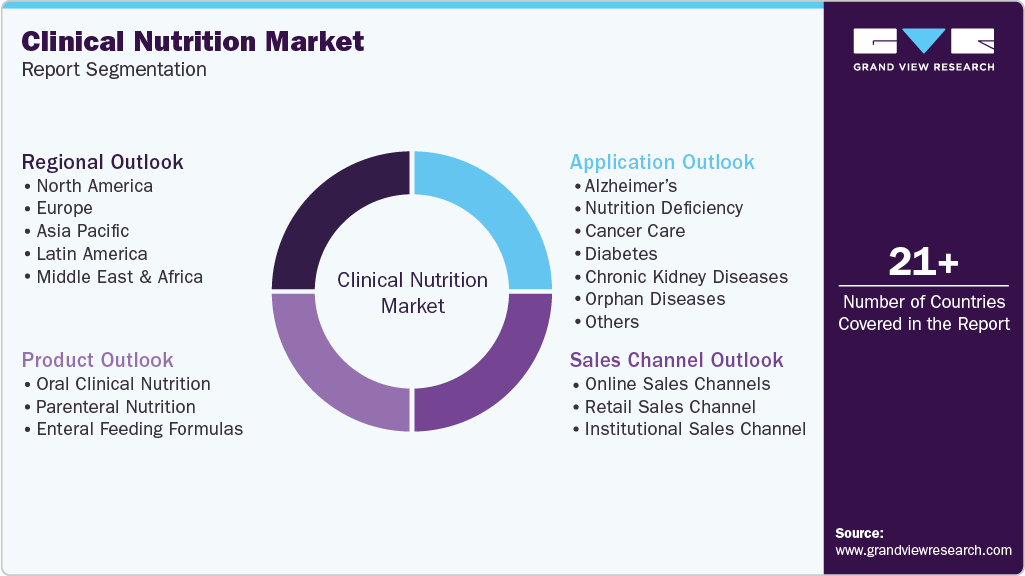
This report forecasts revenue growth at global, regional, and country levels and provides an analysis of the latest industry trends in each of the sub-segments from 2021 to 2033. For this study, Grand View Research has segmented the global clinical nutrition market report based on product, application, sales channel, and region:
-
Product Outlook (Revenue, USD Million, 2021 - 2033)
-
Oral Clinical Nutrition
-
Parenteral Nutrition
-
Carbohydrates
-
Parenteral Lipid Emulsion
-
Single Dose Amino Acid Solutions
-
Trace Elements
-
-
Vitamins & Minerals
-
Enteral Feeding Formulas
-
Standard Formula
-
Disease-specific Formulas
-
-
-
Application Outlook (Revenue, USD Million, 2021 - 2033)
-
Alzheimer’s
-
Nutrition Deficiency
-
Cancer Care
-
Diabetes
-
Chronic Kidney Diseases
-
Orphan Diseases
-
Dysphagia
-
Pain Management
-
Malabsorption/GI Disorder/Diarrhea
-
Others
-
-
Sales Channel Outlook (Revenue, USD Million, 2021 - 2033)
-
Online Sales Channels
-
Retail Sales Channel
-
Institutional Sales Channel
-
-
Regional Outlook (Revenue, USD Million, 2021 - 2033)
-
North America
-
U.S.
-
Canada
-
Mexico
-
-
Europe
-
UK
-
Germany
-
France
-
Italy
-
Spain
-
Denmark
-
Sweden
-
Norway
-
-
Asia Pacific
-
China
-
Japan
-
India
-
South Korea
-
Australia
-
Thailand
-
-
Latin America
-
Brazil
-
Argentina
-
-
Middle East and Africa (MEA)
-
South Africa
-
Saudi Arabia
-
UAE
-
Kuwait
-
-
Frequently Asked Questions About This Report
b. Key factors driving the clinical nutrition market includes rising prevalence of malnutrition, increasing demand for post-cancer care, and a consumer shift toward plant-based options, along with the launch of such solutions by notable players such as Nutricia and Nestlé
b. The global clinical nutrition market size was estimated at USD 34.04 billion in 2025 and is expected to reach USD 35.92 billion in 2026.
b. The global clinical nutrition market is expected to grow at a compound annual growth rate of 5.27% from 2026 to 2033 to USD 51.47 billion by 2033
b. North America dominated the global clinical nutrition market and accounted for 34.82% share in 2025. This growth can be attributed to the increasing geriatric population, which is more susceptible to chronic diseases, such as gastrointestinal disorders, metabolic disorders, and neurological disorders. Moreover, the growing number of premature infants is a major factor driving market growth.
b. Some of the key player operating in the market includes Abbott, Pfizer Inc., Nestlé, Otsuka Holdings Co., Ltd., Mead Johnson & Company, LLC (Reckitt Benckiser Group PLC), Danone S.A., Megalabs, Fresenius Kabi AG, Meiji Holdings Co., Ltd., Baxter, Grifols, S.A., Daisyfsmp (Jiangsu Daisy FSMP Co., Ltd.), Ausnutria Dairy Corporation Ltd., Maifu Nutrition Technology


Share this report with your colleague or friend.
Need a Tailored Report?
Customize this report to your needs — add regions, segments, or data points, with 20% free customization.


ISO 9001:2015 & 27001:2022 Certified
We are GDPR and CCPA compliant! Your transaction & personal information is safe and secure. For more details, please read our privacy policy.
Trusted market insights - try a free sample
See how our reports are structured and why industry leaders rely on Grand View Research. Get a free sample or ask us to tailor this report to your needs.