- Home
- »
- Pharmaceuticals
- »
-
Medical Foods Market Size & Share, Industry Report, 2033GVR Report cover
![Medical Foods Market Size, Share & Trends Report]()
Medical Foods Market (2026 - 2033) Size, Share & Trends Analysis Report By Route of Administration (Oral, Enteral), By Product (Powder, Pills, Liquid), By Application, By Sales Channel, By Module, By Region, And Segment Forecasts
- Report ID: GVR-1-68038-419-2
- Number of Report Pages: 150
- Format: PDF
- Historical Range: 2021 - 2025
- Forecast Period: 2026 - 2030
- Industry: Healthcare
- Report Summary
- Table of Contents
- Segmentation
- Methodology
- Download FREE Sample
-
 Download Sample Report
Medical Foods Market Summary
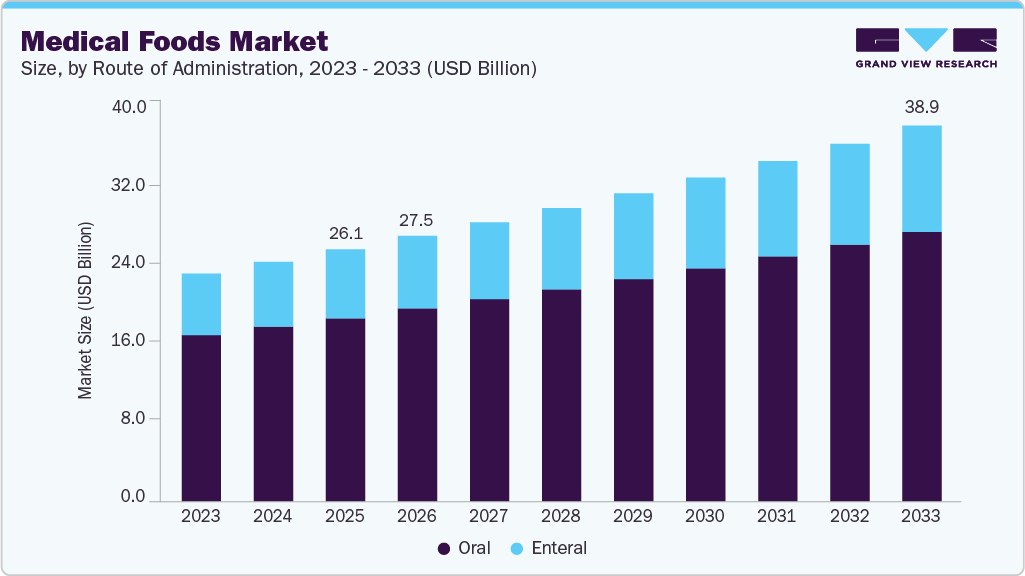
The global medical foods market size was estimated at USD 26.1 billion in 2025 and is projected to reach USD 38.9 billion by 2033, growing at a CAGR of 6.0% from 2026 to 2033. The market growth is driven by the rising prevalence of chronic diseases like Alzheimer's, ADHD, osteoporosis, osteoarthritis, and central nervous system disorders.
Key Market Trends & Insights
- North America dominated the medical foods market with the largest revenue share of 32.5% in 2025.
- The medical foods market in the U.S. accounted for the largest revenue share in North America in 2025.
- Based on route of administration, the oral segment led the market with the largest revenue share in 2025.
- Based on product, the powder segment led the market with the largest revenue share of 35.6% in 2025.
- Based on application, the cancer segment led the market with the largest revenue share of 12.2% in 2025.
- Based on module, the hypoallergenic module segment is expected to grow at a significant CAGR over the forecast period.
- Based on sales channel, the DTC segment led the market with the largest revenue share in 2025.
Market Size & Forecast
- 2025 Market Size: USD 26.1 Billion
- 2033 Projected Market Size: USD 38.9 Billion
- CAGR (2026-2033): 6.0%
- North America: Largest market in 2025
- Asia Pacific: Fastest-growing market
Market Dynamics and DriversThe growing consumer shift toward personalized and plant-based nutrition solutions is increasingly influencing product development in the market. Patients and caregivers are seeking food for special medical purposes that support the dietary management of specific medical conditions, such as malnutrition, metabolic disorders, and digestive intolerance, and align with individual dietary preferences, including vegan and vegetarian formulations. As a result, manufacturers are introducing plant-based, nutritionally complete medical foods designed to improve tolerance, adherence to nutrition therapy, and patient-centric disease management.
Some of the plant-based medical nutrition products offered by key market players include:
Company
Product
Description / Relevance to Driver
Danone (Nutricia)
Fortimel Plant-Based Energy
Food for Special Medical Purposes (FSMP) is developed for the dietary management of disease-related malnutrition. The product is suitable for vegan diets, reflecting rising demand for plant-based, clinically validated nutrition solutions.
Nestle Health Science
Compleat Standard 1.4
Plant-based, vegan, nutritionally complete tube-feeding formula containing both soluble and insoluble fibers to support digestive health. Suitable for oral consumption or tube feeding, addressing personalization and plant-based preferences.
Fresenius Kabi AG
Fresubin Plant-Based Drink
Plant-based oral nutritional supplement designed for patients seeking vegan clinical nutrition options, supporting tolerance, dietary alignment, and adherence to nutrition therapy.
Daisy FSMP (Jiangsu Daisy FSMP Co., Ltd.)
Dongze All-Vegetarian Special Medical Purpose Complete Nutritional Formula Food
A plant-based, nutritionally complete FSMP developed for patients requiring full nutrition support while adhering to vegetarian dietary preferences or restrictions.
Furthermore, the rise in consuming disease-specific formulas is set to boost the market, driven by the increasing incidence of targeted diseases and advancements in drug development. Clinical nutrition is increasingly used for personalized treatment, especially in diseases like cancer and cystic fibrosis, where special nutrition is vital to prevent drug interactions. For example, in cystic fibrosis cases, unique digestive enzyme capsules are administered, varying among individuals. Notable companies like Nestle Health Science specialize in personalized clinical nutrition products, offering solutions like Deplin for depression and Metanx for diabetes.
The adoption of nutrition support platforms is emerging as a key opportunity, driven by the need for personalized, evidence-based dietary management. These platforms integrate digital tools, telehealth, and clinical guidance to help healthcare professionals design, monitor, and optimize nutrition plans for individual patients. By combining patient data, clinical insights, and product information, nutrition support platforms enable tailored interventions that improve adherence, therapeutic outcomes, and continuity of care across hospital, long-term care, and home-based settings.
Market Concentration & Characteristics
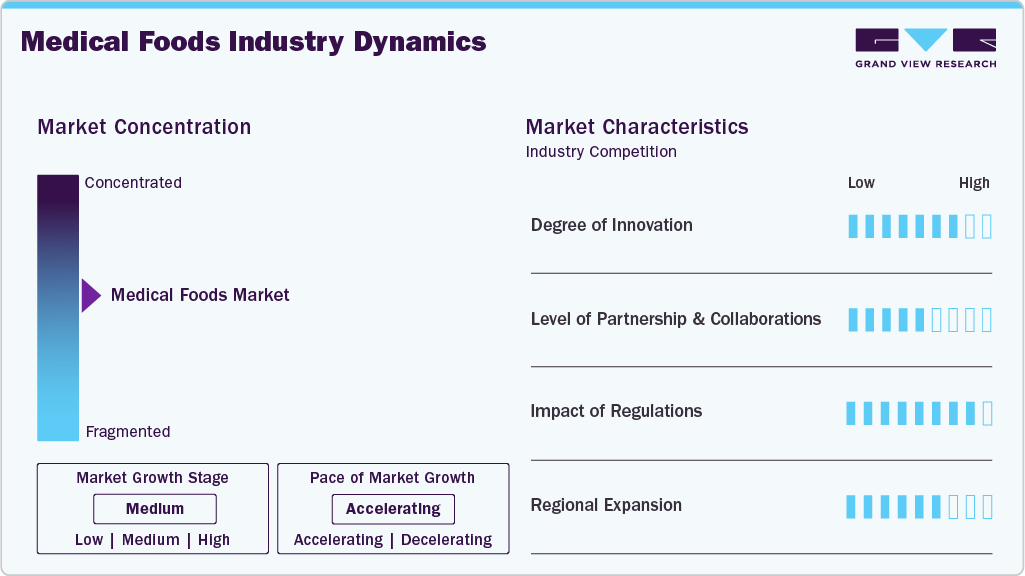
The chart below illustrates the relationship between market concentration, industry characteristics, and industry participants. The x-axis represents the level of industry concentration, ranging from low to high. The y-axis represents various industry characteristics, including industry competition, impact of regulations, level of partnerships & collaborations activities, degree of innovation, and regional expansion. For instance, the industry is consolidated, steadily moving towards fragmentation, with many product & service providers entering the market. The degree of innovation, the level of partnerships & collaboration activities, and the impact of regulations on the industry are high. However, the regional expansion observes moderate growth.
The medical foods industry is witnessing a high degree of innovation, with companies increasingly focusing on patient-centric formulations and disease-specific nutritional solutions. For instance, in November 2025, Abbott (Abbott Nutrition) launched an upgraded formulation of Ensure Diabetes Care, featuring a triple care system with higher myo-inositol, low-glycemic carbohydrates, protein, and fiber to support blood sugar control, metabolic health, cholesterol management, and weight management in people with diabetes.
The level of partnerships and collaborations in the medical foods industry is increasing as companies collaborate with healthcare, digital health, and research organizations to expand access to nutrition-based healthcare solutions and improve patient outcomes. For instance, in October 2025, Standard Foods Group announced a strategic partnership and investment in Hello Health Group to integrate nutrition expertise with digital health platforms and expand preventive wellness and personalized health solutions across Southeast Asia.
The impact of regulations on the market is high, as medical foods must comply with specific regulatory frameworks governing foods for special medical purposes and clinical nutrition products. Regulatory authorities such as the U.S. Food and Drug Administration and the European Food Safety Authority set guidelines for formulation, labeling, and clinical use to ensure product safety and efficacy, which can influence product development and market entry timelines.
The medical foods industry is witnessing moderate regional expansion, driven by the rising prevalence of chronic diseases and increasing demand for disease-specific nutritional management. Companies are expanding their presence in emerging economies, introducing new product portfolios, and partnering with regional distributors to improve access to medical nutrition products. This expansion supports wider adoption of medical foods and improves patient access to specialized dietary therapies.
Route of Administration Insights
Oral segment led the market and accounted for a large share in 2025, attributed to the increased preference for orally administered products, their commercial viability, and supportive healthcare initiatives promoting nutritional therapy. In addition, the growing use of oral medical foods in the form of pre-thickened liquids, powders, and pills is expected to drive segment growth further. For instance, in January 2023, Nutricia launched Fortimel Plant-Based Energy, a plant-based oral nutritional supplement designed to address the nutritional needs of individuals experiencing malnutrition or those at risk due to illness. The product expands the Fortimel portfolio under Danone (Nutricia), leveraging the company’s expertise in plant-based nutrition and clinically developed medical nutrition solutions.
The enteral route of administration segment is expected to witness the fastest growth over the forecast years. The growing prevalence of cardiovascular and chronic diseases resulting from several metabolic disorders leads to difficulty in oral food consumption and increases the preference for medical food feeding through enteral mode. Moreover, the growing focus of manufacturers to develop technologically advanced enteral feeding devices is positively impacting the segment growth.
Product Insights
Powder accounted for the largest market revenue share of 35.6% in 2025. Medical foods are most widely available in powder form, which can be administered through the oral route or enteral route by mixing milk or water, as advised by the physician. Medical foods in the powdered formula are suitable for patients of all age groups, especially in the oral route. Owing to a high preference for powdered formulations due to ease of consumption, manufacturers are developing product categories in line with consumer preferences. For instance, in February 2023, Danone (Nutricia) launched Souvenaid, a powder version of a medical nutrition drink to support memory function in the early stages of Alzheimer's disease.
Liquid is anticipated to grow at the fastest rate during the forecast period owing to the rising adoption of liquid formulations in the pediatric and geriatric population, where the intake of solid formulations is limited or impossible, and in cases of clinically diagnosed dysphagia or when oral physiology is limited. In addition, the ease of administration of liquid-based medical foods and the commercial viability of these products will drive the segment. Increasing functional gastrointestinal disorders and the recommendation of doctors to intake liquid formulated medical food for those who suffer from these illnesses before or after surgeries support the segment growth. Moreover, the increasing benefits of taking liquid formulated food to maintain sufficient hydration and electrolyte balance favor the segment growth.
Application Insights
The cancer application segment dominated the market, accounting for the largest share of 12.2% in 2025. The high burden of cancer and the associated risk of malnutrition among patients are key factors driving demand for medical foods in oncology care. According to the American Cancer Society, approximately 2,041,910 new cancer cases and 618,120 cancer-related deaths are projected to occur in the United States in 2025. Cancer often weakens the immune system and leads to malnutrition in 40% to 80% of patients, increasing the need for specialized nutritional support. As a result, the demand for medical foods to support nutritional management in cancer patients is expected to increase during the forecast period.
Cachexia is expected to grow at the fastest CAGR during the forecast period. It is a complex metabolic syndrome characterized by severe weight loss and muscle wasting, often accompanied by chronic illnesses such as cancer, HIV/AIDS, and certain metabolic disorders. Medical foods made to address the nutritional needs of individuals suffering from cachexia have become increasingly crucial in mitigating the adverse effects of this condition. The rising prevalence of chronic diseases and the growing geriatric population, where cachexia frequently presents as a challenging comorbidity, is driving the market growth.
Module Insights
The protein modules segment held the largest market share of 12.8% in 2025. Protein modules are used in severe infections, trauma, burns, malnutrition, post-surgery recovery, and critically ill patients. The increasing prevalence of chronic diseases, such as cancer, chronic kidney disease, and malnutrition, which require specialized nutritional interventions, likely drives the segment growth. Patients undergoing treatments like chemotherapy or dialysis often suffer from muscle wasting and protein deficiencies, boosting demand for protein-enriched medical foods. In addition, the aging population, particularly in developed countries, further contributes to the need for protein modules to combat age-related muscle loss (sarcopenia).
Furthermore, the hypoallergenic module segment is expected to grow significantly over the forecast period. The growth is driven by the increasing prevalence of food allergies and intolerances, especially among infants and individuals with chronic health conditions. Hypoallergenic medical foods cater to patients with specific dietary needs, such as those unable to tolerate proteins found in common foods like cow's milk or soy. These products are formulated to minimize allergenic responses and are crucial for managing conditions like severe food allergies, eosinophilic esophagitis, and gastrointestinal disorders. The rising awareness of food-related health issues and advancements in hypoallergenic formulations, such as amino acid-based or extensively hydrolyzed proteins, have significantly boosted demand.
Sales Channel Insights
The DTC sales channel held the largest market share in 2025. DTC sales in the medical foods sector allow companies to bypass traditional retail channels and establish a direct relationship with end users. This model has gained traction due to its ability to provide personalized customer experiences and foster brand loyalty. By leveraging online platforms, companies can offer detailed product information, educational resources, and tailored recommendations based on individual health conditions.
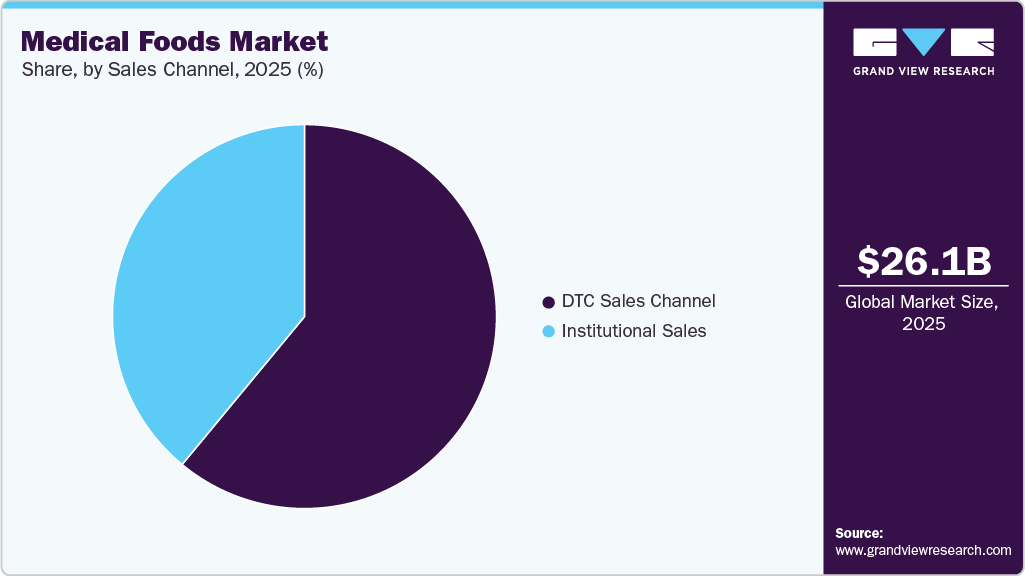
Institutional sales are expected to expand at a significant rate over the forecast period. Institutions that purchase medical foods include hospitals, long-term care centers, hospices, clinics, and disability facilities. The decision to purchase medical foods is influenced by doctors. Since the consumption of medical foods is recommended under medical supervision, the revenue generated through institutional sales is the highest. Furthermore, the growing number of private and public healthcare institutions and the increasing chronic disease patient population across the globe are propelling the segment. According to the data published by the American Hospital Association in 2024, 6,120 hospitals in the U.S. provided healthcare services to 33,679,935 patients. In addition, the collaboration between manufacturers and healthcare institutions has led to improved product visibility and accessibility within clinical settings.
Regional Insights
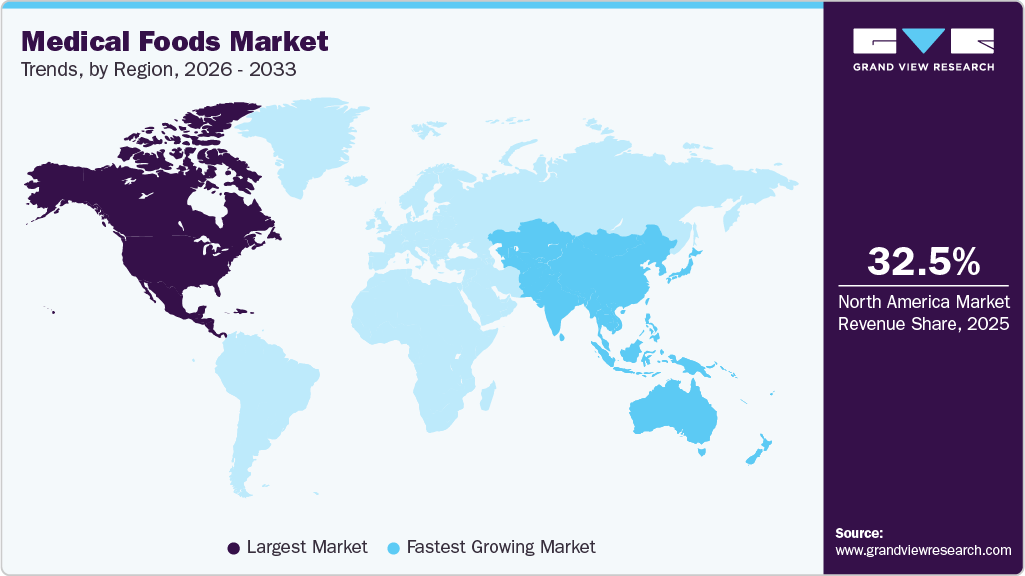
North America medical foods market dominated the market and accounted for 32.5% share in 2025. Growth in the market can be attributed to the increasing geriatric population, which is more susceptible to chronic diseases, such as gastrointestinal disorders, metabolic disorders, and neurological disorders. For instance, according to the United Health Foundation, in 2022, about 17.3% of the population in the U.S. was aged 65 and above. Furthermore, around 56 million elderly people are expected to depend on medical foods to fulfill their nutritional needs in the U.S. by 2030.
U.S. Medical Foods Market Trends
The medical foods market in the U.S. accounted for the largest market share in 2025. The increasing prevalence of head & neck cancer across the U.S. is driving the adoption of medical foods. For instance, the American Cancer Society estimated that in 2026, around 60, 480 new cases of oral cavity or oropharyngeal cancer and about 13,150 deaths from oral cavity or oropharyngeal cancer will be registered in the U.S. Moreover, the growing incidence of various chronic diseases, such as neurological diseases, is anticipated to improve the adoption of medical foods during the forecast period. According to the Alzheimer’s Association’s 2025 Report in the U.S., around 7.2 million individuals age 65 and older lived with Alzheimer’s disease in 2025. Moreover, this number is expected to reach 13 million by 2050
Europe Medical Foods Market Trends
The medical foods market in Europe is expected to grow significantly over the forecast period. Europe has a large elderly population, which is at a high risk of various diseases, such as cardiovascular, respiratory, and other chronic diseases. For instance, as per a 2022 publication by the European Parliament, Chronic Kidney Disease (CKD) imposes a substantial burden on society and individuals. According to the article, CKD affects around 100 million people, with projections indicating that it is expected to become the fifth leading cause of global mortality by 2040 in the region.
The UK medical foods market is driven by increasing awareness of malnutrition and the growing focus on early nutritional intervention in healthcare settings. National initiatives and awareness campaigns encourage improved screening and nutritional management practices across hospitals and community care. For instance, in November 2025, the British Association for Parenteral and Enteral Nutrition launched UK Malnutrition Awareness Week 2025 to raise awareness about malnutrition and dehydration across the country and encourage healthcare professionals to strengthen early screening, identification, and nutritional care practices, which is expected to support the adoption of medical nutrition products.
The medical foods market in Germany held a significant share in 2025. The increasing prevalence of cancer and the growing need for radiotherapy procedures are some of the key factors boosting the demand for medical foods in Germany. According to ESTRO-HERO (Health Economics in Radiation Oncology), the proportion of new cancer cases requiring radiotherapy is expected to increase by 15.2% from 2012 to 2025, while it is expected to increase by 16% in other European countries. In addition, the rising geriatric population in the country is projected to drive the market during the forecast period.
Asia Pacific Medical Foods Market Trends
The medical foods market in the Asia Pacific is anticipated to be the fastest-growing region over the forecast period, owing to the increasing rate of cancer and diabetic patients, along with several government initiatives in the healthcare segment. In addition, the local presence of key players and untapped opportunities provided by the region are among the major factors propelling regional market growth.
China medical foods market is dominated by the largest market share in the Asia Pacific region in 2025. A UN report indicates that the elderly population in China is projected to double from 10% in 2017 to 20% by 2037. This growing geriatric demographic, along with higher per capita healthcare spending and the growing prevalence of esophageal cancer, is anticipated to be a key market driver.
The medical foods market in Indiais expected to grow significantly over the forecast period. An increase in malnutrition and diabetes is expected to drive the market over the forecast period. According to the India Diabetes (INDIAB) study published by the Indian Council of Medical Research (ICMR) in 2023, around 1.2 million people have diabetes. In addition, according to the Poshan Tracker, around 671,922 children in the country suffer from malnutrition.
Latin America Medical Foods Market Trends
The medical foods market in Latin America is expected to grow significantly due to constant efforts by the government to improve healthcare access and treatment. The increasing prevalence of chronic diseases and improving reimbursement scenarios are key factors driving market growth.
Middle East and Africa Medical Foods Market Trends
The medical foods market in the MEA is attributed to high economic development and the growing geriatric population. According to a joint report published by the United Nations Population Fund (UNFPA), the Center for Studies on Aging (CSA), and the Economic and Social Commission for Western Asia (ESCWA), the geriatric population in Arab countries is projected to grow from 4.1% in 2010 to 12% in 2050.
Key Medical Foods Company Insights
Key players in the market are adopting innovative strategies, focusing on specialized formulations for chronic diseases, plant-based and sustainable nutrition, and patient-tailored solutions to improve outcomes and adherence
Notable Product-Level Data for Key Companies at the Application Level:
Companies
Top Notable Products/Brands
Available Product Form
Application
Market Presence
Danone (Nutricia)
Aptamil
Powder/Liquid
Constipation Relief
High
Nutrison
Liquid/Semi-elemental
Malabsorption
High to Medium
Alzheimer's
Cancer
Cerebral Plasy
Diabetes
Dysphagia
Gastrointestinal Disease
Wound Care
Parkinson's Disease
Multiple Food Allergy
Eosinophilic Esophagitis
Short Bowel Syndrome
Malabsorption
Abbott (Abbott Nutrition)
Ensure
Powder
Diabetes
High
Glucerna
Shakes/Bars/Powder
Diabetes
High
Similac
Powder/Liquid
Nutritional Deficiency
High to Medium
Key Medical Foods Companies:
The following key companies have been profiled for this study on the medical foods market.
- Danone (Nutricia)
- Nestle Health Science
- Abbott (Abbott Nutrition)
- Fresenius Kabi AG
- Mead Johnson & Company, LLC
- Hexagon Nutrition Ltd.
- Biovencer Healthcare Pvt Ltd
- Meiji Holdings. Co., Ltd.
- Daisyfsmp (JIANGSU DAISY FSMP CO., LTD)
- Ausnutria Dairy Corporation Ltd.
- Maifu Nutrition Technology
- Megalabs
Recent Developments
-
In June 2024, Megalabs acquired Victus, Inc. in the U.S. to support its North American expansion, leveraging Victus’s nutrition-focused product portfolio as a strategic entry into the wellness market. Victus is now Megalabs’ first U.S. subsidiary and a base for scaling operations in North America.
-
In September 2023, Ausnutria launched its Global R&D Center in Changsha in collaboration with leading research institutions, focusing on specialized nutrition, functional ingredients, and innovative formulations. The center will support product development, quality testing, talent training, and technology commercialization, strengthening the specialty foods value chain.
-
In November 2023, Danone (Nutricia) launched its first medical nutrition product, Fortimel, for adults in China, categorized under foods for special medical purposes. This launch is a crucial component of Danone (Nutricia)'s strategy in China, aimed at utilizing its scientific expertise across all life stages and promoting the growth of the adult medical nutrition segment.
-
In September 2023, Danone (Nutricia) announced a €50 million (USD 53.78 million) line expansion of its production facility at Opole, Poland, to meet the increasing demand for medical nutrition worldwide. This move aims to enhance its position in the adult medical nutrition market, with the growing rate of chronic diseases and an aging population. The expansion is anticipated to enable Danone (Nutricia) to serve patients across the globe, as many people are expected to require medical nutrition at some point in their lives due to diseases such as cancer and stroke, which can result in malnutrition.
-
In March 2023, Danone (Nutricia) acquired ProMedica, a Poland-based company that specializes in providing care services for patients in their homes. This acquisition is part of Danone (Nutricia)'s lucrative specialized nutrition market expansion strategy to strengthen its presence in Poland.
-
In February 2023, Nestle Health Science and EraCal Therapeutics entered into a research collaboration to identify novel nutraceuticals relevant to controlling food intake.
Medical Foods Market Report Scope
Report Attribute
Details
Market size value in 2026
USD 27.5 billion
Revenue forecast in 2033
USD 38.9 billion
Growth rate
CAGR of 6.0% from 2026 to 2033
Actual data
2021 - 2025
Forecast period
2026 - 2033
Quantitative units
Revenue in USD million/billion and CAGR from 2026 to 2033
Report coverage
Revenue forecast, company ranking, competitive landscape, growth factors, and trends
Segments covered
Route of administration, product, application, module, sales channel, region
Regional scope
North America; Europe; Asia Pacific; Latin America; MEA
Country scope
U.S.; Canada; Mexico; Germany; UK; Germany; Spain; France; Italy; Denmark; Sweden; Norway; Poland; Netherlands; Portugal; Slovakia; Finland; Czech Republic; Hungary; Belgium; Japan; China; Australia; India; South Korea; Thailand; Vietnam; Brazil; Argentina; Saudi Arabia; UAE; Kuwait; South Africa
Key companies profiled
Danone (Nutricia); Nestle Health Science; Abbott (Abbott Nutrition); Fresenius Kabi AG; Mead Johnson & Company, LLC; Hexagon Nutrition Ltd.; Biovencer Healthcare Pvt Ltd.; Meiji Holdings Co., Ltd.; Daisyfsmp (JIANGSU DAISY FSMP CO., LTD); Ausnutria Dairy Corporation Ltd.; Maifu Nutrition Technology; MegalabsCustomization scope
Free report customization (equivalent up to 8 analysts working days) with purchase. Addition or alteration to country, regional & segment scope.
Pricing and purchase options
Avail customized purchase options to meet your exact research needs. Explore purchase options
Global Medical Foods Market Report Segmentation
This report forecasts revenue growth at global, regional, and country levels and provides an analysis of the latest industry trends in each of the sub-segments from 2021 to 2033. For this study, Grand View Research has segmented the global medical foods market report based on route of administration, product, application, module, sales channel, and region:
-
Route of Administration Outlook (Revenue, USD Million, 2021 - 2033)
-
Oral
-
Enteral
-
-
Product Outlook (Revenue, USD Million, 2021 - 2033)
-
Powder
-
Pills
-
Liquid
-
Other
-
-
Application Outlook (Revenue, USD Million, 2021 - 2033)
-
Chronic Kidney Disease
-
Minimal Hepatic Encephalopathy
-
Chemotherapy-Induced Diarrhoea
-
Pathogen-Related Infections
-
Diabetic Neuropathy
-
ADHD
-
Depression
-
Alzheimer's Disease
-
Nutritional Deficiency
-
Orphan Diseases
-
Tyrosinemia
-
Eosinophilic Esophagitis
-
FPIES
-
Phenylketonuria
-
MSUD
-
Homocystinuria
-
Others
-
-
Wound Healing
-
Chronic Diarrhea
-
Constipation Relief
-
Protein Booster
-
Dysphagia
-
Pain Management
-
Parkinson's Disease
-
Epilepsy
-
Other Cancer-related treatments
-
Severe Protein Allergy
-
Cancer
-
Cachexia
-
Other
-
-
Module Outlook (Revenue, USD Million, 2021 - 2033)
-
Amino Acid Module
-
Protein Module
-
Vitamin & Mineral Modules
-
Fatty Acid-based Modules
-
Carbohydrate Modules
-
Fiber Modules
-
Ketogenic Modules
-
Peptide-based Modules
-
Hypoallergenic Modules
-
Others (Electrolyte Module, etc.)
-
-
Sales Channel Outlook (Revenue, USD Million, 2021 - 2033)
-
DTC Sales Channel
-
Online Sales
-
Retail Sales
-
-
Institutional Sales
-
Hospitals
-
Others (Long-term Care Facilities, etc.
-
-
-
Regional Outlook (Revenue, USD Million, 2021 - 2033)
-
North America
-
U.S
-
Canada
-
Mexico
-
-
Europe
-
UK
-
Germany
-
Spain
-
France
-
Italy
-
Denmark
-
Sweden
-
Norway
-
Poland
-
Netherlands
-
Portugal
-
Slovakia
-
Finland
-
Czech Republic
-
Hungary
-
Belgium
-
-
Asia Pacific
-
Japan
-
China
-
Australia
-
India
-
South Korea
-
Thailand
-
Vietnam
-
Latin America
-
Brazil
-
Argentina
-
-
Middle East and Africa (MEA)
-
Saudi Arabia
-
UAE
-
South Africa
-
Kuwait
-
-
Frequently Asked Questions About This Report
b. Some of the key market players include Danone, Nestlé, Abbott, Fresenius Kabi AG, Mead Johnson & Company, LLC, Hexagon Nutrition Ltd., Biovencer Healthcare Pvt Ltd, Meiji Holdings Co., Ltd., Jiangsu Daisy FSMP Co., Ltd., Ausnutria Dairy Corporation Ltd., Maifu Nutrition Technology, Megalabs
b. The global medical foods market size was valued at USD 26.1 billion in 2025 and is expected to reach USD 27.5 billion in 2026.
b. The global medical foods market is anticipated to reach USD 38.9 billion by 2033 and is anticipated to expand at a CAGR of 6.0% from 2026 to 2033.
b. The oral route of administration segment dominated the medical foods market with a share in 2025. This is attributed to the increased preference for orally administered products, commercial viability, and supportive initiatives are key factors driving the demand for orally administered medical foods.
b. North America dominated the global medical foods market with a revenue share of 32.5% in 2025. Growth in the market can be attributed to the increasing geriatric population, which is more susceptible to chronic diseases, such as gastrointestinal disorders, metabolic disorders, and neurological disorders. Moreover, the growing number of premature infants in critical care is a major factor driving market growth.

Share this report with your colleague or friend.
Need a Tailored Report?
Customize this report to your needs — add regions, segments, or data points, with 20% free customization.


ISO 9001:2015 & 27001:2022 Certified
We are GDPR and CCPA compliant! Your transaction & personal information is safe and secure. For more details, please read our privacy policy.
Trusted market insights - try a free sample
See how our reports are structured and why industry leaders rely on Grand View Research. Get a free sample or ask us to tailor this report to your needs.