- Home
- »
- Healthcare IT
- »
-
Healthcare IT Market Size & Share, Industry Report, 2033GVR Report cover
![Healthcare IT Market Size, Share & Trends Report]()
Healthcare IT Market (2026 - 2033) Size, Share & Trends Analysis Report By Application (EHR, CPOE, Electronic Prescribing Systems, Medical Imaging Information Systems, Revenue Cycle Management), By Delivery Mode, By End Use, By Region, And Segment Forecasts
- Report ID: 978-1-68038-071-2
- Number of Report Pages: 190
- Format: PDF
- Historical Range: 2021 - 2025
- Forecast Period: 2026 - 2033
- Industry: Healthcare
- Report Summary
- Table of Contents
- Segmentation
- Methodology
- Download FREE Sample
-
 Download Sample Report
Healthcare IT Market Summary
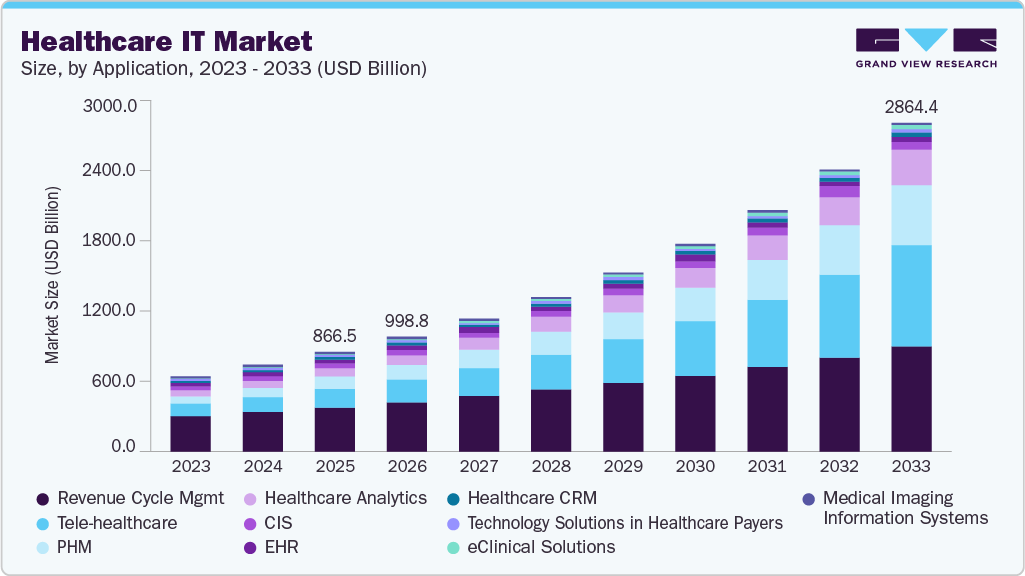
The global healthcare IT market size was estimated at USD 866.48 billion in 2025 and is expected to reach USD 2,864.39 billion by 2033, growing at a CAGR of 16.2% from 2026 to 2033. Increasing usage of smartphones, a growing demand for remote patient monitoring for improved out-of-hospital care, technologically advanced healthcare IT infrastructure, and an increase in the number of initiatives and investments supporting eHealth and digital health are driving overall market growth.
Key Market Trends & Insights
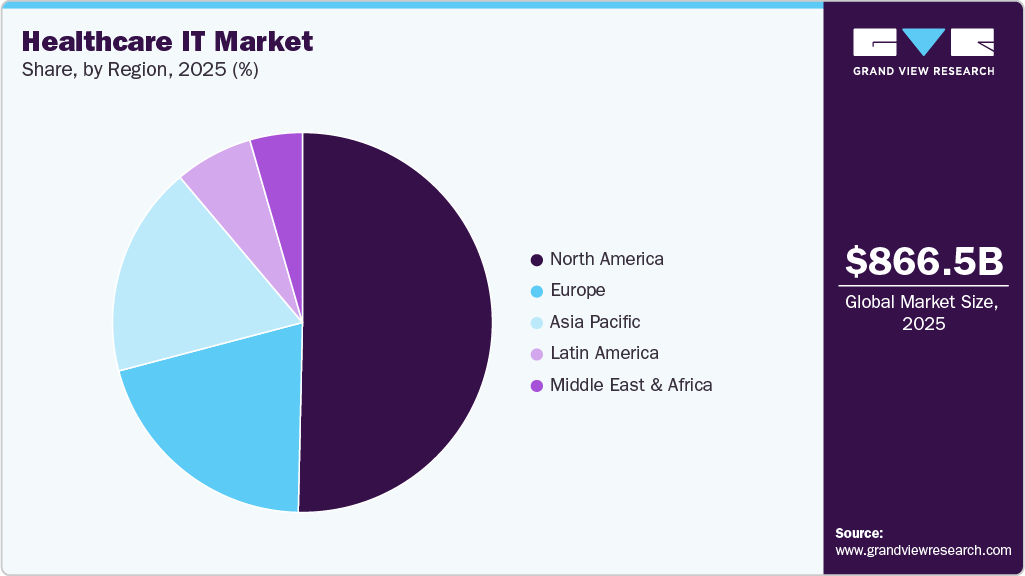
- North America dominated the market for healthcare IT with a share of 50.35% in 2025.
- Latin America is estimated to be the fastest-growing region from 2026 to 2033.
- By application, the revenue cycle management segment held the largest market share of 44.39% in 2025.
- By delivery mode, the solutions segment held a dominant market share in 2025.
- By end use, the healthcare providers segment held a dominant market share in 2025.
Market Size & Forecast
- 2025 Market Size: USD 866.48 Billion
- 2033 Projected Market Size: USD 2,864.39 Billion
- CAGR (2026-2033): 16.2%
- North America: Largest market in 2025
- Latin America: Fastest growing market
Ease of use, cost-effectiveness, and time efficiency are driving the widespread adoption of healthcare IT in hospitals. The expansion of the healthcare IT industry is further supported by continuous innovation by industry players to address growing demands for workflow optimization, interoperability, and data-driven clinical decision-making. For instance, in February 2025, DeepHealth introduced new AI-powered radiology informatics and population screening solutions at ECR 2025, including its cloud-native Diagnostic Suite PACS and SmartMammo AI-driven mammography solution, aimed at streamlining diagnostic workflows and improving early cancer detection rates.The growing penetration of smartphones and the expansion of internet coverage are directly driving the adoption of healthcare IT solutions. Widespread smartphone usage has enhanced chronic disease management through the extensive use of mHealth applications for remote monitoring, medication adherence, and patient engagement. As of 2023, approximately 78% of the global population uses smartphones, according to the ITU (International Telecommunication Union). Furthermore, improving connectivity supports digital health adoption, with data from the World Bank Group indicating that around 71% of the global population had internet access as of 2024. Together, these trends are accelerating the deployment of mobile health platforms, telehealth services, and cloud-based healthcare IT systems worldwide
Surging demand for centralized medical records to help improve care delivery, particularly in developed nations such as the United States, where there has been a noticeable shift towards value-based care, is enabling the adoption of health management systems such as EHR. This contributes greatly to market expansion. For instance, in March 2022, Google Health collaborated with MEDITECH to integrate its search & summarization capabilities into MEDITECH's Expanse EHR platform, enabling clinicians to provide the best care by providing easy, quick access to information from multiple sources.
Integration of AI in Healthcare IT Market
Artificial intelligence(AI) is increasingly shaping the evolution of healthcare IT by improving operational efficiency, clinical decision-making, and patient engagement across care settings. Core segments such as revenue cycle management, tele-healthcare, population health management, healthcare analytics, and electronic health records are witnessing accelerated AI adoption, supported by strategic partnerships, platform launches, and real-world deployments.
Key AI-Driven Healthcare IT Segments and Recent Industry Initiatives
Segment
Impact of AI
Key Benefits
Recent AI Initiatives (2025)
Revenue Cycle Management (RCM)
AI automates medical coding, predicts claim denials, and streamlines appeals and correspondence
Reduced administrative burden, faster reimbursements, improved revenue realization
In July 2025, Omega Healthcare expanded its collaboration with Microsoft to launch 20+ generative and agentic AI solutions via Azure AI Foundry and Omega Digital Platform, automating coding, denial management, appeals, correspondence processing, and call center operations.
Tele-healthcare
AI enables virtual triage, symptom assessment, chatbots, and remote diagnostics
Improved access to care, better maternal and chronic disease outcomes, and reduced geographic barriers
In May 2025, VSee Health launched Project MAMA in rural Philippines, deploying AI-powered telehealth with local-language chatbots, portable ultrasound, EHR integration, and remote OB-GYN consults to reduce maternal mortality.
Population Health Management (PHM)
AI-driven risk stratification, predictive modeling, and continuous health monitoring
Early intervention, reduced readmissions, improved population outcomes
In January 2025, Percipio Health launched an AI-powered PHM platform, raising USD 20 million in Series A funding, leveraging smartphone-based vision and vocal biomarkers for real-time, device-free health monitoring and predictive insights.
Healthcare Analytics
AI supports predictive, prescriptive, and real-time analytics across clinical and operational data
Data-driven decision-making, operational efficiency, improved outcomes
In May 2025, Oracle Health, the Cleveland Clinic, and G42 partnered to develop an AI-powered global healthcare platform using Oracle Cloud and advanced analytics, initially targeting the US and UAE markets.
Electronic Health Records (EHRs)
AI enhances documentation, clinical summaries, data retrieval, and decision support
Improved clinician productivity, reduced documentation burden, and better care coordination
August 2025 Athenahealth introduced new AI features in athenaOne ambulatory EHR, including GenAI-based document labeling, clinical summaries, and an AI assistant for patient history queries.
Market Characteristics & Characteristics
Growth Momentum: Growth momentum is a qualitative concept that describes the current rate or speed of growth at a particular point in time, often reflecting recent trends in growth. It is more focused on assessing the pace of growth in the near term.
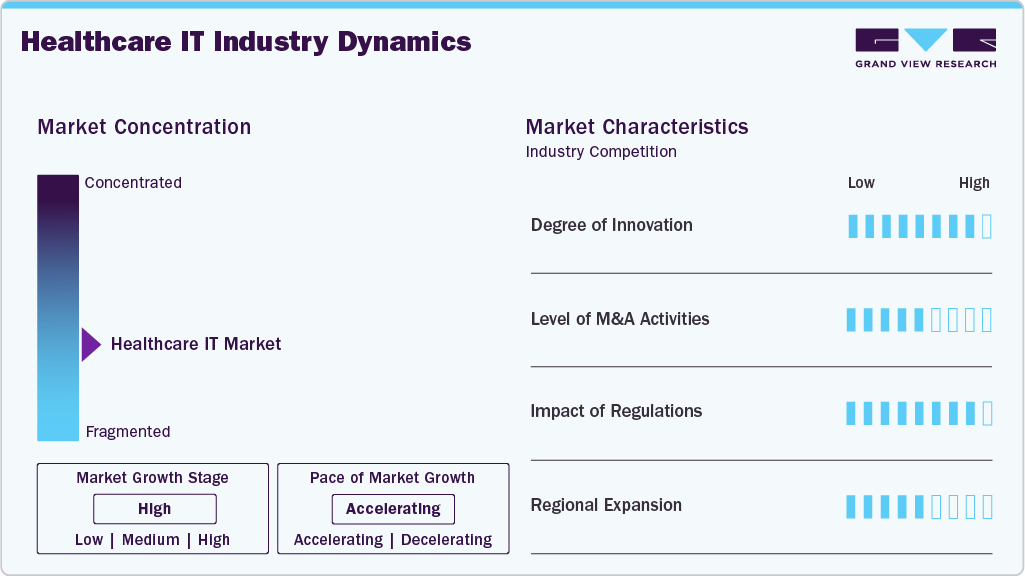
In recent years, the healthcare IT market has witnessed a surge in innovation, marking a transformative shift in healthcare delivery and management. Artificial intelligence, big data analytics, and the widespread adoption of electronic health records (EHRs) have reshaped the sector. These advancements not only streamline administrative processes but also significantly enhance patient care through personalized treatment. For instance, in October 2025, athenahealth launched AI-native enhancements to athenaOne’s practice management and revenue cycle management platform, aimed at reducing administrative workload for healthcare practices by over 50%.
“Curing complexity across the revenue cycle has always been core to athenahealth. Rapid advances in AI, coupled with our decades of experience are enabling us to make another transformative leap in reducing customer workload and improving revenue cycle outcomes for our practices”
“Our AI-native, cloud-based co-sourcing model will yield revenue cycle results that were unimaginable only a year ago - clean claim rates at nearly 99%, time to bill in low single digit days, and assurance that our practices receive every dollar that they should. We can do all this while also wicking away half of the work our practices have historically done.”
-Paul Brient, chief product and operations officer at athenahealth.
Level of M&A activities
Several market players are engaging in M&A activities to enhance their capabilities and expand their geographic reach. In May 2025, Clario completed the acquisition of WCG’s electronic clinical outcome assessment (eCOA) business, significantly enhancing its capabilities in neuroscience clinical trials. The acquisition expands Clario’s offerings in study design, clinical outcomes assessments, centralized image analysis, and regulatory guidance, reinforcing its leadership in delivering high-quality, reliable data across therapeutic areas without disrupting ongoing trials or customer relationships.
“Along with our recent acquisition of neurology imaging analysis experts, NeuroRx, we are positioned to be the true leader in delivering endpoint data solutions to neuroscience clinical trials. Our clients now have access to the most reliable, high-quality data across multiple modalities and all major neuroscience endpoints. This will have wide-ranging benefits for our customers and to patients in this area of significant unmet medical need.”
-Chris Fikry, M.D., chief executive officer, Clario
Impact Of Regulations
Government regulations are favoring the growth of digital health. It is regulated by the FDA’s Center for Devices and Radiological Health (CDRH) in the US. In 2017, the U.S. FDA launched its Digital Health Innovation Action Plan that provides timelines and details regarding the implementation of the 21st Century Cures Act. Federal laws applicable to mobile app developers are the Health Insurance Portability and Accountability Act (HIPAA) and the FTC’s Health Breach Notification Rule. To promote the adoption of healthcare IT, the Health Information Technology for Economic and Clinical Health Act was passed in 2009. The Meaningful Use (MU) directives for the use of certified EHRs have led to the complete adoption of EHRs in healthcare.
In February 2019, the government introduced the Executive Order on Maintaining American Leadership in Artificial Intelligence to reduce barriers to the use of AI technology, enhance access to traceable, high-quality federal data, and maintain privacy, data confidentiality, and safety & security in accordance with applicable laws & policies.
Regional Expansion
The level of geographic expansion in the healthcare IT industry is high. Several market players are engaged in geographical expansion to enhance capabilities and establish a direct presence in high-demand countries. For instance, in June 2021, Greenway Health, LLC expanded its geographical presence by opening its new office in Bengaluru, India. The company aims to achieve rapid product and software delivery, revenue growth, and client success through this expansion. However, with the increasing adoption of digital healthcare solutions and the growing need for efficient, the market is expected to witness significant growth in the coming years.
Case Study: Optimizing Healthcare Operations Through Advanced EHR Analytics
Background:
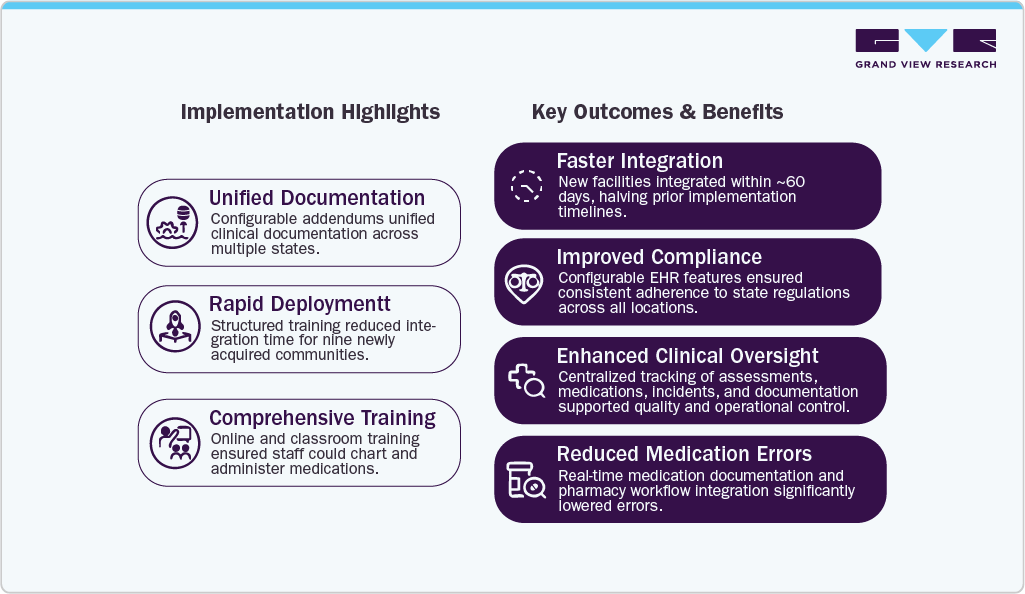
Senior Solutions Management Group (SSMGRP) is a multi-state senior care provider operating 40 communities offering assisted living, memory care, and personal care services. With growth through acquisitions, the organization faced operational inefficiencies and inconsistent clinical systems across facilities.
Challenge:
SSMGRP struggled to integrate clinical and medication administration processes across newly acquired locations, due to disparate systems and manual workflows. These challenges hindered compliance with varying state regulations and made maintaining visibility and consistency of clinical data difficult.
Solution:
The organization partnered with a healthcare IT provider to deploy a standardized Electronic Health Record (EHR) and electronic Medication Administration Record (eMAR) platform. The implementation included customized configuration, a train-the-trainer model, and hands-on support to ensure rapid adoption.
Application Insights
The revenue cycle management segment led the healthcare IT market, accounting for the largest share of 44.39% in 2025. This growth can be attributed to increasing demand for workflow optimization with the adoption of synchronized management software systems. The healthcare industry is constantly evolving with regular technological advancements, and as a result, many healthcare payers and providers are rapidly adopting these advancements. For instance, in November 2023, the Healthcare Financial Management Association (HFMA) partnered with FinThrive, Inc. to launch a five-stage RCM technology adoption model (RCMTAM). This model helps health systems assess current RCM technology maturity and build best-practice plans using industry benchmarks.
The increasing health consciousness, rising demand for cost-effective care, and growing geriatric population are other key factors contributing to the tele-healthcare segment’s growth. For instance, Independa, a TV-based platform specializing in remote engagement, care, and education, conducted a survey in November 2022 to examine smart TV users' behavior & attitude toward telehealth. Findings released in March 2023 revealed that over 90% of Americans had utilized telehealth services in the past year, with a satisfaction rate of 90%. These services included doctor's appointments, tele-dentistry, and vision appointments. The survey also highlighted the significance of increased smartphone penetration, with 71% of users accessing telehealth services on their smartphones. These findings indicate growing awareness and a positive reception of telehealth, which is expected to drive market growth as adoption continues to rise during the forecast period.
The electronic prescribing system segment is anticipated to experience one of the fastest CAGRs of 25.9% over the forecast period, driven by strong end-user acceptance and clear efficiency benefits. According to a study published by Springer Nature in August 2025, 78.57% of participants reported that e-prescriptions save time and reduce errors, while 73.63% highlighted improved medication alerts, and 48.35% acknowledged potential reductions in healthcare costs. In addition, over 60% recognized the value of e-prescriptions in enabling data-driven research, reinforcing their growing adoption across healthcare settings.
The medical imaging information systems segment is sub-segmented into monitoring analysis software, radiology information systems, and picture archiving and communication systems (PACS). Factors such as an increasing need to streamline healthcare operations, rising awareness of these systems for tracking billing information and radiology imaging orders, and a growing prevalence of chronic diseases globally are significantly contributing to the overall growth of the medical imaging information systems segment.
Delivery Mode Insights
The solution segment held the largest share of the healthcare IT industry in 2025. The large share is attributed to the widespread adoption of integrated healthcare IT software such as EHRs, healthcare analytics platforms, revenue cycle management systems, telehealth solutions, and hospital information systems, along with growing demand for implementation, customization, maintenance, and cloud-based managed services to support digital transformation across healthcare providers.
The solution segment is expected to grow at the fastest CGAR during the forecast period, driven by increasing demand for intelligent, interoperable healthcare IT platforms that enable real-time data access, automation, and decision support across care and operational workflows. The growth is further supported by the integration of AI-enabled solutions, such as Suvoda’s launch of Sofia in March 2025, an AI assistant designed to simplify data access, analysis, and visualization through natural language queries, highlighting how advanced software solutions are enhancing efficiency, usability, and compliance across healthcare IT ecosystems.
End Use Insights
The healthcare providers segment held a large share of the healthcare IT market in 2025. The growth is attributed to rising patient volumes, the increasing burden of chronic diseases, the widespread adoption of electronic health records and clinical decision support systems, the growing use of telehealth and remote patient monitoring across care settings, and sustained investments by providers to enhance care coordination, operational efficiency, and patient outcomes.
However, life sciences industry segment is anticipated to grow at the fastest CAGR over the forecast period, owing to increasing adoption of advanced healthcare IT solutions for clinical trial management, real-world evidence generation, and regulatory data management, rising focus on data-driven drug development, growing use of AI- and analytics-enabled platforms to optimize research timelines, and increasing investments by pharmaceutical and biotechnology companies to improve operational efficiency and compliance across the product lifecycle.
Regional Insights
North America dominated the healthcare IT market, accounting for a revenue share of 50.35% in 2025. The region's growth is fueled by extensive adoption of healthcare IT solutions and services, especially in the U.S., as providers strive to enhance patient care while reducing costs. Adoption of healthcare IT solutions varies among providers for various reasons. A case in point is the high adoption of Electronic Health Records (EHR) in Oregon, where healthcare providers demonstrate varying adoption rates influenced by distinct digital divisions.
U.S. Healthcare IT Market Trends
The growth of the healthcare IT industry in the U.S. is strongly driven by the rapid, widespread adoption of electronic health records (EHRs), supported by federal incentive programs, regulatory mandates, and the transition toward value-based, data-driven care delivery models. According to Health IT reports, by 2021, nearly 9 out of 10 U.S.-based physicians had adopted EHR systems. This high level of adoption has accelerated demand for advanced healthcare IT solutions by enabling interoperability, improving clinical decision-making, enhancing care coordination, reducing administrative burden, and supporting population health and analytics initiatives, thereby significantly contributing to the market expansion.
Europe Healthcare IT Market Trends
The Europe healthcare IT industry is growing adoption of tele radiology, increasing demand for cross-border data sharing, and strong healthcare infrastructure across the region. For instance, according to an article published by the World Health Organization (WHO) in October 2024, around 84% of countries in Europe report the use of tele radiology, alongside rising uptake of tele psychiatry (51%) and telemedicine or remote monitoring services (77%). This widespread adoption reflects strong digital health readiness, supported by favorable regulatory frameworks, national eHealth strategies, and continued investments in interoperable healthcare IT systems across Europe.
The healthcare IT market in the UK is expanding rapidly, driven by NHS-led digital transformation initiatives, strong government support for health data modernization, and the increasing adoption of AI and predictive analytics across care settings. In addition, public-sector efforts and industry-academia collaborations are accelerating innovation; for instance, in June 2024, SAS and the Maxwell Centre at the University of Cambridge announced a partnership to integrate the SAS Viya AI and analytics platform into the university environment, encouraging collaboration with researchers and startups.
The Germany healthcare IT market is expected to grow over the forecast period. Government policies and national digital health initiatives are key market growth drivers. Regulatory frameworks such as the Digital Act (DigiG, 2024) enable reimbursement for approved digital health solutions, while the DiGA pathway accelerates the adoption of regulated digital applications across the healthcare system. These measures support large-scale digital transformation, improve interoperability and administrative efficiency, and enhance patient engagement, thereby driving wider adoption of healthcare IT solutions across Germany.
Asia Pacific Healthcare IT Market Trends
The growth of the Asia Pacific Healthcare IT industry is attributed to increased government spending on healthcare. Furthermore, demand for healthcare IT systems has been increasing, as it enables efficient management of clinical, financial, and administrative aspects of hospitals. Several government initiatives and supportive programs are also boosting the adoption of such technologies. For instance, in Australia, state and federal governments support healthcare IT at their respective levels. State-level programs, such as HealthSmart, and nationwide programs, such as HealthConnect, are examples of government programs undertaken to increase the integration of IT in healthcare. In addition, South Africa is also focusing on the development of fully integrated health record systems via its CareConnect.sa program. Such initiatives and policies across various nations are supporting market growth in the region, and expanding business opportunities are attracting many players to enter the market.
The healthcare IT market in Japan is growing steadily, supported by an aging population, a strong government focus on digital health, and increasing adoption of AI-enabled remote care solutions. The market is witnessing rising deployment of telehealth platforms, interoperable EHR systems, and AI-driven monitoring technologies to address workforce shortages and improve elderly care. For instance, in September 2023, Japan’s Sompo partnered with Israeli telehealth startup TytoCare to deploy AI-powered remote examination devices across 301 nursing homes and elderly care centers, covering approximately 28,500 rooms nationwide, enabling remote diagnostics and continuous health monitoring. Such initiatives highlight Japan’s emphasis on technology-driven care delivery, particularly in long-term and elderly care settings, thereby accelerating nationwide healthcare IT adoption.
The China healthcare IT market is expected to witness growth, driven by strong government support for digital health, large-scale healthcare digitization initiatives, and the adoption of artificial intelligence across clinical and administrative workflows. The country is increasingly leveraging AI, big data, and cloud platforms to address physician shortages, improve care efficiency, and enhance clinical decision-making. For instance, in 2024, Tsinghua University launched Agent Hospital, the first AI hospital town, featuring large language model (LLM) powered virtual doctors and nurses capable of autonomously diagnosing and treating 10,000 virtual patients within days, achieving 93.06% accuracy on MedQA benchmarks. This development underscores China’s leadership in AI-driven healthcare innovation and highlights the growing role of advanced healthcare IT solutions in transforming care delivery nationwide.
Latin America Healthcare IT Market Trends
The healthcare IT industry in Latin America is growing at the fastest CAGR of 20.8% over the forecast period. This growth is driven by the increasing digitization of healthcare, the rising adoption of electronic health records, and government initiatives aimed at improving care delivery, interoperability, and cost efficiency. Countries such as Brazil and Argentina are at the forefront of adopting AI-enabled healthcare IT solutions, including clinical systems, analytics platforms, and population health tools, to enhance care coordination, optimize hospital operations, and support the transition toward value-based care models.
Middle East And Africa Healthcare IT Market Trends
The growth of the healthcare IT industry in the Middle East and Africa is driven by government-led digital health initiatives, expanding healthcare infrastructure, and the increasing adoption of telehealth and AI-enabled platforms. For instance, in February 2025, Aster DM Healthcare launched the myAster app in Saudi Arabia at LEAP 2025, offering digital appointments, telehealth services, pharmacy delivery, vitals tracking, and AI-powered Arabic voice-based symptom analysis via Google Cloud, highlighting the region’s accelerating shift toward integrated, patient-centric healthcare IT solutions.
Key Healthcare IT Company Insights
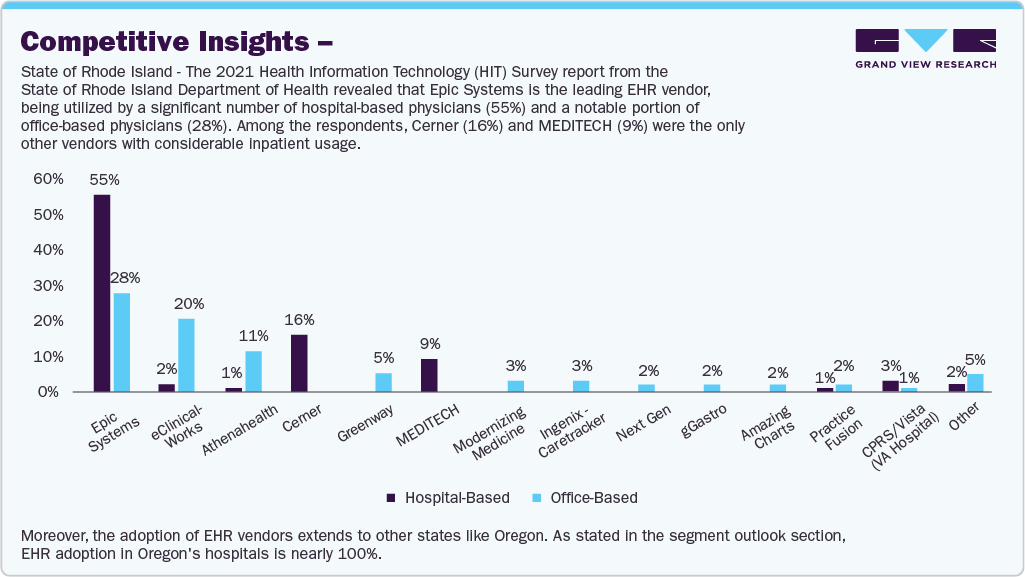
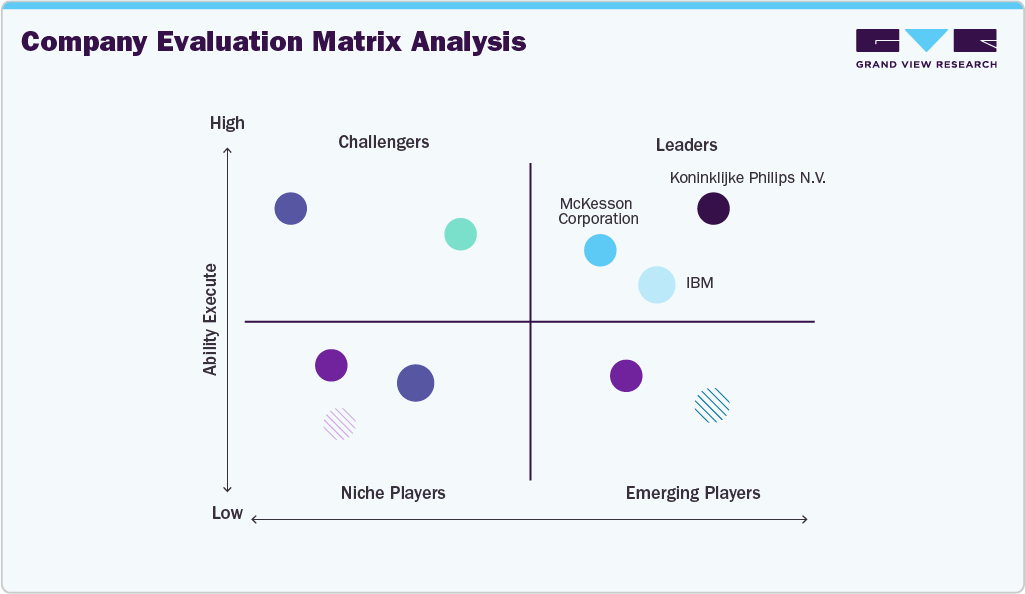
Notable market players such as Philips Healthcare; McKesson Corporation; eMDs, Inc.; Veradigm Inc. (formerly Allscripts, Healthcare Solutions, Inc.); Athenahealth, Inc. (Acquired by Hellman & Friedman and Bain Capital); Carestream Health; and GE Healthcare are implementing different strategies, including new product development, collaborations, and partnerships, to bolster their market presence. The market is fiercely competitive, offering applications such as EHR and e-prescribing, with multiple vendors providing solutions.
As an example shown below, we have analyzed EHR vendors in prominent U.S. states, highlighting the variations in market dominance among providers based on published research data.
Key Healthcare IT Companies:
The following key companies have been profiled for this study on the healthcare IT market
- Koninklijke Philips N.V.
- McKesson Corporation
- eMDs, Inc.
- Veradigm Inc. (formerly Allscripts Healthcare Solutions, Inc.)
- Athenahealth, Inc. (Acquired by Hellman & Friedman and Bain Capital)
- Carestream Health
- GE Healthcare
- Agfa- Gevaert Group
- Hewlett Packard Enterprise Development LP
- Novarad
- Optum, Inc.
- IBM
- Oracle
- SAS Institute, Inc.
- IQVIA
- Verisk Analytics, Inc.
- SAP
- Accenture
- Epic Systems Corporation
- Merative
- Veeva Systems
Recent Developments
-
In November 2025, TruDoc Healthcare launched its Super Health App in GCC and India, featuring facial scan vitals, wearable sync, Tru AI multilingual chatbot, lab report summarizer with trends/nutrition tips, real-time order tracking, e-commerce delivery, and medicine alerts.
"The TruDoc Super Health App brings our complete ecosystem into a single, powerful platform, for our members globally, that means faster personalized end-to-end care, 24x7 access at their fingertips, and the confidence that all their healthcare needs are completely taken care of in one place."
- Vish Narain, Executive Chairman, TruDoc Healthcare.
-
In July 2025, Core Solutions launched Cx360 Intelligence, an AI-powered EHR platform for behavioral health and IDD, featuring real-time AI summaries, conversational insights, dynamic treatment plans, and Cx360 GO mobile ambient documentation in 17 languages.
"Cx360 Intelligence represents a major leap forward not just for Core, but for the entire behavioral health industry, we’ve combined our deep expertise in behavioral health and IDD with clinically grounded, leading-edge AI to create a solution unlike anything else on the market. It's powerful, intuitive, and designed to meet the highest standards of safety, privacy, and trust."
- Ravi Ganesan, President & CEO of Core Solutions.
-
In June 2025, Kythera Labs announced strategic partnerships with healthcare analytics firms Preverity and GAM to provide advanced data integration, de-identification, and data mastering services through its Wayfinder Platform. This collaboration enables secure, compliant, and comprehensive healthcare analytics that improve patient safety, risk management, and operational efficiency.
“These partnerships demonstrate the critical need for robust data infrastructure in healthcare analytics. We're providing the essential data backbone that enables Preverity and GAM to focus on what they do best delivering specialized analytics insights while we handle the complex challenges of data integration, privacy protection, and data quality management."
-Jeff McDonald, CEO and Co-Founder of Kythera Labs.
-
In September 2024, Talkdesk launched the Healthcare Experience Cloud for Payers, an AI-powered contact center platform tailored for U.S. healthcare insurance providers.
“This strengthens our leadership in the healthcare market by expanding the capabilities of Healthcare Experience Cloud. In addition to supporting healthcare providers like hospitals and clinics, the platform now offers pre-trained AI and workflows designed specifically for payers, delivering tailored CX solutions for both sides of the healthcare ecosystem.”
- Tiago Paiva, chief executive officer and founder of Talkdesk
-
In June 2023, BoomerangFX, a cloud-based SaaS provider specializing in comprehensive practice management solutions for healthcare sectors such as cosmetic dentistry, cosmetic surgery, dermatology, medical spa, vision care, and women's health, unveiled a strategic collaboration with health technology pioneer DrFirst. This partnership aims to introduce an innovative e-prescribing solution tailored for aesthetic medicine practices throughout North America.
-
In May 2023, athenahealth made a significant announcement regarding its 'athenaOne' integrated cloud-based EHR, medical billing, and patient engagement solution. This solution, along with 'athenaOne Dental,' was chosen by LCH Health and Community Services to enhance provider and patient experiences while advancing its growth strategy.
Healthcare IT Market Report Scope
Report Attribute
Details
Market size value in 2026
USD 998.78 billion
Revenue forecast in 2033
USD 2,864.39 billion
Growth rate
CAGR of 16.2% from 2026 to 2033
Actual estimates/Historical data
2021 - 2025
Forecast period
2026 - 2033
Quantitative units
Revenue in USD million/billion and CAGR from 2026 to 2033
Report coverage
Revenue forecast, company share, competitive landscape, growth factors, and trends
Segment covered
Application, deployment mode, end use, and region
Regional scope
North America; Europe; Asia Pacific; Latin America; Middle East & Africa
Country scope
U.S.; Canada; UK; Germany; France; Italy; Spain; Russia; Sweden; Norway; Belgium; Finland; Switzerland; Netherlands; Austria; Poland; Portugal; Ireland; China; Japan; India; Singapore; Australia; Thailand; South Korea; New Zealand; Brazil; Mexico; Argentina; South Africa; Saudi Arabia; UAE; Kuwait
Key companies profiled
Koninklijke Philips N.V.; McKesson Corporation; eMDs, Inc.; Veradigm Inc. (formerly Allscripts Healthcare Solutions, Inc.); Athenahealth, Inc. (Acquired by Hellman & Friedman and Bain Capital); Carestream Health; GE Healthcare; Agfa-Gevaert Group; Hewlett Packard Enterprise Development LP; Novarad; Optum, Inc.; IBM; Merative; Oracle; SAS Institute, Inc.; IQVIA; Verisk Analytics, Inc.; SAP; Accenture; Epic Systems Corporation; Merative; Veeva Systems
15% free customization scope (equivalent to 5-analyst working days)
If you need specific market information, which is not currently within the scope of the report, we will provide it to you as part of customization
Global Healthcare IT Market Report Segmentation
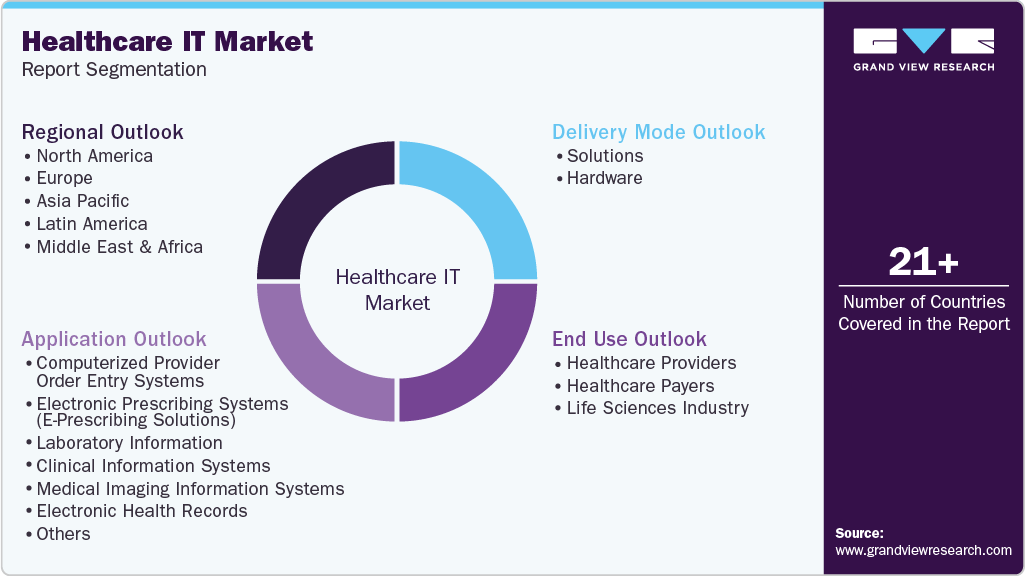
This report forecasts revenue growth at the global, regional, and country levels and provides an analysis of the latest industry trends in each of the sub-segments from 2021 to 2033. For this study, Grand View Research, Inc. has segmented the healthcare IT market report based on application, delivery mode, end use, and region:
-
Application Outlook (Revenue, USD Million, 2021 - 2033)
-
Computerized Provider Order Entry Systems
-
Electronic Prescribing Systems (E-Prescribing Solutions)
-
Laboratory Information
-
Clinical Information Systems
-
Medical Imaging Information Systems
-
Radiology Information Systems
-
Monitoring Analysis Software
-
Picture Archiving and Communication Systems
-
-
Electronic Health Records
-
Licensed Software
-
Technology Resale
-
Subscriptions
-
Professional Services
-
Others
-
-
Tele-healthcare
-
Tele-care
-
Tele-Health
-
-
Revenue Cycle Management
-
Integrated
-
Standalone
-
-
eClinical Solutions
-
Electronic Clinical Outcome Assessment (eCOA)
-
Electronic Data Capture (EDC) & CDMS
-
Clinical Analytics Platforms
-
Clinical Data Integration Platforms
-
Safety Solutions
-
Clinical Trial Management System (CTMS)
-
Randomization and Trial Supply Management (RTSM)
-
Electronic Trial Master File (eTMF)
-
eConsent
-
-
Population Health Management (PHM)
-
Digital Healthcare Supply Chain Management
-
Software
-
Hardware
-
Barcodes
-
RFID Tags
-
-
Services
-
-
Clinical alarm management
-
Nurse Call Systems
-
Physiological Monitors
-
Bed Alarms
-
EMR Integration Systems
-
Ventilators
-
Others
-
-
Healthcare Customer relationship management (CRM)
-
Customer Service and Support
-
Digital Commerce
-
Marketing
-
Sales
-
Cross -CRM
-
-
Technology Solutions in the Healthcare Payers
-
Enrollment and Member Management
-
Provider Management
-
Claims Management
-
Value-based Payments
-
Revenue Management and Billing
-
Analytics
-
Personalize/CRM
-
Clinical Decision Support
-
Data management and support
-
Others
-
-
Healthcare Analytics
-
Descriptive Analysis
-
Predictive Analysis
-
Prescriptive Analysis
-
-
-
Delivery Mode Outlook (Revenue, USD Million, 2021 - 2033)
-
Solutions
-
Software
-
On-Demand/On-premise
-
Cloud-based/ Web-based
-
-
Services
-
-
Hardware
-
-
End Use Outlook (Revenue, USD Million, 2021 - 2033)
-
Healthcare Providers
-
Hospitals & Clinics
-
Home Care Settings
-
Outpatient Facilities
-
Ambulatory surgery centers (ASCs)
-
Physician’s Clinic
-
Others (Laboratories, Pharmacy, etc.)
-
-
Long-term Care Facilities
-
Specialty Centers
-
-
Healthcare Payers
-
Government
-
Commercial
-
-
Life Sciences Industry
-
Pharma & Biotech Organizations
-
Medical Device Manufacturers
-
Contract Research Organizations (CROs)
-
Academic institutes
-
-
-
Regional Outlook by (Revenue, USD Million, 2021 - 2033)
-
North America
-
U.S.
-
Canada
-
Mexico
-
-
Europe
-
UK
-
Germany
-
France
-
Italy
-
Spain
-
Russia
-
Sweden
-
Denmark
-
Norway
-
Belgium
-
Finland
-
Switzerland
-
Netherlands
-
Austria
-
Poland
-
Portugal
-
Ireland
-
-
Asia Pacific
-
Japan
-
China
-
India
-
Australia
-
Singapore
-
Thailand
-
South Korea
-
New Zealand
-
-
Latin America
-
Brazil
-
Argentina
-
-
MEA
-
South Africa
-
Saudi Arabia
-
UAE
-
Kuwait
-
-
Frequently Asked Questions About This Report
b. Key factors that are driving the healthcare IT market growth include the increasing usage of smartphones, growing demand for remote patient monitoring for improved out-of-hospital care, technologically advanced healthcare IT infrastructure, and an increase in the number of initiatives and investments supporting eHealth and digital health.
b. The global healthcare IT market size was estimated at USD 866.48 billion in 2025 and is expected to reach USD 998.78 billion in 2026.
b. The global healthcare IT market is expected to grow at a compound annual growth rate of 16.2% from 2026 to 2033 to reach USD 2,864.39 billion by 2033.
b. North America dominated healthcare IT market in 2025 with the revenue share of 55.35%. The region's market growth is fueled by the extensive adoption of healthcare IT solutions and services, especially in the U.S., as providers strive to enhance patient care while reducing costs.
b. Some key players operating in the healthcare IT market include Koninklijke Philips N.V., McKesson Corporation, eMDs, Inc., Veradigm Inc. (formerly Allscripts Healthcare Solutions, Inc.), Athenahealth, Inc. (Acquired by Hellman & Friedman and Bain Capital), Carestream Health, GE Healthcare, Agfa-Gevaert Group, Hewlett Packard Enterprise Development LP, Novarad, Optum, Inc., IBM, Oracle, SAS Institute, Inc., IQVIA, Verisk Analytics, Inc., SAP, Accenture, Epic Systems Corporation, Merative, Veeva Systems


Share this report with your colleague or friend.
Need a Tailored Report?
Customize this report to your needs — add regions, segments, or data points, with 20% free customization.


ISO 9001:2015 & 27001:2022 Certified
We are GDPR and CCPA compliant! Your transaction & personal information is safe and secure. For more details, please read our privacy policy.
Trusted market insights - try a free sample
See how our reports are structured and why industry leaders rely on Grand View Research. Get a free sample or ask us to tailor this report to your needs.