- Home
- »
- Beauty & Personal Care
- »
-
Hair And Scalp Care Market Size, Industry Report, 2033GVR Report cover
![Hair And Scalp Care Market Size, Share & Trends Report]()
Hair And Scalp Care Market (And Segment Forecasts 2026 - 2033) Size, Share & Trends Analysis Report By Product (Shampoo, Conditioner, Hair Oils, Hair Serums, Masks & Treatments), By Concern, By Hair Type, By Price Tier, By End Use, By Distribution Channel, By Region
- Report ID: GVR-2-68038-128-3
- Number of Report Pages: 90
- Format: PDF
- Historical Range: 2021 - 2025
- Forecast Period: 2026 - 2033
- Industry: Consumer Goods
- Report Summary
- Table of Contents
- Interactive Charts
- Methodology
- Download FREE Sample
-
 Download Sample Report
Hair And Scalp Care Market Summary
The global hair and scalp care market size was estimated at USD 88.20 billion in 2025 and is projected to reach USD 150.45 billion by 2033, growing at a CAGR of 7.0% from 2026 to 2033. The increasing prevalence of hair and scalp issues, such as dandruff, hair loss, and dryness, has driven demand for specialized care products.
Key Market Trends & Insights
- Based on region, Asia Pacific held the largest market share of 37.51% in 2025.
- Based on product, the shampoo segment held the largest revenue share of 43.50% in 2025.
- Based on concern, the dry and damaged hair segment held the largest revenue share of 28.44% in 2025.
- Based on hair type, the straight hair segment held the largest revenue share of 35.99% in 2025.
- By end use, the women end-user segment accounted for the largest share of 66.89% in 2025.
Market Size & Forecast
- 2025 Market Size: USD 88.20 Billion
- 2033 Projected Market Size: USD 150.45 Billion
- CAGR (2026-2033): 7.0%
- Asia Pacific: Largest market in 2025
The rising concerns, such as hair fall, dandruff, scalp sensitivity, premature greying, and thinning hair across all age groups, increasingly drive the global hair and scalp care industry’s growth. Urban lifestyles, rising stress levels, exposure to pollution, hard water use, and changing dietary patterns have intensified scalp-related problems, prompting consumers to seek targeted treatment-oriented products rather than basic cleansing solutions. This shift has supported demand for anti-dandruff shampoos, scalp serums, hair growth solutions, and dermatologically tested formulations. Manufacturers are responding by expanding problem-solution portfolios, including sulfate-free, pH-balanced, and ingredient-focused products designed to address specific scalp conditions, thereby strengthening repeat purchase behavior and long-term brand loyalty.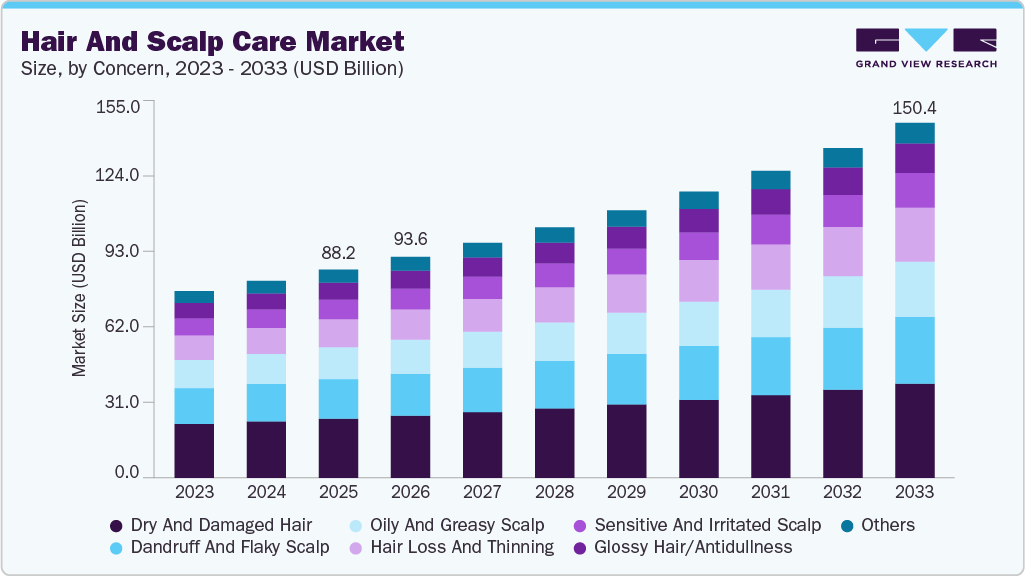
For instance, in February 2025, Head & Shoulders upgraded shampoo and conditioner collections designed to address different scalp and hair needs rather than relying on a single universal formula. The new ranges combine the brand’s core anti-dandruff performance with enhanced conditioning, improved sensory appeal, and targeted benefits tailored to specific hair types. This update reflects a broader shift toward more personalized hair care solutions that balance scalp health with everyday hair concerns.
Social media platforms and digital beauty content have become powerful demand drivers in the global hair and scalp care market, significantly shaping consumer awareness and purchase decisions. Tutorials, product reviews, influencer-led routines, and before-and-after transformations on platforms such as Instagram, YouTube, and TikTok have normalized scalp care as an extension of skincare. Consumers are increasingly educated about ingredients, formulations, and scalp health benefits, accelerating interest in exfoliating scrubs, scalp masks, pre-wash oils, and treatment serums. Celebrity endorsements and influencer collaborations further amplify product visibility, enabling brands to rapidly scale new launches, test niche formulations, and align offerings with evolving beauty trends across millennial and Gen Z consumers.
The rapid expansion of e-commerce has significantly enhanced accessibility and market penetration for hair and scalp care products globally. Online platforms enable consumers to compare formulations, read verified reviews, and access a wider range of premium, professional, and niche brands that may not be available through traditional retail channels. Subscription models, personalized product recommendations, and direct-to-consumer strategies have further supported market growth by improving convenience and repeat engagement.
Brand Market Share Insights
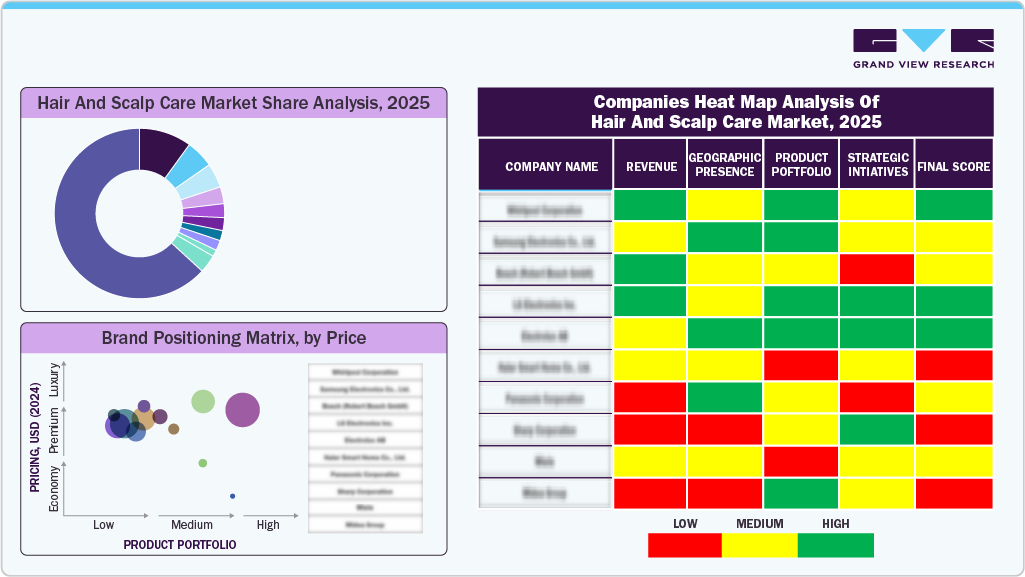
The global hair and scalp care market is shaped by a mix of large multinational beauty companies and a rapidly expanding set of niche, premium, and digital-first brands, all competing to meet rising consumer expectations around efficacy, ingredient quality, personalization, and brand credibility. Market participants are increasingly prioritizing advanced formulation development, with greater emphasis on ingredient transparency, clean-label positioning, sustainably sourced actives, and science-backed scalp solutions. Alongside this, brands are broadening their portfolios to include targeted treatments, dermatological-grade products, multifunctional formats, and trial or travel-sized offerings to improve consumer adoption and repeat usage. Omnichannel strategies, including direct-to-consumer platforms and robust e-commerce integration, are being leveraged to expand reach, enhance consumer engagement, and capture real-time feedback.
Consumer Insights
According to a YouGov survey conducted in August 2025, hair and scalp care engagement varies significantly across age groups, highlighting noticeable behavioural differences among global consumers. Among adults aged 18-34, nearly 9 in 10 regularly use shampoo or conditioner, with about 23% using hair oil and 25% using serums or masks, indicating a stronger inclination toward experimentation and multi-product routines. In contrast, older demographics tend to have simpler routines. Adults aged 55 and above report using only 11% of serums/masks, suggesting that younger consumers are more open to trying targeted treatments and diversified product formats to address specific concerns and lifestyle aspirations. This pattern reflects a broader global trend of younger cohorts increasingly willing to explore specialized hair and scalp solutions beyond basic cleansing.
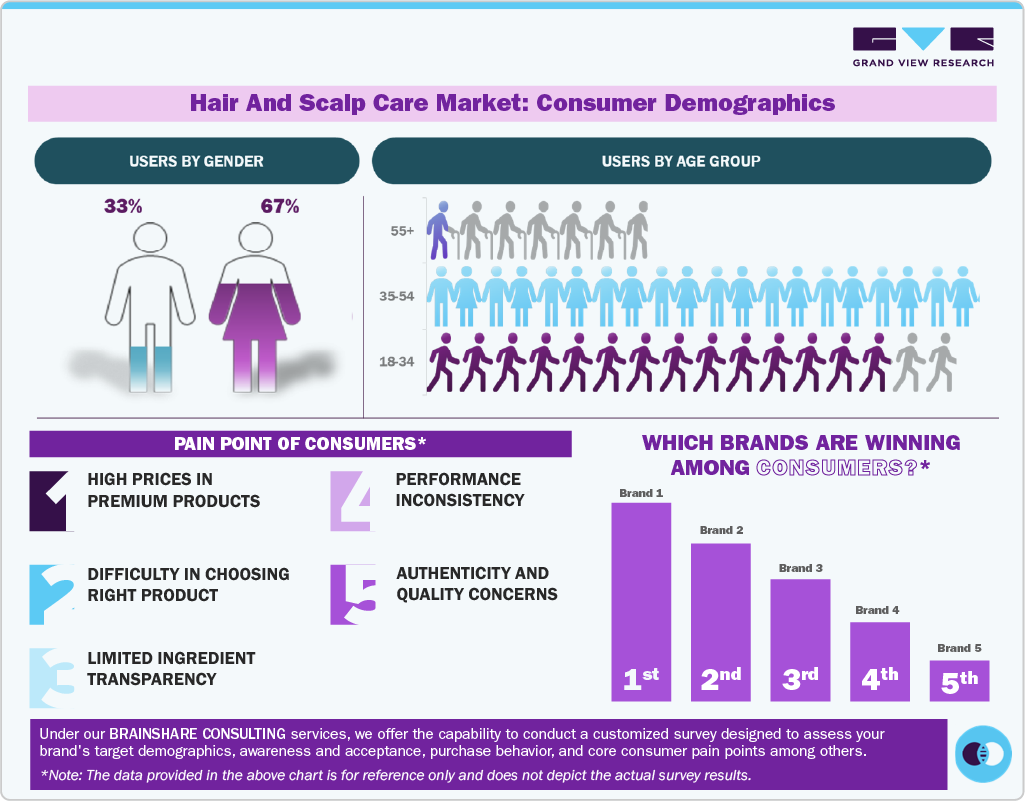
Consumer motivations in hair care are also shaped by emotional and experiential associations, rather than functional need alone. The same YouGov survey reveals that 66% of Americans cite hygiene and upkeep as key reasons for hair care, but women are notably more likely than men to link hair routines to confidence and appearance goals (72% vs. 42%). Furthermore, the average consumer stays within modest spending brackets: 42 % report a monthly hair care spend of USD 1-50, and only 5 % are willing to spend USD 100 or more, indicating cautious investment even among engaged users. These data highlight how consumers balance routine demands with personal values such as confidence enhancement, wellness, and sensory experience, which, in turn, shape global brand engagement and purchase behaviour.
Broader consumer sentiment data from Revuze’s analysis of over 1.2 million haircare product reviews underscores the growing importance of product attributes tied to experience and performance; fragrance and scent were among the top drivers of satisfaction, while demand for hydration-focused products and natural, chemical-free ingredients also showed significant year-over-year growth. This points to an evolving market where consumers, particularly digital-savvy younger cohorts, seek products that deliver both sensory appeal and tangible benefits, increasingly informed by peer reviews, online discovery, and social influence rather than traditional advertising alone.
Product Insights
Shampoo accounted for the largest revenue share of 43.5% in 2025. Consumers are increasingly shifting from basic cleansing products toward shampoos that offer enhanced fragrance profiles, scalp-care benefits, and ingredient transparency, supported by rapid technological advancements in formulation and fragrance development. The premium segment leads the shampoo category in revenue due to its stronger emphasis on quality, exclusivity, and sensory experience, with manufacturers expanding high-end offerings that combine natural actives, dermatologically tested ingredients, and refined scent compositions.
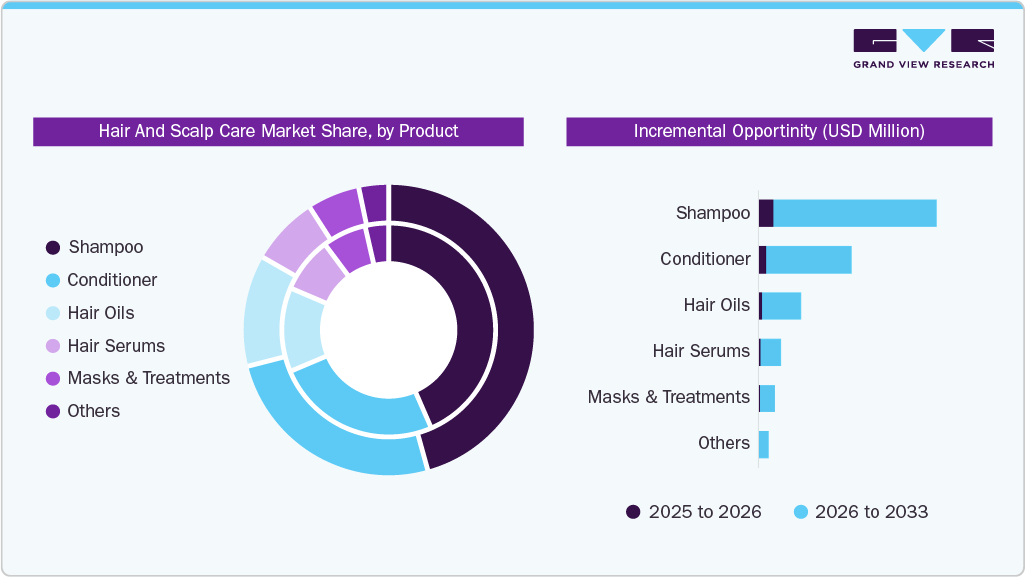
The demand for hair conditioner is expected to grow at a CAGR of 7.1% from 2026 to 2033. Demand is expanding beyond basic moisturizing conditioners toward products offering richer textures, longer-lasting fragrances, and targeted benefits such as smoothening, strengthening, and scalp comfort. While conditioners were traditionally positioned in the premium segment due to higher concentrations of conditioning agents and oils, manufacturers are increasingly broadening their appeal through affordable formulations, simplified fragrance profiles, and smaller pack sizes.
Concern Insights
Hair and scalp care products used for dry and damaged hair accounted for the largest revenue share of 28.44% in 2025. Consumers actively seek specialized repair solutions rather than general-purpose products, driving demand for shampoos, conditioners, masks, oils, and leave-in treatments formulated with high-performance ingredients such as keratin, ceramides, argan oil, shea butter, and bond-repair complexes. The segment is strongly supported by premium offerings, where brands emphasize intensive nourishment, long-term damage repair, and improved hair texture alongside refined fragrances and sensorial formulations.
Hair and scalp care products used for hair loss and thinning are expected to grow at a CAGR of 8.6% from 2026 to 2033, driven by the increasing incidence of stress-related hair fall, hormonal imbalance, nutritional deficiencies, and lifestyle changes across both men and women. Consumers are increasingly seeking targeted, treatment-led solutions rather than cosmetic coverage, supporting demand for anti-hair fall shampoos, scalp serums, growth tonics, and leave-in treatments formulated with actives such as caffeine, biotin, niacinamide, peptides, plant stem cells, and clinically tested botanical extracts.
Hair Type Insights
Hair and scalp care products for straight hair led the industry, accounting for the largest revenue share of 35.99% in 2025. Consumers increasingly favor straight-hair-specific formulations over general-purpose products, supporting demand for shampoos, conditioners, masks, oils, and leave-in treatments designed to preserve smoothness, enhance shine, and control frizz without adding excess weight. The growth is strongly supported by premium offerings that emphasize advanced smoothing and protection technologies, long-term hair health, and refined fragrances combined with sensorial textures.
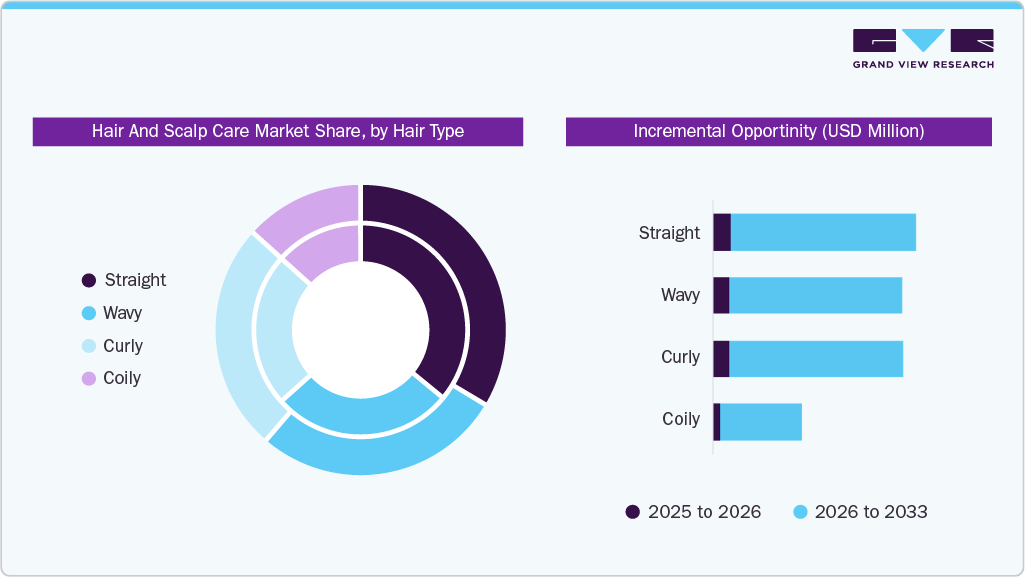
Hair and scalp care products used for curly hair are expected to grow at a CAGR of 8.1% from 2026 to 2033. Curly hair requires higher levels of hydration and structural support due to its coiled pattern, driving demand for specialized shampoos, co-washes, conditioners, curl creams, gels, and leave-in treatments that enhance definition while minimizing frizz and breakage. Consumers increasingly prefer formulations enriched with humectants, natural butters, lightweight oils, and protein-balancing complexes that support curl elasticity without stiffness or buildup.
End Use Insights
The women's end-use segment led the hair and scalp care market, accounting for the largest revenue share of 66.89% in 2025. Women tend to adopt preventive and corrective hair care practices earlier and more frequently, driving sustained demand for cleansing, conditioning, repair, and scalp-focused products. Purchasing decisions in this segment are strongly influenced by product efficacy, sensory attributes such as fragrance and texture, and alignment with individual hair needs and lifestyle preferences. In addition, increased awareness of hair health, greater access to premium and dermatologist-backed products, and growing acceptance of tailored solutions continue to support higher spending.
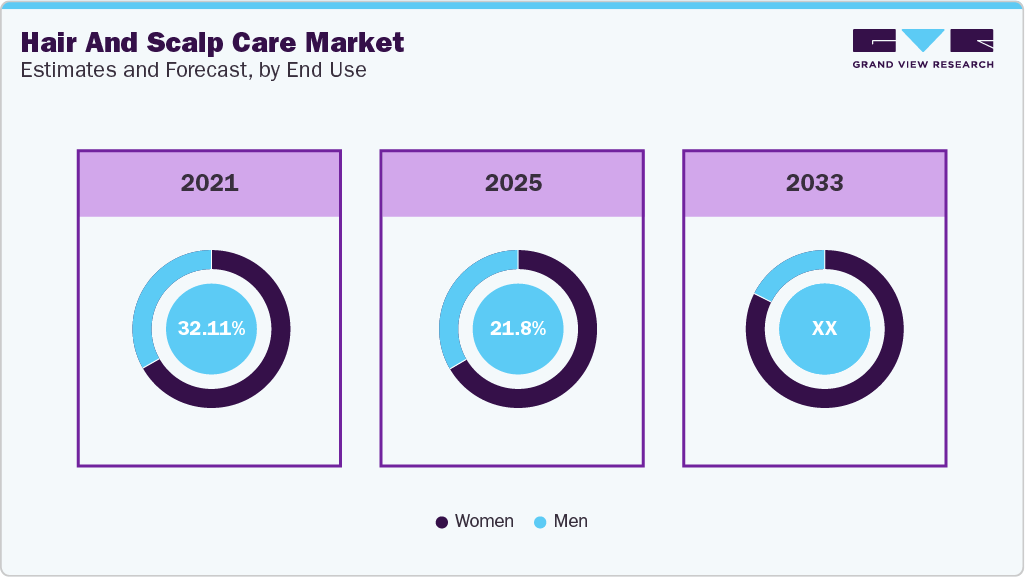
The men’s end-use segment is expected to grow at a CAGR of 7.8% from 2026 to 2033. Men are progressively shifting from basic shampoo usage toward targeted solutions addressing concerns such as hair fall, dandruff, scalp irritation, and premature thinning. Growing interest in premium grooming, evolving lifestyle patterns, and greater exposure to digital content have encouraged experimentation with different formulations, fragrances, and treatment-led products. In addition, strong visibility of male grooming through celebrity endorsements, sports personalities, and social media influencers continues to normalize the use of advanced hair and scalp care products.
Price Tier Insights
Mass hair and scalp care products accounted for the largest share of 58.63% in 2025. Consumers favor mass hair and scalp care products for their practicality, versatility, and ease of incorporation into regular routines, supported by familiar formulations, mild fragrances, and multiple usage formats. High availability across retail and e-commerce channels, along with frequent product replenishment cycles, continues to drive repeat purchases and reinforces the dominant revenue contribution of the mass segment within the global hair and scalp care market.
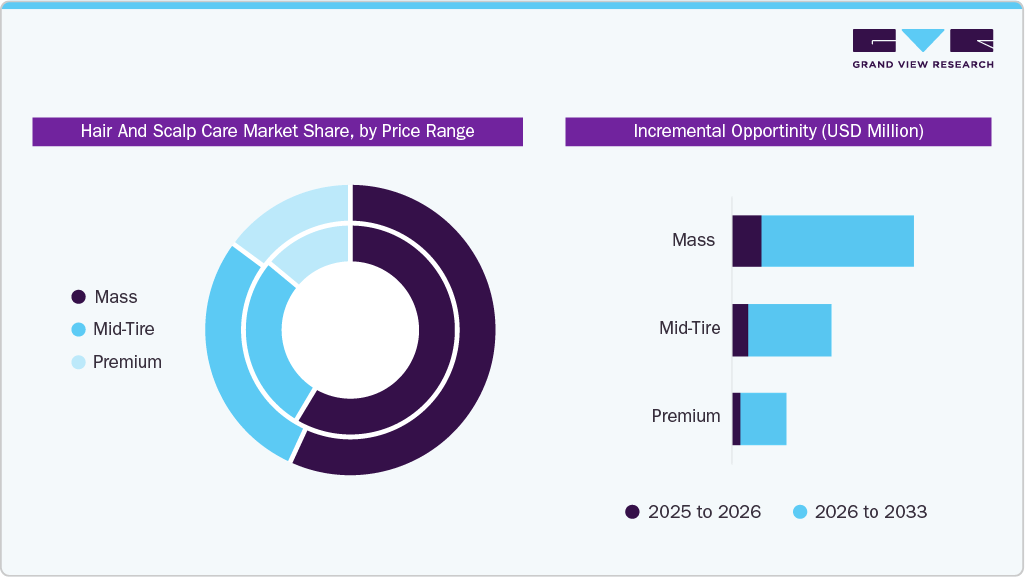
Premium hair and scalp care products are expected to grow at a CAGR of 7.9% from 2026 to 2033, driven by rising consumer preference for high-quality formulations that balance performance, sensory appeal, and brand value without entering ultra-luxury price tiers. This segment attracts brand-conscious, quality-driven consumers who seek noticeable improvements in hair and scalp health alongside refined fragrances and elevated usage experiences. Premium products are increasingly favored for personal upgrades, gifting, and occasion-led purchases, supported by a strong emphasis on packaging design and ingredient sophistication.
Distribution Channel Insights
Sales of hair and scalp care products through supermarkets and hypermarkets accounted for the largest share of 33.82% in 2025, supported by their extensive reach, convenience-driven shopping behavior, and strong dominance in everyday personal care purchasing. These outlets serve as primary touchpoints for routine replenishment, enabling consumers to easily access a wide range of mass and mid-priced hair and scalp care products under one roof. High shelf visibility, frequent price promotions, and multi-pack or value-based offerings encourage brand switching and repeat purchases.
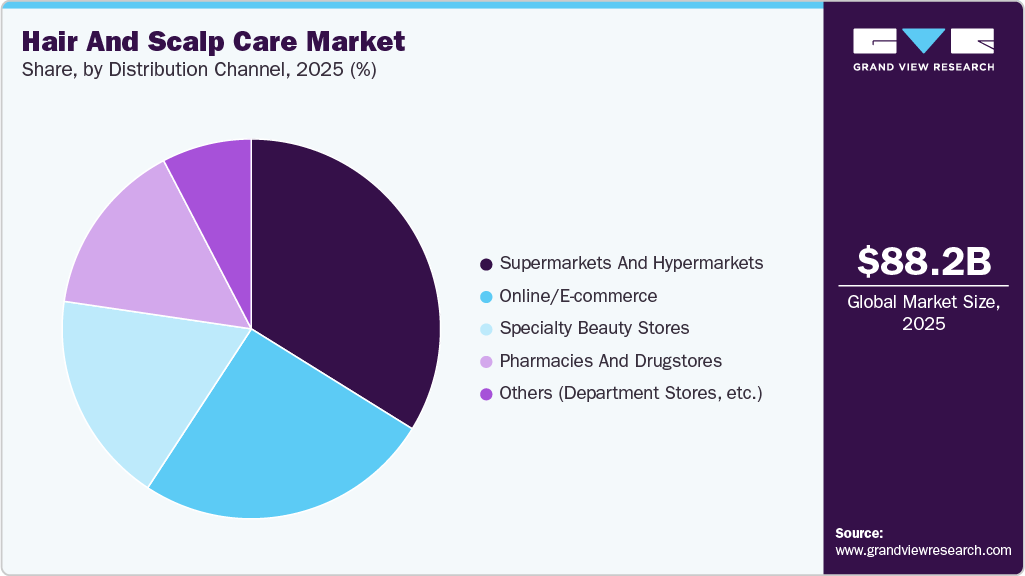
Sale of hair and scalp care products through online/e-commerce is expected to grow at a CAGR of 8.2% from 2026 to 2033. Consumers are using online platforms to access a wider variety of hair and scalp care products, including dermatologist-recommended, premium, and niche formulations that are often unavailable in physical retail. Detailed ingredient disclosures, user reviews, tutorial content, and algorithm-based recommendations are helping shoppers make informed purchase decisions despite the lack of physical product testing. In addition, the rise of mobile commerce, subscription-based replenishment models, and direct-to-consumer brand websites is strengthening repeat purchases. Rapid growth in internet penetration and digital payment adoption across emerging economies continues to accelerate online sales.
Regional Insights
The North America hair and scalp care industry accounted for the largest share of 25.63% in 2025. Consumers in the region actively invest in solutions addressing concerns such as hair fall, scalp sensitivity, color protection, and damage repair, supporting demand for shampoos, conditioners, masks, serums, and scalp treatments with clinically backed, clean-label positioning. The market benefits from a well-developed distribution infrastructure, with specialty beauty retailers, salons, and e-commerce platforms enabling access to a wide range of mass, premium, and professional brands.
U.S. Hair and Scalp Care Market Trends
The hair and scalp care industry in the U.S. is supported by high consumer awareness of hair health, strong discretionary spending, and a well-established culture of routine and treatment-led grooming. U.S. consumers actively invest in products targeting concerns such as hair fall, scalp sensitivity, color protection, and damage from frequent heat styling and chemical treatments. Demand is particularly strong for shampoos, conditioners, and scalp treatments positioned around clean ingredients, dermatologist-backed claims, and sensorial appeal, including refined fragrances and lightweight textures.
Europe Hair and Scalp Care Market Trends
The Europe hair and scalp care industry accounted for the largest revenue share of 22.57% in 2025. European consumers demonstrate high awareness of hair health and ingredient sourcing, driving demand for clean-label, dermatologically tested, and sustainably formulated shampoos, conditioners, and scalp treatments. The market shows pronounced premium and niche penetration, with consumers valuing sensorial attributes such as refined fragrances, texture, and packaging alongside functional benefits.
The growth of the hair and scalp care market in the UK is driven by strong consumer focus on personal grooming, wellness, and product quality, supported by high awareness of hair health and ingredient safety. Demand is increasingly shaped by interest in premium and wellness-oriented formulations that combine functional benefits with refined sensory experiences, including mild fragrances and nourishing textures.
The France hair and scalp care market held the largest share of Europe in 2025, characterized by strong consumer emphasis on formulation quality, sensorial performance, and premium positioning, reflecting the country’s deep-rooted beauty and fragrance culture. French consumers show high awareness of ingredient provenance, safety standards, and product craftsmanship, driving demand for clean-label, dermatologically tested, and sustainably formulated hair and scalp solutions.
Asia Pacific Hair and Scalp Care Market Trends
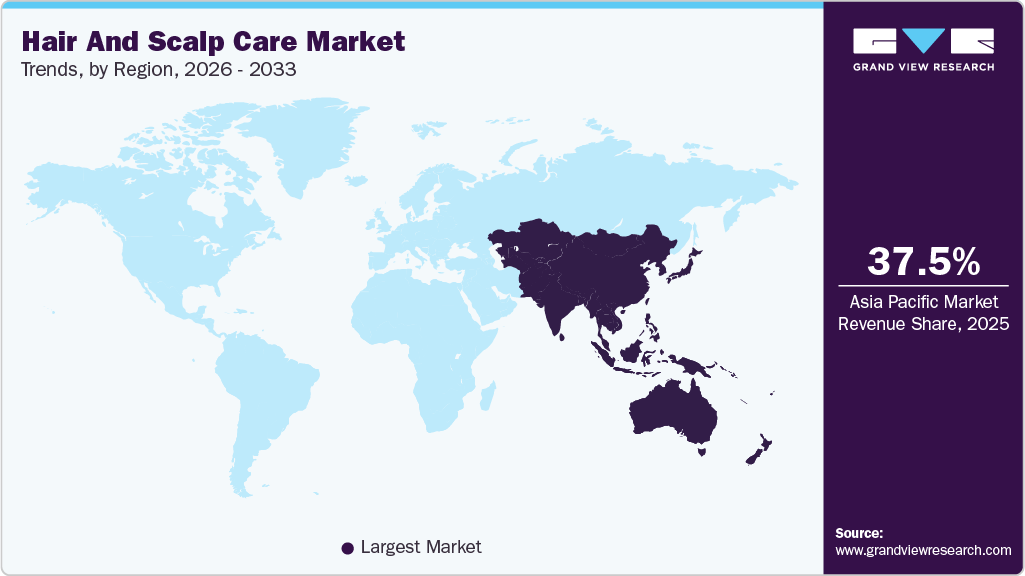
The Asia Pacific hair and scalp care industry is expected to grow at a CAGR of 7.8% from 2026 to 2033. Consumers across the Asia Pacific show strong demand for products addressing climate-specific concerns such as humidity-induced frizz, scalp oiliness, hair fall, and pollution-related damage, driving uptake of targeted shampoos, conditioners, scalp treatments, and leave-in products. The market also benefits from high adoption of multi-step hair care routines and frequent product experimentation, particularly among younger consumers. In addition, rising middle-class incomes, strong influence of digital beauty content, and widespread use of e-commerce platforms are improving access to premium and specialized hair and scalp care products, reinforcing sustained regional growth across both mass and premium segments.
The India hair and scalp care market is expected to witness growth, driven by rising consumer demand for luxury and premium fragrances. Increasing disposable incomes and growing awareness of global fragrance trends are contributing to the product demand. Al Abbadi Fragrances launched its exclusive luxury collection in New Delhi in September 2025, offering artisan-crafted, limited-edition perfumes with 18-24 hours of longevity.
Central & South America Hair and Scalp Care Market Trends
The Central & South America hair and scalp care industry is expected to grow at a CAGR of 7.2% from 2026 to 2033. The market growth is driven by high daily use of hair care products, favorable climate conditions, strong appearance-conscious grooming habits, and frequent washing routines. Consumers in the region actively seek solutions for concerns such as dryness, frizz, hair fall, and damage caused by humidity, sun exposure, and chemical treatments, supporting demand for nourishing shampoos, conditioners, oils, and leave-in products.
Middle East & Africa Hair and Scalp Care Market Trends
The Middle East & Africa hair and scalp care industry is expected to grow at a CAGR of 5.4% from 2026 to 2033. High temperatures, low humidity, and frequent sun exposure increase the need for intensive nourishment, scalp hydration, and damage-repair solutions, driving demand for oils, masks, serums, and conditioning treatments. Consumers in the region place strong value on product richness, longevity, and sensorial experience, supporting higher adoption of premium and concentrated formulations.
Key Hair And Scalp Care Companies:
The following key companies have been profiled for this study on the hair and scalp care market
- L’Oréal S.A.
- Johnson & Johnson Services, Inc.
- Beiersdorf
- Procter & Gamble
- Unilever
- AMOREPACIFIC US, INC.
- The Estée Lauder Companies Inc.
- Kanebo Cosmetics Inc.
- Himalaya Global Holdings Ltd
- Shiseido Company, Limited
Recent Developments
-
In February 2026, Mielle introduced a new scalp-focused collection created to support natural hair textures and protective styling routines. The range emphasizes scalp comfort and moisture balance, helping address dryness and irritation that can occur with long-term styling. The launch reinforces Mielle’s focus on targeted scalp care as an essential part of maintaining healthy hair rather than treating scalp needs as an afterthought.
-
In July 2025, Root Botanié launched India’s first haircare brand focused on gender-specific scalp microbiome solutions tailored for urban lifestyles. The brand centers on scalp health as the foundation for stronger hair, with separate formulations designed to address the differing concerns of men and women. By combining botanical ingredients with modern scientific approaches, the range targets issues linked to pollution, stress, and daily urban exposure, positioning itself as a personalized hair wellness offering rather than a conventional cosmetic care product.
Hair and Scalp Care Market Report Scope
Report Attribute
Details
Market size value in 2026
USD 93.61 billion
Revenue forecast in 2033
USD 150.45 billion
Growth rate
CAGR of 7.0% from 2026 to 2033
Base year for estimation
2025
Historical data
2021 - 2025
Forecast period
2026 - 2033
Quantitative units
Revenue in USD million/billion and CAGR from 2026 to 2033
Report coverage
Revenue forecast, company ranking, competitive landscape, growth factors, trends
Segments covered
Product, concern, hair type, end use, price tier, distribution channel, and region
Regional scope
North America; Europe; Asia Pacific; Middle & East Africa; Central & South America
Country scope
U.S.; Canada; Mexico; Germany; France; UK; Spain; Italy; China; Japan; India; South Korea; Australia & New Zealand; Brazil; South Africa
Key company profiled
L’Oréal S.A.; Johnson & Johnson Services, Inc.; Beiersdorf; Procter & Gamble; Unilever; AMOREPACIFIC US, INC.; The Estée Lauder Companies Inc.; Kanebo Cosmetics Inc.; Himalaya Global Holdings Ltd; Shiseido Company, Limited
Customization scope
Free report customization (equivalent to up to 8 analysts working days) with purchase. Addition or alteration to country, regional & segment scope.
Pricing and purchase options
Avail customized purchase options to meet your exact research needs. Explore purchase options
Global Hair and Scalp Care Market Report Segmentation
This report forecasts revenue growth at the global, regional, and country levels and provides an analysis of the latest industry trends and opportunities in each of the sub-segments from 2021 to 2033. For this study, Grand View Research has segmented the global hair and scalp care market report based on product, concern, hair type, end use, price tier, distribution channel, and region:
-
Product Outlook (Revenue, USD Million, 2021 - 2033)
-
Shampoo
-
Conditioner
-
Hair Oils
-
Hair Serums
-
Masks and Treatments
-
Others
-
-
Concern Outlook (Revenue, USD Million, 2021 - 2033)
-
Dry and Damaged Hair
-
Dandruff and Flaky Scalp
-
Oily and Greasy Scalp
-
Sensitive and Irritated Scalp
-
Hair Loss and Thinning
-
Glossy Hair/Antidullness
-
Others
-
-
Hair Type Outlook (Revenue, USD Million, 2021 - 2033)
-
Straight
-
Wavy
-
Curly
-
Coily
-
-
Price Tier Outlook (Revenue, USD Million, 2021 - 2033)
-
Mass
-
Mid-Tire
-
Premium
-
-
End Use Outlook (Revenue, USD Million, 2021 - 2033)
-
Women
-
Men
-
-
Distribution Channel Outlook (Revenue, USD Million, 2021 - 2033)
-
Supermarkets and Hypermarkets
-
Specialty Beauty Stores
-
Pharmacies and Drugstores
-
Online/E-commerce
-
Others
-
-
Regional Outlook (Revenue, USD Million, 2021 - 2033)
-
North America
-
U.S.
-
Canada
-
Mexico
-
-
Europe
-
Germany
-
UK
-
France
-
Italy
-
Spain
-
-
Asia Pacific
-
China
-
India
-
Japan
-
South Korea
-
Australia & New Zealand
-
-
Central & South America
-
Brazil
-
-
Middle East & Africa
-
South Africa
-
-
Frequently Asked Questions About This Report
b. The global hair and scalp care market size was estimated at USD 88.20 billion in 2025 and is expected to reach USD 93.61 billion in 2026.
b. The global hair and scalp care market is expected to grow at a compound annual growth rate of 7.0% from 2026 to 2033 to reach USD 150.45 billion by 2033.
b. Some key players operating in the hair and scalp care market include L’Oreal, Hindustan Unilever Ltd., P&G, Kao Corporation, Marico Limited, Aveda Corporation, Henkel Corporation, Combe Incorporated, Johnson & Johnson, etc.
b. Key factors that are driving the hair and scalp care market growth include a rising old age population and a growing trend in the fashion industry. Additionally, an increasing number of males have been using hair care products which has boosted demand.
b. Asia Pacific dominated the hair and scalp care market with a share of 37.51% in 2025, driven by the strong presence of both local and multinational players offering a wide range of products including shampoos, conditioners, hair color, and styling solutions. High product penetration, frequent product launches, and rising consumer spending on daily haircare routines continue to support regional market leadership.


Share this report with your colleague or friend.
Need a Tailored Report?
Customize this report to your needs — add regions, segments, or data points, with 20% free customization.


ISO 9001:2015 & 27001:2022 Certified
We are GDPR and CCPA compliant! Your transaction & personal information is safe and secure. For more details, please read our privacy policy.
Trusted market insights - try a free sample
See how our reports are structured and why industry leaders rely on Grand View Research. Get a free sample or ask us to tailor this report to your needs.