- Home
- »
- Beauty & Personal Care
- »
-
Facial Serum Market Size And Share, Industry Report, 2033GVR Report cover
![Facial Serum Market Size, Share & Trends Report]()
Facial Serum Market (2026 - 2033) Size, Share & Trends Analysis Report By Type (Anti-Aging Serums, Skin Brightening Serums, Acne Fighting Serums, Hydrating Face Serums, Exfoliating Face Serums), By Form, By Distribution Channel, By Price Point, By Region, And Segment Forecasts
- Report ID: GVR-4-68040-188-2
- Number of Report Pages: 100
- Format: PDF
- Historical Range: 2021 - 2025
- Forecast Period: 2026 - 2033
- Industry: Consumer Goods
- Report Summary
- Table of Contents
- Segmentation
- Methodology
- Download FREE Sample
-
 Download Sample Report
Facial Serum Market Summary
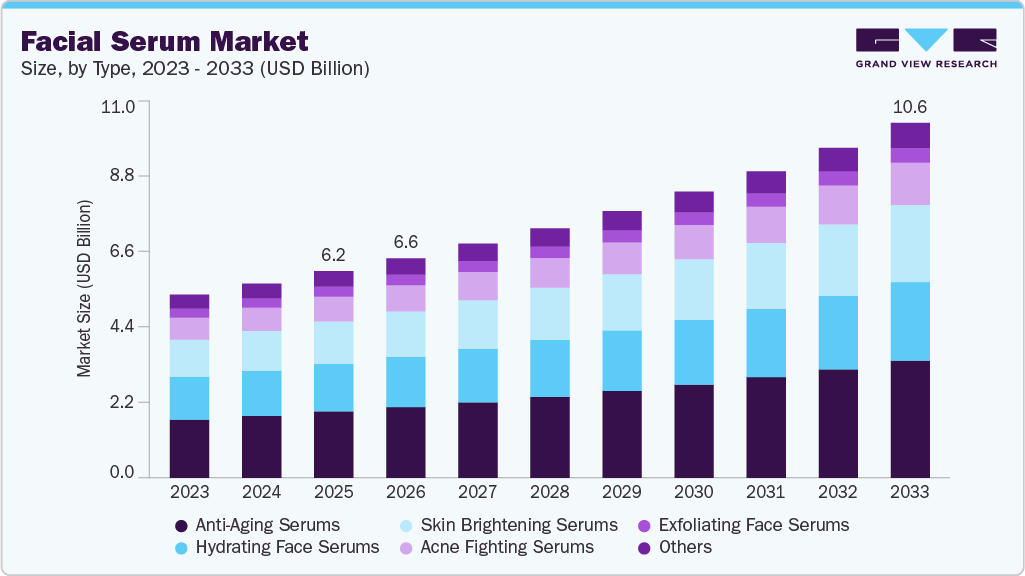
The global facial serum market size was estimated at USD 6.20 billion in 2025 and is expected to reach USD 10.66 billion by 2033, growing at a CAGR of 7.1% from 2026 to 2033. Rising awareness of skincare and the growing demand for anti-aging solutions are key drivers of the facial serum industry.
Key Market Trends & Insights
- The Europe facial serum market held the largest market share of 31.3% in 2025.
- The facial serum market in France is estimated to witness a CAGR of 6.7% from 2026 to 2033.
- By type, the anti-aging serums segment led the facial serum market and accounted for a share of 32.0% in 2025.
- By form, the water-based serums segment led the facial serum market and accounted for a share of 44.6% in 2025.
- By distribution channel, the supermarkets/ hypermarkets segment led the facial serum market and accounted for a share of 29.3% in 2025.
Market Size & Forecast
- 2025 Market Size: USD 6.20 Billion
- 2033 Projected Market Size: USD 10.66 Billion
- CAGR (2026-2033): 7.1%
- Europe: Largest market in 2025
- Asia Pacific: Fastest growing market
Consumers are increasingly educated about skin health, ingredients, and the benefits of targeted treatments, leading to higher adoption of serums as part of daily routines rather than occasional use. At the same time, concerns about premature aging, fine lines, and skin damage have intensified across both younger and older demographics, driving strong demand for anti-aging formulations.Consumers are increasingly prioritizing skincare products made with natural, organic, and non-toxic ingredients, driving the demand for clean beauty serums. There is a growing preference for formulations free from parabens, sulfates, and synthetic additives, along with a strong focus on sustainability, cruelty-free practices, and eco-friendly packaging. This shift reflects heightened awareness around long-term skin health and environmental impact.
The global popularity of Korean and Japanese skincare has significantly influenced the facial serum market, introducing advanced formulations and unique ingredients. Trends such as “glass skin,” layering techniques, and the use of fermented or traditional ingredients have encouraged consumers to adopt more sophisticated skincare routines. These innovations continue to inspire product development and brand positioning worldwide. Modern consumers are highly ingredient-conscious and actively seek serums with clinically proven actives such as vitamin C, retinol, and hyaluronic acid. Transparency in labeling and evidence-based claims has become essential, as buyers prioritize efficacy and visible results. This trend reflects a broader shift toward science-driven skincare and informed purchasing decisions.
In September 2025, Genaura launched with a flagship serum powered by Levagen+, a patented ingredient that reduces inflammation, improves hydration, and strengthens the skin barrier, addressing concerns such as aging and sensitivity. It emphasized bridging the gap between high-end beauty and real scientific efficacy, reflecting a broader industry shift toward evidence-based, results-driven skincare rather than purely marketing-led products. The demand for customized skincare solutions is rising, with brands leveraging AI, skin analysis tools, and online diagnostics to offer personalized serum recommendations. Consumers are increasingly drawn to products tailored to their unique skin types, concerns, and environmental conditions. This trend enhances user engagement and improves perceived effectiveness.
In May 2025, Elemental Herbology launched its “Pause and Renew” facial serum, specifically designed to address skin concerns associated with perimenopause and menopause. The product targeted hormonal changes that often led to dryness, sensitivity, and loss of elasticity, offering a tailored skincare solution.
The facial serum market has emerged as one of the fastest-growing segments of the global skincare industry, driven by rising consumer demand for targeted, high-efficacy formulations. Consumers are shifting from basic moisturization to solution-oriented skincare, fueling demand for products addressing concerns such as anti-aging, hydration, pigmentation, and acne. This trend is particularly evident in the India facial serum market, where rising disposable incomes, growing skincare awareness, and the influence of digital platforms have accelerated adoption across urban and semi-urban consumers. Additionally, the overlap between serums and the facial oil market is becoming more pronounced, as brands introduce hybrid formulations that combine lightweight serum textures with nourishing oil-based actives.
From a growth driver perspective, the facial serum market is benefiting from premiumization, increased dermatological awareness, and the expansion of e-commerce and D2C channels. The India facial serum market is witnessing strong momentum due to the entry of global brands alongside the rapid rise of domestic players offering affordable and ingredient-focused products. Meanwhile, the facial oil market continues to complement serum demand, particularly in natural and ayurvedic skincare segments, where oils are positioned as potent treatment solutions. Social media influence, especially through skincare influencers and dermatologists, has further amplified consumer education and product trial, contributing to sustained category growth.
Innovation in the facial serum market centers on advanced actives such as hyaluronic acid, vitamin C, niacinamide, peptides, and emerging biotech ingredients like exosomes and plant stem cells. The India facial serum market is also seeing a surge in formulations incorporating traditional ingredients such as turmeric, saffron, and adaptogens, blending modern science with heritage-based positioning. At the same time, the facial oil market is evolving with non-comedogenic, fast-absorbing oils and multi-functional blends that cater to both skincare and wellness needs. Clean beauty, sustainability, and personalized skincare solutions remain key innovation trends, further shaping the competitive landscape.
Consumer Insights
Consumers primarily select facial serums based on their specific skin concerns, such as acne, pigmentation, dryness, or aging. Unlike general skincare products, serums are valued for their highly concentrated formulations that deliver targeted treatment. This makes them more effective and appealing to individuals seeking precise solutions for their skin issues.
There is a growing consumer shift toward natural, organic, and safe skincare products. Buyers increasingly avoid harmful chemicals and prefer serums labeled as paraben-free, vegan, and cruelty-free. This preference reflects rising awareness about long-term skin health as well as environmental and ethical considerations.
Modern consumers are well-informed and closely scrutinize ingredient lists and product claims. They prefer serums that contain clinically proven ingredients and offer clear, transparent labeling. Trust is built through evidence-based formulations that deliver visible, reliable results.
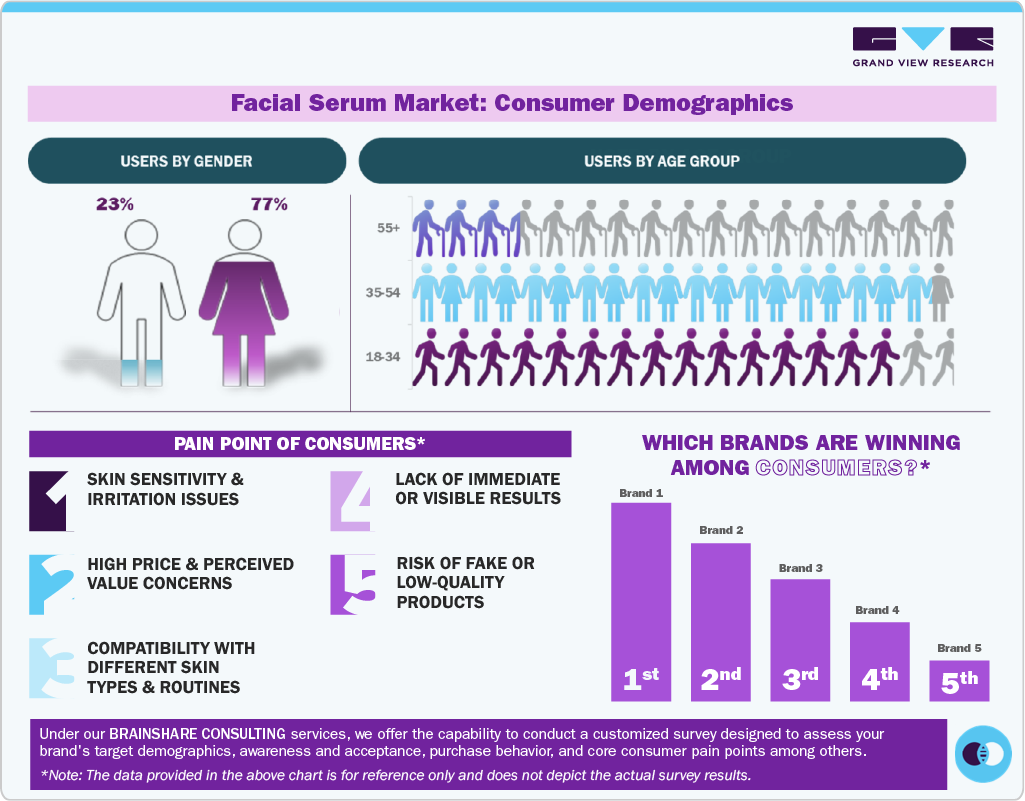
Consumers are increasingly drawn to personalized skincare solutions tailored to their unique skin types and concerns. Customized serums, often supported by AI-driven tools or skin analysis technologies, enhance the overall user experience. This level of personalization improves satisfaction and strengthens brand engagement.
Product performance plays a crucial role in purchase decisions, with consumers expecting quick absorption and noticeable improvements. Benefits such as brighter, smoother, and firmer skin are key expectations. As a result, effectiveness often takes priority over brand loyalty when choosing facial serums.
Type Insights
Anti-aging serums held the revenue share of 32.0% of the facial serum industry in 2025. A growing aging population in many countries has led to increased interest in anti-aging products such as serums and creams. Consumers have become increasingly aware of the importance of preventive skincare and proactive measures against aging. Additionally, celebrity endorsements and social media trends have influenced consumer behavior, driving demand for anti-aging serums.
In January 2026, Martha Stewart launched her skincare brand Elm Biosciences. The brand introduced an anti-aging serum developed after years of research with a dermatologist, designed to improve skin texture, firmness, and radiance. The serum combined familiar and innovative ingredients and was positioned as a science-backed, simplified solution for aging skin with visible results.
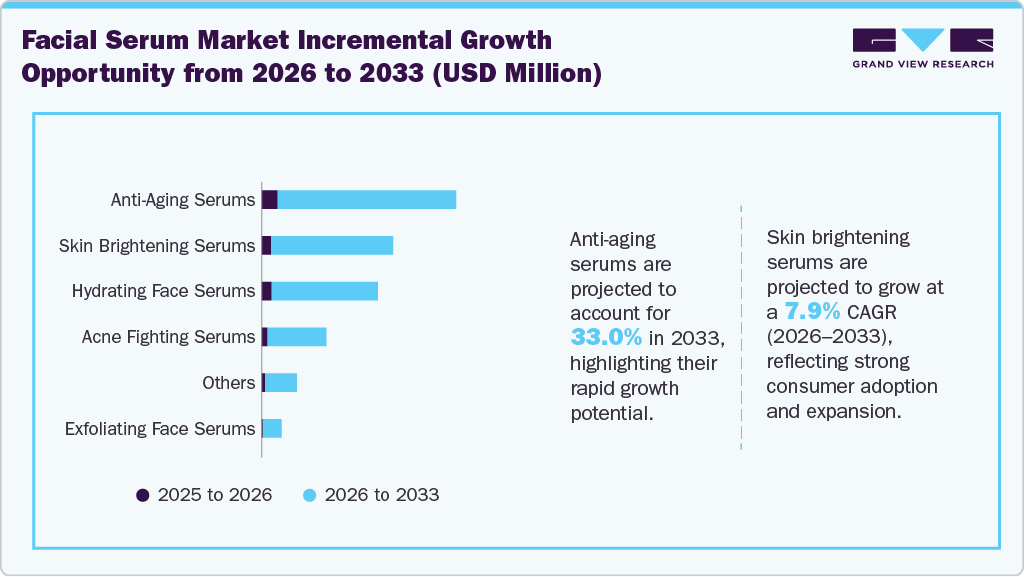
Skin-brightening serums are expected to grow at a CAGR of 7.9% from 2026 to 2033. There is a growing concern about hyperpigmentation caused by sun exposure, acne scars, and hormonal changes. As a result, people are looking for effective solutions to address uneven skin tone, dark spots, and hyperpigmentation. Skin brightening serums are gaining popularity because they offer targeted action. Skin-brightening serums formulated with botanical extracts and gentle ingredients like vitamin C and Niacinamide are becoming more popular as consumers have begun to prefer natural and organic skincare products.
In December 2025, Emcutix Biopharma launched a new liposomal facial serum (SOLGLO-AZ) in India, specifically designed to treat hyperpigmentation issues such as dark spots and uneven skin tone. The serum used advanced delivery technology to improve ingredient absorption and effectiveness while reducing irritation, reflecting a growing focus on science-backed, targeted skincare solutions tailored for Indian consumers.
Form Insights
Water-based facial serums held the revenue share of 44.6% of the facial serum industry in 2025. Water-based serums are formulated with humectants such as hyaluronic acid and glycerin, which attract and retain moisture, leaving the skin plump and hydrated. Their lightweight texture and oil-free nature make them perfect for maintaining a balanced complexion, and they can be easily layered with other skincare products, such as moisturizers and sunscreen, without causing pilling or discomfort. Additionally, many skincare brands are creating water-based serums that target multiple concerns, such as brightening, firming, and pore-minimizing.
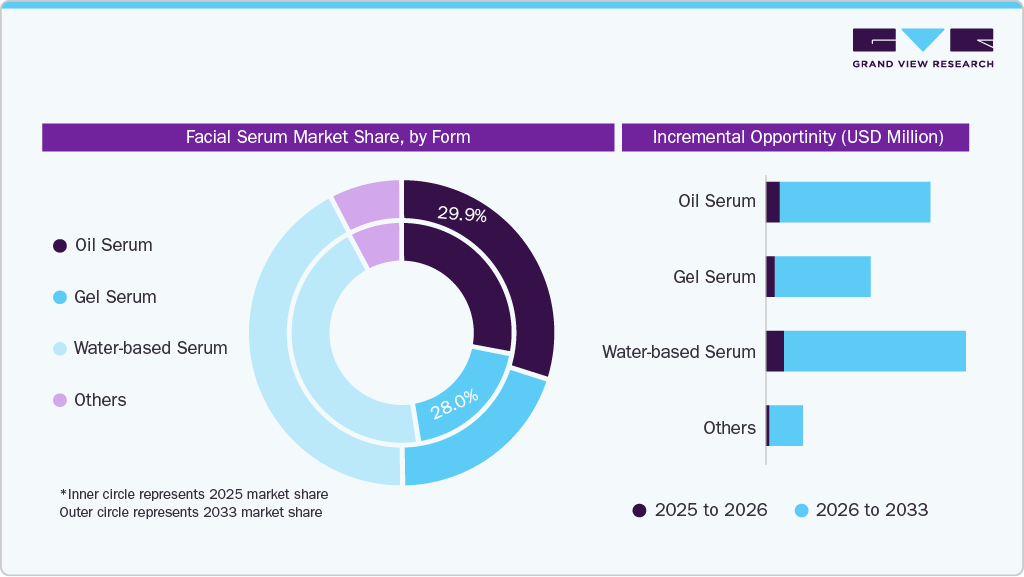
Demand for oil-based facial serums is estimated to witness a CAGR of 8.0% from 2026 to 2033. The demand for natural and plant-based skincare solutions is on the rise, and this trend aligns perfectly with oil-based serums. These serums are often made with pure botanical oils such as jojoba, rosehip, and squalane. Oil-based serums offer versatility, acting as moisturizers, makeup primers, or even massage oils. This appeals to consumers who are looking for streamlined routines and multi-purpose products.
Price Point Insights
The mass-market facial serum held the revenue share of 49.8% in 2025. Mass-market serums are accessible to a wider audience, driven by competitive pricing and larger product volumes. This attracts budget-conscious consumers or those seeking to experiment with serums before investing in luxury options. Mass-market brands are increasingly incorporating innovative ingredients and technologies, like encapsulated retinol or plant-derived alternatives, to bridge the gap with luxury serums while maintaining affordability. Moreover, younger demographics, value-conscious consumers, and individuals new to serums are most likely to gravitate toward mass-market options, driving high demand for these skin serums.
Demand for luxury facial serums is estimated to witness a CAGR of 7.9% from 2026 to 2033 in the facial serum industry. Luxury serums claim to contain advanced ingredients such as plant-derived stem cells, marine collagen, and biocompatible peptides at higher concentrations than mass-market products, ensuring better results. Luxury brands are increasingly adopting sustainable practices, ethically sourced ingredients, and using environmentally-friendly packaging, appealing to eco-conscious consumers. Moreover, social media and influencer marketing are significant factors in raising awareness and influencing purchase decisions based on product claims and influencer recommendations.
Distribution Channel Insights
The sales through supermarkets & hypermarkets held the revenue share of 29.3% of the facial serum industry in 2025. Supermarkets and hypermarkets have a vast network of stores located in convenient locations, making it easy for a wide range of consumers to access their products. This is particularly beneficial for those who prefer physical shopping or are impulsive buyers. Moreover, facial serums can benefit from promotional campaigns and from being placed on shelves alongside complementary products such as moisturizers and cleansers.
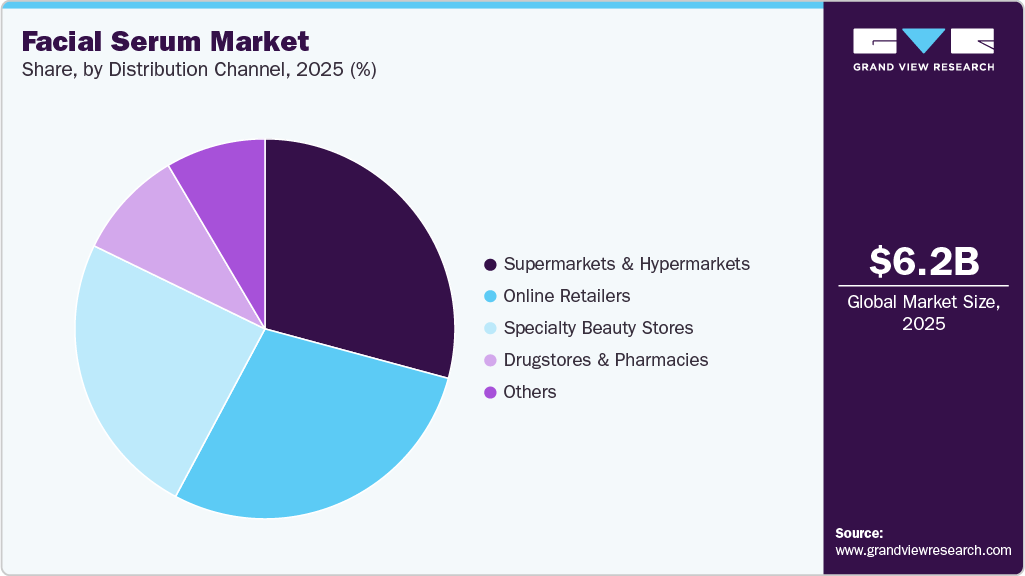
Demand from online retailers is estimated to witness a CAGR of 8.1% from 2026 to 2033. E-commerce platforms offer a wider variety of serums than brick-and-mortar stores. They cater to diverse needs and preferences with ease and offer lower prices due to reduced overhead costs. This attracts budget-conscious consumers and drives price competition. Online shopping provides 24/7 access to a vast array of serums from global brands, exceeding the limitations of geographical location and physical store availability.
Regional Insights
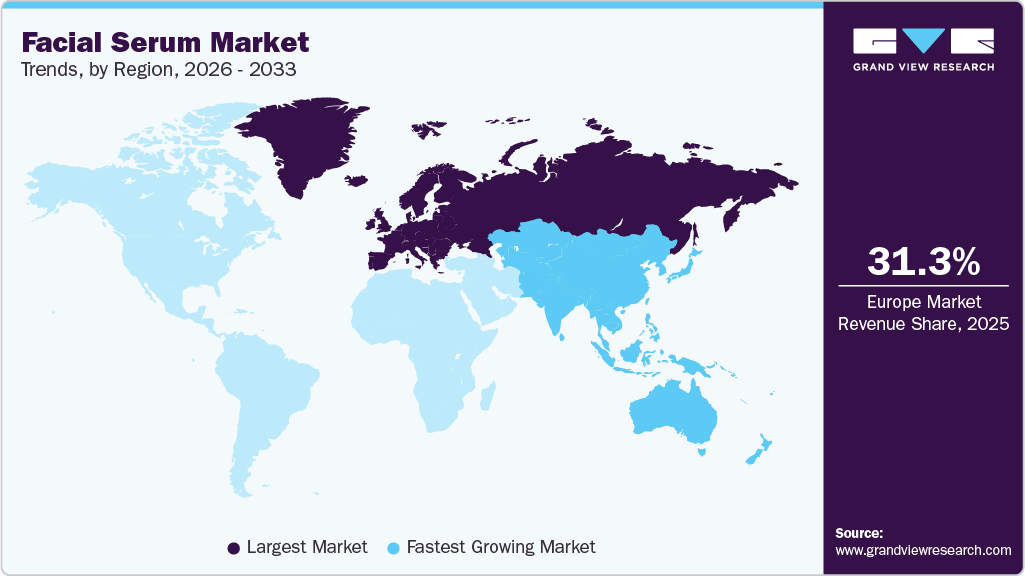
The Europe facial serum market held the revenue share of 31.3% of the global industry in 2025. The market is driven by high disposable incomes and established beauty routines. The willingness of consumers in this region to pay more for premium and luxury beauty products is driving demand for facial serums prepared from natural and organic ingredients. Moreover, rising skin care concerns and the growth of the geriatric population have driven investments in proactive skincare products, with serums seen as targeted solutions for concerns such as aging, acne, and hyperpigmentation.
UK Facial Serum Market Trends
The facial serum market in the UK is estimated to witness a CAGR of 6.3% from 2026 to 2033. The UK market is seeing strong demand for anti-aging and targeted treatments, as consumers increasingly seek solutions for concerns such as wrinkles, fine lines, pigmentation, and loss of firmness. This has significantly driven the growth of the anti-aging facial serum market, with buyers favoring products containing active ingredients like retinol, vitamin C, and peptides that deliver visible results. The shift toward preventive skincare and early adoption among younger consumers has further strengthened demand for targeted serums that address specific skin needs effectively.
The facial serum market in France is estimated to witness a CAGR of 6.7% from 2026 to 2033. The market is seeing rising popularity of brightening and vitamin C serums, driven by consumers' growing preference for radiant, even-toned skin. Vitamin C-based formulations are highly favored for their antioxidant properties and ability to reduce pigmentation and dullness. Alongside this, the hydrating facial serum market is gaining traction as consumers seek products that combine brightening benefits with deep hydration, reflecting a growing demand for multifunctional, skin-enhancing solutions.
In August 2025, French skincare brand Doré partnered with biotech company Evolved By Nature to launch two innovative skincare products powered by advanced peptide technology. This collaboration combined American biotechnology with French skincare expertise, resulting in a formulation that improves hydration, strengthens the skin barrier, and enhances collagen production, while emphasizing clean, gentle, and clinically effective ingredients.
Asia Pacific Facial Serum Market Trends
The facial serum market in Asia Pacific is estimated to witness a CAGR of 8.4% from 2026 to 2033. The middle-class population in the Asia-Pacific region is growing, driving demand for premium facial care products. The region comprises a diverse range of ethnicities and skin types, leading to a range of skin concerns. Sun damage and hyperpigmentation are prevalent in Southeast Asia, while dryness and aging are common in Japan and South Korea. As a result, there is a growing demand for multifunctional face care serums that address these concerns.
The facial serum market in India is estimated to witness a CAGR of 7.9% from 2026 to 2033. The Indian facial serum market is witnessing the emergence of advanced, science-backed formulations, driven by growing consumer demand for effective, clinically proven skincare solutions. Ingredients such as vitamin C, hyaluronic acid, peptides, and retinol are gaining popularity due to their targeted benefits and visible results. This trend is also supporting the growth of the hydrating facial serum market, as consumers increasingly seek formulations that combine deep hydration with scientifically validated performance, reflecting a shift toward result-oriented and technology-driven skincare.
In February 2026, ENTOD Pharmaceuticals launched an AI bio-engineered collagen skin serum called COLLADERM in India, designed for deep skin regeneration and improved hydration, firmness, and elasticity. Developed using advanced transdermal delivery technology and optimized for Indian skin conditions, the product aimed to overcome limitations of traditional collagen treatments and was positioned as a dermatologist-led, science-driven innovation in regenerative skincare.
The facial serum market in China is estimated to witness a CAGR of 8.3% from 2026 to 2033. The market is seeing an increasing preference for premium, high-efficacy products as consumers become more sophisticated and quality-conscious in their skincare choices. Buyers are willing to invest in advanced formulations that offer clinically proven results, superior ingredients, and dermatologist-backed claims. This shift is also driving the growth of the luxury facial serum market, where high-end brands differentiate through innovation, performance, and premium positioning, catering to consumers seeking both efficacy and an elevated skincare experience.
North America Facial Serum Market Trends
The facial serum market in North America is estimated to witness a CAGR of 6.7% from 2026 to 2033. North American consumers are moving beyond one-size-fits-all products toward customized skincare solutions. Buyers are seeking serums tailored to their specific skin types, concerns, and environmental factors, often supported by AI-driven tools and skin analysis technologies. At the same time, there is a growing emphasis on long-term skin health, with consumers prioritizing barrier repair, hydration, and preventive care, reflecting a shift toward more holistic and results-oriented skincare routines.
The facial serum market in the U.S. is estimated to witness a CAGR of 6.6% from 2026 to 2033. The U.S. facial serum market is experiencing strong demand for anti-aging and preventive skincare, as consumers increasingly focus on maintaining youthful skin and delaying the visible signs of aging. This has significantly contributed to the growth of the anti-aging facial serum market, with a strong preference for products that target wrinkles, fine lines, and skin elasticity. Additionally, younger consumers are adopting preventive skincare routines early, further driving demand for serums that offer long-term skin health benefits and visible results.
The facial serum market in Canada is estimated to witness a CAGR of 7.7% from 2026 to 2033. The rising popularity of dermocosmetic brands increasingly influences the market, as consumers prioritize high-quality, dermatologist-recommended products with proven efficacy. This trend is driving the growth of the luxury facial serum market, where brands differentiate through advanced formulations, clinical backing, and superior ingredients, catering to consumers seeking both performance and a premium skincare experience.
Middle East & Asia Facial Serum Market Trends
The facial serum market in the Middle East & Asia is estimated to witness a CAGR of 7.8% from 2026 to 2033. The Middle East & Asia region is witnessing a strong focus on innovation and advanced ingredients, as brands continue to develop high-performance formulations that incorporate actives such as peptides, vitamin C, and bio-engineered compounds. This trend is driving growth in the cosmetics face serum market, with consumers increasingly seeking scientifically advanced products that deliver targeted, effective, and long-lasting skincare results.
Central and South America Facial Serum Market Trends
The facial serum market in the Central and South America is estimated to witness a CAGR of 7.3% from 2026 to 2033. The Central and South America region is witnessing a strong influence of global and Asian beauty trends, particularly K-beauty, which is encouraging consumers to adopt multi-step skincare routines and innovative formulations. This trend is positively impacting the cosmetics face serum market, as demand rises for lightweight, multifunctional, and ingredient-focused serums that align with global beauty standards and evolving consumer preferences.
Key Facial Serum Company Insights
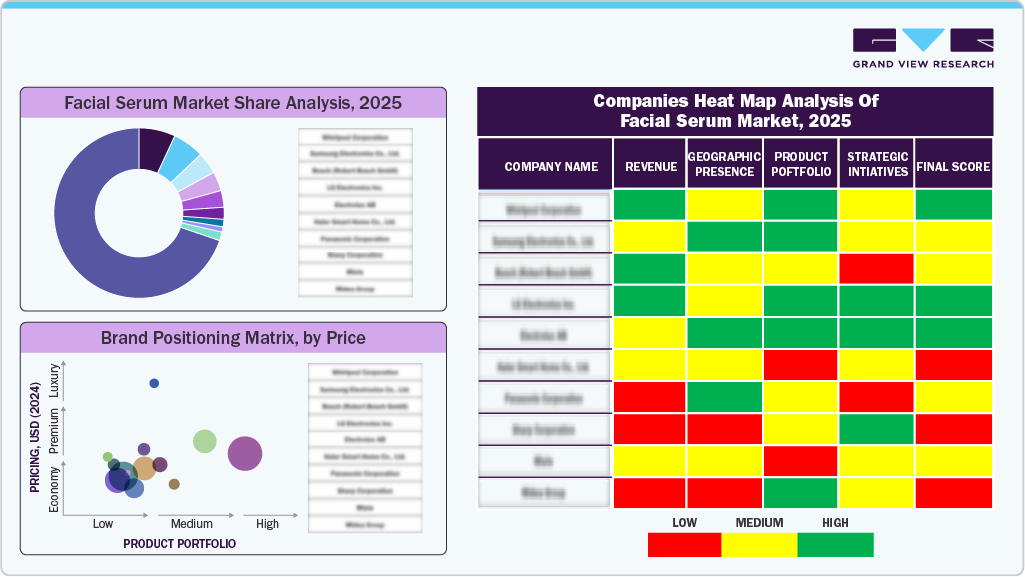
The facial serum market was highly competitive and moderately fragmented, with several multinational skincare companies, dermatology-focused brands, and emerging indie beauty labels. Key participants included established global players in the personal care and cosmetics industry, as well as smaller brands specializing in clean, clinical, and targeted skincare solutions. Companies competed through continuous product innovation, advanced formulations with active ingredients, premiumization strategies, and strong brand positioning, while addressing consumer priorities such as efficacy, skin compatibility, anti-aging benefits, and sustainability.
Key Facial Serum Companies:
The following key companies have been profiled for this study on the facial serum market.
- L'Oréal S.A.
- Galderma S.A.
- Amorepacific Group Inc
- KOSÉ Corporation
- Clarins Inc.
- Unilever plc.
- Shiseido Company Limited
- Beiersdorf AG
- Estée Lauder Companies Inc.
- Revlon Inc.
Recent Developments
-
In March 2026, Galderma introduced a new line of Cetaphil AM/PM Antioxidant Serums designed specifically for sensitive skin, addressing a gap in the antioxidant serum category. The dual-system approach focused on daytime environmental protection and nighttime skin repair, combining clinically tested ingredients to strengthen the skin barrier and reduce oxidative stress. The launch reinforced the company’s strategy to expand science-backed skincare offerings within dermatologist-recommended brands.
-
In March 2026, Dr. Barbara Sturm expanded its product portfolio with the launch of the Exoso-Metic Face Serum, incorporating biomimetic peptides and exosome-based technology. The formulation targeted cellular-level repair and anti-aging by leveraging lab-engineered exosomes known for their regenerative properties. The launch aligned with the brand’s continued focus on molecular and inflammation-based skincare research following its strategic expansion under new ownership.
-
In March 2026, Givaudan Active Beauty launched VectorHyal, an advanced hyaluronic acid-based delivery system designed to enhance the efficacy of skincare formulations, including serums. The technology enabled controlled release of active ingredients and improved stability, allowing brands to develop next-generation facial serums with higher performance and targeted delivery. The innovation was positioned as a platform solution to support evolving formulation needs in premium skincare.
-
In February 2026, ENTOD Pharmaceuticals announced the launch of its AI-enabled bio-engineered collagen serum, COLLADERM, marking a significant advancement in regenerative skincare. The product was developed using artificial intelligence to enhance collagen synthesis and support deeper skin repair, positioning it within the clinical dermatology segment. The company highlighted that the formulation aimed to improve skin elasticity and regeneration through precision-driven biotechnology, reflecting the growing convergence of pharma-grade innovation and cosmetic skincare solutions.
-
In September 2025, Genaura launched with a flagship serum powered by Levagen+, a patented ingredient that reduces inflammation, improves hydration, and strengthens the skin barrier, addressing concerns such as aging and sensitivity. It emphasized bridging the gap between high-end beauty and real scientific efficacy, reflecting a broader industry shift toward evidence-based, results-driven skincare rather than purely marketing-led products.
-
In May 2025, Elemental Herbology launched its “Pause and Renew” facial serum, specifically designed to address skin concerns associated with perimenopause and menopause. The product targeted hormonal changes that often led to dryness, sensitivity, and loss of elasticity, offering a tailored skincare solution.
-
In October 2025, Gold Bond partnered with comedian Chelsea Handler to launch its new Plumping Collagen Body & Face Serum Lotion, using a bold and experiential marketing campaign to highlight the product’s benefits. The product, formulated with collagen peptides and nourishing oils, aimed to deliver visible hydration and firmness.
-
In February 2025, Alkem Laboratories launched its Kojiglo serum in India to manage facial hyperpigmentation, expanding its presence in the dermatology skincare segment. The company introduced the product with advanced Duo-Lipo liposomal technology, which enhanced the penetration and effectiveness of active ingredients such as azelaic acid, tranexamic acid, alpha arbutin, and niacinamide. The serum aimed to deliver targeted treatment while minimizing skin irritation, and it was positioned as a prescription-based solution.
Facial Serum Market Report Scope
Report Attribute
Details
Market size value in 2026
USD 6.59 billion
Revenue forecast in 2033
USD 10.66 billion
Growth rate
CAGR of 7.1% from 2026 to 2033
Historical data
2021 - 2025
Forecast period
2026 - 2033
Quantitative units
Revenue in USD million/billion, and CAGR from 2026 to 2033
Report coverage
Revenue forecast, company ranking, competitive landscape, growth factors, and trends
Segments covered
Type, form, distribution channel, price point, region
Regional scope
North America; Europe; Asia Pacific; Central & South America; Middle East & Africa
Country scope
U.S.; Canada; Mexico; Germany; UK; France; Italy; Spain; China; Japan; India; South Korea; Australia & New Zealand; Brazil; Argentina; Saudi Arabia; South Africa
Key companies profiled
L'Oréal S.A.; Galderma S.A.; Amorepacific Group Inc; KOSÉ Corporation; Clarins; Unilever Plc; Shiseido Company Limited; Beiersdorf AG; Estée Lauder Companies Inc; Revlon.
Customization scope
Free report customization (equivalent up to 8 analysts working days) with purchase. Addition or alteration to country, regional & segment scope.
Pricing and purchase options
Avail customized purchase options to meet your exact research needs. Explore purchase options
Global Facial Serum Market Report Segmentation
This report forecasts revenue growth at global, regional & country levels and provides an analysis of the latest trends and opportunities in each of the sub-segments from 2021 to 2033. For the purpose of this study, Grand View Research has segmented the global facial serum market report on the basis of type, form, distribution channel, price point, and region.
-
Type Outlook (USD Billion, 2021 - 2033)
-
Anti-Aging Serums
-
Skin Brightening Serums
-
Acne Fighting Serums
-
Hydrating Face Serums
-
Exfoliating Face Serums
-
Others
-
-
Form Outlook (USD Billion, 2021 - 2033)
-
Oil based
-
Gel based
-
Water based
-
Others
-
-
Distribution Channel Outlook (USD Billion, 2021 - 2033)
-
Supermarkets & Hypermarkets
-
Drugstores & Pharmacies
-
Specialty Beauty Stores
-
Online Retailers
-
Others
-
-
Price Point Outlook (USD Billion, 2021 - 2033)
-
Mass-Market
-
Premium
-
Luxury
-
-
Regional Outlook (Revenue, USD Billion, 2021 - 2033)
-
North America
-
U.S.
-
Canada
-
Mexico
-
-
Europe
-
Germany
-
UK
-
France
-
Italy
-
Spain
-
-
Asia Pacific
-
China
-
India
-
Japan
-
South Korea
-
Australia & New Zealand
-
-
Central & South America
-
Brazil
-
Argentina
-
-
Middle East & Africa
-
South Africa
-
Saudi Arabia
-
-
Frequently Asked Questions About This Report
b. The global facial serum market was estimated at USD 6.20 billion in 2025 and is expected to reach USD 6.59 billion in 2026.
b. The global facial serum market is expected to grow at a compound annual growth rate of 7.1% from 2026 to 2033 to reach USD 10.66 billion by 2033.
b. Anti-aging serums held the revenue share of 32.0% of the facial serum industry in 2025. A growing aging population in many countries has led to increased interest in anti-aging products such as serums and creams.
b. Some of the key players operating in the facial serum market include L'Oréal S.A.; Galderma S.A.; Amorepacific Group Inc; KOSÉ Corporation; Clarins Inc; Unilever Plc; Shiseido Company Limited; Beiersdorf AG; Estée Lauder Companies Inc; Revlon
b. Key factors that are driving the facial serum market growth include growing consumer concerns related to dark circles, acne, hyperpigmentation, & age spots, the importance of preventative skincare, and protecting and maintaining healthy skin.


Share this report with your colleague or friend.
Need a Tailored Report?
Customize this report to your needs — add regions, segments, or data points, with 20% free customization.


ISO 9001:2015 & 27001:2022 Certified
We are GDPR and CCPA compliant! Your transaction & personal information is safe and secure. For more details, please read our privacy policy.
Trusted market insights - try a free sample
See how our reports are structured and why industry leaders rely on Grand View Research. Get a free sample or ask us to tailor this report to your needs.