
- Home
- »
- Beauty & Personal Care
- »
-
Skin Care Products Market Size, Share, Industry Report 2033GVR Report cover
![Skin Care Products Market Size, Share & Trends Report]()
Skin Care Products Market (2026 - 2033) Size, Share & Trends Analysis Report By Product (Face Creams & Moisturizers, Sunscreen), By Gender (Male, Female), By Price Range, By Distribution Channel, By Region, And Segment Forecasts
- Report ID: 978-1-68038-902-9
- Number of Report Pages: 85
- Format: PDF
- Historical Range: 2021 - 2025
- Forecast Period: 2026 - 2033
- Industry: Consumer Goods
- Report Summary
- Table of Contents
- Segmentation
- Methodology
- Download FREE Sample
-
 Download Sample Report
Skin Care Products Market Summary
The global skin care products market size was estimated at USD 155.84 billion in 2025 and is projected to reach USD 202.77 billion by 2033, growing at a CAGR of 3.1% from 2026 to 2033. Growing awareness among consumers about skincare, wellness, and the importance of maintaining healthy skin has led to an increased demand for skincare products. Escalating demand for face creams, sunscreens, and body lotions across the globe is expected to positively impact the growth.
Key Market Trends & Insights
- Asia Pacific skin care products market led with a share of 40.2% in 2025.
- By gender, females led the market and accounted for a share of 61.3% in 2025.
- By product, face creams & moisturizers led the market and accounted for a share of 41.9% in 2025.
- By distribution channel, supermarkets & hypermarkets led the market and accounted for a share of 43.3% in 2025.
Market Size & Forecast
- 2025 Market Size: USD 155.84 Billion
- 2033 Projected Market Size: USD 202.77 Billion
- CAGR (2026-2033): 3.1%
- Asia Pacific: Largest Market in 2025
The influence of social media, beauty influencers, and online beauty communities plays a significant role in shaping consumer preferences. Trends and product recommendations shared on social platforms impact purchasing decisions. Moreover, the flourishing e-commerce sector is anticipated to boost market growth further.Rising awareness of skin barrier health, the importance of sun protection, and the long-term benefits of active ingredients such as retinoids, antioxidants, ceramides, and peptides has strengthened demand for products backed by credible dermatological science. Consumers now perceive skincare not merely as a cosmetic enhancer but as an essential component of daily health maintenance.
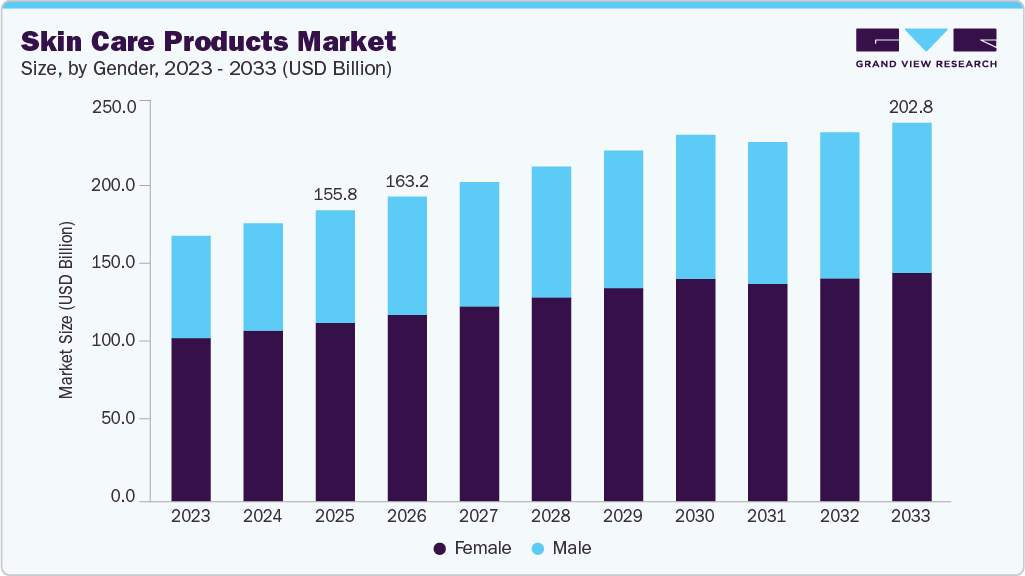
Growth in digital media consumption has further accelerated this shift. Social platforms such as Instagram, TikTok, and YouTube have played a significant role in educating consumers about ingredients, routines, and treatment outcomes. Influencer-led demonstrations, before-and-after comparisons, and user-generated product reviews have increased transparency and trust while fuelling rapid adoption of trending formulations. This heightened exposure to skincare content has also encouraged experimentation across categories, driving demand for serums, exfoliants, sunscreens, and specialized treatment products.
Rising dermatological concerns are also contributing to market expansion. Increased pollution levels, climate variability, lifestyle stress, and post-pandemic issues such as mask-related acne have led to higher incidence of sensitive skin, pigmentation, and breakouts. As a result, consumers are increasingly seeking dermatologist-recommended and clinically validated solutions that offer targeted results. This has strengthened the positioning of cosmeceutical and pharmaceutical skincare brands known for their efficacy and safety profiles.
Economy-priced skincare products are budget-friendly, making them accessible to a broad consumer base, including those on tighter budgets. This affordability enhances the appeal of these products. However, there is a shift in consumer preferences toward premium and luxury experiences. Consumers view skincare as a form of self-care and are willing to invest in premium skin care products that offer enhanced benefits and a more indulgent skincare routine. This is leading to an increasing investment in the research & development of products, coupled with the rising trend of natural ingredient-based skincare products, which has encouraged manufacturers to launch new products. For instance, in September 2025, Cetaphil has launched its new Skin Activator Hydrating & Firming Line, developed in collaboration with dermatologists to address aging, thinning, and fragile skin by rejuvenating the skin's surface cells using microdosed AHA and encapsulated centella asiatica (CICA). The products improve hydration, firmness, and skin texture, showing visible results within one week, and are now available in the U.S., with global expansion planned.
Consumer Insights
Consumer preferences in the skincare market have shifted toward products that deliver visible results, prioritize ingredient transparency, and align with broader wellness and sustainability values. Across markets, there is a growing inclination toward science-backed formulations, including active ingredients such as retinoids, niacinamide, vitamin C, peptides, ceramides, and hyaluronic acid. Consumers increasingly seek products with a clear clinical rationale, supported by dermatological testing or peer-reviewed evidence.
Personalization is becoming a defining expectation. Individuals prefer routines tailored to their specific skin type, lifestyle, and environmental exposure. This has driven interest in skin analyses whether through virtual tools, diagnostics apps, or in-store assessments, and boosted demand for customizable serums, treatment boosters, and multi-step regimens. Simultaneously, the preference for clean, non-toxic, and environmentally responsible products continues to grow. Eco-conscious consumers want formulations free from perceived irritants (e.g., parabens, sulfates, synthetic fragrances) and packaged responsibly, reflecting a rising emphasis on sustainability.
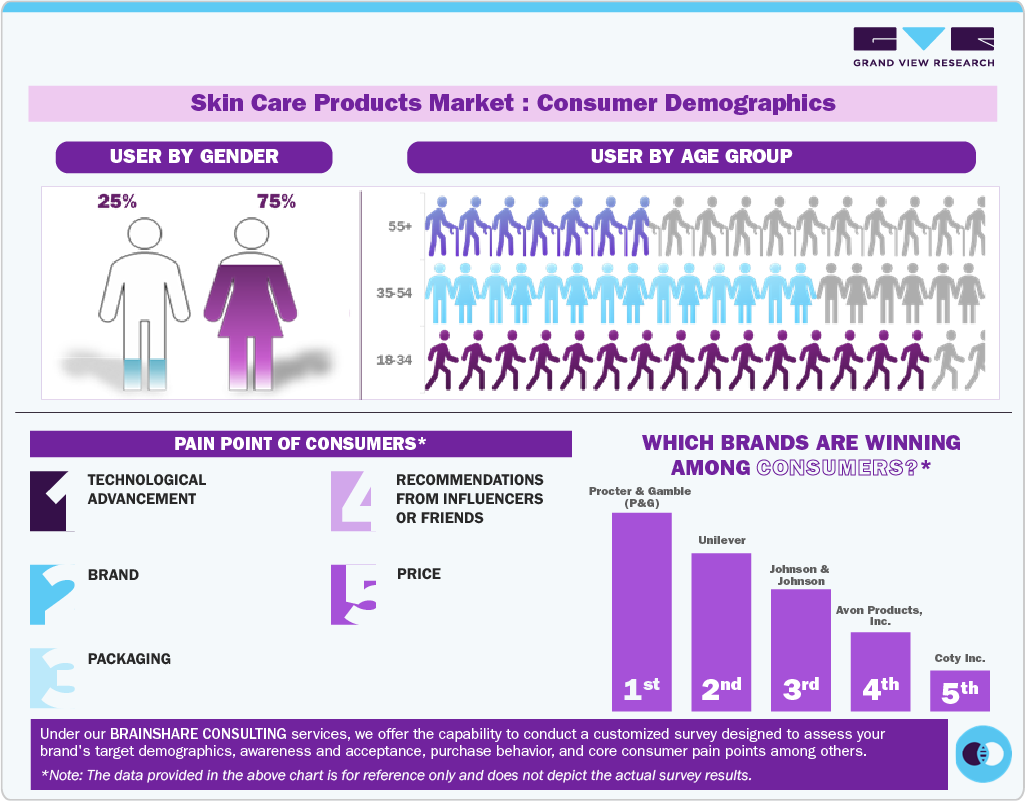
Younger consumers, particularly Gen Z, exhibit the highest willingness to experiment with new skincare products. Their digital-native orientation exposes them to a constant stream of skincare education, ingredient breakdowns, and peer reviews on platforms such as TikTok, Instagram, and YouTube. This real-time access reduces perceived risk and promotes curiosity-driven experimentation. For this cohort, skincare is intertwined with self-expression, emotional well-being, and daily self-care rituals. Their openness to gender-neutral products, innovative textures, and novel delivery formats such as serums-in-stick, waterless cleansers, or microbiome-supporting formulations illustrates their readiness to explore emerging categories. Furthermore, the expectation of authenticity and value alignment motivates Gen Z to adopt brands that champion inclusivity, sustainability, and transparent scientific communication.
Convenience and experience also shape modern preferences. Consumers value textures that are lightweight, non-greasy, fast-absorbing, and suitable for daily use. Minimalist routines (“skinimalism”) coexist with advanced routines among enthusiasts, illustrating broader experimentation within the category. Importantly, trust signals-such as dermatologist recommendations, third-party certifications, and clinical trial claims-remain instrumental in a consumer’s final purchase decision.
Gender Insights
The female segment held the largest revenue share of 61.3% in 2025. Women are increasingly adding personal grooming products to their daily routines to enhance their confidence and appearance, which is significantly contributing to the segment's growth. Furthermore, the importance of self-care in recent years has encouraged women to proactively create relaxing self-care experiences through complex skincare routines at home. This trend is driving the demand for skincare products with active ingredients that have healing and nourishing properties, including creams, lotions, repair creams, peels, masks, serums, powders, and scrubs.
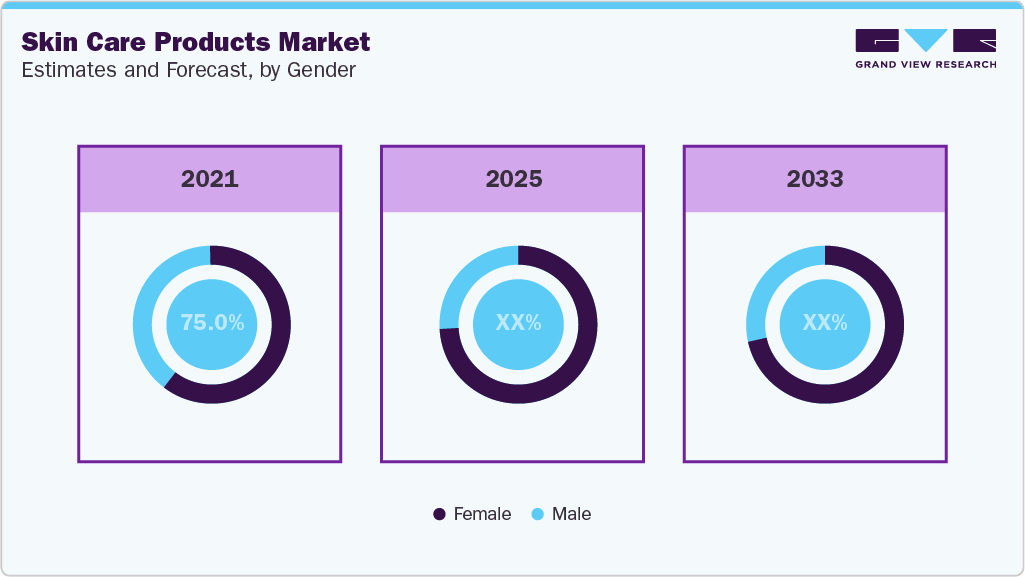
The male segment is projected to register the fastest CAGR of 3.5% from 2026 to 2033. The growing awareness among males regarding personal hygiene and regular grooming, increased product launches, celebrity endorsements, and rising disposable income are the major factors fueling the expansion of the men's skincare market. The appetite of men for skin care products is evolving beyond traditional grooming products such as deodorants, razors, and face wash to more specific skincare products like anti-aging and sun protection creams. The demand for anti-aging creams and sunscreens among men is expected to witness substantial growth in the near future.
Price Range Insights
Mass skin care products accounted for a market share of 40.0% in 2025. Demand for mass skin care products is primarily driven by rising skin health awareness, growing urban populations, and increasing penetration of affordable products across both physical retail and e-commerce channels. Consumers are adopting basic, preventive skincare routines for cleansing, moisturizing, sun protection, and pollution defense, supported by greater access to information through social media and digital platforms. Mass brands are also benefiting from continuous formulation upgrades, such as the inclusion of SPF, dermatology-inspired actives, and multi-functional benefits, while maintaining accessible price points. In addition, expanding middle-income groups, higher frequency of daily use, and increasing adoption among men and younger consumers are reinforcing sustained volume-driven growth in the mass skin care category.
The demand for premium skin care products is projected to register the fastest CAGR of 4.1% from 2026 to 2033. The growth of premium skin care products is driven by rising consumer aspirations, higher willingness to pay for proven efficacy, and the perception of skincare as a long-term investment in skin health and self-care. Consumers are increasingly seeking advanced formulations with clinically backed ingredients, targeted solutions for concerns such as aging, pigmentation, and sensitivity, and differentiated sensorial experiences. Premiumization trends, supported by dermatologist recommendations, influencer-led education, and strong brand storytelling, are encouraging consumers to trade up from mass products, particularly in high-performance categories such as serums, treatments, and anti-aging solutions. Additionally, demand for personalization, clean and sustainable formulations, and luxury packaging continues to elevate premium skincare as a lifestyle and wellness-oriented purchase rather than a basic necessity.
Product Insights
Face creams and moisturizers held the largest revenue share of 41.9% in 2025. Face creams and moisturizers are among the most used items, as these are frequently applied. Apart from benefits such as instant hydration, reduced breakouts, and refreshed skin, moisturizers are an easy-to-use, hassle-free, and quick solution for combating dry skin. Furthermore, with a growing number of consumers opting for cruelty-free skincare products due to their heightened awareness of animal welfare and environmental concerns, the demand for vegan or blended plant-based ingredients in skincare products has increased. Thus, the face creams and moisturizers segment is expected to exhibit significant growth opportunities in the future. Consumers are becoming more educated about the benefits of moisturizing to keep the skin hydrated, supple, and protected, thus driving the growth of the moisturizer market.
The shaving lotions and creams segment is projected to register the fastest CAGR of 3.9% from 2026 to 2033. The growth is mainly due to an increasing number of people embracing corporate culture and prioritizing personal grooming. The market is anticipated to be driven by increased spending. Consumers typically shave to remove facial hair. Growing awareness regarding self-grooming, coupled with the rising disposable income, is expected to positively impact the growth of the shaving lotions and creams market. Increasing awareness through advertisements, social media blogs, YouTube channels, and influencer marketing is likely to further augment demand.
Distribution Channel Insights
The supermarkets and hypermarkets segment held the largest revenue share of 43.3% in 2025. Supermarkets and hypermarkets offer significant advantages to consumers, such as freedom of selection, lower prices, and high visibility of international brands, which makes them a suitable platform for all customers. As supermarkets/hypermarkets offer significant advantages to consumers, such as freedom of selection, lower prices, and high visibility of international brands, they make them a suitable platform for customers of all types of skincare products.
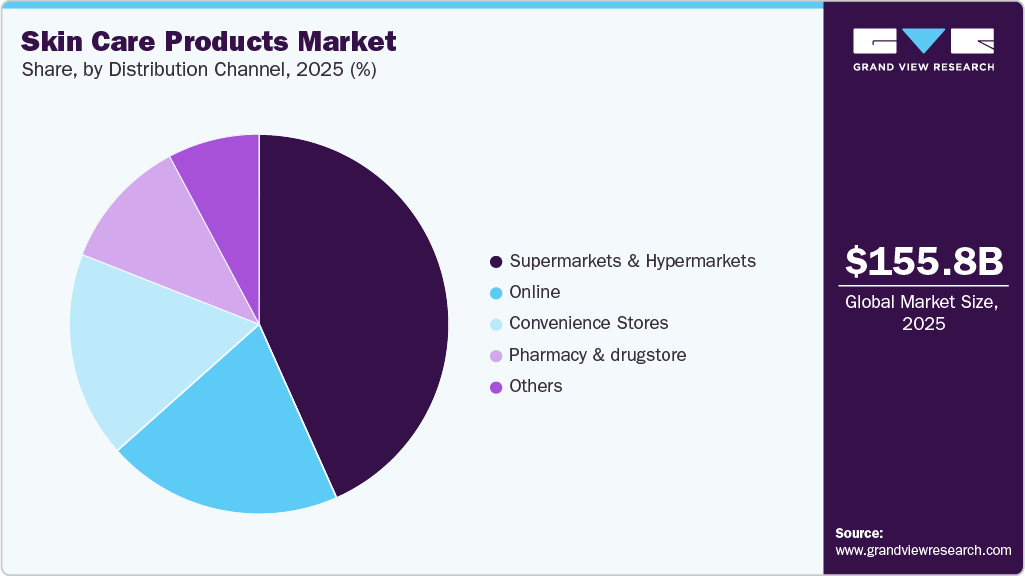
The online channel is projected to register a CAGR of 3.9% from 2026 to 2033. Consumers increasingly prefer digital channels because they offer detailed product information, ingredient transparency, dermatologist-backed reviews, and comparison tools that are often unavailable in physical stores. The surge in influencer-driven education on platforms like Instagram, TikTok, and YouTube has also accelerated online discovery and trial of new skincare brands. Additionally, e-commerce platforms provide subscription models, exclusive online-only product lines, and faster delivery options, which collectively enhance shopper convenience.
Regional Insights
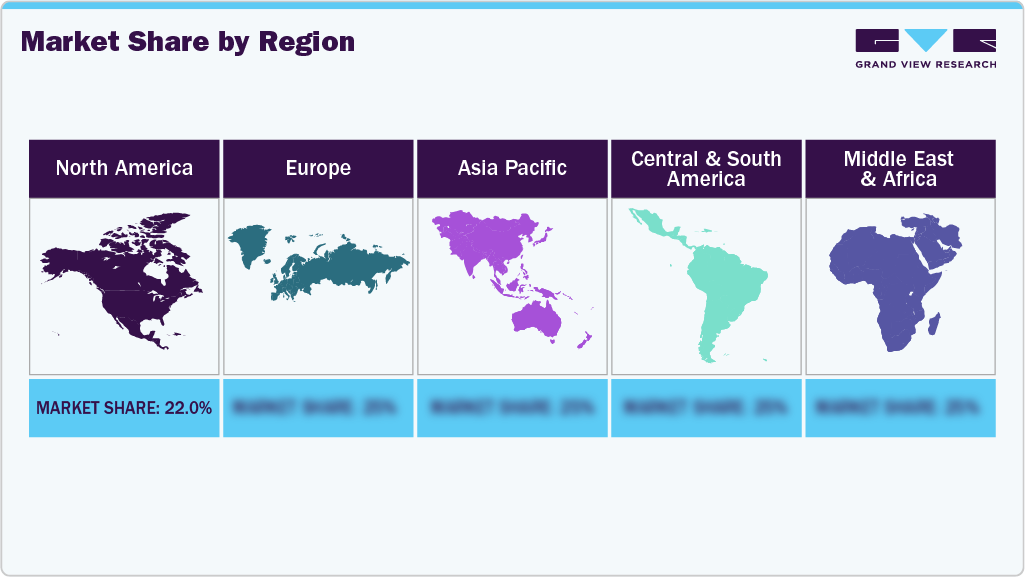
North America skin care products market is expected to register a CAGR of 2.8% from 2026 to 2033. Consumers in North American countries such as the U.S. and Canada are willing to pay a high price for a more youthful appearance, along with brighter and glowing skin. The rising consumer demand for specific skin care solutions and increasing consciousness regarding specific ingredients are expected to boost the demand for personalized beauty products. The presence of well-established product manufacturers in North America, such as Procter & Gamble and Unilever, along with the growing infrastructure facilities for retailers, is expected to support the demand for skin care products.
Europe Skin Care Products Market Trends
The skin care products market in Europe is expected to register a CAGR of 2.8% from 2026 to 2033. Consumers increasingly prioritize preventive self-care, driven by rising awareness of skin health, sun protection, and early anti-aging routines. Higher disposable incomes and the growing influence of dermatologists, social media creators, and beauty-focused retail platforms have accelerated the adoption of scientifically backed, ingredient-driven formulations such as retinoids, niacinamide, peptides, and ceramides. Additionally, the surge in stress-related skin conditions, post-pandemic wellness habits, and the expansion of premium clean-beauty and personalized skincare brands continue to fuel strong market growth across the region.
Asia Pacific Skin Care Products Market Trends
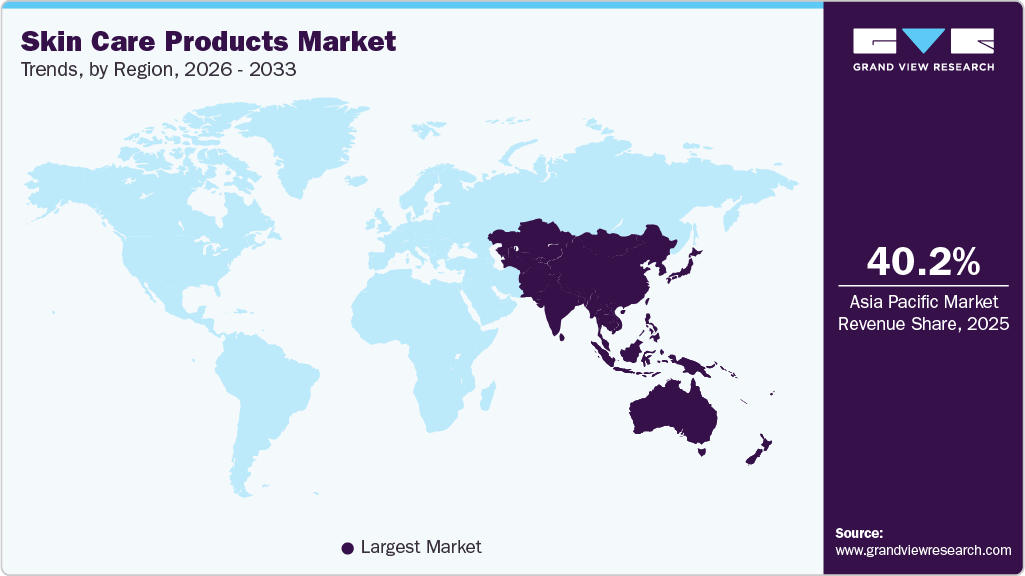
The skin care products market in Asia Pacific held the largest revenue share of 40.2% in 2025. The expansion of the chemical industry in India and China, both of which are backed by regulatory support, is expected to ensure continuous raw material access to skincare product manufacturers and thus be a positive factor for the market in the Asia Pacific over the forecast period. China is among the major countries contributing to the growth of the global cosmetics and market of skin care products market, in terms of consumption as well as production. Various government policies are also promoting the demand for skin care products in the country. The skincare products industry in the Philippines has been witnessing steady growth, driven by increasing consumer awareness of skincare, beauty trends, and a growing middle class with disposable income for personal care products.
Central & South America Skin Care Products Market Trends
The skin care products market in Central & South America is expected to register a CAGR of 3.3% from 2026 to 2033. The demand for skincare products in Central and South America is increasing due to a combination of demographic shifts, rising incomes, and increased beauty consciousness across the region. Consumers are increasingly prioritizing preventive skincare, driven by a greater awareness of the risks associated with sun exposure, pollution, and premature aging particularly in urban centers such as São Paulo, Bogotá, Santiago, and Mexico City. Social media, beauty influencers, and K-beauty trends have accelerated the adoption of multi-step skincare routines, while expanding middle-class purchasing power supports the shift toward premium and dermo cosmetic brands.
Middle East & Africa Skin Care Products Market Trends
The skin care products market in the Middle East & Africa is expected to register a CAGR of 2.9% from 2026 to 2033. Demand for skincare products is rising across the Middle East & Africa due to a combination of demographic, lifestyle, and environmental factors. A young, urbanizing population with increasing disposable income is driving higher spending on personal care and premium beauty products. Harsh climatic conditions, such as high UV exposure, heat, and dry weather, are also boosting consumer focus on sun protection, hydration, and skin barrier repair. Additionally, growing beauty consciousness, social media influence, and the expansion of international and regional beauty brands are accelerating product adoption.
Key Skin Care Products Company Insights
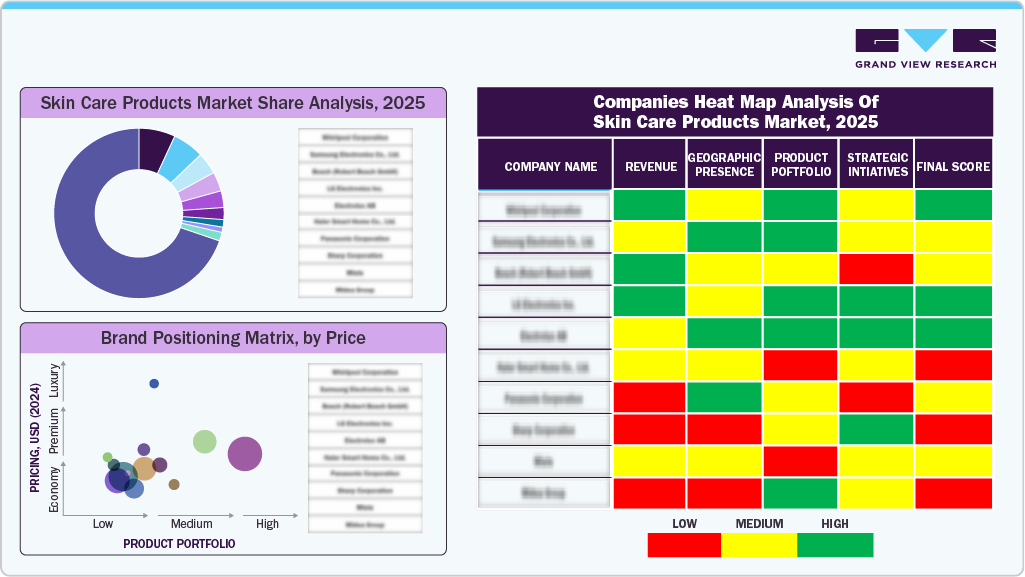
Key players operating in the skin care products market are undertaking various initiatives to strengthen their presence and increase the reach of their products and services. Strategies such as expansion activities and partnerships are key in propelling the market growth.
Key Skin Care Products Companies:
The following are the leading companies in the skin care products market. These companies collectively hold the largest market share and dictate industry trends.
- L’Oréal S.A.
- Beiersdorf AG
- Shiseido Co., Ltd.
- Procter & Gamble (P&G)
- Unilever
- Johnson & Johnson, Inc.
- Avon Products, Inc.
- Coty Inc.
- Colgate-Palmolive Company
- Revlon
Recent Developments
-
In September 2025, Ceuticoz, a dermatologist-led skincare brand, partnered with Dabur NewU, a leading beauty and wellness retail chain. Ceuticoz's bestselling serums, sunscreens, and treatment essentials are now available in 25 NewU stores, with plans to expand to over 100 outlets across India in the next six months. The partnership aims to make high-performance skincare more accessible and to enhance consumer education and personalized experiences in modern retail environments.
-
In October 2025, SkinMedica announced reimagined packaging for its products and launched a new item called the HA5 R Hydra Collagen Water Burst Moisturizer, which focuses on advanced hydration and skin health benefits for consumers.
-
In May 2025, Natural Grocers launched a new luxury vegan skincare collection featuring body butters, sugar scrubs, body washes, and creams designed to offer a spa-inspired self-care experience at affordable prices. The line is made without parabens, petroleum, synthetic fragrances, and includes essential oils and acacia-derived phyto-collagen. The collection expands Natural Grocers' house brand, which emphasizes high quality and affordability.
Skin Care Products Market Report Scope
Report Attribute
Details
Market size value in 2026
USD 163.24 billion
Revenue forecast in 2033
USD 202.77 billion
Growth rate
CAGR of 3.1% from 2026 to 2033
Actual data
2021 - 2025
Forecast period
2026 - 2033
Quantitative units
Revenue in USD million/billion, and CAGR from 2026 to 2033
Report coverage
Revenue forecast, company ranking, competitive landscape, growth factors, and trends
Segment covered
Gender, product, price range, distribution channel, region
Regional scope
North America; Europe; Asia Pacific; Central & South America; Middle East & Africa
Country scope
U.S; Canada; Mexico; Germany; UK; Spain; Italy; France; China; India; Japan; South Korea; Australia; Brazil; South Africa; Saudi Arabia
Key companies profiled
L’Oréal S.A.; Beiersdorf AG; Shiseido Co. Ltd.; Procter & Gamble (P&G); Unilever; Johnson & Johnson Services, Inc.; Avon Products, Inc.; Coty Inc.; Colgate-Palmolive Company; Revlon
Customization scope
Free report customization (equivalent up to 8 analysts working days) with purchase. Addition or alteration to country, regional & segment scope.
Pricing and purchase options
Avail customized purchase options to meet your exact research needs. Explore purchase options Global Skin Care Products Market Report Segmentation
This report forecasts revenue growth at the global, regional, and country levels and provides an analysis of the latest industry trends and opportunities in each of the sub-segment from 2021 to 2033. For this study, Grand View Research has segmented the global skin care products market report on the basis of gender, product, price range, distribution channel, and region:
-
Gender Outlook (Revenue, USD Billion, 2021 - 2033)
-
Male
-
Female
-
-
Product Outlook (Revenue, USD Billion, 2021 - 2033)
-
Face Creams & Moisturizers
-
Cleansers & Face Wash
-
Sunscreen
-
Body Creams & Moisturizers
-
Shaving Lotions & Creams
-
Others
-
-
Distribution Channel Outlook (Revenue, USD Billion, 2021 - 2033)
-
Supermarkets & Hypermarkets
-
Convenience Stores
-
Pharmacy & drugstore
-
Online
-
Others
-
-
Price Range Outlook (Revenue, USD Billion, 2021 - 2033)
-
Economy
-
Mid-Range
-
Premium
-
-
Regional Outlook (Revenue, USD Billion, 2021 - 2033)
-
North America
-
U.S.
-
Canada
-
Mexico
-
-
Europe
-
Germany
-
UK
-
Spain
-
Italy
-
France
-
-
Asia Pacific
-
China
-
India
-
Japan
-
South Korea
-
Australia
-
-
Central & South America
-
Brazil
-
-
Middle East & Africa
-
South Africa
-
Saudi Arabia
-
-
Frequently Asked Questions About This Report
b. Some key players operating in the skin care products market include L’Oréal S.A., Beiersdorf AG, Shiseido Co., Ltd., Procter & Gamble (P&G), Unilever, and Johnson & Johnson, Inc.
b. Escalating demand for face creams, sunscreens, and body lotions across the globe is expected to have a positive impact on the market over the forecast period. Moreover, the flourishing e-commerce sector is anticipated to boost skin care products market growth further.
b. The global skin care products market is expected to grow at a compound annual growth rate of 3.1% from 2026 to 2033 to reach USD 202.77 billion by 2033.
b. The global skin care products market size was estimated at USD 155.84 billion in 2025 and is expected to reach USD 163.24 billion in 2026.
b. The body lotions & cream products dominated the skincare body products market with a share of 45.1% in 2025. The market for body lotions, creams, and other body-care skincare products is rising as consumers today are increasingly prioritizing skin health, comfort, and personal grooming as part of their daily self-care routines.


Share this report with your colleague or friend.
Need a Tailored Report?
Customize this report to your needs — add regions, segments, or data points, with 20% free customization.


ISO 9001:2015 & 27001:2022 Certified
We are GDPR and CCPA compliant! Your transaction & personal information is safe and secure. For more details, please read our privacy policy.
Trusted market insights - try a free sample
See how our reports are structured and why industry leaders rely on Grand View Research. Get a free sample or ask us to tailor this report to your needs.












