- Home
- »
- Beauty & Personal Care
- »
-
Yoga Market Size, Share, And Trends, Industry Report, 2033GVR Report cover
![Yoga Market Size, Share, And Trends Report]()
Yoga Market (2026 - 2033) Size, Share, And Trends Analysis Report By Delivery Mode (Online, Offline, Yoga Accreditation Training Programs, Corporate Programs), By End Use (Male, Female), By Age Group, By Region And Segment Forecasts
- Report ID: GVR-4-68040-180-8
- Number of Report Pages: 115
- Format: PDF
- Historical Range: 2021 - 2025
- Forecast Period: 2026 - 2033
- Industry: Consumer Goods
- Report Summary
- Table of Contents
- Interactive Charts
- Methodology
- Download FREE Sample
-
 Download Sample Report
Yoga Market Summary
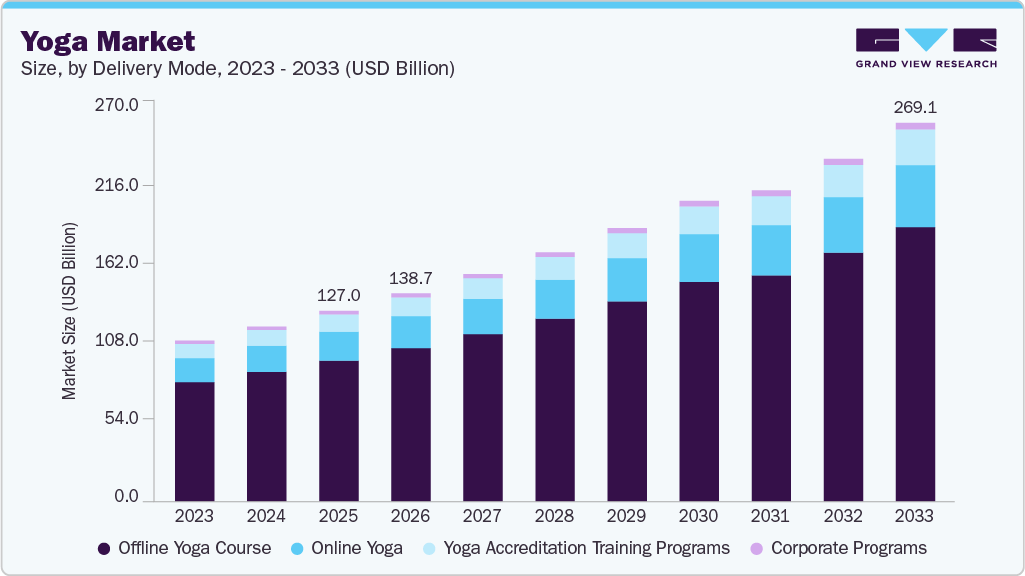
The global yoga market size was estimated at USD 127.0 billion in 2025 and is expected to reach USD 269.1 billion by 2033, growing at a CAGR of 9.9% from 2026 to 2033. Factors driving the market include growing consumer awareness of health and wellness and the rise in popularity of online yoga courses.
Key Market Trends & Insights
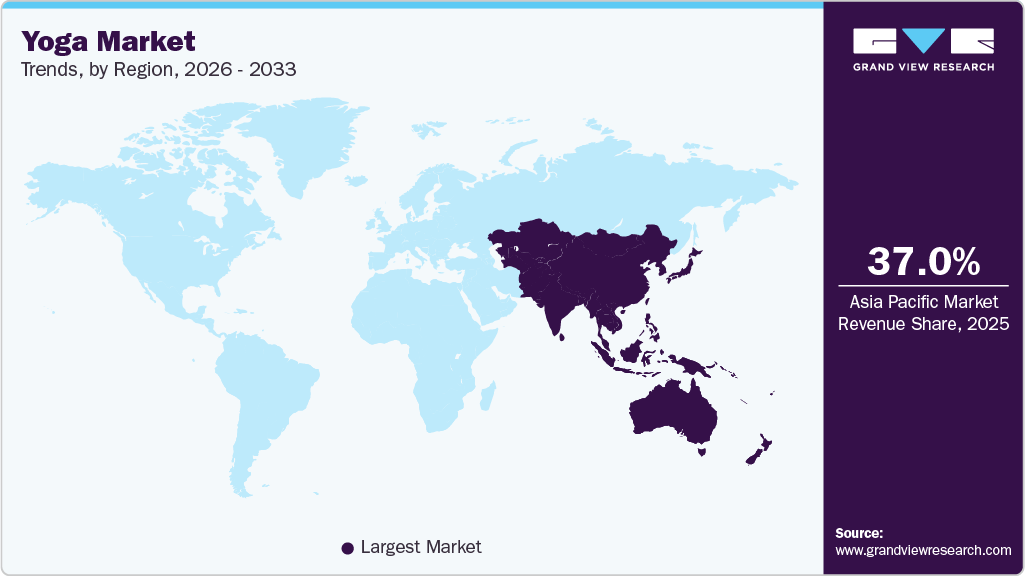
- Asia Pacificled the yoga market and accounted for a share of 37.05% in 2025
- By delivery mode, the offline yoga courseled the yoga market and accounted for a share of 73.93% in 2025.
- By end user, femalesled the yoga market and accounted for a share of 71.84% in 2025.
- By age group, the 30-50 yearsled the yoga market and accounted for a share of 43.46% in 2025.
Market Size & Forecast
- 2025 Market Size: USD 127.0 Billion
- 2033 Projected Market Size: USD 269.1 Billion
- CAGR (2026-2033): 9.9%
- Asia Pacific: Largest market in 2025
Yoga is recognized for providing diverse benefits beyond physical fitness, such as stress reduction, improved flexibility, mental clarity, and emotional well-being. Due to these advantages, a wider range of people, including those seeking mental health benefits, are now practicing yoga.Growing scientific research has supported the health benefits of practicing yoga. This research has led to endorsements from healthcare professionals, which has created potential growth opportunities for the market. The sense of community and social connection fostered by yoga studios, retreats, community-driven events, and group practices has contributed to its appeal, encouraging continued participation and market expansion. Moreover, the increasing prevalence of chronic diseases such as obesity, diabetes, and heart disease is attracting individuals to adopt yoga as a way of managing these conditions. According to the Centers for Disease Control, chronic disease is the leading cause of death and disability in the U.S., accounting for 70% of all deaths.
The popularity of online yoga platforms, apps, and wearable technology is increasing, making yoga more accessible to people of all ages and abilities. Innovations like virtual reality and augmented reality are also emerging as ways to enhance the yoga experience, enabling people to practice from the comfort of their own homes. People's busy lifestyles have led to a need for convenient and accessible fitness options, and online yoga apps and classes are meeting that demand.
The demand for environmentally friendly and sustainable yoga products, such as mats, clothing, and accessories made from recyclable materials, has led to the growth of a specialized market within the broader yoga industry. Due to yoga's globalization and acceptance across various cultures and regions, it has penetrated previously untapped areas, offering new opportunities for market expansion. In addition, endorsements by celebrities, influencers, healthcare professionals, and wellness advocates have significantly contributed to the popularization of yoga. Social media platforms are powerful tools for spreading awareness and generating interest in yoga practices. International celebrities, including Jennifer Aniston, Miley Cyrus, and Lady Gaga, have credited yoga for their fitness.
Rising disposable incomes in both developed and developing economies are allowing individuals to spend more on their health and well-being. As a result, investment in yoga classes, retreats, and accessories has increased. In addition, companies are recognizing the importance of employee well-being and are partnering with yoga studios to integrate yoga into their corporate wellness programs. Yoga has been proven to be effective in reducing stress and improving focus.
Consumer Insights
18-29 age group: Young adults value convenient digital formats that fit into busy schedules. This group often seeks yoga not just for physical fitness but also for stress relief, flexibility, and mental clarity. Social engagement via apps and social media challenges also makes yoga appealing to this cohort, reinforcing a lifestyle that blends wellness and community.
30-44 age group: People in this core working age bracket often turn to yoga to manage work‑related stress, maintain physical health, and support overall well‑being. Many in this group juggle family and career responsibilities, so the flexibility of online yoga is a major draw. They’re also more likely to invest in structured programs that help with strength building and long‑term health goals.
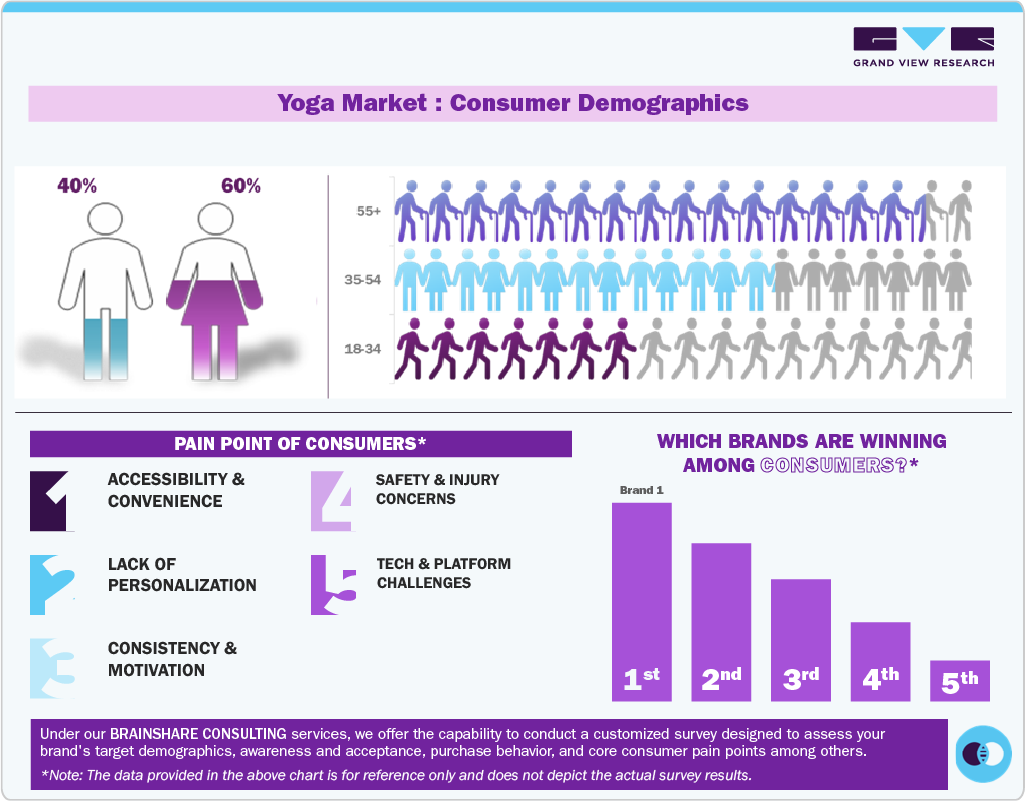
45-59 age group: This age group is increasingly adopting yoga as a preventive health tool and to manage aches, joint stiffness, and back issues. The online format appeals due to time flexibility and gentle routines suited for middle‑aged bodies. Guided classes focused on balance, mobility, and core strength resonate well with this group.
60+ group: Older adults practicing online yoga are often motivated to maintain mobility, reduce fall risk, and improve quality of life. They prefer gentle, low‑impact styles and classes tailored to seniors. The convenience of online sessions helps those with reduced physical mobility or travel limitations stay active and connected.
Delivery Mode Insights
Offline yoga courses accounted for the largest revenue share in the yoga industry in 2025, at 73.93%. Offline yoga courses are conducted in person by certified instructors. Many yoga practitioners prefer offline courses for personalized guidance, a group environment, and hands-on posture correction. Yoga studios offer a wide range of yoga styles, catering to various fitness levels, interests, and needs. This includes hatha, vinyasa, ashtanga, yin, restorative, prenatal, and others. Furthermore, yoga studios are becoming more widespread across the globe, making it easier for individuals to find convenient and affordable classes.
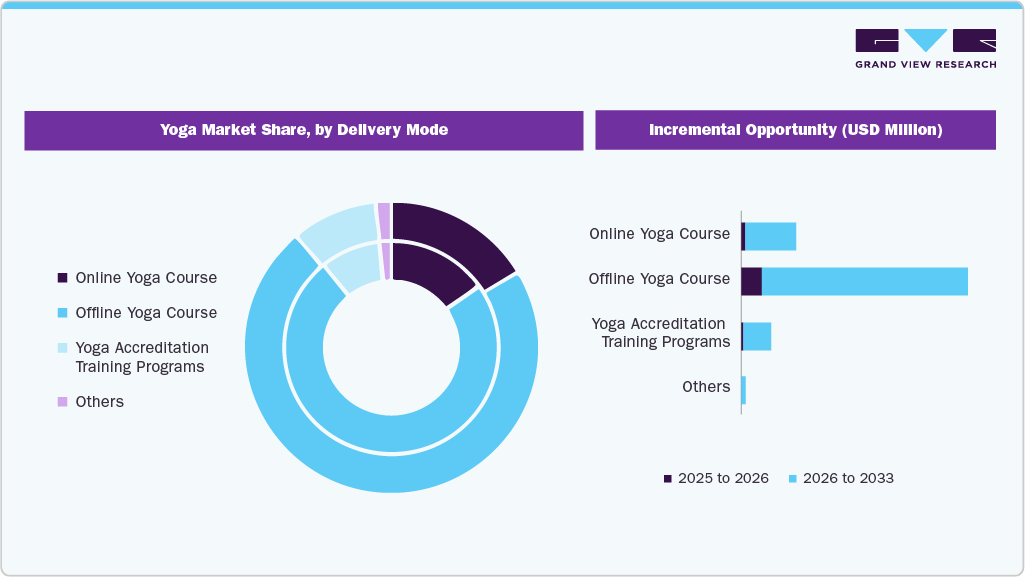
Online yoga course is anticipated to witness a CAGR of 10.0% from 2026 to 2033. The proliferation of digital technology has facilitated the growth of online yoga courses and platforms. These platforms offer a wide range of classes, catering to different yoga styles and levels, from beginner to advanced. Users can access these courses remotely, enabling flexible scheduling and practice from home. For instance, in February 2024, Samsung partnered with fitness platform FlexIt to bring online health and wellness training, including personal trainer-led workouts, nutrition guidance, and low-impact activities like yoga and meditation, directly to Samsung Smart TVs via its new Samsung Daily+ lifestyle hub, letting users book and participate in virtual sessions from home and integrate fitness into their daily routines.
End User Insights
Females held the largest share of the yoga industry's revenue in 2025, accounting for 71.84%. Female practitioners are more inclined towards attending group classes at yoga studios or community centers. They appreciate the community aspect, social interaction, and sense of belonging that group yoga sessions offer. Yoga is valued by women during different life transitions, such as pregnancy, menopause, or periods of high stress. It offers tools and practices to navigate these changes with more ease. Tailored yoga programs designed for women, such as prenatal yoga for expectant mothers, postnatal yoga for new mothers, or classes focused on women's health issues, address specific needs and life stages.
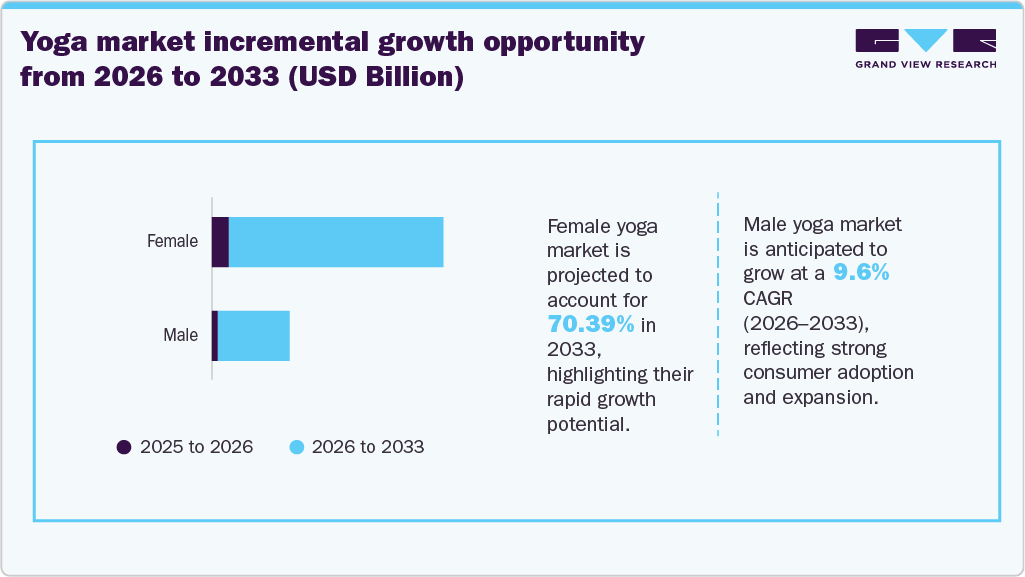
Male is anticipated to witness a CAGR of 9.6% from 2026 to 2033. There has been a growing interest among men in practicing yoga for various reasons such as stress management, athletic performance, mindfulness, and meditation. Yoga brands started offering more gender-neutral or male-specific yoga apparel and equipment. Moreover, male athletes are increasingly incorporating yoga into their training routines to enhance their flexibility, recovery, and overall performance.
Age Group Insights
The 30-50 years’ age group held the largest revenue share of the yoga industry in 2025, accounting for a share of 43.46%. Individuals in the 30-50 age bracket often turn to yoga to relieve stress, maintain fitness, and promote mental relaxation. They seek yoga to balance their work-life responsibilities, manage stress, and maintain physical health. This group also tends to participate in recreational sports and exercise, and yoga can help enhance their athletic performance and prevent injuries. Nowadays, many yoga studios offer specialized classes for athletes that focus on building strength, flexibility, and balance. Rise Up Yoga Studio, for example, helps athletes enhance their training during the off-season. Yoga can be an excellent team-building tool, improving an athlete's mental and physical strength and flexibility.
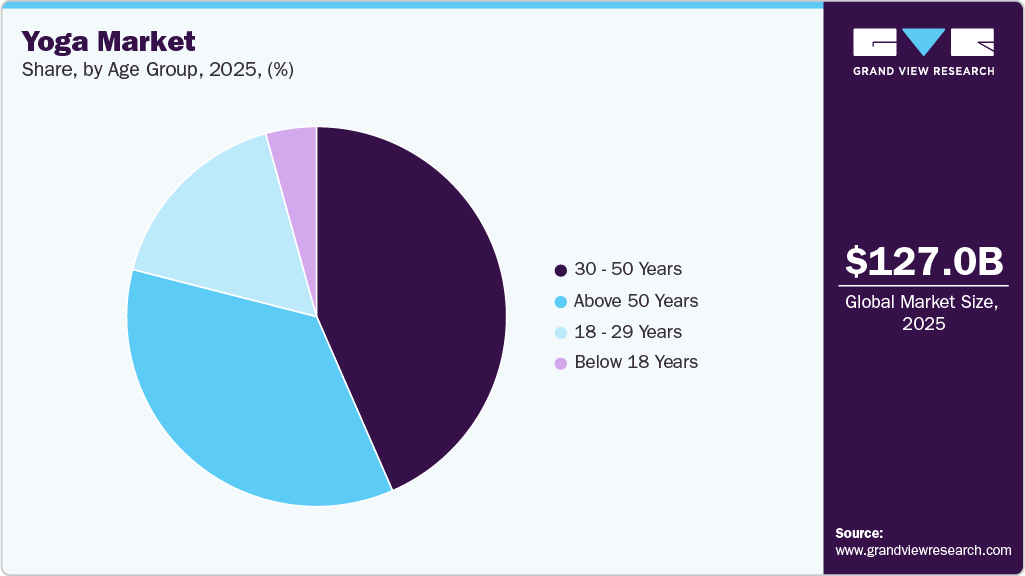
The 18-29 years’ age group is anticipated to witness a CAGR of 9.6% from 2026 to 2033. This age group often turns to yoga to stay fit, manage stress, and improve their mental well-being, while juggling the demands of college, work, and personal life. They may practice a variety of yoga styles, from dynamic to mindfulness-based. Online yoga platforms and apps are particularly popular among this group, and they are influenced by social media and celebrity endorsements.
Regional Insights
The yoga market in North America is expected to grow at a CAGR of 9.3% from 2026 to 2033. Hatha yoga, vinyasa, ashtanga, and other dynamic styles are popular, reflecting the region's fitness-focused culture and increasing interest in stress management and holistic health. High-end studios and retreats that offer personalized attention and unique environments are attracting affluent consumers. The use of online platforms and mobile apps is increasing to book classes, practice at home, and access personalized yoga experiences.
U.S. Yoga Market Trends
Participation in yoga and Pilates in the U.S. reflects a broad cultural shift toward holistic wellness, with people embracing these practices not just for physical fitness but also for stress relief and mental well-being. Rather than being limited to a single demographic, participation now spans a wide age range: although a typical studio client might be a career professional in her 30s or 40s, studios also welcome college students on a budget and retirees who are trying to stay agile. According to the data, roughly 17 % of U.S. adults, over 40 million people, practiced yoga in 2024. Notably, more than one-third of yoga and Pilates participants are above age 50, drawn to the low-impact nature of these workouts that appeal to older adults as well as younger practitioners.
Asia Pacific Yoga Market Trends
The yoga market in the Asia Pacific accounted for the largest share of 37.05% in 2025, driven by the shift toward preventive healthcare and holistic wellness. Rising stress levels, lifestyle disorders, and mental health awareness are expanding yoga adoption beyond fitness enthusiasts to working professionals, seniors, and youth. This broadening consumer base creates demand for specialized yoga formats, accessories, and wellness solutions tailored to different age groups and use cases. According to a study conducted by ICICI Lombard & published in January 2024, about 77% Indians displayed at least one symptom of stress, while one in three Indians was struggling with stress & anxiety.
Significant growth potential exists in Tier II and Tier III cities of India, where awareness is increasing but product penetration remains relatively low. Expansion of e-commerce, digital payments, and affordable logistics enables brands to reach these underserved markets efficiently. Localized pricing, vernacular marketing, and community-based yoga programs can accelerate adoption in these regions.
According to the data published in December 2025, a major project (spanning across 70.885 hectares of land in the village of Hariya Khurd) for an ‘International Wellness And Yoga Centre’ in Baghpat, Uttar Pradesh, has moved into the next stage of development with bids invited from private partners. This indicates increased investment into yoga-focused physical facilities in smaller urban and peri-urban areas, enhancing access outside major metro zones.
The India yoga market growth is driven by rising health consciousness, increasing stress-related lifestyle disorders, and growing awareness of yoga as a holistic approach to physical and mental well-being. Government initiatives such as the promotion of International Yoga Day and the integration of yoga into public health programs continue to support market expansion. The increasing adoption of yoga among urban populations, corporate wellness programs, and younger demographics is further accelerating demand.
According to the data published in May 2025, Delhi Government Schools are introducing courses that include yoga and self-help alongside other subjects for students up to Class 10, signaling the formal incorporation of yoga into school learning modules. Rising smartphone penetration and affordable internet are expanding access to online classes and apps. Moreover, increasing health-conscious urban populations are investing in yoga equipment, wearables, and personalized training programs.
Additionally, the Indian yoga market is influenced by government initiatives and campaigns promoting yoga for public health and international recognition. According to the Nationwide Impact Assessment Survey on International Day of Yoga (IDY) 2025 data, approximately 231.4 million people participated in yoga events on the International Day of Yoga occasion in 2023.
Europe Yoga Market Trends
The yoga market in Europe is expected to grow at a CAGR of 8.8% from 2026 to 2033, driven by increasing awareness about the benefits of yoga for physical and mental well-being. One of the primary trends in the market is the growing demand for yoga classes and workshops, particularly among the younger population. With the rise of social media, yoga has become a popular activity, and many people are taking to Instagram and other platforms to share their yoga journeys, inspiring others to try it out. As a result, yoga studios and gyms are experiencing a significant increase in enrollment, with many offering specialized classes, such as hot yoga, power yoga, and yoga for beginners. Additionally, the demand for yoga accessories, such as mats, blocks, and straps, is also on the rise, driven by the growing popularity of home practice and online tutorials.
Key Yoga Company Insights
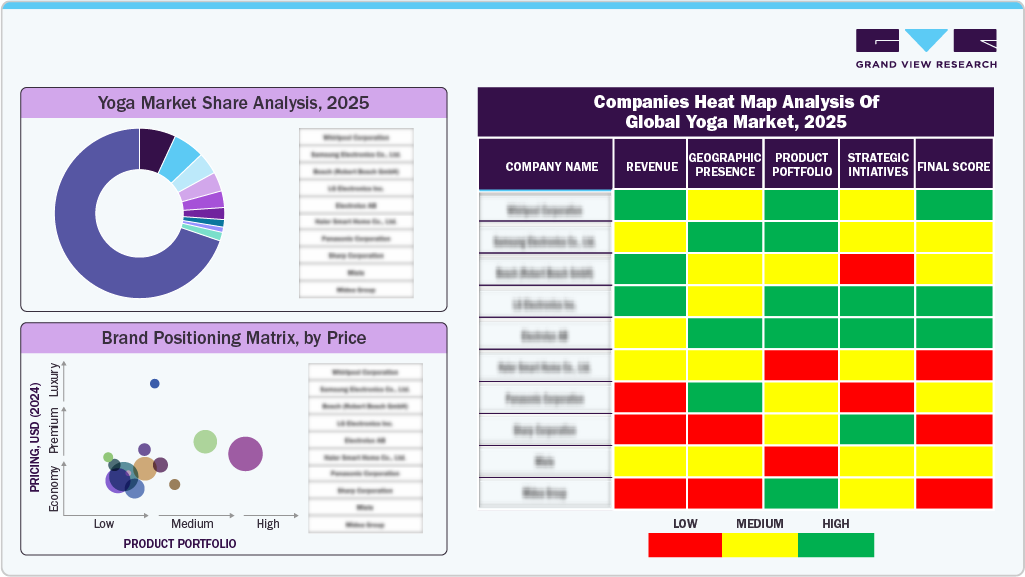
Leading players in the yoga market include CorePower Yoga, Honor Yoga, Pure Yoga, and Glo Digital, Inc. The global yoga market is highly competitive, with yoga studios, wellness brands, digital platforms, and independent instructors expanding across fitness centers, corporate wellness programs, healthcare settings, retreats, and online subscription-based platforms worldwide. Providers are increasingly focusing on holistic yoga offerings, certified instructor training, and technology-driven delivery models such as virtual classes, mobile apps, and personalized wellness solutions to meet growing global demand for physical fitness, mental well-being, and sustainable lifestyles.
Yoga Companies:
The following key companies have been profiled for this study on the yoga market.
- CorePower Yoga
- Honor Yoga
- Pure Yoga
- Glo Digital, Inc.
- YogaOne
- YogaSix
- Yoga Pod
- MoreYoga
- Power Yoga Canada
- Flyogi LLC.
Recent Developments
-
In November 2025, The Edge Fitness Clubs launched its first Infrared Yoga Studio in Fairfield, Connecticut, debuting as part of a broader expansion of premium fitness amenities. This new offering blends traditional yoga with the restorative benefits of infrared heat, intended to enhance flexibility, detoxification, and recovery, bringing a boutique-style wellness experience into a larger full-service gym setting and complementing other innovative classes and training options available to members.
-
In June 2025, the National Institute of Mental Health and Neuro Sciences (NIMHANS) launched yoga-based extension services as part of its community intervention programmes in Karnataka, aiming to integrate simple, structured yoga practices into mental health care for people in rural and underserved areas, particularly those with severe mental disorders, to support overall mental well-being and recovery.
-
In July 2025, iFIT partnered with Samsung Health to integrate its extensive library of interactive workouts and wellness content directly into the Samsung Health app, giving billions of users worldwide access to personalized fitness experiences, including strength, yoga, Pilates, cardio, recovery, mindfulness, HIIT, and barre routines.
Yoga Market Report Scope
Report Attribute
Details
Market size value in 2025
USD 138.7 billion
Revenue forecast in 2033
USD 269.1 billion
Growth rate
CAGR of 9.9% from 2025 to 2033
Actual data
2021 - 2025
Forecast period
2026 - 2033
Quantitative units
Revenue in USD billion, and CAGR from 2026 to 2033
Report coverage
Revenue forecast, company ranking, competitive landscape, growth factors, and trends
Segments covered
Delivery Mode, End User, Age Group, and Region
Regional scope
North America; Europe; Asia Pacific; Central & South America; Middle East & Africa
Country scope
U.S.; Canada; UK; Germany; France; Italy; Spain; China; Japan; India; South Korea; Brazil; Argentina; South Africa; Saudi Arabia
Key companies profiled
CorePower Yoga; Honor Yoga; Pure Yoga; Glo Digital, Inc.; YogaOne; YogaSix; Yoga Pod; MoreYoga; Power Yoga Canada; and Flyogi LLC.
Customization scope
Free report customization (equivalent up to 8 analysts’ working days) with purchase. Addition or alteration to country, regional & segment scope.
Pricing and purchase options
Avail customized purchase options to meet your exact research needs. Explore purchase options
Global Yoga Market Report Segmentation
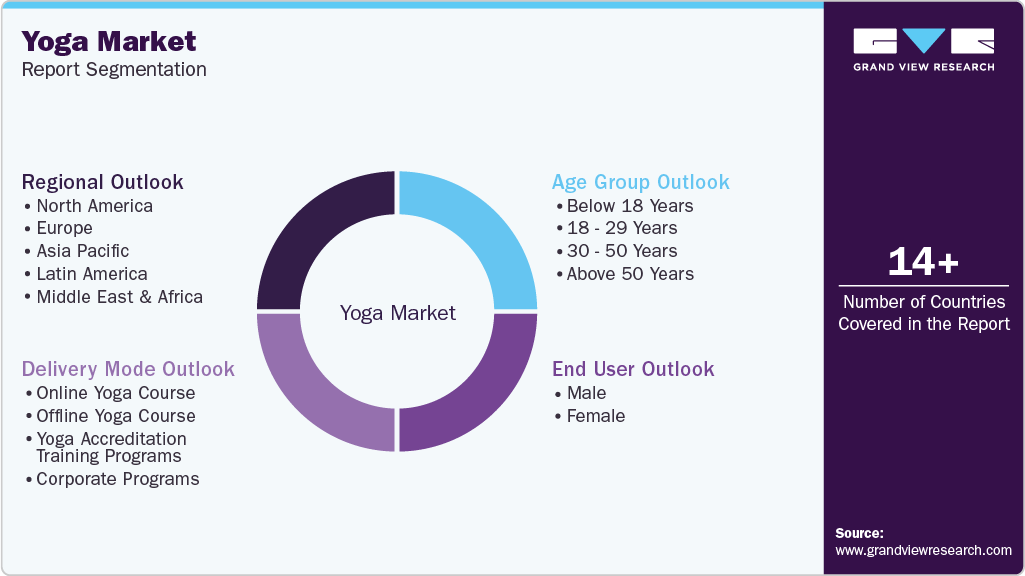
This report forecasts revenue growth at regional levels and provides an analysis of the latest trends and opportunities in each sub-segment from 2021 to 2033. For the purpose of this study, Grand View Research has segmented the yoga market by delivery mode, end user, age group, and region:
-
Delivery Mode Outlook (Revenue, USD Billion, 2021 - 2033)
-
Online Yoga Course
-
Offline Yoga Course
-
Yoga Accreditation Training Programs
-
Corporate Programs
-
-
End User Outlook (Revenue, USD Billion, 2021 - 2033)
-
Male
-
Female
-
-
Age Group Outlook (Revenue, USD Billion, 2021 - 2033)
-
Below 18 Years
-
18 - 29 Years
-
30 - 50 Years
-
Above 50 Years
-
-
Regional Outlook (Revenue, USD Billion, 2021 - 2033)
-
North America
-
U.S.
-
Canada
-
-
Europe
-
UK
-
Germany
-
France
-
Spain
-
Italy
-
-
Asia Pacific
-
China
-
Japan
-
India
-
South Korea
-
-
Latin America
-
Brazil
-
Argentina
-
-
Middle East and Africa (MEA)
-
South Africa
-
Saudi Arabia
-
-
Frequently Asked Questions About This Report
b. The global yoga market was estimated at USD 127.0 billion in 2025 and is expected to reach USD 138.66 billion in 2026.
b. The global yoga market is expected to grow at a compound annual growth rate of 9.9% from 2026 to 2033 to reach USD 269.1 billion by 2033.
b. Some of the key players operating in the yoga market include CorePower Yoga; Honor Yoga; Pure Yoga; Glo Digital, Inc.; YogaOne; YogaSix; Yoga Pod; MoreYoga; Power Yoga Canada; Flyogi LLC
b. Offline yoga course held the largest revenue share of the yoga industry in 2025, accounting for a share of 73.93%. Offline yoga courses are conducted in person by certified instructors. Many yoga practitioners prefer offline courses for personalized guidance, a group environment, and hands-on correction of postures.
b. Factors pushing the market include growing awareness of health and wellness among consumers and the rise in popularity of online yoga courses. Yoga is recognized for providing diverse benefits beyond physical fitness, such as stress reduction, improved flexibility, mental clarity, and emotional well-being. Due to these advantages, a wider range of people, including those seeking mental health benefits, are now practicing yoga.


Share this report with your colleague or friend.
Need a Tailored Report?
Customize this report to your needs — add regions, segments, or data points, with 20% free customization.


ISO 9001:2015 & 27001:2022 Certified
We are GDPR and CCPA compliant! Your transaction & personal information is safe and secure. For more details, please read our privacy policy.
Trusted market insights - try a free sample
See how our reports are structured and why industry leaders rely on Grand View Research. Get a free sample or ask us to tailor this report to your needs.