- Home
- »
- Consumer F&B
- »
-
Vietnam Fruit Juice Market Size, Industry Report, 2033GVR Report cover
![Vietnam Fruit Juice Market Size, Share & Trends Report]()
Vietnam Fruit Juice Market (2026 - 2033) Size, Share & Trends Analysis Report By Nature (Organic & Conventional), By Type (Orange, Apple, Mixed Fruits), By Packaging (PET Bottles, Glass Bottles), By Distribution Channel (Hypermarkets & Supermarkets), And Segment Forecasts
- Report ID: GVR-4-68040-880-9
- Number of Report Pages: 90
- Format: PDF
- Historical Range: 2021 - 2025
- Forecast Period: 2026 - 2033
- Industry: Consumer Goods
- Report Summary
- Table of Contents
- Segmentation
- Methodology
- Download FREE Sample
-
 Download Sample Report
Vietnam Fruit Juice Market Summary
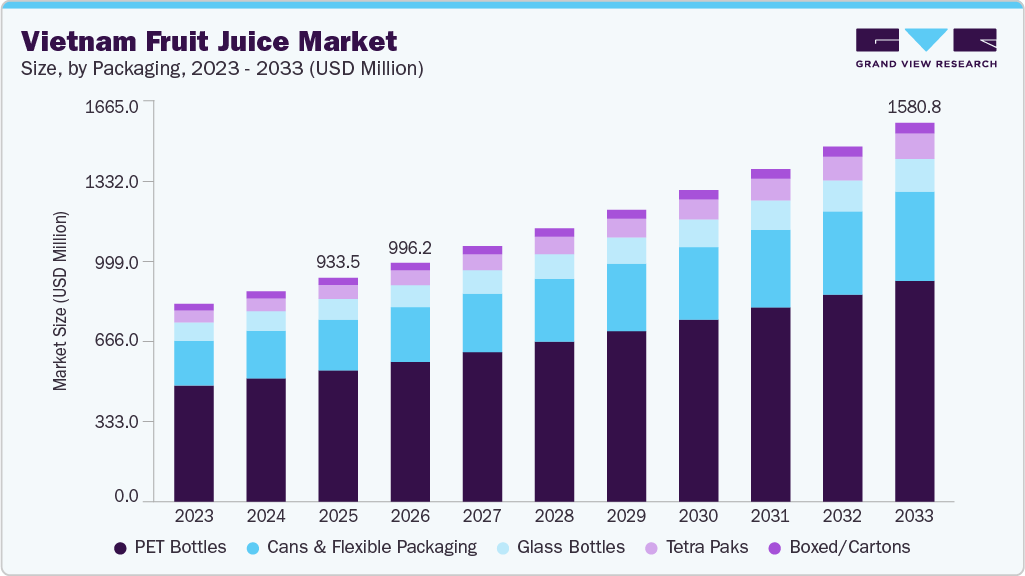
The Vietnam fruit juice market size was estimated at USD 933.5 million in 2025 and is projected to reach USD 1,580.8 million in 2033, growing at a CAGR of 6.8% from 2026 to 2033. The Vietnam fruit juice industry is driven by the heightened health and wellness orientation among Vietnamese consumers.
Key Market Trends & Insights
- By nature, the conventional fruit juice segment led the market with the share of 67.4% in 2025.
- By type, orange juice segment led the market with share of 47.5% in 2025.
- By packaging, the PET bottles segment led the Vietnam fruit juice industry with a share of 58.6% in 2025.
- By distribution channel, the online channel segment is estimated to grow at a CAGR of 8.3% during the forecast period.
Market Size & Forecast
- 2025 Market Size: USD 933.5 Million
- 2033 Projected Market Size: USD 1,580.8 Million
- CAGR (2026-2033): 6.8%
With growing awareness of nutrition and lifestyle-related diseases, consumers are increasingly substituting sugary soft drinks with fruit juices that are perceived as natural sources of vitamins and antioxidants. Rising health consciousness is prompting demand for products that are low in added sugars and free from artificial additives, particularly among urban Millennials and Gen Z demographics. This shift is reflected in product positioning and innovation by manufacturers such as Vinamilk (Nam Viet Foods & Beverage) and Nestlé Vietnam, who are expanding portfolios with premium and functional juice variants tailored to health-oriented consumers.Another prominent driver of the Vietnam fruit juice industry is urbanization coupled with rapid expansion of the middle-class consumer base. Vietnam’s urbanization rate stood at approximately 41.5%, and projections suggest that 37 million additional individuals will enter the consumer class in the next decade. These demographic changes correlate with increased disposable incomes and greater demand for convenient, ready-to-drink packaged fruit juice products. This trend encourages both domestic leaders like Tan Hiep Phat Beverage Group and international players such as Coca-Cola Vietnam and Suntory PepsiCo Vietnam Beverage to scale production, diversify flavour offerings, and strengthen distribution networks across modern retail formats.
A key trend within the Vietnam beverages market is the shift towards natural, organic, and functional juices. Consumers are increasingly seeking beverages with clean-label claims (“100 % natural,” “no added sugar,” “fortified with vitamins/minerals”), leading manufacturers to reformulate and innovate. Reports note that natural and organic juices, including not-from-concentrate (NFC) and cold-pressed options, are gaining substantial traction, accounting for a rising share of product launches and commanding premium pricing. Brands such as Lavifood JSC are capitalizing on this trend by introducing exotic tropical juice blends that resonate with health and sustainability preferences.
Parallel to health-driven product evolution, the digitization of sales and marketing is reshaping distribution and consumer engagement. E-commerce penetration has accelerated rapidly, with online channels becoming one of the fastest-growing avenues for fruit juice purchases. Manufacturers and brands are leveraging digital campaigns, social media outreach, and direct-to-consumer platforms to boost visibility and loyalty, especially among younger buyers who prioritize convenience and mobile-first shopping experiences. This trend enhances the Vietnam fruit juice market's reach beyond traditional brick-and-mortar retail while enabling data-driven customer segmentation and targeted promotions.
Consumer Insights
Vietnamese consumers have clear taste preferences when it comes to juice. Orange and apple emerged as the most preferred juice flavors, with significantly higher selection rates compared to other options such as watermelon, peach, or grape. This indicates that traditional fruit profiles still dominate consumer choices in the country. In addition, fresh fruit juices, especially fresh orange juice made locally, are widely consumed and often considered more desirable than packaged alternatives due to perceptions of freshness and natural taste.
Consumer health consciousness is a major trend shaping juice preferences. 62% of Vietnamese consumers choose fruit beverages (including packaged fruit juice) over carbonated soft drinks, reflecting a growing tendency to favor drinks perceived as healthier. As health awareness rises, consumers seek juices lower in sugar and often enriched with nutrients or functional benefits like added vitamins, aligning with broader wellness trends in diet and lifestyle choices.
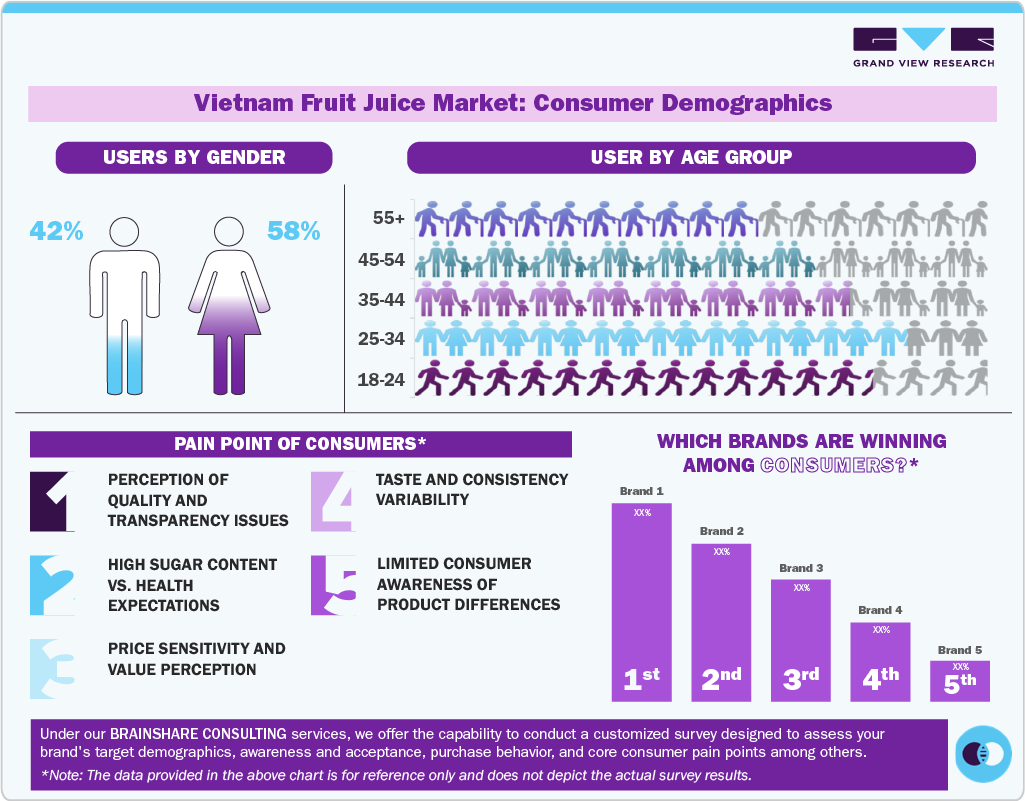
Consumption patterns also reflect changing lifestyles: traditional retail channels such as supermarkets and convenience stores remain primary purchase avenues, while online shopping accounts for around 22 % of juice sales, especially among busy urban consumers looking for convenient access and variety. This shift toward digital commerce is consistent with broader trends in beverage purchasing among Millennials and Gen Z, who frequently use social media and e-commerce platforms to discover and buy products.
Nature Insights
Conventional fruit juice market in Vietnam held a revenue share of 67.4% in 2025, driven by its affordability, wide availability, and strong consumer familiarity compared to premium alternatives. Mass-market distribution through supermarkets, convenience stores, and traditional retail channels continues to support its dominance. In addition, established local brands and consistent demand across urban and rural areas contribute to steady growth, despite the gradual rise of organic and health-focused juice segments.
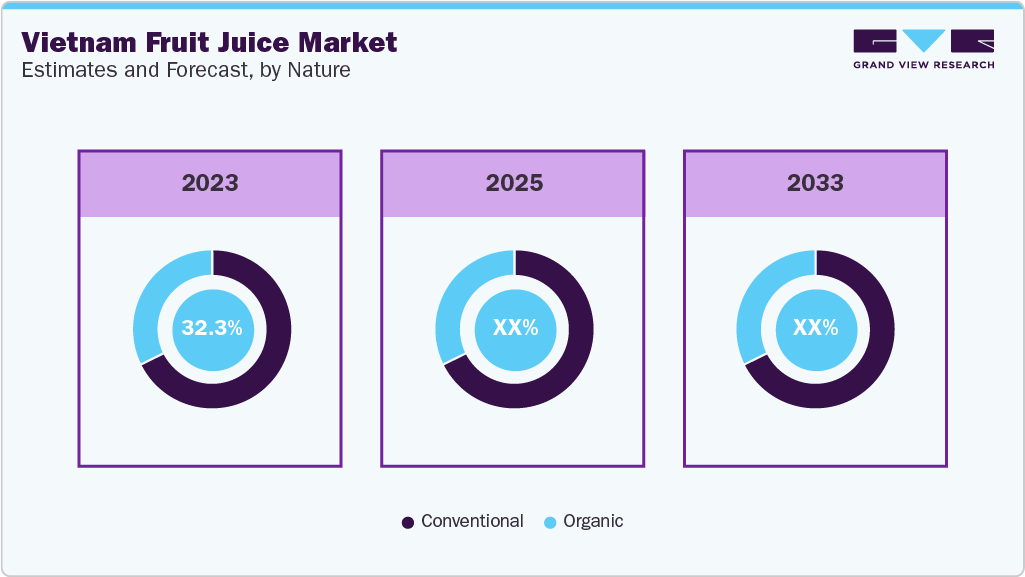
Organic fruit juice market in Vietnam is expected to grow at a CAGR of 7.1% from 2026 to 2033, driven by increasing consumer awareness regarding health, food safety, and clean-label products. Rising concerns over pesticide residues and artificial additives are encouraging a shift toward organic alternatives. Urban consumers, particularly younger demographics, are showing higher willingness to pay for premium and natural beverages. Expansion of modern retail channels and e-commerce platforms is further improving product accessibility. In addition, supportive government initiatives promoting organic agriculture and sustainable farming practices are expected to strengthen supply, contributing to long-term market growth.
Type Insights
Orange juice held the revenue share of 47.5% in 2025 in Vietnam fruit juice industry, supported by its widespread popularity, refreshing taste, and strong association with vitamin C and immunity benefits. Its affordability and easy availability across retail formats further drive consumption. In addition, established brand presence and consistent demand across age groups contribute to its leading position, while innovations in packaging and fortified variants continue to support segment growth.
Mixed fruit juice is projected to grow at a CAGR of 8.2% from 2026 to 2033, driven by increasing consumer preference for diverse flavors and enhanced nutritional profiles. The combination of multiple fruits offers a balance of taste and health benefits, appealing to younger and urban consumers seeking variety. Product innovation, including fortified and low-sugar variants, is further supporting demand. In addition, attractive packaging and marketing strategies are helping brands differentiate in a competitive market. Expanding distribution through supermarkets, convenience stores, and online platforms is also improving accessibility, contributing to sustained segment growth over the forecast period.
Packaging Insights
PET bottles segment held the largest revenue share of 58.6% in 2025. The dominance of PET bottled in Vietnam fruit juice industry is driven by consumer convenience, affordability, and established retail penetration. PET bottles are lightweight, shatter-resistant, and suited to on-the-go consumption, a strong value proposition in urban and suburban areas where busy lifestyles favor ready-to-drink beverages. In addition, PET packaging is generally less expensive to produce than alternatives such as glass or aseptic cartons, enabling manufacturers to price products competitively and secure broad distribution through traditional retail channels, especially mom & pop stores.
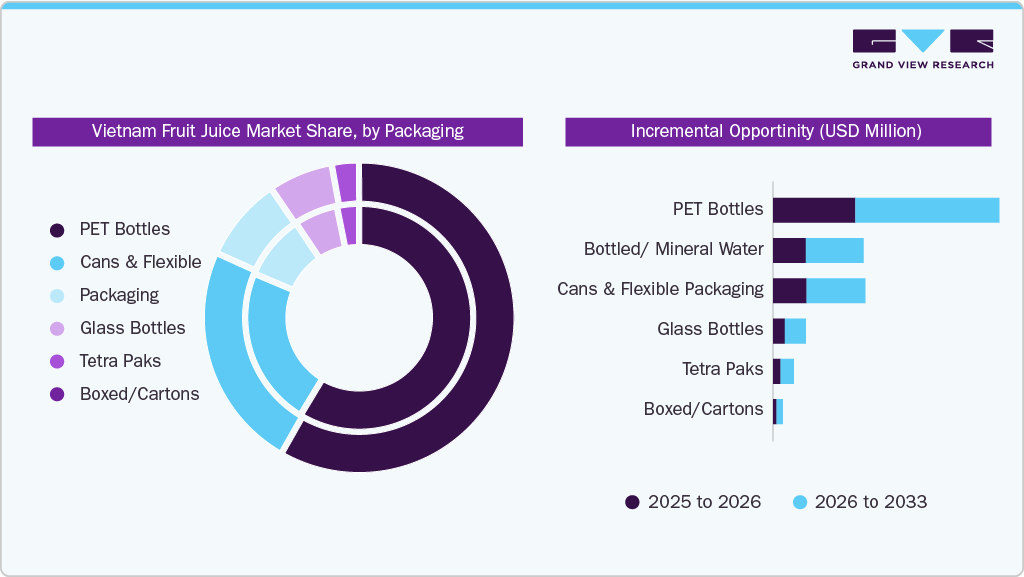
Tetra paks segment is expected to grow at the fastest CAGR of 7.8% from 2026 to 2033. The projected rapid growth of the Tetra Pak fruit juice segment is underpinned by health-oriented consumption trends and improved cold chain infrastructure. Tetra Pak cartons are often associated with preserving nutritional quality, extended shelf life, and minimal need for added preservatives, which aligns with rising consumer demand for “clean label,” nutritious, and convenient products. As more Vietnamese consumers become concerned about sugar content and processing methods, manufacturers are leveraging aseptic packaging to position Tetra Pak juices as natural and better quality alternatives. This is driving the growth of the Vietnam fruit juice market.
Distribution Channel Insights
The sales of fruit juice through mom & pop stores led the market with a revenue share of 50.7% in 2025. The leadership of mom & pop stores in fruit juice sales reflects Vietnam’s retail landscape, where traditional trade remains deeply rooted in community shopping habits. These stores offer hyper-local accessibility, and consumers can easily purchase chilled juice during daily errands without traveling to supermarkets. Their strategic locations in residential neighbourhoods and near transit hubs make them default purchase points for frequent, small-quantity buys, especially for PET-bottled juices.
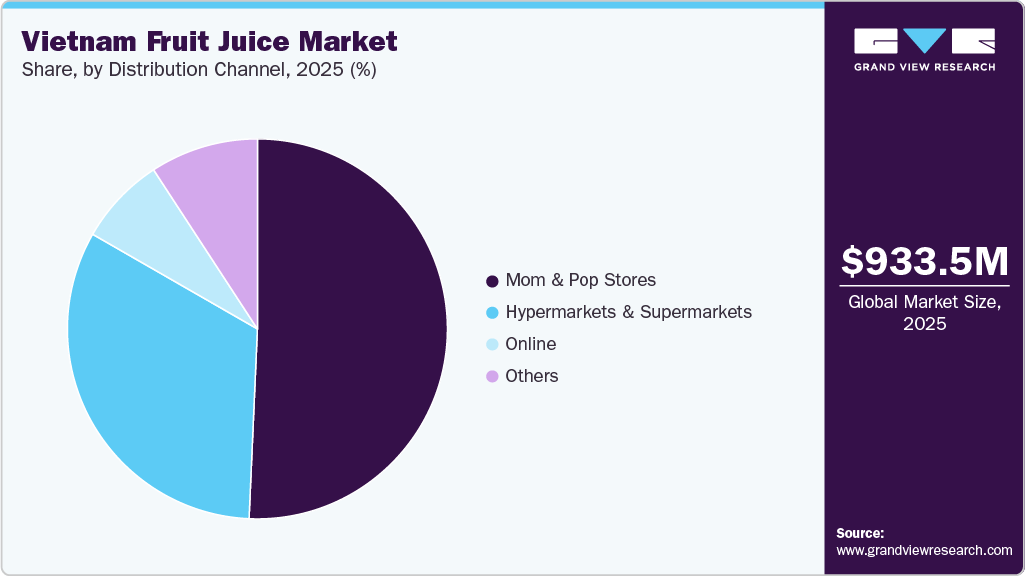
The online segment is expected to grow at a significant CAGR of 8.3% from 2026 to 2033. The rapid expected growth of the online fruit juice segment is propelled by digitization of consumer shopping patterns and expanding e-commerce infrastructure. Rising internet penetration and mobile commerce adoption are reshaping how Vietnamese consumers shop for beverages: convenience, doorstep delivery, and wide assortments at competitive prices are powerful incentives, particularly among urban Millennials and Gen Z demographics. Promotions and flash deals on e-commerce platforms further stimulate trial purchases and increase basket sizes.
Key Vietnam Fruit Juice Company Insights
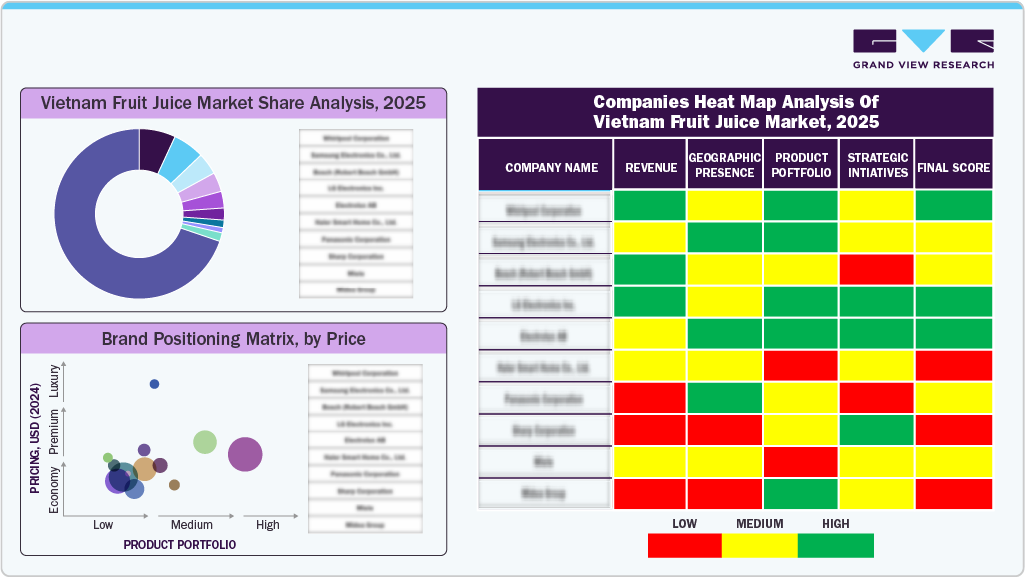
The Vietnam fruit juice market is characterized by a blend of established domestic manufacturers and strong global beverage giants, creating a dynamic and highly competitive environment.
-
Vinamilk (Nam Viet Foods & Beverage) is one of the dominant domestic players, leveraging its extensive distribution network across modern retail and traditional trade. Its Vfresh line, positioned as 100 % fruit juice with no preservatives, has strong consumer recognition and appeals to health-oriented buyers.
-
Tan Hiep Phat Beverage Group is renowned for innovation and scale, offering popular mainstream and premium juice products. Its extensive production capacity and marketing support help maintain visibility across urban and rural markets.
-
Nafoods Group JSC, through its Juice Smile brand, integrates Vietnam’s fruit processing expertise. It provides a wide range of tropical fruit juices and leverages domestic fruit sourcing to create competitive, value-added products.
Key Vietnam Fruit Juice Companies:
- Vinamilk (Nam Viet Foods & Beverage)
- Tan Hiep Phat Beverage Group (THP Group)
- Coca-Cola Vietnam
- Suntory PepsiCo Vietnam Beverage
- Nestlé Vietnam
- RITA Food & Drink Co., Ltd.
- Nafoods Group JSC
- Tan Do Beverage
- Giavico International Food Co., Ltd.
- Lavifood JSC
Recent Developments
-
In October 2025, Sunsip Beverages Vietnam launched its 250 ml juice with soft fruit pulp series made from tropical fruit blends (e.g., pineapple, mango, guava, grape), designed for natural flavour and export markets.
-
In May 2025, Sunsip introduced its canned fruit juice line targeting global markets, featuring tropical flavours crafted for both retail and B2B distribution.
-
In May 2025, At THAIFEX Anuga Asia 2025, Nam Viet Foods & Beverage JSC (VINUT) unveiled several new 100% tropical juice SKUs with pulp including lychee, mango and dragon fruit, alongside other beverage innovations.
Vietnam Fruit Juice Market Report Scope
Report Attribute
Details
Market size value in 2026
USD 996.2 million
Revenue forecast in 2033
USD 1,580.8 million
Growth rate
CAGR of 6.8% from 2026 to 2033
Actuals
2021 - 2025
Forecast period
2026 - 2033
Quantitative units
Revenue in USD million, volume in metric tons, and CAGR from 2026 to 2033
Report coverage
Revenue forecast, company ranking, competitive landscape, growth factors, and trends
Segments covered
Nature, type, packaging, distribution channel
Key companies profiled
Vinamilk (Nam Viet Foods & Beverage); Tan Hiep Phat Beverage Group (THP Group); Coca-Cola Vietnam; Suntory PepsiCo Vietnam Beverage; Nestlé Vietnam; RITA Food & Drink Co., Ltd.; Nafoods Group JSC; Tan Do Beverage; Giavico International Food Co., Ltd.; Lavifood JSC
Customization scope
Free report customization (equivalent up to 8 analysts’ working days) with purchase. Addition or alteration to country, regional & segment scope.
Pricing and purchase options
Avail customized purchase options to meet your exact research needs. Explore purchase options
Vietnam Fruit Juice Market Report Segmentation
This report forecasts revenue growth at country levels and provides an analysis of the latest trends and opportunities in each of the sub-segment from 2021 to 2033. For this study, Grand View Research has segmented the Vietnam fruit juice market on the basis nature, type, packaging, and distribution channel.
-
Nature Outlook (Volume, Metric Tons; Revenue, USD Million, 2021 - 2033)
-
Organic
-
Conventional
-
-
Type Outlook (Volume, Metric Tons; Revenue, USD Million, 2021 - 2033)
-
Orange
-
Apple
-
Grapes
-
Mixed Fruits
-
Others
-
-
Packaging Outlook (Volume, Metric Tons; Revenue, USD Million, 2021 - 2033)
-
PET Bottles
-
Glass Bottles
-
Boxed/Cartons
-
Tetra Packs
-
Cans & Flexible Packaging
-
-
Distribution Channel Outlook (Volume, Metric Tons; Revenue, USD Million, 2021 - 2033)
-
Hypermarkets & Supermarkets
-
Mom & Pop Stores
-
Online
-
Others
-
Frequently Asked Questions About This Report
b. The Vietnam fruit juice market is expected to grow at a compound annual growth rate of 6.8% from 2026 to 2033 to reach USD 1,580.8 million by 2033.
b. The Vietnam fruit juice market was estimated at USD 933.5 million in 2025 and is expected to reach USD 996.2 billion in 2026.
b. The PET bottles segment dominated the Vietnam fruit juice market with a share of 58.6% in 2025. PET bottles’ physical robustness and ease of logistics make them a preferred pack format across traditional retail outlets, especially mom & pop stores, kiosks, and street vendors, which dominate Vietnam’s beverage distribution landscape.
b. Some of the key market players in the Vietnam fruit juice market are Vinamilk (Nam Viet Foods & Beverage); Tan Hiep Phat Beverage Group (THP Group); Coca-Cola Vietnam; Suntory PepsiCo Vietnam Beverage; Nestlé Vietnam; RITA Food & Drink Co., Ltd.; Nafoods Group JSC; Tan Do Beverage; Giavico International Food Co., Ltd.; Lavifood JSC
b. One of the most significant drivers of the Vietnam fruit juice market is the country’s rapid urbanization and economic growth, which has expanded consumer spending power and modern lifestyle adoption.


Share this report with your colleague or friend.
Need a Tailored Report?
Customize this report to your needs — add regions, segments, or data points, with 20% free customization.


ISO 9001:2015 & 27001:2022 Certified
We are GDPR and CCPA compliant! Your transaction & personal information is safe and secure. For more details, please read our privacy policy.
Trusted market insights - try a free sample
See how our reports are structured and why industry leaders rely on Grand View Research. Get a free sample or ask us to tailor this report to your needs.