- Home
- »
- Animal Health
- »
-
Veterinary Ophthalmic Drugs Market, Industry Report, 2033GVR Report cover
![Veterinary Ophthalmic Drugs Market Size, Share & Trends Report]()
Veterinary Ophthalmic Drugs Market (2026 - 2033) Size, Share & Trends Analysis Report By Animal (Canine, Feline, Equine, Bovine), By Drug (Antibiotics, NSAIDs, Corticosteroids, Lubricants / Artificial Tears, Analgesics / Pain Relievers), By Indication, By Distribution Channel, By Region, And Segment Forecasts
- Report ID: GVR-4-68040-826-4
- Number of Report Pages: 150
- Format: PDF
- Historical Range: 2021 - 2025
- Forecast Period: 2026 - 2033
- Industry: Healthcare
- Report Summary
- Table of Contents
- Segmentation
- Methodology
- Download FREE Sample
-
 Download Sample Report
Veterinary Ophthalmic Drugs Market Summary
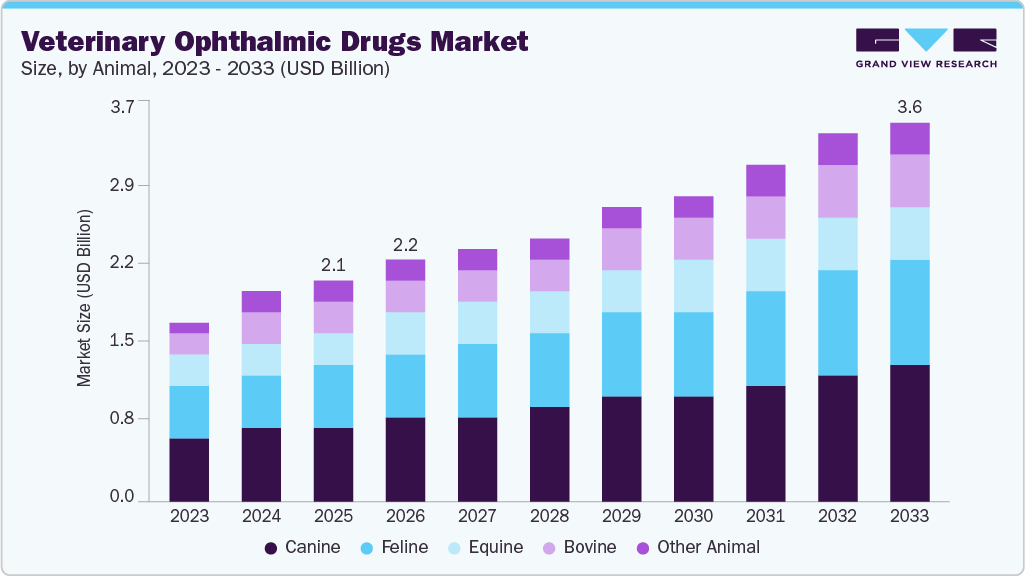
The global veterinary ophthalmic drugs market size was estimated at USD 2.1 billion in 2025 and is projected to reach USD 3.6 billion by 2033, growing at a CAGR of 7.1% from 2026 to 2033. Some of the factors driving the market growth are advancements in ophthalmic drug-delivery technologies, rising development of long-acting ophthalmic therapies, increasing focus on antimicrobial stewardship & evidence-based use, and growing clinical demand for treatment of complex ocular diseases.
Key Market Trends & Insights
- North America veterinary ophthalmic drugs market held the largest share of 41.1% of the global market in 2025.
- By drug, lubricants/artificial tears held the largest share of over 26% of the market in 2025
- By animal, canine dominated the global market with a share of 34.7% in 2025.
- Based on indication, uveitis held the highest market share in 2025.
- Based on distribution channel, e-commerce is expected to grow at the fastest CAGR of 8.1% over the forecast period.
Market Size & Forecast
- 2025 Market Size: USD 2.1 Billion
- 2033 Projected Market Size: USD 3.6 Billion
- CAGR (2026-2033): 7.1%
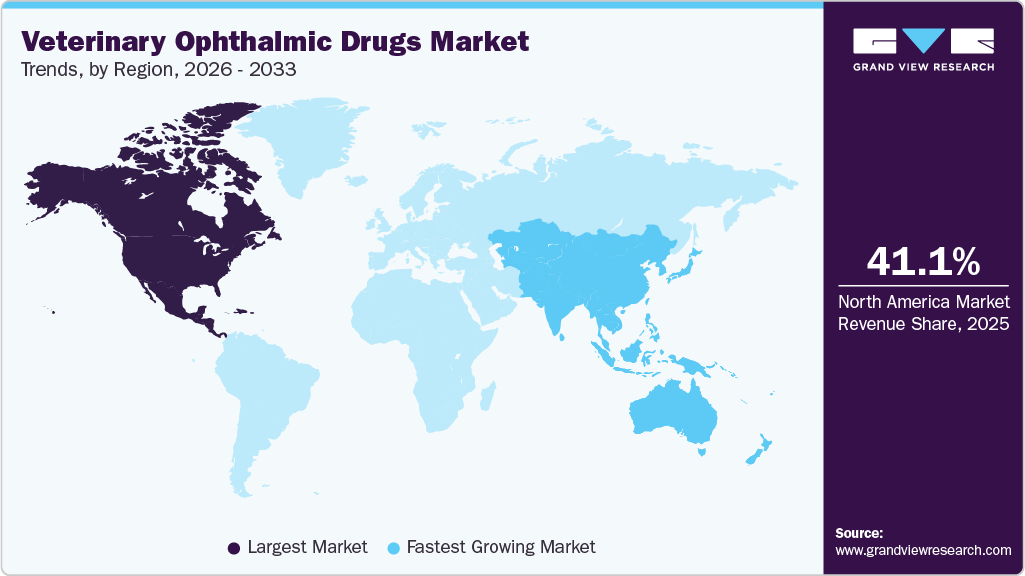
- North America: Largest market in 2025
- Asia Pacific: Fastest growing market
Advances in drug delivery technology are driving market growth. Advanced technologies such as artificial intelligence are improving corneal drug delivery by modeling how formulation variables affect ocular absorption and retention. A February 2026 review from the University of Illinois Chicago, published in MDPI, reported that machine learning predicts particle size, release kinetics, corneal permeability, and irritation risk before laboratory validation. These models operate in closed-loop systems that refine formulations using experimental feedback. The approach reduces development time, supports safer carrier design, and enables smart platforms such as peptide carriers and drug-releasing contact lenses. This shift is creating growth opportunities for precision-based ophthalmic therapies with sustained release profiles.Furthermore, an April 2025 study conducted at the Hebrew University of Jerusalem reported that eyedrops formulated with cross-linked hyaluronic acid achieved superior ocular bioavailability than conventional carriers. Dogs treated with XHA-based drops recorded 2.4 times higher exposure to cefazolin and 4.2 times higher exposure to chloramphenicol compared with polyvinyl alcohol formulations. Higher drug exposure and prolonged retention on the corneal surface reduce dosing frequency and improve treatment adherence among pet owners. Lower administration burden increases the acceptance of premium ophthalmic therapies in clinical practice.
Moreover, an April 2025 article published on Drugs.com confirmed that hyaluronic acid carriers extend antibiotic residence time on canine ocular tissue and may reduce the risk of antimicrobial resistance. The report noted that hyaluronic acid supports epithelial healing and exhibits mild antimicrobial activity. Veterinary pharmaceutical companies are responding by developing combination products that integrate antibiotics with advanced viscoelastic carriers. These platforms create opportunities for antifungal therapies, immunomodulators, and anti-glaucoma agents that benefit from sustained ocular exposure.
Drug delivery innovation has emerged as the most decisive market growth. Artificial intelligence-led formulation design and advanced carriers such as cross-linked hyaluronic acid are increasing ocular drug exposure and extending therapeutic duration beyond conventional drops. Veterinary clinics are prioritizing products that achieve measurable clinical improvement with fewer daily doses and lower resistance risk. Manufacturers are directing capital toward differentiated delivery platforms that command premium pricing and strengthen brand positioning against generics. This technology-centered shift is accelerating demand in chronic indications such as keratoconjunctivitis sicca and glaucoma and is shaping the long-term expansion trajectory of the sector.
Key Insights from the Improved Canine Eyedrops Research Study
Insight
Explanation / Implication
Hyaluronic acid improves retention
Cross-linked HA keeps antibiotics on the eye longer and increases contact time.
Higher drug exposure levels
Cefazolin exposure rose about 2.4× and chloramphenicol about 4.2× with HA-based drops.
Reduced dosing needs
Longer retention allows fewer applications and improves caregiver compliance.
Lower resistance risk
Better drug persistence supports more stable dosing and may slow resistance development.
HA supports healing
Hyaluronic acid helps hydration, tissue repair, and may provide antibacterial action.
Better tear-film stability
The formulation improves lubrication, which supports recovery in many eye conditions.
Relevance to human therapies
Canine eye structure is similar to that of humans, so findings may guide human drug-delivery advances.
Tested for safety first
Initial work was done in healthy dogs, and trials in diseased eyes are planned.
Uses common ophthalmic antibiotics
The study used antibiotics already standard in veterinary care, improving practical value.
Dogs as strong research models
Dog eye anatomy makes them suitable for testing ophthalmic delivery systems.
Market Concentration & Characteristics
The veterinary ophthalmic drugs industry exhibits moderate concentration, dominated by leading companies such as Merck & Co., Dechra Pharmaceuticals, Virbac, and Zoetis, which maintain extensive portfolios and global distribution networks. At the same time, specialized ophthalmic manufacturers, compounding pharmacies, and veterinary clinic-driven innovators contribute to a diverse competitive environment. Emerging players in AI-driven drug delivery, cross-linked hyaluronic acid carriers, and sustained-release platforms further broaden competition, keeping the industry balanced while promoting technology-led innovation.
The veterinary ophthalmic drugs industry shows a strong innovation trajectory, driven by AI-based diagnostics, tele-ophthalmology, and sustained-release drug delivery platforms. Advanced carriers, including cross-linked hyaluronic acid and peptide-based systems, improve ocular drug retention and healing, while next-generation imaging tools enable earlier detection and precision care. These technologies enhance treatment outcomes and support the adoption of premium therapies, supporting industry growth.
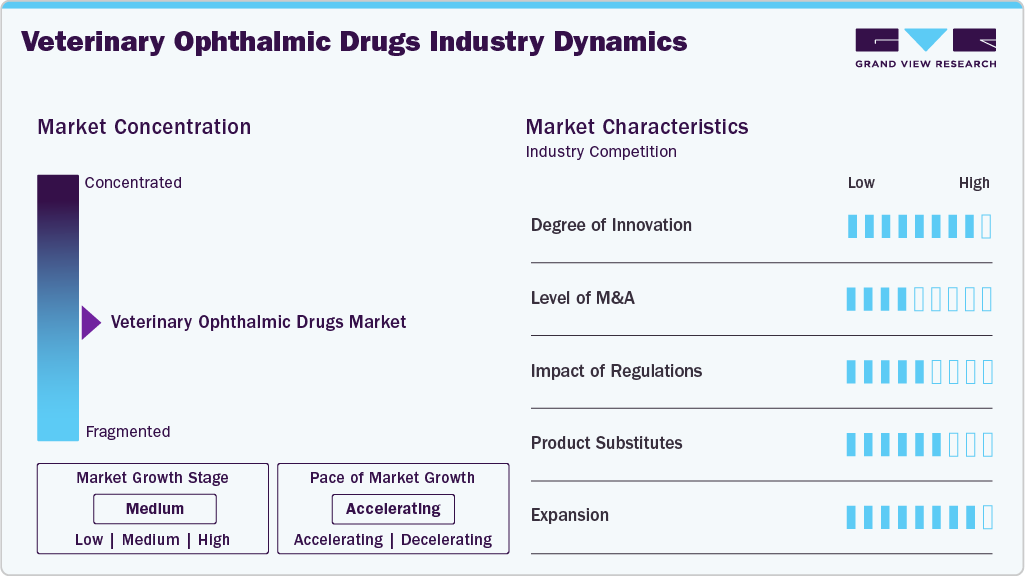
M&A activity is increasing as leading animal health companies acquire specialized ophthalmic technology developers to expand capabilities and portfolios. The acquisition of SentrX by Dômes Pharma illustrates strategic consolidation around advanced biomaterials and sustained-release drug-delivery systems. These deals strengthen competitive positioning, accelerate innovation pipelines, and extend industry reach.
Regulatory frameworks influence industry dynamics by enforcing standards for drug safety, efficacy, and manufacturing quality. Alignment with human ophthalmology regulations supports faster adoption of advanced therapies, while regional differences in approval pathways may delay industry entry. Compliance requirements enhance product credibility and shape development costs and timelines.
Substitution pressure is moderate, with some human ophthalmic drugs and general medications repurposed for veterinary use. Rising demand for species-specific formulations and targeted delivery systems is reducing reliance on these substitutes. The shift toward dedicated veterinary solutions enhances industry differentiation and lowers substitution risks.
Human pharmaceutical companies are increasingly entering veterinary ophthalmology by adapting advanced ocular drug-delivery technologies and biomaterials for animal use. Leveraging strong R&D in human eye care, they efficiently repurpose sustained-release systems and specialty formulations for pets. Many establish veterinary subsidiaries or partnerships to streamline industry entry, introducing higher-quality, innovation-driven products that elevate therapeutic standards and accelerate innovation in veterinary eye care.
Animal Insights
In 2025, the canine segment accounted for the largest share of 34.7%, driven by high disease prevalence in dogs, routine screening at clinics, and strong owner awareness of visible eye symptoms. Chronic dry eye, corneal ulcers, and age-linked degeneration need repeat therapy, so drug use remains steady throughout the year. Many dogs stay on lubricants, antibiotics, and anti-inflammatory drops for extended periods. Clinics invest in better diagnostics for canine eye care, and this raises treatment rates. These patterns keep demand broad across urban and rural regions.
The feline segment is emerging as the fastest-growing category in the market, fueled by rising cases linked to herpesvirus, allergy-driven irritation, and tear film instability. Cats often present subtle symptoms, so clinics rely on imaging and staining tools to raise detection. Owners act early when discharge or redness appears, and this boosts more treatment starts. Many cats live indoors, and this increases exposure to irritants that trigger eye problems. Chronic flare-ups need repeat therapy, so growth remains strong. More cat-specific formulations also help improve compliance.
Indication Insights
Uveitis represented the largest segment in 2025, driven by its links to trauma, immune disease, and systemic infections that affect many animal species. Recurrence is common, so patients come back for prolonged care. Clinics rely on steroids, antibiotics, and immune-acting drops to control inflammation. Many cases appear suddenly with pain or cloudiness, so vets begin treatment right away. Imaging helps reveal deeper inflammation that was once missed. These factors keep uveitis a high-volume condition across practices.
Conjunctivitis is emerging as the fastest-growing segment in the market, fueled by allergies, viral exposure, and irritants in homes and outdoor spaces. It is simple to identify, so case numbers rise as clinics screen pets more often. Treatment relies on antibiotics, lubricants, and anti-inflammatory drops that owners find easy to use. Sudden redness and discharge drive quick visits, and this supports early intervention. Recurrence in young and adult pets raises follow-up prescribing. These traits create strong growth across general practices.
Distribution Channel Insights
Veterinary hospitals and clinics account for the largest market share in 2025, because they manage examinations, imaging, procedures, and follow-up plans. Eye disorders often require direct evaluation, so most prescriptions originate in clinics. Specialists support complex surgeries and use advanced drugs that raise total volume. Clinics maintain full stock for immediate treatment. Repeat appointments keep drug flow consistent throughout the year. This setting remains the primary point of care for most pet owners.
E-commerce is the fastest-growing market segment over the forecast period, driven by strong demand for easy refills and home delivery for chronic therapies. Online platforms offer a wide range of approved products with clear pricing. Auto-refill programs support pets with recurring dry eye or infection-linked conditions. Digital pharmacies expand access for owners in smaller towns. Simple ordering improves adherence to long-term treatment plans. These factors keep online sales rising across regions.
Drug Insights
The lubricants/artificial tears segment represented the largest share of about 26% in 2025 and is also expected to exhibit the fastest CAGR over the forecast period. This dominance is driven by their use in dry eye, irritation, and postoperative care across many species. These products are safe for long-term use, so they carry high refill rates in clinics. Older animals and flat-faced breeds need regular lubrication for comfort. Clinics hold a wide mix of gels, ointments, and extended-relief drops to support varied cases. These drugs play a significant role in healing after eye surgery. This broad and daily use keeps the category dominant across markets.
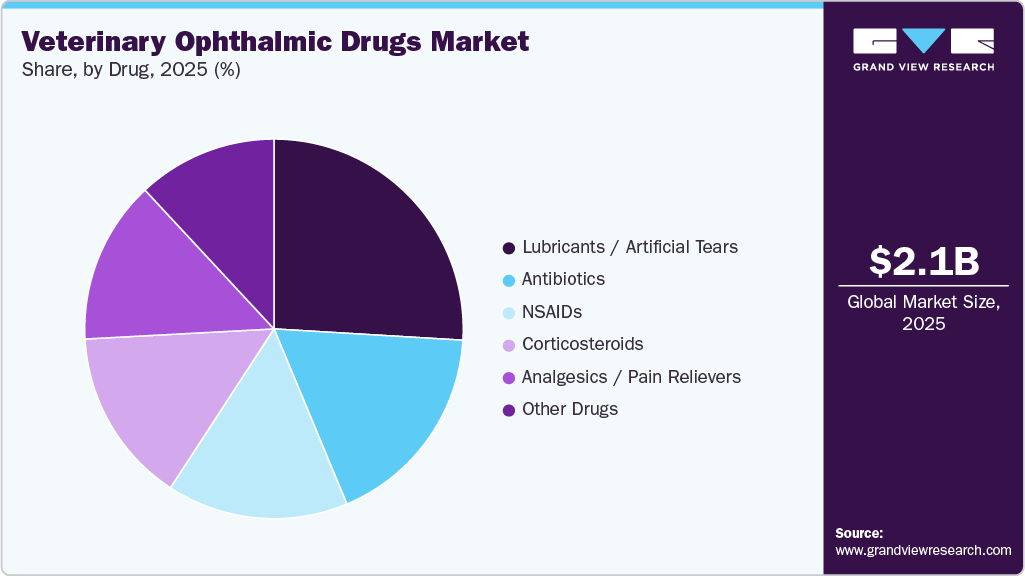
Other drugs (anesthetics, antifungals, anti-glaucoma, etc.) segment is the second-fastest growing over the forecast period, fueled by a steady rise in complex infections, fungal disease, and pressure-linked disorders. Corneal injuries also bolster the use of anesthetics and targeted antifungals. Glaucoma cases in dogs and cats often need lifelong pressure control. Early diagnosis improves as clinics adopt newer imaging tools. These conditions create long treatment cycles with high clinical dependency. Growth remains strong because these therapies support both routine and advanced care.
Regional Insights
The North America veterinary ophthalmic drugs market has accounted for a share of more than 41.1% in 2025, driven by strong pet ownership, high awareness of ocular disorders, and advanced veterinary infrastructure. The region benefits from the rapid adoption of specialty ophthalmic therapeutics, including anti-infectives, anti-inflammatories, and tear-replacement formulations. The growing prevalence of conditions such as keratoconjunctivitis sicca, cataracts, and glaucoma continues to stimulate product demand. Expanding pet insurance coverage further supports treatment accessibility. Increasing emphasis on early diagnosis and the availability of board-certified veterinary ophthalmologists also drives market expansion.
U.S. Veterinary Ophthalmic Drugs Market Trends
The veterinary ophthalmic drugs market in the U.S. is evolving with rising demand for targeted ocular therapies, increasing chronic ocular disease burden, and heightened focus on companion animal wellness. Growth is supported by strong investments in specialty clinics and advanced diagnostic tools such as slit-lamp biomicroscopy and tonometry. Manufacturers are expanding portfolios with improved formulations, longer-acting drops, and combination therapies. Pet parents’ willingness to spend on premium care continues to elevate treatment uptake. Regulatory clarity and faster approval pathways for ophthalmic generics also shape market progression.
Europe Veterinary Ophthalmic Drugs Market Trends
The veterinary ophthalmic drugs market in Europe is expanding, fueled by high veterinary care standards, increasing treatment rates for ocular infections, and widespread adoption of companion animals. Strong regulatory emphasis on product quality and safety enhances trust in ophthalmic therapeutics. Demand is rising for anti-inflammatory agents and ocular lubricants, particularly for aging pets and brachycephalic breeds. Growth in veterinary insurance penetration across Western Europe further supports market performance. Expansion of cross-border distribution networks is also streamlining product availability.
The UK veterinary ophthalmic drugs market is gaining momentum, driven by the rising prevalence of hereditary ocular disorders, strong clinical expertise, and active adoption of advanced treatment regimens. Increased awareness of pet eye health is prompting earlier diagnosis and intervention. The presence of leading veterinary ophthalmology practices contributes to higher procedural volumes. Growth in pet insurance coverage supports the affordability of long-term therapies. Market demand is also boosted by an expanding aging pet population requiring chronic ophthalmic management.
Asia Pacific Veterinary Ophthalmic Drugs Market Trends
The veterinary ophthalmic drugs market in the Asia Pacific is the fastest-growing region over the forecast period, driven by rising pet ownership, expanding urban veterinary networks, and increasing awareness regarding ocular diseases. Countries such as China, Japan, and South Korea are witnessing significant growth in specialized care adoption. Manufacturers are broadening distribution across emerging markets to address previously underserved demand. Economic growth and rising disposable incomes support higher spending on companion animal therapeutics. The increasing incidence of infections and trauma-related ocular disorders further accelerates market uptake.
India veterinary ophthalmic drugs market is expanding, driven by rising companion animal adoption, growing veterinary infrastructure, and increased recognition of ocular conditions. Market growth is supported by more veterinarians adopting modern ophthalmic diagnostics and therapeutics in urban regions. Demand for antibiotics, lubricants, and anti-inflammatory formulations is increasing steadily. The growing presence of multinational and domestic brands is improving market accessibility. Educational initiatives by veterinary associations are also enhancing clinical management capabilities.
Latin America Veterinary Ophthalmic Drugs Market Trends
The veterinary ophthalmic drugs market in Latin America is growing, driven by improving veterinary healthcare access, rising awareness of pet eye diseases, and expanding pet care spending in key markets. Increased penetration of private veterinary clinics is enhancing the availability of ophthalmic treatments. The market is also benefiting from improvements in supply chain and distribution networks. The growing demand for anti-infective and supportive ocular therapies is particularly notable. Increasing adoption of premium pet care services is further propelling market growth.
Brazil veterinary ophthalmic drugs market is expanding, driven by strong pet population growth, increased clinical adoption of ophthalmic diagnostics, and rising awareness of early eye disease management. Demand for antibiotics, lubricants, and anti-inflammatory drops is growing rapidly. High prevalence of ocular infections among dogs in tropical climates also supports market demand. Improved access to specialty veterinary care is enabling faster adoption of advanced products. Growing investments by domestic and international manufacturers are strengthening market competitiveness.
Middle East & Africa Veterinary Ophthalmic Drugs Market Trends
The veterinary ophthalmic drugs market in the MEA is gaining traction, fueled by growing demand for companion animal care, increasing establishment of specialized clinics, and rising focus on preventive ophthalmology. Countries like the UAE and Saudi Arabia are witnessing significant adoption of advanced formulations. Higher disposable incomes are contributing to a greater willingness to invest in premium ocular treatments. Market penetration is improving due to the expansion of international veterinary brands. Rising awareness of breed-specific ocular issues is further driving demand.
South Africa veterinary ophthalmic drugs market is expanding, driven by rising pet care expenditure, growing recognition of ocular disorders, and improving availability of specialty veterinary services. Increased uptake of treatments for infections, corneal injuries, and chronic inflammatory conditions is supporting growth. Veterinary associations are promoting awareness of preventive ophthalmic care among pet owners. Distribution of ophthalmic therapeutics is improving through retail and clinic-based channels. Growth is further supported by increasing demand for advanced diagnostic procedures.
The veterinary ophthalmic drugs market in Saudi Arabia is expanding, driven by rising demand for companion animal services, strong investments in veterinary infrastructure, and growing adoption of specialized ophthalmic treatments. Increased pet ownership among urban households is stimulating demand for ocular care products. Clinics are increasingly equipped with advanced diagnostics, leading to better detection of chronic diseases. Government support for the veterinary sector development is improving product accessibility. Rising preference for premium and imported drugs further boosts market growth.
Key Veterinary Ophthalmic Drugs Company Insights
The market is moderately concentrated, with Merck & Co., Zoetis, Dechra Pharmaceuticals, and Virbac holding leading positions through broad portfolios and global reach. Specialty ophthalmic manufacturers, compounding pharmacies, and technology-driven entrants capture smaller but growing shares, supporting innovation and limiting market consolidation. Companies investing in sustained-release carriers, AI-assisted diagnostics, and human-pharma crossovers are gaining a competitive advantage, while regulatory compliance and strategic M&A further influence market positioning and growth.
Key Veterinary Ophthalmic Drugs Companies:
The following key companies have been profiled for this study on the veterinary ophthalmic drugs market.
- Merck & Co. Inc.
- Zoetis
- Dechra Pharmaceuticals
- Virbac
- Ceva Santé Animale
- Elanco
- Bausch & Lomb
- Sandoz
- Norbrook Laboratories
- I-Med Animal Health
- Dômes Pharma, Inc.
Recent Developments
-
In January 2026, Dômes Pharma partnered with the International Society of Veterinary Ophthalmology (ISVO) to sponsor the Dômes Pharma‑ISVO Travel Scholarship, funding three travel awards in 2026 to support emerging veterinary ophthalmologists’ training at centers of excellence.
-
In January 2026, Hagyard Equine Medical Institute announced expansion plans for its equine‑only ophthalmology services beyond central Kentucky, starting in 2026, to address a shortage of board‑certified equine ophthalmologists and reduce long wait times for specialized eye care for horses. The expansion will increase access to advanced diagnostics and surgical treatments for a wide range of equine ocular conditions and support growth in specialist equine eye care.
-
In October 2025, Tata 1mg launched a new pet medicines and supplements service, leveraging its existing pharmacy app and delivery infrastructure to reach 22,000 pincodes across India. It plans to serve prescription-led pet care, food, and grooming needs without building a separate app.
Veterinary Ophthalmic Drugs Market Report Scope
Report Attribute
Details
Market size value in 2026
USD 2.2 billion
Revenue forecast in 2033
USD 3.6 billion
Growth rate
CAGR of 7.1% from 2026 to 2033
Historical Period
2021 - 2025
Forecast period
2026 - 2033
Quantitative units
Revenue in USD million/billion and CAGR from 2026 to 2033
Report coverage
Revenue forecast, company ranking, competitive landscape, growth factors, and trends
Segments covered
Animal, drug, indication, distribution channel, region
Regional scope
North America; Europe; Asia Pacific; Latin America; MEA
Country scope
U.S.; Canada; Mexico; UK; Germany; France; Italy; Spain; Denmark; Sweden; Norway; Japan; China; India; Australia; South Korea; Thailand; Brazil; Argentina; South Africa; Saudi Arabia; UAE; Kuwait; Qatar; Oman
Key companies profiled
Merck & Co. Inc.; Zoetis; Dechra Pharmaceuticals; Virbac; Ceva Santé Animale; Elanco; Bausch & Lomb; Sandoz; Norbrook Laboratories; I-Med Animal Health; Dômes Pharma, Inc.
Customization scope
Free report customization (equivalent up to 8 analysts working days) with purchase. Addition or alteration to country, regional & segment scope.
Pricing and purchase options
Avail customized purchase options to meet your exact research needs. Explore purchase options
Global Veterinary Ophthalmic Drugs Market Report Segmentation
This report forecasts revenue growth at global, regional, and country levels and provides an analysis of the latest industry trends in each of the sub-segments from 2021 to 2033. For this study, Grand View Research has segmented the global veterinary ophthalmic drugs market report based on animal, drug, indication, distribution channel, and region
-
Animal Outlook (Revenue, USD Million, 2021 - 2033)
-
Canine
-
Feline
-
Equine
-
Bovine
-
Others
-
-
Drug Outlook (Revenue, USD Million, 2021 - 2033)
-
Antibiotics
-
NSAIDs
-
Corticosteroids
-
Lubricants / Artificial Tears
-
Analgesics / Pain Relievers
-
Others Drugs
-
-
Indication Outlook (Revenue, USD Million, 2021 - 2033)
-
Eyelid Abnormalities
-
Cataract
-
Glaucoma
-
Retinal Complications
-
Uveitis
-
Conjunctivitis
-
Corneal Complications
-
Other Indications
-
-
Distribution Channel Outlook (Revenue, USD Million, 2021 - 2033)
-
Veterinary Hospitals & Clinics
-
Specialty Stores
-
E-Commerce
-
Other Distribution Channels
-
-
Regional Outlook (Revenue, USD Million, 2021 - 2033)
-
North America
-
U.S.
-
Canada
-
Mexico
-
-
Europe
-
UK
-
Germany
-
France
-
Italy
-
Spain
-
Denmark
-
Sweden
-
Norway
-
-
Asia Pacific
-
Japan
-
India
-
China
-
South Korea
-
Australia
-
Thailand
-
-
Latin America
-
Brazil
-
Argentina
-
-
Middle East and Africa (MEA)
-
South Africa
-
Saudi Arabia
-
UAE
-
Kuwait
-
Qatar
-
Oman
-
-
Frequently Asked Questions About This Report
b. The global veterinary ophthalmic drugs market size was estimated at USD 2.1 billion in 2025 and is expected to reach USD 2.2 billion in 2026.
b. The global veterinary ophthalmic drugs market is expected to grow at a compound annual growth rate of 7.1% from 2026 to 2033 to reach USD 3.6 billion by 2033.
b. By Indication, Uveitis dominated the market in with a share of around 18% 2025, driven by its recurring nature and broad link to trauma, immune conditions, and systemic infections requiring prolonged multi-drug treatment. Conjunctivitis is the fastest-growing segment, propelled by rising allergy prevalence, frequent clinic screening, and high recurrence rates sustaining repeat prescribing across general practices.
b. Some key players operating in the veterinary ophthalmic drugs market include Merck & Co. Inc., Zoetis, Dechra Pharmaceuticals, Virbac, Ceva Santé Animale, Elanco, Bausch & Lomb, Sandoz, Norbrook Laboratories, I-Med Animal Health, and Dômes Pharma, Inc.
b. Some of the factors driving the market growth are advancements in ophthalmic drug-delivery technologies, rising development of long-acting ophthalmic therapies, increasing focus on antimicrobial stewardship & evidence-based use, and growing clinical demand for treatment of complex ocular diseases.


Share this report with your colleague or friend.
Need a Tailored Report?
Customize this report to your needs — add regions, segments, or data points, with 20% free customization.


ISO 9001:2015 & 27001:2022 Certified
We are GDPR and CCPA compliant! Your transaction & personal information is safe and secure. For more details, please read our privacy policy.
Trusted market insights - try a free sample
See how our reports are structured and why industry leaders rely on Grand View Research. Get a free sample or ask us to tailor this report to your needs.