U.S. Short-term Vacation Rental Market Summary
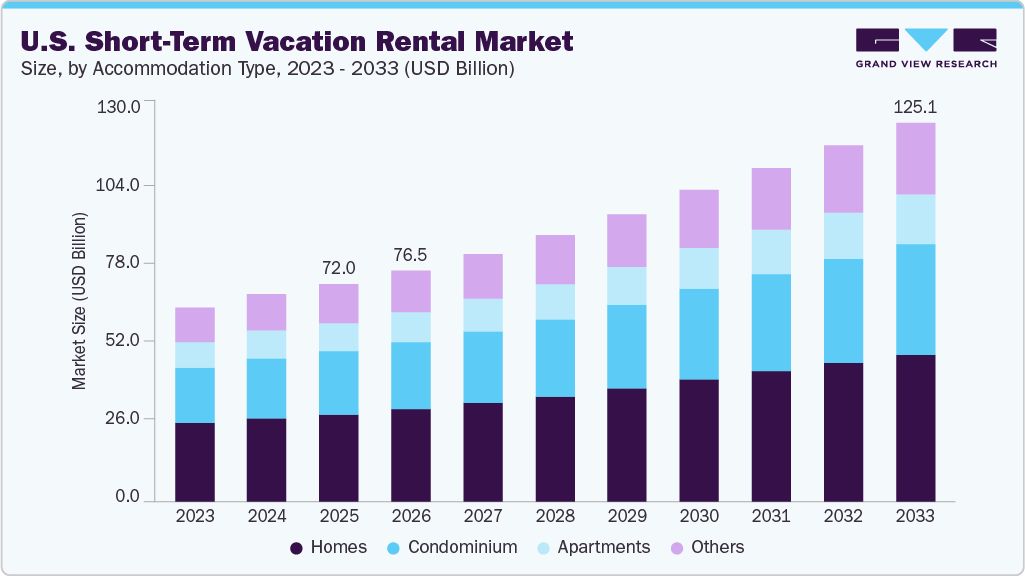
The U.S. short-term vacation rental market size was estimated at USD 72.00 billion in 2025 and is projected to reach USD 125.14 billion by 2033, growing at a CAGR of 7.3% from 2026 to 2033. Increasing domestic travel demand in the U.S. has significantly driven the market growth, as more Americans are choosing local and regional trips for leisure, weekend getaways, and family vacations.
Key Market Trends & Insights
- By accommodation type, the homes segment led the U.S. short-term vacation rental market, accounting for a share of 40.2% in 2025.
- By booking mode, the online segment led the U.S. short-term vacation rental industry, accounting for a share of 96.0% in 2025.
- Based on booking mode, the offline booking mode for short-term vacation rentals in the U.S. is estimated to witness a CAGR of 0.5% from 2026 to 2033.
Market Size & Forecast
- 2025 Market Size: USD 72.00 Billion
- 2033 Projected Market Size: USD 125.14 Billion
- CAGR (2026-2033): 7.3%
This has increased the demand for private accommodations that offer flexibility and comfort. At the same time, cost advantages for groups and families have further supported market expansion, as vacation rentals often offer larger living spaces, multiple bedrooms, and kitchen facilities at a lower overall cost than booking several hotel rooms.
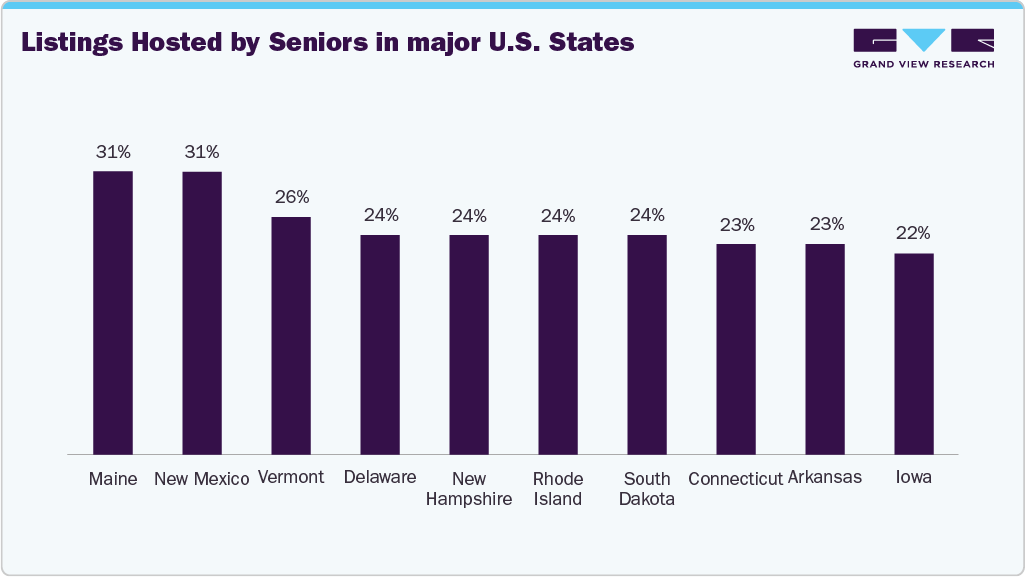
Short-term vacation rentals have become a significant contributor to the U.S. economy. The revenue generated from rental bookings supports local economies by creating jobs, fostering tourism, and contributing to the hospitality sector. For property owners, hosting short-term rentals offers an attractive income opportunity, with many generating substantial earnings through these platforms. This economic boost is not limited to hosts; it extends to local businesses that cater to tourists, such as restaurants, shops, and transportation services. Moreover, many hosts use rental income to offset mortgage payments and housing costs, or to supplement retirement savings, thereby contributing to financial well-being.
Travelers in the U.S. are increasingly seeking accommodations that offer a more personalized, home-like experience than traditional hotels. Short-term vacation rentals provide larger living spaces, kitchens, and greater privacy, making them particularly appealing for families and groups. As a result, many travelers prefer booking homes, apartments, and villas through platforms such as Airbnb and Vrbo, which offer diverse property options and flexible stays. Consumer surveys in 2025 show that travelers value space, privacy, and home-like amenities when choosing vacation rentals. About 82% of vacation rental guests reported high satisfaction, compared with 68% of hotel guests, mainly due to larger living areas, kitchens, and the ability to cook during longer stays.
Demand for luxury and premium vacation rentals is increasing as affluent travelers seek exclusive, high-quality accommodation. High-end villas, waterfront homes, and premium vacation properties are becoming increasingly popular among travelers seeking privacy, premium amenities, and personalized services. This trend is encouraging property owners and management companies to invest in upscale properties and enhanced guest experiences.
For instance, in April 2025, Luxury travel company Kensington Tours expanded into the private villa rental segment by launching Kensington Villas, offering more than 2,000 curated luxury villa properties with personalized services such as private chefs and wellness experiences. The expansion was driven by strong demand from affluent travelers, particularly families seeking spacious and private accommodations for multi-generational vacations.
Consumer Insights
Consumers increasingly prefer short-term vacation rentals because they offer greater privacy compared to traditional hotels. Entire homes or apartments allow travelers to avoid shared spaces and enjoy a more relaxed, private environment, which is particularly appealing to families, couples, and small groups.
Travelers favor vacation rentals that offer home-style amenities such as kitchens, laundry facilities, and living rooms. These amenities allow guests to cook meals, stay comfortably for longer periods, and maintain routines similar to those at home during their trips.
Amenities play a major role in booking decisions, with travelers prioritizing features such as high-speed Wi-Fi, air conditioning, smart TVs, parking, and dedicated workspaces. Properties offering modern conveniences and well-equipped interiors are more likely to attract bookings.
Families and groups of friends highly prefer vacation rentals because they offer multiple bedrooms and shared living spaces. Staying together in one property is often more convenient and cost-effective than booking several hotel rooms.
Many travelers choose vacation rentals for distinctive accommodations, such as beachfront homes, countryside cottages, or cabins. These properties often allow visitors to stay in residential neighborhoods and experience local culture more authentically than traditional hotels.
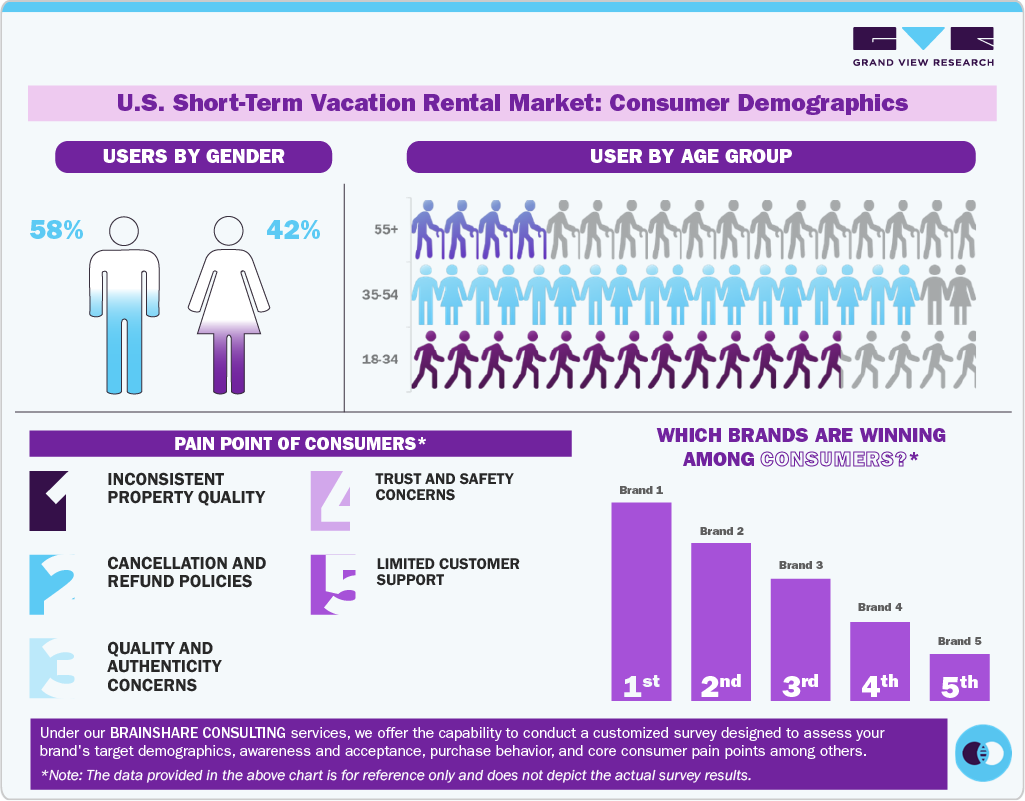
Cities like New York City, San Francisco, Chicago, and Miami have a strong demand for short-term rentals, particularly apartments and condos. These accommodations are highly preferred by consumers visiting cities for business, cultural events, or tourism. Travelers in urban areas often prioritize proximity to landmarks, public transportation, and dining options, making centrally located rentals especially desirable.
From an owner’s perspective, urban properties are appealing because of their year-round demand, ensuring steady bookings. However, high property costs and strict regulations in cities like New York (e.g., Local Law 18) limit the pool of eligible STR properties. Urban rentals are often marketed as luxurious, modern, or boutique-style accommodations to attract higher-paying guests. Amenities such as high-speed Wi-Fi, fully equipped kitchens, and concierge services are prioritized to meet the expectations of business travelers and affluent tourists.
Locations like the Hamptons, Malibu, and Myrtle Beach offer properties tailored for relaxation and luxury. Popular accommodations in these locations include beach houses, cottages, and waterfront condos, often marketed for their scenic views and tranquil surroundings. Consumers highly sought-after features such as private docks, beachfront access, and outdoor decks.
Travelers in these locations often prioritize privacy, exclusivity, and access to water-based activities like boating, fishing, or paddleboarding. For an owner, these properties are appealing as investments due to their capability to generate high nightly rates, particularly during peak summer months. However, maintaining these homes can be costly due to weather-related wear and tear. Owners often enhance their properties with upscale amenities like hot tubs, fire pits, and outdoor kitchens to justify higher rental prices and attract affluent clientele.
Accommodation Type Insights
The vacation rental homes industry segment led the U.S. short-term vacation rental market, accounting for a revenue share of 40.2% in 2025. These rentals cater to diverse traveler preferences by providing unique stays, from cozy cabins to spacious family homes, often equipped with full kitchens and private amenities like pools or patios. Additionally, the rise of remote work has allowed more people to travel while maintaining their routines, making rental homes an attractive option for long-term stays or work-friendly environments.
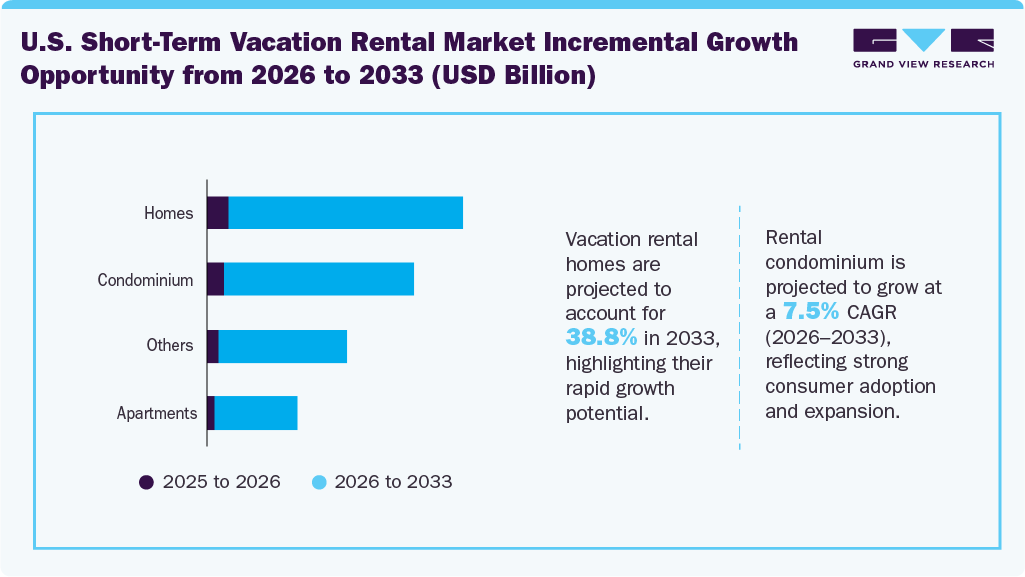
The rental condominium market is estimated to grow at a CAGR of 7.5% from 2026 to 2033. These properties allow guests to escape traditional lodging and immerse themselves in settings that reflect local culture, natural beauty, or creative themes. Cabins and cottages, for instance, appeal to those seeking a tranquil nature retreat, while themed properties cater to families, couples, or groups looking for novelty and fun. The shift toward experiential travel, combined with social media's influence in showcasing these unique stays, has further fueled their popularity. Additionally, these accommodations often offer privacy and personalized amenities, making them ideal for both leisure and work-focused travelers seeking alternatives to conventional rentals.
Booking Mode Insights
The online/platform-based booking mode led the U.S. short-term vacation rental market, accounting for a revenue share of 96.0% in 2025. Online platforms enable travelers to search, compare, and book accommodations from anywhere, offering detailed property descriptions, reviews, and real-time availability. This seamless process appeals to modern consumers who prioritize efficiency and transparency in travel planning. Additionally, features like secure payment options, flexible cancellation policies, and 24/7 customer support enhance trust and confidence in online booking. The growing use of mobile devices and apps has further amplified this trend, making it easier for travelers to plan and book trips on the go, driving the popularity of online booking.
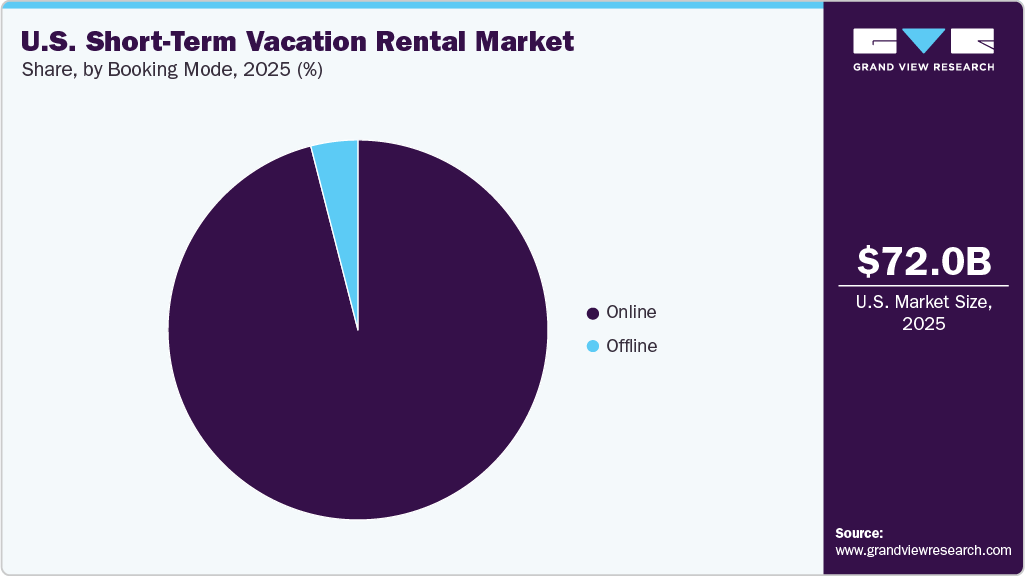
The offline booking mode for short-term vacation rentals in the U.S. is estimated to witness a CAGR of 0.5% from 2026 to 2033. Offline mode enables customized recommendations, term negotiation, and tailored travel arrangements that may not always be available on online platforms. Additionally, offline bookings can be more appealing in niche markets or remote destinations where internet connectivity and digital literacy may be limited. As some travelers seek a more hands-on approach to planning their stays, offline booking remains a valuable and reliable option in the evolving vacation rental market.
Key U.S. Short-term Vacation Rental Company Insights
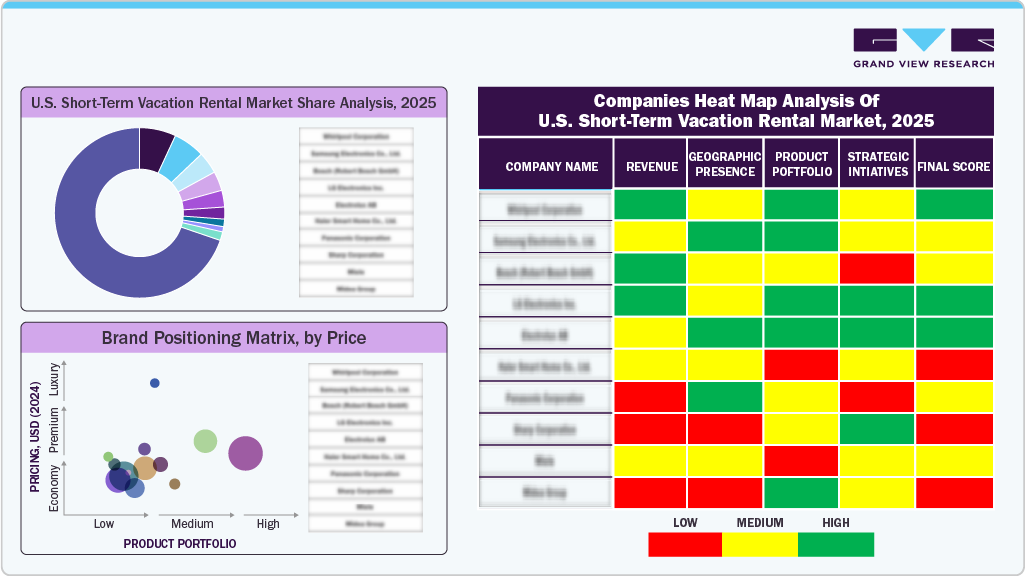
The U.S. short-term vacation rental industry comprises both well-established property management companies and emerging independent hosts that continue to innovate in accommodation offerings, property management services, and technology-driven booking solutions to meet evolving traveler preferences. Leading companies focus on providing a wide range of rental options, including apartments, villas, cabins, beachfront homes, and luxury vacation properties, while emphasizing enhanced amenities, flexible stay options, and personalized guest experiences to attract modern travelers. By expanding listings and improving visibility through online booking platforms, professional property management services, and digital marketing channels, these companies ensure broader property accessibility and strengthen their presence across popular U.S. travel destinations.
Key U.S. Short-term Vacation Rental Companies:
- Extended Stay America
- AvantStay, Inc.
- Airbnb, Inc.
- Booking Holdings Inc.
- Expedia, Inc.
- Evolve Vacation Rental.
- Vacasa LLC
- Sonder Holdings Inc.
- Wyndham Destinations, Inc.
- NOVASOL A/S
Recent Developments
-
In January 2026, StayTerra invested in Vacation Homes of Hilton Head, a luxury vacation rental property management company located on Hilton Head Island, South Carolina, to expand its presence in the U.S. short-term rental market. The partnership aimed to strengthen StayTerra’s portfolio of premium vacation rental brands and broaden its reach into the southeastern Atlantic coast region.
-
In December 2025, TravelAI acquired the vacation rental brand Owner Direct Vacation Rentals, including the domain OwnerDirect.com, to strengthen its presence in the North American short-term rental market. The company completed the acquisition to expand its reach across Canada and the U.S. and to increase traffic for whole-home vacation rental bookings.
-
In December 2025, StayTerra invested in Cape & Coast Premier Properties, a luxury vacation rental management company based in Cape San Blas, Florida, to expand its presence in the U.S. short-term vacation rental market. Cape & Coast manages a portfolio of high-end beachfront homes along Florida’s “Forgotten Coast,” offering premium guest services and curated vacation experiences.
U.S. Short-term Vacation Rental Market Report Scope
|
Report Attribute
|
Details
|
|
Market size value in 2026
|
USD 76.46 billion
|
|
Revenue forecast in 2033
|
USD 125.14 billion
|
|
Growth rate
|
CAGR of 7.3% from 2026 to 2033
|
|
Actuals
|
2021 - 2025
|
|
Forecast period
|
2026 - 2033
|
|
Quantitative units
|
Revenue in USD million/billion and CAGR from 2026 to 2033
|
|
Report coverage
|
Revenue forecast, company ranking, competitive landscape, growth factors, and trends
|
|
Segments covered
|
Accommodation type, booking mode
|
|
Country scope
|
U.S.
|
|
Key companies profiled
|
Extended Stay America; AvantStay, Inc.; Airbnb, Inc.; Booking Holdings Inc.; Expedia, Inc.; Evolve Vacation Rental; Vacasa LLC; Sonder Holdings Inc.; Wyndham Destinations, Inc.; NOVASOL A/S
|
|
Customization
|
Free report customization (equivalent up to 8 analysts working days) with purchase. Addition or alteration to country, regional & segment scope.
|
|
Pricing and purchase options
|
Avail customized purchase options to meet your exact research needs. Explore purchase options |
U.S. Short-Term Vacation Rental Market Report Segmentation
This report forecasts revenue growth at the country levels and provides an analysis of the latest industry trends and opportunities in each of the sub-segments from 2021 to 2033. For this study, Grand View Research has segmented the U.S. short-term vacation rental market report based on accommodation type, and booking mode:
-
Accommodation Type Outlook (Revenue, USD Million, 2021 - 2033)
-
Booking Mode Outlook (Revenue, USD Million, 2021 - 2033)
-
Online/Platform-Based
-
Offline
-
Accommodation Type x Booking Mode Outlook (Revenue, USD Million, 2021 - 2033)
-
Homes
-
Online/Platform-based
-
Offline
-
Apartments
-
Online/Platform-based
-
Offline
-
Condominium
-
Online/Platform-based
-
Offline
-
Others
-
Online/Platform-based
-
Offline
Frequently Asked Questions About This Report
b. Some key players operating in the U.S. short-term vacation rental market include Extended Stay America, AvantStay, Inc., Airbnb, Inc., Booking Holdings Inc., Expedia, Inc., Evolve Vacation Rental., Vacasa LLC, Sonder Holdings Inc., Wyndham Destinations, Inc., NOVASOL A/S
b. Key factors driving the U.S. short-term vacation rental increased travel demand, the rise of remote work, platform-based accessibility, and preferences for unique, private accommodations.
b. The U.S. short-term vacation rental market was estimated at USD 72.00 billion in 2025 and is expected to reach USD 76.46 billion in 2026.
b. The U.S. short-term vacation rental market is expected to grow at a compound annual growth rate of 7.3% from 2026 to 2033, reaching USD 125.14 billion by 2033.
b. Vacation rental homes industry held the revenue share of 40.2% of the U.S. short-term vacation rental industry in 2025. These rentals cater to diverse traveler preferences by providing unique stays, from cozy cabins to spacious family homes, often equipped with full kitchens and private amenities like pools or patios

 Download Sample Report