- Home
- »
- Beauty & Personal Care
- »
-
U.S. Hair Care Products Market Size, Industry Report, 2033GVR Report cover
![U.S. Hair Care Products Market Size, Share & Trends Report]()
U.S. Hair Care Products Market (2026 - 2033) Size, Share & Trends Analysis Report By Product (Shampoo, Conditioner, Oils, Serums, Hair Masks), By Gender (Men & Women), By Distribution Channel (Hypermarkets & Supermarkets, Specialty Beauty Stores), And Segment Forecasts
- Report ID: GVR-4-68040-574-7
- Number of Report Pages: 95
- Format: PDF
- Historical Range: 2021 - 2025
- Forecast Period: 2026 - 2033
- Industry: Consumer Goods
- Report Summary
- Table of Contents
- Segmentation
- Methodology
- Download FREE Sample
-
 Download Sample Report
U.S. Hair Care Products Market Summary
The U.S. hair care products market size was estimated at USD 22.05 billion in 2025 and is expected to reach USD 35.52 billion by 2033, growing at a CAGR of 6.2% from 2026 to 2033. Rising demand for vegan, natural, and organic hair care products is driving growth in the U.S. hair care industry.
Key Market Trends & Insights
- By product, the shampoo segment led the market with a share of 43.0% in 2025.
- By gender, the women segment led the industry with a share of 68.2% in 2025.
- By distribution channel, the hypermarkets & supermarkets segment led the market with a share of 33.8% in 2025.
Market Size & Forecast
- 2025 Market Size: USD 22.05 Billion
- 2033 Projected Market Size: USD 35.52 Billion
- CAGR (2026-2033): 6.2%
Organic hair care products are free of chemicals and are considered good for hair and scalp health. Organic professional haircare products are gaining traction among salons and spa service providers in the region. Consumers in the U.S. are increasingly recognizing that a healthy scalp is essential for maintaining strong, healthy hair, leading to a growing demand for specialized scalp-care products such as scalp serums, exfoliating scrubs, anti-dandruff treatments, and hair-loss solutions. Brands are responding by introducing clinically supported formulations that address hair thinning, dryness, and scalp sensitivity. A 2025 consumer hair-care survey reported that 34.5% of U.S. consumers considered scalp health one of their top hair concerns, making it a key priority alongside hair loss prevention and hair growth. The survey also showed that 37% of respondents were concerned about preventing hair loss or thinning. Additionally, 47% of male consumers identified scalp health as a major concern, underscoring the growing demand for targeted scalp treatment products.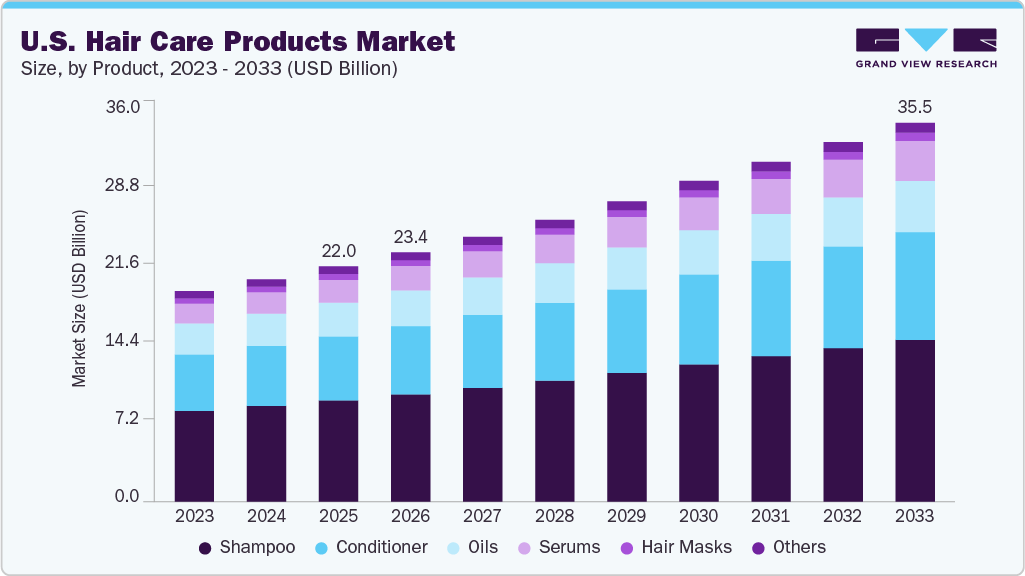
The demand for premium hair care products in the U.S. is increasing as consumers seek high-performance, specialized solutions that address specific hair and scalp concerns, such as hair thinning, hair damage repair, frizz control, and color protection. This trend is driving strong growth in the premium hair care products market, as many consumers are shifting from basic products to salon-quality, treatment-focused formulations. These products are often enriched with advanced ingredients, such as proteins, botanical extracts, and scalp-nourishing compounds that deliver targeted benefits and improve hair health.
For instance, in February 2025, Minimalist launched a new anti-dandruff shampoo designed to improve scalp health and control flakes. The product was formulated with clinically proven ingredients, including Piroctone Olamine, Climbazole, and Salicylic Acid, which target the root causes of dandruff and help reduce flaking, itching, and scalp impurities. The sulphate- and fragrance-free shampoo was dermatologically tested and formulated to gently cleanse the scalp without stripping moisture, making it suitable for all hair types.
The demand for products made with natural, clean ingredients is increasing significantly, driving growth in the natural hair care market. Consumers are becoming more aware of the potential effects of synthetic chemicals such as sulfates, parabens, and artificial fragrances, leading them to prefer hair care products formulated with plant-based, organic, and naturally derived ingredients. This shift toward transparency and ingredient safety has encouraged manufacturers to develop clean-label shampoos, conditioners, and treatments that promote healthier hair and scalp while aligning with sustainability and wellness trends, further supporting the expansion of the natural hair care products market.
The demand for conditioners among Americans is increasing as consumers place greater emphasis on hair nourishment, damage repair, and overall hair health, which is supporting growth in the hair conditioner market. Frequent use of styling tools, hair coloring, and exposure to environmental factors such as pollution and sun can cause dryness and hair damage, increasing the need for conditioners that help restore moisture, reduce frizz, and improve hair texture. According to the 2025 consumer survey, nearly 9 in 10 individuals aged 18-34 use shampoo or conditioner, highlighting strong product adoption among younger consumers. This growing awareness of comprehensive hair care routines and the availability of specialized formulations for different hair types are further contributing to the expansion of the hair conditioner market.
Consumer Insights
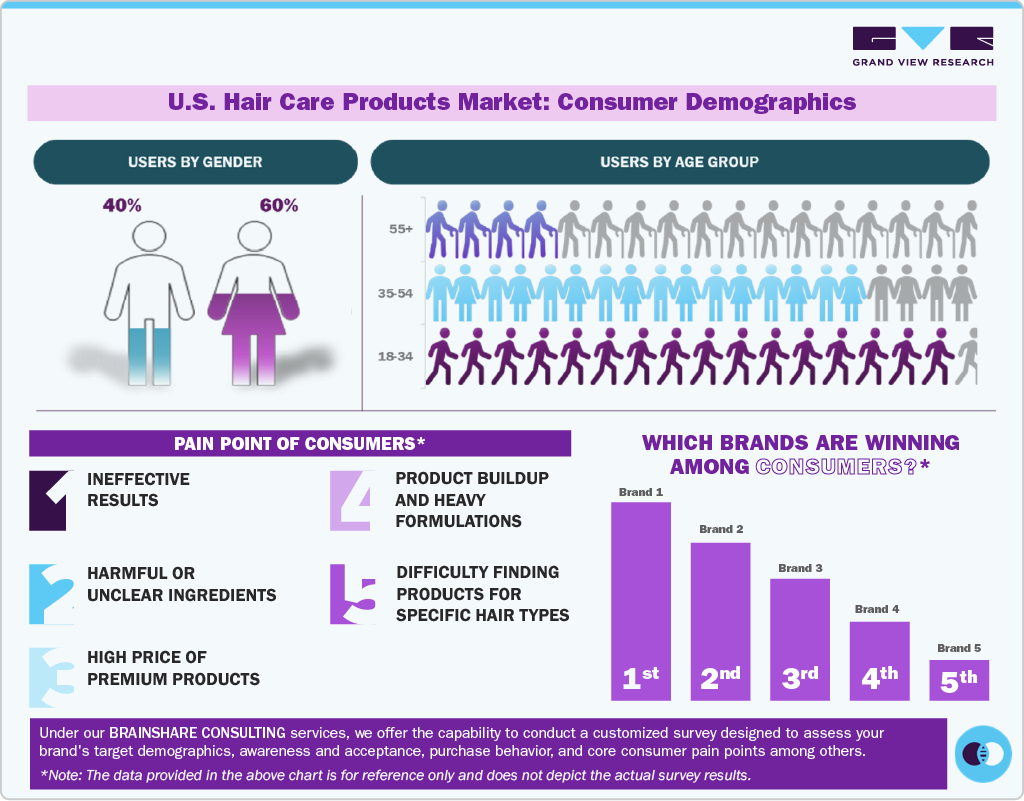
Growing conversations around healthy hair, especially through social media tutorials and product innovations, have encouraged many Americans to adopt regular hair-care routines, supporting growth in the hair shampoo market. A 2025 YouGov survey found that 86% of U.S. consumers use shampoo or conditioner as part of their routine, underscoring strong demand for hair shampoo products. Smaller shares use hair oils (16%) or treatments such as serums, masks, or leave-ins (18%), while fewer rely on salon treatments (9%) or home remedies (11%). Only 5% reported taking no action to care for their hair, indicating that most Americans actively maintain a hair-care routine, which continues to drive demand in the hair shampoo market.
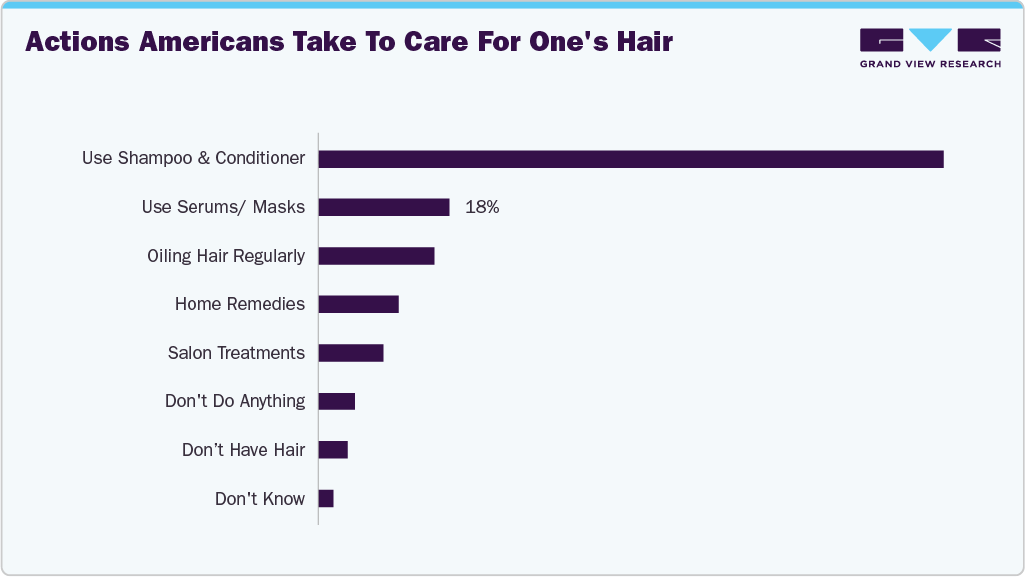
A YouGov survey found that hair-care habits varied across age groups in the U.S., with younger consumers more willing to experiment with different products. Among adults aged 18-34, nearly 90% used shampoo or conditioner, while a few applied hair oil and used serums or hair masks as part of their routine. In comparison, consumers aged 55 and above followed simpler routines, with only 11% using serums and 5% relying on home remedies. Meanwhile, individuals aged 35-54 showed moderate engagement: 85% used shampoo or conditioner, 22% used serums or masks, and 19% applied hair oil, indicating varying levels of product adoption across age groups.
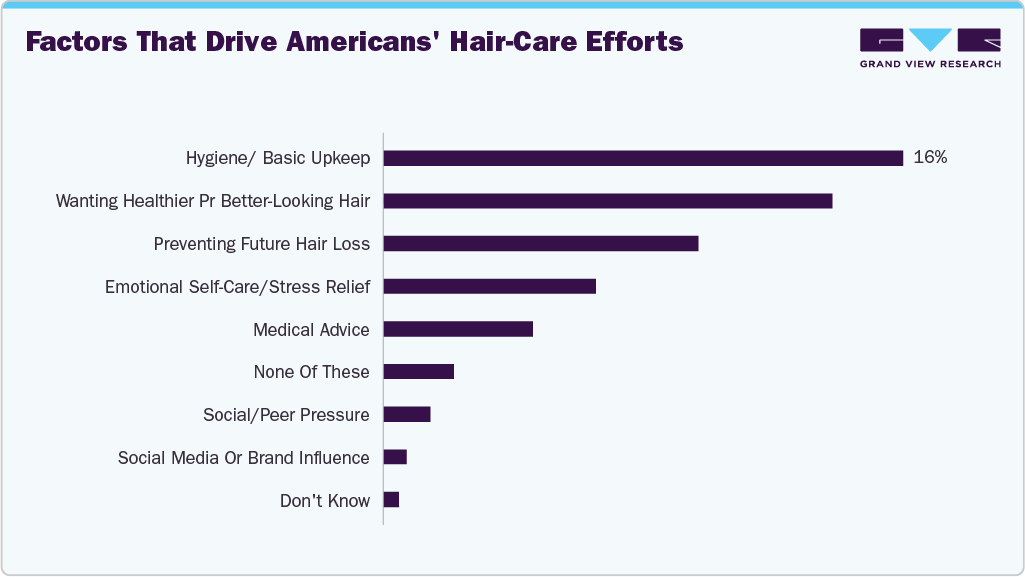
According to the data, hygiene and maintenance were the primary reasons Americans cared for their hair, with 66% of consumers citing cleanliness and upkeep as the main motivation. However, the reasons for maintaining hair care routines varied across genders. Women were more likely than men to focus on achieving healthier, more beautiful hair, with 72% of women reporting this as a reason, compared to 42% of men. Women were also more likely to associate hair care with stress relief (33% vs. 21% of men). While preventing hair loss was a concern for both groups, it was slightly more prominent among women, with 44% expressing concern compared to 35% of men.
Product Insights
Shampoo held around 43.0% revenue share of the U.S. hair care products industry in 2025. It is considered the basic and essential product for maintaining hair hygiene and scalp cleanliness. Most consumers use shampoo regularly to remove dirt, oil, sweat, and product buildup, making it a fundamental step in daily or weekly hair care routines. In addition, shampoos are widely available in various formulations targeting specific concerns, such as dandruff control, hair fall reduction, moisturization, and color protection, thereby increasing their relevance to different consumer needs.
In June 2025, French skincare brand Typology expanded further into the U.S. hair care products market by launching its scalp-focused haircare line on its direct-to-consumer website. The collection includes products, such as shampoos, conditioners, and scalp scrubs, designed to care for both the scalp and hair fibers.
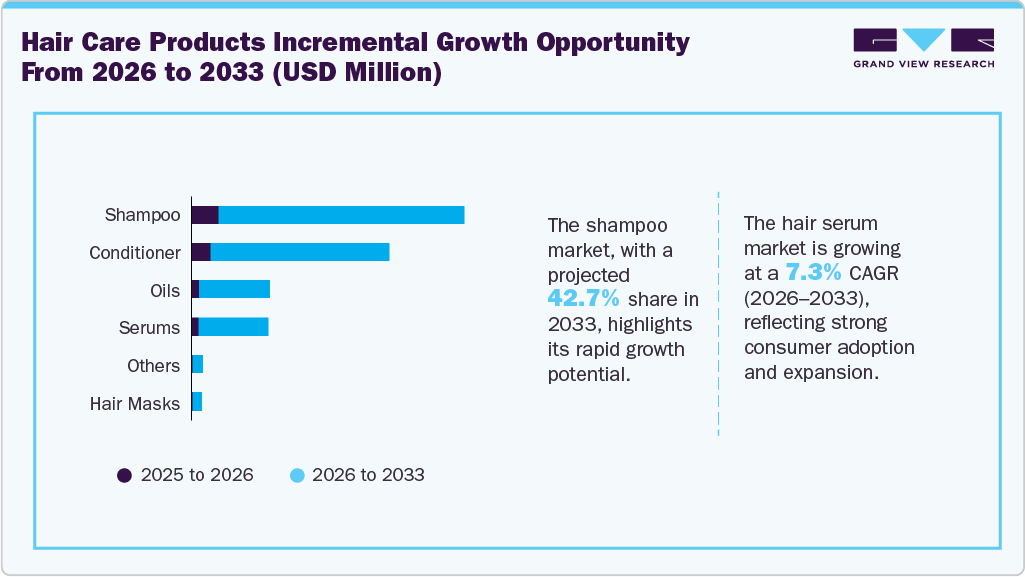
The demand for hair care serums is estimated to grow at a CAGR of 7.3% from 2026 to 2033, driven by increased consumer awareness of targeted skincare and haircare solutions. The busy lifestyles of consumers have led to a preference for products that enhance natural texture and style, such as hair serums. Serums, known for their high concentration of active ingredients, have become a staple in personal care routines, especially among millennials and Gen Z.
In May 2025, Prose launched a Custom Scalp Serum designed to provide personalized solutions for individual scalp needs and improve overall hair health. The serum was formulated using over 85 personalized factors to create customized formulas tailored to each user. The product also contained over 99% naturally derived ingredients and was designed to be microbiome-friendly, helping maintain the scalp’s natural balance while addressing issues such as dryness, irritation, and flakiness.
Gender Insights
Women held a 68.2% revenue share of the U.S. hair care products industry in 2025. Women place a stronger emphasis on personal grooming, appearance, and hair maintenance. Many women use a wide range of products, including shampoos, conditioners, hair oils, serums, masks, and styling products, to address concerns such as hair damage, dryness, frizz control, color protection, and hair growth. In addition, women often have longer hair and more frequent styling routines, which increases the need for conditioning, repair, and protection products.
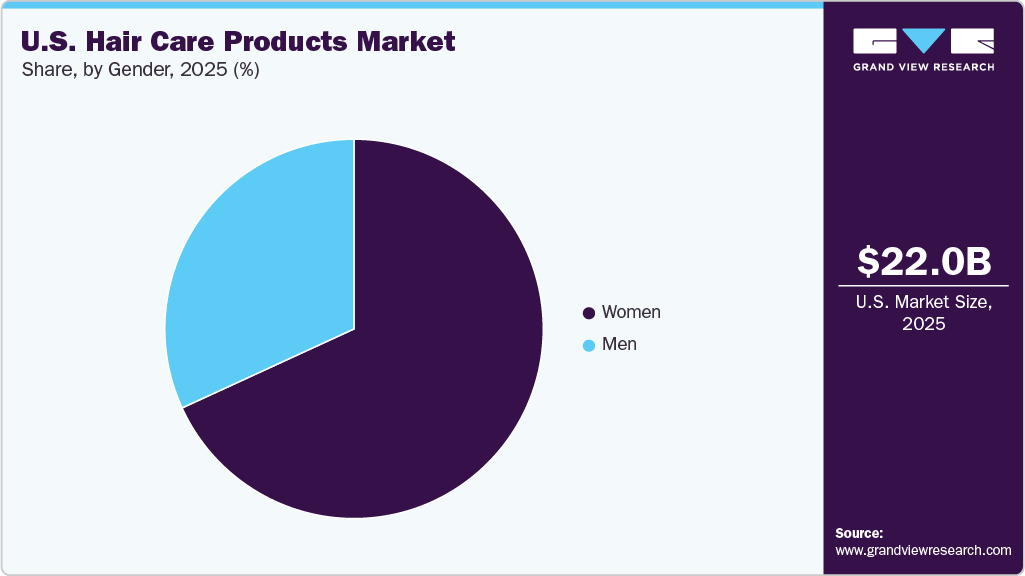
Hair care products for men are expected to grow at a CAGR of 7.0% from 2026 to 2033. This growth is mainly driven by evolving grooming habits and increased awareness of hair health among male consumers. This expansion is fueled by factors such as the rising popularity of diverse hairstyles, the influence of social media, and a growing demand for products addressing specific concerns, such as hair loss and scalp health. Brands are responding with tailored solutions, offering a range of products from shampoos and conditioners to styling gels and serums.
For instance, in March 2025, Suave launched 34 new products across hair care, body care, and men’s grooming, marking one of the brand’s largest product expansions in decades. The new lineup included innovations such as the Bonding Infusion hair care range, dry shampoos, heat-protection sprays, deodorants, and grooming products, designed to deliver salon-level performance with trending ingredients at affordable prices. The products were introduced to provide consumers with high-quality personal care solutions at budget-friendly prices and were made available through major retailers across the U.S.
Distribution Channel Insights
The sale of hair care products through hypermarkets & supermarkets held the revenue share of 33.8% in 2025. Factors such as business expansion and the growth in the number of hypermarkets and supermarkets operated by major retailers drive sales growth for these retail formats and significantly contribute to the U.S. hair care industry. The wide popularity of such retail stores helps beauty and personal care product manufacturers expand their consumer base. U.S. retailers operating through these retail formats continue to benefit from geographically dispersed and large store networks. Consumers prefer such retail stores as they offer attractive discounts and schemes. Some of the key retailers that operate hypermarkets and supermarkets across the U.S. include Walmart Stores, Target Corp., Sam's Club, and Costco.
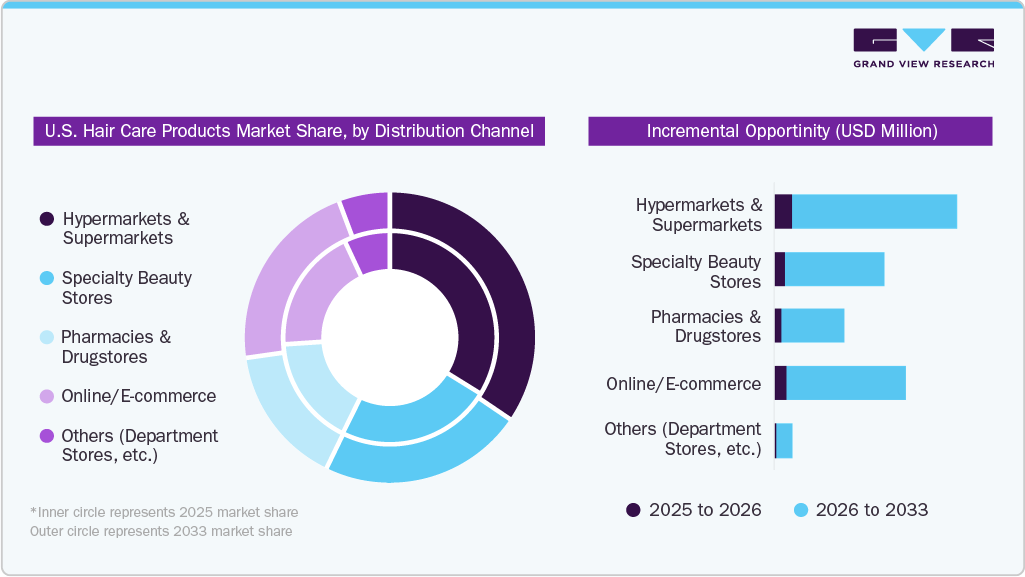
The sale of hair care products through online/e-commerce is estimated to witness a CAGR of 7.8% from 2026 to 2033. The online distribution channel is growing faster than the offline channel in the U.S. hair care products market. With the growing trend of online retailing, sales of personal care products, including haircare products, are expected to increase significantly through this channel during the forecast period. E-commerce platforms allow consumers to compare and gather information about haircare products and to provide valuable feedback through reviews and ratings. Hair care products are offered by pure-play e-retailers, such as Amazon, and echobay.com (eBay), as well as online platforms of various offline players, such as Walmart Inc. (Walmart) and Target Corporation (Target).
Key U.S. Hair Care Products Company Insights
The U.S. hair care products market has undergone notable changes in recent years as major brands have pursued strategies to strengthen their market positions. Companies are increasingly focusing on product innovation, launching new formulations that address evolving consumer needs such as scalp health, hair repair, and anti-hair fall solutions. Many manufacturers are also introducing clean-label, natural, and sulfate-free hair care products to attract health-conscious consumers. In addition, greater investment in research and development has enabled the creation of advanced formulations with improved performance and targeted benefits.
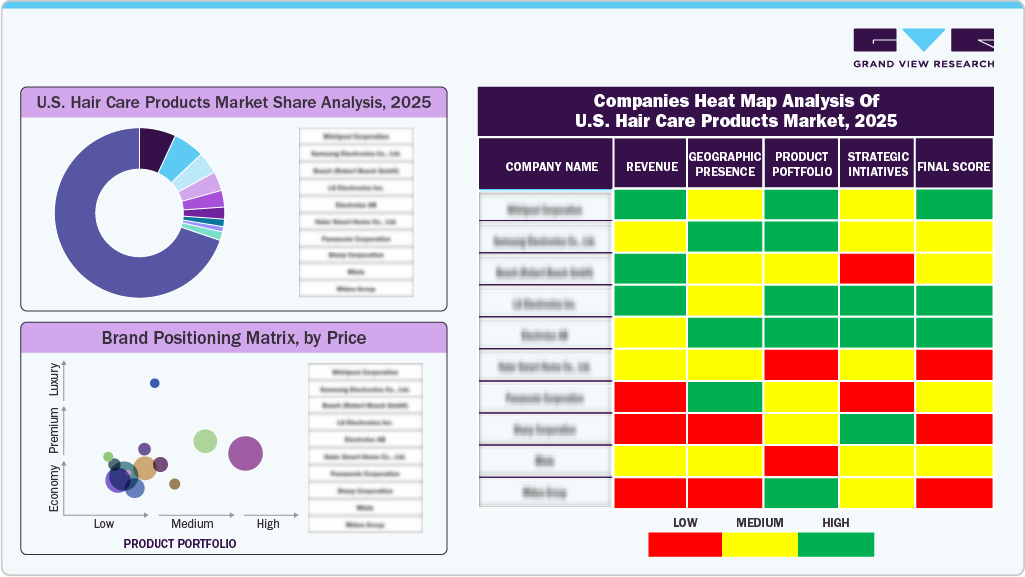
Key U.S. Hair Care Products Companies:
- Procter & Gamble (P&G) Company
- Unilever plc
- L'Oréal USA, Inc.
- Johnson & Johnson Consumer Inc.
- Henkel Corporation
- Revlon Consumer Products Corporation
- The Estée Lauder Companies Inc
- John Paul Mitchell Systems
- Kao Corporation
- Coty Inc.
Recent Developments
-
In March 2026, Innovative Beauty Group (IBG) launched its first fully owned hair and scalp care brand, Liva, marking a strategic move to expand its presence in the beauty market. The brand debuted at Walmart in more than 700 stores and on Walmart.com, offering five products, including a scalp scrub, shampoo, conditioner, hair tonic, and scalp serum designed to support a complete hair-care routine.
-
In April 2025, Paul Mitchell unveiled "Clear," a new hair care line tailored for individuals with sensitive scalps.This collection includes a shampoo, conditioner, smoothing serum, and styling glaze, each formulated with fewer than 10 essential ingredients.
-
In April 2025, Paul Mitchell introduced the "Pro Partners Program," a new initiative aimed at strengthening collaborations with leading influencer stylists. This program is designed to enhance brand visibility through co-created content, elevate educational offerings, and showcase product innovations.
U.S. Hair Care Products Market Report Scope
Report Attribute
Details
Market revenue in 2026
USD 23.37 billion
Revenue forecast in 2033
USD 35.52 billion
Growth rate
CAGR of 6.2% from 2026 to 2033
Actual data
2021 - 2025
Forecast period
2026 - 2033
Quantitative units
Revenue in USD million/billion, and CAGR from 2026 to 2033
Report coverage
Revenue forecast, company ranking, competitive landscape, growth factors, and trends
Segments covered
Product, gender, distribution channel
Country scope
U.S.
Key companies profiled
Procter & Gamble (P&G) Company; Unilever plc; L'Oréal USA, Inc.; Johnson & Johnson Consumer Inc.; Henkel Corporation; Revlon Consumer Products Corporation; The Estée Lauder Companies Inc.; John Paul Mitchell Systems; Kao Corporation; Coty Inc.
Customization
Free report customization (equivalent up to 8 analysts working days) with purchase. Addition or alteration to country, regional & segment scope.
Pricing and purchase options
Avail customized purchase options to meet your exact research needs. Explore purchase options
U.S. Hair Care Products Market Report Segmentation
This report forecasts revenue growth at the country level and provides an analysis of the latest industry trends and opportunities in each of the sub-segments from 2021 to 2033. For this study, Grand View Research has segmented the U.S. hair care products market report based on product, gender, and distribution channel:
-
Product Outlook (Revenue, USD Billion, 2021 - 2033)
-
Shampoo
-
Conditioner
-
Oils
-
Serums
-
Hair Masks
-
Others (Peels, Etc.)
-
-
Gender Outlook (Revenue, USD Billion, 2021 - 2033)
-
Men
-
Women
-
-
Distribution Channel Outlook (Revenue, USD Billion, 2021 - 2033)
-
Hypermarkets & Supermarkets
-
Specialty Beauty Stores
-
Pharmacies & Drugstores
-
Online/E-commerce
-
Others (Department Stores, etc.)
-
Frequently Asked Questions About This Report
b. Key players in the U.S. hair care products market are Procter & Gamble (P&G) Company, Unilever plc, L'Oréal USA, Inc., Johnson & Johnson Consumer Inc., Henkel Corporation, Revlon Consumer Products Corporation, The Estée Lauder Companies Inc, John Paul Mitchell Systems, Kao Corporation, Coty Inc., among others.
b. Key factors that are driving the U.S. hair care products market growth include growing emphasis on personal grooming and health-conscious lifestyles, integration of personalization into the hair care buying journey, social media and blogging, as well as the increasing use of online platforms to purchase hair care products.
b. The U.S. hair care products market was estimated at USD 22.05 billion in 2025 and is expected to reach USD 23.37 billion in 2026.
b. The U.S. hair care products market is expected to grow at a compound annual growth rate of 6.2% from 2026 to 2033 to reach USD 35.52 billion by 2033.
b. Shampoo held the revenue share of 43.0% of the U.S. hair care industry in 2025. It is considered the basic and essential product for maintaining hair hygiene and scalp cleanliness. Most consumers use shampoo regularly to remove dirt, oil, sweat, and product buildup, making it a fundamental step in daily or weekly hair care routines


Share this report with your colleague or friend.
Need a Tailored Report?
Customize this report to your needs — add regions, segments, or data points, with 20% free customization.


ISO 9001:2015 & 27001:2022 Certified
We are GDPR and CCPA compliant! Your transaction & personal information is safe and secure. For more details, please read our privacy policy.
Trusted market insights - try a free sample
See how our reports are structured and why industry leaders rely on Grand View Research. Get a free sample or ask us to tailor this report to your needs.