- Home
- »
- Processed & Frozen Foods
- »
-
U.S. Frozen Meals Market Size, Share, Industry Report, 2033GVR Report cover
![U.S. Frozen Meals Market Size, Share & Trends Report]()
U.S. Frozen Meals Market (2026 - 2033) Size, Share & Trends Analysis Report By Product (Breakfast Food, Dinners/Entrees, Pizza), By Distribution Channel (Traditional Grocery Stores, Club Stores, Discount Stores, Online), By Region, And Segment Forecasts
- Report ID: GVR-4-68040-873-8
- Number of Report Pages: 90
- Format: PDF
- Historical Range: 2021 - 2025
- Forecast Period: 2026 - 2033
- Industry: Consumer Goods
- Report Summary
- Table of Contents
- Segmentation
- Methodology
- Download FREE Sample
-
 Download Sample Report
U.S. Frozen Meals Market Summary
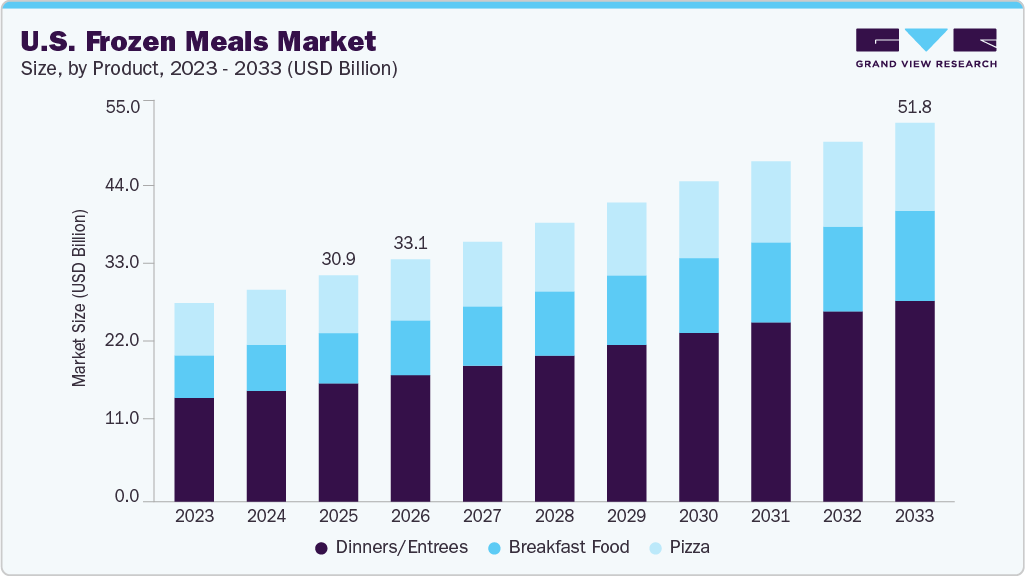
The U.S. frozen meals market size was estimated at USD 30,913.7 million in 2025 and is projected to reach USD 51,769.3 million by 2033, growing at a CAGR of 6.6% from 2026 to 2033. The primary growth driver is Americans’ intensifying demand for convenience.
Key Market Trends & Insights
- The Northeast region accounted for the largest revenue share of 16.45% in 2025.
- Based on product, the frozen dinners/entrees segment held the largest revenue share of 52.23% in 2025.
- Based on the distribution channel, the frozen meals sales through traditional grocery stores accounted for the revenue share of 36.84% in 2025.
Market Size & Forecast
- 2025 Market Size: USD 30,913.7 Million
- 2033 Projected Market Size: USD 51,769.3 Million
- CAGR (2026-2033): 6.6%
With increasingly busy lifestyles, especially among dual-income households and working professionals, frozen meals provide reliable, ready-to-heat solutions that significantly reduce meal preparation and cleanup time. According to data from the National Frozen & Refrigerated Foods Association (NFRA), about 71% of U.S. grocery shoppers report that ready-to-eat and quick-prep meals are a key part of their shopping basket, reflecting the strong preference for convenience foods in meal planning.Approximately 34% of consumers eat frozen meals weekly (as of 2024), underlining frozen meals’ role as a staple convenience option. This trend is particularly robust among millennials and Gen Z, who report choosing frozen meals because they save significant time on cooking. The rapid adoption of frozen meals in everyday households continues to support market expansion, especially for segments like breakfast foods (e.g., waffles, breakfast sandwiches) and dinner entrées that appeal to time-pressed consumers.
Demographic and lifestyle shifts, especially increased urbanization and smaller household sizes, are driving frozen meal consumption. Urban professionals living in apartments or shared housing often lack the time or space for labor-intensive cooking and thus gravitate to frozen meals that are quick to prepare with minimal cleanup. U.S. Bureau of Labor Statistics data indicate that many Americans spend an average of only about 1.2 hours per day on food preparation and cleanup, which incentivizes the adoption of frozen ready meals that align with time constraints.
Another strong trend driving the U.S. frozen ready meals industry is the expansion and diversification of distribution channels, particularly through e-commerce and grocery delivery platforms. The digitization of grocery shopping has made frozen meals more accessible to consumers who prefer shopping online for convenience and safety. Retailers such as Walmart, Amazon Fresh, and Instacart now offer extensive frozen meal selections with flexible delivery windows, further encouraging adoption.
Beyond online channels, the geographic expansion of supermarket chains and club stores has increased physical access to a broader range of frozen meal products, resulting in deeper penetration into suburban and rural markets. These distribution trends support year-round frozen meal purchases, reduce stockouts, and improve consumer convenience through omnichannel shopping journeys. Between 2022 and 2025, frozen meal prices increased by over 20%, yet consumption remained strong, with half of U.S. respondents eating frozen meals or pizza at least once per week, indicating resilient demand despite inflationary pressures.
Rising consumption amid tighter budgets encourages consumers to purchase frozen meals that offer convenience, portion control, and reduced waste compared to fresh meals. Additionally, multi-serve frozen options and value packs appeal to larger households and cost-conscious shoppers, contributing to broader market resilience. These socio-economic trends are aligning with the sector’s structural advantages, such as long shelf life and relatively stable inventory costs, to sustain market growth.
Consumer Insights for the U.S. Frozen Meals Market
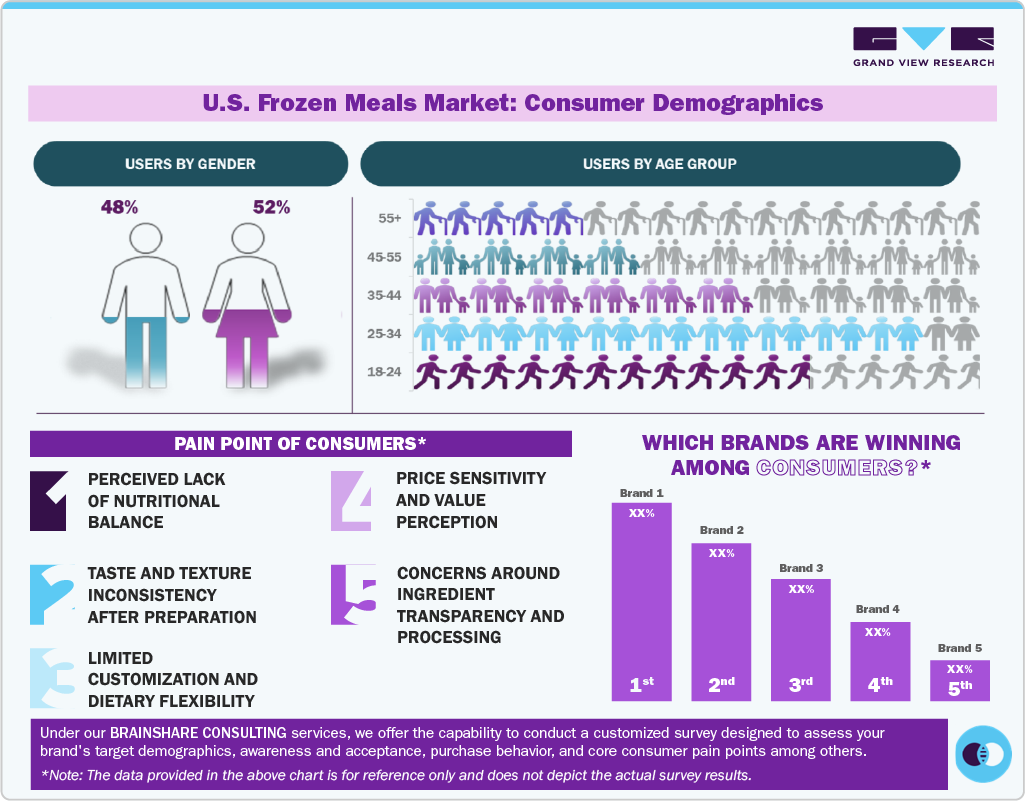
Although convenience remains essential, U.S. consumers are increasingly balancing it with health and wellness considerations. Shoppers are seeking frozen meals that boast improved nutrition profiles, including lower sodium, increased protein, dietary fiber, or better-for-you attributes such as plant-based formulations. 52% of consumers purchasing frozen meals cite intentions to meet higher nutritional goals, such as lower sodium or fortified nutrient content, as a key purchase driver.
This shift is prompting manufacturers to reformulate products, introduce clean-label ingredients, and explore alternative diets, including gluten-free, organic, and plant-forward meals. USDA surveys indicate that approximately 79% of consumers read nutrition labels, signaling demand for transparent, health-oriented frozen offerings.
Moreover, plant-based frozen meal sales have surged, with some reports citing a 27% increase in U.S. plant-based frozen meals from 2021 to 2022, reflecting rapidly rising interest in environmentally friendly and health-aligned products. These health and wellness trends are broadening the market beyond traditional frozen comfort foods into segments appealing to diet-conscious customers.
Product Insights
Frozen dinners/entrees accounted for a share of 52.23% in 2025, primarily due to consumers’ increasing reliance on convenient main-meal solutions that substitute traditional home cooking. Drivers include expanded product variety, improvements in taste and nutrition, and enhanced capability to address multiple meal occasions (lunch and dinner). Consumers are more inclined toward entrées that are heat-and-eat without sacrificing perceived freshness or flavor, with manufacturers leveraging improved freezing technology and optimized packaging that preserves texture and reduces preparation time. For instance, Conagra Brands, in collaboration with celebrity partner Dolly Parton, introduced multiple Southern-style single-serve entrées, such as Louisiana-style Shrimp & Grits and Beef Pot Roast, aimed at elevating traditional comfort meals in the freezer aisle. These offerings reinforce the emotional appeal of familiar meals delivered with convenience.
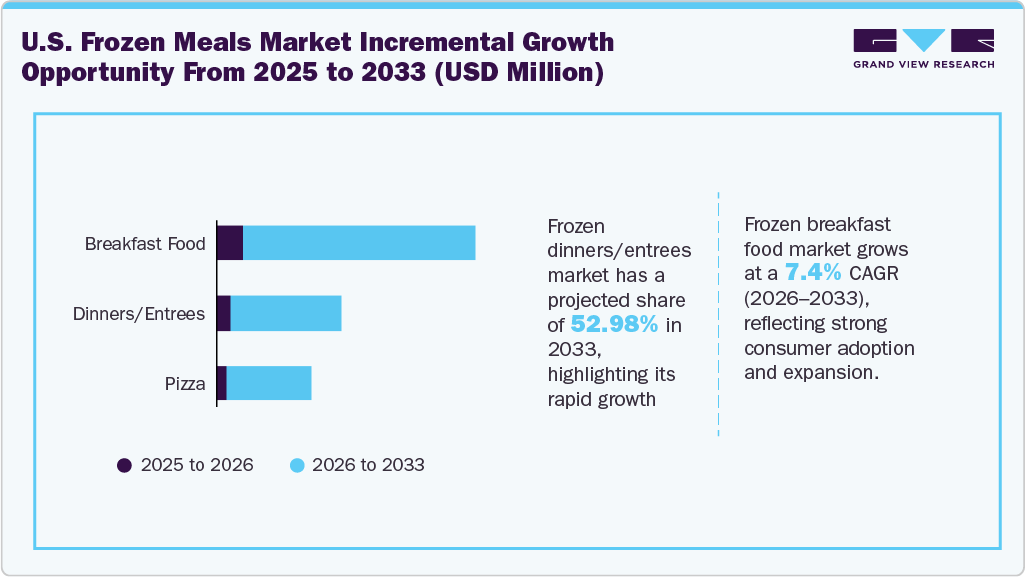
The frozen breakfast food segment is projected to grow at a CAGR of 7.4% from 2026 to 2033, driven by evolving lifestyle patterns that prioritize speed and routine meal solutions for busy mornings or on-the-go consumption. Breakfast is increasingly viewed as a category where consumers seek consistency, convenience, and nutrition, enabling frozen formats to gain traction. Time-pressed professionals and students alike lean on frozen breakfast items (e.g., sandwiches, waffles, burritos) that can be microwaved in minutes yet deliver reasonable satiety and perceived value.
Manufacturers are responding with more innovative breakfast offerings, including brand expansions, nutrition-focused variants, and premium flavor profiles. Though formal launch data specific to this segment is limited in open sources, anecdotal market movement indicates that established brands like those under Conagra and Nestlé are expanding breakfast meal lines, and private-label retailers are increasingly introducing their own frozen breakfast portfolios to compete on price and variety.
Distribution Channel Insights
Sales of frozen meals through traditional grocery stores accounted for the revenue share of 36.84% in 2025, largely due to product availability, geographic convenience, and the breadth of choice across brands and price points within the frozen aisle. Their extensive shelf space allows consumers to compare offerings directly, enabling impulse and planned purchases of frozen dinners, breakfasts, and pizzas in one trip. Many grocers actively merchandise frozen meals alongside complementary items such as sides and beverages, enhancing basket size and cross-sell opportunities.
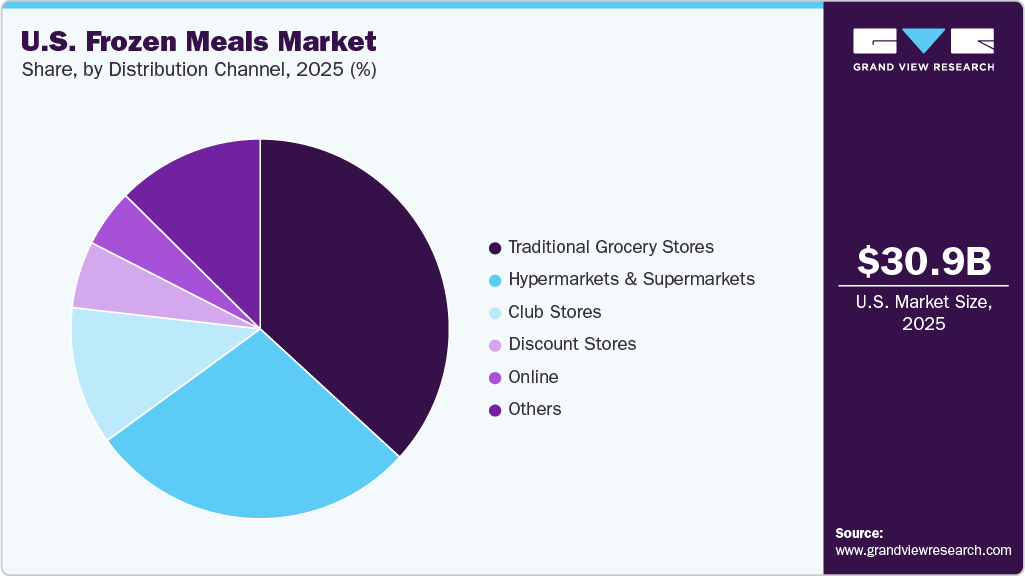
Sales of frozen meals through the online channel are expected to grow at a significant CAGR of 10.8% over the forecast period, reflecting broader e-commerce penetration in food retail and consumer preferences for digital convenience. Online grocery shopping has reshaped how frozen meals are purchased, as improved cold-chain logistics and delivery services make it feasible to order freezer-aisle products via apps or websites. Shoppers appreciate the ability to browse extensive frozen meal options, compare nutrition attributes, and access deals without visiting stores physically. Major supermarkets and digital platforms integrate curated frozen meal selections and same-day/next-day cold delivery. This supports variety-seeking and caters to consumers who prefer touchless shopping experiences, particularly in urban and high-growth metro areas where online ordering is normalized.
Regional Insights
Northeast U.S. Frozen Meals Market Trends
The Northeast U.S. frozen meals market accounted for a share of 16.45% in 2025, supported by strong demand within the broader frozen food market. Growth in this region is largely driven by high urban population density, commuter lifestyles, and limited time for meal preparation. Compact living environments in major metropolitan areas such as New York, Boston, Philadelphia, and Hartford encourage consumers to prioritize convenient, quick-prep frozen meals that align with busy routines and smaller household sizes.
These regional consumption patterns reflect broader trends observed across the frozen food market, where consumers increasingly prefer ready-to-eat and easy-to-prepare meal solutions that support time-efficient cooking habits. As a result, the Northeast continues to demonstrate strong penetration of frozen meals, supported by urban lifestyles and sustained demand for convenience-oriented food products.
Consumers in this region demand premium, nutritious formats (e.g., high-protein, gluten-free, veggie-enhanced frozen entrées) that align with wellness goals. Northeast shoppers frequently choose options perceived as healthier and convenient, prompting manufacturers to tailor product lines with nutrition-oriented claims. This combination of lifestyle patterns, retail accessibility, and evolving consumer preferences explains why the Northeast maintains a meaningful share of U.S. frozen meals revenue despite slower overall population growth relative to the South and West.
South Central U.S. Frozen Meals Market Trends
The South Central U.S. frozen meals market is projected to grow at a CAGR of 9.2% from 2026 to 2033, positioning this region as one of the fastest-expanding demand centers in the country. Growth in Texas, Oklahoma, Arkansas, and Louisiana reflects demographic expansion, rising incomes, and broadening retail footprints. These states combine both urban and sprawling suburban populations that increasingly adopt frozen meals as affordable, time-saving meal solutions. The South Central has shown strong adoption due to expanding product assortment in local grocery chains and cultural preferences for hearty meal options.
States such as Texas are experiencing above-average population increases, fueling demand for convenient meal solutions across age groups and households with working adults and children. Consumers in this region often seek value in food purchases, and frozen meals provide a cost-effective alternative to eating out or frequent fresh meal preparation, particularly in multi-serving frozen dinners and family packs. The South Central market has a strong preference for flavorful meals with familiar profiles (e.g., Tex-Mex, BBQ, comfort entrées). Frozen meal manufacturers are increasingly launching products tailored to these regional tastes, driving trial and repeat purchases.
Key U.S. Frozen Meals Company Insights
The U.S. frozen meals market is competitive and moderately consolidated, comprising large multinational conglomerates, U.S. packaged food leaders, specialized frozen meal producers, and retail private labels. Leading players leverage brand strength, product portfolios, distribution scale, and innovation to maintain and grow market share in a segment driven by convenience, taste, and nutrition preferences.
-
Nestlé S.A.: A global leader with iconic frozen meal and pizza brands such as Stouffer’s, Lean Cuisine, and DiGiorno. Nestlé holds a significant share of the frozen food segment and continues expanding with new product lines in ethnic and global flavor categories.
-
Conagra Brands, Inc.: Strong U.S. presence through brands like Healthy Choice, Banquet, and Kid Cuisine. The company’s acquisition of Pinnacle Foods has broadened its frozen portfolio and enhanced distribution.
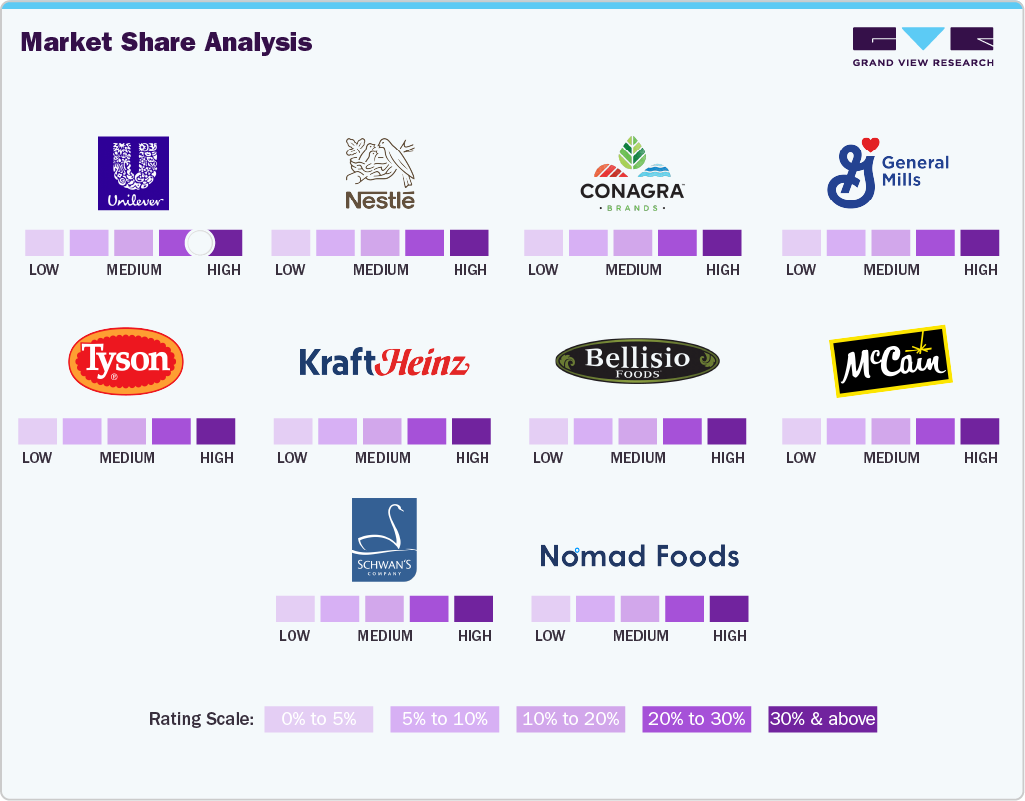
Key U.S. Frozen Meals Companies:
- Nestlé
- Conagra Brands
- Unilever PLC
- General Mills, Inc.
- Tyson Foods, Inc.
- The Kraft Heinz Company
- Bellisio Foods (Bellisio Parent, LLC)
- McCain Foods
- Schwan’s Company
- Nomad Foods Ltd.
Recent Developments
-
In March 2025, Nestlé expanded into high-protein frozen pizzas with its Vital Pursuit Max Pro line, designed to appeal to nutrition-conscious consumers seeking higher protein and fiber in convenience formats.
-
In February 2025, CAULIPOWER launched a first-of-its-kind Dill Pickle Pizza, featuring a cauliflower crust with a dill pickle-infused béchamel sauce, mozzarella, roasted garlic, and dill garnish, catering to consumers seeking novel flavors and gluten-free alternatives.
U.S. Frozen Meals Market Report Scope
Report Attribute
Details
Market value size in 2026
USD 33,092.7 million
Revenue forecast in 2033
USD 51,769.3 million
Growth rate (revenue)
CAGR of 6.6% from 2026 to 2033
Actuals
2021 - 2025
Forecast period
2026 - 2033
Quantitative (revenue) units
Revenue in USD million/billion and CAGR from 2026 to 2033
Report coverage
Revenue forecast, company ranking, competitive landscape, growth factors, and trends
Segments covered
Product, distribution channel, region
Country scope
U.S.
Regional scope
Southeast, Northeast, Great Lakes, Mid-South, South Central, West, California, Plains
Key companies profiled
Nestlé; Conagra Brands; Unilever PLC; General Mills, Inc.; Tyson Foods, Inc.; The Kraft Heinz Company; Bellisio Foods (Bellisio Parent, LLC); McCain Foods; Schwan’s Company; Nomad Foods Ltd.
Customization scope
Free report customization (equivalent up to 8 analysts’ working days) with purchase. Addition or alteration to country, regional & segment scope.
Pricing and purchase options
Avail customized purchase options to meet your exact research needs. Explore purchase options
U.S. Frozen Meals Market Report Segmentation
This report forecasts revenue growth at the country level and provides an analysis of the latest industry trends and opportunities in each of the sub-segments from 2021 to 2033. For this study, Grand View Research has segmented the U.S. frozen meals market report on the basis of product, distribution channel, and region:
-
Product Outlook (Revenue, USD Million, 2021 - 2033)
-
Breakfast Food
-
Dinners/Entrees
-
Pizza
-
-
Distribution Channel Outlook (Revenue, USD Million, 2021 - 2033)
-
Traditional Grocery Stores
-
Hypermarkets & Supermarkets
-
Club Stores
-
Discount Stores
-
Online
-
Others
-
-
Regional Outlook (Revenue, USD Million, 2021 - 2033)
-
Southeast
-
Northeast
-
Great Lakes
-
Mid-South
-
South Central
-
West
-
California
-
Plains
-
Frequently Asked Questions About This Report
b. The U.S. frozen meals market was valued at USD 30,913.7 million in 2025 and is expected to reach USD 33,092.7 million by 2026.
b. The U.S. frozen meals market is expected to reach USD 51,769.3 million by 2033 and is expected to grow at a compound annual growth rate (CAGR) of 6.6% from 2026 to 2033.
b. Frozen dinners/entrees accounted for a share of 52.23% of the U.S. revenue in 2025 primarily due to consumers’ increasing reliance on convenient main-meal solutions that substitute traditional home cooking.
b. Nestlé; Conagra Brands; Unilever PLC; General Mills, Inc.; Tyson Foods, Inc.; The Kraft Heinz Company; Bellisio Foods (Bellisio Parent, LLC); McCain Foods; Schwan’s Company; Nomad Foods Ltd.
b. The primary growth driver in the U.S. frozen meals market is Americans’ intensifying demand for convenience. With increasingly busy lifestyles, especially among dual-income households and working professionals, frozen meals provide reliable, ready-to-heat solutions that significantly reduce meal preparation and cleanup time.


Share this report with your colleague or friend.
Need a Tailored Report?
Customize this report to your needs — add regions, segments, or data points, with 20% free customization.


ISO 9001:2015 & 27001:2022 Certified
We are GDPR and CCPA compliant! Your transaction & personal information is safe and secure. For more details, please read our privacy policy.
Trusted market insights - try a free sample
See how our reports are structured and why industry leaders rely on Grand View Research. Get a free sample or ask us to tailor this report to your needs.