- Home
- »
- Nutraceuticals & Functional Foods
- »
-
Thailand Dietary Supplements Market, Industry Report, 2033GVR Report cover
![Thailand Dietary Supplements Market Size, Share & Trends Report]()
Thailand Dietary Supplements Market (2026 - 2033) Size, Share & Trends Analysis Report By Product (Single Ingredient, Multi-Ingredients/Blends), By Ingredient (Vitamin, Minerals, Botanical Extracts), By End User, By Form, By Application, By Type, By Distribution Channel, And Segment Forecasts
- Report ID: GVR-4-68040-689-0
- Number of Report Pages: 110
- Format: PDF
- Historical Range: 2021 - 2025
- Forecast Period: 2026 - 2033
- Industry: Consumer Goods
- Report Summary
- Table of Contents
- Segmentation
- Methodology
- Download FREE Sample
-
 Download Sample Report
Thailand Dietary Supplements Market Summary
The Thailand dietary supplements market size was estimated at USD 2,778.2 million in 2025 and is projected to reach USD 5,763.7 million by 2033, growing at a CAGR of 9.6% from 2026 to 2033. Lifestyle conditions such as diabetes, cardiovascular issues, and obesity influence buying, particularly in urban hubs such as Bangkok, Thailand, and the wellness-forward retail corridor of Chiang Mai, Thailand.
Key Market Trends & Insights
- By ingredients, the vitamin supplements market accounted for the largest share of 32.3% in 2025.
- By form, tablet supplements accounted for the largest revenue share of 29.4% in 2025.
- By end use, dietary supplements for adults dominated the dietary supplements market, with a share of 62.8% in 2025.
Market Size & Forecast
- 2025 Market Size: USD 2,778.2 Million
- 2033 Projected Market Size: USD 5,763.7 Million
- CAGR (2026-2033): 9.6%
Office professionals adopt supplements for focus and stable energy due to long work hours and stress fatigue. Thailand is witnessing a pronounced rise in health consciousness as consumers become more proactive in managing their well-being. The shift from curative to preventive healthcare is driving individuals to adopt daily supplements as part of their lifestyle. Increased exposure to wellness information through digital platforms, influencer-led content, and government awareness campaigns has elevated public understanding of the importance of micronutrients, immunity support, and overall nutritional balance. As a result, dietary supplements are no longer perceived as optional enhancements but as essential components of a modern health regimen.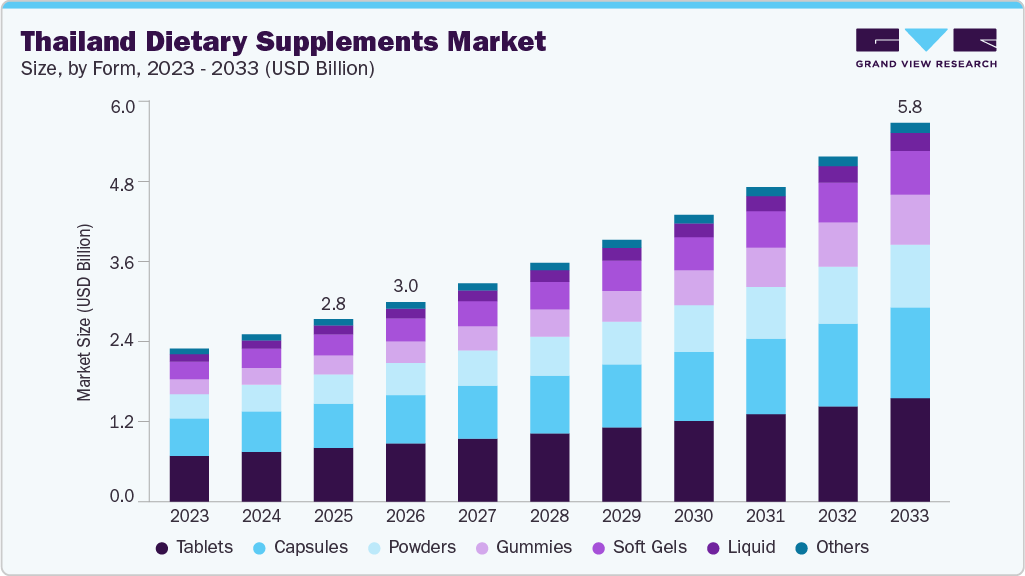
According to the PwC Voice of Consumer Survey conducted in 2025, about 40% of Thai consumers report regularly taking supplements or vitamins to boost their health, which is significantly higher than the global average of 30%. This demonstrates a stronger orientation toward preventive care in Thailand compared with many markets worldwide.
The higher adoption rate is driven by increased interest in ingredients such as vitamins, omega-3, probiotics, collagen, and herbal formulations rooted in traditional Thai wellness practices. Younger consumers, in particular, are embracing supplements not just for immunity, but for skin, sleep, mental well-being, and energy management.
Consumer Insights
Dietary supplement use has been steadily rising in Thailand as consumers become more health-conscious and gain easier access to a wide range of over-the-counter products. Despite this growing popularity, there is still limited research on the safety challenges associated with supplement use, including potential adverse reactions and misuse. The study highlights the need to better understand how Thai consumers use these products, their experiences with side effects, and their level of knowledge when choosing and consuming dietary supplements. These gaps indicate that while the market is expanding, there is a pressing need for improved consumer education, clearer product information, and stronger monitoring to ensure safe and informed supplement use across the population.
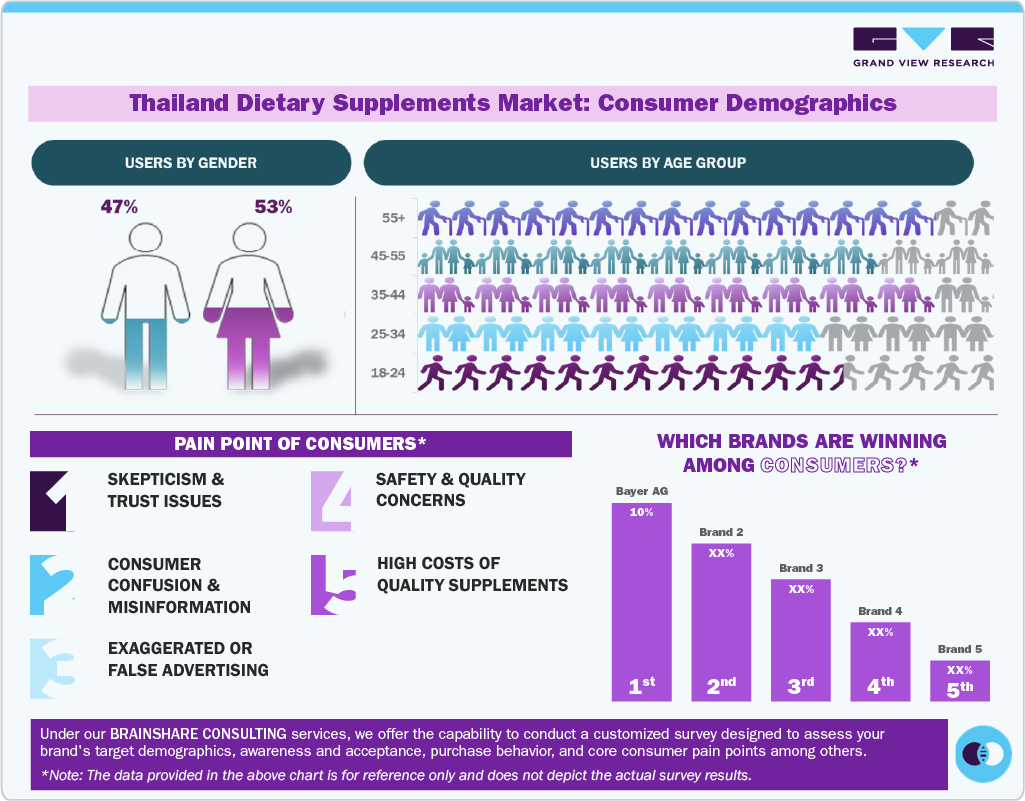
The fastest-growing trends include higher use of vitamins, herbal/natural supplements, beauty-from-within products, sports nutrition, and digestive health aids, with younger consumers driven by lifestyle and appearance goals while older groups focus on immunity, bone, and heart health. E-commerce and social commerce have become major purchase channels, supported by influencer marketing and wellness-focused branding, although pharmacies remain important for trust and safety.
Product Insights
Multiple-ingredient/blend supplements accounted for the largest revenue share of 62.5% in 2025. The demand for multi-ingredient or blended dietary supplements is rising due to several interrelated factors. Growing health awareness and a preventive-care mindset are encouraging consumers to focus on overall wellness rather than just addressing deficiencies, making supplements that combine vitamins, minerals, herbal extracts, or functional ingredients increasingly attractive. Busy urban lifestyles and convenience needs further drive this trend, as many consumers find it challenging to maintain a balanced diet and prefer all-in-one supplements that support immunity, energy, bone health, and beauty in a single dose.
Single-ingredient dietary supplements are projected to grow at a CAGR of 8.4% from 2026 to 2033. The demand for single-ingredient dietary supplements in Thailand is increasing as consumers prefer products that are simple, transparent, and easy to understand. Buyers are becoming more cautious about ingredient quality and safety and increasingly choosing supplements that clearly state only one active ingredient on the label. This helps reduce confusion and build consumer trust, especially for products linked to immunity, bone health, digestion, and skin health. This shift is also supported by growing health awareness among working adults and the elderly population, who are more focused on preventive healthcare and long-term wellness.
Ingredient Insights
Vitamin supplements market accounted for the largest revenue share of 32.3% in 2025, due to rising health awareness and a strong focus on preventive healthcare. Many consumers now use vitamin supplements to support immunity, manage daily stress, and improve overall wellness. As a result, consumers are increasingly consuming dietary supplements. According to a research paper published by Springer Nature in July 2025, a survey conducted in Thailand reported that among 540 respondents, 78.3% of consumers used dietary supplements. The expansion of retail infrastructure has improved accessibility to such products across the country. In September 2022, Central Retail Corporation introduced a new business format called ‘Tops Vita,’ providing an integrated Offline-to-Online (O2O) platform for vitamins and dietary supplements.
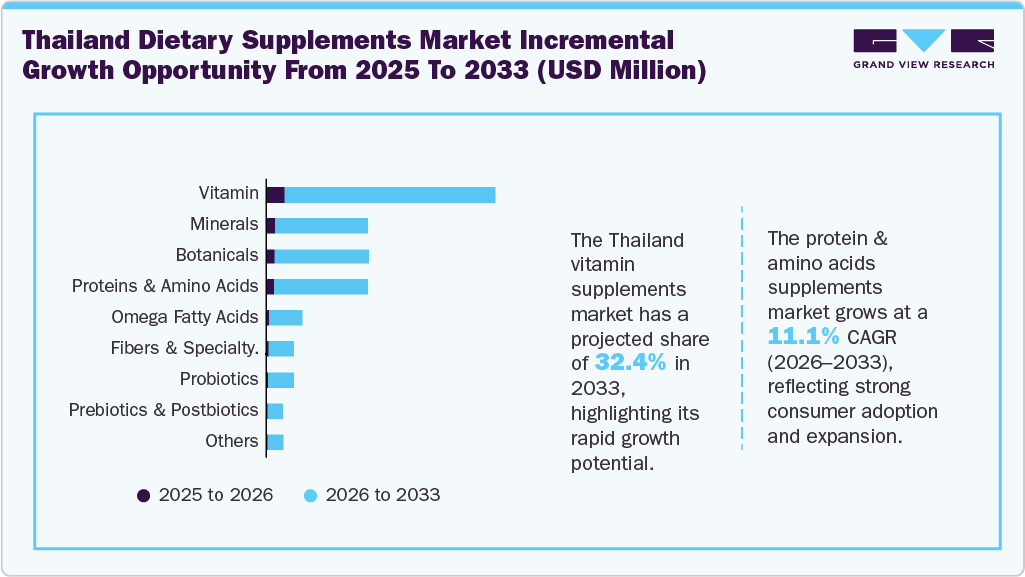
The demand for protein & amino acid supplements is expected to grow at a CAGR of 11.1% from 2026 to 2033, due to a growing health-conscious mindset among consumers. Urban populations, particularly younger adults, are adopting active lifestyles and fitness routines, driving the need for protein and amino acids for muscle building, recovery, and enhanced performance. At the same time, collagen supplements are gaining popularity for skin health, anti-aging, and joint support, reflecting the growing interest in “beauty-from-within” wellness trends. Global companies are introducing collagen-based supplements aligned with this trend in the Thai market. In April 2025, Nestlé Health Science introduced Vital Proteins Collagen Peptides in powder form, aimed at consumers seeking health-conscious wellness solutions.
Type Insights
Over-the-counter (OTC) dietary supplements accounted for the largest revenue share of 86.0% in 2025, owing to a mix of everyday consumer habits and broader changes in society. People increasingly seek products that can prevent illness instead of only treating it when required, and prefer self-medication over prescribed medicines for common health needs. These products are conveniently available for purchase in pharmacies, supermarkets, convenience stores, and online. In addition, rising disposable income and a higher number of older adults, who often take vitamins, minerals, and products for bones, joints, heart, or immunity on a regular basis, are driving the growth of this segment in Thailand’s market.
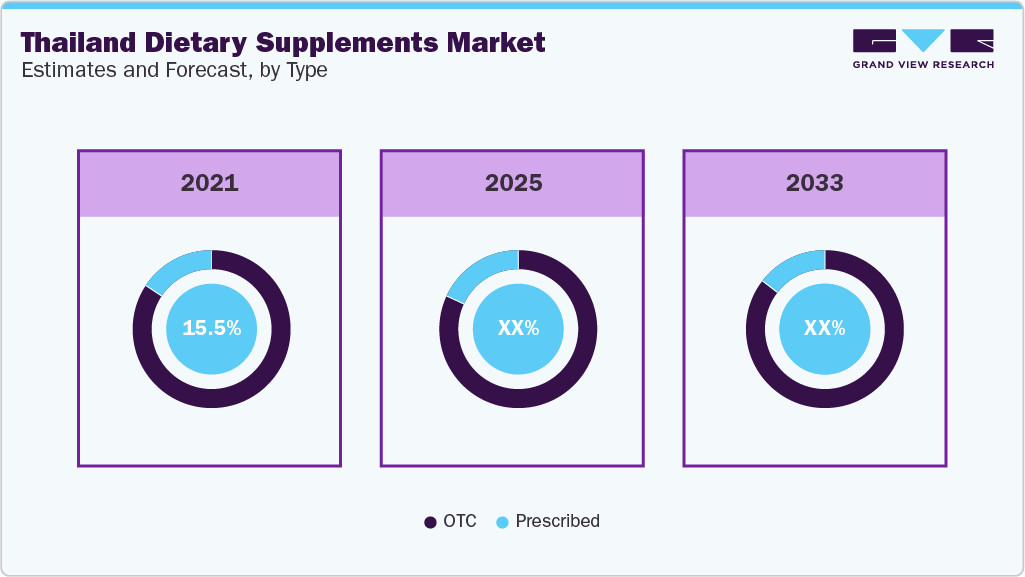
The demand for prescribed dietary supplements is projected to grow at a CAGR of 8.9% from 2026 to 2033, driven by the hospital system and the way people use healthcare services in Thailand. Most patients first go to public or private hospitals, where doctors determine which vitamins, minerals, or nutritional products they should take. Doctors tend to use prescription supplements for people who are at higher risk, such as pregnant women with anemia, babies and infants, older adults, and patients with chronic diseases or poor nutrition. These products are often higher strength or medical grade, and their doses are adjusted based on blood tests or clear medical needs.
Form Insights
Tablet supplements accounted for the largest revenue share of 29.4% in 2025. In Thailand, tablets are the preferred form of dietary supplements because of the convenience and ease of consumption. They also have a long shelf life, which simplifies storage and transport, and provide accurate dosing of vitamins, minerals, or other nutrients, ensuring that consumers receive the right amount. The demand for tablet dietary supplements is increasing due to several factors that are making them suitable for everyday use.
Gummy supplements are projected to grow at a CAGR of 12.8% from 2026 to 2033. The demand for gummy supplements is increasing as they offer a pleasant taste and texture and are easier to consume compared with traditional pills. This convenience, combined with growing health awareness, has led consumers to adopt supplements in gummy form not only for nutrient support but also for general wellness, immunity, and lifestyle purposes. In response, manufacturers are introducing innovative products, including natural, sugar-free, or gelatin-free gummies, as well as specialized formulations.
Application Insights
The skin/hair/nails dietary supplements market accounted for a revenue share of 19.6% in 2025 in Thailand, driven by a strong beauty consciousness and significant social media influence. Many Thai consumers, especially women and younger adults, are increasingly turning to the beauty-from-within concept to support their overall appearance and wellness. As a result, the nutricosmetics market in Thailand has witnessed strong growth, driven by demand for supplements that enhance skin brightness, reduce acne and dark spots, delay visible aging, strengthen hair, and minimize hair loss or brittle nails.
This rising interest has boosted demand for collagen, biotin, vitamins A, C, E, B-complex, zinc, hyaluronic acid, and other beauty-focused ingredients that promise clearer skin, stronger hair, and healthier nails from the inside out. The perception that outer beauty reflects inner health aligns closely with broader wellness trends, making these supplements increasingly attractive for daily, preventive use rather than occasional treatment.
Gastrointestinal health supplements are projected to grow at a CAGR of 10.9% from 2026 to 2033, as more people are becoming aware of the importance of gut health for overall well-being. Digestive issues such as bloating, irregular bowel movements, acid reflux, and indigestion are common among both urban and working-age populations, driven by busy lifestyles, irregular eating habits, and high consumption of processed foods. This has encouraged consumers to turn to probiotics, prebiotics, fiber supplements, and herbal products such as ginger and peppermint to support digestion and maintain a healthy gut.
End User Insights
Dietary supplements for adults accounted for a revenue share of 62.8% in 2025, as people across all age groups seek to support overall health, boost energy, and prevent lifestyle-related conditions. Millennials and Gen Z are often drawn to products that support immunity, brain health, beauty-from-within, and energy, reflecting their active lifestyles and interest in preventive wellness. Gen X and Boomers, meanwhile, focus more on heart health, bone and joint support, metabolic health, and maintaining vitality as they age. Busy work schedules, urban stress, sedentary routines, and increased screen time have also made daily supplementation a convenient way to fill nutritional gaps and maintain well-being.
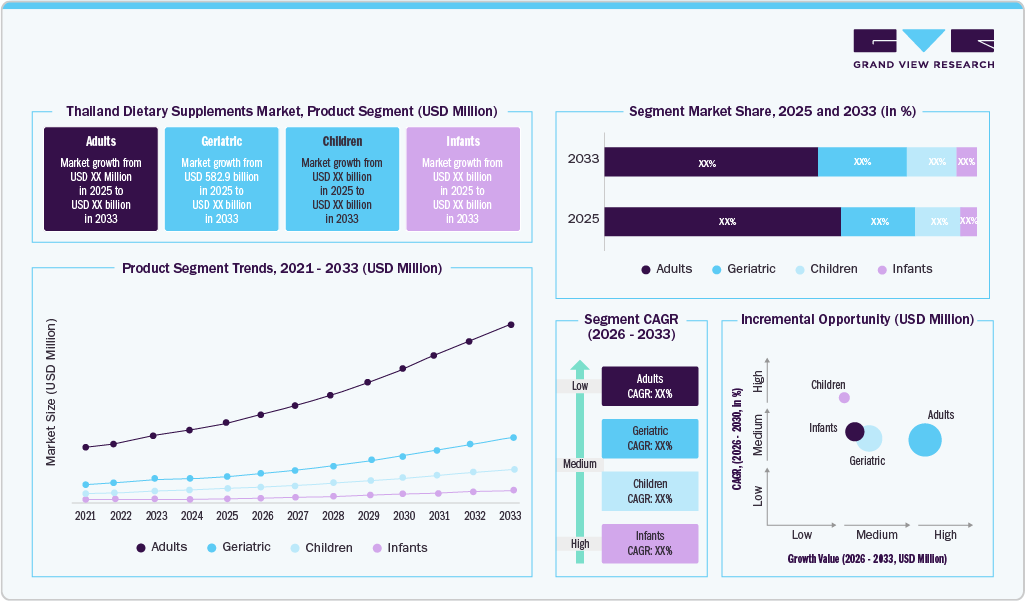
Dietary supplements for children are projected to grow at a CAGR of 10.5% from 2026 to 2033, driven by a mix of nutritional concerns, changing diets, and increasing awareness among parents about child health. A 2024 study published by Cambridge University Press found that many Thai children still do not get enough key nutrients, with diets often lacking sufficient vitamins, minerals, or calcium due to eating habits, busy urban lifestyles, and shifting food patterns. Parents and caregivers are increasingly turning to dietary supplements, such as vitamins, minerals, or micronutrient mixes, to help close nutritional gaps, support healthy growth and bone development, boost immunity, and generally support children’s overall development.
Distribution Channel Insights
The sales of dietary supplements through offline channels accounted for a share of around 80.7% in 2025. The offline distribution channel in Thailand’s dietary supplements market remains crucial, as many consumers still prefer to see products in person, ask questions, and purchase from trusted locations. Hypermarkets and supermarkets attract everyday shoppers who pick up vitamins, minerals, and general health supplements while doing their regular grocery shopping, helped by strong brand visibility, in-store promotions, and discounts. Pharmacies are a key trust point, where pharmacists provide product advice and recommend specific supplements for conditions, such as immunity, bone and joint health, digestive issues, or chronic diseases, which makes this channel especially strong for medical or condition-specific products. Specialty stores further support the channel by offering a wide range of niche or premium brands, functional products, and expert guidance, appealing to health-conscious and higher-income consumers.
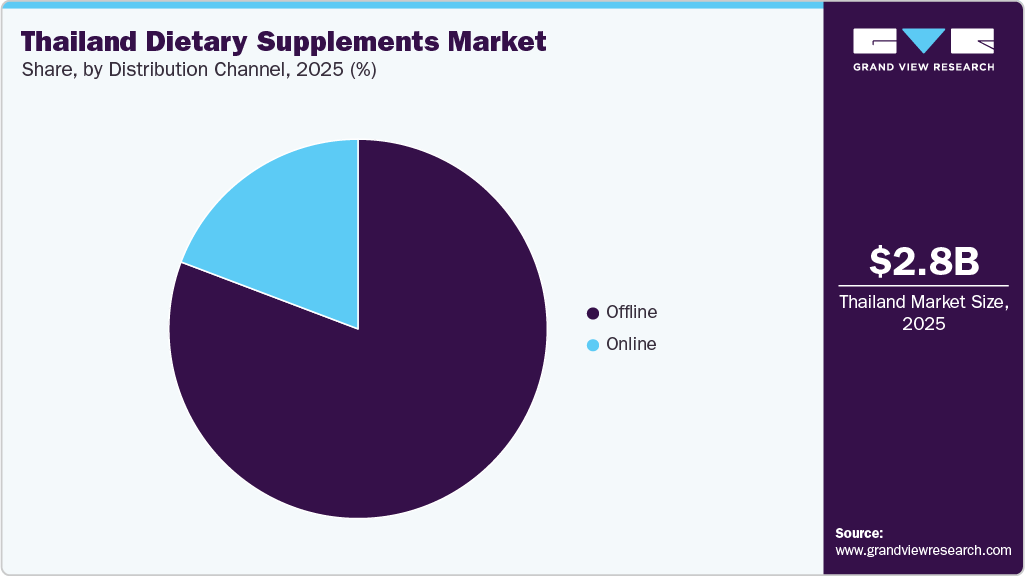
The sales of dietary supplements through online channels are projected to grow at a CAGR of 11.5% from 2026 to 2033, as more consumers prefer the convenience of browsing and purchasing health products from the comfort of their own homes. Busy lifestyles, widespread usage of smartphones, and easy access to e-commerce platforms and brand websites make it simple for people to explore a wide range of vitamins, minerals, herbal products, and functional supplements at any time. Social commerce, facilitated through platforms, such as Facebook, LINE, TikTok, and Instagram, has become increasingly popular, enabling buyers to discover products through reviews, influencer recommendations, and targeted promotions.
Key Thailand Dietary Supplements Company Insights
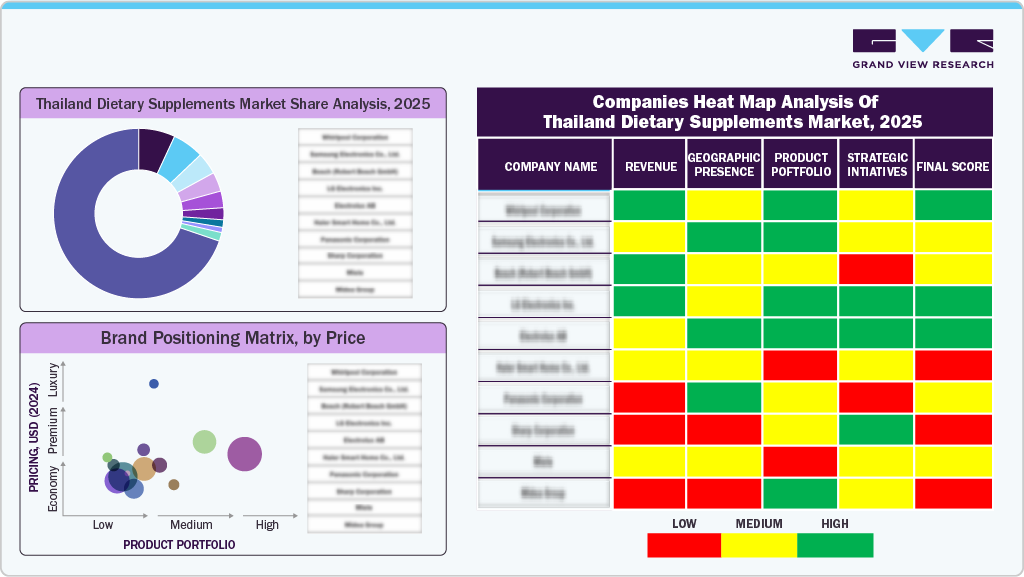
The Thailand dietary supplements industry is becoming increasingly competitive as established companies and emerging players focus on product innovation, quality assurance, and strategic pricing to capture consumer attention and market share. Companies invest heavily in advanced manufacturing technologies, automation, and skilled workforce development to maintain high production standards, enhance operational efficiency, and comply with evolving regulatory requirements to remain competitive. This investment-intensive environment raises the entry barrier while pushing innovation forward.
Key Thailand Dietary Supplements Companies:
- Blackmores
- (Kirin Holdings Company, Limited.)
- Amway Corp.
- MEGA Lifesciences
- Abbott.
- Haleon Group of Companies
- H & H Group
- Herbalife International of America, Inc.
- Bayer AG
- Nestle Health Science
- NUTRIHUB
Recent Developments
-
In November 2025, H&H Group introduced a new Swisse Nutra range focused on cellular health, beauty-from-within, and healthy ageing, with products launched in Australia (via Chemist Warehouse) and other global markets.
-
In August 2025, Abbott launched Ensure Gold AdvancePro in Thailand, targeting older adults. The product featured nutritional value of YBG (yeast beta-glucan) and HMB (methylbutyrate), supporting muscle health and immunity, and was introduced across multiple flavors. The launch included promotional initiatives to increase consumer awareness.
-
In July 2025, Bayer and DKSH announced a strategic partnership across multiple Southeast Asian markets (including Thailand) in which DKSH will provide market-expansion and commercial services for a portion of Bayer’s pharmaceuticals business and the women’s-health retail portfolio in Thailand.
-
In January 2025, Blackmores recently celebrated its 30th anniversary in Thailand. The company held an event, 30th Anniversary Blackmores Thailand, Better You, Brighter Tomorrow”, highlighting its market leadership in the Thai dietary supplements space.
Thailand Dietary Supplements Market Report Scope
Report Attribute
Details
Market size value in 2026
USD 3,036.6 million
Revenue forecast in 2033
USD 5,763.7 million
Growth rate
CAGR of 9.6% from 2026 to 2033
Actuals
2021 - 2025
Forecast period
2026 - 2033
Quantitative units
Revenue in USD million/billion, and CAGR from 2026 to 2033
Report coverage
Revenue forecast, company ranking, competitive landscape, growth factors, and trends
Segments covered
Product, ingredient, type, form, application, end user, distribution channel
Country scope
Thailand
Key companies profiled
Blackmores (Kirin Holdings Company, Limited.); Amway Corp.; MEGA Lifesciences; Abbott.; Haleon Group of Companies; H & H Group; Herbalife International of America, Inc.; Bayer AG; Nestle Health Science; NUTRIHUB
Customization scope
Free report customization (equivalent up to 8 analysts working days) with purchase. Addition or alteration to country, regional & segment scope.
Pricing and purchase options
Avail customized purchase options to meet your exact research needs. Explore purchase options
Thailand Dietary Supplements Market Report Segmentation
This report forecasts revenue growth at country levels and provides an analysis of the latest trends and opportunities in each of the sub-segments from 2021 to 2033. For this study, Grand View Research has segmented the Thailand dietary supplements market on the basis of product, ingredient, type, form, application, end-user, and distribution channel.
-
Product Outlook (Revenue, USD Million, 2021 - 2033)
-
Single Ingredient
-
Multiple Ingredients/Blends
-
-
Ingredient Outlook (Revenue, USD Million, 2021 - 2033)
-
Vitamin
-
Multivitamin
-
Vitamin A
-
Vitamin B
-
Vitamin C
-
Vitamin D
-
Vitamin K
-
Vitamin E
-
-
Botanicals
-
Minerals
-
Calcium
-
Potassium
-
Magnesium
-
Iron
-
Zinc
-
Others (selenium, chromium, copper)
-
-
Proteins & Amino Acids
-
Collagen
-
Others
-
-
Fibers & Specialty Carbohydrates
-
Omega Fatty Acids
-
Probiotics
-
Prebiotics & Postbiotics
-
Others
-
-
Form Outlook (Revenue, USD Million, 2021 - 2033)
-
Tablets
-
Capsules
-
Soft Gels
-
Powders
-
Gummies
-
Liquids
-
Others
-
-
Type Outlook (Revenue, USD Million, 2021 - 2033)
-
OTC
-
Prescribed
-
-
Application Outlook (Revenue, USD Million, 2021 - 2033)
-
Energy & Weight Management
-
General Health
-
Bone & Joint Health
-
Gastrointestinal Health
-
Immunity
-
Cardiac Health
-
Diabetes
-
Anti-cancer
-
Lungs Detox/Cleanse
-
Skin/ Hair/ Nails
-
Sexual Health
-
Brain/Mental Health
-
Insomnia
-
Menopause
-
Anti-aging
-
Prenatal Health
-
Others
-
-
End User Outlook (Revenue, USD Million, 2021 - 2033)
-
Adults
-
Millennials
-
Male
-
Female
-
Pregnant Women
-
Non-pregnant Women
-
-
Gen X
-
Male
-
Female
-
Pregnant Women
-
Non-pregnant Women
-
-
Gen Z
-
Male
-
Female
-
Pregnant Women
-
Non-pregnant Women
-
-
Boomers
-
Male
-
Female
-
-
-
Geriatric
-
Children
-
Infants
-
-
Distribution Channel Outlook (Revenue, USD Million, 2021 - 2033)
-
Offline
-
Hypermarkets/Supermarkets
-
Pharmacies
-
Specialty Stores
-
Practioner
-
Direct Sales
-
D2C
-
Others
-
-
Online
-
Frequently Asked Questions About This Report
b. The Thailand dietary supplements market was estimated at USD 2,778.2 million in 2025 and is expected to reach USD 3,036.6 million in 2026.
b. The Thailand dietary supplements market is expected to grow at a compound annual growth rate of 9.6% from 2026 to 2033 to reach USD 5,763.7 million by 2033.
b. Over-the-counter (OTC) dietary supplements accounted for the largest revenue share of 86.0% in 2025, owing to a mix of everyday consumer habits and broader changes in the society.
b. Some of the key market players in the Thailand dietary supplements market are Blackmores (Kirin Holdings Company, Limited.); Amway Corp.; MEGA Lifesciences; Abbott.; Haleon Group of Companies; H & H Group; Herbalife International of America, Inc.; Bayer AG; Nestle Health Science; and NUTRIHUB.
b. Lifestyle conditions such as diabetes, cardiovascular issues, and obesity influence buying, particularly in urban hubs like Bangkok, Thailand, and the wellness-forward retail corridor of Chiang Mai, Thailand. Office professionals adopt supplements for focus and stable energy due to long work hours and stress fatigue.


Share this report with your colleague or friend.
Need a Tailored Report?
Customize this report to your needs — add regions, segments, or data points, with 20% free customization.


ISO 9001:2015 & 27001:2022 Certified
We are GDPR and CCPA compliant! Your transaction & personal information is safe and secure. For more details, please read our privacy policy.
Trusted market insights - try a free sample
See how our reports are structured and why industry leaders rely on Grand View Research. Get a free sample or ask us to tailor this report to your needs.