- Home
- »
- Electronic & Electrical
- »
-
Smart Dishwasher Market Size, Share, Industry Report, 2033GVR Report cover
![Smart Dishwasher Market Size, Share & Trends Report]()
Smart Dishwasher Market (2026 - 2033) Size, Share & Trends Analysis Report By Product (Free Standing Dishwasher, Built-in Dishwasher), By Application (Household, Commercial), By Distribution Channel (Offline, Online), By Region, And Segment Forecasts
- Report ID: GVR-4-68038-628-8
- Number of Report Pages: 100
- Format: PDF
- Historical Range: 2021 - 2025
- Forecast Period: 2026 - 2033
- Industry: Consumer Goods
- Report Summary
- Table of Contents
- Segmentation
- Methodology
- Download FREE Sample
-
 Download Sample Report
Smart Dishwasher Market Summary
The global smart dishwasher market size was estimated at USD 4.11 billion in 2025 and is projected to reach USD 6.77 billion by 2033, growing at a CAGR of 5.9% from 2026 to 2033. As everyday routines become more demanding, consumers increasingly seek appliances that simplify domestic tasks and reduce manual involvement.
Key Market Trends & Insights
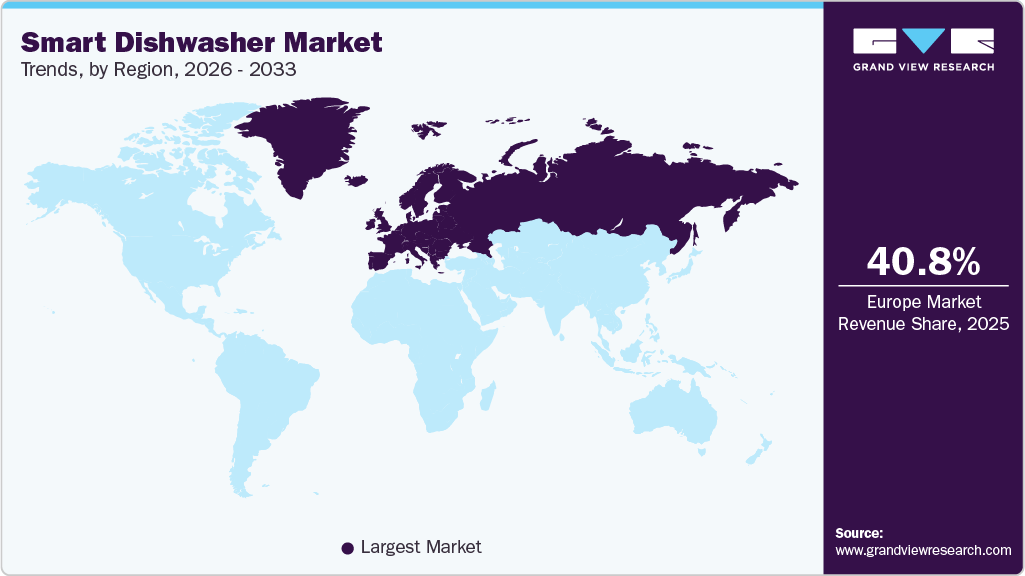
- By region, Europe dominated the global smart dishwasher market in 2025 with a revenue share of 40.8%.
- By product, free-standing dishwashers accounted for a market share of 55.8% in 2025.
- By application, household accounted for a market share of 82.3% in 2025.
- By distribution channel, offline accounted for a market share of 80.7% in 2025.
Market Size & Forecast
- 2025 Market Size: USD 4.11 Billion
- 2033 Projected Market Size: USD 6.77 Billion
- CAGR (2026-2033): 5.9%
- Europe: Largest market in 2025
Smart dishwashers, equipped with remote monitoring, automated cycle selection, and app-based control, align directly with this shift toward convenience-driven purchasing behavior. The ability to monitor wash cycles, receive notifications, or start a load remotely has become a valued capability, especially among dual-income households and time-constrained urban consumers.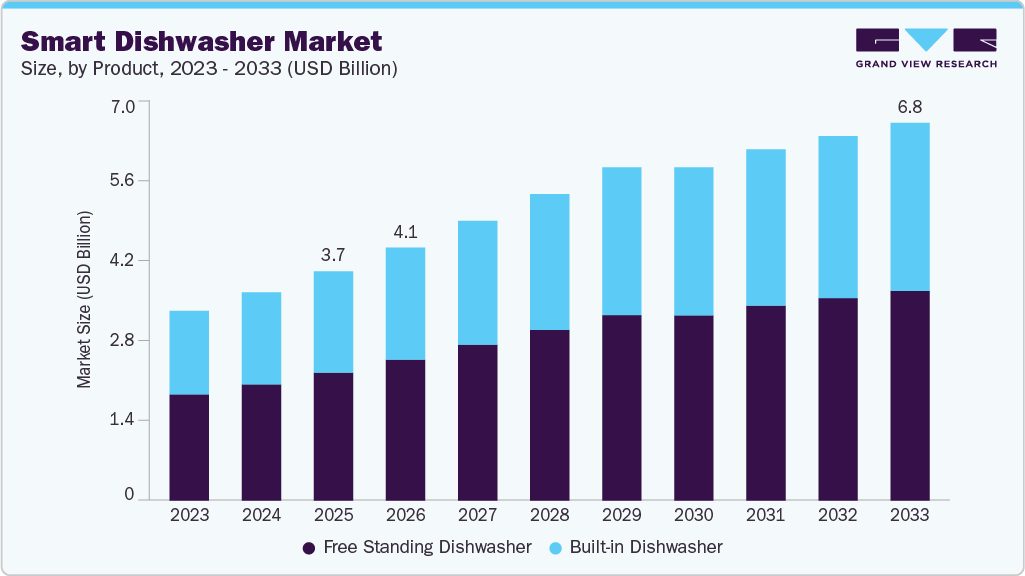
The broader integration of smart-home ecosystems has further accelerated demand. As households adopt connected devices such as smart speaker, thermostats, and lighting systems consumers naturally extend this connectivity to kitchen appliances. Smart dishwashers that integrate with voice assistants (Amazon Alexa, Google Assistant) or IoT home hubs offer a seamless, intuitive user experience, strengthening their appeal. Many consumers now perceive connectivity as a standard expectation rather than a premium feature. This shift reflects a broader behavioral trend: once a consumer invests in one smart appliance, they tend to upgrade the rest of the kitchen for consistency and interoperability.
The premiumization of home and kitchen environments plays a central role. Modern kitchen designs emphasize integrated, built-in, and minimalistic appliances categories where smart dishwashers fit naturally. Improved online availability, transparent consumer reviews, and flexible financing options have made premium appliances more accessible, driving uptake across middle- and upper-income households. Moreover, smart dishwashers now serve as both functional and lifestyle-enhancing products, contributing to a broader consumer shift toward “future-proof” kitchen investments.
Sustainability has also become a prominent driver of demand. Smart dishwashers offer superior energy and water efficiency through load-sensing technology, soil sensors, and automatic detergent dosing systems. These features not only help consumers reduce household utility costs but also align with growing environmental awareness. As more buyers actively evaluate the long-term cost and ecological impact of household appliances, resource-efficient smart dishwashers have gained preference over traditional models.
Consumer Demographic Insights
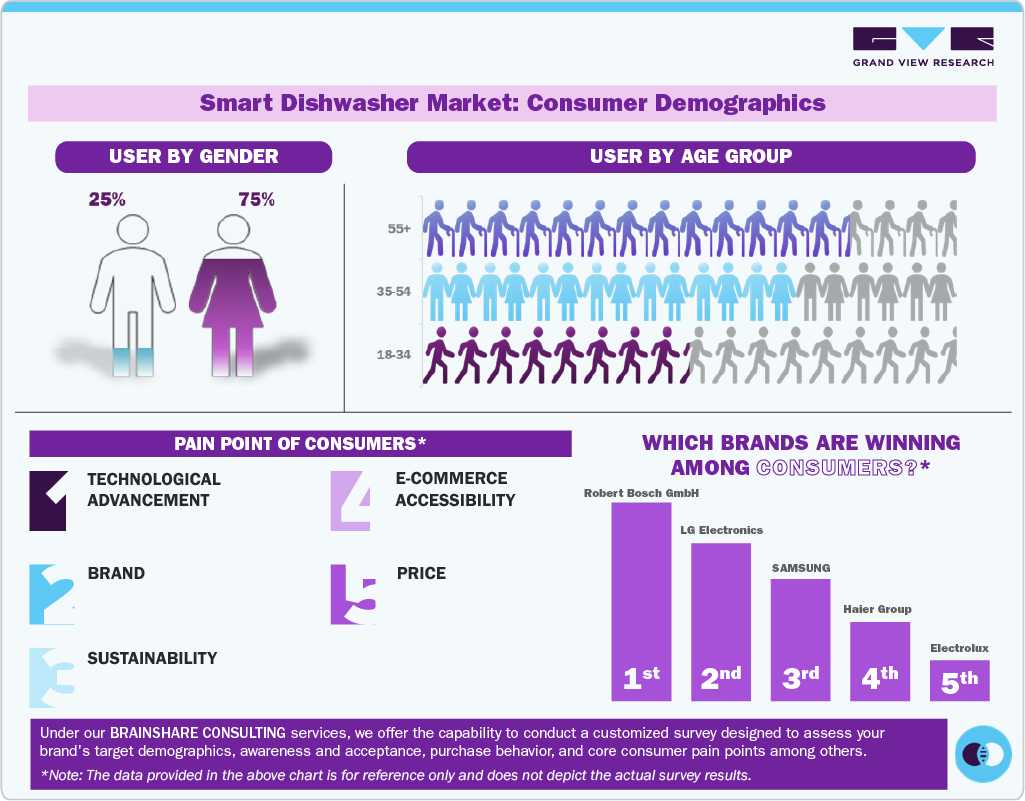
Modern lifestyles characterized by dual-income households, longer working hours, and reduced domestic support have created a strong preference for appliances that minimize manual effort. Smart dishwashers address these needs by offering programmable cycles, remote operation through mobile applications, and automated notifications, thereby enabling users to manage kitchen tasks with minimal intervention. The ability to start, stop, or monitor a washing cycle remotely has become a key differentiator for time-constrained consumers.
As households integrate devices such as smart lighting, thermostats, and voice-activated assistants, kitchen appliances are becoming natural extensions of this connected environment. Smart dishwashers that integrate with Alexa, Google Assistant, or IoT platforms appeal to tech-savvy consumers who seek seamless interoperability among home devices. This alignment with broader digital-home trends has strengthened consumer confidence in adopting technologically advanced kitchen equipment.
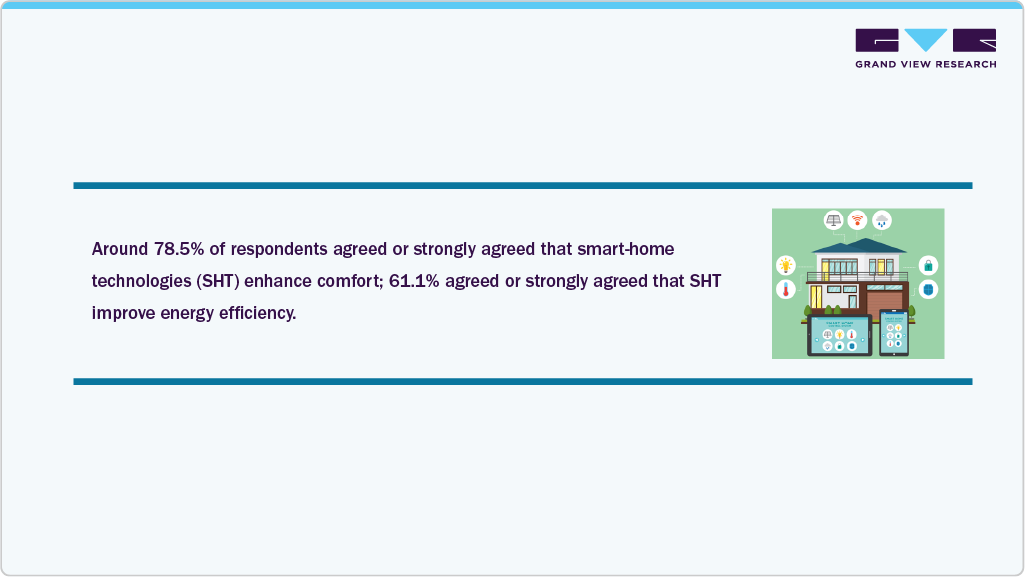
A recent study by Factors Influencing Consumer Buying Behavior for Smart Home Technologies (Lin & Chen, 2025) found that perceived comfort and energy efficiency are significant predictors of smart home technology adoption.
According to an article from, SQ magazine, approximately 63% of U.S. households now own at least one smart-home device. This high level of penetration suggests a strong base of connected households, which supports the increasing adoption of smart kitchen appliances (such as smart dishwashers) as part of the broader ecosystem. The article states that the average annual spending per smart-home user in the U.S. reached USD 2,500 in 2025.
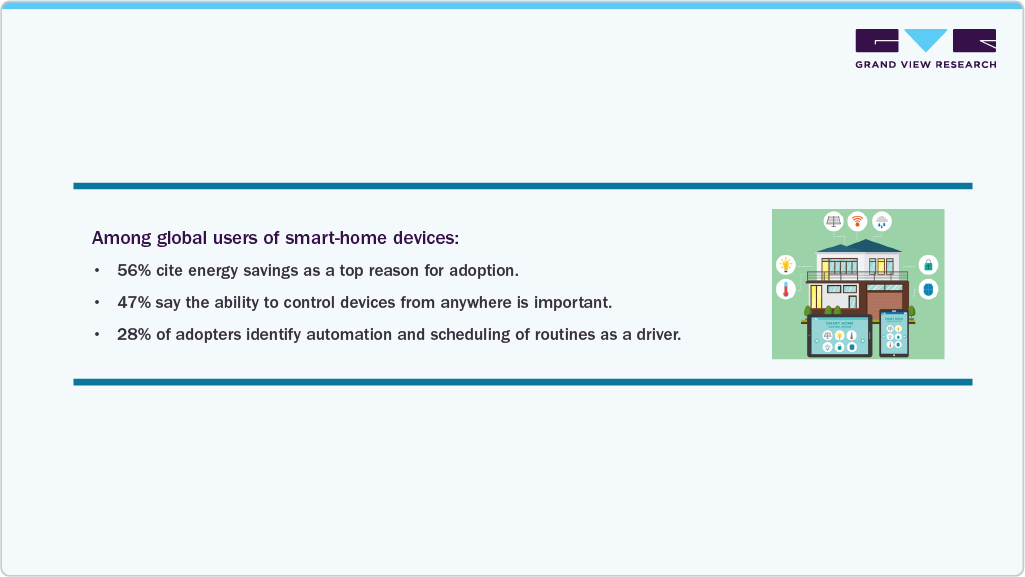
In addition, changing household structures and evolving cooking habits contribute to market growth. Increased cooking frequency, the use of reusable dishware, and smaller household sizes have amplified the volume of daily dishwashing needs. Smart dishwashers, with their enhanced cleaning features, flexible rack systems, and advanced hygiene cycles, meet these requirements effectively. Post-pandemic consumer concern for cleanliness has further boosted interest in models offering high-temperature sanitation, steam-cleaning, and hygienic drying features.
Key Brand Market Insights
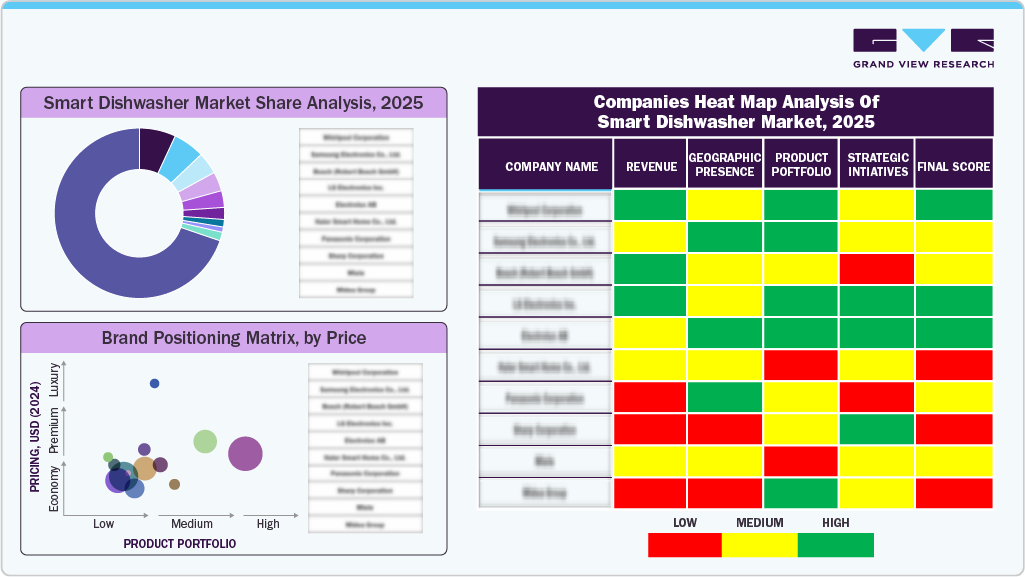
Established and emerging players in the global smart dishwasher market operate in a highly competitive environment, driven by innovation in intelligent cleaning technologies, connectivity features, and differentiated user experiences. Companies are increasingly investing in energy-efficient designs, advanced sensor systems, and IoT-enabled functionalities to meet rising consumer expectations for convenience, automation, and sustainability. In addition, leading brands are strengthening omnichannel retail strategies and leveraging digital-first marketing to engage tech-savvy, modern households who prioritize seamless integration, time-saving capabilities, and premium performance within their smart kitchens.
Product Insights
The free-standing dishwasher accounted for a market share of 55.8% of the global revenues in 2025. The market for freestanding smart dishwashers is rising as consumers increasingly prioritize convenience, flexibility, and connected-home functionality. Unlike built-in models, freestanding units can be placed anywhere, making them ideal for rented homes, smaller apartments, and modern kitchen layouts. At the same time, the shift toward smart appliances featuring WiFi control, voice assistant integration, load-sensing technology, and energy-efficient cycles is appealing to busy, dual-income households seeking time-saving solutions. Growing awareness of water and energy efficiency, combined with rising dishwasher penetration in emerging markets, is further accelerating the adoption of freestanding smart dishwashers as a practical, premium, and highly flexible home solution.
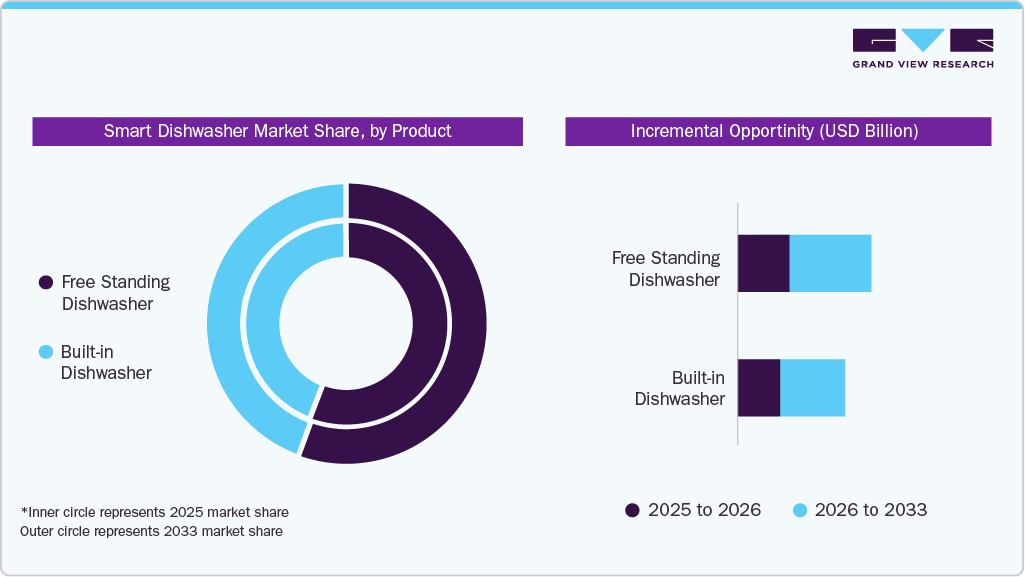
The built-in dishwashers is projected to grow at a CAGR of 6.0% from 2026 to 2033. The market for built-in smart dishwashers is gaining traction as modern consumers increasingly prioritise convenience, connectivity, and efficiency in their kitchen appliances. Rising adoption of smart home ecosystems where appliances can be controlled via smartphones or voice assistants has encouraged homeowners to upgrade to dishwashers that allow remote monitoring, adaptive wash cycles, and automatic detergent dosing. Urban living trends and modular kitchen designs are driving preference for built-in models that seamlessly integrate into cabinetry and save space in smaller homes. Moreover, growing emphasis on sustainability and energy/water savings is pushing households toward smart dishwashers that optimise resource use and often exceed regulatory standards.
Application Insights
Smart dishwashers for household use accounted for a share of 82.3% of the global revenues in 2025. The market for smart dishwashers is rising in households as consumers increasingly prioritize convenience, energy savings, and connected-home automation. Modern smart dishwashers offer features such as app-based controls, load-sensing technology, water and energy optimization, auto-dispensing detergents, and maintenance alerts, making them far more efficient and user-friendly than traditional models. With busier lifestyles and the growing adoption of IoT appliances, households value the ability to monitor, schedule, and control dishwashing remotely. In addition, heightened awareness of water conservation and rising utility costs is pushing consumers toward smart appliances that reduce waste while delivering better cleaning performance.
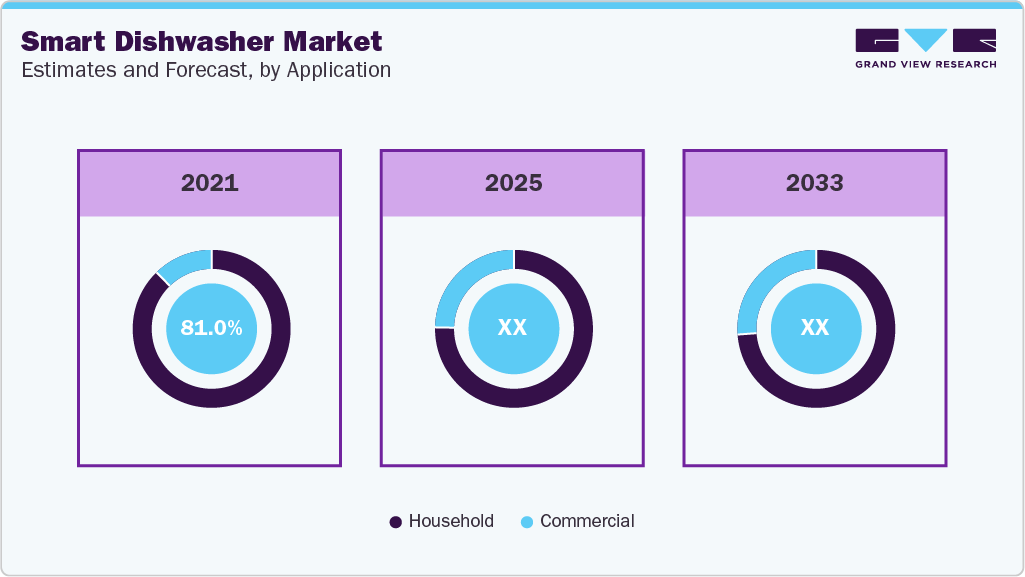
Smart dishwashers for commercial use is projected to grow at a CAGR of 4.7% from 2026 to 2033. The commercial market for smart dishwashers is rising rapidly as restaurants, hotels, hospitals, and large food-service operators prioritise efficiency, hygiene, and cost savings. Smart dishwashers offer features such as automated load sensing, energy- and water-optimised cycles, remote monitoring, and predictive maintenance helping businesses reduce utility expenses and minimise downtime. At the same time, stricter hygiene regulations and the growing need for consistent, high-volume sanitisation are pushing operators to replace traditional machines with intelligent, connected models. Combined with the expansion of the food-service industry and the shift toward digital, sustainable kitchen operations, these benefits are driving strong adoption of smart dishwashers in commercial settings.
Distribution Channel Insights
The sales of smart dishwashers through the offline channel accounted for a share of 80.7% of the global revenues in 2025. Offline channels allow buyers to physically inspect build quality, smart features, noise levels, and capacity factors that are difficult to evaluate online. Large electronics chains and appliance showrooms are also expanding smart-home sections, offering bundled discounts and installation support, which further boosts conversion. As households upgrade kitchens and adopt connected appliances, offline stores remain a trusted destination, especially for premium smart dishwashers where expert consultation and after-sales assurance strongly influence purchase decisions.
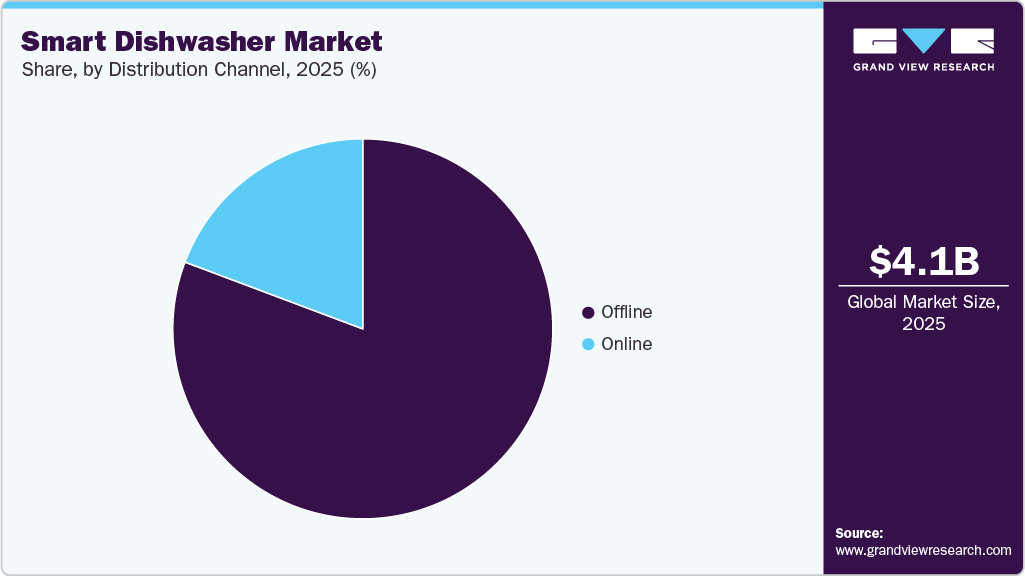
The sales of smart dishwashers through online/e-commerce channels are anticipated to grow at a CAGR of 7.1% from 2026 to 2033. E-commerce platforms make it easier to compare features such as Wi-Fi connectivity, remote monitoring, auto-detergent dispensing, and energy-saving modes, capabilities that appeal to tech-savvy households. Online shopping also offers wider model choices, better discounts, and transparent reviews, which accelerate consumer confidence and purchase decisions. As smart-home adoption grows and busy urban consumers prioritise automation, online platforms have become the fastest-growing sales channel for smart dishwashers.
Regional Insights
The smart dishwasher market in North America accounted for a share of 32.6% of the global revenue in 2025. Consumers in North America are increasingly embracing smart dishwashers because they align closely with evolving lifestyle needs: time-pressed households want appliances that do more with less effort, and smart dishwashers deliver remote monitoring, automatic cycle optimization and connectivity (via smartphone apps or voice assistants). In addition, the push for greater energy and water efficiency driven by utilities, regulatory standards and consumer environmental concern, fuels the upgrade from basic models to smarter, feature-rich units. Finally, the rise in kitchen remodeling and smart-home integration means buyers are willing to invest in connected appliances as part of a seamless home ecosystem.
U.S. Smart Dishwasher Market Trends
The smart dishwasher market in the U.S. is projected to grow at a CAGR of 5.4% from 2026 to 2033. Consumers in the U.S. are increasingly adopting smart dishwashers as part of a broader shift towards connected homes, time-saving convenience and eco-friendly living. Smart models such as the Bosch Series 6 Free Standing Dishwasher and the LG TrueSteam Free Standing Dishwasher DFB424FM offer Wi-Fi/voice connectivity, cycle optimization, load sensing and remote monitoring, making them especially appealing to tech-savvy households and dual-income families with busy lifestyles. The growth in U.S. is also driven by factors such as growth in home-remodeling, rising consumer interest in water/energy savings, and the increasing prevalence of smart home ecosystems.
Europe Smart Dishwasher Market Trends
The smart dishwasher market in Europe accounted for a share of 40.8% of the global revenue in 2025. As consumers increasingly prioritize convenience, energy efficiency, and smart-home integration. With busy urban lifestyles and a shift toward modern modular kitchens, households are opting for appliances that save time and optimize water and electricity use areas where smart dishwashers deliver clear value. Strong EU regulations promoting energy-efficient home appliances also accelerate adoption, as smart models use sensors and automation to minimise consumption. At the same time, the rapid growth of connected homes has made Wi-Fi-enabled dishwashers, remote controls, and voice-assistant compatibility more appealing, pushing smart dishwashers from premium niches into mainstream European households.
Asia Pacific Smart Dishwasher Market Trends
The smart dishwasher market in the Asia Pacific is projected to grow at a CAGR of 8.0% from 2026 to 2033. The Asia Pacific region is experiencing strong growth in smart dishwashers, driven by rising urbanization and increasing disposable incomes across countries such as China, India, Japan and South Korea. As more households adopt modern, space-efficient kitchen designs and seek time-saving appliances, the shift from manual dish-washing to automated, connected solutions becomes more appealing. Urban consumers are embracing the smart-home ecosystem dishwashers that offer IoT connectivity, remote control features, water/energy-efficient cycles and compatibility with voice assistants.
Key Smart Dishwasher Companies:
The following key companies have been profiled for this study on the smart dishwasher market.
- Robert Bosch GmbH
- LG Electronics
- SAMSUNG
- Haier Group
- Electrolux
- Whirlpool Corporation
- Miele & Cie. KG
- Panasonic Corporation
- Arçelik
- Smeg
Recent Developments
-
In November 2025,The GE Profile Smart Compact Dishwasher announced its launch in the in theU.S. market. It offers flexible installation options (countertop, under-sink, or built-in), accommodates six place settings, features multiple wash cycles, including a Baby Care Cycle, uses just two gallons of water per wash, and supports smart controls via the SmartHQ app. The base price is $599, with additional trim kits sold separately.
-
In August 2025, Bosch launched its new 500 Series dishwasher line, featuring the innovative Zone Wash Spray Arm for triple water power on tough, lower-rack messes, a Deep Clean cycle, and intelligent PrecisionWash sensors for smarter cleaning. The dishwashers include a stainless-steel tub, extra racks, adjustable loading, super-quiet 44 dBA operation, AutoAir door opening for better drying, ENERGY STAR efficiency, leak protection, and smart connectivity, blending premium features with mid-range pricing..
Smart Dishwasher Market Report Scope
Report Attribute
Details
Market size value in 2026
USD 4.53 billion
Revenue forecast in 2033
USD 6.77 billion
Growth rate
CAGR of 5.9% from 2026 to 2033
Actuals
2021 - 2025
Forecast period
2026 - 2033
Quantitative units
Revenue in USD million/billion, and CAGR from 2026 to 2033
Report coverage
Revenue forecast, company ranking, competitive landscape, growth factors, and trends
Segments covered
Product, application, distribution channel, region
Regional scope
North America; Europe; Asia Pacific; Central & South America; Middle East & Africa
Country scope
U.S.; Canada; Mexico; Germany; UK; France; Italy; Spain; China; India; Japan; South Korea; South Africa; Brazil
Key companies profiled
Robert Bosch GmbH; LG Electronics; SAMSUNG; Haier Group; Electrolux; Whirlpool Corporation; Miele & Cie. KG; Panasonic Corporation; Arçelik; Smeg
Customization scope
Free report customization (equivalent up to 8 analysts working days) with purchase. Addition or alteration to country, regional & segment scope. Pricing and purchase options
Avail customized purchase options to meet your exact research needs. Explore purchase options Global Smart Dishwasher Market Report Segmentation
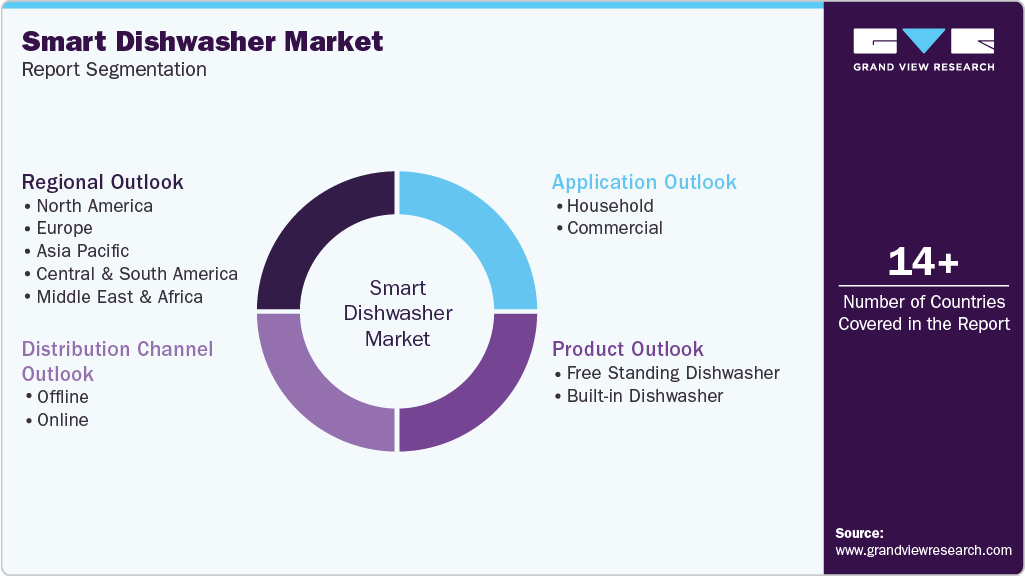
This report forecasts revenue growth at the global, regional, and country levels and provides an analysis of the latest industry trends and opportunities in each of the sub-segments from 2021 to 2033. For this study, Grand View Research has segmented the global smart dishwasher market report on the basis of product, application, distribution channel, and region.
-
Product Outlook (Revenue, USD Million, 2021 - 2033)
-
Free Standing Dishwasher
-
Built-in Dishwasher
-
-
Application Outlook (Revenue, USD Million, 2021 - 2033)
-
Household
-
Commercial
-
-
Distribution Channel Outlook (Revenue, USD Million, 2021 - 2033)
-
Offline
-
Online
-
-
Regional Outlook (Revenue, USD Million, 2021 - 2033)
-
North America
-
U.S.
-
Canada
-
Mexico
-
-
Europe
-
Germany
-
UK
-
France
-
Italy
-
Spain
-
-
Asia Pacific
-
China
-
India
-
Japan
-
South Korea
-
-
Central & South America
-
Brazil
-
-
Middle East & Africa
-
South Africa
-
-
Frequently Asked Questions About This Report
b. The global smart dishwasher market size was estimated at USD 4.11 billion in 2025 and is expected to reach USD 4.53 billion in 2026.
b. The global smart dishwasher market is expected to grow at a compound annual growth rate of 5.9% from 2026 to 2033 to reach USD 6.77 billion by 2033.
b. The free-standing dishwasher accounted for a market share of 55.8% of the global revenues in 2025. The market for freestanding smart dishwashers is rising as consumers increasingly prioritize convenience, flexibility, and connected-home functionality. Unlike built-in models, freestanding units can be placed anywhere, making them ideal for rented homes, smaller apartments, and modern kitchen layouts.
b. Some key players operating in the smart dishwasher market include Robert Bosch GmbH, LG Electronics, SAMSUNG ELECTRONICS CO., LTD., Haier Group Corporation, Electrolux AB, and Whirlpool Corporation among others.
b. Key factors that are driving the market growth include increasing penetration of smart household, consumers’ inclinations towards smart kitchen appliances and rising disposable income among consumers.


Share this report with your colleague or friend.
Need a Tailored Report?
Customize this report to your needs — add regions, segments, or data points, with 20% free customization.


ISO 9001:2015 & 27001:2022 Certified
We are GDPR and CCPA compliant! Your transaction & personal information is safe and secure. For more details, please read our privacy policy.
Trusted market insights - try a free sample
See how our reports are structured and why industry leaders rely on Grand View Research. Get a free sample or ask us to tailor this report to your needs.