- Home
- »
- Homecare & Decor
- »
-
Resort Market Size, Share & Growth, Industry Report, 2033GVR Report cover
![Resort Market Size, Share & Trends Report]()
Resort Market (2026 - 2033) Size, Share & Trends Analysis Report By Resort Type (Golf Resorts, Beach Resorts, Island Resorts, Lake Resorts, Mountain Resorts, Ski Resorts, Eco-Resorts), By Price Range, By Booking Mode, By Region, And Segment Forecasts
- Report ID: GVR-4-68040-423-2
- Number of Report Pages: 100
- Format: PDF
- Historical Range: 2021 - 2025
- Forecast Period: 2026 - 2033
- Industry: Consumer Goods
- Report Summary
- Table of Contents
- Segmentation
- Methodology
- Download FREE Sample
-
 Download Sample Report
Resort Market Summary
The global resort market size was estimated at USD 403.94 billion in 2025 and is projected to reach USD 1,420.02 billion by 2033, growing at a CAGR of 17.0% from 2026 to 2033. The global resort industry is expanding steadily as international tourism and leisure travel continue to increase across major travel destinations.
Key Market Trends & Insights
- The Asia Pacific resort industry accounted for the revenue share of 45.11% in 2025.
- The resort market in China accounted for a 28.4% revenue share of Asia Pacific in 2025.
- By resort type, the beach resorts segment led the resort industry, accounting for a share of 28.6% in 2025.
- By price range, midrange resorts accounted for a market share of 53.1% in 2025.
- By booking mode, bookings through travel agents & online travel agencies (OTAs) accounted for a market share of 52.6% in 2025.
Market Size & Forecast
- 2025 Market Size: USD 403.94 Billion
- 2033 Projected Market Size: USD 1,420.02 Billion
- CAGR (2026-2033): 17.0%
- Asia Pacific: Largest market in 2025
Rising global mobility, improved air connectivity, and the growing popularity of long-distance leisure trips have encouraged travelers to choose resorts that combine accommodation with recreation, dining, and entertainment facilities in a single destination. According to a travel report by Internova Travel Group in December 2025, travelers took an average of 6.4 trips in 2025, while 27% of surveyed consumers expect to increase their leisure travel in 2026. Resorts are benefiting from this rising travel activity as vacationers increasingly seek destinations that provide relaxation, outdoor experiences, and integrated amenities such as beaches, wellness centers, and recreational facilities within a single property.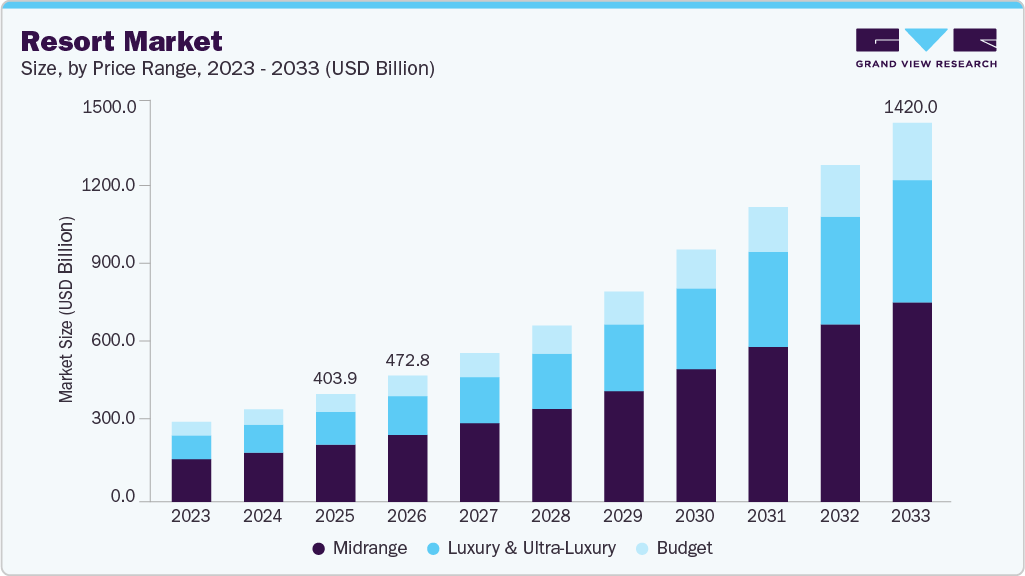
Another key factor supporting market growth is the expansion of the middle class and rising disposable incomes, particularly in emerging economies across Asia, Latin America, and parts of the Middle East. As household purchasing power improves, more consumers are allocating spending toward leisure travel and holiday experiences. This shift has enabled a broader segment of the population to afford resort vacations that were previously considered luxury experiences. The growth of outbound travel from emerging markets has also encouraged resort developers to expand properties in popular international destinations to accommodate a larger and more diverse tourist base.
Consumer preferences are increasingly shifting toward experiential and luxury travel, strengthening demand for resort-based vacations worldwide. Travelers are seeking immersive experiences such as cultural excursions, wellness retreats, adventure activities, and curated culinary experiences rather than conventional sightseeing trips. Resorts are responding by offering customized packages that include guided local tours, water sports, yoga programs, and farm-to-table dining experiences, creating more memorable stays. According to the Luxury Travel Report released by Preferred Hotels & Resorts in May 2025, more than 90% of luxury travelers seek experiences that immerse them in the destination’s history and culture, highlighting the strong preference for authentic and experience-driven travel. These evolving traveler expectations are encouraging resorts to design experience-focused offerings that increase guest engagement, extend stay duration, and support higher spending per visitor, contributing to the continued expansion of the global market.
The rise of experiential travel has significantly contributed to the growth of the resort industry. Travelers are increasingly seeking experiences that go beyond traditional leisure, looking for opportunities to engage with local cultures, participate in outdoor activities, and enjoy unique culinary offerings. Resorts have responded by curating experiences that cater to these evolving consumer preferences, such as cultural tours, adventure sports, and farm-to-table dining. This shift towards experience-driven travel has not only attracted a broader customer base but has also encouraged resorts to innovate and diversify their offerings, leading to an expansion in both market size and revenue.
Resorts are increasingly positioning themselves as venues for weddings, corporate retreats, and social celebrations due to their scenic locations and comprehensive hospitality services. Beach resorts, island destinations, and mountain retreats are particularly attractive for couples seeking unique wedding experiences that combine the ceremony, accommodation, and honeymoon travel within a single destination. These properties often offer integrated services, including event venues, catering, guest accommodation, and leisure activities, making them convenient choices for large celebrations involving family and guests traveling from different regions.
This trend has become particularly noticeable among Indian travelers, where international wedding celebrations are gaining strong popularity. According to a report cited by The Economic Times, around 21% of Indian couples now choose overseas destinations for their weddings, reflecting the growing preference for combining celebrations with travel experiences. As a result, many resorts are investing in larger event spaces, professional wedding planning services, and customized celebration packages designed for multi-day wedding events. These developments are encouraging resorts to strengthen their event infrastructure while attracting a growing segment of travelers who combine special occasions with leisure tourism.
In addition, technological developments are further accelerating market growth through the expansion of digital travel platforms and online booking channels. Online travel agencies, hotel booking platforms, and mobile travel applications have made it easier for consumers to discover resort destinations, compare pricing, and plan vacations with greater convenience. Digital tools such as virtual property tours, personalized recommendations, and dynamic pricing systems also help resorts reach global audiences and improve customer engagement. As digital travel ecosystems continue to evolve, resorts are increasingly leveraging these platforms to expand their market reach and enhance the overall booking and travel planning experience.
Brand Market Share Insights
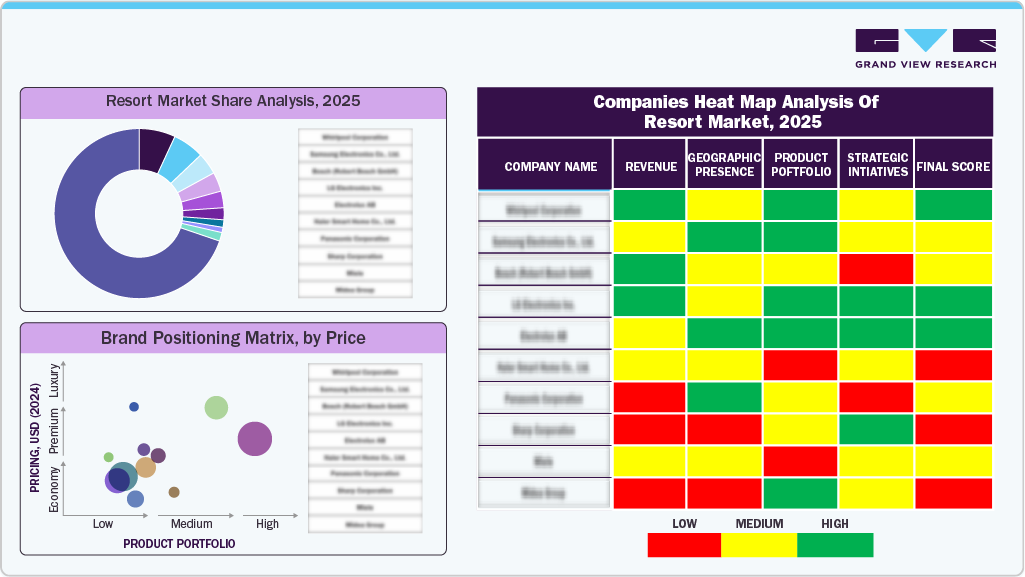
A competitive landscape, with international hospitality groups, luxury resort operators, and boutique destination properties characterize the global resort market. Leading companies maintain strong market positions through extensive resort portfolios, premium guest services, and global distribution networks. Major players such as Marriott International, Hilton Worldwide, Hyatt Hotels Corporation, and Four Seasons Hotels and Resorts operate resorts offering luxury accommodations, wellness facilities, and curated guest experiences. Continuous resort developments, experiential travel offerings, and the rise of boutique and eco-resort brands are further intensifying competition in the market.
Consumer Insights
Consumer behavior in the global resort industry is increasingly shaped by travelers seeking curated, personalized experiences that go beyond standard leisure holidays. Modern travelers prefer stays that combine comfort with carefully designed itineraries and authentic local experiences. Industry insights indicate that about 89% of luxury travelers are interested in hotels that reflect the local charm and cultural identity of the destination, underscoring the growing importance of unique property design and culturally integrated hospitality offerings. Resorts are responding by incorporating regional architecture, locally inspired cuisine, and cultural excursions that allow guests to experience the destination more authentically and engagingly.
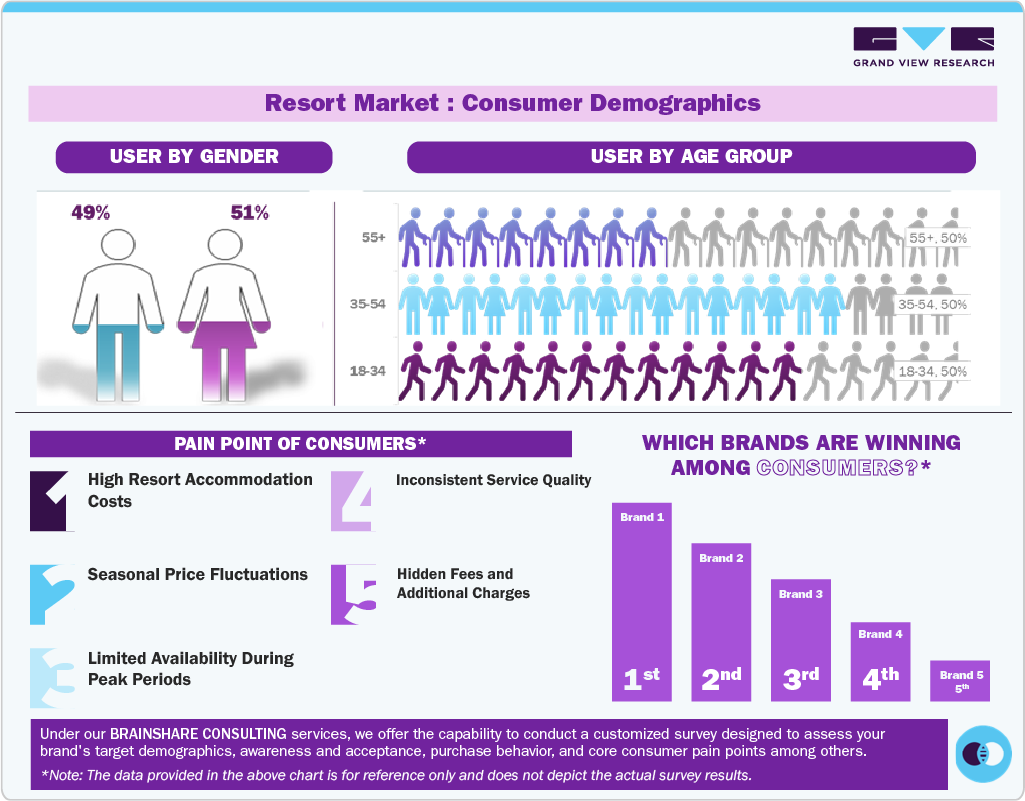
Another important behavioral trend is the growing reliance on expert travel guidance when planning high-end vacations. Data from the same luxury travel insights indicates that around 84% of affluent travelers consider a trusted travel advisor more valuable than relying solely on online research when planning trips. This reflects the increasing demand for curated travel planning, particularly for resort vacations that include multiple experiences such as wellness programs, private excursions, and exclusive cultural activities. As a result, resorts are strengthening partnerships with travel advisors and luxury travel planners to design tailored guest experiences and attract high-value travelers.
Resort Type Insights
The beach resorts segment led the resort industry, accounting for a share of 28.6% in 2025, supported by the strong demand for coastal vacation destinations that offer direct access to beaches and ocean-based recreational activities. Travelers are increasingly choosing beachfront resorts because they offer activities such as snorkeling, scuba diving, surfing, and boating, which are typically not available at inland resorts. The segment is also driven by the popularity of seaside relaxation experiences, where guests seek ocean views, private beach access, and outdoor leisure spaces such as beach lounges and cabanas. In addition, many coastal destinations host seasonal tourism events, marine excursions, and island-hopping tours, further attracting visitors to beach resort properties.
The demand for eco-resorts is anticipated to grow at a CAGR of 19.9% from 2026 to 2033, driven by the increasing development of sustainable tourism destinations that prioritize low-impact accommodation and responsible resource management. Many travelers prefer eco-resorts because these properties are designed with environmentally friendly materials, energy-efficient infrastructure, and waste-reduction systems that minimize environmental damage. The segment is also supported by the growing interest in authentic local experiences, as eco-resorts often collaborate with nearby communities to provide cultural activities, traditional cuisine, and locally guided excursions. In addition, travelers seeking quieter, less crowded vacation environments are increasingly choosing eco-resorts in remote natural settings, further contributing to the growth of this segment.
Price Range Insights
The midrange resorts segment led the resort market, accounting for a share of 53.1% in 2025, reflecting their strong presence in established tourism destinations where large volumes of leisure travelers require reliable accommodation with full-service facilities at moderate price levels. These resorts are widely developed in coastal holiday regions, mountain destinations, and major tourist corridors where operators focus on standardized rooms, multiple dining outlets, swimming pools, and family-friendly entertainment programs. Their pricing structure allows tour operators, travel agencies, and online booking platforms to package them easily into bundled vacation deals that include accommodation, local excursions, and transportation. This operational model enables midrange resorts to attract a broad traveler base, including family vacationers, group tours, and international tourists seeking organized resort stays with predictable service quality.
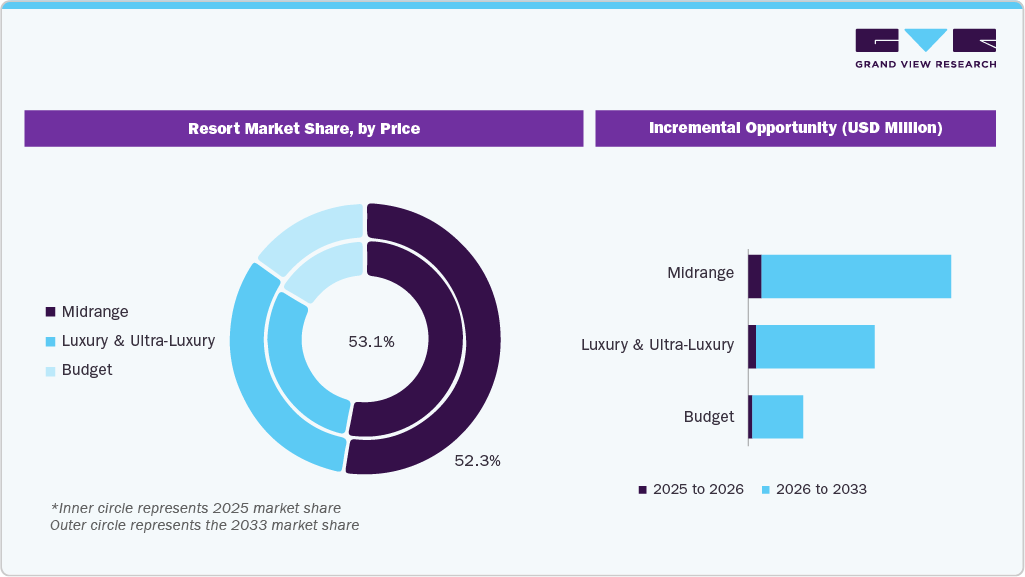
The demand for luxury and ultra-luxury resorts is anticipated to grow at a CAGR of 17.8% from 2026 to 2033. The luxury and ultra-luxury resort segments are witnessing robust growth, driven by several converging factors that cater to the evolving expectations of affluent travelers and high-net-worth individuals (HNWIs). The rise in global wealth, particularly among the upper echelons of society in regions like Asia Pacific, North America, and the Middle East, has significantly increased the demand for exclusive and high-end travel experiences. These travelers prioritize privacy, personalized service, and unique experiences, which luxury and ultra-luxury resorts are uniquely positioned to deliver. Additionally, there is a growing trend among affluent consumers toward experiential travel, where the focus is not just on the destination but on the quality and distinctiveness of the experience itself. Luxury and ultra-luxury resorts cater to this demand by offering bespoke services such as private villas, personalized itineraries, gourmet dining experiences, and wellness programs that go beyond the standard offerings of traditional resorts. This level of customization and exclusivity is increasingly sought after, particularly as consumers look to spend on travel that provides lasting memories and a sense of fulfillment.
Hotels and resort companies are actively expanding their luxury portfolios to meet the growing demand from affluent travelers. For instance, in December 2025, Hilton expanded its presence in India with the opening of Hilton Hyderabad Genome Valley Resort & Spa, marking the debut of its flagship Hilton Hotels & Resorts brand in Hyderabad. Located in the city’s Genome Valley biotechnology district, the resort is designed to serve both business and leisure travelers. The property features 115 rooms and villas, multiple dining options, wellness facilities, and event spaces suitable for corporate meetings and social celebrations. The launch highlights Hilton’s strategy to strengthen its footprint in fast-growing Indian destinations where increasing business activity and tourism are driving demand for upscale hospitality. Such strategic developments are expected to diversify the range of resort options available to consumers and contribute significantly to market growth.
Booking Mode Insights
The resort bookings through travel agents and online travel agencies (OTAs) accounted for a share of 52.6% in 2025. The increasing reliance on digital platforms for travel planning has transformed the way travelers research and book accommodations. OTAs provide a convenient, user-friendly experience that allows travelers to compare a wide range of resort options, amenities, and pricing in a single interface. This aggregation of information empowers consumers to make informed decisions, driving higher booking volumes through these platforms. The ongoing trend of experiential travel has amplified the demand for unique and personalized resort experiences. Travel agents, leveraging their expertise, play a critical role in curating tailored itineraries and recommendations for their clients. This personalized service, combined with the broad inventory available through OTAs, enhances the appeal of booking through these channels, particularly among affluent travelers seeking bespoke vacation experiences.
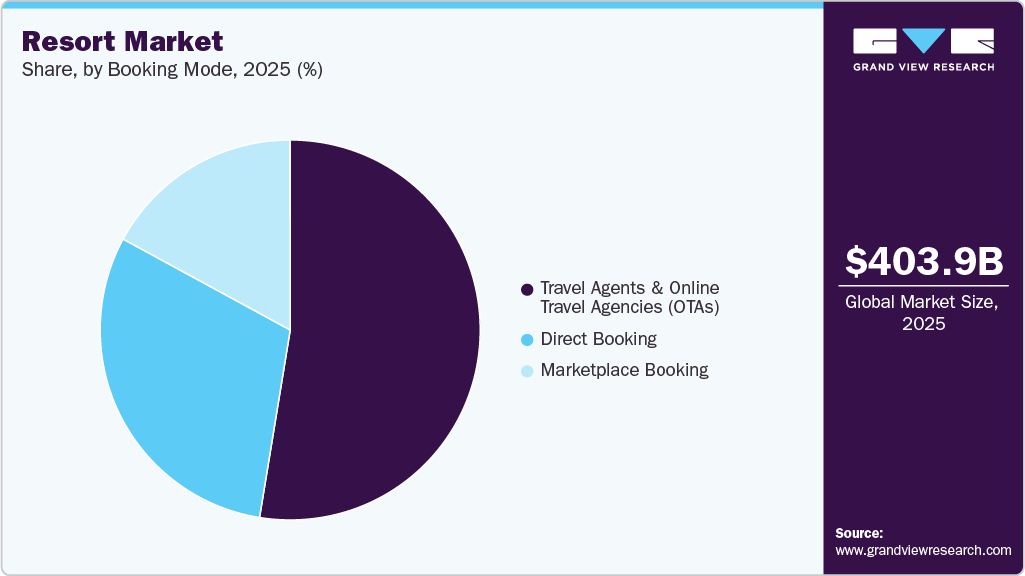
Resort bookings through marketplaces are projected to grow at a CAGR of 18.6% over the forecast period, from 2026 to 2033. Online marketplaces provide travelers with comprehensive information about various resorts, including detailed descriptions, user reviews, high-quality images, and pricing comparisons. This transparency allows consumers to make informed decisions, fostering trust and increasing the likelihood of booking through these platforms. Marketplaces aggregate a wide range of resorts, catering to various preferences, budgets, and experiences. This diversity enables consumers to easily find accommodations that meet their specific needs, from luxury resorts to budget-friendly options, driving higher conversion rates.
Regional Insights
The Asia Pacific resort industry accounted for the revenue share of 45.11% in 2025, driven by the rapid expansion of tourism and leisure travel across several countries in the region. Rising disposable incomes and a growing middle-class population are encouraging more consumers to spend on vacations and resort-based travel experiences. Popular destinations featuring beaches, islands, mountains, and nature reserves are attracting both domestic and international tourists seeking relaxation and experiential travel. In addition, increasing investments in hospitality infrastructure and the expansion of new resort developments across major tourism destinations are strengthening the market.
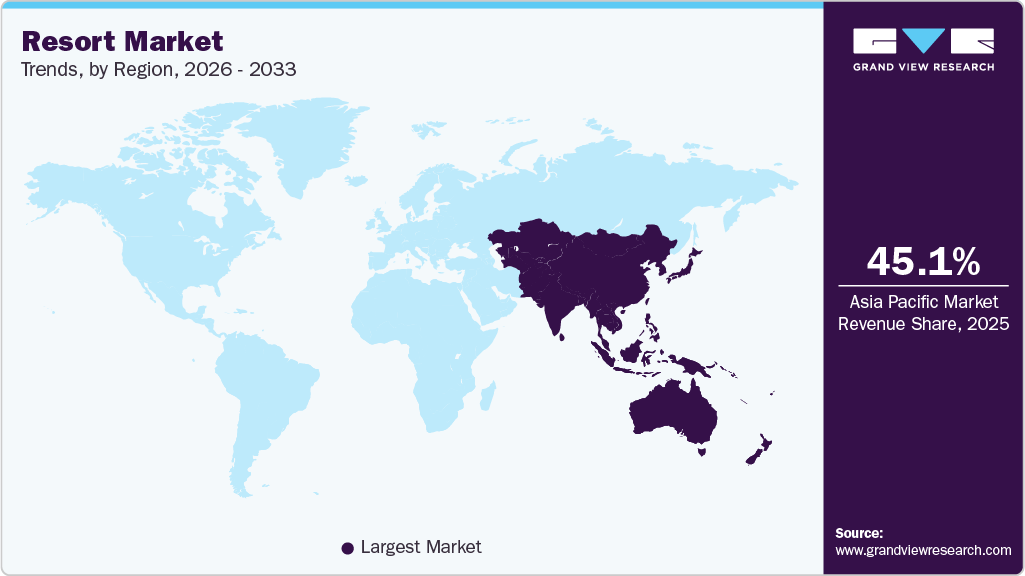
The resort market in China accounted for a 28.4% revenue share of Asia Pacific in 2025, driven by the rapid expansion of domestic tourism and increasing investments in hospitality infrastructure. Rising disposable incomes and a growing middle-class population are encouraging more travelers to spend on leisure vacations across destinations such as coastal areas, mountain regions, and scenic countryside locations. At the same time, hospitality companies are expanding new resort developments that offer wellness retreats, nature-based stays, and family-oriented vacation experiences to attract domestic travelers. In addition, improved transportation networks, including high-speed rail and expanded air connectivity, are making resort destinations more accessible, further supporting the market growth.
The India resort market is expected to grow at a CAGR of 14.5% from 2026 to 2033, driven by increasing investments in new resort developments across major tourism destinations. Hospitality companies and real estate developers are expanding resort properties in popular locations such as coastal areas, hill stations, and wildlife regions to accommodate the rising number of domestic and international travelers. Several hospitality brands are launching new luxury resorts and boutique properties that offer nature-based experiences, wellness retreats, and adventure tourism activities. In addition, the growing popularity of short leisure trips, weekend getaways, and destination celebrations such as weddings and corporate retreats is encouraging the expansion of resort infrastructure across emerging tourism destinations in India.
For instance, in March 2026, Mountain Shadows Resort launched a new luxury destination-wedding offering to position the property as one of the most exclusive wedding venues in Kerala. Surrounded by hills, forests, and lake views, the resort offers scenic outdoor venues, including lakefront lawns and poolside spaces, ideal for multi-day wedding celebrations. The initiative focuses on curated, private wedding experiences with customized décor, tailored dining options, and wellness activities, thereby strengthening Wayanad’s appeal as a premium destination for luxury weddings in India.
North America Resort Market Trends
The North America resort industry accounted for the largest share of 18.2% of the global market in 2025, driven by the region’s strong tourism industry and high consumer spending on leisure travel. The presence of diverse travel destinations, including coastal resorts, mountain retreats, ski resorts, and lakeside vacation properties, attracts both domestic and international travelers seeking relaxation and outdoor recreation. Many travelers prefer resort-style accommodations that offer integrated amenities such as spa facilities, recreational activities, dining options, and entertainment within a single destination. In addition, the expansion of luxury resorts, wellness retreats, and nature-based vacation properties across the U.S., Canada, and Mexico continues to strengthen the regional industry.
U.S. Resort Market Trends
The resort industry in the U.S. accounted for 87.4% revenue share of North America in 2025, driven by the country’s strong domestic tourism activity and well-developed hospitality infrastructure. The U.S. offers a wide range of resort destinations, including beach resorts, mountain retreats, desert resorts, and lakeside vacation properties, attracting both domestic and international travelers. Many travelers prefer resort accommodations that offer integrated amenities, such as wellness facilities, recreational activities, and entertainment options, within a single destination. In addition, the growing popularity of wellness tourism, outdoor recreation, and destination events such as weddings and corporate retreats is encouraging the expansion of new resort developments and upgrades to existing resort properties across several tourism destinations in the U.S.
Canada resort market is expected to grow at a CAGR of 11.5% from 2026 to 2033, driven by the country’s strong tourism sector and increasing demand for nature-based leisure travel. Canada offers diverse resort destinations, including mountain retreats, lakeside resorts, ski resorts, and wilderness lodges that attract both domestic and international travelers seeking outdoor recreation and scenic landscapes. Many travelers prefer resort accommodations that offer integrated amenities, such as spa facilities, adventure activities, and wellness programs, within natural environments. In addition, the rising popularity of winter tourism and outdoor activities such as skiing, hiking, and wildlife exploration is driving the expansion of resort properties across several Canadian tourism destinations.
Europe Resort Market Trends
The Europe resort industry accounted for a global revenue share of 24.5% in 2025, driven by the region’s well-established tourism infrastructure and strong demand for leisure travel. Europe attracts a large number of international and domestic tourists due to its diverse destinations, including coastal resorts, alpine retreats, countryside resorts, and historic spa towns. Many travelers choose resort-style accommodations that combine comfortable lodging with wellness facilities, recreational activities, and scenic natural environments. The market is also supported by the growing popularity of wellness tourism and nature-based vacations, where travelers seek relaxation through spa treatments, outdoor activities, and countryside escapes. In addition, continuous investments in hospitality developments, along with the expansion of luxury and boutique resort properties across popular destinations, continue to support the industry growth.
For instance, in November 2025, Accor introduced its new luxury brand, Emblems Collection, with the debut of its first property in the United Kingdom at Lucknam Park Hotel & Spa. The historic countryside estate offers upscale accommodation, dining, spa facilities, and equestrian experiences. The brand is designed as a collection of distinctive luxury hotels that retain their unique character while benefiting from Accor’s global network, with additional landmark properties planned in several international destinations as the portfolio expands.
The resort market in Germany accounted for a 22.5% revenue share of Europe in 2025, driven by the country’s well-developed tourism infrastructure and strong domestic travel demand. Germany attracts a large number of travelers to destinations such as alpine regions, lakeside retreats, and countryside wellness resorts that offer nature-based relaxation and recreational activities. Many travelers prefer resort-style accommodations that combine leisure facilities such as spas, wellness centers, and outdoor adventure activities within scenic natural environments. In addition, the market is benefiting from the expansion of wellness tourism and the growing popularity of spa resorts that focus on health, relaxation, and therapeutic experiences. Continuous investments in hospitality infrastructure and upgrades to existing resort properties are further supporting the market growth.
The UK resort market is expected to grow at a CAGR of 11.7% from 2026 to 2033, driven by the increasing popularity of domestic leisure travel and short holiday breaks across the country. Many travelers in the UK are opting for resort-style stays in coastal destinations, countryside retreats, and spa resorts that offer relaxation and recreational amenities within a single property. The market is also benefiting from the growing interest in wellness tourism, where resorts provide facilities such as spa treatments, nature-based activities, and fitness programs designed to enhance relaxation and well-being. In addition, hospitality companies are expanding resort developments and upgrading existing properties with modern amenities, experiential activities, and premium accommodations to attract both domestic and international travelers across the UK tourism market.
Central & South America Resort Market Trends
The Central & South America resort industry is expected to grow at a CAGR of 14.4% from 2026 to 2033, driven by the region’s rich natural landscapes and growing popularity as a leisure tourism destination. Many countries in the region offer diverse attractions such as tropical beaches, rainforests, and cultural heritage sites that attract international travelers seeking nature-based and adventure tourism experiences. Resorts are expanding their offerings to include eco-tourism activities, beach vacations, and wildlife exploration to appeal to travelers seeking unique, immersive holiday experiences.
Middle East & Africa Resort Market Trends
The Middle East & Africa resort industry is expected to grow at a CAGR of 15.0% from 2026 to 2033, driven by the rising popularity of luxury leisure travel and the increasing number of international visitors to the region. Many travelers are attracted to destinations that offer unique experiences such as desert landscapes, coastal beaches, and wildlife tourism. Resorts across the region are expanding offerings that include private beach access, adventure tourism activities, and wellness retreats to attract high-spending travelers. In addition, the growth of international events, business conferences, and sports tourism in major regional destinations is encouraging the development of resort-style accommodations that combine leisure facilities with hospitality services. These factors are supporting the expansion of resort properties across the Middle East and Africa.
Key Resort Companies:
The following key companies have been profiled for this study on the resort market.
- Marriott International, Inc.
- Hilton Worldwide Holdings Inc.
- Wyndham Hotels & Resorts
- Accor S.A.
- InterContinental Hotels Group (IHG)
- Four Seasons Hotels and Resorts
- Banyan Tree Holdings Limited
- Hyatt Hotels Corporation
- MGM Resorts International
- Las Vegas Sands Corp.
Recent Developments
-
In December 2025, IHG Hotels & Resorts introduced InterContinental The Red Sea Resort, a new luxury resort located within Saudi Arabia’s large Red Sea tourism development. The property offers more than 200 rooms and suites and features upscale dining, wellness facilities, and experiences centered around the region’s marine environment. The opening supports the country’s broader tourism expansion under Saudi Vision 2030, which aims to develop new luxury travel destinations along the Red Sea coast.
-
In October 2025, Hilton partnered with INSPIRE Entertainment Resort to bring its Hilton Hotels & Resorts brand to the large integrated resort complex. The property includes 1,275 hotel rooms across three themed towers and is located near Incheon International Airport. The resort combines accommodation with entertainment facilities, including a performance arena, convention spaces, retail outlets, and leisure attractions, strengthening Hilton’s presence in South Korea’s growing tourism and entertainment sector.
-
In February 2025, Radisson Hotel Group opened Radisson Resort Khopoli, expanding its presence in western India. Located between Mumbai and Pune, the resort offers 115 rooms and suites along with dining outlets, a rooftop infinity pool, spa, and event spaces for weddings and corporate gatherings. The opening supports Radisson’s strategy to grow in emerging leisure destinations where demand for upscale resort experiences and destination events is increasing.
Resort Market Report Scope
Report Attribute
Details
Market size value in 2026
USD 472.81 billion
Revenue forecast in 2033
USD 1,420.02 billion
Growth rate
CAGR of 17.0% from 2026 to 2033
Actuals
2021 - 2025
Forecast period
2026 - 2033
Quantitative units
Revenue in USD billion and CAGR from 2026 to 2033
Report coverage
Revenue forecast, company ranking, competitive landscape, growth factors, and trends
Segments covered
Resort type, price range, booking mode, region
Regional scope
North America; Europe; Asia Pacific; Central & South America; Middle East & Africa
Country scope
U.S.; Canada; Mexico; UK; Germany; France; Italy; Spain; China; India; Japan; Australia & New Zealand; South Korea; Brazil; South Africa
Key companies profiled
Marriott International, Inc.; Hilton Worldwide Holdings Inc.; Wyndham Hotels & Resorts; Accor S.A.; InterContinental Hotels Group (IHG); Four Seasons Hotels and Resorts; Banyan Tree Holdings Limited; Hyatt Hotels Corporation; MGM Resorts International; Las Vegas Sands Corp.
Customization scope
Free report customization (equivalent up to 8 analysts working days) with purchase. Addition or alteration to country, regional & segment scope.
Pricing and purchase options
Avail customized purchase options to meet your exact research needs. Explore purchase options
Global Resort Market Report Segmentation
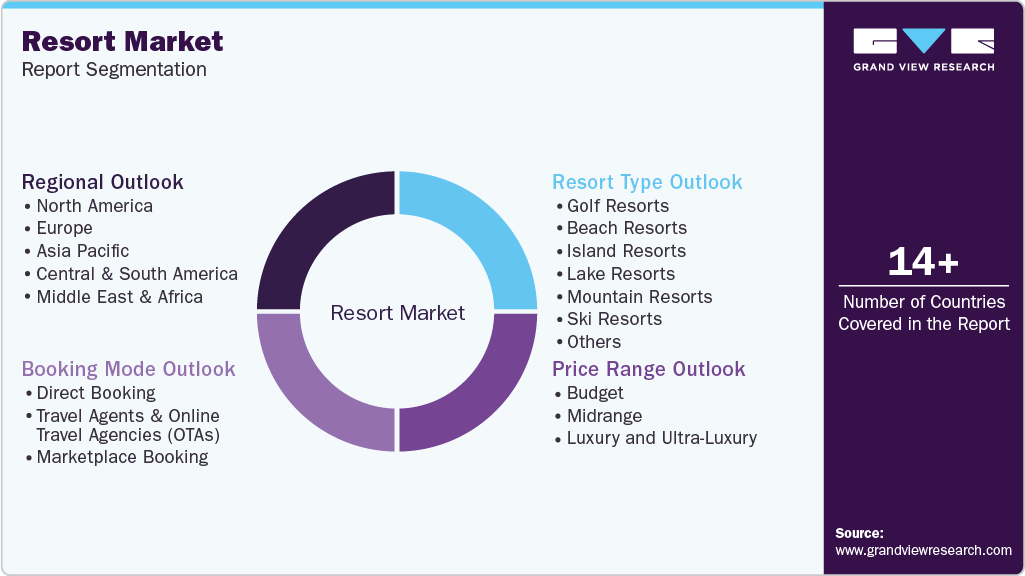
This report forecasts revenue growth at the global, regional & country levels and provides an analysis of the latest trends and opportunities in each of the sub-segments from 2021 to 2033. For this study, Grand View Research has segmented the global resort market report based on resort type, price range, booking mode, and region:
-
Resort Type Outlook (Revenue, USD Billion, 2021 - 2033)
-
Golf Resorts
-
Beach Resorts
-
Island Resorts
-
Lake Resorts
-
Mountain Resorts
-
Ski Resorts
-
Eco-Resorts
-
Others (Heritage Resorts, Casino Resorts, etc.)
-
-
Price Range Outlook (Revenue, USD Billion, 2021 - 2033)
-
Budget
-
Midrange
-
Luxury and Ultra-Luxury
-
-
Booking Mode Outlook (Revenue, USD Billion, 2021 - 2033)
-
Direct Booking
-
Travel Agents & Online Travel Agencies (OTAs)
-
Marketplace Booking
-
-
Regional Outlook (Revenue, USD Billion, 2021 - 2033)
-
North America
-
U.S.
-
Canada
-
Mexico
-
-
Europe
-
UK
-
Germany
-
France
-
Italy
-
Spain
-
-
Asia Pacific
-
China
-
India
-
Japan
-
Australia & New Zealand
-
South Korea
-
-
Central & South America
-
Brazil
-
-
Middle East & Africa (MEA)
-
South Africa
-
-
Frequently Asked Questions About This Report
b. The global resort market was estimated at USD 300.03 billion in 2023 and is expected to reach USD 347.14 billion in 2024.
b. The global resort market is expected to grow at a compound annual growth rate of 18.2% from 2024 to 2030 to reach USD 945.38 billion by 2030.
b. Asia Pacific dominated the resort market with a share of over 44.25% in 2023. The region is witnessing a significant expansion in its resort market, driven by the rapid growth of the middle class, increased urbanization, and a burgeoning interest in luxury travel experiences.
b. Some of the key players operating in the resort market include Marriott International, Inc., Hilton Worldwide Holdings Inc., Wyndham Hotels & Resorts, Accor S.A., InterContinental Hotels Group (IHG), Four Seasons Hotels and Resorts, Banyan Tree Holdings Limited, Hyatt Hotels Corporation, MGM Resorts International, and Las Vegas Sands Corp.
b. Key factors driving the resort market growth include increasing consumer spending on travel, the rising appeal of experiential and luxury tourism, and the strategic expansion of resort offerings across emerging and established destinations.


Share this report with your colleague or friend.
Need a Tailored Report?
Customize this report to your needs — add regions, segments, or data points, with 20% free customization.


ISO 9001:2015 & 27001:2022 Certified
We are GDPR and CCPA compliant! Your transaction & personal information is safe and secure. For more details, please read our privacy policy.
Trusted market insights - try a free sample
See how our reports are structured and why industry leaders rely on Grand View Research. Get a free sample or ask us to tailor this report to your needs.