- Home
- »
- Medical Devices
- »
-
Red Light Therapy Market Size, Share, Industry Report, 2033GVR Report cover
![Red Light Therapy Market Size, Share & Trends Report]()
Red Light Therapy Market (2026 - 2033) Size, Share & Trends Analysis Report By Product (Face Mask, Hair Cap/Hair Helmets, Wands, Panels), By Application, By Device Category (Premium, Budget-friendly), By End-use (B2B, B2C), By Region, And Segment Forecasts
- Report ID: GVR-4-68040-881-8
- Number of Report Pages: 200
- Format: PDF
- Historical Range:
- Forecast Period: 1 - 2033
- Industry: Healthcare
- Report Summary
- Table of Contents
- Segmentation
- Methodology
- Download FREE Sample
-
 Download Sample Report
Red Light Therapy Market Summary
The global red light therapy market size was estimated at USD 533.8 million in 2025 and is projected to reach USD 1,133.1 million by 2033, growing at a CAGR of 9.8% from 2026 to 2033. The industry has gained significant traction in recent years as consumers and healthcare providers increasingly adopt non-invasive and technology-driven treatment options for skin care, pain management, and overall wellness.
Key Market Trends & Insights
- North America red light therapy market held the largest share of 44.6% of the global market in 2025.
- The U.S. red light therapy market is being reshaped by robust healthcare infrastructure, strong regulatory oversight, and growing clinical research supporting photobiomodulation therapies.
- By product, the beds/pods segment held the largest market share of 39.9% in 2025.
- By application, the cosmetic segment held the largest market share of 59.5% in 2025.
- By device category, the premium segment held the largest market share in 2025.
Market Size & Forecast
- 2025 Market Size: USD 533.8 Million
- 2033 Projected Market Size: USD 1,133.1 Million
- CAGR (2026-2033): 9.8%
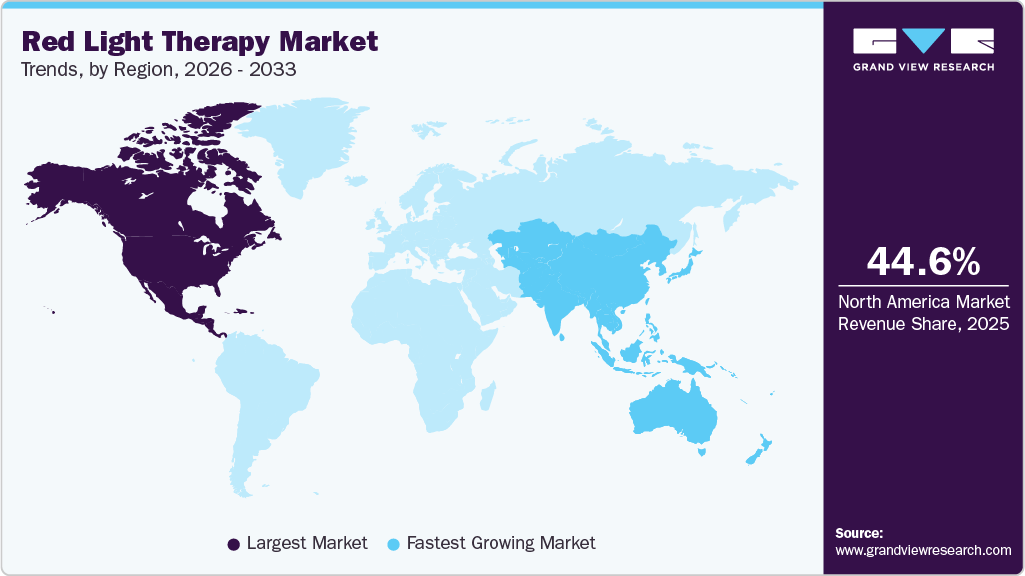
- North America: Largest market in 2025
- Asia Pacific: Fastest growing market
Red light therapy, also known as photobiomodulation, uses wavelengths of red or near-infrared light to stimulate cellular activity and enhance tissue repair. The therapy works by penetrating the skin and stimulating mitochondrial activity, thereby increasing cellular energy production and supporting processes such as collagen synthesis, tissue regeneration, and inflammation reduction. These biological effects have led to the widespread use of RLT in dermatology, sports recovery, rehabilitation, and aesthetic medicine.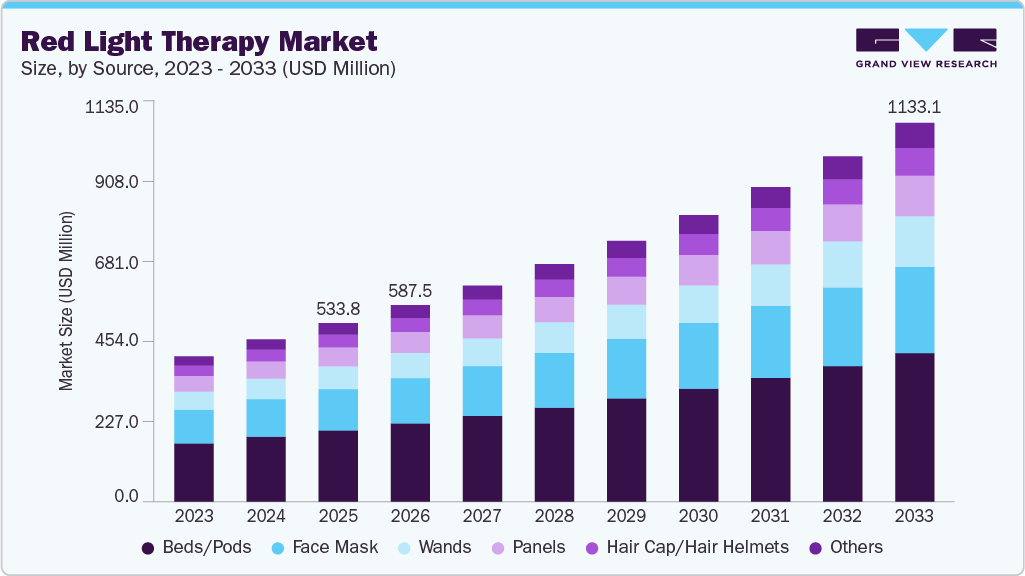
Another key factor driving the demand for RLT devices is the growing consumer preference for non-invasive aesthetic treatments. Many individuals are increasingly seeking alternatives to surgical procedures for acne management, skin rejuvenation, and anti-aging. Red light therapy is widely promoted for reducing wrinkles, improving skin texture, and stimulating collagen production. This demand has expanded the availability of light-based treatment devices across dermatology clinics, medi-spas, and wellness centers. At the same time, the rapid growth of at-home beauty technology has made RLT more accessible, with facial masks, handheld devices, and full-body panels becoming widely available to consumers.
The rise of digital wellness culture and social media influence has further accelerated the adoption of red light therapy products. Platforms such as TikTok and Instagram have played a key role in spreading awareness about RLT devices through influencers and celebrity endorsements. For instance, in March 2025, a report by Allure Magazine highlighted the rapid rise in consumer interest in red light therapy devices, particularly LED facial masks, fueled by viral social media trends and celebrity endorsements. The publication noted that content related to red light therapy has generated over 70 million views on TikTok, reflecting strong consumer awareness and demand for at-home phototherapy devices. This reflects strong consumer curiosity and awareness about the technology.
Moreover, the growing prevalence of skin disorders, chronic pain, and inflammatory conditions further supports the expansion of the market. Red light therapy is increasingly used as a supportive treatment for conditions such as acne, eczema, psoriasis, and musculoskeletal pain due to its anti-inflammatory and tissue-healing properties. According to the article published by The Conversation in January 2025, clinical research shows red light therapy can help reduce pain, inflammation, and tissue damage in certain medical conditions. The article highlighted that randomized controlled trials have demonstrated benefits in musculoskeletal pain, wound healing, and treatment-related inflammation, although experts noted that some broader claims about the therapy still require stronger clinical evidence. Health professionals and physiotherapy clinics are incorporating light-based therapies into treatment protocols for rehabilitation and sports recovery. This shift toward light-based therapeutic solutions reflects a broader trend toward drug-free and minimally invasive treatment approaches in modern healthcare.
The growth is also attributed to the growing popularity of wellness and recovery technologies among athletes and fitness enthusiasts. Red light therapy panels and beds are increasingly used in sports medicine facilities to support muscle recovery, reduce inflammation, and improve circulation after intense physical activity. The growing number of sports injuries and the rising emphasis on recovery-focused fitness routines have encouraged gyms, physiotherapy centers, and wellness studios to integrate these systems into their services.
Technological advancements are further supporting the development of the red light therapy industry. Manufacturers are introducing multi-wavelength devices, portable systems, and smart devices integrated with mobile applications that allow users to personalize treatment sessions and monitor progress. These innovations are expanding the use of RLT beyond clinics into home-based healthcare and consumer wellness applications. As awareness of photobiomodulation continues to grow and device technologies improve, red light therapy is increasingly being positioned as a holistic wellness tool that combines aesthetics, recovery, and preventive health benefits, which is expected to sustain the demand for RLT products in the coming years.
Market Concentration & Characteristics
The Red Light Therapy (RLT) market is moderately competitive, with several established medical device and wellness technology companies actively developing and commercializing light-based therapy systems. Key players such as Mito Red Light, LightStim, Joovv, Inc., and Therabody hold notable positions in the market by offering a range of red and near-infrared light therapy devices designed for skincare, pain management, muscle recovery, and general wellness applications. These companies provide products such as LED therapy panels, handheld devices, wearable therapy wraps, and facial masks, enabling both clinical and at-home treatment options.
The industry is experiencing notable technological advancements as companies continue to develop more efficient and clinically validated photobiomodulation systems. Recent innovations include multi-wavelength LED therapy devices, wearable and portable light therapy systems, and AI-enabled personalized treatment platforms that help optimize treatment parameters based on patient conditions. For instance, in July 2024, TheraLight launched the TheraLight 360+ full-body photobiomodulation therapy bed, designed with four therapeutic wavelengths (633 nm, 810 nm, 850 nm, and 940 nm) and more than 45,000 LEDs to enhance treatment effectiveness. The device also provides 25% more power and improved digital control systems, enabling more advanced light-based therapeutic treatments for pain relief, recovery, and wellness applications.
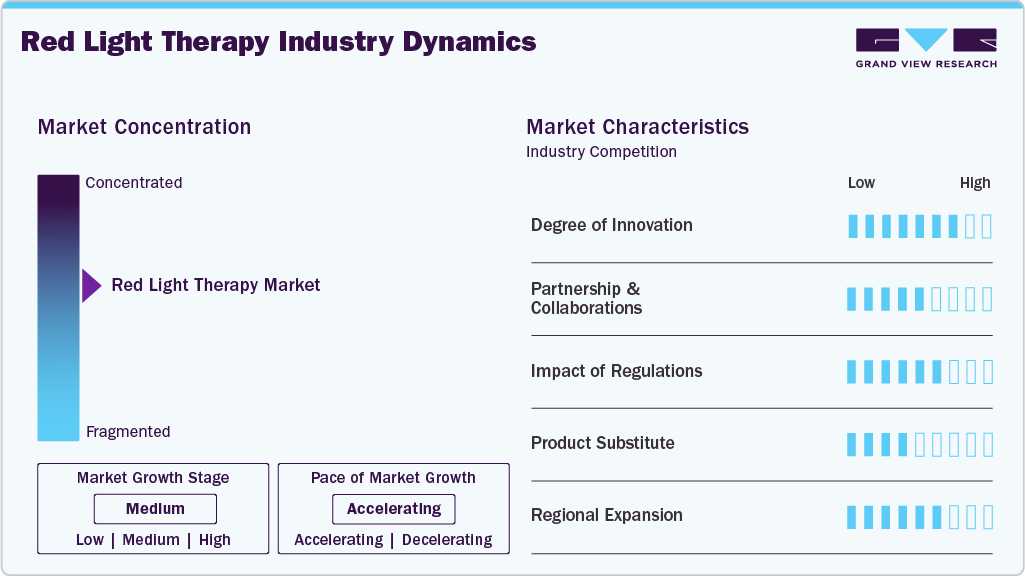
Partnerships and collaborations play an important role in the Red Light Therapy (RLT) industry, enabling companies to expand distribution networks, improve clinical adoption, and accelerate the development of advanced photobiomodulation technologies. Through collaborations with healthcare providers, sports organizations, and wellness clinics, companies are able to integrate RLT systems into diverse applications such as dermatology, rehabilitation, sports recovery, and hair restoration. For instance, in June 2025, Revian announced a strategic partnership with Bosley, a well-known hair restoration provider, to expand access to FDA-cleared red light therapy devices for hair regrowth across Bosley’s nationwide network of clinics. Through this collaboration, Bosley clinics began offering Revian’s at-home light therapy systems designed to stimulate scalp circulation and support hair follicle health, thereby increasing the availability of photobiomodulation treatments for hair loss patients.
Regulatory approval plays an important role in shaping the market, as photobiomodulation devices used for dermatology, pain relief, and hair restoration must comply with safety and performance standards before commercialization. Regulatory authorities such as the U.S. Food and Drug Administration, the European Medicines Agency under the Medical Device Regulation (MDR), and other national health authorities classify many light therapy systems as medical devices. Manufacturers are therefore required to demonstrate device safety, wavelength accuracy, optical output stability, electromagnetic compatibility, and clinical effectiveness before receiving regulatory clearance. For instance, in September 2024, LumeBox announced that its portable red and near-infrared light therapy device received FDA 510(k) clearance for the temporary relief of minor muscle and joint pain and improvement of local blood circulation. The clearance marked an important regulatory milestone that enables the device to be marketed for therapeutic applications in the U.S.
Product substitutes in the Red Light Therapy (RLT) market include several alternative treatment technologies used for similar applications, such as skin rejuvenation, pain relief, inflammation reduction, and dermatological treatments. For instance, laser-based therapies and photorejuvenation treatments are widely used in dermatology clinics to address wrinkles, pigmentation, and acne by stimulating skin regeneration through controlled light exposure. Technologies such as Intense Pulsed Light (IPL) are commonly used for skin conditions, including acne, pigmentation, and vascular lesions, as IPL devices deliver broad-spectrum light pulses that target multiple skin layers and stimulate collagen production.
Regional expansion is gaining momentum due to the increasing demand for non-invasive wellness technologies, growing awareness about photobiomodulation therapies, and the expansion of dermatology, physiotherapy, and sports recovery clinics. Companies are actively expanding their geographical presence through international distribution partnerships, new product launches, and the establishment of regional offices to strengthen market access and increase the availability of red and near-infrared light therapy devices. Such expansion strategies are also supported by the rising popularity of at-home wellness technologies and growing investments in digital health and recovery solutions across emerging markets.
Product Insights
The beds/pods segment dominated the market in 2025 and accounted for the largest share of 39.9% of the overall revenue. This dominance is primarily driven by the growing demand for full-body photobiomodulation treatments in wellness clinics, medical spas, and recovery centers, where beds and pods enable uniform exposure of red and near-infrared light across the entire body. Compared to handheld or panel devices, full-body systems provide higher treatment efficiency, shorter session times, and improved therapeutic outcomes for applications such as muscle recovery, pain management, and skin rejuvenation. Increasing commercial adoption by spas and health centers is further supporting segment growth. In addition, continuous product innovations and launches are strengthening the availability of advanced devices in the market. For instance, in January 2026, Solbasium announced the global launch of the Nova Red Light Therapy Bed, designed to deliver clinic-grade full-body therapy while reducing infrastructure and cost barriers for clinics and wellness facilities. Such product launches are expected to accelerate the adoption of professional full-body therapy systems, thereby supporting the strong growth of the beds/pods segment during the forecast period.
The wands segment is expected to witness the fastest CAGR of 10.6% over the forecast period. The growth is driven by the increasing demand for portable, targeted, and home-use red light therapy devices. Unlike large panels or beds, handheld wands allow users to deliver localized photobiomodulation therapy for specific skin or muscle concerns such as acne, wrinkles, inflammation, and joint pain. Their compact design, affordability, and ease of use make them highly suitable for homecare settings, which is fueling adoption among consumers seeking non-invasive skincare and pain-management solutions. In addition, the increasing introduction of technologically advanced handheld devices is further accelerating segment growth. For instance, in October 2024, Lifezoom announced the launch of a 3-in-1 handheld red light therapy wand with multiple wavelengths, including red (660 nm) and near-infrared (850 nm), designed to treat several skin conditions, such as acne, ulcers, and eczema, through targeted light therapy. Such innovations and the rising availability of portable light therapy devices are expected to significantly support the rapid expansion of the segment during the forecast period.
Application Insights
The cosmetic segment dominated the market in 2025 and accounted for the largest share of 59.5% of the overall revenue. The growth is primarily driven by the rising demand for non-invasive aesthetic treatments that improve skin appearance, reduce wrinkles, and treat acne without surgery or downtime. Red light therapy is increasingly adopted in dermatology clinics, medical spas, and at-home skincare devices due to its ability to stimulate collagen production and temporarily improve fine lines and skin texture. In addition, the rising popularity of at-home LED skincare devices and continuous product innovations by beauty technology companies are accelerating segment growth. For instance, in January 2025, Nanoleaf launched an FDA Class II-certified LED red light therapy face mask designed for cosmetic skincare applications such as acne, fine lines, collagen production, and uneven skin tone, expanding the availability of clinically tested aesthetic devices for consumers. These technological advancements and new product launches are expected to further drive the expansion of the cosmetic segment in the market.
The muscle recovery & medical applications segment is expected to witness the fastest CAGR over the forecast period. The growth is attributed to the increasing adoption of non-invasive photobiomodulation therapies for pain management, sports injury rehabilitation, and post-exercise muscle recovery. Red and near-infrared light therapy is widely used to stimulate cellular energy production, improve blood circulation, and reduce inflammation, thereby accelerating tissue repair and reducing delayed-onset muscle soreness among athletes and patients undergoing physical therapy. In addition, regulatory clearances and new product launches focused on medical and recovery applications are strengthening market adoption. For instance, in June 2023, Lumaflex announced the launch of the Lumaflex Body Pro, a portable red light therapy device that achieved FDA Class II certification and was designed specifically for muscle recovery, pain relief, and performance enhancement. Such developments highlight the increasing commercialization of clinically oriented red light therapy devices, which is expected to drive the growth of the segment during the forecast period.
Device Category Insights
The premium segment dominated the market in 2025. The rising demand for high-power, clinically oriented red light therapy systems that deliver greater treatment intensity, larger coverage areas, and advanced features such as app-guided programs and multi-wavelength LEDs drives the growth of the segment. Premium devices are widely used in medical spas, rehabilitation clinics, dermatology centers, and high-end wellness facilities as they deliver professional-grade photobiomodulation therapy, improving treatment outcomes for applications such as skin rejuvenation, muscle recovery, and pain management. The increasing introduction of technologically advanced devices by manufacturers is further supporting segment growth. For instance, in November 2024, Sunlighten launched a new RED Light Therapy Panel, featuring customizable treatment programs, adjustable intensity levels, and a companion mobile application designed to guide users through personalized therapy sessions. The premium panel is priced starting at around USD 1,599, reflecting the growing market for high-end therapeutic light systems. Such innovations and the integration of smart technologies into advanced therapy devices are expected to further strengthen the dominance of the premium device category in the market.
The budget-friendly segment is expected to witness the fastest CAGR over the forecast period. The segment’s growth is primarily driven by the increasing availability of affordable, portable red light therapy devices designed for home use. Consumers are increasingly adopting these devices due to their lower cost, convenience, and ability to deliver non-invasive treatments for skincare, pain relief, and muscle recovery without requiring clinic visits. Budget-friendly devices typically include handheld wands, small LED panels, and facial masks priced between USD 20 and USD 100/400, making them accessible to a wider consumer base and supporting rapid market expansion. In addition, companies are actively launching lower-priced devices to expand their consumer reach. For instance, in January 2024, Lumaflex introduced the Lumaflex Essential, a more affordable red light therapy device priced at around USD 399, designed to provide portable, targeted therapy for conditions such as chronic pain and inflammation while maintaining key features of higher-end systems.
End-use Insights
The B2B segment dominated the industry, accounting for the largest revenue share in 2025. The growth is primarily attributed to the increasing adoption of red light therapy systems by wellness centers, medical spas, dermatology clinics, gyms, and hospitality facilities seeking to expand their non-invasive treatment offerings. Businesses are increasingly integrating red light therapy devices into their service portfolios as these systems can generate recurring revenue through treatment sessions while requiring relatively low operational costs. In addition, commercial partnerships between device manufacturers and fitness or wellness companies are accelerating the deployment of these technologies in professional settings. For instance, in October 2024, Precor partnered with Wellness USA to distribute advanced red-light therapy pods, beds, and saunas across fitness facilities, spas, and hotels globally, leveraging Precor’s distribution network across more than 100 countries. These strategic initiatives are expected to continue driving strong growth in the B2B segment.
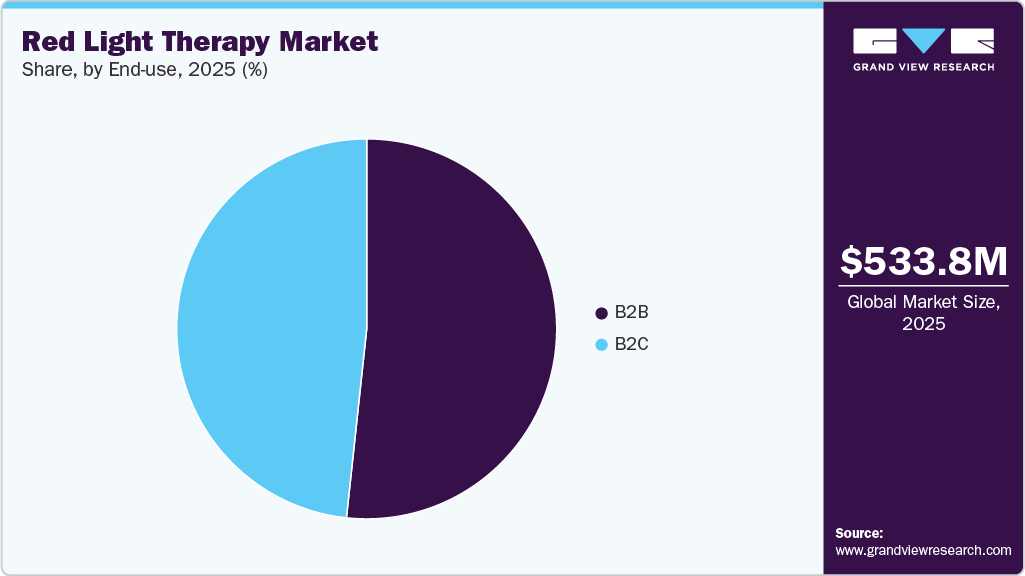
The B2C segmentis anticipated to grow at the fastest CAGR over the forecast period. Rapid adoption of at-home red light therapy devices for skincare, wellness, and pain-relief applications highlights the growth of the segment. Consumers are increasingly seeking convenient, non-invasive treatments that can be used without visiting clinics or wellness centers, which has accelerated demand for portable devices such as LED face masks, handheld wands, and compact therapy panels. The rise of beauty technology brands, influencer-driven marketing, and growing consumer awareness of photobiomodulation benefits, such as collagen stimulation and acne reduction, are further supporting the expansion of the consumer segment. In addition, companies are actively launching new at-home devices to strengthen their direct-to-consumer presence. For instance, in January 2026, Wavytalk launched the Glow Time LED Mask, a clinically tested red and near-infrared light therapy device designed specifically for home skincare routines and made available through consumer retail platforms such as Amazon. These types of product launches highlight the increasing focus on direct-to-consumer solutions, which are expected to continue driving the growth of the B2C segment.
Regional Insights
The red light therapymarket in North Americaaccounted for the revenue share of 44.6% in 2025. The growth is primarily driven by strong clinical adoption in dermatology clinics, rehabilitation centers, and wellness facilities across the region. The region benefits from advanced healthcare infrastructure, high consumer awareness of non-invasive treatments, and increasing use of photobiomodulation therapies for conditions such as acne, psoriasis, muscle pain, and seasonal affective disorder (SAD). In the U.S., the National Institute of Mental Health estimates that around 10 million Americans experience seasonal affective disorder each year, which has contributed to growing demand for light-based therapies used for mood regulation and circadian rhythm management. In addition, dermatology and rehabilitation clinics across North America are increasingly integrating LED-based light therapy systems for skin rejuvenation and pain management treatments, reflecting the region’s strong focus on preventive healthcare and wellness technologies.
U.S. Red Light Therapy Market Trends
The U.S.red light therapy market is being reshaped by robust healthcare infrastructure, strong regulatory oversight, and growing clinical research supporting photobiomodulation therapies. Hospitals, dermatology clinics, and rehabilitation centers in the country increasingly adopt light-based therapeutic devices due to the country’s advanced medical device ecosystem and the regulatory framework established by the U.S. Food and Drug Administration, which classifies many photobiomodulation systems as Class II medical devices requiring safety and effectiveness evaluation. This regulatory structure has encouraged manufacturers to develop clinically validated devices for therapeutic use. For example, in November 2024, the FDA authorized the Valeda Light Delivery System developed by LumiThera, marking the first light-based treatment approved to improve vision loss associated with dry age-related macular degeneration.
Europe Red Light Therapy Market Trends
The red light therapy (RLT)market in Europe held the second-largest revenue market share during the year 2025. The growth is driven by the region’s strong dermatology infrastructure, increasing preference for non-invasive aesthetic treatments, and supportive medical device regulatory frameworks. European countries have a well-established network of dermatology clinics and physiotherapy centers that increasingly incorporate photobiomodulation technologies for applications including acne treatment, wound healing, and pain management. In addition, clinical adoption is supported by national treatment guidelines in several European countries where phototherapy is widely used to treat skin conditions such as psoriasis and chronic inflammatory disorders, particularly in hospital and outpatient dermatology units.
The Germany red light therapy market held the largest market share of 17.5% in Europe in 2025, mainly attributed to various factors, such as the country’s strong medical research ecosystem and widespread adoption of phototherapy treatments in clinical practice. Germany has numerous university hospitals and dermatology centers that actively conduct research on photobiomodulation and light-based therapies for wound healing, skin disorders, and tissue regeneration.
The red light therapy marketin France is supported by the increasing adoption of non-invasive aesthetic treatments and the presence of specialized phototherapy centers. French hospitals and dermatology institutes have actively explored photobiomodulation technologies for wound healing, skin regeneration, and the treatment-related side effects in cancer patients, thereby strengthening clinical acceptance of light-based therapies. In July 2023, a clinical study published in the journal Skin Research and Technology reported growing research activity in France around photobiomodulation therapies. The study, conducted by French researchers in collaboration with companies such as Lucibel Group and dermatology experts in France, demonstrated that red LED photobiomodulation treatments could measurably improve signs of facial skin aging, supporting the increasing use of light-based therapies in the country’s dermatology and aesthetic medicine sector.
Asia Pacific Red Light Therapy Market Trends
The red light therapy (RLT)market in theAsia Pacific is anticipated to grow with the fastest CAGR of 10.5% during the forecast period. The growth is attributed to the region’s expanding dermatology and wellness sectors, rising disposable income, and increasing adoption of non-invasive therapeutic technologies. In addition, the rapid expansion of medical spas and wellness tourism across Southeast Asia has encouraged the use of red light therapy as part of holistic skincare and recovery treatments offered by wellness clinics and boutique aesthetic centers. These factors drive the growth of the market in the region.
The red light therapy market growth in China is attributed to the country’s strong biomedical research ecosystem and increasing integration of photobiomodulation technologies in hospitals and medical universities. China has seen a rise in clinical research on LED-based therapies for dermatology and regenerative medicine. For example, in October 2024, researchers at Chongqing Medical University reported that 830-nm LED photobiomodulation therapy significantly improved healing outcomes and reduced complications following cosmetic eyelid surgery (blepharoplasty), highlighting the growing use of red light therapy in China’s plastic surgery and dermatology practices. These types of developments reflect China’s strong clinical research activity and increasing adoption of light-based therapeutic technologies in healthcare and aesthetic medicine.
TheJapan red light therapy market is anticipated to grow at the significant rate during the forecast period. supported by the country’s strong biomedical research ecosystem, aging population, and widespread adoption of non-invasive healthcare technologies. Japan has been actively conducting clinical and laboratory research on photobiomodulation (PBM) for applications such as wound healing, dermatology, and neurological disorders. For example, in June 2025, researchers from Aichi Gakuin University published a study demonstrating that low-power LED photobiomodulation significantly enhanced metabolic activity in endothelial cells, supporting its potential role in tissue repair and regenerative medicine.
Latin America Red Light Therapy Market Trends
The red light therapy (RLT)market in Latin America is expected to witness a lucrative growth during the forecast period. Countries in the region are major hubs for cosmetic procedures due to a high acceptance of beauty enhancement treatments and a growing medical tourism industry. In addition, the region has seen rapid growth in specialized aesthetic clinics; for example, Brazil had large number of aesthetic clinics and professionals working in the aesthetic sector, which is increasing accessibility to skin rejuvenation procedures and driving market growth across Latin America.
The Brazil red light therapy market is supported by the country’s strong aesthetic culture, increasing dermatology clinic networks, and regulatory oversight from the Brazilian Health Regulatory Agency (ANVISA), which evaluates and approves medical and aesthetic devices before commercialization. Moreover, Brazil is among the world’s largest beauty and hair-care markets, which further drives demand for non-invasive technologies such as red light therapy across dermatology and aesthetic clinics.
Middle East & Africa Red Light Therapy Market Trends
The red-light therapy industry in the Middle East & Africa is driven by the rising demand for non-invasive wellness and aesthetic treatments, expanding medical spa infrastructure, and increasing consumer awareness of light-based therapies for skin health and recovery. In addition, the region’s strong wellness tourism industry is encouraging clinics to adopt advanced technologies such as red light therapy as part of holistic beauty and anti-aging services. Furthermore, consumers' rising adoption of RLT devices and related treatments across the region is driving the market growth.
The Saudi Arabia red light therapy market is driven by the growing healthcare infrastructure and technological advancements. Dermatology and aesthetic clinics across major cities, such as Riyadh and Jeddah, are increasingly adopting photobiomodulation and LED-based therapies for conditions including acne, pigmentation, and skin rejuvenation. The rising preference for minimally invasive procedures in Saudi Arabia is also accelerating the adoption of red light therapy technologies across dermatology and aesthetic medicine practices.
Key Red Light Therapy Company Insight
The red light therapy (RLT) market is highly competitive, with several established medical device manufacturers and emerging wellness technology companies. Major players in the market are focusing on expanding their geographical footprint to capitalize on the rising demand for non-invasive therapeutic and wellness solutions. Companies are increasingly forming strategic partnerships with dermatology clinics, wellness centers, physiotherapy facilities, and aesthetic clinics to broaden the adoption of red light therapy devices across both medical and consumer segments.
Key Red Light Therapy Companies:
The following key companies have been profiled for this study on the red light therapy market.
- Mito Red Light
- LightStim
- Joovv, Inc.
- Therabody
- Currentbody
- NovoTHOR
- TheraLight
- EZ-Therapylight
- Sunglor
- Omnilux
- Solawave
- Medicube
Recent Development
-
In November 2025, JOVS launched the world’s first FDA-cleared laser therapy mask designed for at-home anti-aging treatments. The device integrates laser-based red light technology to target skin aging, wrinkles, and pigmentation, expanding the use of photobiomodulation in consumer skincare devices.
-
In October 2025, RENPHO announced the launch of the RENPHO REJUVEN ARTEMIS LED Light Therapy Mask, marking the company’s expansion into beauty technology. The FDA-cleared device, priced under USD 200, was designed to deliver professional-grade red, blue, and near-infrared light therapy for concerns such as acne, fine lines, and uneven skin tone in an at-home format.
-
In September 2025, Sunsred launched a new line of FDA-cleared red light therapy devices aimed at global wellness and beauty brands. These devices are designed for applications such as skin rejuvenation, muscle recovery, and pain management, supporting the expansion of red light therapy solutions across the consumer health and aesthetic markets.
Red Light Therapy Market Report Scope
Report Attribute
Details
Market size value in 2026
USD 587.5 million
Revenue forecast in 2033
USD 1,133.1 million
Growth rate
CAGR of 9.8% from 2026 to 2033
Base year for estimation
2025
Historical data
2021 - 2024
Forecast period
2026 - 2033
Quantitative units
Revenue in USD million and CAGR from 2026 to 2033
Report coverage
Revenue forecast, company ranking, competitive landscape, growth factors, and trends
Segments covered
Product, application, device category, end-use,region
Regional scope
North America; Europe; Asia Pacific; Latin America; Middle East & Africa
Country scope
U.S.; Canada; Mexico; UK; Germany; France; Italy; Spain; Denmark; Sweden; Norway: Japan; China India; Australia; Thailand; South Korea; Brazil; Argentina; South Africa; Saudi Arabia; UAE; Kuwait
Key companies profiled
Mito Red Light; LightStim; Joovv, Inc.; Therabody; Currentbody; NovoTHOR; TheraLight; EZ-Therapylight; Sunglor; Omnilux; Solawave; Medicube
Customization scope
Free report customization (equivalent up to 8 analyst’s working days) with purchase. Addition or alteration to country, regional, and segment scope
Pricing and purchase options
Avail customized purchase options to meet your exact research needs. Explore purchase options
Global Red Light Therapy Market Report Segmentation
This report forecasts revenue growth at global levels and provides an analysis of the latest industry trends in each of the sub-segments from 2021 to 2033. Forthis study, Grand View Research has segmented the global red light therapy market report based on product, application, device category, end-use, and region:
-
Product Outlook (Revenue, USD Million, 2021 - 2033)
-
Face Mask
-
Hair Cap/Hair Helmets
-
Wands
-
Panels
-
Beds/Pods
-
Others
-
-
Application Outlook (Revenue, USD Million, 2021 - 2033)
-
Muscle Recovery & Medical applications
-
Cosmetic
-
Skin Health
-
Hair health
-
-
-
Device Category Outlook (Revenue, USD Million, 2021 - 2033)
-
Premium
-
Budget-friendly
-
-
End-use Outlook (Revenue, USD Million, 2021 - 2033)
-
B2B
-
B2C
-
-
Regional Outlook (Revenue, USD Million, 2021 - 2033)
-
North America
-
U.S.
-
Canada
-
Mexico
-
-
Europe
-
Germany
-
UK
-
France
-
Italy
-
Spain
-
Denmark
-
Sweden
-
Norway
-
-
Asia Pacific
-
China
-
Japan
-
India
-
South Korea
-
Australia
-
Thailand
-
-
Latin America
-
Brazil
-
Argentina
-
-
Middle East and Africa (MEA)
-
South Africa
-
Saudi Arabia
-
UAE
-
Kuwait
-
-
Frequently Asked Questions About This Report
b. The global red light therapy market size was estimated at USD 533.8 million in 2025 and is expected to reach USD 587.5 million in 2026.
b. The global red light therapy market is expected to grow at a compound annual growth rate of 9.8% from 2026 to 2033 to reach USD 1,133.1 million by 2033.
b. North America dominated the global red-light therapy market with a share of 44.6% in 2025. The growth is primarily driven by strong clinical adoption in dermatology clinics, rehabilitation centers, and wellness facilities across countries.
b. Some key players operating in the red-light therapy market include Mito Red Light, LightStim, Joovv, Inc., Therabody, Currentbody, NovoTHOR, TheraLight, EZ- Therapylight, Sunglor, Omnilux, Solawave, and Medicube, among others.
b. Key factors are driving the red-light therapy market growth include the rising demand for non-invasive treatments for skin care, pain management, and wellness, along with increasing adoption of home-use therapy devices.


Share this report with your colleague or friend.
Need a Tailored Report?
Customize this report to your needs — add regions, segments, or data points, with 20% free customization.


ISO 9001:2015 & 27001:2022 Certified
We are GDPR and CCPA compliant! Your transaction & personal information is safe and secure. For more details, please read our privacy policy.
Trusted market insights - try a free sample
See how our reports are structured and why industry leaders rely on Grand View Research. Get a free sample or ask us to tailor this report to your needs.