- Home
- »
- Water & Sludge Treatment
- »
-
Produced Water Treatment Market, Industry Report, 2033GVR Report cover
![Produced Water Treatment Market Size, Share & Trends Report]()
Produced Water Treatment Market (2026 - 2033) Size, Share & Trends Analysis Report By Treatment (Physical Treatment, Chemical Treatment, Biological Treatment), By Application (Onshore, Offshore), By Region, And Segment Forecasts
- Report ID: GVR-1-68038-273-0
- Number of Report Pages: 100
- Format: PDF
- Historical Range: 2021 - 2025
- Forecast Period: 2026 - 2033
- Industry: Bulk Chemicals
- Report Summary
- Table of Contents
- Segmentation
- Methodology
- Download FREE Sample
-
 Download Sample Report
Produced Water Treatment Market Summary
The global produced water treatment market size was estimated at USD 9,331.5 million in 2025 and is projected to reach USD 16,479.2 million by 2033, growing at a CAGR of 7.5% from 2026 to 2033. The produced water treatment market is mainly driven by the rapid expansion of oil and gas exploration and production activities worldwide.
Key Market Trends & Insights
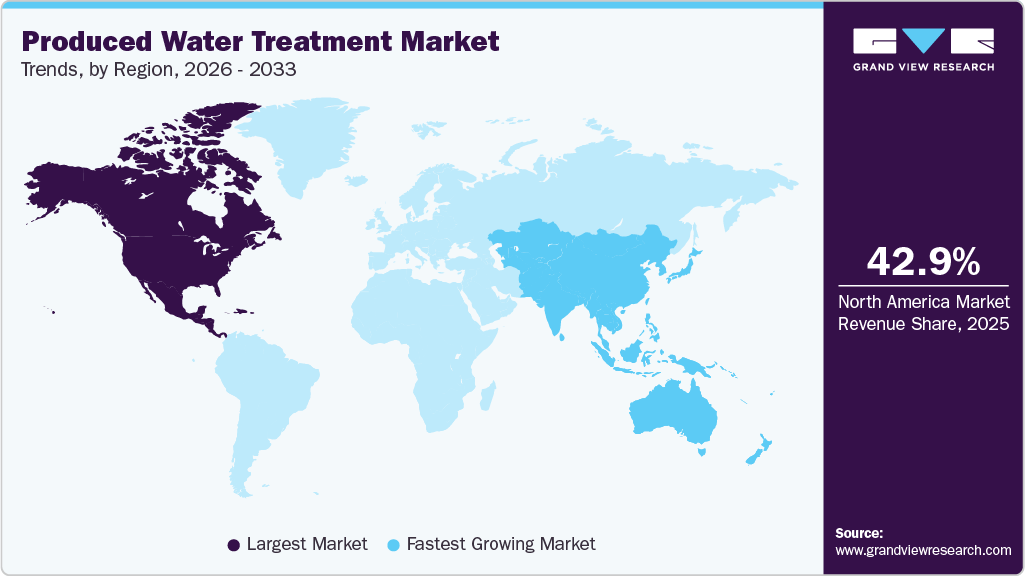
- North AIn 2025, North America accounted for the largest share of the produced water treatment market, contributing 42.9% of the total revenue.
- The biological treatment segment, based on treatment type, is projected to expand at a notable CAGR of 8.0% from 2026 to 2033 in terms of revenue.
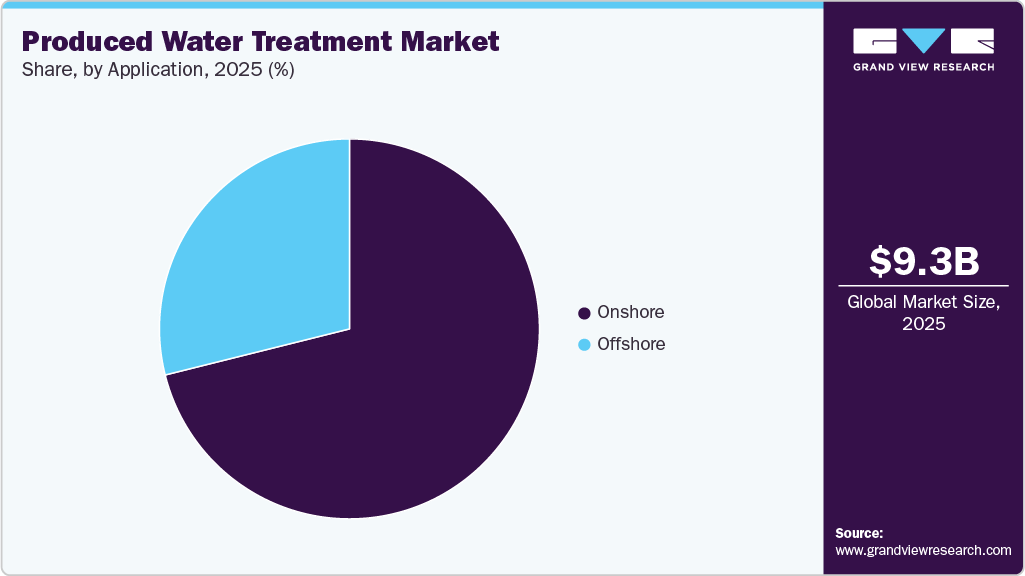
- By application, the onshore segment held the leading position in 2025, capturing 71.1% of the market share.
Market Size & Forecast
- 2025 Market Size: USD 9,331.5 Million
- 2033 Projected Market Size: USD 16,479.2 Million
- CAGR (2026-2033): 7.5%
- North America: Largest market in 2025
- Asia Pacific: Fastest growing region
As conventional reservoirs decline, companies are increasingly developing unconventional resources such as shale gas and tight oil, which generate large volumes of produced water during extraction. The produced water treatment market is largely driven by strict environmental regulations governing wastewater discharge from oil and gas operations. Produced water often contains oil, chemicals, and dissolved solids, requiring treatment before disposal to prevent environmental damage. For example, the U.S. Environmental Protection Agency mandates that discharged produced water must contain less than 15 mg/liter of oil. In addition, rising global water scarcity is increasing regulatory pressure, with the United Nations estimating that around 700 million people may face severe water shortages by 2030. These factors are accelerating the adoption of solutions within the produced water treatment technologies market, while also supporting growth in the broader water and wastewater treatment market.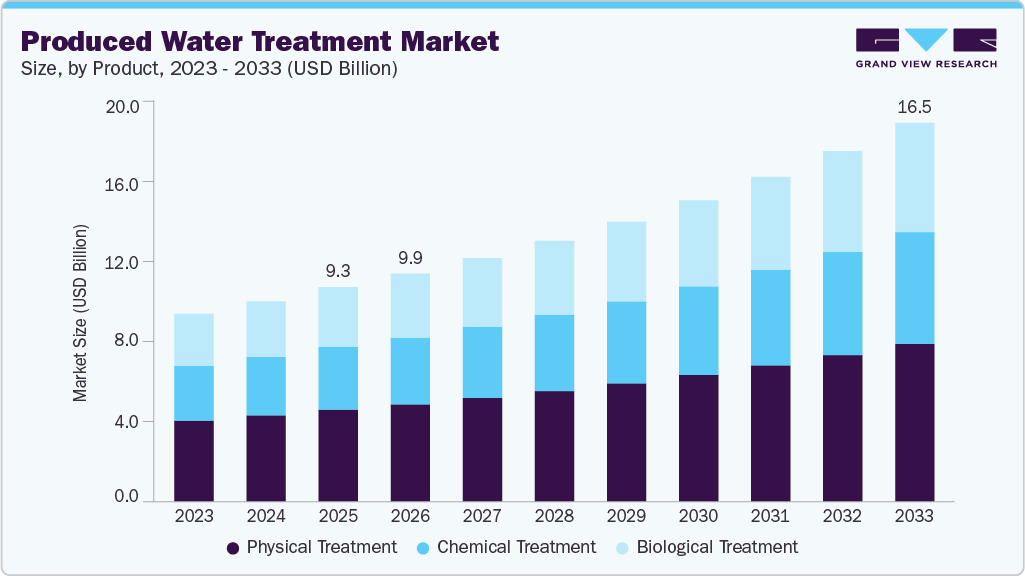
Increasing oil and gas exploration and drilling activities worldwide are also generating large volumes of produced water, driving the need for effective treatment solutions. Chemicals used during drilling further contaminate the water, making treatment essential before discharge or reuse. For instance, in December 2023, ExxonMobil submitted a development plan in Guyana involving the exploration of 35 wells between 2023 and 2027. Such developments are increasing the demand for specialized solutions within the produced water treatment systems market
Market Concentration & Characteristics
The produced water treatment market is consolidated, with a mix of large multinational companies and specialized water treatment technology providers competing in the industry. Major players focus on advanced filtration, membrane separation, chemical treatment, and integrated water management solutions to strengthen their market presence. Companies are also investing in strategic partnerships, technology development, and acquisitions to expand their capabilities and geographic reach.
Stringent environmental regulations governing the disposal and treatment of produced water, particularly in industries such as oil and gas, are driving the demand for innovative treatment solutions. These regulations mandate the reduction of harmful contaminants and the protection of ecosystems, spurring investment in advanced treatment technologies such as membrane filtration, electrocoagulation, and chemical treatment processes. As a result, companies are investing in innovative treatment methods to ensure compliance while improving operational efficiency. This regulatory pressure is also supporting technological development within the produced water treatment technologies market and the broader water and wastewater treatment market.
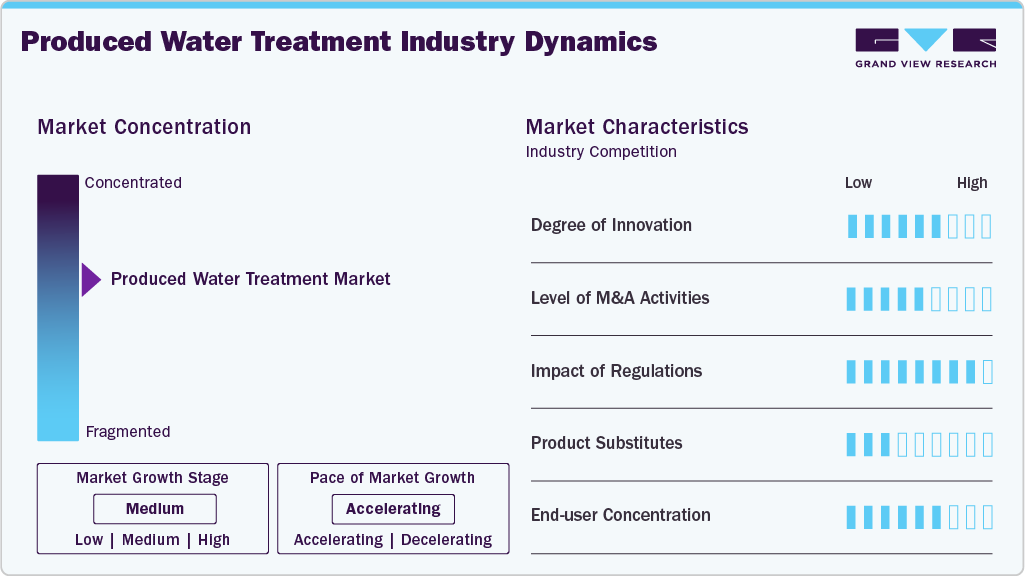
The degree of innovation within the market is significantly influenced by various factors, including technological advancements, market demand, and regulatory requirements. Furthermore, increasing awareness of water scarcity and environmental concerns fuels market demand for innovative solutions that minimize freshwater usage, reduce energy consumption, and mitigate environmental impact. This demand, coupled with regulatory mandates, fosters a competitive landscape where companies strive to differentiate themselves through technological innovation.
The end-user concentration for the produced water treatment industry, particularly in industries like oil and gas, significantly influences market dynamics and innovation. Low to moderate concentration among major operators and service providers fosters strategic partnerships, driving the development of tailored solutions to meet specific industry needs. This concentration can create barriers to entry for new competitors while incentivizing existing players to continuously innovate to maintain competitiveness.
Drivers, Opportunities & Restraints
The produced water treatment market is primarily driven by increasing oil and gas exploration activities and the large volumes of wastewater generated during drilling and production. Produced water often contains hydrocarbons, chemicals, and dissolved solids, making treatment essential before disposal or reuse. In addition, strict environmental regulations related to wastewater discharge and increasing concerns over water contamination are encouraging operators to adopt advanced solutions within the produced water treatment technologies market, contributing to growth across the broader water and wastewater treatment market.
Rising global water scarcity and the growing focus on water reuse are creating significant opportunities for produced water treatment solutions. Oil and gas companies are increasingly investing in technologies that allow treated produced water to be reused for drilling operations, industrial processes, or irrigation. Moreover, advancements in membrane filtration, biological treatment, and advanced oxidation technologies are expected to improve treatment efficiency and expanding applications across the industrial water treatment market.
High installation and operational costs associated with advanced produced water treatment systems act as a key challenge for the market. Treatment technologies often require significant capital investment, specialized infrastructure, and ongoing maintenance. In addition, the complexity of produced water composition, which varies depending on the oilfield and extraction method, can make treatment processes more difficult and increase operational costs for oil and gas operators.
Treatment Insights
Physical treatment dominated the produced water treatment market in 2025 with 42.9% share, due to its widespread use as the primary step for removing suspended solids, oil droplets, and other contaminants from produced water. Technologies such as filtration and flotation are commonly deployed across oil and gas facilities because they are reliable, cost-effective, and capable of handling large volumes of wastewater generated during drilling and production activities. The strong adoption of these systems in both onshore and offshore operations has contributed to the segment’s leading market share.
Biological treatment is expected to register the fastest growth during the forecast period at CAGR of 8.0%, as companies increasingly focus on sustainable and efficient water treatment methods. Biological processes help break down dissolved organic compounds and other complex contaminants that are difficult to remove through conventional physical or chemical methods. Growing environmental regulations, rising interest in water reuse, and advancements in biological treatment technologies are driving the rapid adoption of this segment in produced water management.
Application Insights
The onshore segment continues to hold a major share and accounted for 71.1% in 2025, due to the large number of onshore oil and gas fields and continuous drilling programs worldwide. Onshore operations generate substantial quantities of produced water that require treatment before disposal or reuse. For instance, in February 2026, the North American rig count increased by three rigs to reach 778 rigs, which includes 546 rigs in the U.S. and 232 in Canada. The rise in onshore drilling activity is expected to increase produced water volumes, thereby strengthening the demand for produced water treatment market.
The offshore segment is expected to witness strong growth due to increasing investments in deepwater and offshore oil and gas developments. Produced water generated from offshore platforms must be treated before discharge or reinjection, creating significant demand for treatment technologies. For instance, in December 2024, Shell approved the USD 5 billion Bonga North deepwater project offshore Nigeria, which involves drilling 16 wells and upgrading subsea infrastructure connected to the Bonga FPSO facility. The project is expected to produce up to 110,000 barrels of oil per day, increasing offshore production and associated produced water volumes.
Regional Insights
North America Produced Water Treatment Market Trends
North America held the largest share of the produced water treatment systems market in 2025, accounting for 42.9% of the total market, supported by extensive oil and gas production across the U.S. and Canada. The region has a strong presence of major shale basins such as the Permian Basin, Bakken, and Eagle Ford, which generate substantial volumes of produced water during extraction. Within the produced water treatment technologies market, operators are increasingly adopting advanced solutions to manage large wastewater volumes generated from drilling operations. In addition, strict environmental regulations on wastewater disposal and the growing emphasis on water recycling are further driving demand across the broader water and wastewater treatment market.
The U.S. leads the produced water treatment market in North America due to extensive shale oil and gas production and large upstream investments. Major basins such as the Permian Basin generate significant volumes of produced water during drilling and hydraulic fracturing operations, increasing the need for advanced water management systems. For instance, Chevron announced a capital expenditure budget of around USD 16 billion for 2024, with nearly USD 14 billion allocated to upstream operations, including about USD 6.5 billion for U.S. shale development and roughly USD 5 billion for the Permian Basin. Such large investments in shale exploration and production activities continue to increase produced water volumes, driving the demand for treatment and recycling technologies in the country.
Canada is experiencing steady growth in the produced water treatment market due to increasing oil sands and conventional oil production, particularly in provinces such as Alberta and Saskatchewan. Oil sands extraction generates large volumes of wastewater that require treatment before reuse or disposal, supporting the demand for advanced treatment solutions. In addition, stricter environmental regulations and growing emphasis on sustainable water management in upstream operations are encouraging oil and gas operators to invest in efficient produced water treatment technologies across the country.
Europe Produced Water Treatment Market Trends
Europe is experiencing steady growth in the produced water treatment market, largely driven by offshore oil and gas activities in the North Sea. Countries including the UK and Norway are investing in improved water management practices to reduce the environmental impact of offshore production. The region also emphasizes sustainable water treatment solutions and strict compliance with environmental regulations, which is supporting the adoption of advanced treatment technologies.
Russia holds a leading position in the produced water treatment market in Europe due to its extensive oil and gas production and large number of mature oilfields. Many of these aging fields generate substantial volumes of produced water during extraction, increasing the need for efficient water management and treatment solutions. In addition, ongoing investments in oilfield modernization and enhanced oil recovery techniques are contributing to higher produced water generation, which is driving the adoption of advanced treatment technologies across the country.
The UK is witnessing steady growth in the produced water treatment market, primarily supported by offshore oil and gas activities in the North Sea. Operators in the region are increasingly focusing on improving water management practices and reducing environmental impacts associated with offshore production. Furthermore, strict regulatory standards for wastewater discharge and increasing investments in extending the life of mature offshore fields are encouraging the adoption of advanced produced water treatment systems in the country.
Asia Pacific Produced Water Treatment Market Trends
Asia Pacific is expected to register the fastest growth during the forecast period due to rising energy demand and increasing investments in oil and gas exploration activities. Countries such as China, India, Indonesia and Australia are expanding both onshore and offshore production to strengthen domestic energy security. In addition, growing environmental awareness and tightening wastewater discharge standards are encouraging operators to deploy advanced produced water treatment in the region.
China holds a significant share in the Asia Pacific produced water treatment market due to its large-scale oil and gas production and continuous efforts to enhance domestic energy output. Major oilfields such as Daqing and Shengli generate substantial volumes of produced water during extraction, increasing the need for effective treatment and recycling systems. In addition, the government’s focus on improving environmental protection and wastewater management in the energy sector is encouraging oil and gas operators to adopt advanced produced water treatment technologies.
Indonesia is experiencing steady growth in the produced water treatment market driven by expanding upstream oil and gas activities and increasing offshore developments. The country continues to invest in exploration and production projects to strengthen its energy security and boost hydrocarbon output. Rising environmental concerns and stricter regulations on wastewater discharge are also encouraging operators to implement efficient produced water treatment solutions in both onshore and offshore oilfields.
Latin America Global Produced Water Treatment Market Trends
Latin America is witnessing gradual growth due to expanding oil and gas production in countries such as Brazil, Argentina, and Venezuela. Large offshore discoveries and ongoing exploration programs are increasing the volume of produced water that requires treatment before discharge or reinjection. In addition, government initiatives to enhance domestic energy production and investments by international oil companies are supporting the demand for produced water treatment solutions across the region.
Brazil is a key market for produced water treatment in Latin America, supported by its extensive offshore oil production in the pre-salt basins. Large deepwater and ultra-deepwater projects operated by Petrobras and international oil companies generate significant volumes of produced water during extraction. As offshore production continues to expand, the need for efficient treatment systems to manage and discharge produced water in compliance with environmental regulations is increasing.
Middle East & Africa Global Produced Water Treatment Market Trends
The Middle East & Africa region is also experiencing notable growth due to the presence of vast oil reserves and continuous upstream development projects. Countries such as Saudi Arabia, the UAE, and Kuwait are increasing oil production capacity, which leads to higher volumes of produced water requiring treatment.
Saudi Arabia represents a key market for produced water treatment in the Middle East & Africa due to its large-scale oil production and extensive upstream operations. Mature oilfields in the country generate substantial volumes of produced water that require effective treatment before reinjection or disposal. In addition, ongoing investments by Saudi Aramco to expand production capacity and improve water management practices are supporting the adoption of advanced produced water treatment technologies.
Key Produced Water Treatment Company Insights
Some of the key players operating in the market include SLB, Baker Hughes, and Halliburton.
-
SLB is a global technology company that provides advanced solutions and services for the energy industry. Formerly known as Schlumberger, the company focuses on technologies for reservoir characterization, drilling, production, and processing to support oil and gas operations worldwide. SLB operates in more than 100 countries and combines engineering, digital technologies, and data-driven solutions to improve energy production efficiency while reducing environmental impact. The company is also expanding its capabilities in areas such as carbon capture, geothermal energy, and other low-carbon technologies to support the global energy transition.
-
Baker Hughes is an international energy technology company that provides a wide range of equipment, services, and digital solutions to support the oil and gas, energy, and industrial sectors. Headquartered in Houston, the company operates across more than 120 countries and focuses on improving efficiency across exploration, drilling, production, and energy processing activities. Its business portfolio includes oilfield services, subsea systems, turbomachinery, and industrial equipment, along with digital technologies for monitoring and optimization. In addition to conventional energy operations, the company is expanding its capabilities in areas such as hydrogen, carbon capture, and geothermal energy to support evolving energy industry needs.
Key Produced Water Treatment Companies:
The following key companies have been profiled for this study on the produced water treatment market
- SLB
- Baker Hughes
- Halliburton
- TechnipFMC
- Veolia Environnement
- Siemens Energy
- Aker Solutions
- Aquatech International
- Frames Group
- Weatherford International
- Ovivo
- Mineral Technologies
- Enviro-Tech Systems
- CETCO Energy Services
- Cannon Artes S.P.A.
Recent Developments
-
In March 2025, Baker Hughes signed a multi-year agreement with Petrobras to supply integrated completion technologies for deepwater fields offshore Brazil. The systems will enable real-time monitoring and improved control of well performance. These solutions are designed to enhance production efficiency across Petrobras’ offshore operations. The project reflects the company’s expanding role in deepwater oil and gas developments.
-
In February 2025, Halliburton Labs partnered with technology company Espiku to advance innovative produced water recycling solutions for oilfield operations. The collaboration focuses on developing modular treatment units capable of recycling produced water directly at the wellhead and extracting valuable minerals such as lithium and manganese. A pilot project is planned in the Permian Basin to test the technology in real operating conditions.
Produced Water Treatment Market Report Scope
Report Attribute
Details
Market size value in 2026
USD 9,914.3 million
Revenue forecast in 2033
USD 16,479.2 million
Growth rate
CAGR of 7.5% from 2026 to 2033
Historical data
2021 - 2025
Forecast period
2026 - 2033
Quantitative units
Revenue in USD million/billion and CAGR from 2026 to 2033
Report coverage
Revenue forecast, company ranking, competitive landscape, growth factors, and trends
Segments covered
Treatment, application, region
Country scope
U.S., Canada, Mexico, Netherlands, Norway, Italy, Denmark, UK, Russia, China, Indonesia, India, Malaysia, Australia, Argentina, Brazil, Venezuela, Saudi Arabia, Iran, Iraq, Algeria Kuwait, Nigeria, UAE
Key companies profiled
SLB; Baker Hughes; Halliburton; TechnipFMC; Veolia Environnement; Siemens Energy; Aker Solutions; Aquatech International; Frames Group; Weatherford International; Ovivo; Mineral Technologies; Enviro-Tech Systems; CETCO Energy Services; Cannon Artes S.P.A.
Customization scope
Free report customization (equivalent up to 8 analysts working days) with purchase. Addition or alteration to country, regional & segment scope.
Pricing and purchase options
Avail customized purchase options to meet your exact research needs. Explore purchase options
Global Produced Water Treatment Market Report Segmentation
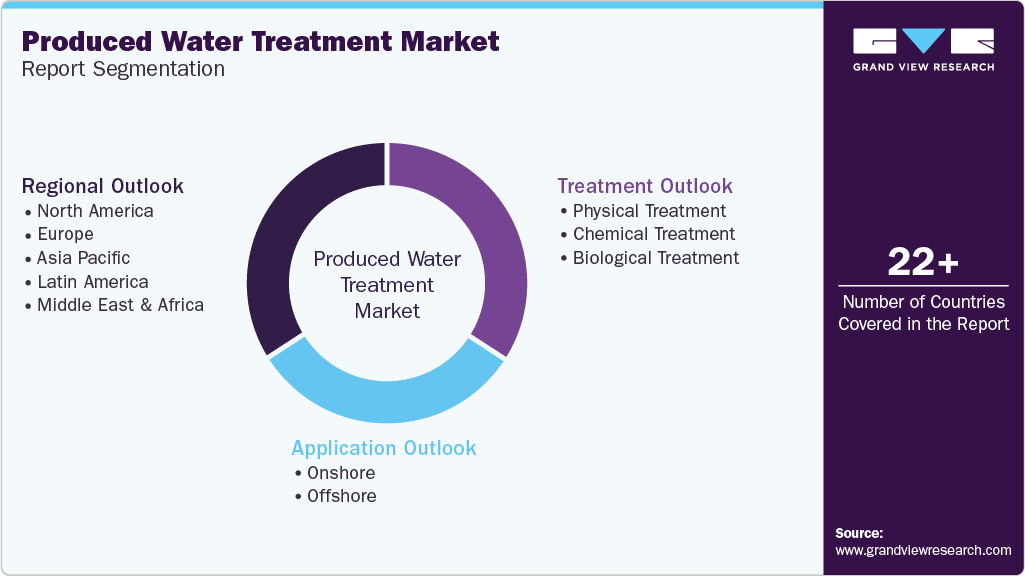
This report forecasts revenue growth at global, regional, and country levels and provides an analysis of the latest industry trends in each of the sub-segments from 2021 to 2033. For this study, Grand View Research has segmented the produced water treatment market report based on treatment, application, and region.
-
Treatment Outlook (Revenue, USD Million, 2021 - 2033)
-
Physical Treatment
-
Filtration
-
Flotation
-
Other
-
-
Chemical Treatment
-
Precipitation
-
Oxidation
-
Other
-
-
Biological Treatment
-
-
Application Outlook (Revenue, USD Million, 2021 - 2033)
-
Onshore
-
Offshore
-
-
Region Outlook (Revenue, USD Million, 2021 - 2033)
-
North America
-
U.S.
-
Canada
-
Mexico
-
-
Europe
-
Norway
-
Netherlands
-
Italy
-
Denmark
-
UK
-
Russia
-
-
Asia Pacific
-
China
-
India
-
Indonesia
-
Malaysia
-
Australia
-
-
Latin America
-
Brazil
-
Argentina
-
Venezuela
-
-
Middle East & Africa
-
Saudi Arabia
-
UAE
-
Iran
-
Iraq
-
Algeria
-
Kuwait
-
Nigeria
-
-
Frequently Asked Questions About This Report
b. The global produced water treatment market size was estimated at USD 9,331.5 million in 2025 and is expected to be USD 9,914.3 million in 2026.
b. The global produced water treatment market, in terms of revenue, is expected to grow at a compound annual growth rate of 7.5% from 2026 to 2033 to reach USD 16,479.2 million by 2033.
b. North America held the largest share of the produced water treatment market in 2025 and accounted for 42.9% share, supported by extensive oil and gas production activities across the U.S. and Canada. The region has a high concentration of shale plays such as the Permian Basin, Bakken, and Eagle Ford, which generate significant volumes of produced water during extraction.
b. Some of the key players operating in the produced water treatment market include SLB; Baker Hughes; Halliburton; TechnipFMC; Veolia Environnement; Siemens Energy; Aker Solutions; Aquatech International; Frames Group; Weatherford International; Ovivo; Mineral Technologies; Enviro-Tech Systems; CETCO Energy Services; Cannon Artes S.P.A.
b. The produced water treatment market is driven by increasing oil and gas exploration activities that generate large volumes of wastewater during extraction. In addition, strict environmental regulations regarding wastewater discharge and the growing need for water reuse in oilfield operations are encouraging the adoption of advanced produced water treatment technologies.


Share this report with your colleague or friend.
Need a Tailored Report?
Customize this report to your needs — add regions, segments, or data points, with 20% free customization.


ISO 9001:2015 & 27001:2022 Certified
We are GDPR and CCPA compliant! Your transaction & personal information is safe and secure. For more details, please read our privacy policy.
Trusted market insights - try a free sample
See how our reports are structured and why industry leaders rely on Grand View Research. Get a free sample or ask us to tailor this report to your needs.