- Home
- »
- Biotechnology
- »
-
Primary Cell Culture Market Size, Industry Report, 2033GVR Report cover
![Primary Cell Culture Market Size, Share & Trends Report]()
Primary Cell Culture Market (2026 - 2033) Size, Share & Trends Analysis Report By Product (Primary Cells, Media), By Cell Type (Human Cells, Animal Cells), By Application (Cell & Gene Therapy Development), By End Use, By Region, And Segment Forecasts
- Report ID: GVR-2-68038-590-8
- Number of Report Pages: 150
- Format: PDF
- Historical Range: 2021 - 2024
- Forecast Period: 2026 - 2033
- Industry: Healthcare
- Report Summary
- Table of Contents
- Interactive Charts
- Methodology
- Download FREE Sample
-
 Download Sample Report
Primary Cell Culture Market Summary
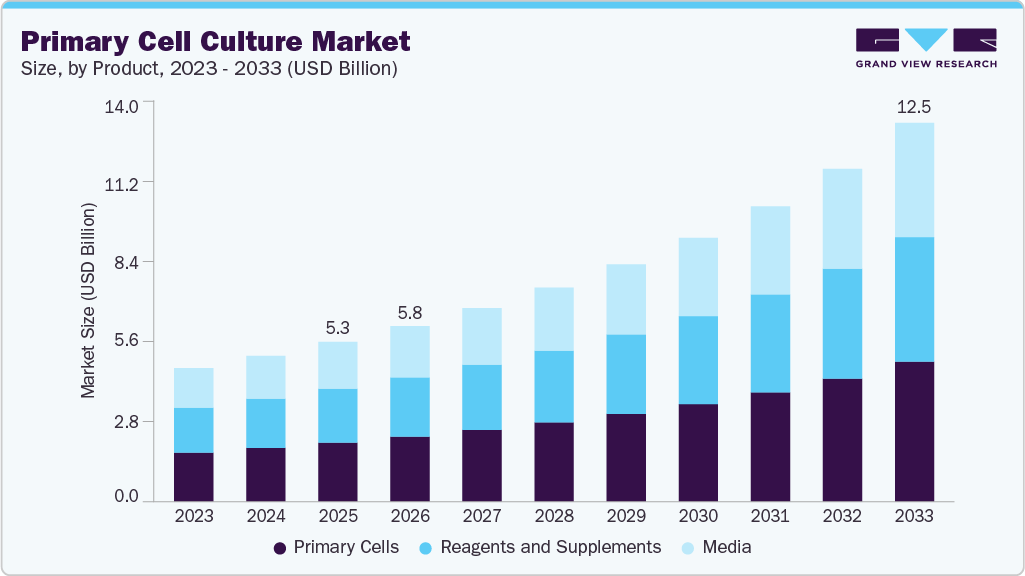
The global primary cell culture market size was estimated at USD 5.25 billion in 2025 and is projected to reach USD 12.45 billion by 2033, expanding at a CAGR of 11.6% from 2026 to 2033. The market expansion is largely driven by the rising burden of chronic diseases, increased government funding for cell-based research, and the continued growth of the pharmaceutical and biotechnology sectors.
Key Market Trends & Insights
- The North America primary cell culture market held the largest share of 41.83% of the global market in 2025.
- The primary cell culture industry in the U.S. is expected to grow at the fastest CAGR over the forecast period.
- By cell type, the human cells segment dominated the market with the largest revenue share in 2025.
- By application, the cell & gene therapy development segment dominated the market with a market share of 40.55% in 2025.
- By end use, the pharmaceutical and biopharmaceutical companies segment accounted for the largest revenue share of 47.97% in 2025.
Market Size & Forecast
- 2025 Market Size: USD 5.25 Billion
- 2033 Projected Market Size: USD 12.45 Billion
- CAGR (2026-2033): 11.6%
- North America: Largest market in 2025
- Asia Pacific: Fastest growing market
Rising usage of primary cell culture products in in-vitro testing and drug screening
The increasing demand for primary cell culture products in laboratory testing and drug evaluation processes drives market growth because these cells provide better human tissue simulation than permanent cell lines. The native genetic and functional characteristics of their cells enable more precise assessment of toxicity and efficacy, and mechanism-of-action research, which helps pharmaceutical and biotechnology companies decrease their costs associated with late-stage drug development and drug failure rates.
Cell-Based Screening Assay for Candidate Drugs
Cell type(s)
Model
Active compounds
MCF-7 cells / OR6M1-expressing cell lines
SPR chip with immobilized cells; modified carboxymethyl dextran sensor chip
Anthraquinone, rutin
DNA-PKcs and OCT4-expressing HEK-293FT cells / MK2 and OCT4-expressing NCI-H82 cells
384-well plate; two-step method using exogenous protein expression in cancer cells
Cardioglycoside; isocarbostyril alkaloid; cholesterol-based structures (three compounds)
Vero E6 cells
96-well plates; compounds pre-incubated followed by transfection with 2-E plasmids
34 hits with cell-protection activity
HeLa cells
24-well plates; compound treatment followed by intracellular Hsp90 labeling and in-gel fluorescence analysis after cell lysis
157 compounds; Morin
COS7 cells
Clean glass surface; single-protein tracking in living cells assessed by diffusion coefficient shifts using fluorescence microscopy
Hyperoside (EGFR, ErbB2); DiAB-141 and 2″-O-acetylvitexin (ErbB3)
COS-7 cells
96-well plates; cells seeded in a monolayer and compounds added to the culture medium
Blebbistatin, para-aminoblebbistatin, para-nitroblebbistatin, jasplakinolide, cytochalasin D, swinholide A
HEK293:FLP-In T-REx-BiFC#20 cells
384-well clear-bottom, black-walled microplates; cells seeded in monolayer and treated with compounds
Six compounds; Isocotoin
Source: Biophysics Report, Secondary Research, Grandview Resaerch.inc
This development is further supported by policies encouraging alternatives to animal testing and advances in cell extraction, cryopreservation, and culture media that improve cell quality and availability. Demand for culture products is also rising as primary cells are increasingly used in high-throughput screening, 3D cultures, and organ-on-chip models for preclinical research.
Increasing demand for stem cell therapy and regenerative medicine
The primary cell culture market expands because stem cell therapy and regenerative medicine show increasing demand, which requires high-quality primary cells to study the processes of differentiation, tissue repair, and cell interactions. The rising occurrence of chronic and degenerative illnesses leads to increased funding for regenerative research, which creates a higher demand for dedicated cell lines, specific growth media, and supplementary materials.
Expanding clinical pipelines and translational research further boost the adoption of primary cell culture products. Advances in cell processing, cryopreservation, and scalable culture systems have improved reliability and reproducibility, making primary cells essential for preclinical studies and stem cell therapy development.
Market Concentration & Characteristics
The primary cell culture industry shows major innovation because technological advancements, new materials, biotechnological developments, pharmaceutical innovations, and regenerative medicine applications bring about new scientific possibilities. Scientists are replacing traditional 2D culture methods with 3D systems that include scaffold-based systems, hydrogels, and spheroid/organoid cultures because 3D systems provide better simulation of real-life biological conditions.
The primary cell culture industry has experienced significant growth, driven by strategic collaborations and partnerships among key industry players. These alliances aim to enhance product offerings, streamline research and development, and accelerate the commercialization of innovative cell culture technologies.
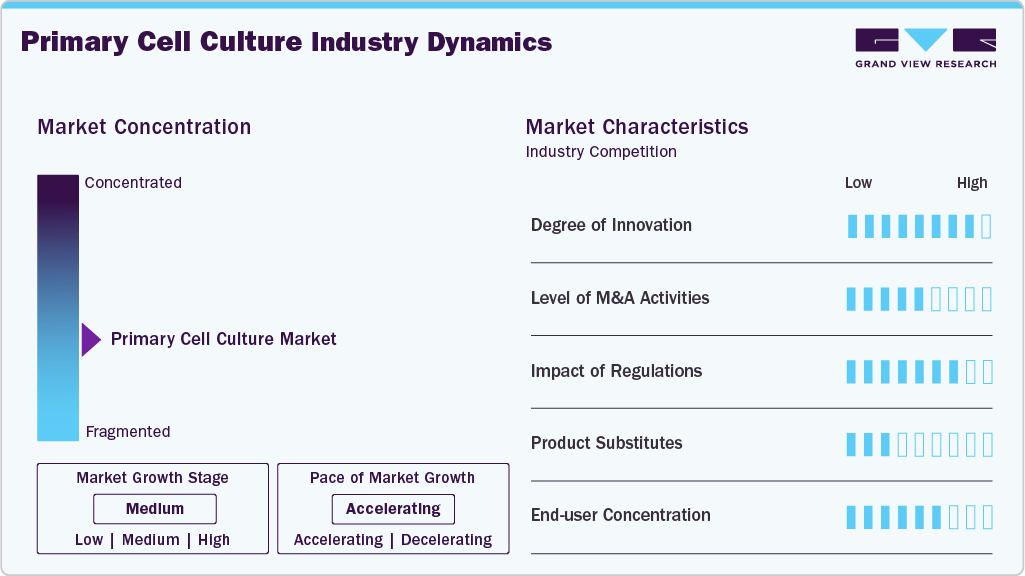
Regulatory guidelines are essential to guarantee the safety, effectiveness, and product quality of cell culture products, which researchers, drug developers, and clinical practitioners use in their work. The U.S. FDA and European Union require all organizations to follow Good Manufacturing Practices (GMP) when they develop primary cell culture products for therapeutic and research purposes.
The primary cell culture industry uses product expansion as its main strategy, which allows businesses to fulfill their customers' changing requirements while increasing their market presence and developing new applications for regenerative medicine and advanced cell-based research. For instance, in November 2023, ACROBiosystems launched GMP-grade DLL4, a recombinant Delta-like Ligand 4 used in stem cell manufacturing and one of the few offerings produced under GMP conditions.
The primary cell culture industry is witnessing strong regional expansion, reflecting rising demand and broader market penetration. For instance, in 2023, Fujifilm Corporation invested USD 200 million in cell therapy expansion, allocating funds to Fujifilm Cellular Dynamics for human induced pluripotent stem cells and to Fujifilm Diosynth Biotechnologies for biologics and advanced therapies manufacturing.
Product Insights
The primary cells segment held the largest revenue share of 37.01% in 2025, due to the widespread use in basic and translational research, high physiological relevance compared with immortalized cell lines, and increasing adoption in disease modeling, drug discovery, and toxicity testing. Growing demand for patient-derived cells to support personalized medicine approaches, coupled with rising academic and biopharmaceutical R&D funding, further reinforced the segment’s dominance.
The media segment is expected to grow fastest over the forecast period, driven by the fragile nature of primary cells and their reliance on optimized culture conditions. The availability of high-quality, cell-type-specific media supports consistent and reproducible research outcomes, contributing to strong demand within the primary cell culture market.
Cell Type Insights
The human cells segment dominated the market with the largest revenue share in 2025. Human cells enable accurate evaluation of disease mechanisms, drug efficacy, toxicity, and personalized therapies. The demand is further driven by their relevance in studying human-specific physiological and disease processes.
The animal cells segment is expected to grow rapidly over the forecast period, driven by increasing use of animal-origin primary cells in vaccine development and biomedical research. Scientists use well-characterized cells from mice, rats, and pigs due to these cells serve as essential models for their research on disease mechanisms, drug development, and toxicity testing. Growth is further supported by the broad availability of animal primary cell products from leading suppliers such as Lonza, Merck KGaA, and Thermo Fisher Scientific.
Application Insights
The cell and gene therapy development segment accounted for 40.55% of revenue in 2025, driven by the rapid expansion of regenerative medicine and growing demand for personalized therapies. These therapies, which rely on cell and gene modification to treat cancer, genetic, and autoimmune disorders, depend heavily on primary cell culture systems for development and manufacturing. For instance,in February 2025, Cellistic launched its Allo Chassis ready-to-use, immune-cloaked iPSC cell lines from CD34+ and CD4+ T cells-to accelerate cost-effective cell therapy development globally.
The model system segment is expected to register the fastest growth over the forecast period, driven by its critical role in biological research, disease modeling, and drug discovery. Advanced model systems, such as organoids, 3D cell cultures, and tissue-engineered constructs, provide researchers with more accurate physiological representations than traditional 2D cultures, which helps them achieve better translational outcomes. Increasing investment in 3D cell culture technologies further supports the segment’s accelerated growth.
End Use Insights
The pharmaceutical and biopharmaceutical companies segment held the largest revenue share of 47.97% in 2025, driven by the increasing use of cell-based models for various applications. Rising demand for personalized medicines, targeted therapies, and biologics has further accelerated the adoption of primary cell cultures for drug testing and validation.
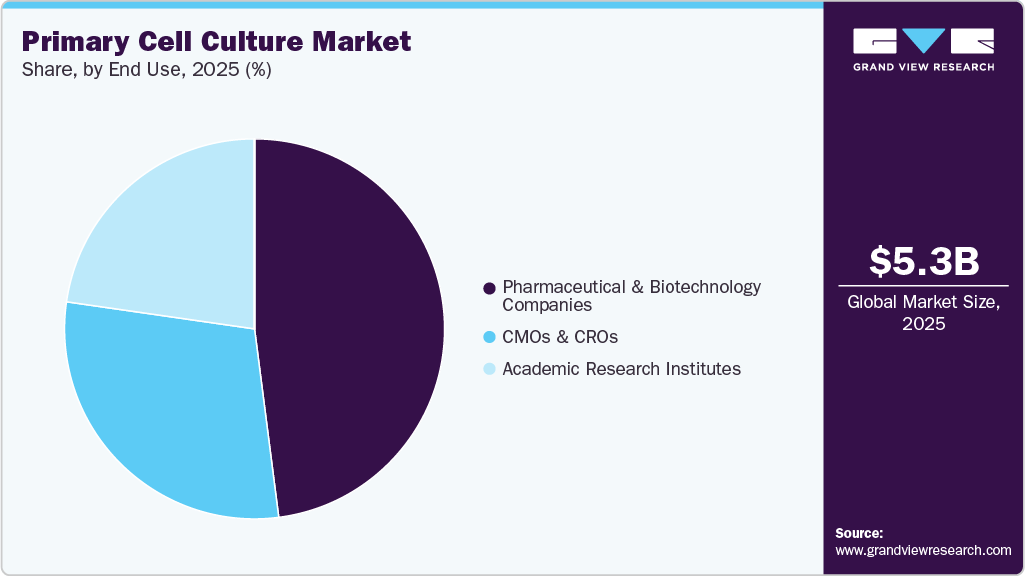
The CROs and CMOs segment is expected to grow at the fastest CAGR from 2026 to 2033, due to rising demand for outsourced research and manufacturing services. As pharma and biopharma companies focus on cost efficiency, CROs and CMOs offer specialized capabilities in cell culture-based assays, testing, and production. Their reliance on primary cell cultures supports more accurate models for drug development, toxicology, and vaccine testing, addressing the need for high-quality and reproducible outcomes.
Regional Insights
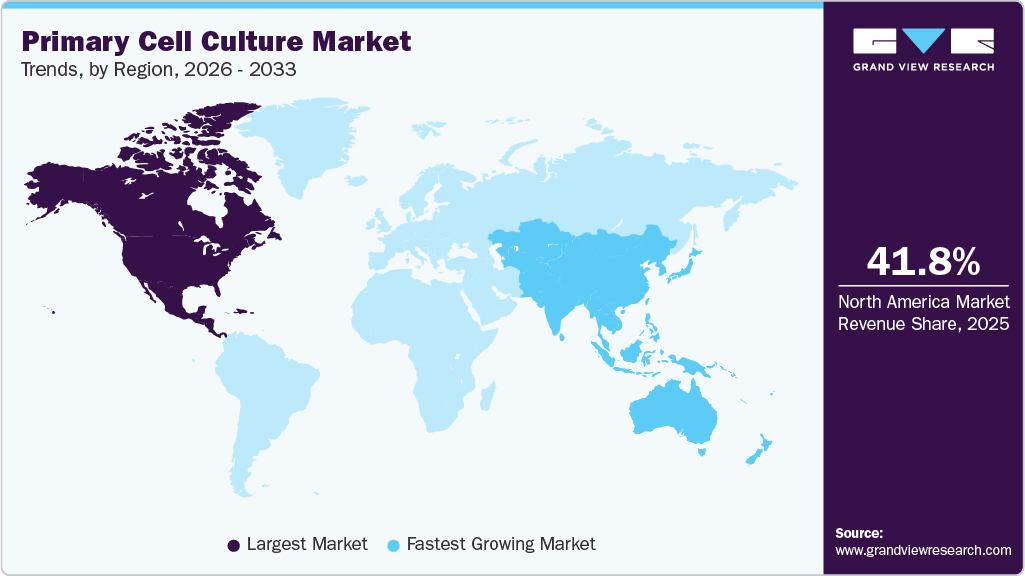
North America primary cell culture market dominated the global market with the largest share of 41.83% in 2025, driven by strong research infrastructure, high biomedical R&D investment, and the presence of major industry players. A well-established scientific ecosystem and extensive biotech and pharmaceutical activity continue to advance primary cell culture technologies across the region.
U.S.Primary Cell Culture Market Trends
The U.S. primary cell culture market is projected to grow significantly.The U.S. is the hub for the operations of major players in the supply and logistics market, such as Thermo Fisher Scientific, Inc., Merck, and Danaher. Moreover, its strong infrastructure, availability of necessary funds, and ability to adapt to advanced technology drive overall market growth.
Europe Primary Cell Culture Market Trends
Europe accounts for a significant share of global stem cell transplantation and cancer treatment R&D and holds a substantial share in stem cell research studies. These factors, along with rising government funding in stem cell research and the presence of organizations that accelerate research studies, are expected to drive the market's growth over the forecast period.
Primary cell culture industry in the UK is expected to expand because of increasing investments in developing innovative cell culture solutions, alongside emerging regional players offering advanced technologies, are poised to boost the UK’s market growth significantly.
The primary cell culture market in Germany is expected to experience a substantial growth throughout the forecast period. The country develops new technologies to improve gene therapy vector production efficiency and scalability, which demonstrates its dedication to advancing cell culture technologies likely to drive market expansion.
Asia Pacific Primary Cell Culture Market Trends
The primary cell culture market in the Asia Pacific region is expected to grow at the fastest CAGR of 12.6% during the forecast period. The growth is primarily due to the region’s lower costs associated with stem cell transplantation, thereby contributing to the high demand. In addition, researchers are conducting extensive R&D activities, which can be further attributed to the region’s growth.
Primary cell culture market in China held the largest significant share of the Asia Pacific primary cell culture market in 2025, supported by the rapid expansion of its biopharmaceutical and life sciences sectors and strong R&D investment. The country’s large and diverse population further enables extensive primary cell culture research, contributing to sustained market growth.
The primary cell culture market in Japan is witnessing rapid growth over the forecast period. Rising cancer cases, an aging population, and an increasing disease burden are expected to further stimulate the demand for human primary cell cultures.
MEA Primary Cell Culture Market Trends
The MEA primary cell culture market is expected to grow exponentially over the forecast period due to several key factors. The cell culture industry experiences business expansion through investments and partnerships, which result from rising disposable income, infrastructure development, and increased public awareness throughout the Middle Eastern and African regions.
Kuwait primary cell culture market is anticipated to grow moderately over the forecast period due to the ongoing investments in medical research and collaborations with international biotech firms.
Key Primary Cell Culture Company Insights
Leading companies such as Thermo Fisher Scientific Inc., Merck KGaA, Lonza, STEMCELL Technologies, and PromoCell dominate the landscape by offering high-quality primary cells, optimized media, and specialized reagents supported by robust global distribution networks.
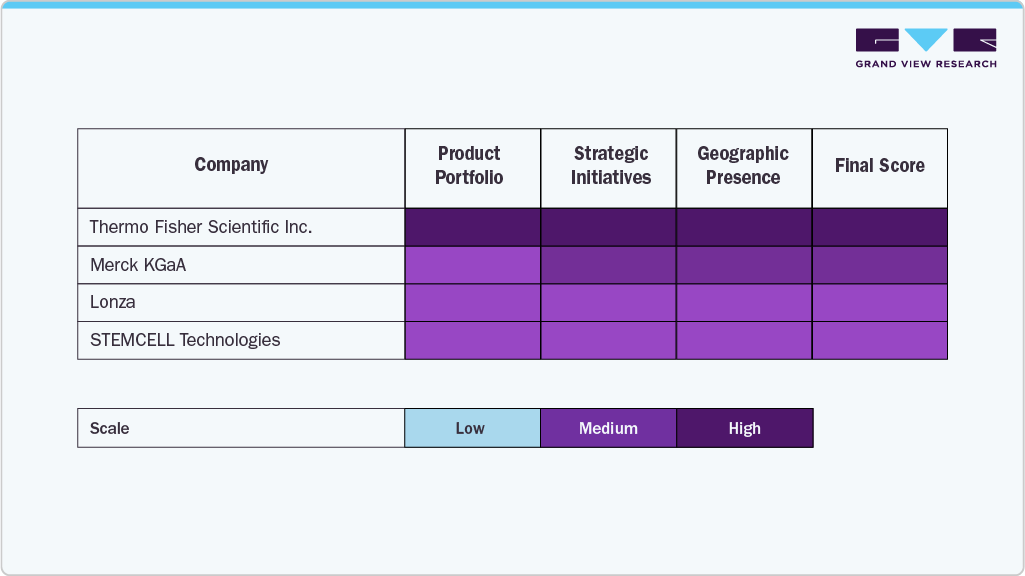
Companies including Cell Biologics, Inc., ZenBio, AllCells, Axol Biosciences Ltd., and American Type Culture Collection (ATCC) are expanding their market presence by providing highly characterized, application-specific primary cell products and customized solutions tailored to the needs of academic researchers, pharmaceutical companies, and biotechnology firms. Companies that successfully combine scientific rigor with customer-focused solutions are well-positioned to drive long-term value in this rapidly evolving market.
Key Primary Cell Culture Companies:
The following key companies have been profiled for this study on the primary cell culture market.
- Thermo Fisher Scientific Inc.
- Merck KGaA
- Lonza
- STEMCELL Technologies
- Cell Biologics, Inc.
- PromoCell
- ZenBio
- AllCells
- American Type Culture Collection
- Axol Biosciences Ltd.
Recent Developments
-
In January 2026, Creative Biolabs launched integrated human CNS modeling solutions in the United States to reduce translational gaps, improve preclinical predictivity, and accelerate neurodegenerative drug discovery and development programs.
-
In December 2024, BioCentriq signed a long-term lease for a new manufacturing facility in Princeton, NJ, which will be its headquarters. The USD 12M investment will enhance its capabilities in cell therapy development and production.
-
In February 2024, Gemini Bioproducts, LLC introduced a new human AB serum product designed for use in the primary cell culture market, supporting cell therapy and regenerative medicine applications.
Primary Cell Culture Market Report Scope
Report Attribute
Details
Market size value in 2026
USD 5.77 billion
Revenue forecast in 2033
USD 12.45 billion
Growth rate
CAGR of 11.6% from 2026 to 2033
Base year for estimation
2025
Historical data
2021 - 2024
Forecast period
2026 - 2033
Quantitative units
Revenue in USD million/billion and CAGR from 2026 to 2033
Report coverage
Revenue forecast, company ranking, competitive landscape, growth factors, and trends
Segments covered
Product, cell type, application, end use, region
Regional scope
North America; Europe; Asia Pacific; Latin America; MEA
Country scope
U.S.; Canada; Mexico; Germany; UK; France; Italy; Spain; Denmark; Sweden; Norway; China; Japan; India; South Korea; Australia; Thailand; Brazil; Argentina; South Africa; Saudi Arabia, UAE; Kuwait
Key companies profiled
Thermo Fisher Scientific Inc.; Merck KGaA; Lonza STEMCELL Technologies Inc.; Cell Biologics, Inc.; PromoCell; ZenBio; AllCells; American Type Culture Collection; Axol Biosciences Ltd.
Customization scope
Free report customization (equivalent up to 8 analyst’s working days) with purchase. Addition or alteration to country, regional & segment scope.
Global Primary Cell Culture Market Report Segmentation
This report forecasts revenue growth and provides an analysis of the latest trends in each of the sub-segments from 2021 to 2033. For this report, Grand View Research has segmented the primary cell culture market based on product, cell type, application, end use, and region.
-
Product Outlook (Revenue, USD Million, 2021 - 2033)
-
Primary Cells
-
Hematopoietic Cells
-
Skin Cells
-
Hepatocytes
-
Gastrointestinal Cells
-
Lung Cells
-
Renal Cells
-
Heart Cells
-
Skeletal and Muscle Cells
-
Other Primary Cells
-
-
Media
-
Serum-free Media
-
Serum-containing Media
-
Others
-
-
Reagents and Supplements
-
Attachment Solutions
-
Buffers and Salts
-
Freezing Media
-
Sera
-
Growth Factors and Cytokines
-
Others
-
-
-
Application Outlook (Revenue, USD Million, 2021 - 2033)
-
Cell & Gene Therapy Development
-
Vaccine Production
-
Model System
-
Virology
-
Prenatal Diagnosis
-
Others
-
-
Cell Type Outlook (Revenue, USD Million, 2021 - 2033)
-
Human Cells
-
Animal Cells
-
-
End-use Outlook (Revenue, USD Million, 2021 - 2033)
-
Pharmaceutical & Biotechnology Companies
-
CMOs & CROs
-
Academic Research Institutes
-
-
Regional Outlook (Revenue, USD Million, 2021 - 2033)
-
North America
-
U.S.
-
Canada
-
Mexico
-
-
Europe
-
UK
-
Germany
-
France
-
Italy
-
Spain
-
Denmark
-
Sweden
-
Norway
-
-
Asia Pacific
-
Japan
-
China
-
India
-
Australia
-
Thailand
-
South Korea
-
-
Latin America
-
Brazil
-
Argentina
-
-
Middle East and Africa (MEA)
-
South Africa
-
Saudi Arabia
-
UAE
-
Kuwait
-
-
Frequently Asked Questions About This Report
b. Some of the key players operating in the market include, Thermo Fisher Scientific Inc., Merck KGaA, Lonza STEMCELL Technologies Inc., Cell Biologics, Inc., PromoCell, ZenBio, AllCells, American Type Culture Collection, Axol Biosciences Ltd.
b. The market growth can be primarily attributed to the increasing prevalence of chronic disorders, government investments in cell-based research, and the expanding pharmaceutical and biotechnology industry. These factors have led to increased research, facilitating the high adoption of primary cell cultures.
b. The global primary cell culture market size was estimated at USD 5.25 billion in 2025 and is expected to reach USD 5.77 billion in 2026.
b. The global primary cell culture market is expected to grow at a compound annual growth rate of 11.61% from 2026 to 2033 to reach USD 12.45 billion by 2033.
b. The primary cells segment held the largest share of 37.01% in 2025. The growth of the primary cells segment can be attributed to their inherent physiological relevance and functional characteristics.
b. Based on cell type, the human cells segment dominated the market with a share of 80.94% in 2025. Human cells offer a unique opportunity to study and understand human-specific physiological and pathological processes.


Share this report with your colleague or friend.
Need a Tailored Report?
Customize this report to your needs — add regions, segments, or data points, with 20% free customization.


ISO 9001:2015 & 27001:2022 Certified
We are GDPR and CCPA compliant! Your transaction & personal information is safe and secure. For more details, please read our privacy policy.
Trusted market insights - try a free sample
See how our reports are structured and why industry leaders rely on Grand View Research. Get a free sample or ask us to tailor this report to your needs.