- Home
- »
- Medical Devices
- »
-
Poly-L-lactic Acid Filler Market Size, Industry Report, 2033GVR Report cover
![Poly-L-lactic Acid Filler Market Size, Share & Trends Report]()
Poly-L-lactic Acid Filler Market (2026 - 2033) Size, Share & Trends Analysis Report By Application (Face, Neck, Abdomen, Knees, Thighs), By End Use (Medspas, Cosmetic Surgery Centers/Dermatology Clinics), By Region, And Segment Forecasts
- Report ID: GVR-4-68040-364-7
- Number of Report Pages: 100
- Format: PDF
- Historical Range: 2021 - 2025
- Forecast Period: 2026 - 2033
- Industry: Healthcare
- Report Summary
- Table of Contents
- Interactive Charts
- Methodology
- Download FREE Sample
-
 Download Sample Report
Poly-L-lactic Acid Filler Market Summary
The global poly-l-lactic acid filler market size was valued at USD 207.3 million in 2025 and is projected to reach USD 404.3 million by 2033, growing at a CAGR of 8.9% from 2026 to 2033. Increasing demand for minimally invasive cosmetic procedures is a major factor boosting market growth.
Key Market Trends & Insights
- North America's poly-l-lactic acid filler market held the largest share of 39.34% of the global market in 2025.
- The poly-l-lactic acid filler market in the U.S. accounted for the largest share of the North American region.
- By application, the face segment held the highest market share of 43.5% in 2025.
- By end use, the cosmetic surgery centers/dermatology clinics segment held a leading market share of 55.1% in 2025.
Market Size & Forecast
- 2025 Market Size: USD 207.3 Million
- 2033 Projected Market Size: USD 404.3 Million
- CAGR (2026-2033): 8.9%
- North America: Largest market in 2025
- Asia Pacific: Fastest growing market
According to the American Society of Plastic Surgeons (ASPS) report published in 2024, in America, 28,243,407 minimally invasive cosmetic procedures were performed. Among these procedures, non-HA fillers such as Radiesse, Sculptra, and Bellafill accounted for 932,861 treatments. This data highlights the significant use of poly-lactic acid (PLLA) filler in aesthetic treatments to restore facial volume and reduce wrinkles. Aging population, rising focus on anti-aging solutions, technological advancements, product innovations, and the growing awareness and acceptance of cosmetic enhancements are the drivers boosting the market's growth.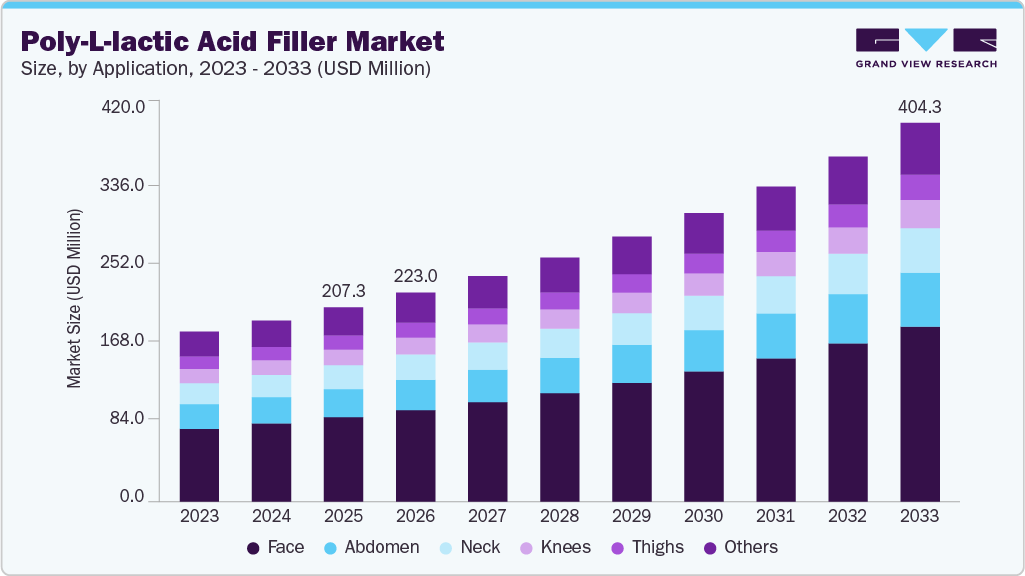
An aging population and a rising focus on anti-aging solutions are boosting the market's growth. According to the United Nations Fund for Population Activities (UNFPA), the global proportion of individuals aged 65 and older is increasing more rapidly than the younger population. This demographic is expected to grow from 5.5% in 1974 to 10.3% in 2024. According to United Nations projections, this figure is expected to double again, reaching 20.7% by 2074. Additionally, the number of people aged 80 and above is set to more than triple over the same period, highlighting the growing demand for aesthetic solutions like Poly-L-lactic Acid (PLLA) fillers to address age-related volume loss and skin rejuvenation. In 2023, ASPS surgeons performed 369,614 cosmetic procedures using non-hyaluronic acid fillers on individuals aged 55 to 69, the highest number among all age groups. This reflects a widespread acknowledgment of PLLA fillers' effectiveness in anti-aging treatments, meeting the demands of aging populations globally.
Technological advancements and product innovations drive the growth of the market as companies continue to explore innovative treatment approaches. In January 2025, Galderma announced promising initial results from a groundbreaking clinical trial assessing the combined use of Restylane Lyft or Contour with Sculptra in patients experiencing medication-induced weight loss and facial volume depletion. The three-month interim data from this first-of-its-kind study demonstrated significant improvements in facial aesthetics, along with high patient satisfaction. These findings, set to be presented at the 43rd Annual J.P. Morgan Healthcare Conference, highlight the growing potential of PLLA-based fillers in advanced aesthetic treatments.
Growing awareness and acceptance of cosmetic enhancements are among the major factors driving the poly-l-lactic acid (PLLA) filler market. According to an NCBI article published in March 2024, several clinical trials and studies have confirmed the safety and efficacy of PLLA in skin rejuvenation. PLLA treatments have been shown to notably increase skin thickness and improve texture, particularly in refining static wrinkles. For instance, a study involving 54 patients in the U.S. demonstrated a 54.9% increase in skin thickness after 12 months of PLLA treatment. Other research has indicated that repeated PLLA treatments can effectively address contour defects and enhance overall skin quality.
Market Concentration & Characteristics
The PLLA fillers industry is moderately concentrated, with leading companies such as Galderma, Sinclair Pharma, GANA R&D Co., Ltd., and PRP Life Science Co., Ltd holding significant shares of the market. These players offer advanced collagen-stimulating injectable fillers designed to restore facial volume, improve skin texture, and reduce wrinkles through gradual collagen regeneration. Their product portfolios include well-known PLLA-based aesthetic injectables such as Sculptra and AestheFill, which are widely used for facial rejuvenation and long-lasting anti-aging treatments. The market continues to evolve due to advancements in biostimulatory dermal filler technologies, improved formulation stability, and innovations in injection techniques that enhance safety and treatment outcomes. In addition, the rising demand for minimally invasive aesthetic procedures, increasing consumer focus on natural-looking anti-aging solutions, and the growing acceptance of cosmetic dermatology treatments are supporting market growth.
The industry is experiencing significant innovation due to advancements in regenerative aesthetic technologies and collagen-stimulating injectable formulations. PLLA fillers function as biostimulatory agents that gradually stimulate collagen production, enabling long-lasting improvements in skin structure, facial volume, and wrinkle reduction. Recent clinical research has focused on improving injection protocols, dilution techniques, and treatment combinations to enhance safety and treatment outcomes. For instance, a 2024 clinical review published in the journal Plastic and Reconstructive Surgery - Global Open highlighted advances in PLLA injection techniques and expanded aesthetic indications, including facial rejuvenation, skin tightening, and body contouring applications. These innovations improve treatment precision and patient outcomes while supporting the growing adoption of collagen-stimulating dermal fillers in aesthetic medicine. Such technological and clinical advancements are expected to drive the growth of the PLLA fillers market during the forecast period.
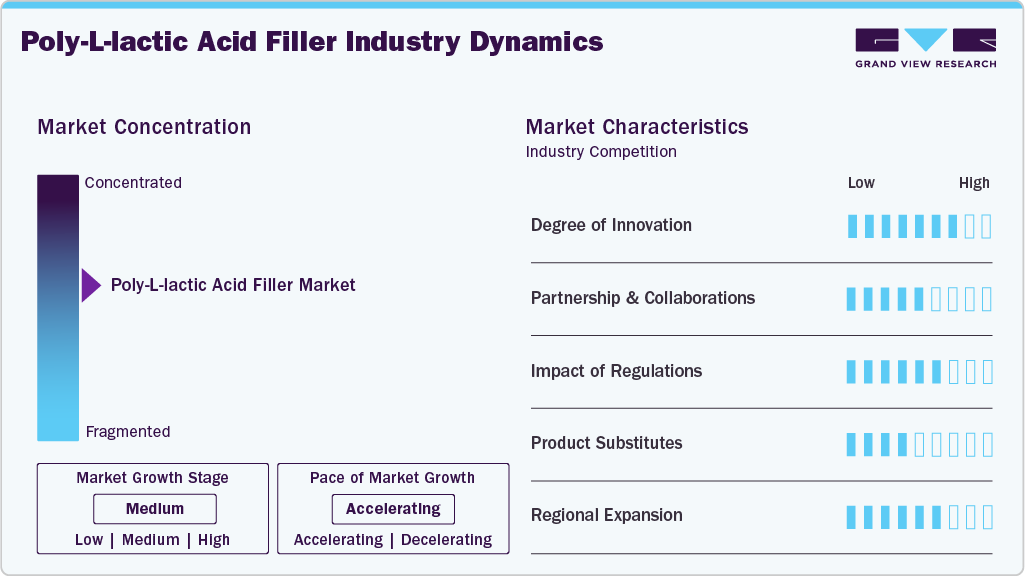
Partnerships and collaborations play a crucial role in the poly-L-lactic acid (PLLA) fillers industry, enabling companies to expand their aesthetic portfolios, strengthen distribution networks, and improve clinical adoption of collagen-stimulating injectable treatments. Strategic alliances between pharmaceutical companies, aesthetic clinics, and dermatology organizations help accelerate product availability and training for advanced injection techniques. These collaborations also support knowledge sharing through clinical workshops, medical conferences, and certification programs for dermatologists and aesthetic practitioners, which help improve treatment outcomes and patient satisfaction.
Regulatory approval plays a critical role in shaping the industry by ensuring that injectable aesthetic products meet stringent safety, efficacy, and quality standards before they are introduced to the market. Regulatory authorities such as the U.S. Food and Drug Administration, the European Medicines Agency, and the National Medical Products Administration in China regulate dermal fillers as medical devices or injectable aesthetic products. Manufacturers must provide comprehensive clinical data demonstrating biocompatibility, sterility, long-term safety, and effectiveness in stimulating collagen production and improving facial volume. Compliance with these regulatory frameworks enhances confidence among dermatologists, plastic surgeons, and aesthetic practitioners while supporting broader adoption of PLLA-based fillers in cosmetic procedures.
Product substitutes in the industry include other dermal filler materials and non-surgical aesthetic treatments that are widely used for facial rejuvenation and anti-aging procedures. Common alternatives include hyaluronic acid (HA) fillers, calcium hydroxylapatite (CaHA) fillers, polymethylmethacrylate (PMMA) fillers, as well as energy-based aesthetic treatments such as laser skin resurfacing, radiofrequency skin tightening, chemical peels, and botulinum toxin injections. These treatments are often preferred for addressing mild to moderate wrinkles, fine lines, and skin texture improvements due to their quicker treatment time and immediate results. For instance, HA-based fillers such as Juvederm and Restylane are widely used alternatives because they provide instant volume restoration and are reversible. Similarly, calcium hydroxylapatite fillers such as Radiesse and PMMA fillers like Bellafill are used for long-lasting facial contouring and wrinkle correction.
Regional expansion in the industry is gaining momentum across key global regions, driven by the increasing demand for minimally invasive aesthetic procedures, growing aging populations, and rising awareness of cosmetic dermatology treatments. Companies are actively broadening their geographical presence through strategic partnerships with local distributors, collaborations with aesthetic clinics, and targeted product registrations to enhance market access. These regional expansion strategies enable companies to capture new customer segments, strengthen brand recognition, and support the overall growth of the PLLA fillers industry.
Application Insights
The face segment held the largest share, over 43.5%, in 2025 and is expected to witness the fastest CAGR of 9.7% over the forecast period, owing to the rising popularity of facial rejuvenation procedures, technological advancements in fillers, and the expanding middle-aged and elderly population. Recent advancements in PLLA filler technology aimed to develop more refined formulations. For example, Devolux Injectable Filler employs advanced granular technology to produce ultra-fine particle sizes (3-5µm), enabling faster dissolution and dispersion within five minutes. This improvement minimizes the risk of post-treatment issues like nodules and papules, resulting in a smoother and safer treatment experience. These advancements contribute to the growing popularity and trust in PLLA treatments for facial applications. The American Academy of Facial Plastic and Reconstructive Surgery (AAFPRS) released new statistics highlighting key trends in facial plastic surgery, reporting that patients aged 35-55 now account for about 32% of facelift procedures, up from 26% in previous years. With a rising number of younger patients (ages 35-55) opting for facial procedures, the need for non-surgical alternatives like PLLA fillers is expanding.
The abdomen segment is driven by the increasing demand for non-invasive skin rejuvenation and tightening solutions. Abdominal skin laxity commonly occurs due to aging, pregnancy, and significant weight loss, leading many individuals to seek aesthetic treatments to restore skin firmness and elasticity. Individuals with mild-to-moderate skin laxity or those unwilling to undergo surgery turn to PLLA-based stimulatory collagen activators as a safer and more convenient alternative. Research supports the effectiveness of PLLA-SCA in improving sagging, wrinkling, dimpling, and cellulite, with long-lasting results and minimal side effects. The introduction of advanced formulations, such as Lanluma, has further expanded the application of PLLA fillers beyond traditional facial treatments, positioning them as a versatile solution for abdominal rejuvenation. As consumer awareness grows and technology advances, the market for PLLA fillers in abdominal treatments is expected to experience significant expansion, catering to the rising demand for minimally invasive body contouring solutions.
End-use Insights
The cosmetic surgery centers/dermatology clinics segment held the largest share of 55.1% in 2025 due to an increasing patient base seeking minimally invasive alternatives to traditional surgical procedures. Cosmetic surgery centers are well-equipped with advanced technologies and skilled professionals who can effectively administer PLLA fillers. Moreover, the integration of PLLA fillers into the treatment protocols at cosmetic surgery centers is supported by continuous advancements in product formulations and injection techniques. These innovations improve the safety, efficacy, and patient satisfaction of PLLA filler treatments, making them a reliable option for practitioners and patients. In addition, the growing strategic initiatives adopted by key players are anticipated to fuel segment growth over the forecast period. For instance, in January 2024, The Waldorf Center for Plastic Surgery partnered with Forefront Dermatology Group, a well-established dermatology organization. Such collaborations underscore the growing integration of cosmetic surgery and dermatology services. In February 2023, Athenix, a leading plastic surgery practice in the U.S., acquired Marina Plastic Surgery and Medspa, a renowned cosmetic surgery center in California, the U.S. By this acquisition, Athenix would operate from six locations in the U.S. Similarly, in June 2023, Kortesis Bharti Management Group, LLC acquired Lowcountry Plastic Surgery Center. Post-acquisition, the latter company’s name will be H/K/B Mount Pleasant.
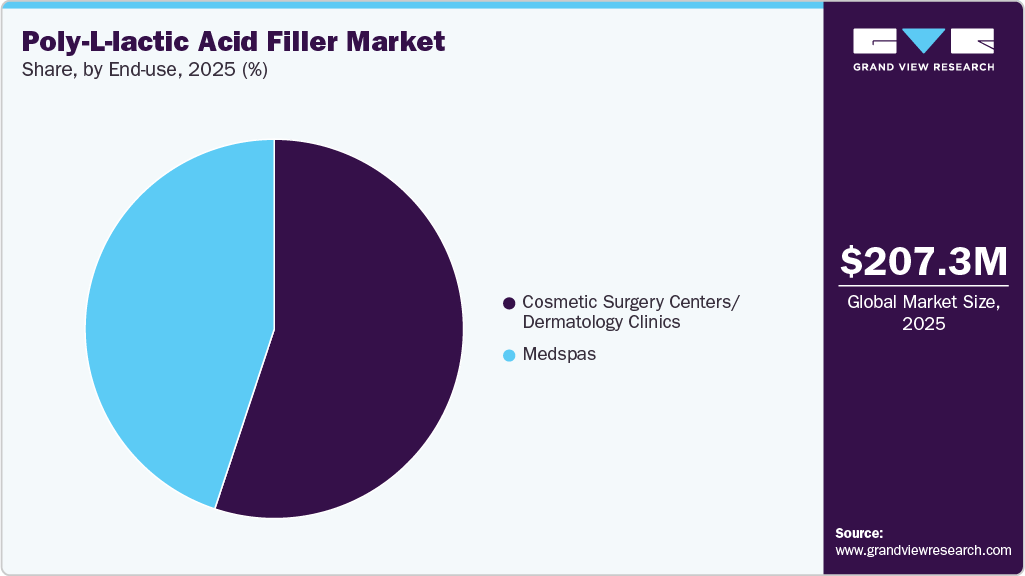
The medspas segment is expected to show lucrative growth during the forecast period due to increasing consumer confidence in the safety and efficacy of non-invasive treatments offered in these settings, supported by stringent regulatory oversight and advancements in injection techniques. Moreover, medspas are strategically positioned to offer consumers who value personalized care and a complete approach to beauty and wellness. Medspas, which combine medical expertise with a spa-like environment, offer a range of non-surgical cosmetic procedures that appeal to a broad demographic seeking rejuvenation and enhancement without the downtime associated with surgical options. In 2024, the American Med Spa Association reported that over 10,488 Med spas were operational in the U.S., representing a 15.2% increase in recent years. According to the American Med Spa Association’s 2024 Medical Spa State of the Industry Report, an average medical spa generates more than USD 1.4 million annually.
Regional Insights
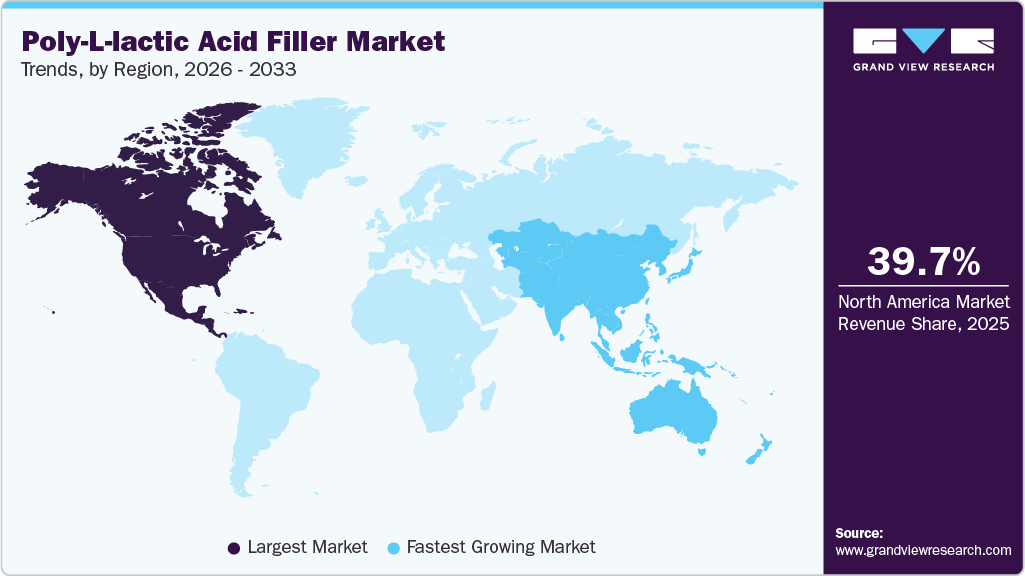
North America poly-l-lactic acid (PLLA) filler market led with a share of 39.34% in 2025, owing to advanced healthcare infrastructure, increasing adoption of aesthetic procedures, huge research and development activities, continuous technological advancements in cosmetic treatments, growing geriatric population and a strong presence of key market players. The growing geriatric population in the U.S., susceptible to skin imperfections or diseases, is expected to increase the demand for cosmetic procedures, thereby significantly contributing to the market growth over the forecast period. Moreover, according to a U.S. Census Bureau article published in May 2023, the geriatric population in the region is about 1 in 6 people above 65. Furthermore, the country has the most plastic surgeons, fueling market growth. Furthermore, the country has the highest number of plastic surgeons, expected to boost market growth.
U.S. Poly-L-lactic Acid Filler Market Trends
The poly-l-lactic acid (PLLA) filler market in the U.S. accounted for the largest share of the North American region. This dominance can be attributed to several key factors, including a highly developed healthcare infrastructure and the advanced cosmetic industry, which facilitate widespread availability and adoption of PLLA fillers among consumers and healthcare providers. Moreover, the economy and high disposable incomes enable greater affordability and accessibility to aesthetic treatments like PLLA fillers, and technological advancements boost the market's growth. According to the American Society of Plastic Surgeons 2024 Procedural Statistics Report, nearly 1.6 million cosmetic surgical procedures and over 28.5 million minimally invasive aesthetic procedures were performed in the U.S. in 2024. Injectable treatments remained highly popular, with around 5,331,426 hyaluronic acid filler procedures conducted during the year, reflecting strong consumer demand for minimally invasive facial rejuvenation treatments.
Europe Poly-L-lactic Acid Filler Market Trends
The poly-l-lactic acid (PLLA) filler market in Europe held a significant share in 2025 due to the presence of skilled professionals and the rise in the geriatric population. Rising demand for advanced treatment tools in Europe is a major factor anticipated to propel the market growth. The region’s growing geriatric population has led to an increased demand for anti-aging and facial rejuvenation treatments, particularly long-lasting, collagen-stimulating fillers such as PLLA-based products. Rising awareness and acceptance of minimally invasive cosmetic procedures among middle-aged and elderly populations have further fueled market growth.
Germany poly-l-lactic acid (PLLA) filler market dominated Europe with the highest revenue share of 24.6% in 2025. Various factors, such as an increase in the popularity of cosmetic procedures, an aging population, technological advancements, and a rise in beauty consciousness, are driving the market. The aging population's interest in maintaining a youthful appearance drives market growth as individuals seek nonsurgical solutions like dermal fillers, emphasizing the relevance & potential growth within the market in Germany. According to AARP, the prevalence of individuals aged 65 and above is expected to increase by 41%, reaching 24 million by 2050, which will make up nearly one-third of the total population, and is a significant growth driver for the poly-l-lactic acid (PLLA) filler market.
The poly-l-lactic acid filler market in the UK held the second largest regional share in 2025. The country's growing number of nonsurgical procedures is expected to boost the market over the forecast period. According to the ISAPS 2023 report, nearly 22,526 nonsurgical procedures were performed nationwide. Moreover, it was estimated that nearly 729 surgeons were registered in the country. Moreover, the country is rapidly changing its regulations for poly-l-lactic acid (PLLA) filler due to practitioner malpractices. For instance, in September 2023, a government consultation program was launched to improve the clinical practices related to dermal fillers and Botox procedures.
France poly-l-lactic acid (PLLA) filler market is anticipated to witness a significant CAGR of 9.0% during the forecast period. Increased awareness among customers about the potential benefits of aesthetic procedures and the growing adoption of minimally invasive procedures are boosting the market in France. Furthermore, rising purchasing power, growing involvement of international players, increasing spending on cosmetics and personal care, & rising number of beauty clinics are among the factors fueling the market growth in France.
Asia Pacific Poly-L-lactic Acid Filler Market Trends
The poly-l-lactic acid (PLLA) filler market in Asia Pacific is expected to grow at the fastest rate during the forecast period. This can be attributed to the rising medical tourism industry, especially in Southeast Asia where high-quality cosmetic procedures are available at more affordable rates compared to Western nations. In addition, the growing middle-class population, increasing disposable income, and rising awareness of non-surgical aesthetic treatments are fueling demand for minimally invasive procedures such as PLLA, CaHA, and hyaluronic acid-based fillers. Social media influence and cultural trends emphasizing youthful appearance further encourage consumers, especially in urban areas, to seek facial rejuvenation treatments.
China poly-l-lactic acid (PLLA) filler market accounted for the largest share of the Asia Pacific region in 2025 due to increasing demand for antiaging procedures. According to the WHO, 28% of the country’s population is projected to be above 65 by 2040, which in turn is expected to boost the adoption of noninvasive aesthetic treatments. Moreover, according to the ISAPS in 2024, China has a surgical workforce of 5,000 surgeons, constituting 8.5% of the total number of surgeons.
The poly-l-lactic acid (PLLA) filler market in Japan held the second largest market share in the Asia Pacific region. Japan is one of the most rapidly aging countries in the world. The National Institute of Population and Social Security Research projects that by 2040, individuals aged 65 & older will make up 34.8% of Japan's total population. The rapidly aging population in the country is also anticipated to boost the market demand, as the geriatric population is more susceptible to fine lines, wrinkles, saggy skin, and other signs of aging.
The India poly-l-lactic acid (PLLA) filler market is experiencing significant growth, driven by increasing affordability of aesthetic procedures along with growing disposable income & awareness about these procedures. Moreover, lower treatment costs in the country are expected to contribute to the growing medical tourism. According to the Times of India article published in May 2023, India witnesses an annual arrival of around 800,000 to 1 million cosmetic procedure patients, 10% of whom come from foreign countries. This positions India as the sixth most favored global destination for medical tourism in cosmetic procedures.
Latin America Poly-L-lactic Acid Filler Market Trends
The poly-L-lactic acid (PLLA) filler market in Latin America is growing due to several factors. These countries are preferred for medical tourism due to the availability of treatments at a lower cost (30% to 70% discount) compared to North American and European countries. In addition, a stronger emphasis on physical beauty coupled with extensive acceptance of facial surgeries has led to the high demand for poly-l-lactic acid filler in Brazil.
Brazil poly-l-lactic acid filler market is expanding due to several distinct growth drivers. Brazil has a strong culture of beauty & aesthetics, emphasizing youthful appearances and physical attractiveness. This cultural focus on beauty has contributed to the widespread acceptance and use of poly-l-lactic acid filler to enhance or maintain one's appearance. According to the ISAPS report in 2024, 2,354,513 surgical procedures were conducted in Brazil, alongside 769,245 nonsurgical procedures.
MEA Poly-L-lactic Acid Filler Market Trends
The poly-l-lactic acid filler market in the Middle East & Africa is expected to grow at the lucrative rate. The MEA region is witnessing a rising preference among consumers for non-surgical cosmetic treatments, driven by increasing disposable incomes and a growing awareness of aesthetic procedures. Moreover, MEA countries invest in healthcare infrastructure and adopt advanced aesthetic technologies, facilitating greater accessibility to cosmetic procedures, including PLLA fillers.
South Africa poly-l-lactic acid (PLLA) filler market held the 17.2% share in the MEA region. The growing demand for hyaluronic acid-based dermal fillers from the geriatric population is expected to boost market growth. According to the UNFPA Statistics, in 2024, nearly 6% of the total country’s population was aged over 65. The market is further supported by the presence of advanced dermatology clinics and aesthetic centers in urban areas, particularly in Johannesburg, Cape Town, and Durban, where consumers have better access to aesthetic procedures. Rising disposable incomes, urbanization, and the growing influence of social media and beauty trends have also encouraged consumers to opt for minimally invasive treatments over surgical alternatives.
Key Poly-L-lactic Acid Filler Companies Insights
Some of the key players operating in the industry include Galderma, GANA RND and Sinclair Pharma. Companies’ key strategies include understanding the strengths and weaknesses of major market participants, anticipating future market trends, opportunities, and challenges, and making proactive decisions based on insights into emerging technologies and changing consumer preferences. For instance, PRP Science and Laboratories Hyamed SA are some of the emerging players in the poly-l-lactic acid (PLLA) filler. These industry players continuously focused on leveraging specialized technologies to differentiate themselves.
Key Poly-L-lactic Acid Filler Companies:
The following key companies have been profiled for this study on the poly-l-lactic acid filler market.
- Galderma
- Sinclair Pharma
- GANA RND
- PRP Life Science Co., Ltd
- Laboratories Hyamed SA
- Dermax Co., Ltd
- Rimless Industry Co., Ltd.
- Hangzhou Singclean Medical Products Co.,Ltd
- LINKUS GLOBAL Co., Ltd.
Recent Developments
-
In December 2025, Galderma announced that Sculptra, a PLLA-based regenerative biostimulator, received EU Medical Device Regulation (MDR) certification along with expanded indications for body contouring treatments. The certification strengthens the company’s regulatory standing and supports wider adoption of PLLA fillers across European aesthetic markets.
-
In January 2025, South Korean aesthetics company Hugel Inc. announced plans to pursue mergers and acquisitions involving PLA- and collagen-based injectable products as part of its strategy to expand in the global dermal filler market. The move reflects increasing demand for collagen-stimulating fillers such as PLLA in medical aesthetics.
-
In January 2025, Alpha Aesthetics Partners announced its strategic collaboration with Flawless Medspa & Wellness, a reputed aesthetic-care center in Mexico and abroad. This partnership would expand the business in body contouring, dermal fillers, and other aesthetic treatments by combining expertise from both the companies.
-
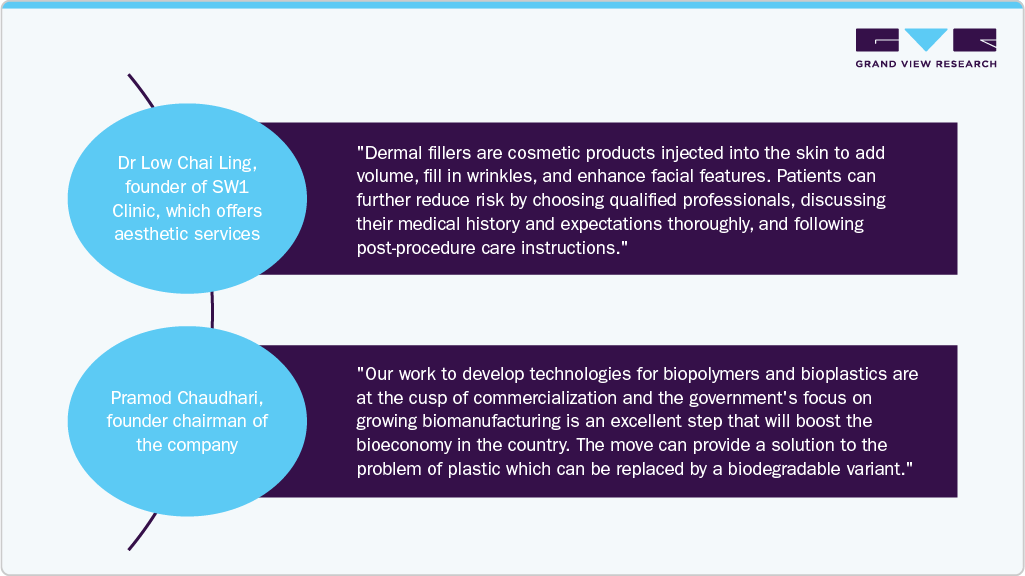
In February 2024, Praj Industries revealed that its polylactic acid (PLA) pilot plant was nearing completion and would convert to operation by April 2024. The facility, designed to manufacture bioplastics, was part of the company’s R&D push to develop renewable chemicals like biodegradable polymers using feedstocks.
-
In April 2023, Galderma revealed that the U.S. FDA had launched Sculptra (injectable poly-L-lactic acid) for treating fine lines and wrinkles in the cheek area. Sculptra, the first FDA-launched PLLA collagen stimulator, enhances collagen production to smooth wrinkles and improve skin firmness and glow, with effects lasting up to 2 years.
Poly-L-lactic Acid (PLLA) Filler Market Report Scope
Report Attribute
Details
Market size value in 2026
USD 223.0 million
Revenue forecast in 2033
USD 404.3 million
Growth rate
CAGR of 8.9% from 2026 to 2033
Actual data
2021 - 2025
Forecast period
2026 - 2033
Quantitative units
Revenue in USD million/billion and CAGR from 2026 to 2033
Report coverage
Revenue forecast, company ranking, competitive landscape, growth factors, and trends
Segments covered
Application, end-use, region
Regional scope
North America; Europe; Asia Pacific; Latin America; MEA
Country scope
U.S.; Canada; Mexico; UK; Germany; France; Italy; Spain; Denmark; Sweden; Norway; Japan; China; India; Australia; Thailand; South Korea; Brazil; Argentina; South Africa; Saudi Arabia; UAE; Kuwait.
Key companies profiled
Galderma; Sinclair Pharma; GANA RND; PRP Life Science Co., Ltd; Laboratories Hyamed SA; Dermax Co., Ltd; Rimless Industry Co., Ltd.; Hangzhou Singclean Medical Products Co., Ltd; LINKUS GLOBAL Co., Ltd.
Customization scope
Free report customization (equivalent up to 8 analysts working days) with purchase. Addition or alteration to country, regional & segment scope.
Pricing and purchase options
Avail customized purchase options to meet your exact research needs. Explore purchase options
Global Poly-L-lactic Acid Filler Market Report Segmentation
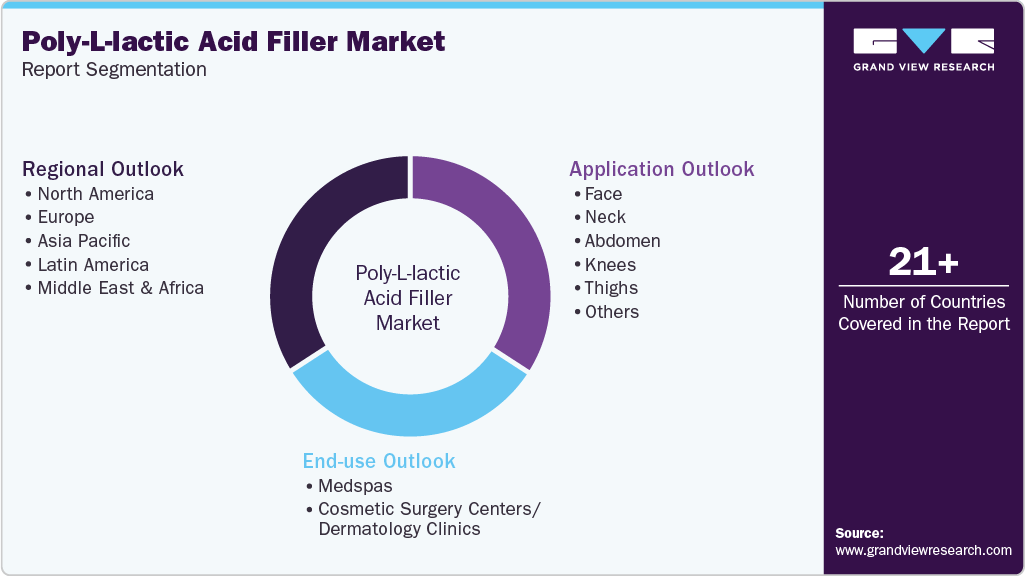
This report forecasts revenue growth at global, regional & country levels and provides an analysis of the industry trends in each of the sub-segments from 2021 to 2033. For this study, Grand View Research has segmented the global poly-l-lactic acid filler market report on the basis of application, end-use, and region:
-
Application Outlook (Revenue, USD Million, 2021 - 2033)
-
Face
-
Neck
-
Abdomen
-
Knees
-
Thighs
-
Others
-
-
End-use Outlook (Revenue, USD Million, 2021 - 2033)
-
Medspas
-
Cosmetic Surgery Centers/Dermatology Clinics
-
-
Regional Outlook (Revenue, USD Million, 2021 - 2033)
-
North America
-
U.S.
-
Canada
-
Mexico
-
-
Europe
-
UK
-
Germany
-
France
-
Italy
-
Spain
-
Denmark
-
Sweden
-
Norway
-
-
Asia Pacific
-
Japan
-
China
-
India
-
South Korea
-
Australia
-
Thailand
-
-
Latin America
-
Brazil
-
Argentina
-
-
Middle East & Africa
-
South Africa
-
Saudi Arabia
-
UAE
-
Kuwait
-
-
Frequently Asked Questions About This Report
b. The global poly-l-lactic acid filler market size was estimated at USD 429.4 million in 2024 and is expected to reach USD 469.3 million in 2025.
b. The global poly-l-lactic acid filler market is expected to grow at a compound annual growth rate of 10.3% from 2025 to 2030 to reach USD 764.8 million by 2030.
b. North America dominated the poly-lactic acid (PLLA) filler market with a share of 36.5% in 2024, owing to advanced healthcare infrastructure, increasing adoption of aesthetic procedures, huge research and development activities, and continuous technological advancements in cosmetic treatments.
b. Some key players operating in the poly-l-lactic acid filler market include Galderma, GANA R&D, Sinclair Pharma, PRP Science, EPRUI Biotech, and Hyamax,
b. The primary factors driving the market are the rising demand for minimally invasive cosmetic procedures, the growing aging population, and technological advancements.


Share this report with your colleague or friend.
Need a Tailored Report?
Customize this report to your needs — add regions, segments, or data points, with 20% free customization.


ISO 9001:2015 & 27001:2022 Certified
We are GDPR and CCPA compliant! Your transaction & personal information is safe and secure. For more details, please read our privacy policy.
Trusted market insights - try a free sample
See how our reports are structured and why industry leaders rely on Grand View Research. Get a free sample or ask us to tailor this report to your needs.