- Home
- »
- Animal Health
- »
-
Pet End-of-Life Services Market Size, Industry Report, 2033GVR Report cover
![Pet End-of-Life Services Market Size, Share & Trends Report]()
Pet End-of-Life Services Market (2026 - 2033) Size, Share & Trends Analysis Report By Service (Hospice/Palliative Care, Euthanasia, Funeral), By Pet (Dogs, Cats), By Provider, By Region, And Segment Forecasts
- Report ID: GVR-4-68040-832-5
- Number of Report Pages: 150
- Format: PDF
- Historical Range: 2021 - 2025
- Forecast Period: 2026 - 2033
- Industry: Healthcare
- Report Summary
- Table of Contents
- Segmentation
- Methodology
- Download FREE Sample
-
 Download Sample Report
Pet End-of-Life Services Market Summary
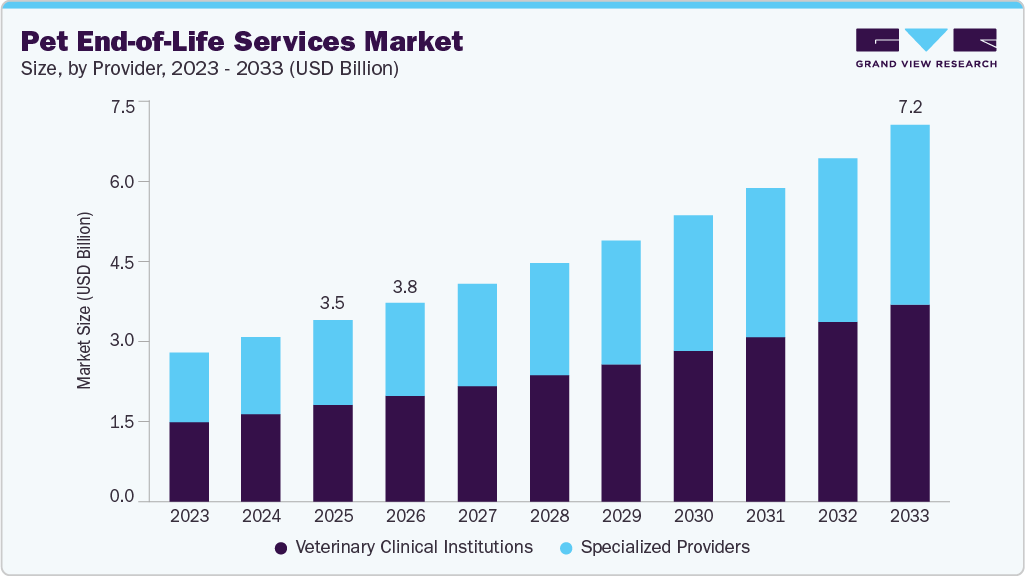
The global pet end-of-life services market size was estimated at USD 3.45 billion in 2025 and is projected to reach USD 7.17 billion by 2033, growing at a CAGR of 9.58% from 2026 to 2033. The market is propelling due to factors such as rapid expansion of in-home and institutional end-of-life services, growing global awareness of hospice, palliative care & compassionate EOL practices, regulatory momentum supporting ethical euthanasia and cremation, and rising demand for pet cremation & funeral infrastructure globally.
Key Market Trends & Insights
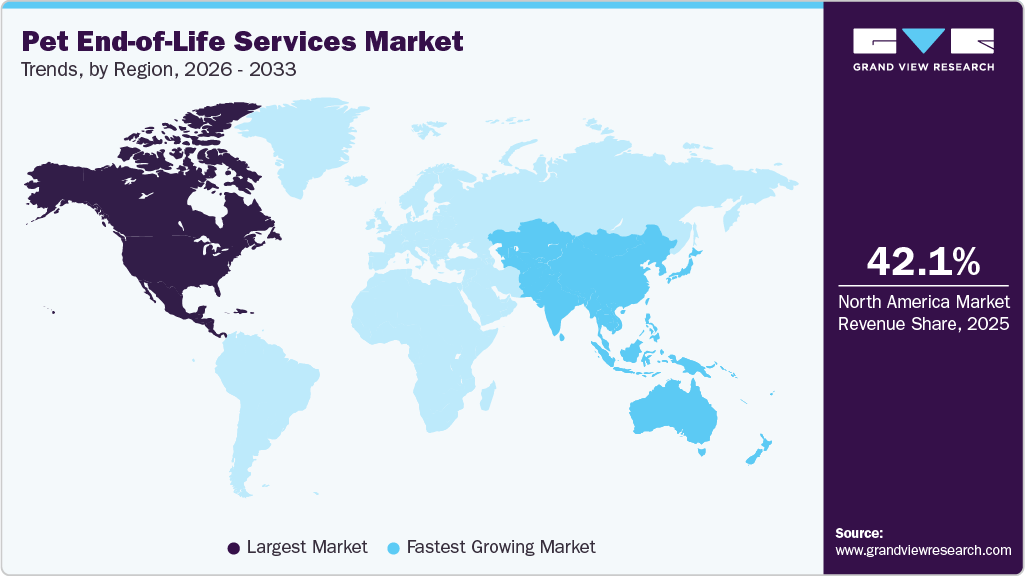
- North America pet end-of-life services market held the largest revenue share of 42.09% in 2025.
- U.S. dominated the North America region with the largest revenue share in 2025.
- By service, funeral held the largest share of over 50.12% of the market in 2025
- By pet, dogs held the largest revenue market share in 2025.
- Based on provider, the specialized providers segment is expected to grow at the fastest rate over the forecast period.
Market Size & Forecast
- 2025 Market Size: USD 3.45 Billion
- 2033 Projected Market Size: USD 7.17 Billion
- CAGR (2026-2033): 9.58%
- North America: Largest market in 2025
- Asia Pacific: Fastest growing market
One of the major driving factors for the market is the rising demand for pet cremation and funeral infrastructure globally. This trend is pushing steady growth in the pet EoL services market. Families are choosing formal care for aging pets, and this shift is shaping new business activity. In many cities, new facilities are opening, and mobile teams are expanding. Each move shows how strongly owners value structured care at the end of life.More in-home euthanasia teams are becoming active in large and mid-sized cities. For instance, providers in Pittsburgh and Plano, cities in the U.S., are adding staff and new routes. Local veterinarians in smaller towns are starting mobile units that focus on calm, familiar settings. This trend shows a move toward quiet environments that reduce stress for both the animal and the family. Growth in these services increases demand for follow-up cremation and funeral options that match the same standard of care.
New transitional care units inside veterinary hospitals are becoming common. These units guide families through the last phase and connect them with cremation partners. Clinics that add these units report a steady increase in adoption, which drives demand for nearby cremation capacity. The growth pattern shows that owners want a linked path from palliative care to final rites. Regions that lacked formal cremation sites are now opening dedicated units to meet this need.
In countries like India, new crematoriums are opening in large and mid-sized cities. Thane, Chennai, and Jamshedpur recently opened the first units in their areas and plan to extend hours as daily volumes rise. Families choose scheduled slots and private viewing rooms. Local reports indicate strong use within the first weeks. The steady rise in urban pet ownership is strengthening this pattern and pushing civic bodies to approve new sites. New service launch proposals in the UK show a similar pattern as local councils review applications for small regional cremation centers.
In addition, private operators are entering this space with new business models. Some providers are forming joint ventures with veterinary groups to expand faster. These partnerships help clinics offer full end-of-life paths from at-home care to private cremation. Owners respond to transparent pricing and clear handling steps. As demand rises, operators invest in modern furnaces, digital booking, and tracked remains.
As more regions treat end-of-life care for pets as a formal need, global demand for these services is expected to expand. Families want dignity, clear steps, and reliable handling, and this expectation continues to push demand for cremation and funeral infrastructure.
Global Pet End-of-Life Services Market: Recent Industry Activities
Region / Country
Incident or Event
Market Implication / Risk
Australia (Gold Coast)
Police are investigating an unlicensed end-of-life business after a man died from a veterinary euthanasia drug. Authorities believe the operator may be linked to more than 20 similar deaths.
Trust in mobile euthanasia services is weakening, and regulators are preparing tighter controls on drug handling and provider licensing.
United States - Idaho
A local vet launched a mobile in-home euthanasia service in response to concerns about improper practices by informal operators. The move highlights rising demand for trusted and compassionate home care.
Shows the need for vetted providers and structured oversight as home-based euthanasia expands.
United States - Texas
A pet funeral company was accused of dumping pets on the roadside instead of cremating them after taking payment from owners. The case triggered public anger and local investigations.
Demonstrates the risk of fraudulent cremation services and pushes for mandatory traceability and audits.
United States - Pennsylvania
A funeral director was charged with dumping thousands of pet bodies and giving families ashes from other sources. More than 6,000 cases were involved over several years.
Creates heavy reputational damage and fuels calls for national standards and strict penalties for remains.
United States - California
A pet cremation business came under investigation for possible fraud after clients questioned ash-return accuracy and handling protocols.
Highlights the sector’s vulnerability to malpractice.
Market Concentration & Characteristics
Industry concentration is low to moderate because global activity is split between large veterinary groups, nonprofit providers, and regional EoL service operators. Big groups like Thrive, BluePearl, and Medivet run structured networks that handle steady volumes. Nonprofits such as ASPCA and Animal Humane Society shape access in many cities through low-cost support. Specialists like Lap of Love, After Life Vets, Dignipets, and Gateway Services focus only on end-of-life work and hold a strong local presence. FNP Care and RVC add institutional depth in markets that need formal training and managed facilities.
The degree of innovation in the industry is expected to be moderate. New projects show steady movement toward better-designed cremation spaces and clearer service planning. Councils are reviewing modern facilities that use cleaner burners and stronger record systems. Smaller operators are testing ideas like grief rooms and tracked remains handling. Growth is shaped by public input because local leaders are seeking models that balance cost and transparency. The sector is improving, but change is gradual and tied to local approvals.
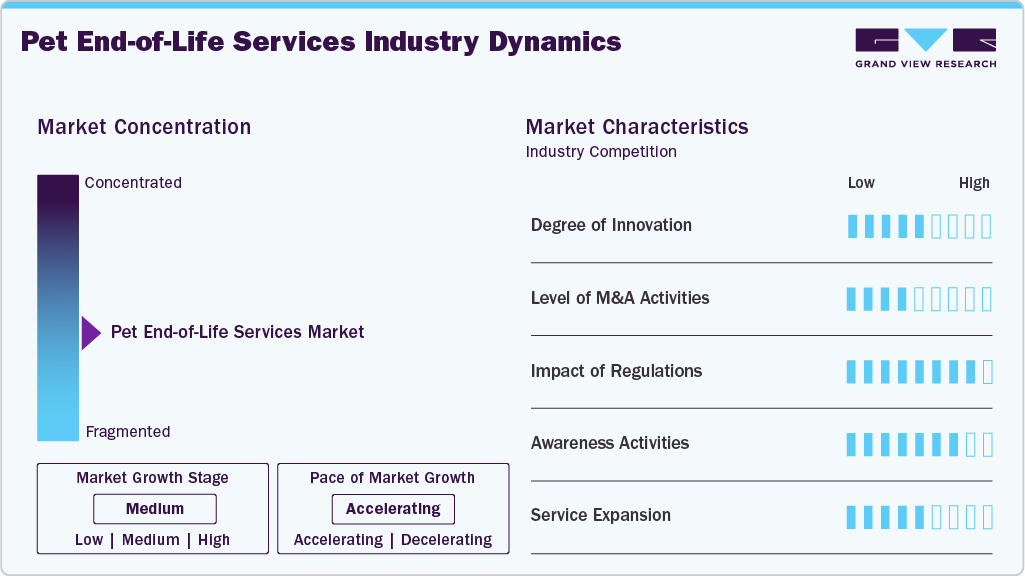
Cross-border interest is rising as funeral groups acquire pet cremation units to build national footprints. Buyers are targeting operators with trained staff and stable volume so they can fold them into larger memorial networks. Deals remain selective because many providers are small family units with limited scale. Activity is steady in markets where cremation demand is climbing, and planning rules are stable. The pipeline is active but not saturated.
Regulatory impact is expected to be very high as rules shape how providers handle euthanasia, remains management, and medical oversight. Regulatory orders define when euthanasia is allowed for sick or rabid animals, which changes how end-of-life cases move through clinics. Governments are approving mobile units, standards for cremation operators, and stronger oversight for burial and ash return. Advocacy groups are pushing for trained palliative care and trauma reduction protocols in clinics. Changes are wide-ranging and affect daily operations across providers.
Clinicians are teaching owners how to plan for decline, pain control, and quality of life scoring. Education efforts are helping guide families through decision points, so conversations start earlier and with less stress. Veterinary groups are training teams to speak about loss with steady language and clear steps. Animal welfare groups are running public campaigns on how to read end-of-life signs and seek help sooner. Community debates around hospice projects are raising visibility of structured care.
In-home care networks are adding new cities through mobile teams that handle palliative care and peaceful euthanasia. Veterinary groups are opening transitional care units that sit between hospital and home support. Many cities are starting their first crematoriums, including units backed by local governments and private operators. Regions with rising pet numbers are adding free or low-cost cremation options for residents. Town councils are reviewing new facility proposals as demand climbs, and private groups are scaling fast to meet that need
Provider Insights
The veterinary clinical institutions segment held the largest revenue share in 2025. These institutions provide comprehensive services, including routine check-ups, diagnostics, surgeries, and end-of-life care. Owners are visiting clinics for structured, regulated handling and professional guidance. These institutions refer complex cases internally and to licensed partners, which strengthens revenue streams. Established networks, wide geographic presence, and trusted reputations are keeping this segment in the lead globally.
The specialized provider segment represents the fastest-growing segment from 2026 to 2033. These providers focus exclusively on pet end-of-life care, offering at-home hospice, mobile euthanasia, and support services. Owners are seeking comfort-centered, personalized care at home, which drives adoption. Mobile teams are expanding in urban centers worldwide, improving accessibility. Structured guidance, counseling, and longer care windows are attracting more families to these specialized services. Rising acceptance of home-based care and end-of-life planning is supporting rapid growth in this segment.
Pet Insights
Based on pet, dogs held the largest revenue share in 2025, owing to owners investing more in preventive care, routine check-ups, and specialty treatments. Dogs are receiving advanced veterinary services, wellness programs, and end-of-life care at higher rates. Clinics are offering tailored packages, including diagnostics, vaccinations, and surgical procedures, which drives spending. High dog ownership in North America, Europe, and parts of Asia is supporting strong revenue generation. The segment also benefits from a combination of population size, routine healthcare adoption, and demand for structured services.
The cats segment represents the fastest-growing segment in the market over the forecast period with the highest CAGR, because cat owners are increasingly seeking specialty care, wellness checks, and preventive treatments for cats. Rising urban cat ownership and awareness about feline health are driving demand. Clinics are expanding cat-focused services, including boarding, diagnostics, and at-home care. Growth is also supported by increasing adoption rates in Asia-Pacific and Latin America. Higher willingness to spend on individual cat health, combined with a smaller population compared with dogs, results in rapid revenue growth.
Service Insights
On the basis of service, funeral dominated the market with the largest revenue share of 50.12% in 2025. This is because owners are choosing structured cremation and memorial options that provide tracked ashes, predictable timelines, and professional handling. Urban centers in Europe, North America, and Asia are adding new pet crematoriums, improving access and reducing waiting periods. Providers are offering private, communal, and premium packages suited to varied budgets, drawing more households into paid services worldwide. Owners are seeking formal closure rituals that mirror human care, increasing demand for viewing rooms, urns, keepsakes, and personalized collections. Clinics are referring cases to licensed operators because families prefer regulated handling over informal disposal. The extensive reach of cremation facilities and the emotional value of memorializing pets are maintaining this segment’s global dominance.
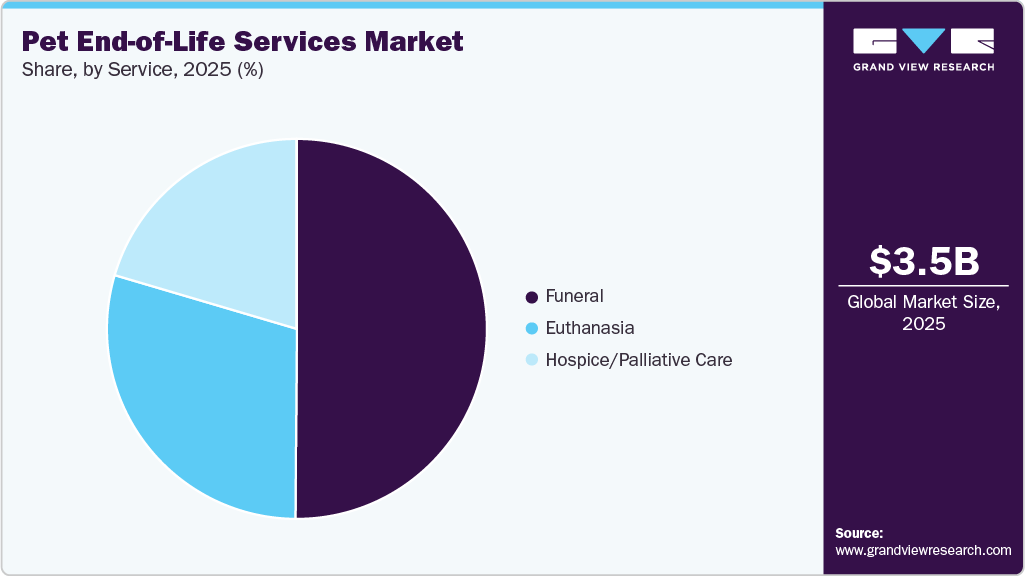
The hospice/palliative care segment is expected to grow at the fastest rate over the forecast period. This can be attributed to owners increasingly requesting comfort-focused support from the early stages of terminal illness. Families are seeking home-based guidance for pain assessment, symptom monitoring, and quality-of-life planning, generating recurring visits and stronger case flows. Mobile teams are expanding in major cities worldwide, giving more owners access to managed end-of-life care rather than sudden euthanasia. Clinics are referring complex cases to hospice providers because intensive monitoring, hydration, and nursing care demand resources beyond standard practice. Owners are investing in longer care periods, as structured guidance reduces stress and supports informed decision-making. Growing acceptance of individualized end-of-life planning and hospice-led counseling is driving rapid global growth in this segment.
Regional Insights
North America dominated the market with the largest revenue share of 42.09% in 2025. This can be owed to owners increasingly seeking at-home hospice, mobile euthanasia, and structured funeral services. Clinics and specialized providers are expanding city by city, improving access to end-of-life care. Families are demanding regulated handling, personalized memorial options, and counseling support, which is increasing paid service adoption. Growing awareness of pet well-being and comfort-focused care is keeping demand high.
Europe Pet End-of-Life Services Market Trends
The pet end-of-life services market in the U.S. accounted for the highest market share in the North America market, owing to pet owners increasingly using mobile euthanasia and in-home hospice services for dogs and cats. Families are preferring formal cremation and memorial services over informal disposal. Clinics and licensed providers are responding with structured packages, including transport, counseling, and keepsakes. Legislative oversight and rising acceptance of end-of-life planning are encouraging responsible service adoption.
Mexico pet end-of-life services market is expected to grow at a significant CAGR during the forecast period. Rising pet ownership and urbanization are driving demand for structured cremation and at-home hospice care. Families are showing a higher willingness to pay for professional handling and emotional support. Mobile services and small-scale specialized providers are expanding in major cities. Awareness campaigns and education about pet welfare are increasing the acceptance of end-of-life services.
Europe Pet End-of-Life Services Market Trends
The pet end-of-life services market in Europe is growing steadily as owners are seeking structured hospice, euthanasia, and funeral services. Urban centers are expanding access to mobile and at-home care, which is increasing adoption rates. Clinics are referring cases to licensed providers to meet demand for regulated handling and emotional support. Rising awareness of pet welfare and quality-of-life planning is encouraging families to choose formal end-of-life options.
The UK pet end-of-life services market is expected to dominate Europe in 2025. Owners are seeking personalized care, including home hospice, mobile euthanasia, and memorial services. Clinics are adopting joint venture models with specialized providers to improve service reach. Rising acceptance of structured end-of-life planning and initiatives to reduce euthanasia-related trauma are supporting a high market share.
The pet end-of-life services market in Sweden is expected to grow at the fastest rate in Europe over the forecast period. Demand is rising for mobile hospice teams, home-based guidance, and counseling services. Owners are showing a higher willingness to pay for comfort-centered care and professional handling. Expansion of specialized providers in major cities is improving access. Awareness campaigns on pet welfare and ethical end-of-life care are driving rapid adoption.
Asia Pacific Pet End-of-Life Services Market Trends
The pet end-of-life services market in the Asia Pacific is expected to grow at the fastest CAGR over the forecast period. The region's growth can be attributed to pet families increasingly choosing formal cremation and home-based care for their pets. Furthermore, new facilities are opening in dense urban areas of the region. Local authorities are approving pet crematoriums and structured handling units, which is raising access to services. Providers are building mobile teams that offer guided euthanasia and hospice support. Growing attention to dignity, transparency, and safe disposal is also lifting regional demand.
China pet end-of-life services market held the largest revenue share in the region and is witnessing new growth opportunities. This is because households in the country are spending more on planned memorials, private cremation, and structured pick-up services. Large cities are supporting formal pet cemeteries and regulated cremation units, so adoption is rising. Clinics are working with private operators who offer tracked ashes and standard handling. Strong growth in companion animal numbers is expanding the customer base. Social media awareness around grief support is pushing families toward paid services.
The pet end-of-life services market in Indiais growing at the fastest rate in the region. The growth is supported by major cities in the country opening new pet crematoriums in Mumbai, Chennai, Thane, and other metros, resulting in improved access. Families are choosing formal cremation rather than informal disposal, and awareness is rising through local news coverage. State bodies are approving structured euthanasia rules for terminal cases, which is shifting demand toward regulated providers. Community debates around animal hospice projects are raising visibility of end-of-life care. Growth in urban pet ownership and strong interest in home-based support are driving rapid expansion.
Latin America Pet End-of-Life Services Market Trends
The pet end-of-life services market in Latin America is poised for strong growth, as pet loss care is becoming part of routine veterinary support. Pet owners are asking for formal grief guidance that mirrors human bereavement services, and new training programs are helping clinics offer structured conversations. Countries from the region are adding licensed cremation units with digital tracking, so owners are gaining predictable timelines. Regional media is covering cases of improper disposal, and this is pushing demand toward regulated operators.
Brazil pet end-of-life services market is gaining momentum, as large metros are adopting municipal rules for pet cremation and ash handling. Private operators are adding 24-hour pick up, live-stream viewing for remote families, and bilingual counseling, which is widening their reach. Pet care insurers are testing add-on coverage for end-of-life events, and this is drawing new users into formal service channels. Growth in pet cemeteries around São Paulo and Recife is creating space for subscription-style memorial plans. These shifts are building a more structured market.
Middle East & Africa Pet End-of-Life Services Market Trends
The pet end-of-life services market in MEA is expanding as companion care facilities in the Gulf and North Africa are adding end-of-life protocols to routine practice. Regional veterinary boards are running workshops on communication skills for difficult decisions, and this is normalizing early planning. New cremation centers in Gulf cities are offering climate-controlled viewing rooms and digital certificates, which raise trust in service quality. Families from expatriate communities are requesting familiar memorial formats, and providers are adjusting their models to meet that demand.
South Africa pet end-of-life services market is expanding, fueled by local councils debating safe disposal rules and long-term space planning for urban burial sites. Private operators are offering eco-friendly cremation options, plantable urns, and mobile euthanasia teams that serve townships and suburbs. Wildlife rehabilitation groups are partnering with small animal clinics to share technical training on sedation and handling, which improves service standards. Rising awareness of past regulatory lapses in pet cremation services is prompting families to choose verified operators who offer full transparency.
Key Pet End-of-Life Services Company Insights
The market is moving toward steady structural change as large veterinary groups build wider networks and formal referral paths for hospice, euthanasia, and funeral care. These groups are growing their reach by linking general practice clinics with mobile teams, grief support units, and cremation centers, and this is raising their share of total case volumes. Competitive momentum is rising as funeral operators buy new cremation units in major cities and form service agreements with veterinary hospitals. Specialist providers that work only on end-of-life care are holding strong growth because they run consistent at-home hospice and mobile euthanasia programs with clear quality controls and predictable response times.
Smaller regional operators are joining larger networks to gain training support, call routing systems, and access to clinical guidance that helps them manage rising caseloads. Public and nonprofit groups are shaping the field through staff training, community programs, and direct support for low-income families. As regulators issue new permits for cremation units, review euthanasia protocols, and expand oversight of mobile services, leading companies are widening their operational base and setting the pace for the rest of the sector.
Key Pet End-of-Life Services Companies:
The following key companies have been profiled for this study on the pet end-of-life services market.
- FNP Care Pvt Ltd
- Animal Humane Society
- American Society for the Prevention of Cruelty to Animals (ASPCA)
- Thrive Pet Healthcare
- BluePearl Holdings LLC
- Royal Veterinary College (RVC) UK
- Dignipets Ltd
- After Life Vets
- Medivet
- Gateway Services Inc.
- Lap of Love
Recent Developments
-
In November 2025, CodaPet expanded its in-home pet euthanasia services to Plano, Texas, by adding a new licensed veterinarian to its network. The expansion gives more pet owners access to compassionate end-of-life care at home, letting pets pass peacefully in familiar surroundings with licensed professionals and optional after-care support.
-
In May 2025, Dignipets launched a joint-venture partner (JVP) programme that lets experienced vets run their own local Dignipets-branded end-of-life pet care services with full training and support. The programme already covers 15 locations across the UK via five partner teams and offers 24/7 reception, hospice nursing, online consultations, and mobile euthanasia care at home.
-
In May 2025, Funecap Group acquired the pet-crematoria business from CVS Group plc for GBP 42.4 (USD 56.02) million. The deal broadens Funecap’s footprint in pet after-care. The acquired business will continue to service CVS clinics via cremation and clinical waste disposal under Funecap’s subsidiary structure.
-
In March 2025, the city of Jamshedpur opened its first pet crematorium near Jubilee Park, offering a gas-based, eco-friendly cremation service for pets up to 50 kg at a fee of INR 3,000 (USD 33.52). The facility aims to give pet owners a safe, hygienic, and respectful option for final rites instead of informal disposal.
Pet End-of-Life Services Market Report Scope
Report Attribute
Details
Market size value in 2026
USD 3.78 billion
Revenue forecast in 2033
USD 7.17 billion
Growth rate
CAGR of 9.58% from 2026 to 2033
Actual data
2021 - 2025
Forecast period
2026 - 2033
Quantitative units
Revenue in USD million/billion and CAGR from 2026 to 2033
Report coverage
Revenue forecast, company ranking, competitive landscape, growth factors, and trends
Segments covered
Service, pet, provider, region
Regional scope
North America; Europe; Asia Pacific; Latin America; MEA
Country scope
U.S.; Canada; Mexico; UK; Germany; France; Italy; Spain; Denmark; Sweden; Norway; Japan; China; India; Thailand; South Korea; Australia; Brazil; Argentina; South Africa; UAE; Saudi Arabia; Kuwait; Qatar; Oman
Key companies profiled
FNP Care Pvt Ltd.; Animal Humane Society; American Society for the Prevention of Cruelty to Animals (ASPCA); Thrive Pet Healthcare; BluePearl Holdings LLC; Royal Veterinary College (RVC) UK; Dignipets Ltd.; After Life Vets; Medivet; Gateway Services Inc.; Lap of Love
Customization scope
Free report customization (equivalent up to 8 analysts working days) with purchase. Addition or alteration to country, regional & segment scope.
Pricing and purchase options
Avail customized purchase options to meet your exact research needs. Explore purchase options
Global Pet End-of-Life Services Market Report Segmentation
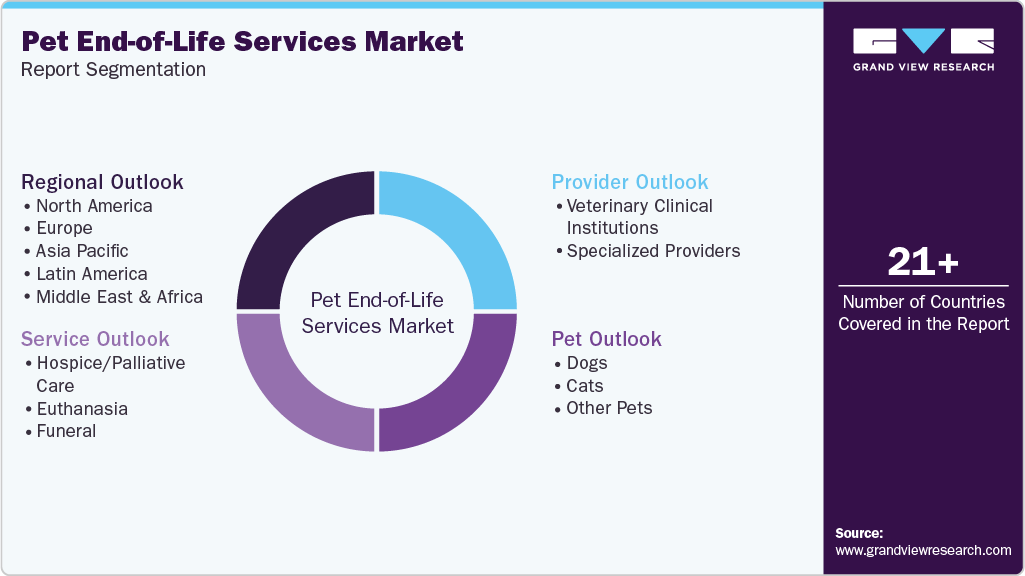
This report forecasts revenue growth at global, regional, and country levels and provides an analysis of the latest industry trends in each of the sub-segments from 2021 to 2033. For this study, Grand View Research has segmented the pet end-of-life services market report based on service, pet, provider, and region:
-
Service Outlook (Revenue, USD Million, 2021 - 2033)
-
Hospice/Palliative Care
-
At-home
-
At-institution
-
-
Euthanasia
-
At-home
-
At-institution
-
-
Funeral
-
Burial
-
Private
-
Communal
-
-
Cremation
-
Private
-
Communal
-
-
-
-
Pet Outlook (Revenue, USD Million, 2021 - 2033)
-
Dogs
-
Cats
-
Other Pets
-
-
Provider Outlook (Revenue, USD Million, 2021 - 2033)
-
Veterinary Clinical Institutions
-
Specialized Providers
-
-
Region Outlook (Revenue, USD Million, 2021 - 2033)
-
North America
-
U.S.
-
Canada
-
Mexico
-
-
Europe
-
UK
-
Germany
-
France
-
Italy
-
Spain
-
Denmark
-
Sweden
-
Norway
-
-
Asia Pacific
-
Japan
-
China
-
India
-
Australia
-
Thailand
-
South Korea
-
-
Latin America
-
Brazil
-
Argentina
-
-
Middle East & Africa
-
South Africa
-
UAE
-
Saudi Arabia
-
Kuwait
-
Qatar
-
Oman
-
-
Frequently Asked Questions About This Report
b. Key factors that are driving the market growth include rapid expansion of in-home and institutional end-of-life services, growing global awareness of hospice, palliative care & compassionate EOL practices, regulatory momentum supporting ethical euthanasia and cremation, and rising demand for pet cremation & funeral infrastructure globally.
b. The global pet end-of-life services market size was estimated at USD 3.45 billion in 2025 and is expected to reach USD 3.78 billion in 2026.
b. The global pet end-of-life services market is expected to grow at a compound annual growth rate of 9.58% from 2026 to 2033 to reach USD 7.17 billion by 2033.
b. North America dominated the pet end-of-life services market with a share of 42.09% in 2025. This is attributable to owners increasingly seeking at-home hospice, mobile euthanasia, and structured funeral services. Clinics and specialized providers are expanding city by city, improving access to end-of-life care.
b. Some key players operating in the pet end-of-life services market include FNP Care Pvt Ltd, Animal Humane Society, American Society for the Prevention of Cruelty to Animals (ASPCA), Thrive Pet Healthcare, BluePearl Holdings LLC, Royal Veterinary College (RVC) UK, Dignipets Ltd, After Life Vets, Medivet, Gateway Services Inc., & Lap of Love


Share this report with your colleague or friend.
Need a Tailored Report?
Customize this report to your needs — add regions, segments, or data points, with 20% free customization.


ISO 9001:2015 & 27001:2022 Certified
We are GDPR and CCPA compliant! Your transaction & personal information is safe and secure. For more details, please read our privacy policy.
Trusted market insights - try a free sample
See how our reports are structured and why industry leaders rely on Grand View Research. Get a free sample or ask us to tailor this report to your needs.