- Home
- »
- Healthcare IT
- »
-
North America Acute Care Telemedicine Market Report, 2033GVR Report cover
![North America Acute Care Telemedicine Market Size, Share & Trends Report]()
North America Acute Care Telemedicine Market (2026 - 2033) Size, Share & Trends Analysis Report By Delivery (Clinician-to-Clinician, Clinician-to-Patient), By Application (Teleradiology, Telepsychiatry, Teleneurology, Tele-ICU), By End-use, By Country, And Segment Forecasts
- Report ID: GVR-4-68040-496-7
- Number of Report Pages: 120
- Format: PDF
- Historical Range: 2021 - 2025
- Forecast Period: 2026 - 2033
- Industry: Healthcare
- Report Summary
- Table of Contents
- Segmentation
- Methodology
- Download FREE Sample
-
 Download Sample Report
North America Acute Care Telemedicine Market Summary
The North America acute care telemedicine market size was estimated at USD 16.20 billion in 2025 and is projected to reach USD 45.35 billion by 2033, growing at a CAGR of 13.49% from 2026 to 2033. Factors such as the growing adoption of telemedicine solutions by healthcare providers, rising consumer demand and patient acceptance, delivery of enhanced quality of care, and the shortage of specialty physicians and healthcare staff contribute to market growth.
Key Market Trends & Insights
- The U.S. acute care telemedicine industry dominated the North America market in 2025 and accounted for the largest revenue share of 84.30%.
- By delivery, the clinician-to-clinician segment held the largest revenue share of 62.19% in 2025.
- By application, the teleradiology segment held the largest revenue share of 36.88% in 2025.
- By end-use, the hospitals and clinics segment held the largest market share of 75.86% in 2025.
Market Size & Forecast
- 2025 Market Size: USD 16.20 Billion
- 2033 Projected Market Size: USD 45.35 Biillion
- CAGR (2026-2033): 13.49%
For instance, according to the Association of American Medical Colleges (AAMC), the U.S. is expected to witness a shortage of up to 86,000 physicians by 2036. The increasing demand for remote healthcare services is revolutionizing North America's acute care telemedicine industry. According to IntuitionLabs article published in January 2026, Remote patient monitoring (RPM) has become a vital component of acute and post-acute care by supporting continuous oversight of chronic and high-risk patients, improving clinical outcomes, and enabling early intervention. Nearly 50 million individuals in the U.S. currently use at least one RPM device to track health metrics, while approximately 80% of the population expresses a willingness to incorporate remote monitoring into routine medical care. Provider adoption has also accelerated rapidly, with 81% of clinicians using RPM in 2023, a 305% increase from 2021, emphasizing the growing integration of digital monitoring tools into acute care workflows.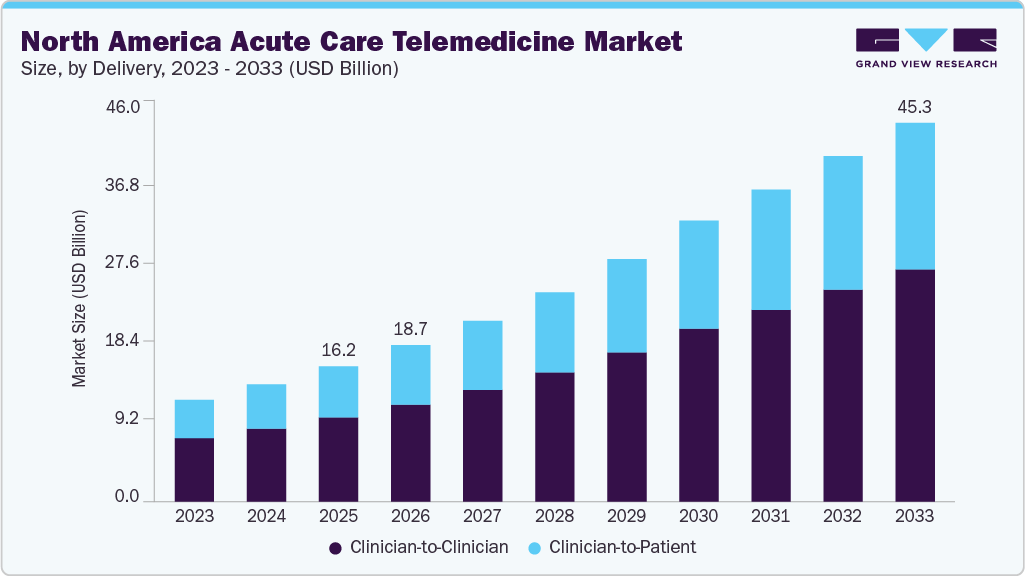
Moreover, the increasing burden of chronic diseases and the need for rapid specialist access during medical emergencies have elevated the role of telemedicine platforms in acute care delivery. These solutions facilitate real-time physician consultations, remote diagnostics, and continuous patient surveillance, helping hospitals reduce emergency department congestion and improve clinical response times. The integration of advanced technologies such as artificial intelligence and Internet of Things enabled devices further strengthens acute care telemedicine by enabling predictive insights, seamless data exchange with hospital systems, and expanded access to critical care services in rural and underserved communities.
Table 1 Top Deals of the Telemedicine Market
Target
Acquirer
Acquirer Sector
Year
Amount (USD Million)
Catapult Health
Teladoc Health
Preventative Care
2025
65
AGNES Connect
UniDoc Health Corp.
Telemedicine
2025
0.175
In addition, with the widespread use of smartphones and the availability of advanced technology, investors are developing innovative solutions to deliver high-quality healthcare and greater patient convenience through mobile platforms. These platforms enable patients to monitor their fitness routines and get medical advice through mobile applications, phone calls, or WhatsApp messaging. Several apps, including Practo, AssistRx, and Wareed have been introduced that allow patients to book appointments, track their medical consultations and prescriptions, and store their health-related data throughout their treatment.
Moreover, both regulatory changes and technological advancements have facilitated the rapid increase in telemedicine adoption. During the pandemic, the U.S. and Canadian governments relaxed specific regulations on telehealth, particularly reimbursement policies, enabling broader use. This increased patient acceptance, as many sought healthcare while staying home to mitigate the risk of virus exposure. While healthcare systems and patients became more used to virtual care, the North American market saw a substantial rise in telemedicine platforms, particularly for acute care services such as emergency consultations and post-discharge follow up care.
Case Study: The hospital at home in the USA: current status and future prospects
Background
According to the Springer Nature Limited article published in February 2024, in the U.S., the Acute Hospital Care at Home (AHCAH) model integrates telemedicine, video visits, remote monitoring, and in person nursing to deliver hospital level acute care at patients’ homes. A 2024 evidence summary and several related studies show that this approach reduces the length of acute care episodes, maintains similar or better clinical outcomes (including mortality and readmissions), and improves patient experience compared with traditional inpatient stays.
In matched analyses of acute infectious cases treated through telemedicine enabled home care, patients had shorter care episodes without higher readmission risk and explained lower mortality within 30 days compared with standard hospital care.
Key Market Impact
-
Capacity relief for hospitals: Telemedicine enabled AHCAH helps reduce pressure on inpatient beds by shifting eligible acute care to homes.
-
Cost optimization: Emerging evidence points to lower overall acute care costs and better resource utilization compared with traditional hospital stays.
- Accelerated telehealth adoption: These models drive broader uptake of remote monitoring, virtual clinical workflows, and digital health technologies across North America.
Market Concentration & Characteristics
The North America acute care telemedicine industry is characterized by a high degree of innovation, driven by improved internet infrastructure and rising smartphone adoption. These advancements are accelerating the expansion of telemedicine solutions by enhancing real-time connectivity, remote clinical access, and care delivery efficiency. For instance, in April 2025, DocNow Telehealth platform launched an integrated telehealth solution built into the DocNow EHR, enabling virtual visits for post-acute care providers (Skilled Nursing Facilities, LTC, and Home Health).
The North America acute care telemedicine industry is characterized by moderate merger and acquisition activity, driven by providers’ efforts to expand specialty coverage, enhance integrated virtual care platforms, and address growing demand for telemedicine solutions. For instance, in April 2025, Teladoc Health acquired UpLift, a virtual mental health therapy, psychiatry and medication management provider, in an all-cash transaction USD 30 Million, expanding its BetterHelp mental health services and integrated virtual care offerings.
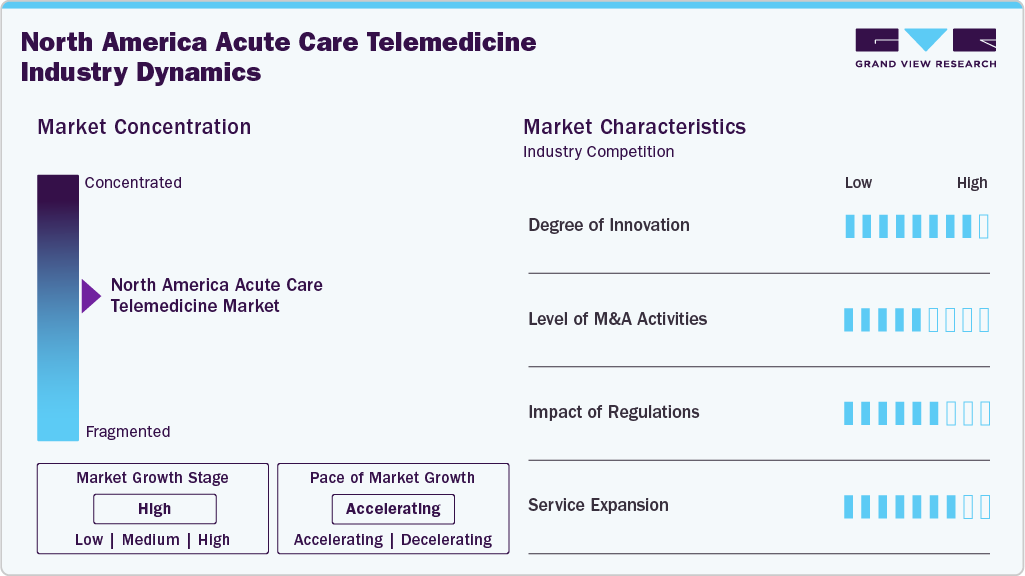
The eased regulations and formation of a robust framework for the practice of telemedicine have positively impacted the market growth. A combination of federal and state laws, healthcare regulations, and guidance from various agencies primarily governs the regulatory framework for acute care telemedicine in the U.S. At the federal level, the Centers for Medicare & Medicaid Services (CMS) has been pivotal, especially with the expansion of telemedicine services through the Medicare program.
Several market players are expanding their business by launching new services to strengthen their market position and portfolio. For instance, in October 2024, iMD Companies, Inc. along with its subsidiary Riize, LLC (Riize Health) introduced and launched a telemedicine platform in Canada. Riize Health's entirely online system offers discreet and secure access to licensed healthcare professionals for evaluating and prescribing personal health products.
Delivery Insights
By delivery, the clinician-to-clinician segment held the largest market share of 62.19% in 2025. The rise in adoption of visualized care delivery solutions, various strategies undertaken by market players, increased user awareness, and the introduction of technologically advanced solutions are anticipated to drive segment growth. For instance, in December 2024, VSee Health, Inc., a telehealth solutions provider, signed a teleradiology contract with the largest post-acute care hospital systems in the U.S. This collaboration is set to launch in the first quarter of 2025. It represents the latest expansion of VSee's teleradiology client base, further establishing its reputation as a provider of advanced imaging solutions.
The clinician-to-patient segment is anticipated to grow at the fastest CAGR over the forecast period. The Clinician-to-Patient model in acute care telemedicine enables real-time remote interactions between healthcare providers and patients, ensuring timely and effective care, particularly in emergency or urgent situations. Through high-definition video consultations, clinicians can assess patients visually, while audio calls offer an alternative when video is not possible. For instance, the Koninklijke eICU program by Philips N.V. transforms an organization's clinical approach by providing centralized, remote monitoring from experienced professionals, proprietary algorithms, and clinical decision support systems, facilitating proactive care delivery
Application Insights
By application, the teleradiology segment held a significant market share of 36.88% in 2025. Integrating artificial intelligence (AI) into teleradiology workflows has amplified its utility in acute care. AI algorithms assist in analyzing imaging data, prioritizing critical cases, and streamlining decision-making. Vendor-neutral solutions ensure seamless interoperability with hospital information systems, making teleradiology useful for acute care providers. For instance, in August 2022, STAR Teleradiology, a Florida-based radiology practice, expanded its partnership with Rad AI, a radiologist-led AI company, to use its advanced technology to generate customized radiology report impressions for their entire practice. Thus, such factors are anticipated to boost the segment growth over the forecast period.
The telepsychiatry segment is expected to grow at the fastest CAGR over the forecast period. Telepsychiatry offers access to a variety of experts, rapid availability of psychiatric interventions & assessments, access to a range of experts, and reduction in the stigma associated with mental health treatment, which can drive the market during the forecast period. In the U.S., as per the National Alliance on Mental Illness in 2024, over 49.9% of youth aged between 18 and 25 years suffer from mental health conditions. Similarly, over 19.1% of U.S. adults live with anxiety disorders. Therefore, the demand for telepsychiatry solutions among patients is growing.
End-use Insights
By end-use, the hospitals & clinics segment held the largest market share of 75.86% in 2025 and the segment is expected to witness the fastest CAGR over the forecast period. Telemedicine helps reduce hospital congestion by enabling virtual assessments and triage. This allows medical teams to prioritize care based on severity, which helps manage patient flow, especially in times of high demand or during public health emergencies such as flu outbreaks. Moreover, hospitals and clinics are leveraging these telemedicine solutions to improve patient care and reduce operational costs by minimizing the need for in-person consultations and hospital readmissions.
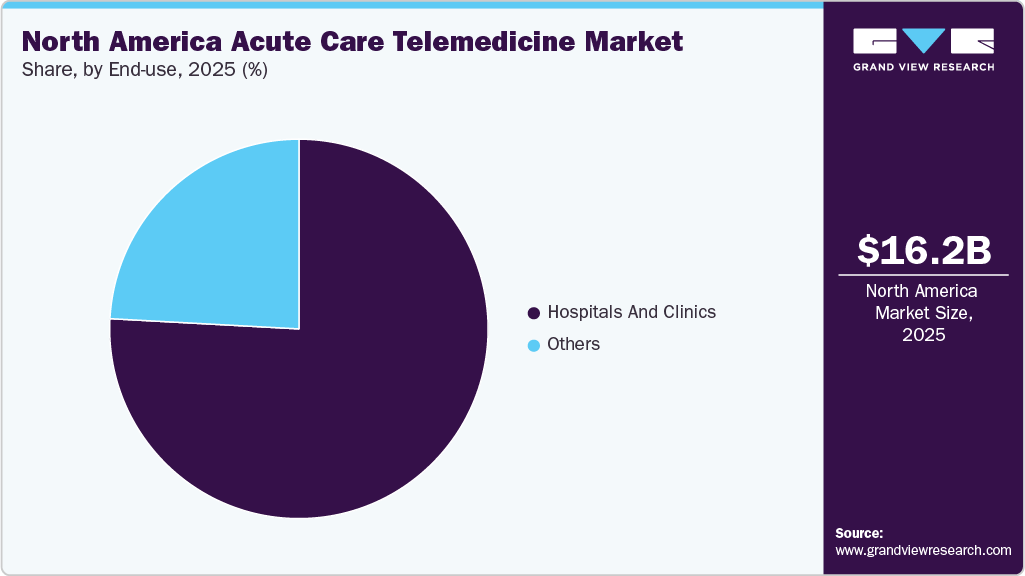
The others segment is expected to witness a significant CAGR over the forecast period. The other segment comprises urgent care centers, rehabilitation facilities, and home healthcare services. Rehabilitation facilities are adopting telemedicine for post acute care management, enabling remote monitoring of patients recovering from surgeries or severe illnesses. This ensures continuous care and facilitates the early detection of complications, improving recovery outcomes.
Country Insights
The U.S. acute care telemedicine industry dominated the market in 2025 and accounted for the largest revenue share of 84.30%. The growing adoption of smart healthcare solutions that include various technologies, such as smart wearables, mobile apps, and eHealth services, such as telemedicine & Electronic Health Record (EHR) services, for remote access to information on severe and chronic healthcare conditions fuels the market growth in the country. For instance, according to FAIR Health’s Monthly Telehealth Regional Tracker, in January 2023, there was a 7.3% rise in national telehealth usage, with the percentage of medical claim lines increasing from 5.5% in December 2022 to 5.9% in January.
Key North America Acute Care Telemedicine Company Insights
Key players operating in the North America acute care telemedicine industry are undertaking various initiatives to strengthen their market presence and increase the reach of their services. Strategies such as expansion activities and partnerships are playing a key role in propelling the market growth.
Key Spay And Neuter Companies:
- Teladoc Health, Inc.
- AMD Global Telemedicine
- Eagle Telemedicine
- AMN Healthcare Services Inc.
- Access TeleCare, LLC
- Enghouse Video (Vidyo, Inc.)
- RelyMD
- Doctor On Demand (Included Health, Inc.)
- GE HealthCare
- Advanced Telemed Services
Recent Developments
-
In May 2025, Equum Medical acquires VeeOne Health’s clinical services portfolio, expanding its acute telehealth services (including tele-psychiatry, tele-neurology, tele-ID, tele-pulmonary and tele-ICU services) to support physician coverage in 200 hospitals and post-acute facilities nationwide.
-
In December 2024, Eagle Telemedicine introduced flexible financing options for its Eagle MedWorks Connect telemedicine carts through Fifth Third Bank to help healthcare facilities streamline their adoption of telemedicine technology.
-
In October 2024, AMD Global Telemedicine partnered with Carefluence, an innovator in interoperability solutions, to enhance AMD’s robust telehealth solutions, provide continuity of care, and enhance clinical outcomes.
-
In February 2024, the Eagle Rural Care Alliance, a program enabling rural/community hospitals to access telemedicine specialty care services (multiple specialties) collaboratively expanding telehealth access for underserved regions.
-
In April 2024, Enghouse Video partnered with SONIFI Health, a virtual care provider, to provide advanced telehealth solutions in hospital settings.
North America Acute Care Telemedicine Market Report Scope
Report Attribute
Details
Market size in 2026
USD 18.71 billion
Revenue forecast in 2033
USD 45.35 billion
Growth rate
CAGR of 13.49% from 2026 to 2033
Actual data
2021-2025
Forecast data
2026 - 2033
Quantitative units
Revenue in USD million/billion and CAGR from 2026 to 2033
Report coverage
Revenue forecast, company ranking, competitive landscape, growth factors, and trends
Segments covered
Delivery, application, end-use, region
Regional scope
North America
Country scope
U.S.; Canada; Mexico
Key companies profiled
Teladoc Health, Inc.; AMD Global Telemedicine; Eagle Telemedicine; AMN Healthcare Services Inc.; Access TeleCare, LLC; Enghouse Video (Vidyo, Inc.); RelyMD; Doctor On Demand (Included Health, Inc.); GE HealthCare; Advanced Telemed Services
Customization scope
Free report customization (equivalent up to 8 analysts working days) with purchase. Addition or alteration to country, regional & segment scope.
Pricing and purchase option
Avail customized purchase options to meet your exact research needs. Explore purchase options
North America Acute Care Telemedicine Market Report Segmentation
This report forecasts revenue growth at regional and country levels and provides an analysis of the latest industry trends in each of the sub-segments from 2021 to 2033. For this study, Grand View Research has segmented the North America acute care telemedicine market report based on delivery, application, end-use, and region:
-
Delivery Outlook (Revenue, USD Million, 2021 - 2033)
-
Clinician-to-Clinician
-
Clinician-to-Patient
-
-
Application Outlook (Revenue, USD Million, 2021 - 2033)
-
Teleradiology
-
Telepsychiatry
-
Tele-ICU
-
Teleneurology
-
Telenephrology
-
Others
-
-
End-use Outlook (Revenue, USD Million, 2021 - 2033)
-
Hospitals and Clinics
-
Others
-
-
Regional Outlook (Revenue, USD Million, 2021 - 2033)
-
North America
-
U.S.
-
Canada
-
Mexico
-
-
Frequently Asked Questions About This Report
b. Some key players operating in the North America acute care telemedicine market include Teladoc Health, Inc., AMD Global Telemedicine, Eagle Telemedicine, AMN Healthcare Services Inc., Access TeleCare, LLC, Enghouse Video (Vidyo, Inc.), RelyMD, Doctor On Demand (Included Health, Inc.), GE HealthCare, Advanced Telemed Services.
b. Factors such as the growing adoption of telemedicine solutions by healthcare providers, rising consumer demand and patient acceptance, delivery of enhanced quality of care, and the shortage of specialty physicians and healthcare staff contribute to market growth.
b. The global North America acute care telemedicine market size was estimated at USD 16.20 billion in 2025 and is expected to reach USD 18.71 billion in 2026.
b. The global North America acute care telemedicine market is expected to grow at a compound annual growth rate of 13.49% from 2026 to 2033 to reach USD 45.35 billion by 2033.
b. The clinician-to-clinician segment held the largest market share of 62.19% in 2025, owing to the rise in the adoption of visualized care delivery solutions, various strategies undertaken by market players, and increased user awareness.


Share this report with your colleague or friend.
Need a Tailored Report?
Customize this report to your needs — add regions, segments, or data points, with 20% free customization.


ISO 9001:2015 & 27001:2022 Certified
We are GDPR and CCPA compliant! Your transaction & personal information is safe and secure. For more details, please read our privacy policy.
Trusted market insights - try a free sample
See how our reports are structured and why industry leaders rely on Grand View Research. Get a free sample or ask us to tailor this report to your needs.