- Home
- »
- Consumer F&B
- »
-
Non-Alcoholic Beverages Market Size, Industry Report, 2033GVR Report cover
![Non-Alcoholic Beverages Market Size, Share & Trends Report]()
Non-Alcoholic Beverages Market (2026 - 2033) Size, Share & Trends Analysis Report By Product (Carbonated Soft Drink, Bottled Water, RTD Tea & Coffee, Functional Beverages, Juices, Dairy-based Beverages, Others), By Distribution Channel, By Region And Segment Forecasts
- Report ID: GVR-2-68038-206-8
- Number of Report Pages: 180
- Format: PDF
- Historical Range: 2021 - 2024
- Forecast Period: 2026 - 2033
- Industry: Consumer Goods
- Report Summary
- Table of Contents
- Segmentation
- Methodology
- Download FREE Sample
-
 Download Sample Report
Non-Alcoholic Beverages Market Summary
The global non-alcoholic beverages market size was estimated at USD 1,391.35 billion in 2025 and is projected to reach USD 2,551.17 billion by 2033, growing at a CAGR of 8.0% from 2026 to 2033. Rising health consciousness and the growing demand for functional beverages are key drivers influencing the non-alcoholic beverages industry.
Key Market Trends & Insights
- Asia Pacific dominated the global non-alcoholic beverages market with the largest revenue share of 33.9% in 2025.
- By product, the carbonated soft drinks segment led the market with the largest revenue share of 27.4% in 2025.
- By distribution channel, the retail segment led the market with the largest revenue share of 75.7% in 2025.
Market Size & Forecast
- 2025 Market Size: USD 1,391.35 Billion
- 2033 Projected Market Size: USD 2,551.17 Billion
- CAGR (2026-2033): 8.0%
- Asia Pacific: Largest market revenue share in 2025
Consumers are increasingly reducing alcohol consumption and seeking healthier drink options that support overall wellness, which has led to higher demand for beverages with low sugar, natural ingredients, and clean-label formulations. At the same time, many consumers prefer drinks that offer additional health benefits such as improved energy, hydration, immunity, and digestive support.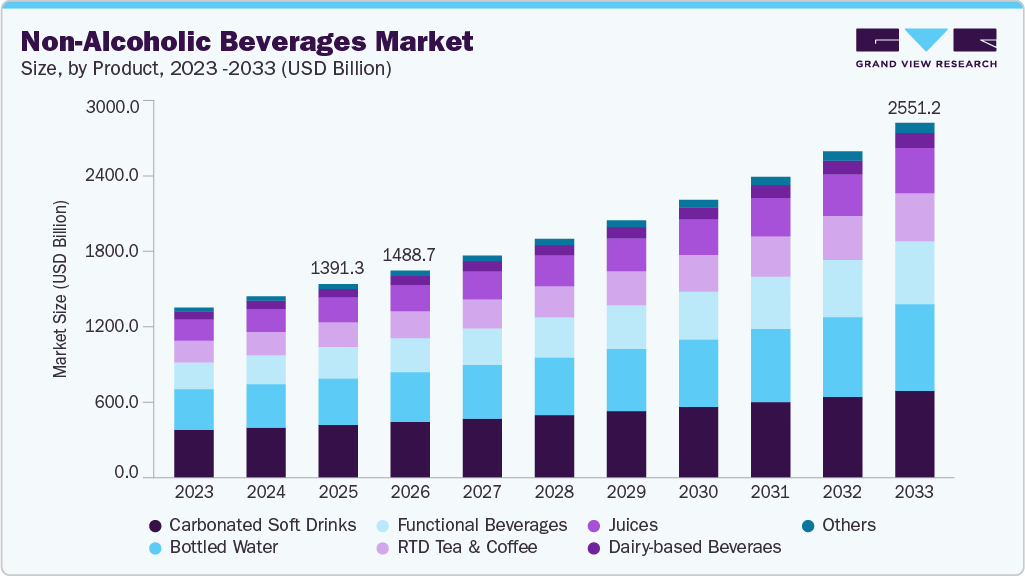
A growing sober curious movement is emerging as a key trend shaping the non-alcoholic beverages industry, as more consumers actively seek alternatives to traditional alcoholic drinks. Increasing awareness about health, wellness, and mindful drinking is encouraging individuals to reduce alcohol consumption while still enjoying social drinking experiences. According to a 2025 NCSolutions consumer survey, nearly 49% of Americans planned to drink less alcohol in 2025, a 44% increase from 2023, highlighting the rapid shift toward alcohol moderation. Additionally, about 30% of consumers participated in “Dry January” in 2025, a 36% increase from 2024, further reflecting the growing consumer preference for alcohol-free lifestyles and boosting demand for innovative non-alcoholic beverage options such as mocktails, functional drinks, and alcohol-free beer and spirits.
The growing availability of non-alcoholic beverage options in retail and foodservice is emerging as a key trend in the non-alcoholic beverages industry, as restaurants, bars, and retail stores increasingly expand their alcohol-free drink offerings to meet rising consumer demand. This wider product availability allows consumers to easily access alcohol-free beverages across multiple channels. According to the 2025 survey, 37% of Americans noticed more restaurants, bars, and stores offering non-alcoholic options over the past year, with stronger awareness among younger consumers, including 53% of Gen Z and 49% of millennials. In addition, 37% of consumers purchase non-alcoholic beverages from grocery stores and 30% from superstores, while 20% buy them in restaurants, indicating expanding distribution channels for alcohol-free drinks.
Influencer and social media marketing targeting the Sober Curious Lifestyle, as beverage brands increasingly use digital platforms and influencer partnerships to attract younger consumers. Social media plays a crucial role in product discovery, particularly among younger generations. Survey findings show that 35% of Gen Z and millennials discover new non-alcoholic beverages through social media, compared to 22% of Gen X and 18% of baby boomers. In addition, 28% of Gen Z and millennials have tried alcohol-free drinks endorsed by celebrities or influencers. Marketing strategies aligned with the sober-curious lifestyle are also gaining traction, with 43% of Gen Z and 33% of millennials more likely to purchase beverages promoted with this positioning. In comparison, 75% of Americans say they are likely to try a new beverage product in 2025 if it is marketed as supporting the sober-curious lifestyle, up from 70% in 2024.
Consumer Insights
Consumers increasingly prefer low-sugar, sugar-free, and healthier drink options due to rising awareness of the health risks associated with excessive sugar and alcohol consumption. Many buyers choose beverages with natural ingredients, reduced calories, and clean labels. Health considerations are a major purchase factor, with many consumers selecting non-alcoholic drinks to support overall wellness and healthier lifestyles.
Taste remains one of the most important purchase criteria for consumers. People prefer non-alcoholic drinks that offer rich flavors, refreshing taste, and innovative flavor combinations, such as fruit infusions, botanicals, and herbal blends. Consumers are also increasingly interested in experimenting with new flavors while still enjoying alcohol-free beverages.
Many consumers look for beverages that provide functional benefits such as energy, hydration, immunity support, and gut health. Drinks containing vitamins, probiotics, electrolytes, or antioxidants are gaining popularity, particularly among younger consumers who prefer beverages that contribute to wellness.
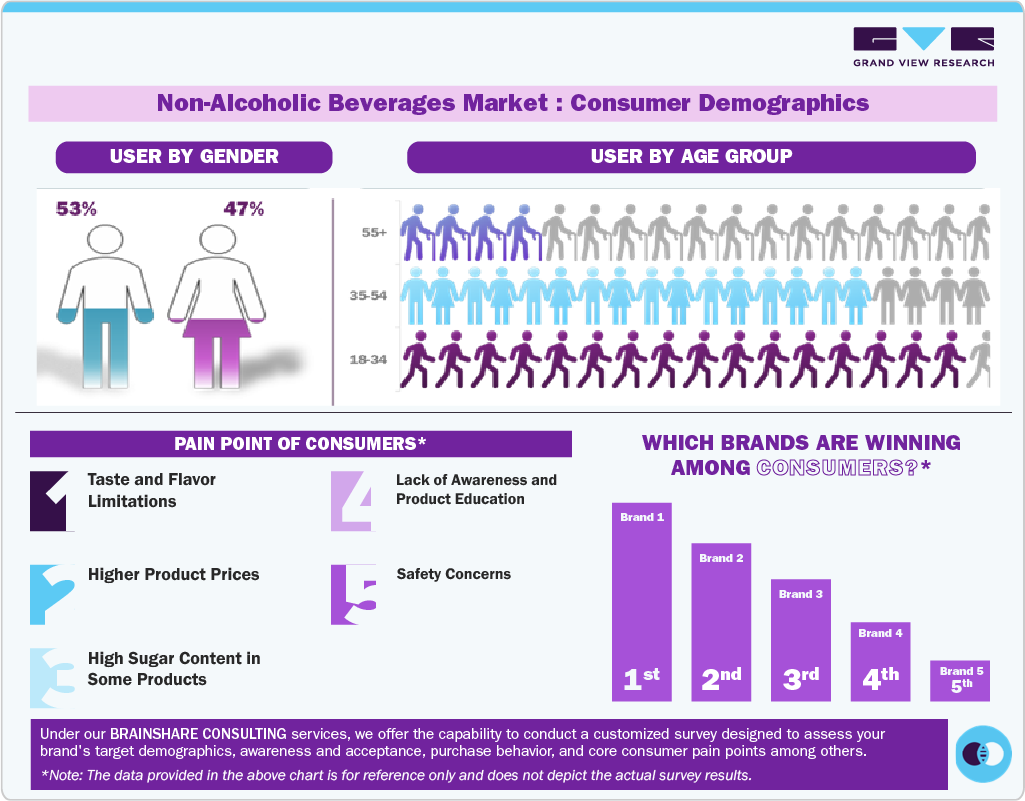
Growing health and wellness awareness is shaping consumer preferences in the non-alcoholic beverages industry, as many individuals are increasingly seeking alternatives to traditional alcoholic drinks that support healthier lifestyles. Consumers are becoming more conscious of alcohol’s potential health effects and are therefore opting for alcohol-free beverages that allow them to enjoy social occasions while maintaining wellness goals. This shift has encouraged beverage manufacturers to introduce alcohol-free alternatives, such as non-alcoholic beer, wine, and mocktails, that offer similar experiences without alcohol.
A 2025 consumer survey on alcohol-free wine found that safety (52.5%), health or wellness benefits (44.1%), and the desire to avoid alcohol (37.3%) were the primary motivations for consuming it. However, some barriers still influence adoption, including sensory shortcomings (64.4%), higher costs (25.4%), and limited availability (23.7%), indicating that while demand for alcohol-free beverages is increasing, improvements in taste, affordability, and product accessibility remain important for wider consumer acceptance.
Product Insights
The carbonated soft drinks led the market with the largest revenue share of 27.4% in 2025. Carbonated soft drinks are known for their effervescence and wide array of flavors, catering to diverse taste preferences. The convenience and availability of CSDs in various packaging sizes further contribute to their popularity, making them a go-to choice for consumers seeking a quick and satisfying thirst-quencher.
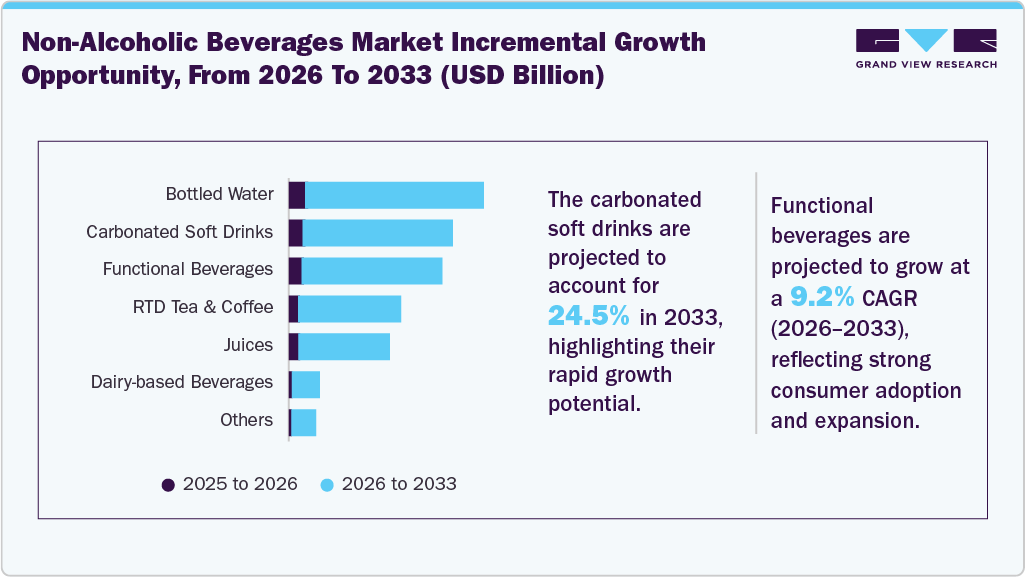
The functional beverages segment is estimated to witness at the fastest CAGR of 9.2% from 2026 to 2033. Increasing awareness and emphasis on health and wellness. As consumers become more health-conscious, there is a growing demand for beverages that offer not just refreshment but also functional benefits. Functional beverages, which include products enriched with vitamins, minerals, antioxidants, and other health-promoting ingredients, align with the contemporary focus on preventive healthcare and overall well-being.Distribution Channel Insights
The retail segment led the market with the largest revenue share of 75.7% in 2025 and is projected to grow at the fastest CAGR during the forecast period. Due to the availability of a wide variety of brands and goods under one roof, supermarkets and hypermarkets in this subcategory hold the largest share. Several supermarkets are expanding their alcohol-free selections, including Whole Foods, Target, Aldi, and Walmart.
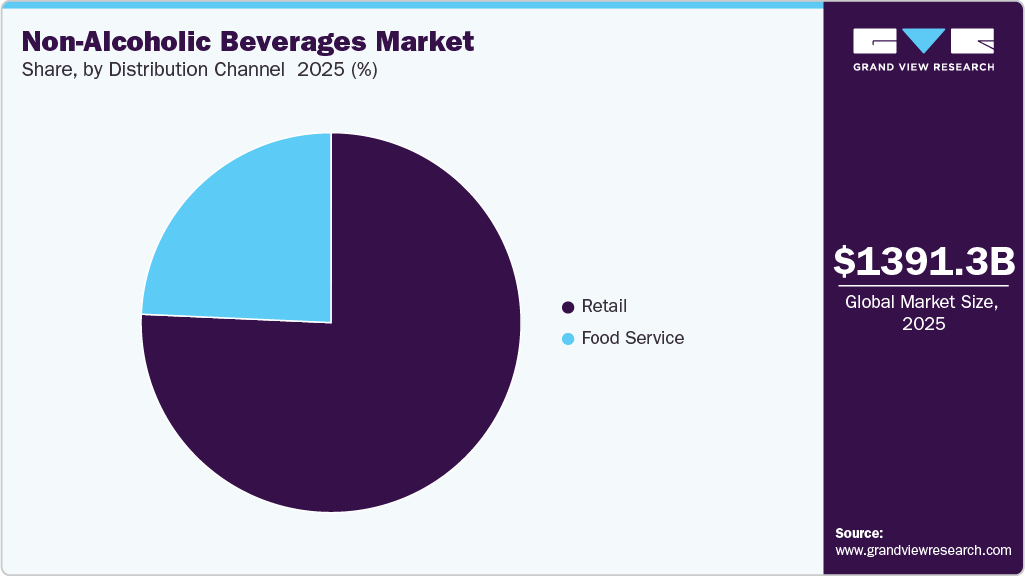
The foodservice segment is estimated to witness at a significant CAGR of 7.7% from 2026 to 2033. Foodservice is one of the primary distribution channels for non-alcoholic beverages. Busy schedules worldwide, coupled with increased disposable income, often compel people to dine out. New eateries cater to varied tastes and beverage preferences, further driving this trend. A growing number of full-service restaurants are adopting all-inclusive dining practices to better serve their consumers. This involves analyzing local dietary trends and innovating their offerings to align with the same. It increases the frequency of consumer visits.
Regional Insights
The non-alcoholic beverages market in North America, especially the U.S., is home to many globally renowned beverage manufacturers. However, the growing prevalence of obesity in the U.S. and Mexico along with taxes on sugar products imposed by the governments restrain the demand for Carbonated Soft Drinks (CSDs), which is a product of non-alcoholic beverages. This drives the demand for low-calorie beverages containing non-nutritive sweeteners.
U.S. Non-Alcoholic Beverages Market Trends
The non-alcoholic beverages market in the U.S. held a significant share in North America in 2025. Increasing health awareness among U.S. consumers is encouraging a shift toward non-alcoholic beverages. Many individuals are reducing alcohol intake due to health concerns and wellness goals, which has increased demand for alcohol-free alternatives such as mocktails, non-alcoholic beer, and functional beverages. For example, a 2025 Gallup survey reported that only 54% of U.S. adults consumed alcohol, a decline from around 63% in previous years, reflecting growing interest in alcohol-free drink options.
Asia Pacific Non-Alcoholic Beverages Market Trends
Asia Pacific dominated the global non-alcoholic beverages market with the largest revenue share of 33.9% in 2025 and is projected to grow at the fastest CAGR during the forecast period. The increasing demand for alcohol-free beverages from developing countries, such as China, India, Thailand, and Malaysia, is expected to drive the regional market. Various government initiatives to develop the manufacturing sector by providing tax cuts, subsidies, and increasing FDI limits are attracting key global players to expand their operations and distribution facilities in this region. Also, due to a shift in beverage consumption patterns, consumers nowadays choose functional and flavored bottled water over carbonated drinks with high sugar content.
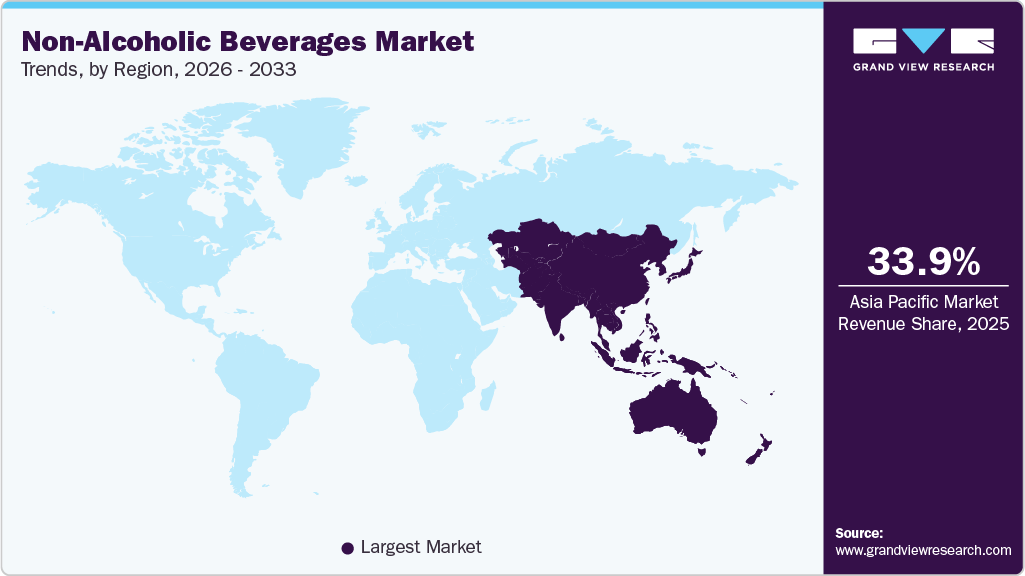
The non-alcoholic beverages market in China accounted for the largest market revenue share in the Asia Pacific in 2025. As awareness of the impact of lifestyle choices on health increases, many Chinese consumers are opting for nonalcoholic beverages as a healthier alternative to traditional sugary and alcoholic drinks. This trend is particularly pronounced among the younger generation, who are actively seeking beverages that align with their desire for a balanced and nutritious diet.
The non-alcoholic beverages market in India is estimated to witness at the fastest CAGR of 8.8% from 2026 to 2033. Health awareness among Indian consumers is increasing, driving demand for healthier non-alcoholic beverage options, such as low-sugar, no-added-sugar, and functional drinks. Consumers are becoming more conscious about sugar intake and overall wellness, encouraging them to choose beverages with healthier formulations. In response, beverage companies are expanding their portfolios with reduced-sugar and sugar-free products. For instance, in 2025, more than 55% of the sales of certain carbonated beverage brands, such as Pepsico in India, came from low-sugar or no-added-sugar variants, reflecting the growing consumer preference for healthier beverage choices.
Europe Non-Alcoholic Beverages Market Trends
The non-alcoholic beverages market in Europe is estimated to witness at a substantial CAGR of 7.6% from 2026 to 2033. European consumers are increasingly choosing beverages that provide functional and wellness benefits, including drinks enriched with vitamins, herbal extracts, probiotics, and antioxidants. The trend toward healthier lifestyles have encouraged manufacturers to introduce functional drinks that support energy, immunity, and hydration. Consumers across Europe are increasingly reducing alcohol consumption and adopting moderation lifestyles, which is boosting demand for non-alcoholic beverages such as alcohol-free beer, wine, and mocktails. Younger consumers are particularly driving this shift, as they seek healthier alternatives and balanced lifestyles. Studies in 2025 indicate that 71% of European consumers are reducing or limiting alcohol consumption, reflecting the strong growth of alcohol-free options in the region.
The France non-alcoholic beverages market is expanding at a rapid pace. Younger consumers are playing a major role in the growth of the non-alcoholic beverage industry in France. According to 2026 data, around 51% of people aged 18-25 consume non-alcoholic beverages, showing a strong interest in alcohol-free drink options among younger generations.
The non-alcoholic beverages market in the UK is estimated to witness at a significant CAGR of 7.9% from 2026 to 2033. Alcohol-free beer is one of the fastest-growing categories in the UK beverage industry as breweries invest in improved brewing technologies and new product launches. In 2025, more than 200 million pints of low- and no-alcohol beer were sold in the UK, highlighting strong consumer demand for alcohol-free alternatives that replicate traditional beer flavors.
Central and South America Non-Alcoholic Beverages Market Trends
The non-alcoholic beverages market in Central and South America is estimated to witness a significant CAGR of 6.9% from 2026 to 2033. Consumers across Latin America are increasingly choosing beverages that offer health benefits, such as hydration, energy, gut health, and immune support. As a result, categories like functional drinks, fortified juices, sports drinks, and probiotic beverages are expanding rapidly.
Middle East and Asia Non-Alcoholic Beverages Market Trends
The non-alcoholic beverages market in the Middle East and Asia is estimated to witness a significant CAGR of 8.2% from 2026 to 2033. Consumers are increasingly seeking functional beverages such as energy drinks, vitamin-infused water, probiotic drinks, and fortified juices. This trend is driven by greater health awareness and demand for beverages that offer benefits such as improved energy, immunity, and hydration.
Key Non-Alcoholic Beverages Company Insights
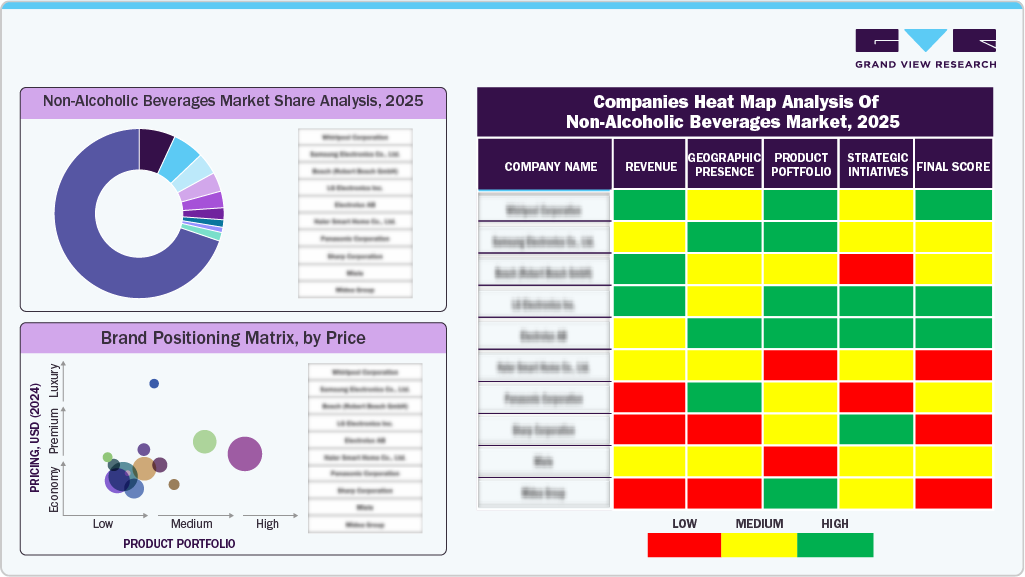
The global non-alcoholic beverages industry includes a mix of well-established beverage manufacturers and emerging specialty brands that continue to innovate in product formulations, flavor development, and the integration of functional ingredients to meet evolving consumer preferences.
Leading companies focus on producing a wide range of beverages, including alcohol-free beer, wine, mocktails, functional drinks, juices, and plant-based beverages, while emphasizing low-sugar formulations, natural ingredients, and clean-label products to attract health-conscious consumers. By expanding distribution through supermarkets, convenience stores, restaurants, bars, and e-commerce platforms, these companies ensure wider product accessibility and strengthen their presence across global markets.
Key Non-Alcoholic Beverages Companies:
The following key companies have been profiled for this study on the non-alcoholic beverages market.
- Nestlé
- PepsiCo Inc.,
- Unilever
- Keurig Dr. Pepper Inc.
- The Coca-Cola Company
- Jones Soda Co.
- Danone S.A
- Suntory Beverage & Food Ltd
- Asahi Group Holdings, Ltd.
- Red Bull
Recent Developments
-
In January 2026, Modelo introduced its first non-alcoholic beverage in the U.S., called Modelo Chelada Limón y Sal Non-Alcoholic, to expand into the growing alcohol-free drinks segment. The company launched the chelada-inspired canned drink in lime and salt flavors in major U.S. markets, including Illinois, New York, Texas, Florida, and California.
-
In October 2025, Edna’s Non-Alcoholic Cocktail Co. launched a new ready-to-drink (RTD) non-alcoholic margarita to expand its alcohol-free beverage portfolio. The company developed the product to replicate the flavor profile of a traditional margarita with citrus notes and a hint of salt while containing no alcohol.
Non-Alcoholic Beverages Market Report Scope
Report Attribute
Details
Market size value in 2026
USD 1,488.6 billion
Revenue forecast in 2033
USD 2,551.1 billion
Growth rate
CAGR of 8.0% from 2026 to 2033
Base year for estimation
2025
Historical data
2021 - 2024
Forecast period
2026 - 2033
Quantitative units
Revenue in USD million/billion, and Volume in million liters, CAGR from 2026 to 2033
Report coverage
Revenue forecast, company ranking, competitive landscape, growth factors, and trends
Segments covered
Product, distribution channel, region
Regional scope
North America; Europe; Asia Pacific; Central & South America; MEA
Country scope
U.S.; Canada; Mexico; UK; Germany; France; Italy; Spain; China; India; Japan; Brazil; South Africa
Key companies profiled
Nestlé; PepsiCo Inc.; Unilever; Keurig Dr. Pepper Inc.; The Coca-Cola Company; Jones Soda Co.; Danone S.A; Suntory Beverage & Food Ltd.; Asahi Group Holdings, Ltd.; Red Bull
Customization scope
Free report customization (equivalent up to 8 analyst working days) with purchase. Addition or alteration to country, regional, and segment scope.
Pricing and purchase options
Avail customized purchase options to meet your exact research needs. Explore purchase options
Global Non-Alcoholic Beverages Market Report Segmentation
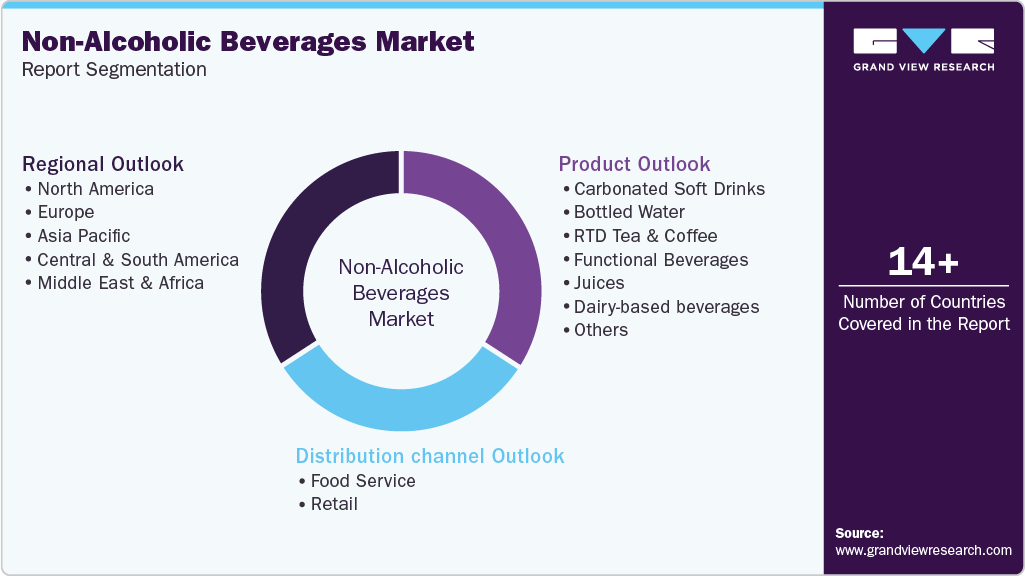
This report forecasts revenue growth at global, regional & country levels and provides an analysis on the industry trends in each of the sub-segments from 2021 to 2033. For this study, Grand View Research has segmented the global non-alcoholic beverages market report based on the product, distribution channel, and region:
-
Product Outlook (Volume: Million Liters; Revenue: USD Billion, 2021 - 2033)
-
Carbonated Soft Drinks
-
Bottled Water
-
RTD Tea & Coffee
-
Functional Beverages
-
Energy Drinks
-
Sports Drinks
-
Others
-
-
Juices
-
Dairy-based beverages
-
Others
-
-
Distribution channel Outlook (Volume: Million Liters; Revenue: USD Billion, 2021 - 2033)
-
Food Service
-
Retail
-
Hypermarkets & Supermarkets
-
Convenience Stores
-
Department Stores
-
Online
-
Others
-
-
-
Regional Outlook (Volume: Million Liters; Revenue: USD Billion, 2021 - 2033)
-
North America
-
U.S.
-
Canada
-
Mexico
-
-
Europe
-
UK
-
Germany
-
France
-
Italy
-
Germany
-
-
Asia Pacific
-
China
-
India
-
Japan
-
-
Central & South America
-
Brazil
-
-
Middle East & Africa
-
South Africa
-
-
Frequently Asked Questions About This Report
b. Key factors that are driving the non-alcoholic beverages market growth include expanding acceptance of no-alcohol and low alcohol categories among the consumers and growing demand for bottled water.
b. Some of the key players operating in the non-alcoholic beverages market include Nestlé, PepsiCo, Unilever, Keurig Dr Pepper Inc., The Coca-Cola Company, Jones Soda Co., Danone S.A., SUNTORY BEVERAGE & FOOD LIMITED, Asahi Group Holdings, Ltd., Red Bull.
b. The global non-alcoholic beverages market was estimated at USD 1,391.35 billion in 2025 and is expected to reach USD 1,488.69 billion in 2026.
b. The global non-alcoholic beverages market is expected to grow at a compound annual growth rate of 8.0% from 2026 to 2033 to reach USD 2,551.17 billion by 2033.
b. Asia Pacific dominated the non-alcoholic beverages market with a share of around 33.9% in 2025. This is owing to the Changes in consumer preferences and rapid urbanization coupled with the growing middle-class population are acting as primary drivers for this market.


Share this report with your colleague or friend.
Need a Tailored Report?
Customize this report to your needs — add regions, segments, or data points, with 20% free customization.


ISO 9001:2015 & 27001:2022 Certified
We are GDPR and CCPA compliant! Your transaction & personal information is safe and secure. For more details, please read our privacy policy.
Trusted market insights - try a free sample
See how our reports are structured and why industry leaders rely on Grand View Research. Get a free sample or ask us to tailor this report to your needs.