- Home
- »
- Food Additives & Nutricosmetics
- »
-
Natural Food Colors Market Size, Industry Report, 2033GVR Report cover
![Natural Food Colors Market Size, Share & Trends Report]()
Natural Food Colors Market (2026 - 2033) Size, Share & Trends Analysis Report By Ingredient (Beta Carotene, Lycopene, Anthocyanin), By Form (Powder, Liquid, Gel & Paste), By Application, By Region, And Segment Forecasts
- Report ID: GVR-1-68038-740-7
- Number of Report Pages: 115
- Format: PDF
- Historical Range: 2021 - 2025
- Forecast Period: 2026 - 2033
- Industry: Specialty & Chemicals
- Report Summary
- Table of Contents
- Interactive Charts
- Methodology
- Download FREE Sample
-
 Download Sample Report
Natural Food Colors Market Summary
The global natural food colors market size was estimated at USD 2,379.0 million in 2025 and is expected to reach USD 4,114.2 million by 2033, growing at a CAGR of 7.1% from 2026 to 2033. The market is experiencing significant growth, propelled by several key factors. Consumers' increasing demand for clean-label products, free from synthetic additives, is driving manufacturers to adopt natural colorants.
Key Market Trends & Insights
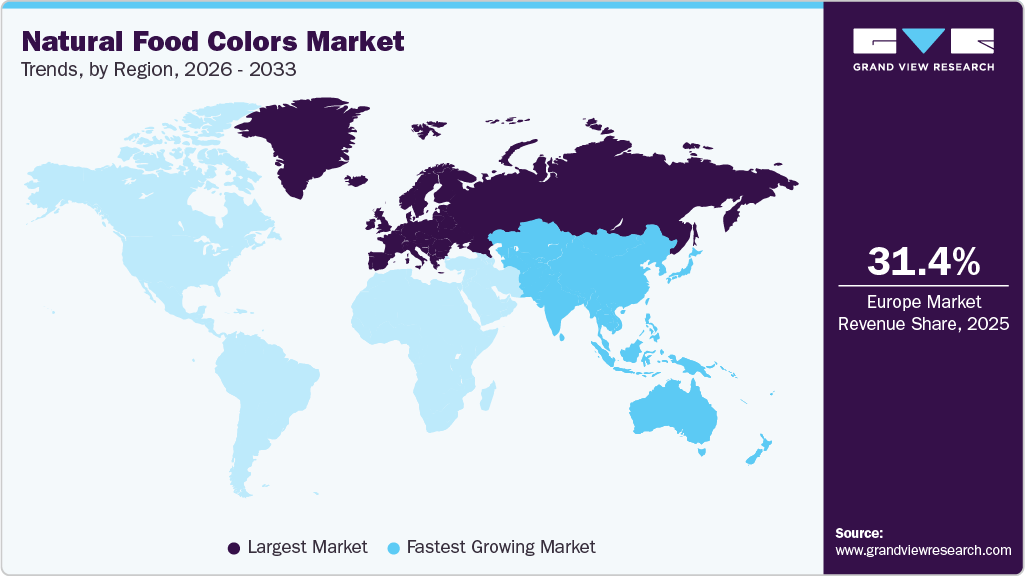
- By region, Europe led the natural food colors market with a share of 31.4% in 2025.
- The Poland natural food colors industry is expected to grow at the fastest CAGR from 2026 to 2033.
- By ingredient, beta carotene led the market with a share of 20.2% in 2025.
- By form, the powder segment led the market with a share of 48.6% in 2025.
- By application, the beverages segment led the market with a share of 26.3% in 2025.
Market Size & Forecast
- 2025 Market Size: USD 2,379.0 Million
- 2033 Projected Market Size: USD 4,114.2 Million
- CAGR (2025-2033): 7.1%
- Europe: Largest market in 2025
- Asia Pacific: Fastest growing market
Health concerns over artificial dyes, such as potential links to hyperactivity in children, have further accelerated this shift toward natural alternatives. Stringent regulatory standards governing the use of synthetic colors also encourage the adoption of natural options. Technological advancements in extraction and stabilization processes have improved the quality and application of natural colors, making them more viable for widespread use. Additionally, the expansion of the food and beverage industry in emerging markets contributes to the increasing demand for natural food colors.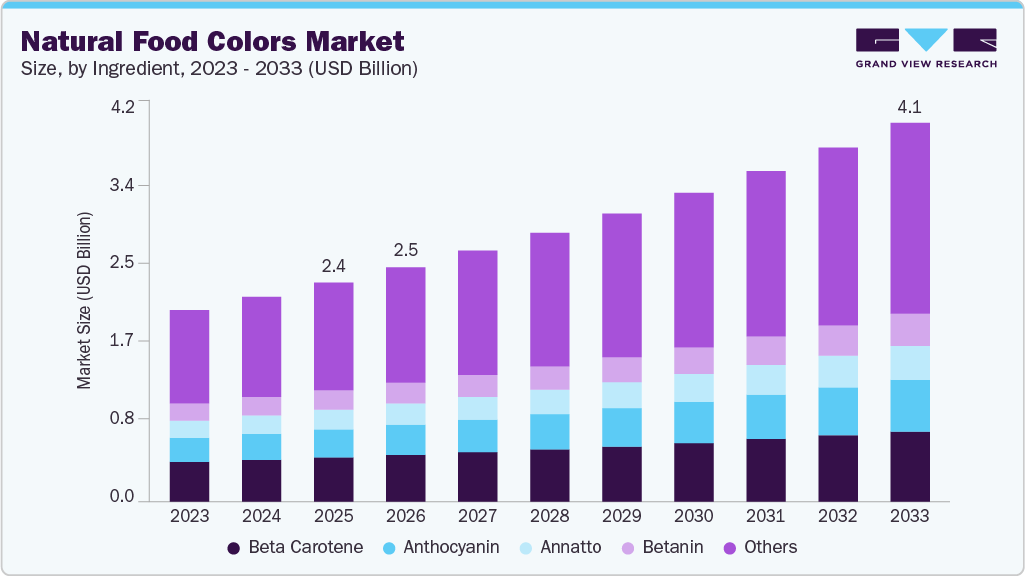
The increasing consumer demand for clean-label products significantly influences the natural food colors industry. This shift is primarily driven by growing consumer awareness of health & wellness, with consumers becoming more discerning about the ingredients in their food. As people become more educated about nutrition and the potential health risks associated with artificial additives, they are actively seeking products with natural ingredients. According to data published in July 2024, 75% of global consumers are willing to pay a premium for clean-label products, including those free from artificial colors.
In addition, the rising number of health-conscious consumers plays a crucial role in this shift. Consumers are increasingly becoming aware of the long-term effects of consuming synthetic additives, preservatives, and artificial colors. Reports indicate that many individuals associate these substances with various health issues, including allergies and chronic diseases. For instance, according to the Healthline Media LLC data published in March 2025, some people who are sensitive to food dyes such as Carmine, Red 40, and Yellow 5 develop intolerance or allergic reactions if consumed. Negative perceptions of artificial food colorants have driven increased demand for natural food colors, boosting the industry's growth.
Consumer Insights
The natural food colors market is increasingly shaped by evolving consumer attitudes toward health, transparency, sustainability, and sensory appeal. The following paragraphs outline the key consumer trends and preferences influencing global demand patterns. One of the most dominant consumer trends is the strong preference for clean-label food products containing recognizable and minimally processed ingredients. Consumers are actively avoiding synthetic dyes and chemical additives due to perceived health risks and growing nutritional awareness.
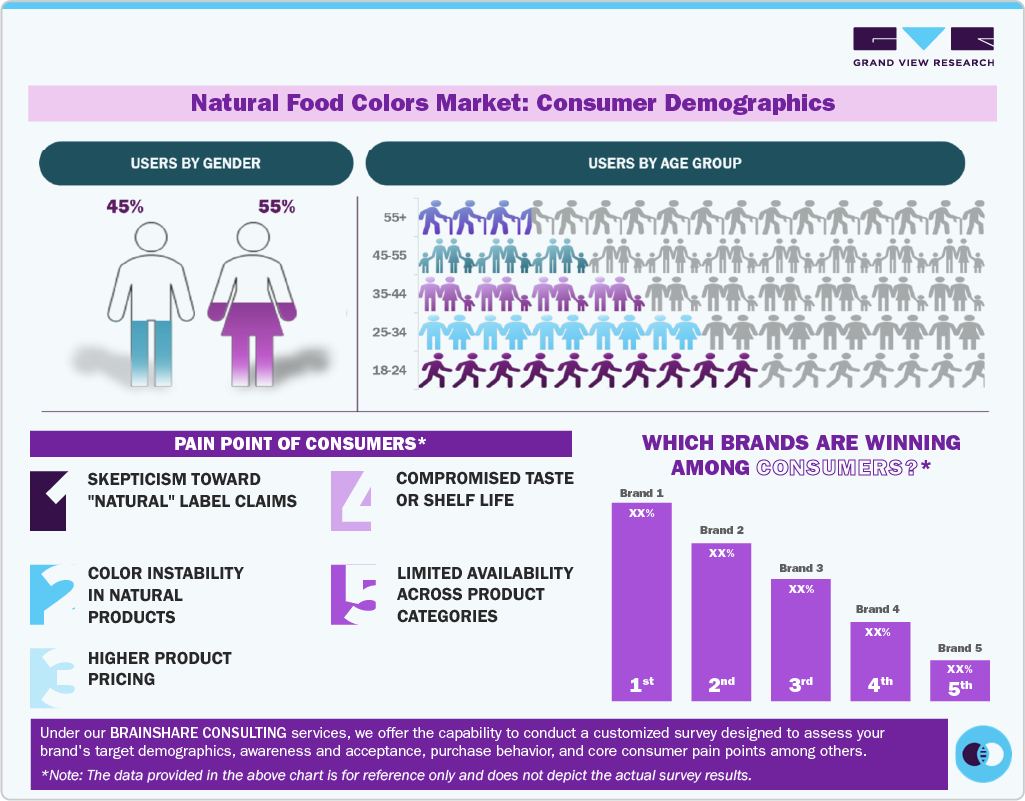
Recent global food surveys indicate that over 71-83% of consumers consider ingredient transparency an important purchase factor, while a majority actively check packaging for natural color claims before buying packaged foods. This behavioral shift has encouraged large-scale reformulation across beverages, confectionery, dairy, and bakery categories, with manufacturers replacing artificial dyes with plant-derived alternatives such as beetroot, turmeric, paprika, and spirulina extracts.
Consumers increasingly associate natural colors with safer and healthier food choices. Rising awareness regarding allergies, hyperactivity concerns in children, and long-term exposure to synthetic additives has strengthened demand for botanical pigments. Approximately 75% of global consumers are willing to pay a premium for products free of artificial colors, reflecting the shift from natural coloring as a niche attribute to a mainstream expectation. Natural colors are now preferred not only in organic foods but also in everyday packaged snacks and beverages positioned under wellness and functional nutrition categories.
Ingredients Insights
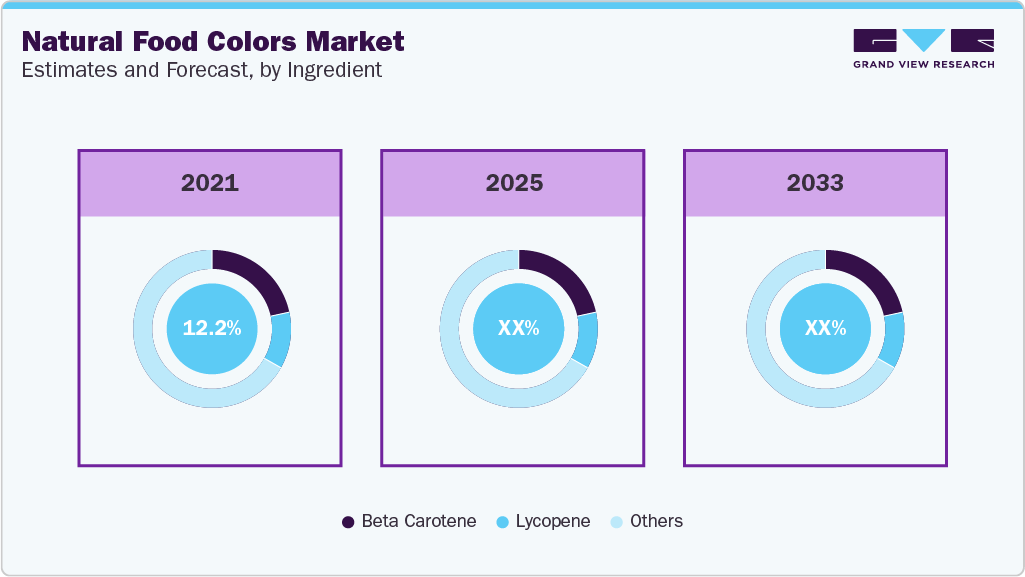
The beta carotene food colors market segment accounted for a share of 20.2% in 2025. Beta-carotene, derived primarily from carrots, sweet potatoes, and algae, has become a prominent natural food colorant due to its dual role as a colorant and a provitamin A compound. Its vibrant orange hue makes it ideal for a wide range of food applications, including beverages, bakery products, and dairy products. Consumers’ growing awareness of the health benefits of vitamin A, especially for vision and immunity, has driven demand for this ingredient. According to the National Library of Medicine data published in March 2025, the commonly used provitamin A carotenoid in foods is beta-carotene.
Additionally, antioxidants such as beta-carotene help reduce and prevent oxidative stress in the body. As functional foods and fortified products gain traction, this ingredient offers value beyond aesthetics, aligning with the natural food colors industry's shift toward nutrition-driven formulations. This dual advantage supports long-term growth and innovation opportunities in the natural color space.
The Blue Spirulina food colors industry segment is anticipated to grow at a CAGR of 8.9% from 2026 to 2033. Blue spirulina, a type of blue-green algae, is one of the few natural sources of a vivid blue color, a rare trait in natural food colors, and is popular for its intense blue hue. It's especially favored in smoothies, candies, and plant-based novelty products where bright, Instagram-friendly hues are desirable.
The surge in demand for visually striking superfoods has made blue spirulina a go-to for health-conscious, young consumers interested in functional aesthetics. Its association with detox, immune support, and sustainability through algae cultivation aligns it with modern wellness values. The FDA has approved Spirulina extract as a color additive in gum and candy, and it is increasingly being used in beverages such as smoothies and sports drinks. Various companies are partnering to develop natural sources of the blue hue used in food and beverages. For instance, in January 2025, Oterra partnered with VAXA Technologies to create Arctic Blue, their first natural blue color product, designed with a low carbon footprint.
Form Insights
Powdered natural food colors held the largest share in the natural food colors market, accounting for a 48.6% share in 2025.The powder segment has achieved a significant revenue share due to its distinct advantages in terms of storage, handling, and application precision. Powdered natural food colors have a longer shelf life than liquid forms, making them highly suitable for manufacturers seeking to reduce waste and optimize inventory management. In addition, powders are easier to store and transport because they are less prone to spillage or degradation during transit. These attributes are particularly valuable in large-scale food production environments where operational efficiency is critical.
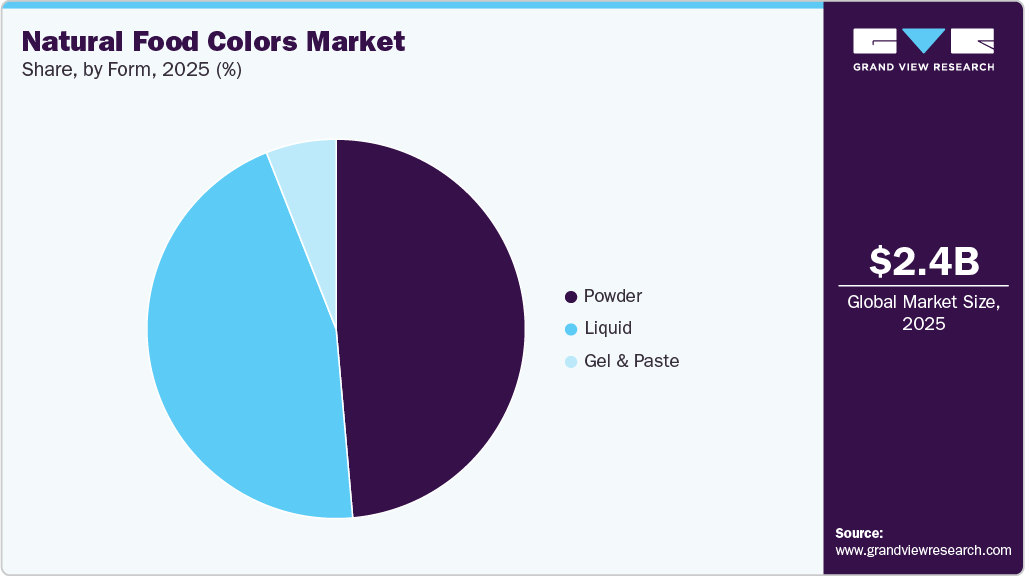
The gel & paste natural food colors market is anticipated to grow at a CAGR of 7.9% from 2026 to 2033. These forms are particularly favored in bakery and confectionery products, where achieving intricate designs and vibrant colors is essential. Gel and paste natural food colors offer concentrated pigmentation, allowing manufacturers to use smaller quantities while achieving intense hues. For instance, gel-based natural colorants are widely used in cake decorating to create detailed patterns without compromising the texture or consistency of the frosting.
Another key advantage of gel and paste forms is their ability to provide excellent stability under diverse processing conditions. Unlike liquid or powder forms, gels and pastes maintain their consistency during high-temperature baking or prolonged storage, ensuring consistent color quality in finished products. This makes them ideal for applications such as fondant coloring or chocolate molding, where color integrity is critical. For instance, paste-based anthocyanins derived from berries are used in premium chocolates to achieve rich purple tones while resisting fading over time.
Application Insights
The beverages application led the natural food colors industry, accounting for a share of 26.3% in 2025. Beverages are one of the most dynamic categories for color trends, especially in juices, carbonated drinks, flavored waters, and energy drinks. As consumers gravitate toward "free-from" products, the shift from synthetic to natural colors is driven by the desire for healthier lifestyle choices and reduced chemical intake.
In addition, functional and plant-based beverages often highlight natural ingredients, where color plays a role in signaling flavor and function, including green for detox and red for energy. Botanical extracts such as hibiscus, spirulina, and elderberry serve dual roles, providing both color and nutritional value, which aligns with the wellness trend. According to the data published in November 2024, color choice in beverages and drinks is important as it depicts the flavor and sends subconscious signals about what type of beverage it is.
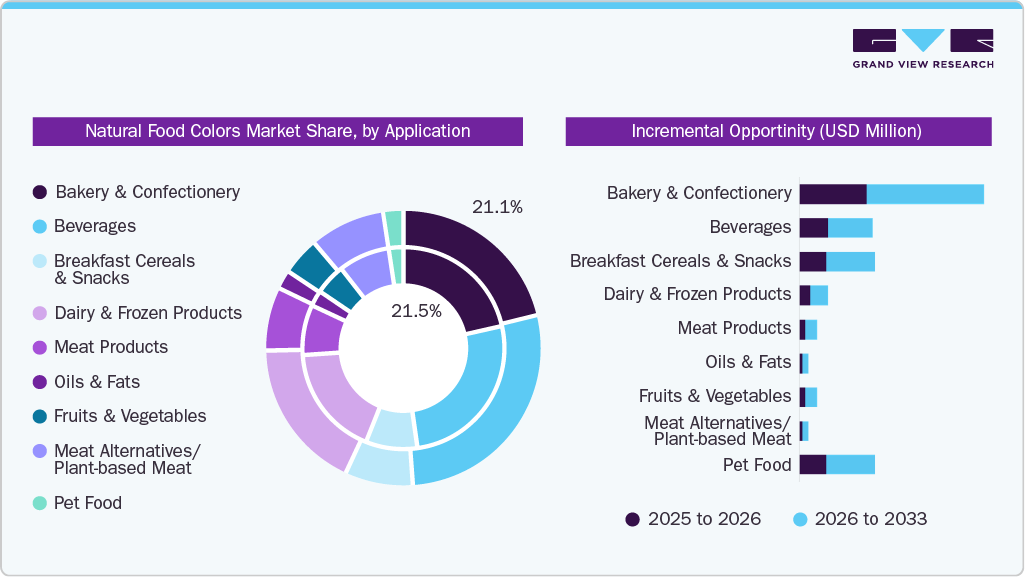
The meat alternatives/plant-based meat applications are anticipated to witness a CAGR of 8.0% from 2026 to 2033. Plant-based meats mimic the appearance and texture of traditional meat, making color one of the most important elements. Natural colorants such as beetroot extract, pomegranate powder, and red radish help replicate the hues of raw and cooked meat. The goal is visual authenticity to appeal to flexitarians and meat-reducers. Consumer demand for vegan and vegetarian alternatives comes with expectations for clean labels and minimal artificial additives. Natural colors align with these values, supporting the broader health and sustainability messaging of meat alternatives. Innovation in encapsulated color technology helps simulate color change during cooking, just like real meat.
Regional Insights
The natural food colors market in North America accounted for a share of around 31.0% in 2025, driven by increasing consumer demand for clean-label and health-conscious products. A growing preference for foods free from synthetic additives has led to a shift towards natural food colors in the U.S. Canada follows suit with a strong inclination towards organic and minimally processed foods. Mexico, with its rich biodiversity, is leveraging native plants for natural colorants, aligning with both local and global health trends.
Moreover, regulation support fuels the demand for natural food colors as the U.S. Food and Drug Administration (FDA) has implemented stringent regulations on artificial food colors, prompting manufacturers to adopt natural alternatives. Canada's regulatory framework also encourages the use of natural ingredients, while Mexico is enhancing its food safety standards to promote the use of natural food colorants. For instance, according to the data published in November 2023, manufacturers are choosing natural food color alternatives as FDA regulations support natural food colorants in their favor.
U.S. Natural Food Colors Market Trends
Stringent regulatory interventions and large-scale reformulation initiatives across the food and beverage industry primarily drive the U.S. natural food colors industry’s growth. Increasing scrutiny of petroleum-based synthetic dyes has transformed the adoption of natural color from a voluntary branding strategy into a compliance-led requirement. Regulatory actions by the U.S. Food and Drug Administration, including bans and phased removal of synthetic additives such as Red Dye No. 3, have compelled manufacturers to transition toward plant-derived pigments across confectionery, dairy, and beverage applications. Major food companies, including General Mills and Kraft Heinz, have announced the complete elimination of artificial dyes from product portfolios by 2026-2027, accelerating demand for natural alternatives across mass-market packaged foods.
Europe Natural Food Colors Market Trends
The natural food colors industry in Europe accounted for a share of 31.4% in 2025, mainly driven by the heightened consumer awareness of health and wellness. Countries like Germany and France are witnessing a shift towards natural ingredients, with consumers preferring products free from artificial additives. The UK and Italy are also embracing natural food colors, influenced by trends in organic and clean-label products. According to the data published in March 2024, nearly 46% of UK consumers prefer clean-label products. In addition, regulatory frameworks across Europe are stringent regarding synthetic food additives, encouraging the adoption of natural alternatives. The European Union mandates clear labeling and has set limits on certain artificial colors, prompting manufacturers to seek natural colorants. Natural food colors are subject to safety standards, as each authorized food color undergoes rigorous safety assessment by the European Food Safety Authority (EFSA).
The natural food colors market in the UK is expected to grow, due to the heightened consumer awareness regarding food safety and transparent ingredient labeling following long-standing regulatory restrictions on artificial dyes across Europe. Alignment with European food safety standards has encouraged manufacturers to replace azo dyes and synthetic pigments with fruit-, vegetable-, and spice-derived colorants. Retailers and private-label brands operating within the UK grocery ecosystem increasingly prioritize “free-from artificial colors” claims to meet consumer demand for minimally processed foods, particularly across bakery, dairy desserts, and children’s nutrition categories.
Asia Pacific Natural Food Colors Market Trends
The Asia Pacific natural food color industry is expected to grow at a CAGR of 8.6% from 2026 to 2033, influenced by a blend of traditional practices and modern health trends. China and India, with their rich agricultural resources, are utilizing native plants and spices to extract natural colorants. Japan's focus on health and wellness is driving demand for natural ingredients in food products. Australia and New Zealand are witnessing a surge in organic and clean-label products, further propelling the natural food colors industry.
Additionally, regulatory support varies across the region. China and India are strengthening their food safety standards, promoting the use of natural colorants. According to the ORF (Observer Research Foundation) data published in June 2024, the Chinese government has strengthened food safety regulations over the years by initially establishing the China State Food and Drug Administration in 2003, followed by China’s Food Safety Law in 2015, to ensure food safety, health & life of the citizens. In addition, the government established a national strategy for food safety with the aim of achieving zero tolerance for food safety risks by 2020 and, by 2050, establishing food safety standards and government.
The natural food colors market in China is witnessing strong expansion due to government-led nutrition modernization programs and increasing consumer health awareness linked to food safety concerns. National initiatives under the Healthy China 2030 framework have encouraged food manufacturers to reduce the use of artificial additives and adopt naturally derived ingredients, significantly accelerating reformulation across the beverage, dairy, and confectionery industries. China has consequently emerged as one of the fastest-growing global markets for natural food colors, supported by large-scale domestic production of botanical raw materials such as turmeric, paprika, and marigold extracts.
Central & South America Natural Food Colors Market Trends
The Central & South America natural food colors industry is expected to grow at a CAGR of 7.9% from 2026 to 2033. The market is expanding as consumer demand for healthier, more natural food options grows. Brazil, with its rich biodiversity, is using native plants such as annatto and beetroot as natural colorants. Argentina is following suit, focusing on natural ingredients to cater to health-conscious consumers. The food industries in the Central and South American region are increasingly incorporating natural food colors into a variety of products. The diverse food sector, including beverages and processed foods, is a significant driver of this trend. In addition, growing exports of food items, especially to health-conscious markets, are also contributing to the demand for natural colorants.
Middle East & Africa Natural Food Colors Market Trends
The Middle East and Africa natural foods colors industry is gaining momentum as consumers become more health-conscious and seek products free from artificial additives. In South Africa, there's a growing awareness of the potential health risks associated with synthetic additives, including artificial colors. Plant and animal-based natural colors are perceived as safer and healthier alternatives, aligning with the demand for clean, natural, and minimally processed foods. According to the ScienceDirect data published in June 2023, a shift is recorded in South Africa from the consumption of grains & pulses to the consumption of easily accessible, high-energy, and ultra-processed foods, contributing to the growth of the natural food color market.
Key Natural Food Colors Company Insights
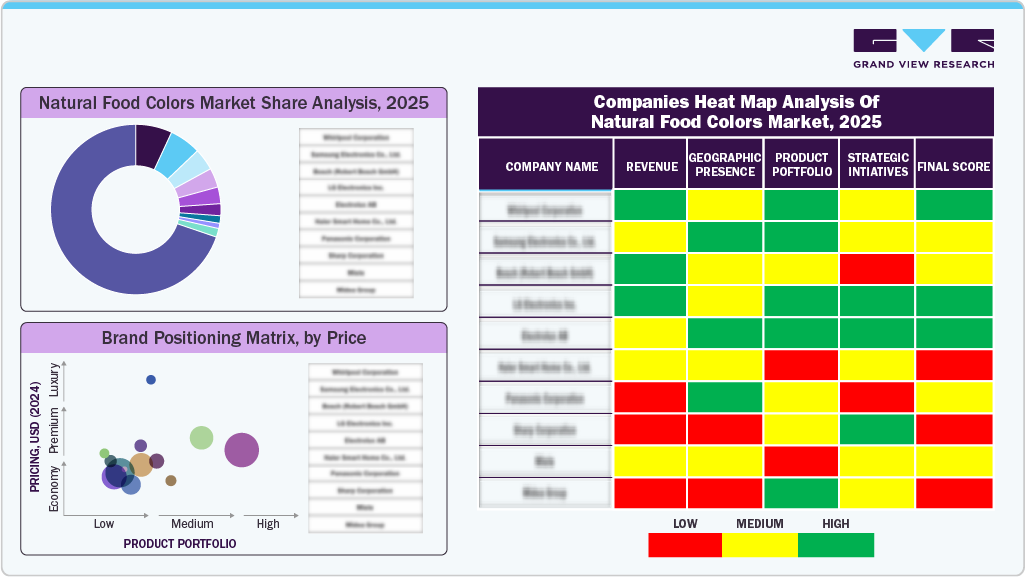
Leading players in the natural food colors market include BASF, Archer Daniels Midland Company, Chenguang Biotech Group Co., Ltd. The natural food colors industry remains highly competitive, with brands emphasizing product expansion across online and offline retail platforms. Companies invest in advanced extraction and formulation technologies to improve color stability, vibrancy, and compatibility across diverse food applications. Rising consumer awareness about clean-label products, health safety, and the demand for plant-based ingredients further propels adoption. This growing preference for natural and sustainable alternatives continues to position the market for robust growth in the coming years.
Key Natural Food Colors Companies:
The following key companies have been profiled for this study on the natural food colors market.
- BASF
- Archer Daniels Midland Company (ADM)
- San-Ei Gen F.F.I., Inc.
- GNT Group (EXBERRY)
- Chenguang Biotech Group Co., Ltd.
- Oterra A/S
- Allied Biotech Corporation
- Givaudan Sense Colour
- Döhler GmbH
- Sensient Technologies Corporation
Recent Developments
-
In February 2025, Oterra, a global leader in natural food colors, inaugurated a new color blending and application center in Kochi, Kerala, India. The facility, located at the site of its subsidiary Akay Natural Ingredients, was established to cater to the growing demand for natural colors across India, the Asia-Pacific region, and the Middle East. Previously reliant on exporting raw materials to Europe for processing, Oterra now offers direct supply of popular color shades such as yellow, orange, red, and pink made from turmeric, paprika, annatto, and red beet. This strategic move not only streamlines the supply chain but also ensures quicker response times to customer demands in emerging markets.
-
In December 2024, Oterra announced the opening of its state-of-the-art innovation, collaboration, and production hub in Mount Pleasant, Wisconsin, strengthening its presence in the U.S. market. The 155,000-square-foot facility integrates innovation and application labs with manufacturing and logistics capabilities to meet the growing demand for natural colors and coloring foodstuffs. Additionally, the site includes 40,000 square feet of expansion space for new color products and pilot production lines. This strategic investment underscores Oterra’s commitment to supporting environmentally conscious, health-focused consumers while helping customers transition to natural color solutions.
-
In July 2024, GNT announced its plans to develop plant-based EXBERRY color solutions using innovative fermentation technologies. This expansion marked a significant step in increasing the sustainability and functionality of its natural color portfolio, which has traditionally relied on fruits, vegetables, and plants since the company’s founding in 1978. By partnering with Plume Biotechnology, a UK-based startup specializing in fermentation science, GNT aimed to scale production through bioreactors that optimize biomass yield and pigment concentration. The collaboration underscored GNT’s commitment to pioneering sustainable solutions while enhancing the performance and year-round availability of its natural food colors.
Natural Food Colors Market Report Scope
Report Attribute
Details
Market size value in 2026
USD 2,545.7 million
Revenue Forecast in 2033
USD 4,114.2 million
Growth rate
CAGR of 7.1% from 2026 to 2033
Actuals
2021 - 2025
Forecast period
2026 - 2033
Quantitative units
Revenue in USD million, volume in tons, and CAGR from 2026 to 2033
Report coverage
Revenue forecast, volume forecast, company ranking, competitive landscape, growth factors, and trends
Segments covered
Ingredient, form, application, and region
Regional scope
North America; Europe; Asia Pacific; Central & South America; Middle East and Africa
Country scope
U.S.; Canada; Mexico; Germany; UK; France; Italy; Spain; Poland; China; Japan; India; Australia & New Zealand; South Korea; Southeast Asia; Brazil; Argentina; South Africa
Key companies profiled
BASF; Archer Daniels Midland Company (ADM); San-Ei Gen F.F.I., Inc.; GNT Group (EXBERRY); Chenguang Biotech Group Co., Ltd.; Oterra A/S; Allied Biotech Corporation; Givaudan Sense Colour; Döhler GmbH; Sensient Technologies Corporation
Customization scope
Free report customization (equivalent up to 8 analysts’ working days) with purchase. Addition or alteration to country, regional & segment scope.
Pricing and purchase options
Avail customized purchase options to meet your exact research needs. Explore purchase options Global Natural Food Colors Market Report Segmentation
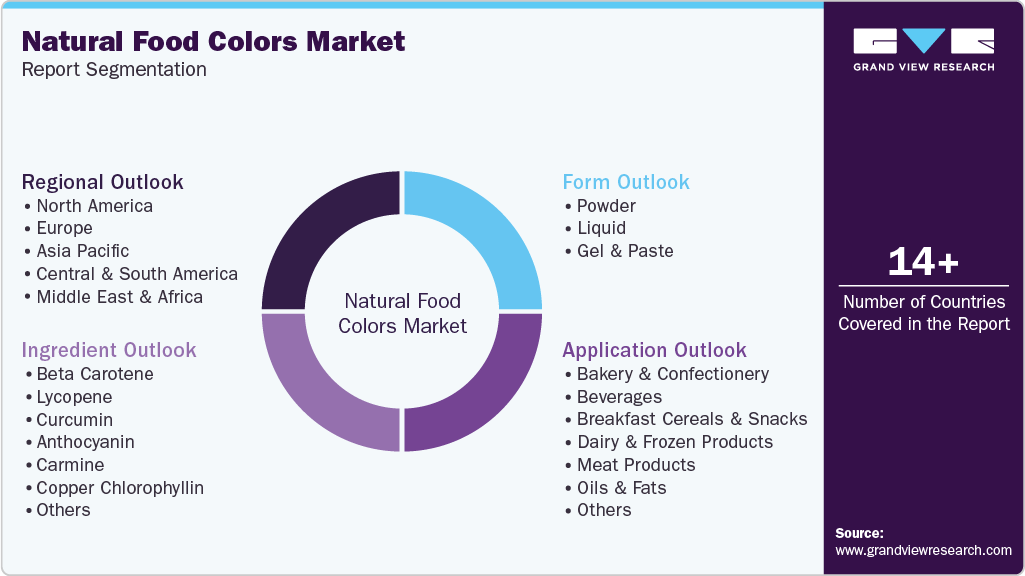
This report forecasts volume & revenue growth at the global, regional & country levels and provides an analysis of the latest trends and opportunities in each sub-segment from 2021 to 2033. For this study, Grand View Research has segmented the natural food colors market report based on ingredient, form, application, and region:
-
Ingredient Outlook (Volume, Tons; Revenue, USD Million, 2021 - 2033)
-
Beta Carotene
-
Lycopene
-
Curcumin
-
Anthocyanin
-
Carmine
-
Copper Chlorophyllin
-
Paprika
-
Betanin
-
Riboflavin
-
Blue Spirulina
-
Caramel
-
Annatto
-
Others
-
-
Form Outlook (Volume, Tons; Revenue, USD Million, 2021 - 2033)
-
Powder
-
Liquid
-
Gel & Paste
-
-
Application Outlook (Volume, Tons; Revenue, USD Million, 2021 - 2033)
-
Bakery & Confectionery
-
Beverages
-
Breakfast Cereals & Snacks
-
Dairy & Frozen Products
-
Meat Products
-
Oils & Fats
-
Fruits & Vegetables
-
Meat Alternatives/Plant-based Meat
-
Pet Food
-
-
Regional Outlook (Volume, Tons; Revenue, USD Million, 2021 - 2033)
-
North America
-
U.S.
-
Canada
-
Mexico
-
-
Europe
-
Germany
-
UK
-
France
-
Italy
-
Spain
-
Poland
-
-
Asia Pacific
-
China
-
Japan
-
India
-
Australia & New Zealand
-
South Korea
-
Southeast Asia
-
-
Central & South America
-
Brazil
-
Argentina
-
-
Middle East and Africa (MEA)
-
South Africa
-
-
Frequently Asked Questions About This Report
b. Some key players operating in the natural food color market BASF; Archer Daniels Midland Company (ADM); San-Ei Gen F.F.I., Inc.; GNT Group (EXBERRY); Chenguang Biotech Group Co., Ltd.; Oterra A/S; Allied Biotech Corporation; Givaudan Sense Colour; Döhler GmbH; Sensient Technologies Corporation
b. Key factors that are driving the market growth include rapid growth over the forecast period owing to high demand in confectionery and bakery goods. In addition, stringent regulations pertaining to the use of synthetic and identical colors is likely to emerge as the major driver for the industry growth.
b. The global natural food colors market size was estimated at USD 2,379.0 million in 2025 and is expected to reach USD 2,545.7 million in 2026.
b. The global natural food colors market is expected to grow at a compound annual growth rate of 7.1% from 2026 to 2033 to reach USD 4,114.2 million by 2033.
b. Europe dominated the natural food colors market with a share of 31.4% in 2025. This is attributable to adoption of the products such as carotenoids, carmines, curcumin, and anthocyanin in applications such as bakery & confectionery, beverages, and meat, among others.


Share this report with your colleague or friend.
Need a Tailored Report?
Customize this report to your needs — add regions, segments, or data points, with 20% free customization.


ISO 9001:2015 & 27001:2022 Certified
We are GDPR and CCPA compliant! Your transaction & personal information is safe and secure. For more details, please read our privacy policy.
Trusted market insights - try a free sample
See how our reports are structured and why industry leaders rely on Grand View Research. Get a free sample or ask us to tailor this report to your needs.