- Home
- »
- Automotive & Transportation
- »
-
Luxury Car Market Size And Share, Industry Report, 2033GVR Report cover
![Luxury Car Market Size, Share & Trends Report]()
Luxury Car Market (2026 - 2033) Size, Share & Trends Analysis Report By Vehicle Type (Hatchback, Sedan, Sports Utility), By Propulsion Type (Internal Combustion Engine (ICE), Electric), By Region (North America, Europe, Asia Pacific), And Segment Forecasts
- Report ID: GVR-4-68040-033-8
- Number of Report Pages: 130
- Format: PDF
- Historical Range: 2021 - 2024
- Forecast Period: 2026 - 2033
- Industry: Technology
- Report Summary
- Table of Contents
- Interactive Charts
- Methodology
- Download FREE Sample
-
 Download Sample Report
Luxury Car Market Summary
The global luxury car market size was estimated at USD 741.1 billion in 2025 and is projected to reach USD 1,145.8 billion by 2033, growing at a CAGR of 5.4% from 2026 to 2033. Rising input costs, electrification investments, and regulatory compliance is resulting in systemic shift in automotive industry profit pools from mass-market vehicles to premium and luxury segments which is major factor expected to drive the market growth.
Key Market Trends & Insights
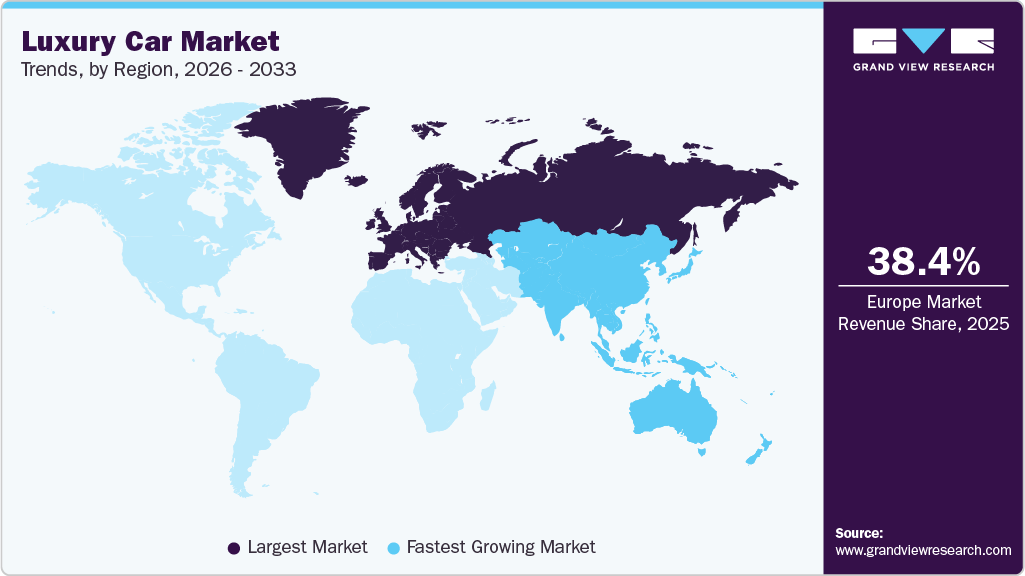
- Europe luxury car industry accounted for a 38.4% share of the overall market in 2025.
- The luxury car industry in Germany is expected to register healthy CAGR over the forecast period.
- By vehicle type, the sports utility segment accounted for the largest share of 58.2% in 2025.
- By propulsion type, the internal combustion engine (ICE) segment held the largest market share in 2025.
Market Size & Forecast
- 2025 Market Size: USD 741.1 Billion
- 2033 Projected Market Size: USD 1,145.8 Billion
- CAGR (2026-2033): 5.4%
- Europe: Largest market in 2025
- Asia Pacific: Fastest growing market
Also, OEMs are strategically reallocating capital, R&D, and production capacity toward premium segments, which is another factor expected to support the market growth. The transformation of luxury vehicles into technology-driven, experience-centric platforms is fundamentally reshaping consumer value perception which is a major factor expected to drive the growth of luxury car market. Premium product buyers increasingly demand seamless integration of advanced technologies such as connected services, AI-powered infotainment, and advanced driver-assistance systems. Also, OEMs are focused on investing in software-defined vehicle architectures and over-the-air update capabilities, enabling continuous feature enhancement post-purchase which is attracting consumer further support the luxury car market growth. Brands like Mercedes-Benz and Tesla are leveraging digital ecosystems to deliver personalized user experiences, extending beyond traditional ownership models. This shift allows OEMs to generate recurring revenue streams through subscriptions and feature upgrades, significantly increasing customer lifetime value.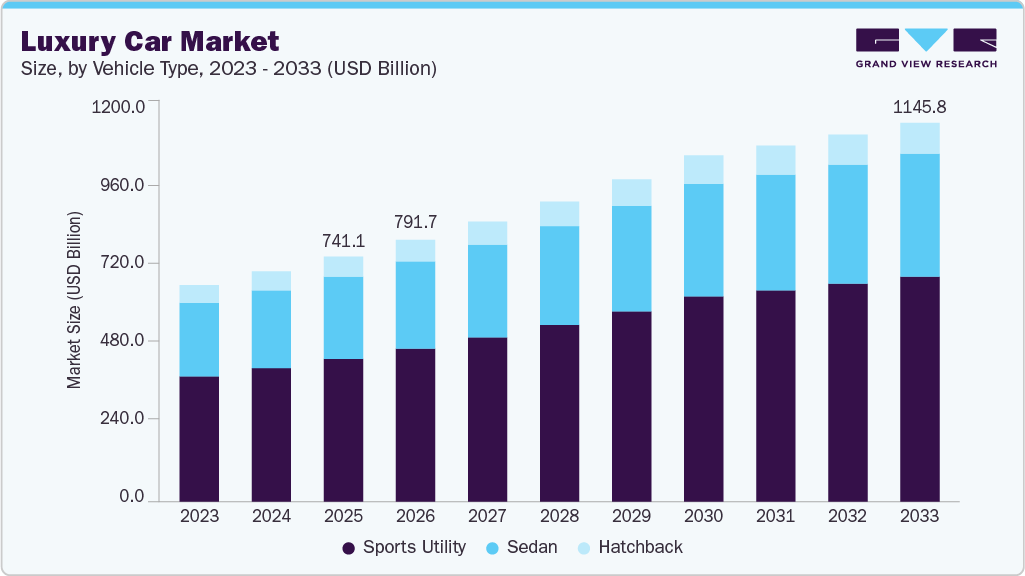
Moreover, the expansion of access-based ownership models is fundamentally broadening the luxury vehicle consumer base and accelerating demand for luxury cars. The increasing adoption of flexible usage formats such as the luxury car rental and luxury car leasing enables consumers to experience premium vehicles without the financial burden of full ownership. This shift is particularly prominent among younger, urban, and high-income professionals who prioritize flexibility and asset-light consumption. Likewise, automakers and financial partners are leveraging leasing programs, short-term subscriptions, and curated rental platforms to lower entry barriers and increase brand exposure. These models act as a major tool for customer acquisition, converting first-time users into long-term buyers. In addition, leasing structures allow for faster vehicle replacement cycles, supporting higher sales volumes and continuous product upgrades.
Furthermore, increasing emphasis on in-cabin experience and sensory differentiation is driving innovation and value addition across luxury vehicle interiors. The evolution of the ambient lighting system in luxury care reflects a broader transformation toward immersive, personalized cabin environments that enhance user experience. Luxury automakers are integrating advanced ambient lighting systems with customizable colors, dynamic themes, and synchronization with infotainment and driving modes. These features are no longer aesthetic add-ons but integral to brand identity and perceived vehicle value. Enhanced in-cabin experience is particularly important as driving becomes more autonomous and passengers spend more time engaging with interior features.
Vehicle Type Insights
The Sports Utility segment accounted for the largest share of 58.2% in 2025. Luxury Sports Utility Vehicles (SUVs) have rapidly emerged as the flagship choice among affluent consumers, driven by a blend of status, performance, and practicality. This segment continues to thrive, largely due to evolving consumer lifestyles that prioritize versatility without compromising on opulence. High ground clearance, advanced all-wheel-drive systems, and tech-infused interiors have turned luxury SUVs into mobile command centers. Automakers such as Mercedes-Benz (GLS), BMW (X7), and Range Rover are redefining this space by offering bespoke customization, AI-assisted driving, and sustainability elements, appealing to both younger elites and traditional luxury buyers. The trend is further reinforced by the surge in female buyers and urban professionals seeking dominance on both the road and social feeds.
The Hatchback segment is expected to grow at a significant CAGR during the forecast period. This segment is being reimagined for city-dwelling elites who demand compact agility without compromising on premium finishes. Models such as the Audi A1, BMW 1 Series, and Mercedes-Benz A-Class have infused the hatchback with high-tech cockpits, semi-autonomous driving features, and eco-conscious materials. While this category does not match SUV volumes, its rising appeal among environmentally aware, younger luxury buyers signals a steady niche growth. It is not about utility anymore, it is about efficient elegance.
Propulsion Type Insights
The Internal Combustion Engine (ICE) segment held the largest market share in 2025. ICE-powered luxury cars still dominate global sales, especially in regions where EV infrastructure lags. Buyers in this segment value the unmistakable growl of a V8 engine, long-distance range, and established maintenance networks. However, even ICE models are undergoing transformation-downsized turbocharged engines, mild-hybrid systems, and sustainable leather alternatives are now standard in premium ICE offerings.
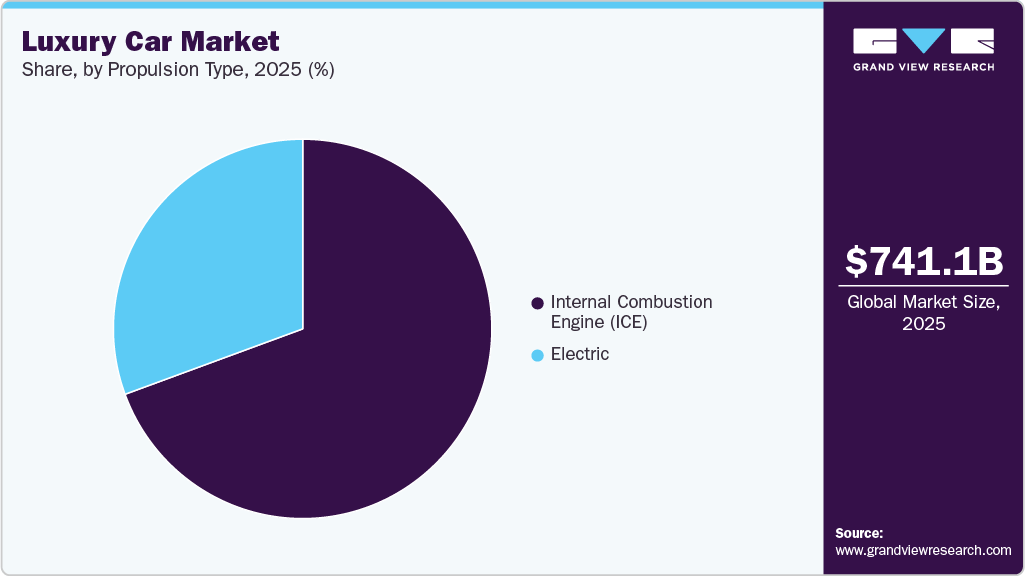
The Electric segment is expected to grow at the fastest CAGR during the forecast period. Electric luxury cars have become more than just alternatives; they are trendsetters. Spearheaded by brands such as Tesla, Lucid, and Porsche (Taycan), the electric segment is becoming synonymous with cutting-edge design, near-instant torque, and software-defined luxury. Discerning buyers are increasingly associating EVs with modernity and eco-conscious prestige. Furthermore, the rollout of ultra-fast charging networks and government incentives in key markets (Europe, China, U.S.) is accelerating adoption. The electric propulsion segment is not only outpacing growth expectations but also redefining what "luxury" means for the next generation.
Regional Insights
The North America luxury car market accounted for 22.9% share of the overall market in 2025, driven by consumer preferences for exclusivity, performance, and advanced technology. There is a notable rise in demand for electric and hybrid luxury vehicles, reflecting a shift towards environmentally friendly options. In addition, SUVs and crossovers are gaining popularity due to their combination of luxury, versatility, and practicality. Domestic luxury car brands maintain a strong presence, offering performance and innovation that resonate with the market. Favorable macroeconomic factors, including a strong economy and high disposable income, further contribute to the development of the luxury car market in North America.
U.S. Luxury Car Market Trends
The U.S. luxury car industry held a dominant position in 2025. In the U.S., the luxury car market is characterized by a growing demand for electric and hybrid vehicles, as consumers become more conscious of their carbon footprint. Luxury car manufacturers are responding by investing in research and development to create eco-friendly options that meet high customer standards. The increasing popularity of SUVs and crossovers, offering a blend of luxury and practicality, is also shaping the market. American luxury car manufacturers continue to have a loyal customer base, contributing to the unique dynamics of the U.S. luxury car market.
Europe Luxury Car Market Trends
The Europe luxury car industry was identified as a lucrative region in 2025. This growth is fueled by economic stability, rising disposable incomes, and a consumer shift towards vehicles that signify status and incorporate the latest automotive technologies. A prominent trend is the rapid adoption of electric vehicles (EVs), with luxury automakers integrating high-performance EVs equipped with advanced driver-assistance systems (ADAS) and autonomous driving capabilities. The expansion of fast-charging infrastructure across Europe enhances the feasibility of EVs for consumers. In addition, luxury brands are emphasizing bespoke customization, allowing clients to personalize their vehicles, thereby amplifying the appeal of luxury brands.
Germany, as a major player in the European automotive industry, is experiencing similar trends to the broader European market. The country hosts leading luxury automakers such as BMW, Mercedes-Benz, and Audi, which collectively account for a significant share of global luxury vehicle production and exports. Germany’s well-established engineering capabilities, advanced supplier network, and strong R&D infrastructure enable continuous innovation in powertrains, vehicle dynamics, and digital vehicle architectures. Supportive industrial and electrification policies implemented by the German Federal Government have accelerated investments in electric luxury platforms and battery manufacturing. In addition, domestic consumers demonstrate a strong preference for premium brands, driven by national brand loyalty and high purchasing power, supporting stable replacement demand.
The presence of globally recognized manufacturers such as Jaguar Land Rover, Rolls-Royce Motor Cars, and Bentley Motors reinforces the UK’s role as a production and innovation hub for high-end vehicles. These companies maintain strong global export networks, with a significant share of UK-produced luxury vehicles shipped to North America, Europe, and Asia-Pacific. Government policies supporting advanced manufacturing, electrification, and R&D driven by initiatives from the UK Government have encouraged continued investment in electric luxury platforms and next-generation automotive technologies. In addition, the UK’s skilled engineering workforce, established supplier base, and motorsport heritage contribute to sustained product innovation and brand prestige. Domestic demand is further supported by high-income urban consumers and corporate fleet purchases, including executive leasing programs, which maintain a stable replacement cycle. The combination of export strength, technological capability, and premium brand heritage positions the UK as a strategically important market and production base within the global luxury automotive landscape.
Asia Pacific Luxury Car Market Trends
In the Asia Pacific (APAC) region, the luxury car market is witnessing steady expansion driven by robust economic growth, increasing urbanization, and rising affluence among the middle and upper classes. Consumers across countries such as China, Japan, and India are showing a marked preference for technologically advanced and environmentally friendly luxury vehicles, especially electric and hybrid models. This shift is being bolstered by government policies promoting clean mobility and reduced emissions. Luxury SUVs, known for their blend of comfort, prestige, and practicality, are gaining strong traction among urban consumers. Automakers are responding to these trends by localizing production, expanding dealership networks, and tailoring offerings to regional tastes, enhancing accessibility and brand loyalty. The convergence of consumer demand for innovation, green technology, and brand exclusivity is shaping a dynamic and competitive luxury car market across APAC.
The China luxury car industry held a substantial market share in 2025. The Chinese government’s long-term focus on new energy vehicles (NEVs), supported by subsidies, license plate incentives, and infrastructure investment, has accelerated luxury EV adoption among affluent consumers. Premium electric offerings from domestic manufacturers such as NIO, BYD, and XPeng are increasingly competing with established European brands, reshaping brand perception in the luxury segment. This shift is particularly significant in metropolitan areas where regulatory restrictions on internal combustion engine vehicles encourage buyers to opt for electric luxury models.
In India, the expansion of high-income households in metropolitan regions such as Mumbai, Delhi NCR, and Bengaluru has increased the addressable base for premium vehicle brands. Luxury vehicles are increasingly viewed as aspirational lifestyle assets and status symbols, particularly among entrepreneurs, senior corporate executives, and next-generation family business owners. Automakers including Mercedes-Benz India, BMW India, and Audi India are expanding their dealership networks and introducing locally assembled models to reduce costs and improve accessibility. In addition, policy measures such as reduced import duties on completely knocked down (CKD) units and incentives for electric mobility introduced by the Government of India have supported market development. The growth of executive leasing, corporate fleets, and the early-stage expansion of the luxury car rental market are also improving exposure to premium brands among first-time users.
Key Luxury Car Company Insights
Some of the major players in the Luxury Car market include BMW AG, Aston Martin, General Motors, Mercedes-Benz Group AG, among others. The major players in the luxury car market are distinguished by their strong global brand presence, cutting-edge technological innovation, and ability to adapt to evolving consumer preferences. These companies invest heavily in research and development to integrate advanced safety systems, high-performance drivetrains, and digital features such as autonomous driving capabilities and software-defined vehicle architectures. Their commitment to electrification, including hybrid and fully electric models, aligns with increasingly stringent emissions regulations and shifting demand for sustainable mobility. In addition, their global manufacturing and distribution networks enable efficient market penetration and localized production, helping them navigate geopolitical challenges and supply chain disruptions. With consistent focus on design excellence, customer experience, and premium value offerings, these manufacturers continue to set benchmarks that define and drive the luxury automotive segment.
-
BMW Group is widely recognized for its strong emphasis on driving dynamics, performance engineering, and premium design, positioning the brand as a leader in the sport-oriented luxury segment. BMW’s global manufacturing footprint, with major production hubs across Europe, China, and North America, supports supply chain resilience and proximity to key luxury markets. The brand’s proprietary digital ecosystem, anchored by the BMW iDrive operating system, enables advanced connectivity, over-the-air updates, and personalized user experiences, reinforcing its technology-forward positioning. In addition, BMW continues to invest in next-generation vehicle architectures, battery technologies, and autonomous driving capabilities to maintain competitiveness in an increasingly software-defined automotive landscape. Its balanced strategy combining performance heritage, electrification, and digital innovation allows BMW to cater to both traditional luxury enthusiasts and emerging EV-focused consumers, thereby sustaining its strong global market position.
-
Volkswagen plays a critical role in the luxury car market through its ownership and strategic development of premium brands such as Audi, Bentley, Lamborghini, and Porsche. Leveraging its extensive global manufacturing network and R&D capabilities, the company has positioned itself as a powerhouse in both performance and luxury segments. Its commitment to electrification is evident through major investments in the Premium Platform Electric (PPE) architecture and the expansion of electric offerings across its luxury brands. Volkswagen also emphasizes digital transformation, integrating advanced software systems and autonomous features to meet evolving consumer expectations. By combining brand heritage, technological innovation, and scalable EV strategies, Volkswagen continues to drive growth and redefine the standards of the global luxury automotive industry.
Key Luxury Car Companies:
The following key companies have been profiled for this study on the luxury car market.
- BMW AG
- Aston Martin
- Volkswagen
- General Motors
- Mercedes-Benz Group AG
- Stellantis NV
- Tesla
- TOYOTA MOTOR CORPORATION
- Tata Motors Limited
- Volvo Car Corporation
Recent Developments
-
In March 2025, Mercedes-Benz introduced the new CLA, featuring an electric variant with a range of 792 km (492 miles), set for sales later in 2025. This third-generation model strengthens Mercedes-Benz’s position in the luxury electric vehicle segment, targeting eco-conscious premium buyers.
-
In May 2025, Audi, a subsidiary of Volkswagen, announced the upcoming RS5 Avant, a plug-in hybrid with a V6 engine producing approximately 600 horsepower. This model blends high performance with fuel efficiency, expanding Audi’s electrified luxury offerings for performance-driven consumers.
Luxury Car Market Report Scope
Report Attribute
Details
Market size value in 2026
USD 791.7 billion
Revenue forecast in 2033
USD 1,145.8 billion
Growth rate
CAGR of 5.4% from 2026 to 2033
Base year for estimation
2025
Historical data
2021 - 2024
Forecast period
2026 - 2033
Quantitative units
Revenue in USD million/billion, volume in units, and CAGR from 2026 to 2033
Report coverage
Revenue forecast, company ranking, competitive landscape, growth factors, and trends
Segments covered
Vehicle type, propulsion type, region
Regional scope
North America; Europe; Asia Pacific; Latin America; MEA
Country scope
U.S.; Canada; Mexico; Germany; UK; France; China; Japan; India; South Korea; Australia; Brazil; KSA; UAE; South Africa
Key companies profiled
BMW AG; Aston Martin; Volkswagen; General Motors; Mercedes-Benz Group AG; Stellantis NV; Tesla; TOYOTA MOTOR CORPORATION; Tata Motors Limited; Volvo Car Corporation
Customization scope
Free report customization (equivalent up to 8 analysts working days) with purchase. Addition or alteration to country, regional & segment scope.
Pricing and purchase options
Avail customized purchase options to meet your exact research needs. Explore purchase options
Global Luxury Car Market Report Segmentation
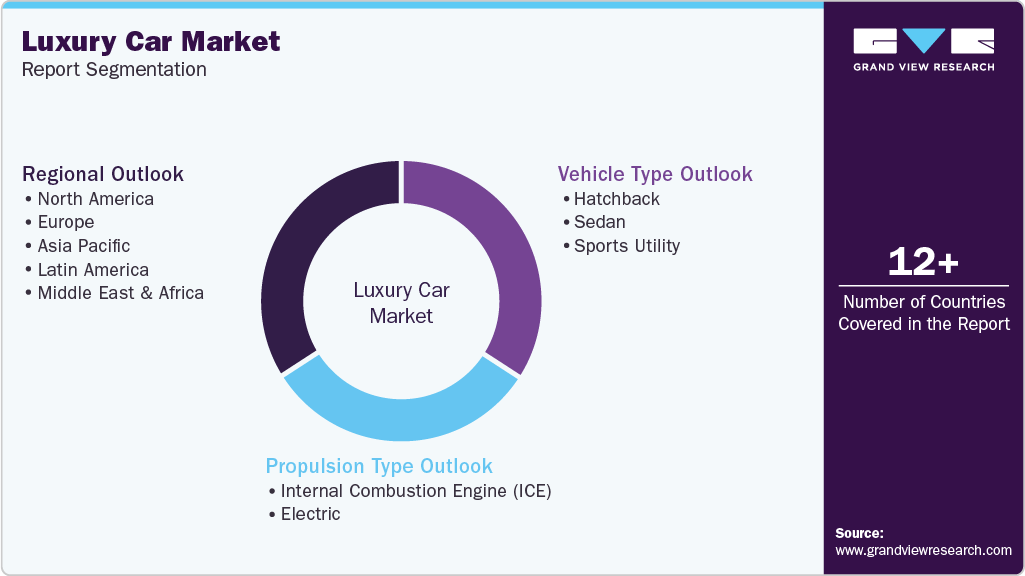
This report forecasts revenue growth at the global, regional, and country levels and provides an analysis of the latest industry trends in each of the sub-segments from 2021 to 2033. For this study, Grand View Research has segmented the global luxury car market report based on vehicle type, propulsion type, and region:
-
Vehicle Type Outlook (Volume, Units; Revenue, USD Billion, 2021 - 2033)
-
Hatchback
-
Sedan
-
Sports Utility
-
-
Propulsion Type Outlook (Volume, Units; Revenue, USD Billion, 2021 - 2033)
-
Internal Combustion Engine (ICE)
-
Electric
-
-
Regional Outlook (Volume, Units; Revenue, USD Billion, 2021 - 2033)
-
North America
-
U.S.
-
Canada
-
Mexico
-
-
Europe
-
Germany
-
UK
-
France
-
-
Asia Pacific
-
China
-
Japan
-
India
-
South Korea
-
Australia
-
-
Latin America
-
Brazil
-
-
Middle East and Africa (MEA)
-
KSA
-
UAE
-
South Africa
-
-
Frequently Asked Questions About This Report
b. Some key players operating in the luxury car market include Mercedes-Benz Group AG, BMW Group, Volkswagen, Tesla, TOYOTA MOTOR CORPORATION (Lexus), Volvo Car Corporation, JAGUAR LAND ROVER AUTOMOTIVE PLC (Tata Motors), and Aston Martin.
b. Key factors driving the market growth include the continued increase of ultra-high-net-worth individuals and increasing disposable income.
b. The global luxury car market size was estimated at USD 741.1 billion in 2025 and is expected to reach USD 791.7 billion in 2026.
b. The global luxury car market is expected to grow at a compound annual growth rate of 5.4% from 2026 to 2033 to reach USD 1,145.8 billion by 2033.
b. Europe dominated the luxury car market with a share of 38.4% in 2025. This can be attributed to the presence of numerous luxury car market players in the region.


Share this report with your colleague or friend.
Need a Tailored Report?
Customize this report to your needs — add regions, segments, or data points, with 20% free customization.


ISO 9001:2015 & 27001:2022 Certified
We are GDPR and CCPA compliant! Your transaction & personal information is safe and secure. For more details, please read our privacy policy.
Trusted market insights - try a free sample
See how our reports are structured and why industry leaders rely on Grand View Research. Get a free sample or ask us to tailor this report to your needs.