- Home
- »
- Animal Health
- »
-
Livestock Diagnostics Market Size, Industry Report, 2033GVR Report cover
![Livestock Diagnostics Market Size, Share & Trends Report]()
Livestock Diagnostics Market (2026 - 2033) Size, Share & Trends Analysis Report By Product (Consumables, Reagents & Kits, Equipment & Instruments), By Animal (Cattle, Poultry), By Testing Category, By End Use, By Region, And Segment Forecasts
- Report ID: GVR-4-68040-869-4
- Number of Report Pages: 150
- Format: PDF
- Historical Range: 2021 - 2024
- Forecast Period: 2026 - 2033
- Industry: Healthcare
- Report Summary
- Table of Contents
- Segmentation
- Methodology
- Download FREE Sample
-
 Download Sample Report
Livestock Diagnostics Market Summary
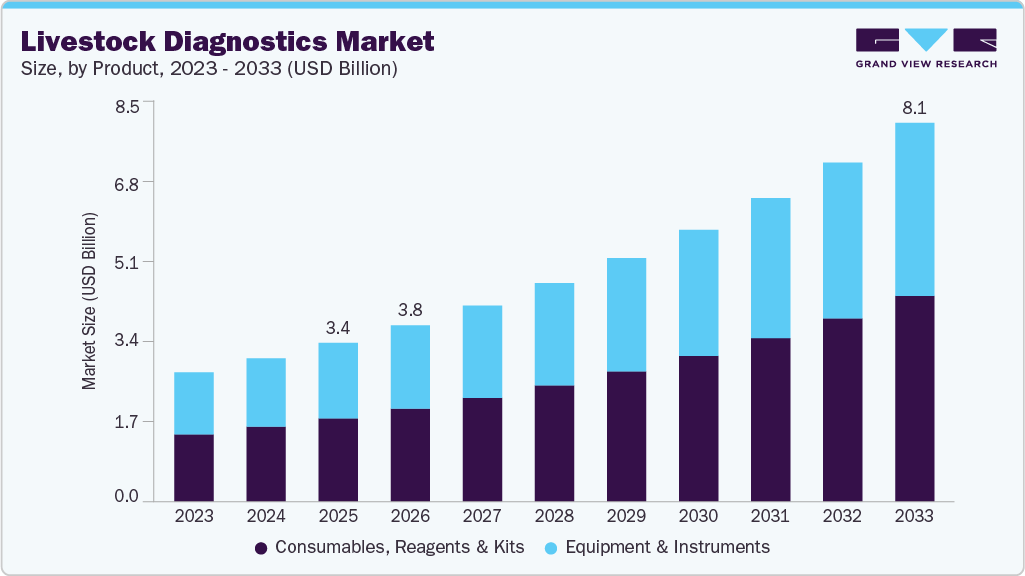
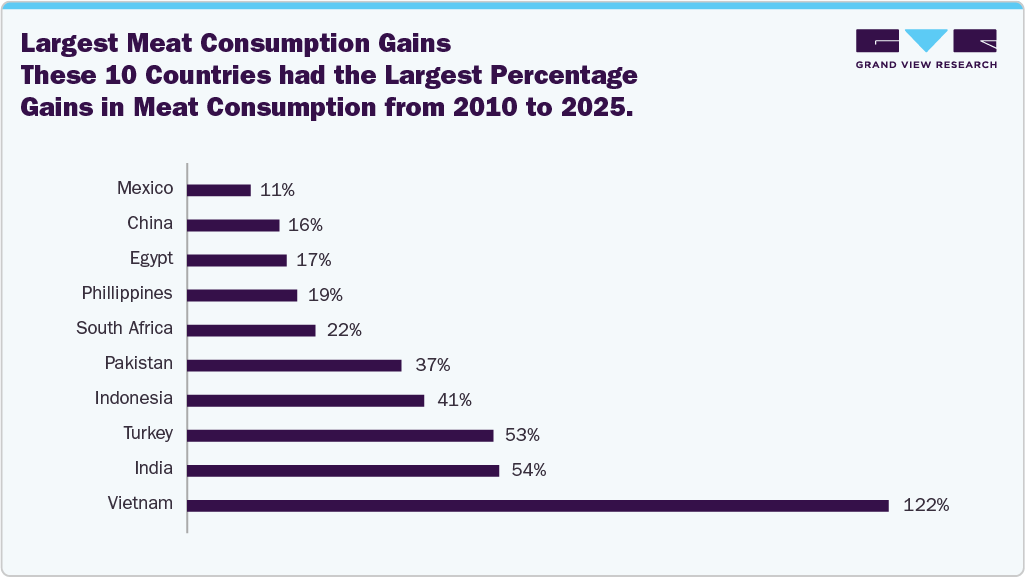
The global livestock diagnostics market size was estimated at USD 3.4 billion in 2025 and is projected to reach USD 8.1 billion by 2033, growing at a CAGR of 11.5% from 2026 to 2033. The market is witnessing significant growth driven by the rising global demand for animal-derived food products, which increases the need for effective disease monitoring to maintain productivity and supply stability.
Key Market Trends & Insights
- North America dominated the global livestock diagnostics market with the largest revenue share of 40.1% in 2025.
- The livestock diagnostics industry in the U.S. accounted for the largest market revenue share in North America in 2025.
- By product, the consumables, reagents & kits segment led the market with the largest revenue share of 52.5% in 2025
- By animal, the cattle segment accounted for the largest market revenue share in 2025.
- By end use, the veterinarians segment accounted for the largest market revenue share in 2025.
Market Size & Forecast
- 2025 Market Size: USD 3.4 Billion
- 2033 Projected Market Size: USD 8.1 Billion
- CAGR (2026-2033): 11.5%
- North America: Largest share market in 2025
- Asia Pacific: Fastest growing in the market
The growing prevalence of infectious, zoonotic, and foodborne diseases in livestock further accelerates adoption as early detection helps reduce economic losses and prevent outbreaks.Moreover, the increasing adoption of digital surveillance platforms and data-driven tools is strengthening demand for advanced livestock diagnostics solutions as stakeholders’ focus on early disease detection and faster response mechanisms. For instance, according to an article published by the Regents of the University of California, Davis campus, in October 2025, the University of California, Davis School of Veterinary Medicine, launched the upgraded Disease BioPortal, which supports veterinarians, producers, and diagnostic laboratories in monitoring livestock health trends through integrated data and predictive analytics. The platform consolidates diagnostic and field data from multiple sources and provides interactive dashboards and real-time insights to improve outbreak detection and farm management decisions.
The adoption of this platform by major swine producers, pharmaceutical companies, and veterinary clinics reflects growing industry reliance on connected diagnostic ecosystems to manage disease risks. By enabling faster identification of health issues and improving biosecurity planning, such digital systems increase the utilization of laboratory testing, surveillance diagnostics, and field-based screening tools. As more livestock sectors integrate similar monitoring solutions, the demand for diagnostic tests, data integration services, and laboratory infrastructure is expected to rise, thereby contributing to the overall growth of the livestock diagnostics industry.
In addition, rising outbreaks of animal diseases significantly increase the demand for rapid and accurate disease detection tools in the livestock sector. For instance, according to an article published by PoultryMed, in February 2026, Argentina’s National Health and Agrifood Quality Service (SENASA) confirmed the presence of a Highly Pathogenic Avian Influenza (H5 subtype) outbreak in a commercial poultry farm, along with virus detection in wild bird populations, leading to strengthened surveillance and stricter control measures across farms and nearby areas.
The culling of infected flocks and the voluntary suspension of poultry exports highlight the economic impact of such events, prompting producers, exporters, and regulators to strengthen routine testing, environmental monitoring, and biosecurity screening. As authorities and industry players aim to prevent further spread and safeguard trade, the need for laboratory-based diagnostics, field testing kits, and continuous monitoring systems increases, thereby supporting the market growth.
Market Concentration & Characteristics
The livestock diagnostics industry is fragmented, with many public and private companies operating in the sector. These players strengthen their position by investing in research and development, building extensive distribution networks, and forming partnerships with local companies to expand their reach. By combining innovation with strong market access and localized support, they can introduce new products faster, improve customer access, and maintain a competitive edge in the livestock diagnostics industry.
The livestock diagnostics industry is evolving with continuous improvements in testing methods, including molecular diagnostics, rapid point-of-care testing, and digital monitoring tools. Companies are investing in advanced technologies to improve detection accuracy, reduce turnaround time, and enable early disease identification. Innovation is primarily focused on developing cost-effective, user-friendly solutions for field conditions that deliver reliable results.
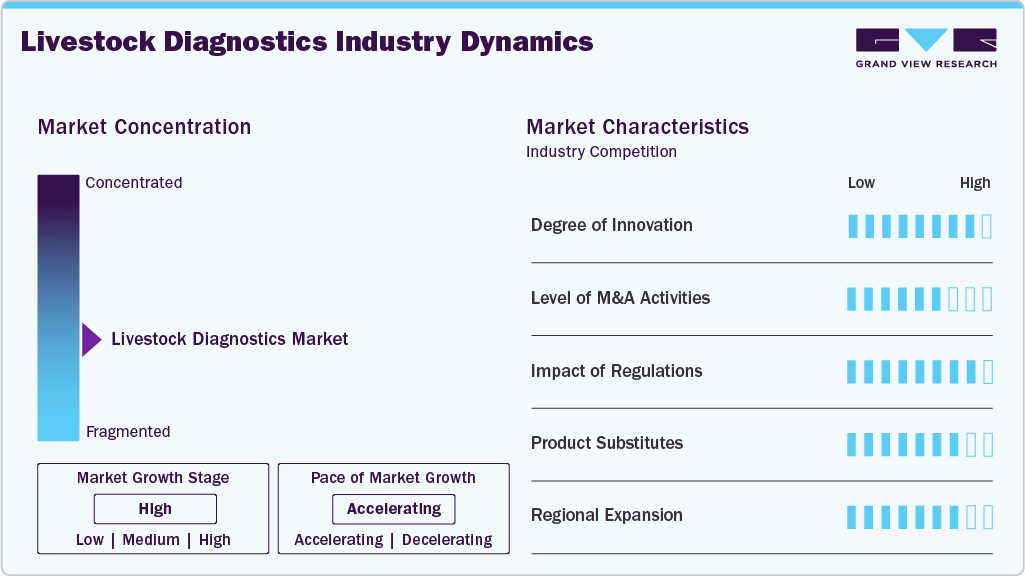
Mergers and acquisitions play an important role in shaping the livestock diagnostics industry as companies seek to expand their product portfolios and strengthen their market presence. Larger players often acquire smaller specialized firms to gain access to new technologies, regional markets, or research capabilities. These activities help companies improve operational efficiency, broaden distribution networks, and accelerate growth in the sector.
Regulatory requirements strongly influence the industry, as governments enforce standards related to animal health, disease control, and food safety. Compliance with veterinary regulations and certification processes is necessary before diagnostic products can enter the market. Strict monitoring of zoonotic diseases and trade-related health protocols increases the demand for reliable diagnostic tools and drives adoption across regions.
Alternative approaches such as preventive vaccination, biosecurity measures, and herd management practices can reduce dependence on certain diagnostic tests. However, diagnostics remain essential for disease confirmation, outbreak control, and monitoring treatment effectiveness. While substitutes may limit usage in some cases, growing disease risks and regulatory reporting requirements continue to sustain demand for diagnostic solutions.
Companies in the livestock diagnostics sector are expanding into emerging markets where livestock production is growing, and disease surveillance systems are strengthening. Expansion efforts focus on establishing local partnerships, setting up distribution channels, and adapting products to regional disease patterns. This approach helps companies capture new opportunities and support increasing demand for animal health monitoring across different geographies.
Product Insights
The consumables, reagents & kits segment led the market with the largest revenue share of 52.5% in 2025 and is anticipated to grow at the fastest CAGR over the forecast period, due to the rising frequency of disease testing and routine health screening across cattle, poultry, swine, and other livestock species. Increased surveillance for infectious diseases and regulatory testing requirements drive continuous demand for test kits, assay reagents, and disposable materials that are used repeatedly in laboratories and field settings. As livestock producers and veterinary labs conduct regular monitoring to prevent outbreaks and ensure compliance with food safety regulations, the recurring need for replacement reagents and ready-to-use diagnostic kits supports steady revenue growth. In addition, the expansion of laboratory infrastructure and the adoption of molecular and immunoassay-based testing methods further boost the consumption of specialized diagnostic consumables.
The equipment & instruments segment is projected to grow at a significant CAGR over the forecast period, owing to the growing adoption of rapid and portable diagnostic tools For instance, in February 2026, EKF Diagnostics introduced the Lactate Scout Vet analyzer, a handheld device designed specifically for veterinary use with species selection for dogs, horses, pigs, and cattle. By enabling quick lactate testing for prognosis, diagnosis, and risk assessment directly at the farm or clinic, the device supports faster decision-making in livestock health management. Such innovations increase the adoption of handheld analyzers and point-of-care instruments among veterinarians and large-animal practitioners, thereby expanding the equipment segment within livestock diagnostics.
Animal Insights
The cattle segment accounted for the largest market revenue share in 2025. The growing adoption of advanced genetic and biomarker-based testing solutions is strengthening the cattle segment of the livestock diagnostics industry by enabling better herd selection and improved productivity. For instance, in March 2024, Anova Biosciences launched Promogen, a diagnostic test that identifies stress-resistant biomarker proteins called “Defensins” to detect cattle with superior genetic traits, supports sustainable breeding practices, and enhances disease resistance. By quantifying biomarker concentrations and helping producers identify high-performing animals with improved feed efficiency and productivity, the test encourages wider use of precision diagnostics in beef and dairy operations. Such innovations increase demand for specialized laboratory testing and field-based screening tools, thereby driving growth in the cattle diagnostics segment.
The other segment is anticipated to grow at the fastest CAGR over the forecast period. Other livestock species, such as sheep and goats, are contributing significantly to the growth of the livestock diagnostics industry as production systems expand and disease risks increase across species. Rising commercial farming activities and higher animal density create a greater need for routine health monitoring, early disease detection, and biosecurity management in these segments. Outbreaks of species-specific diseases and zoonotic infections require frequent testing and surveillance, which boosts demand for diagnostic tools tailored to different animals.
Testing Category Insights
The clinical chemistry segment accounted for the largest market share in 2025, driven by increased demand for blood and serum analysis to assess metabolic disorders, organ function, and nutritional imbalances in animals. Routine testing of biochemical parameters, such as liver enzymes, kidney markers, glucose levels, and mineral balance, helps veterinarians monitor herd health and detect diseases early. Expanding dairy and beef production systems, along with improved laboratory automation and faster testing equipment, is further driving the adoption of clinical chemistry testing in livestock management. Rising cases of production-related stress and metabolic diseases in high-yield animals also increase the need for regular biochemical monitoring. In addition, stricter disease surveillance and farm-level health management practices are encouraging producers to integrate clinical chemistry testing into routine herd management programs.
The cytopathology segment is anticipated to grow at the fastest CAGR over the forecast period, as it enables early detection of infections, tumors, and inflammatory conditions through microscopic examination of cells collected from animals. The increasing incidence of infectious diseases and the rising focus on early disease diagnosis in cattle, poultry, and other livestock are driving demand for accurate laboratory-based testing methods. For instance, cases of mastitis in dairy cattle require cellular analysis of milk samples to identify pathogens and inflammatory changes, which supports timely treatment decisions and improved productivity.
End Use Insights
The veterinarians segment accounted for the largest market revenue share in 2025. Rising outbreaks of infectious diseases, stricter food safety regulations, and growing livestock populations are pushing farmers to rely more on veterinary professionals for diagnostic testing and health monitoring. For instance, during outbreaks such as avian influenza in poultry or foot-and-mouth disease in cattle, veterinarians collect samples, recommend laboratory testing, and guide control measures to prevent spread. In dairy operations, veterinarians regularly conduct mastitis screening and reproductive health testing to improve productivity. As livestock farming becomes more organized and technology-driven, the demand for veterinary services and diagnostic support continues to expand.
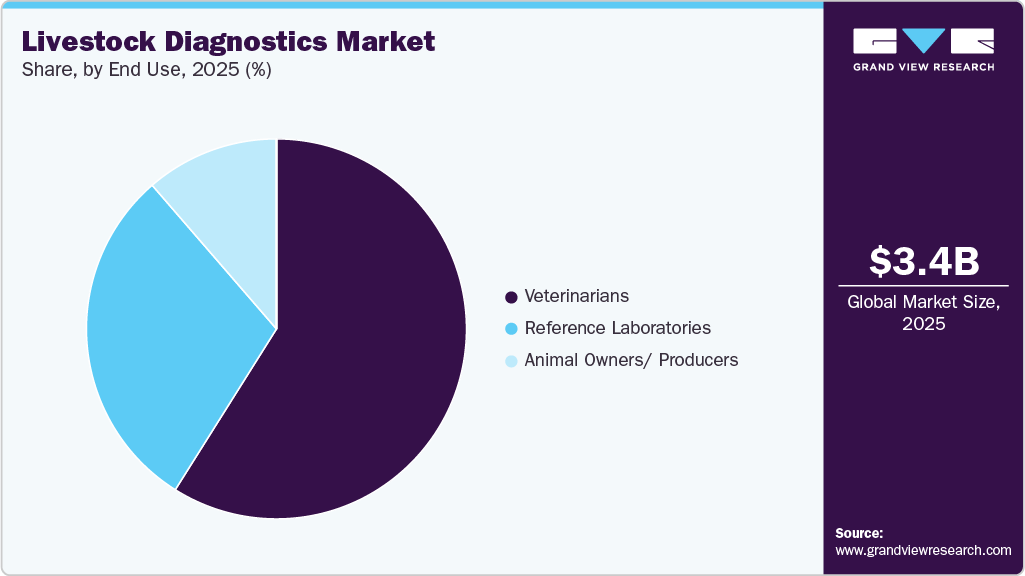
The animal owners/ producers segment is anticipated to grow at the fastest CAGR over the forecast period, as they increasingly focus on improving herd health, productivity, and profitability through regular disease monitoring and testing. With rising disease risks and stricter quality standards for meat, milk, and other animal products, farmers and producers depend on diagnostic tools to detect infections early and reduce economic losses. For instance, dairy producers conduct routine testing for mastitis and reproductive disorders to maintain milk yield and breeding performance, while poultry farm owners use rapid testing to identify viral or bacterial outbreaks before they spread.
Regional Insights
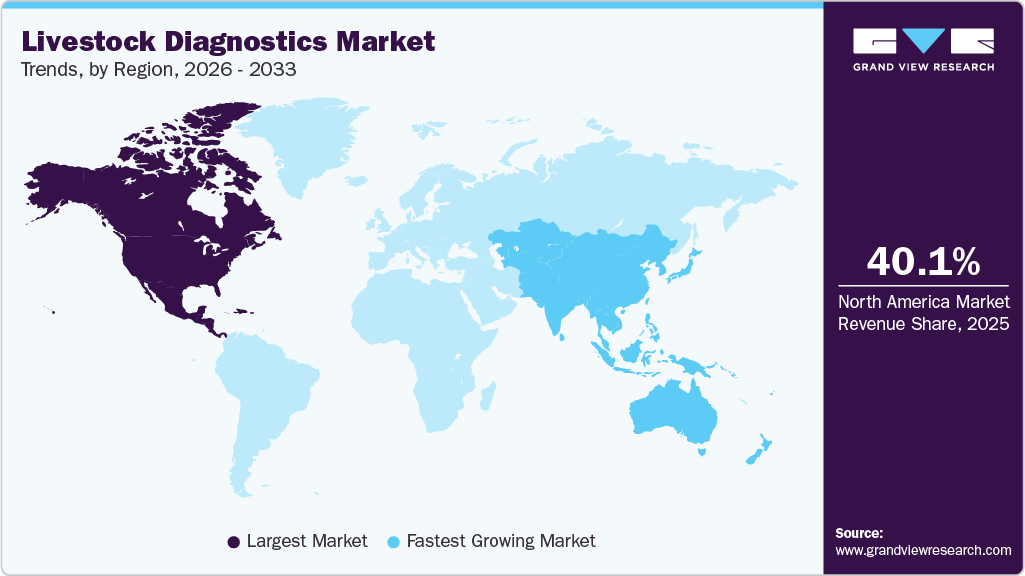
North America dominated the global livestock diagnostics market with the largest revenue share of 40.1% in 2025.The market is being driven by factors such as strict animal health regulations, strong food safety standards, and the large-scale commercial livestock production across the United States and Canada. Frequent monitoring is required to control infectious diseases such as avian influenza, bovine tuberculosis, and swine-related viral infections, which increases demand for laboratory testing and rapid diagnostic tools. High adoption of advanced veterinary services, well-developed diagnostic infrastructure, and growing investments in molecular and point-of-care testing further support market expansion.
U.S. Livestock Diagnostics Market Trends
The livestock diagnostics market in the U.S. accounted for the largest market revenue share in North America in 2025. Growing government-led surveillance and disease monitoring initiatives are driving demand for livestock diagnostics in the U.S. For instance, according to an article published by The Arizona Board of Regents, in September 2025, The University of Arizona’s veterinary diagnostic laboratory, designated to support federal screening efforts for the New World screwworm outbreak, highlighted the increasing reliance on diagnostic facilities for early detection and control. As this pest can affect livestock and spread quickly, continuous testing and monitoring through national laboratory networks strengthen the adoption of diagnostic tools and support growth in the U.S. livestock diagnostics industry.
The Canada livestock diagnostics marketis expected to grow at a significant CAGR during the forecast period. Increased public funding and collaboration for livestock research and disease monitoring strengthen the development and adoption of advanced diagnostic tools in Canada. For instance, in January 2026, Agriculture and Agri-Food Canada and the Government of Saskatchewan allocated funding for livestock and forage research projects, along with renewed partnerships with research institutions such as Prairie Swine Centre and the Vaccine and Infectious Disease Organization, which supports innovation in areas like disease testing, biomarker development, and animal health management. Projects focusing on improved diagnostic approaches for conditions such as Johne’s disease and enhanced livestock productivity encourage the creation and validation of new testing methods. Backed by additional industry contributions and long-term agricultural funding programs, such initiatives expand research infrastructure and drive demand for reliable livestock diagnostic solutions across the Canadian market.
Europe Livestock Diagnostics Market Trends
The livestock diagnostics market in Europe is growing steadily, driven by strong livestock production and a high emphasis on food safety and disease prevention. Countries across the region benefit from established veterinary infrastructure, advanced laboratory networks, and routine disease surveillance systems that support early detection and control of infections. Ongoing investments in diagnostic technologies, expansion of service capabilities, and regulatory compliance requirements further accelerate adoption, strengthening market growth across key European markets.
The UK livestock diagnostics market is expected to grow at a significant CAGR over the forecast period. Strategic acquisitions and the expansion of diagnostic capabilities strengthen the UK livestock diagnostics industry by expanding service reach, improving access to technology, and enhancing laboratory infrastructure. For instance, in November 2025, Zoetis acquired Veterinary Pathology Group (VPG), a leading diagnostic laboratory network in the UK and Ireland. By integrating VPG’s established laboratories and expertise, the company can deliver faster and more accurate diagnostic results, supporting improved disease detection and animal health management. This development increases the availability of high-quality diagnostic solutions in the UK livestock sector and reinforces market growth by improving operational capacity and expanding customer coverage.
The livestock diagnostics market in Germany is growing significantly due to its strong livestock production base, strict animal health regulations, and strong focus on food safety and disease control. The country has a well-developed veterinary infrastructure and advanced laboratory networks that support routine disease screening and rapid outbreak response. For instance, monitoring programs for diseases such as avian influenza and bovine tuberculosis require regular testing on commercial farms, thereby increasing demand for diagnostic solutions. In addition, investments in digital animal health monitoring and government-supported surveillance initiatives further strengthen the adoption of advanced diagnostic tools across the German livestock sector.
Asia Pacific Livestock Diagnostics Market Trends
The livestock diagnostics market in the Asia Pacific is expected to grow at the fastest CAGR over the forecast period.The region's growth can be attributed to the increasing commercialization of livestock farming and rising investment in modern veterinary infrastructure. Rapid urbanization and changing dietary patterns are boosting demand for high-quality animal products, encouraging regular health monitoring. Technological adoption in diagnostic laboratories and government-supported disease surveillance programs further strengthens market growth. Cross-border trade within the region also requires improved testing and compliance mechanisms.
The livestock diagnostics market in Japanis witnessing a lucrative growth over the forecast period. Advancements in research and the development of rapid diagnostic tools are strengthening disease monitoring capabilities and boosting demand for advanced testing solutions in Japan’s livestock diagnostics industry. For instance, the development of a new diagnostic method by the University of Miyazaki, in June 2025, in collaboration with research institutions and international partners, enables quick and accurate differentiation between vaccine strains and field strains of Lumpy Skin Disease in cattle. This innovation supports better surveillance, outbreak control, and informed vaccination strategies, encouraging wider adoption of improved diagnostic technologies across veterinary laboratories and livestock farms in Japan.
The India livestock diagnostics market is expected to grow significantly, driven by the large livestock population, rising incidence of infectious diseases, and government initiatives focused on animal disease control and vaccination programs. Increasing export requirements for dairy and meat products encourage better disease testing and traceability. Growing investment in veterinary services and expanding rural healthcare infrastructure further support the adoption of diagnostic solutions.
Latin America Livestock Diagnostics Market Trends
The livestock diagnostics market in Latin America is supported by strong export-oriented meat and poultry production and strict compliance requirements from international trading partners. Disease monitoring is critical to maintain market access and protect trade reputation. Investments in regional diagnostic laboratories and public-private collaborations improve testing capacity. Environmental changes and livestock movement across borders also require enhanced surveillance systems.
The Brazil livestock diagnostics market is driven by the country’s position as one of the largest global exporters of beef and poultry, requiring strict animal health certification. Surveillance programs for controlling infectious diseases support the demand for advanced diagnostic technologies. Expansion of private veterinary clinics and laboratory networks improves access to testing services. Continuous monitoring is necessary to protect herd health and sustain export competitiveness.
Middle East & Africa Livestock Diagnostics Market Trends
The livestock diagnostics market in the Middle East & Africa is anticipated to grow at a lucrative CAGR over the forecast period, driven by increasing livestock imports, population growth, and efforts to improve food self-sufficiency. Rising investments in veterinary services and disease control programs strengthen diagnostic adoption. Climate-related stress on animals increases susceptibility to infections, driving testing requirements. Development of regional diagnostic facilities and government initiatives to improve animal health systems further support growth.
The South Africa livestock diagnostics market is expanding, due to a structured livestock industry that requires regular disease surveillance to meet domestic and export standards. Growing concerns about animal disease outbreaks are increasing the use of laboratory-based and field diagnostic testing. Strong regulatory oversight and inspection systems promote compliance with animal health protocols. Expansion of private sector laboratories also enhances diagnostic accessibility.
The livestock diagnostics market in the UAE is strengthened byfood security strategies and dependence on imported livestock and animal products. Strict quarantine procedures and border inspections require reliable testing methods to prevent the introduction of disease. Government investment in advanced veterinary infrastructure strengthens diagnostic capabilities. Increasing livestock farming activities within the country also contribute to higher demand for disease monitoring solutions.
Key Livestock Diagnostics Company Insights
The global livestock diagnostics industry remains fragmented. Key market players are investing in strategic partnerships and R&D to develop new PCR-based, rapid assays that enable faster, field-ready disease detection. These varied initiatives by multiple companies, rather than dominance by any single firm, contribute to the fragmented nature of the livestock diagnostics industry while driving overall adoption and technological advancement.
Key Livestock Diagnostics Companies:
The following key companies have been profiled for this study on the livestock diagnostics market.
- IDEXX Laboratories, Inc.
- Zoetis
- Antech Diagnostics, Inc. (Mars Inc.)
- Agrolabo S.p.A.
- Embark Veterinary, Inc.
- Esaote SPA
- Thermo Fisher Scientific, Inc.
- Innovative Diagnostics SAS
- Virbac
- FUJIFILM Corporation
Recent Developments
-
In April 2025, The Equine Analytical Chemistry Laboratory at the University of Kentucky was acquired by Eagle Diagnostics. The facility will now operate under the new name Equine Integrity and Anti-Doping Sciences (EQIAS) Labs. Under its new ownership, the lab will maintain its prominent role in anti-doping testing for the equine and competitive animal sectors, while also broadening its scope to advance research and drive innovation initiatives.
-
In November 2025, Zoetis Inc. acquired Veterinary Pathology Group (VPG), a prominent veterinary diagnostics laboratory network operating across the UK and Ireland. This strategic move strengthens Zoetis’ diagnostics portfolio and highlights its continued focus on enhancing animal health through advanced, high-quality diagnostic services and solutions.
-
In February 2024, MiDOG Animal Diagnostics introduced an advanced All-in-One Diagnostic Test capable of rapidly detecting bacterial and fungal infections, including antibiotic resistance, across various animal species. This innovation aims to enhance veterinary care by replacing traditional testing methods with efficient molecular-based diagnostics, supporting comprehensive treatment strategies for diverse animals, from pets to exotic species.
Livestock Diagnostics Market Report Scope
Report Attribute
Details
Market size value in 2026
USD 3.8 billion
Revenue forecast in 2033
USD 8.1 billion
Growth rate
CAGR of 11.5% from 2026 to 2033
Base year for estimation
2025
Historical data
2021 - 2024
Forecast period
2026 - 2033
Quantitative units
Revenue in USD million/billion, and CAGR from 2026 to 2033
Report coverage
Revenue forecast, company ranking, competitive landscape, growth factors, and trends
Segments covered
Product, testing category, animal, end use, regional
Regional scope
North America; Europe; Asia Pacific; Latin America; MEA
Country scope
U.S.; Canada; Mexico; UK; Germany; France; Italy; Spain; Denmark; Sweden; Norway; Japan; China; India; Thailand; South Korea; Australia; Brazil; Argentina; South Africa; UAE; Saudi Arabia; Kuwait; Qatar; Oman
Key companies profiled
IDEXX Laboratories, Inc.; Zoetis; Antech Diagnostics, Inc. (Mars Inc.); Agrolabo S.p.A.; Embark Veterinary, Inc.; Esaote SPA; Thermo Fisher Scientific, Inc.; Innovative Diagnostics SAS; Virbac; FUJIFILM Corporation
Customization scope
Free report customization (equivalent up to 8 analysts working days) with purchase. Addition or alteration to country, regional & segment scope.
Pricing and purchase options
Avail customized purchase options to meet your exact research needs. Explore purchase options
Global Livestock Diagnostics Market Report Segmentation
This report forecasts revenue growth at global, regional, and country levels and provides an analysis of the latest industry trends in each of the sub-segments from 2021 to 2033. For this study, Grand View Research has segmented the global livestock diagnostics market report based on product, testing category, animal, end use, and region.
-
Product Outlook (Revenue, USD Million, 2021 - 2033)
-
Consumables, Reagents & Kits
-
Equipment & Instruments
-
-
Animal Outlook (Revenue, USD Million, 2021 - 2033)
-
Cattle
-
Poultry
-
Swine
-
Other Livestock Animals
-
-
Testing Category Outlook (Revenue, USD Million, 2021 - 2033)
-
Clinical Chemistry
-
Microbiology
-
Parasitology
-
Histopathology
-
Cytopathology
-
Hematology
-
Immunology & Serology
-
Imaging
-
Molecular Diagnostics
-
Other Categories
-
-
End Use Outlook (Revenue, USD Million, 2021 - 2033)
-
Reference Laboratories
-
Veterinarians
-
Animal Owners/ Producers
-
-
Region Outlook (Revenue, USD Million, 2021 - 2033)
-
North America
-
U.S.
-
Canada
-
Mexico
-
-
Europe
-
UK
-
Germany
-
France
-
Italy
-
Spain
-
Denmark
-
Sweden
-
Norway
-
-
Asia Pacific
-
Japan
-
China
-
India
-
Australia
-
Thailand
-
South Korea
-
-
Latin America
-
Brazil
-
Argentina
-
-
Middle East & Africa
-
South Africa
-
UAE
-
Saudi Arabia
-
Kuwait
-
Qatar
-
Oman
-
-
Frequently Asked Questions About This Report
b. The global livestock diagnostics market size was estimated at USD 3.4 billion in 2025 and is expected to reach USD 3.8 billion in 2026.
b. The global livestock diagnostics market is expected to grow at a compound annual growth rate of 11.5% from 2026 to 2033 to reach USD 8.1 billion by 2033.
b. North America dominated the livestock diagnostics market with a share of 40.1% in 2025. This is attributable to strict animal health regulations, strong food safety standards, and the large scale of commercial livestock production across the United States and Canada
b. Some key players operating in the livestock diagnostics market include IDEXX Laboratories, Inc.; Zoetis; Antech Diagnostics, Inc. (Mars Inc.); Agrolabo S.p.A.; Embark Veterinary, Inc.; Esaote SPA; Thermo Fisher Scientific, Inc.; Innovative Diagnostics SAS; Virbac; FUJIFILM Corporation
b. Key factors that are driving the market growth include the rising global demand for animal-derived food products, the growing prevalence of infectious, zoonotic, and foodborne diseases in livestock, and supportive initiatives by GOvernment


Share this report with your colleague or friend.
Need a Tailored Report?
Customize this report to your needs — add regions, segments, or data points, with 20% free customization.


ISO 9001:2015 & 27001:2022 Certified
We are GDPR and CCPA compliant! Your transaction & personal information is safe and secure. For more details, please read our privacy policy.
Trusted market insights - try a free sample
See how our reports are structured and why industry leaders rely on Grand View Research. Get a free sample or ask us to tailor this report to your needs.