- Home
- »
- Consumer F&B
- »
-
Lecithin Market Size, Share & Growth, Industry Report, 2033GVR Report cover
![Lecithin Market Size, Share & Trends Report]()
Lecithin Market (2026 - 2033) Size, Share & Trends Analysis Report By Source (Soy, Sunflower, Rapeseed), By End Use (Convenience Foods, Bakery, Confectionary, Pharmaceuticals, Personal Care & Cosmetics, Animal Feed, Industrial), By Form, By Region, And Segment Forecasts
- Report ID: GVR-1-68038-858-9
- Number of Report Pages: 80
- Format: PDF
- Historical Range: 2021 - 2025
- Forecast Period: 2026 - 2033
- Industry: Consumer Goods
- Report Summary
- Table of Contents
- Interactive Charts
- Methodology
- Download FREE Sample
-
 Download Sample Report
Lecithin Market Summary
The global lecithin market size was estimated at USD 690.6 million in 2025 and is expected to reach USD 1,323.4 million by 2033, growing at a CAGR of 8.6% from 2026 to 2033. One of the primary factors driving this growth is the rising demand for natural, clean-label ingredients in food and beverage products.
Key Market Trends & Insights
- By region, Europe led the lecithin market and accounted for a share of 29.7% in 2025.
- The lecithin market in France is estimated to witness a CAGR of 5.3% from 2026 to 2033.
- By source, soy led the lecithin market and accounted for a share of 78.1% in 2025.
- By end use, animal feed led the lecithin market and accounted for a share of 39.7% in 2025.
- By form, liquid led the lecithin market and accounted for a share of 86.2% in 2025.
Market Size & Forecast
- 2025 Market Size: USD 690.6 Million
- 2033 Projected Market Size: USD 1,323.4 Million
- CAGR (2026-2033): 8.6%
- Europe: Largest Market in 2025
As consumers become more health-conscious and aware of the ingredients in their food, the demand for lecithin, a natural emulsifier derived primarily from soybeans, sunflower, and egg yolks, has escalated. This trend aligns with the broader movement towards transparency and sustainability in food production, leading more manufacturers to seek phospholipids as a wholesome alternative to synthetic additives. Lecithin manufacturers contend on the grounds of competitive pricing due to the existence of price-sensitive buyers. Moreover, manufacturers emphasize process innovation and low-cost raw material origins to gain a competitive edge in the marketplace. In addition, the rapid growth of end-use industries such as food, beverage, feed, and pharmaceutical, as well as the rise in lecithin production, tends to overwhelm and fill the gap between supply and demand, and moderate price increases are expected during the forecast period.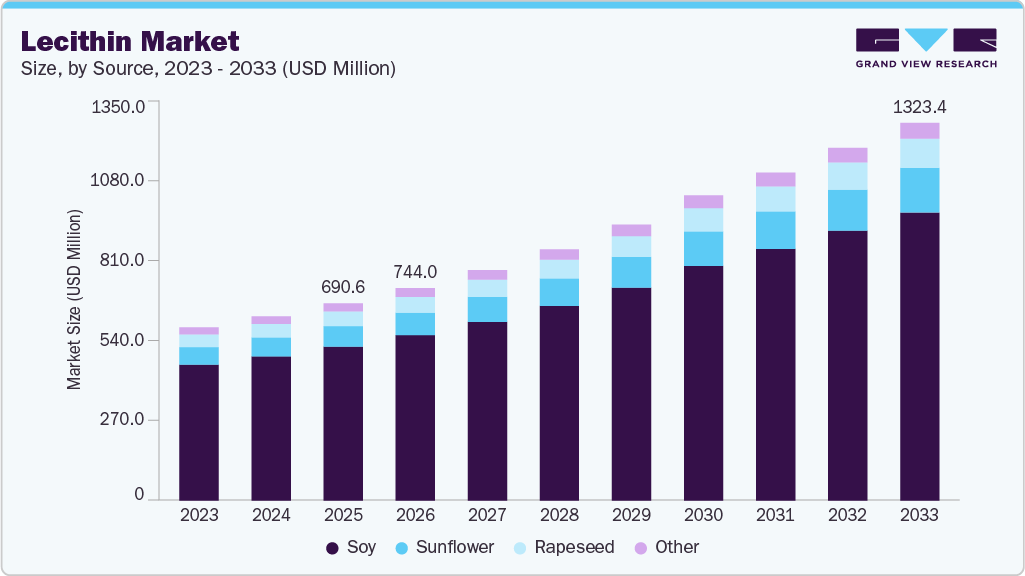
Furthermore, the expansion of the plant-based food sector has significantly influenced the lecithin market. With a growing number of consumers adopting vegetarian and vegan diets, there is an increasing need for plant-derived ingredients that can enhance the texture, flavor, and shelf life of food products. Lecithin serves as an effective emulsifier and stabilizer, making it an essential component in a variety of plant-based alternatives, including dairy substitutes, meat analogs, and baked goods. As plant-based products gain mainstream acceptance, the lecithin market is expected to benefit immensely from this accelerated demand.
Another critical driver of the lecithin market is the rising interest in functional foods and health supplements. With an emphasis on health and wellness, consumers are increasingly seeking out products that offer additional nutritional benefits. Lecithin is known for its positive effects on cholesterol levels, liver health, and cognitive function, which makes it an attractive ingredient in health-oriented products. As more health and nutrition companies incorporate phospholipids into their formulations, the market for this versatile emulsifier is expected to continue expanding, particularly in the dietary supplement sector.
Source Insights
Soy lecithin market held the revenue share of 78.1% in 2025. This is attributable to the growing food industry in regions of Europe and Asia Pacific due to the presence of extensive areas of land under soybean cultivation and production. It is mainly used for manufacturing dairy products, ice creams, dietary supplements, infant formulas, bread, margarine, and other convenience foods. However, growing concerns regarding increasing cholesterol levels and allergic properties of soybeans are expected to lower their demand during the forecast period.
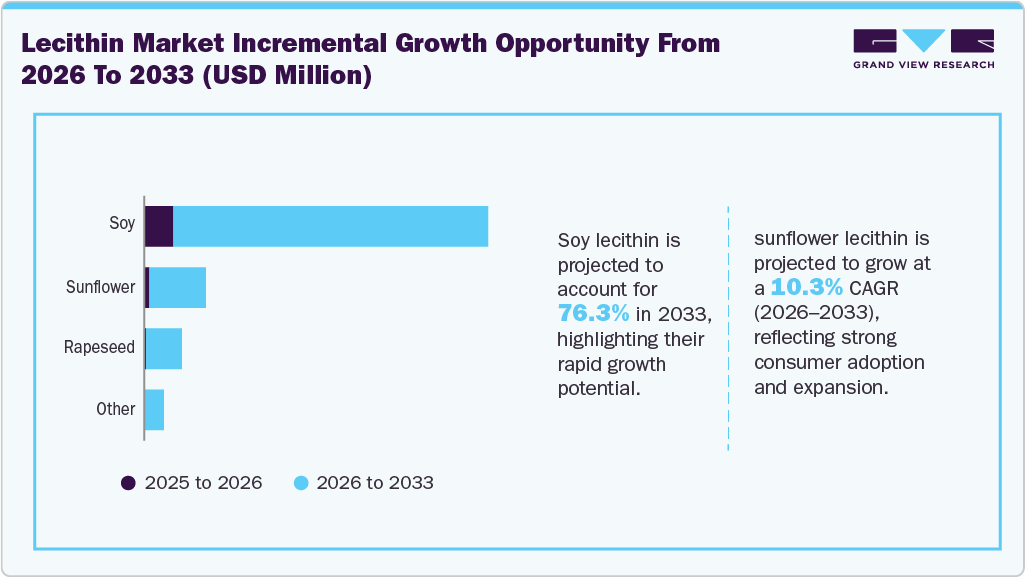
The sunflower lecithin is estimated to witness a CAGR of 10.3% from 2026 to 2033 in the global lecithin industry. Consumers are increasingly seeking natural, minimally processed ingredients. Sunflower lecithin, derived from sunflower seeds without harsh chemicals, aligns with clean-label trends in the food and beverage industry.Sunflower lecithin’s versatility as an emulsifier and stabilizer makes it popular across a wide range of applications, from food products such as chocolate and baked goods to pharmaceutical formulations and natural cosmetics. Its multifunctionality is driving broader adoption across industries.
End Use Insights
Lecithin used for animal feed application held the revenue share of 39.7% in 2025. Lecithin enhances the digestibility of fats and nutrients in animal feed, improving absorption and overall health in livestock. This improves feed efficiency, making it an attractive additive for animal nutrition. It provides a concentrated source of energy due to its high fat content, boosting the caloric value of animal feed. This makes it a valuable ingredient in the formulation of balanced diets for livestock, particularly in poultry and swine production.
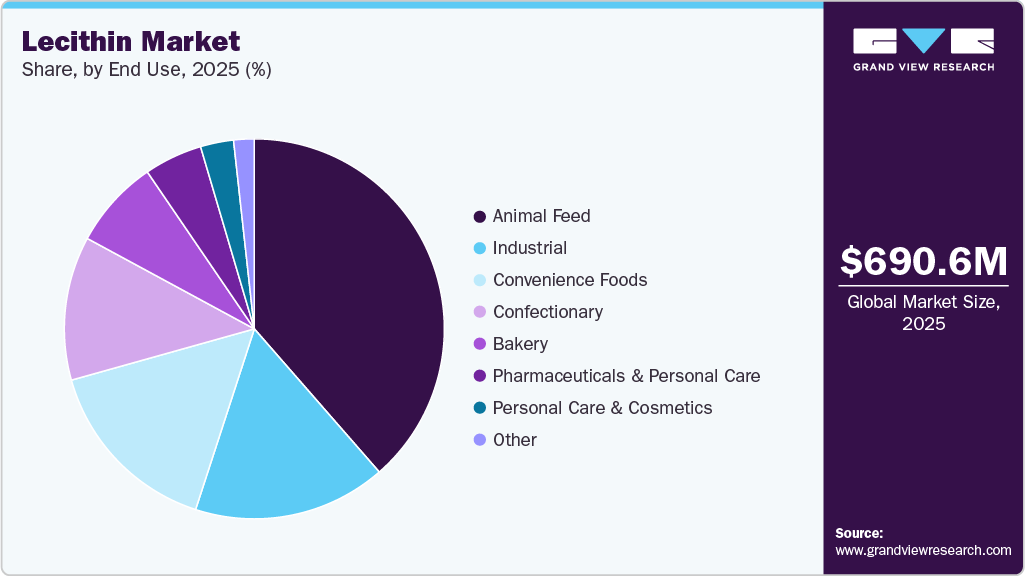
Convenience foods are expected to grow with a CAGR of 9.4% from 2026 to 2033. Convenience foods save time and energy when preparing food at home or in a restaurant. Lecithin is used in convenience food products to help bind fat and keep it in suspension, improve the hydration of high-protein ingredients, reduce the fat cap during the retort process, and enhance the dispersion of high-fat powders. Furthermore, its exceptional qualities to improve mouthfeel and texture, as well as facilitate the even distribution of ingredients, are expected to fuel its inclusion in the convenience food category.
Form Insights
Liquid lecithin held the revenue share of 86.2% of the lecithin industry in 2025. This high share is attributable to a sharp rise in demand for liquid form from multiple application industries, such as industrial coatings, cosmetics, food processing, and confectionery. While liquid form is used in several food products, either as a food additive or naturally, it is also consumed as a dietary supplement. Liquid lecithin in the dietary supplement is frequently a mixture of choline, inositol, phosphatidylcholine, phosphatide, and other compounds and is not merely phosphatidylcholine. Also, the liquid form tends to effortlessly disperse in oil as compared to its other forms.
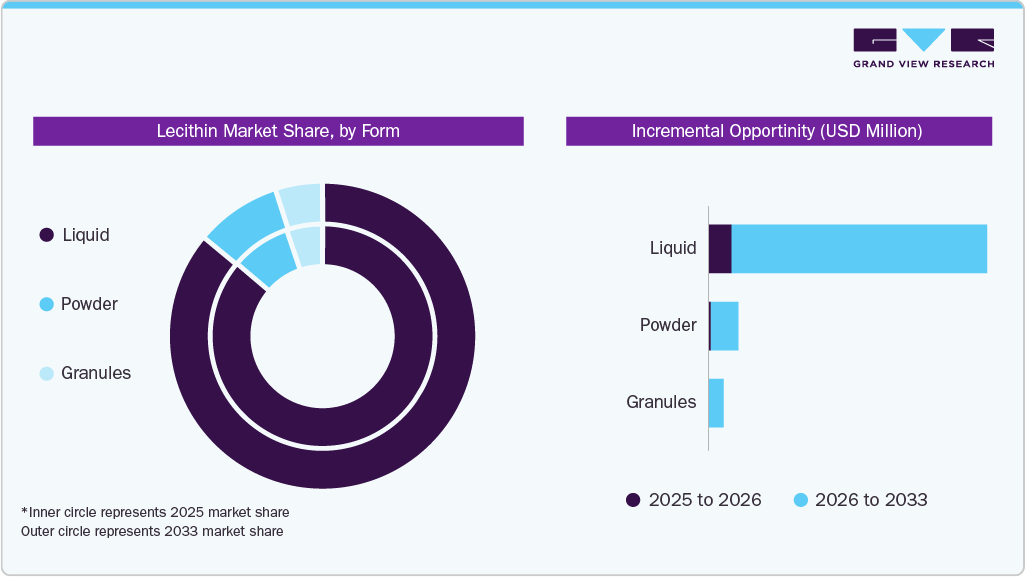
The powder lecithin market is estimated to witness a CAGR of 9.2% from 2026 to 2033. Lecithin powder is utilized as an ingredient in several end-use industries, namely feed, food and beverage, cosmetics, and pharmaceuticals. The product is frequently used in bakery and confectionery products. The powder form is added to cooking sprays to prevent baked goods from sticking to the pans. It also has the unique property of binding with non-lipids and lipids, consequently keeping ingredients with water and oil together.
Regional Insights
The lecithin market in North America is estimated to witness a CAGR of 7.5% from 2026 to 2033. The demand in the North American region is driven by the presence of key end-users and the easy availability of raw materials. The presence of large soy fields in the U.S. and canola fields in Canada are boosting the market growth in this region. Soybeans are one of the major sources used in the manufacturing of lecithin. Large-scale cultivation of soybeans, coupled with the increasing number of small-scale crushing facilities, is augmenting the production of soybeans in North America.
U.S. Lecithin Market Trends
The lecithin market in the U.S. is estimated to witness a CAGR of 5.3% from 2026 to 2033. Americans are increasingly seeking natural and clean-label products. Lecithin, a natural emulsifier and stabilizer, aligns with this trend, driving its usage in food, beverages, and personal care products. The health-conscious population in the U.S. is driving demand for phospholipids in dietary supplements, functional foods, and nutraceuticals due to its health benefits, such as supporting brain function and improving lipid metabolism.
Europe Lecithin Market Trends
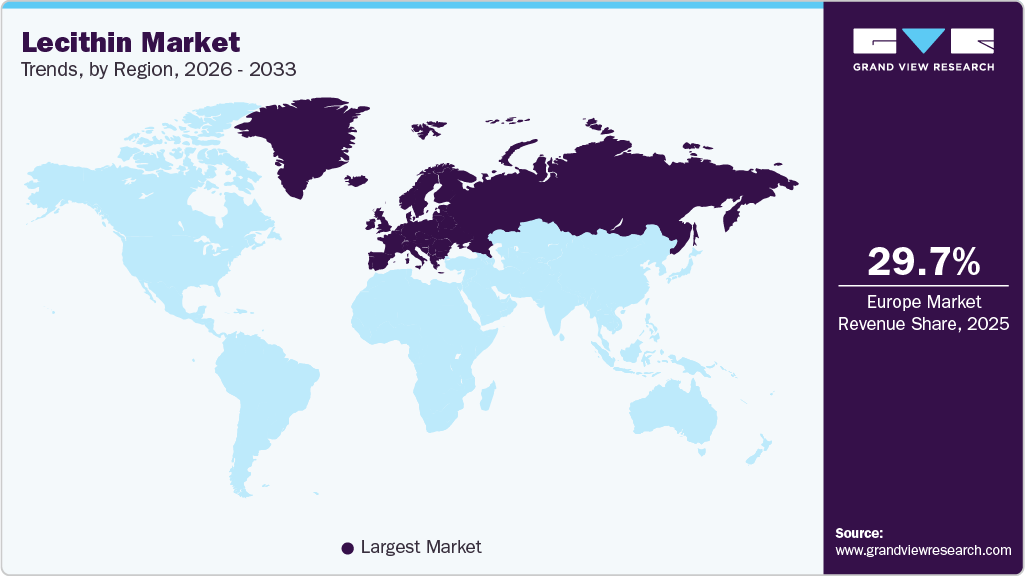
The lecithin market in Europe held a revenue share of 29.7% in 2025. European consumers are highly focused on clean-label, natural ingredients in food, cosmetics, and pharmaceuticals. Lecithin, derived from natural sources such as soy and sunflower, fits this trend as a preferred emulsifier and stabilizer, boosting its demand in various industries. European food and pharmaceutical industries adhere to high regulatory standards for natural and safe ingredients. Lecithin, being a naturally derived, non-GMO ingredient, is favored in food formulations and pharmaceutical applications that require strict adherence to these guidelines.
The lecithin market in France is estimated to witness a CAGR of 5.3% from 2026 to 2033. The expansion of the food processing and convenience food sector in France also supports lecithin demand. Lecithin improves texture, shelf life, and stability in products like chocolates, margarine, baked goods, and ready-to-eat meals. As consumption of packaged and convenience foods rises, food manufacturers increasingly rely on functional ingredients such as lecithin.
Asia Pacific Lecithin Market Trends
The lecithin industry in Asia Pacific is estimated to witness a CAGR of 10.0% from 2026 to 2033. The expanding processed food and beverage sector in Asia Pacific, driven by urbanization and changing consumer preferences, is boosting the demand for lecithin as a natural emulsifier and stabilizer in products such as bakery, confectionery, and dairy items.Consumers in Asia Pacific are becoming more health-conscious, leading to an increased demand for functional foods and dietary supplements. Lecithin is used in these products for its health benefits, such as supporting brain function and improving lipid metabolism.
The lecithin market in India is estimated to witness a CAGR of 10.6% from 2026 to 2033. A greater awareness of the health benefits associated with lecithin such as improved brain function and heart health has spurred demand in both the food and dietary supplement segments. The Indian government's initiatives supporting the food processing industry, including the "Make in India" campaign, have paved the way for enhanced lecithin production, particularly from soy and sunflower seeds, which are widely cultivated in the region. The rise of the organic food movement and the growing preference for non-GMO products have further catalyzed the demand for plant-based lecithin among health-conscious consumers. Furthermore, India's burgeoning bakery, confectionery, and dairy industries are significant contributors to lecithin consumption.
Central & South America Lecithin Market Trends
The lecithin market in Central & South America is estimated to witness a CAGR of 9.4% from 2026 to 2033. The lecithin market in Central and Central & South America is driven primarily by increasing consumer awareness regarding health and wellness, alongside the growing demand for natural emulsifiers in food processing. With countries such as Brazil and Argentina becoming significant players in the food and beverage industry, the rising trend of clean-label products has prompted manufacturers to seek naturally derived ingredients such as lecithin. This demand aligns with the regional agricultural strengths, particularly the production of soy, which serves as a primary source for lecithin extraction. Moreover, the growing population and rising disposable incomes in this region have led to an increased consumption of processed foods, further driving the demand for lecithin as an essential ingredient.
Lecithin market in Brazil is estimated to witness a CAGR of 9.6% from 2026 to 2033. Brazil stands out as a key player in the global lecithin market, backed by its vast agricultural resources and significant soy production. As one of the world's largest exporters of soybeans, Brazil has a natural advantage for lecithin extraction, which is predominantly derived from soy. The ongoing trend toward healthier eating habits among consumers is driving the demand for functional foods, where lecithin serves as an essential ingredient in a variety of processed foods, ranging from baked goods to dairy products. In addition, the Brazilian government's support for sustainable agricultural practices enhances the appeal of soy lecithin, aligning with international demand for eco-friendly ingredients.
Middle East & Africa Lecithin Market Trends
The lecithin market in the Middle East & Africa is estimated to witness a CAGR of 7.8% from 2026 to 2033. The rising population and urbanization in countries such as the United Arab Emirates and South Africa have led to increased demand for convenience and processed food products, where lecithin serves a critical function in improving texture and shelf life. In addition, the region has seen an influx of health-conscious consumers, prompting food manufacturers to incorporate lecithin as a clean-label ingredient that appeals to the growing preference for natural additives. The expansion of the food service industry, particularly in fast-casual dining and takeaway services, has also contributed to the demand for high-quality lecithin.
Key Lecithin Company Insights
The global lecithin market includes a combination of well-established ingredient manufacturers and emerging specialty suppliers that continue to innovate in sourcing, processing technologies, and application development to meet evolving industry demands. Leading companies focus on producing high-quality lecithin derived from sources such as soy, sunflower, and egg while emphasizing clean-label, non-GMO, and allergen-free variants to appeal to health-conscious consumers and food manufacturers. By expanding distribution through food ingredient suppliers, pharmaceutical channels, nutraceutical companies, and e-commerce platforms, these players ensure wider product availability across global markets.
Key Lecithin Companies:
The following key companies have been profiled for this study on the lecithin market.
- Cargill, Inc.
- ADM
- Lipoid GmbH
- Bunge Limited
- American Lecithin Company
- Global River Food Ingredients
- DuPont de Nemours, Inc.
- Stern-Wywiol Gruppe GmbH & Co. KG
- Haneil Soyatech Pvt. Ltd.
- NOW Foods
Lecithin Market Report Scope
Report Attribute
Details
Market size value in 2026
USD 744.0 million
Revenue forecast in 2033
USD 1,323.4 million
Growth rate (Revenue)
CAGR of 8.6% from 2026 to 2033
Actual data
2021 - 2025
Forecast period
2026 - 2033
Quantitative units
Revenue in USD million/ billion, volume in kilo tons, and CAGR from 2026 to 2033
Report coverage
Revenue forecast, company ranking, competitive landscape, growth factors, and trends
Segments covered
Source, end use, form, region
Regional scope
North America; Europe; Asia Pacific; Central & South America; Middle East & Africa
Country scope
U.S; Canada; Mexico; Germany; UK; France; Italy; Spain; China; Japan; India; Australia & New Zealand; South Korea; Brazil; Argentina; South Africa
Key companies profiled
Cargill, Inc.; ADM; Lipoid GmbH; Bunge Limited; American Lecithin Company; Global River Food Ingredients; DuPont de Nemours, Inc.; Stern-Wywiol Gruppe GmbH & Co. KG; Haneil Soyatech Pvt. Ltd.; NOW Foods
Customization scope
Free report customization (equivalent up to 8 analysts working days) with purchase. Addition or alteration to country, regional & segment scope.
Pricing and purchase options
Avail customized purchase options to meet your exact research needs. Explore purchase options
Global Lecithin Market Report Segmentation
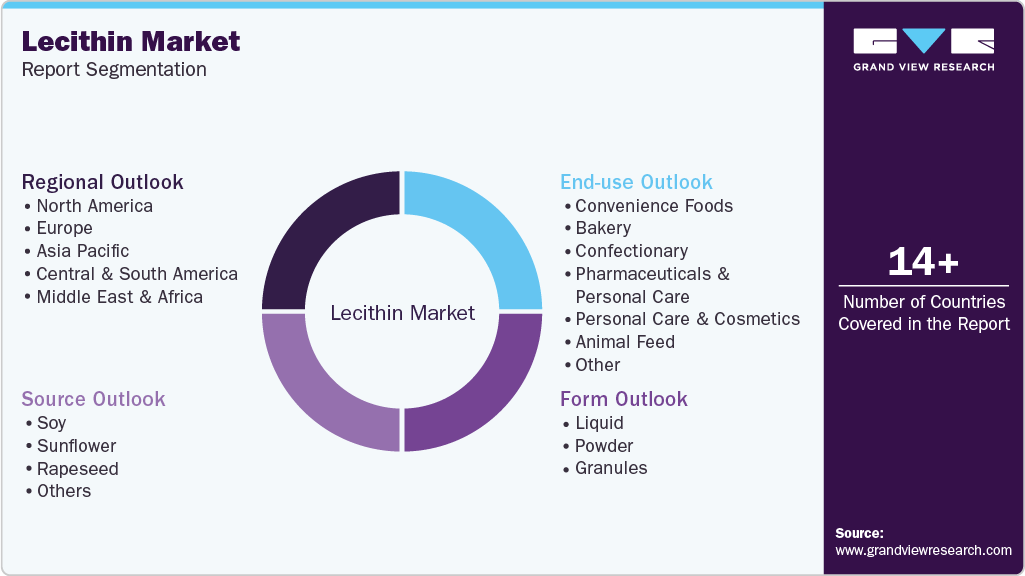
This report forecasts revenue growth at the global, regional, and country levels and provides an analysis of the latest industry trends and opportunities in each of the sub-segments from 2021 to 2033. For this study, Grand View Research has segments the global lecithin market report on the basis of source, end use, form, and region.
-
Source Outlook (Volume, Kilotons; Revenue, USD Million, 2021 - 2033)
-
Soy
-
Sunflower
-
Rapeseed
-
Others
-
-
End Use Outlook (Volume, Kilotons; Revenue, USD Million, 2021 - 2033)
-
Convenience Foods
-
Bakery
-
Confectionary
-
Pharmaceuticals & Personal Care
-
Personal Care & Cosmetics
-
Animal Feed
-
Industrial
-
Other
-
-
Form Outlook (Volume, Kilotons; Revenue, USD Million, 2021 - 2033)
-
Liquid
-
Powder
-
Granules
-
-
Regional Outlook (Volume, Kilotons; Revenue, USD Million, 2021 - 2033)
-
North America
-
U.S.
-
Canada
-
Mexico
-
-
Europe
-
Germany
-
UK
-
France
-
Italy
-
Spain
-
-
Asia Pacific
-
China
-
Japan
-
India
-
Australia & New Zealand
-
South Korea
-
-
Central & South America
-
Brazil
-
Argentina
-
-
Middle East & Africa
-
South Africa
-
-
Frequently Asked Questions About This Report
b. The global lecithin market size was estimated at USD 690.6 million in 2025 and is expected to reach USD 744.0 million in 2026.
b. Some key players operating in the lecithin market include Cargill, Archer Daniels Midland, DuPont Nutrition and Health, Lipoid GmbH, and American Lecithin Company. The other companies are Bunge Ltd., Sternchemie GmbH & Co. KG, NOW Foods, Thew Arnott & Co., Ltd., and GIIAVA.
b. Key factors that are driving the lecithin market growth include the growing demand for food ingredients derived from natural sources and awareness regarding phospholipids.
b. Europe dominated the lecithin market with a share of 29.7% in 2025. This is attributable to the growing consumption of healthy foods and nutritional supplements. Furthermore, the growing research on non-GMO soy lecithin is expected to further boost the demand.
b. The global lecithin market is expected to grow at a compound annual growth rate of 8.6% from 2026 to 2033, reaching USD 1,323.4 million by 2033.


Share this report with your colleague or friend.
Need a Tailored Report?
Customize this report to your needs — add regions, segments, or data points, with 20% free customization.


ISO 9001:2015 & 27001:2022 Certified
We are GDPR and CCPA compliant! Your transaction & personal information is safe and secure. For more details, please read our privacy policy.
Trusted market insights - try a free sample
See how our reports are structured and why industry leaders rely on Grand View Research. Get a free sample or ask us to tailor this report to your needs.