- Home
- »
- Consumer F&B
- »
-
Ketogenic Diet Market Size & Share, Industry Report, 2033GVR Report cover
![Ketogenic Diet Market Size, Share & Trends Report]()
Ketogenic Diet Market (2026 - 2033) Size, Share & Trends Analysis Report By Product (Supplements, Snacks, Beverages), By Distribution Channel (Supermarket / Hypermarkets, Specialty Retailers, Online), By Region, And Segment Forecasts
- Report ID: GVR-4-68039-149-7
- Number of Report Pages: 109
- Format: PDF
- Historical Range: 2021 - 2025
- Forecast Period: 2026 - 2033
- Industry: Consumer Goods
- Report Summary
- Table of Contents
- Segmentation
- Methodology
- Download FREE Sample
-
 Download Sample Report
Ketogenic Diet Market Summary
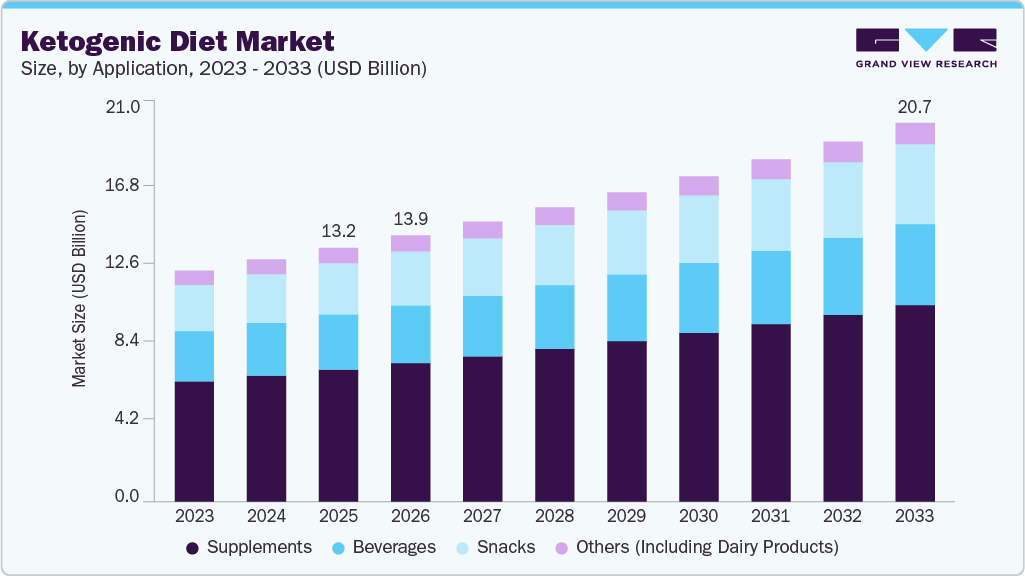
The global ketogenic diet market size was estimated at USD 13.16 billion in 2025 and is expected to reach USD 20.75 billion by 2033, growing at a CAGR of 5.9% from 2026 to 2033. The steadily rising prevalence of health issues such as obesity and diabetes among the younger generation and the working-class population has fueled the demand for diet patterns that are wellness-focused, driving the growth of the global market.
Key Market Trends & Insights
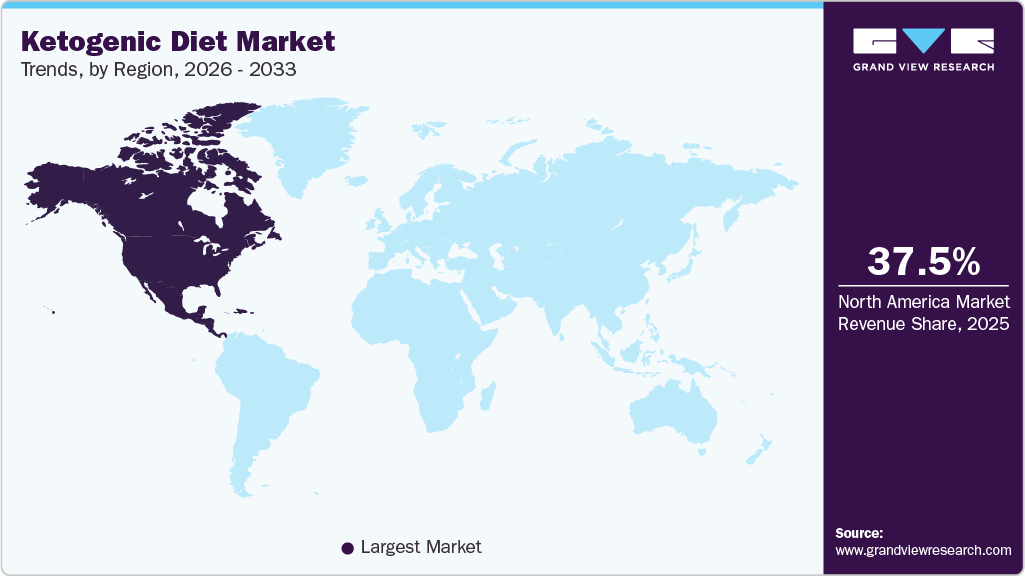
- The North America ketogenic diet market held the largest market share of 37.50% in 2025.
- In North America region, ketogenic diet industry in the U.S. held the largest market share of 73.28% in 2025.
- By product, the supplements segment accounted for a revenue share of 58.33% in 2025.
- By distribution channel, the supermarket/hypermarket segment accounted for a revenue share of 56.54% in 2025.
Key Market Trends & Insights
- 2025 Market Size: USD 13.16 Billion
- 2033 Projected Market Size: USD 20.75 Billion
- CAGR (2026-2033): 5.9%
- North America: Largest market in 2025
The ketogenic diet has emerged as an effective solution for weight management in individuals, as obesity leads to various lifestyle disorders such as cardiovascular diseases, diabetes, and high blood pressure. Governments and private health bodies have also been promoting the adoption of such practices to improve and maintain the health of the population, aiding the expansion of the ketogenic diet industry.In recent years, factors such as unhealthy eating habits and sedentary lifestyle practices have led to a noticeable increase in the overweight population worldwide. For instance, according to a report published by the WHO in March 2024, 1 in 8 people globally were living with obesity, with adult obesity having doubled since 1990. Lack of availability of nutritional food products, particularly in emerging economies, has resulted in a substantial proportion of people becoming overweight. The ketogenic diet, which is a high-fat and low-carbohydrate diet, has gained notable traction owing to its positive results across all age groups.
The impact of such food items on major disorders is expected to boost the popularity of the ketogenic diet. For instance, in August 2024, a study was published in the Nature Journal by scientists at the University of California San Francisco. The study found that this type of diet can be combined with particular cancer therapies to inhibit pancreatic cancer development in mice. Such developments open up the potential adoption of the keto diet among a wider demographic.
Over the past few years, a large number of studies have proven the significance of the ketogenic diet in aiding weight loss and improving overall health. Research studies conducted by major bodies such as the American College of Cardiology and the Academy of Nutrition and Dietetics have shown largely positive results of ketogenic diets in treating several disorders, such as epilepsy, obesity, Alzheimer’s disease, brain injuries, Parkinson’s disease, cancer, and cardiovascular diseases.
As awareness regarding health-based lifestyle practices increases, keto has become a highly preferred option for individuals due to its stricter guidelines and potentially faster results. The demand for the keto diet has also impacted the foodservice industry. Many restaurants now offer keto-friendly menu items, with some chains further allowing customers to personalize their meals to fit the parameters of this diet.
Consumer Insights
Consumers today are increasingly proactive about their health and wellness, driving broad interest in the ketogenic diet as more than just a weight-loss trend. Individuals are adopting keto not only for fat reduction and metabolic health, but also for improved energy and mental clarity, reflecting a shift toward preventive lifestyle choices rather than temporary dieting. This trend is supported by increased health literacy among millennials and adults aged 25-44, who comprise a majority of keto consumers globally. Those concerned with chronic conditions like diabetes or lifestyle-associated risk factors also find keto appealing, reinforcing its position as a solution for both fitness and clinical health goals.
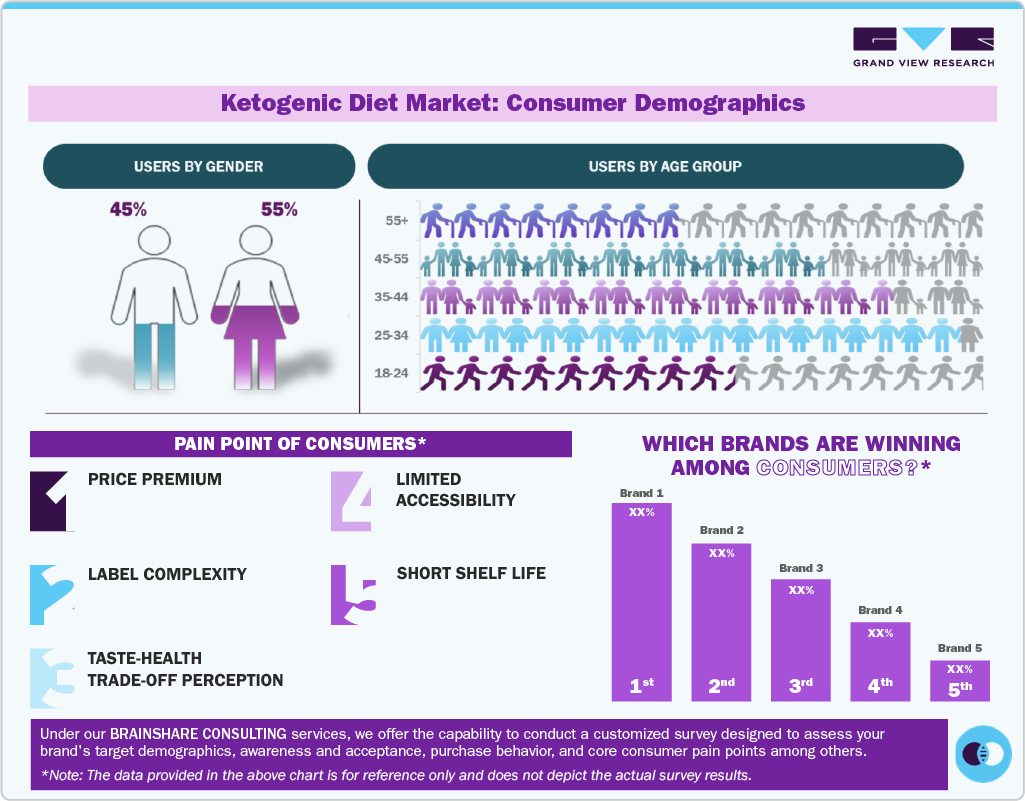
Modern consumers show a clear preference for convenience and variety in keto products. Ready-to-eat snacks, meal kits, beverages, and easy-to-prepare solutions are increasingly preferred, especially by working professionals and younger demographics seeking to maintain dietary goals within busy lifestyles. The rise of online shopping, subscription meal plans, and direct-to-consumer offerings aligns with this trend, providing both convenience and product discovery. Consumers also favor brands that innovate with new formulations, such as flavored keto snacks, beverages with added MCTs, and clean-label products with minimal additives.
Product Insights
The supplements are accounted for the largest revenue share of 58.33% in the ketogenic diet industry in 2025. Rising awareness regarding ketogenic food products and a shift towards healthy lifestyle practices have led to a strong demand for keto-based supplements. These supplements are available in three major categories, including powder, capsules, and oil, and help satisfy the requirements of nutrients without needing substantial changes in the regular diet patterns of consumers. Keto gummies have emerged as another popular option that celebrities are promoting, which has helped further strengthen segment demand.
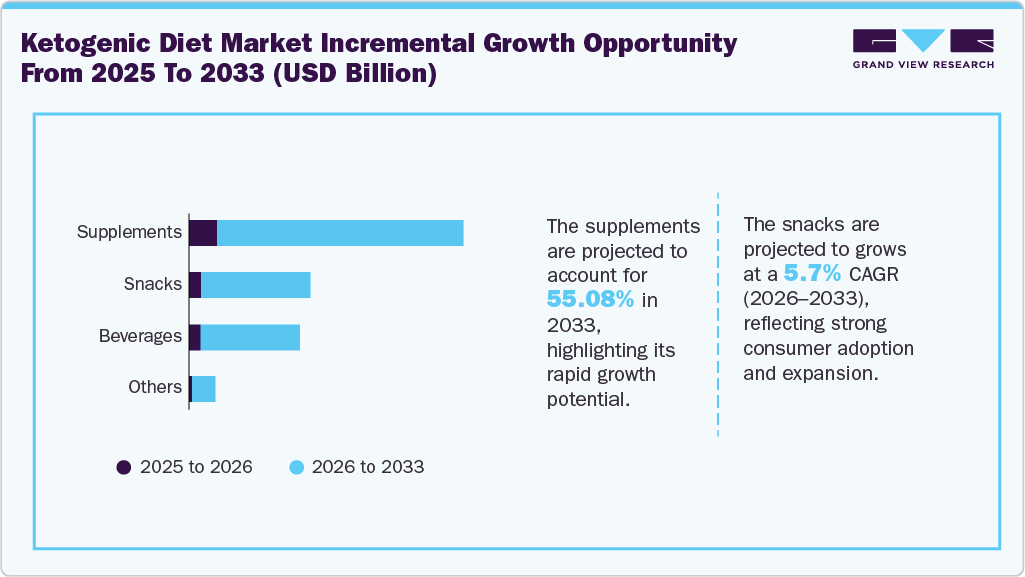
Meanwhile, the keto-snacks are anticipated to grow at the CAGR of 5.7% during the forecast period. The rapidly increasing popularity of keto-specific food products among younger consumers and adherence to wellness-based lifestyle practices have led to the emergence of snacks as a viable option to provide the nutritional benefits of ketogenic diets. Manufacturers are launching a range of snacking products based on ketogenic diet nutrients, which helps people follow their diet while also enjoying the delicacy of snacks. In November 2024, Krack’d Snacks, a California-based company, launched a line of keto snack products catering to the vegan, keto-friendly, gluten-free, and diabetic-friendly demographics. The line includes the Mylk Chocolate Peanut Butter Caramel Crunch and Mylk Chocolate Aloha Caramel, as well as the Vegan Whyte Chocolate Pumpkin Spice PB Caramel Crunch.
Distribution Channel Insights
The sale of ketogenic diet through supermarket/hypermarket accounted for the largest revenue share of 56.54% in the global ketogenic diet industry in 2025. These channels offer a wide variety of keto-friendly snacks, supplements, and beverages, including fresh produce and packaged goods, in a single, convenient location. Major manufacturers are promoting their products through offline retail stores, which witness significant footfall on a daily basis. They are utilizing strategic product placement techniques to attract customers to their offerings, driving product sales. The increasing presence of new supermarkets and hypermarkets provides an opportunity for market players to increase their production output and improve their distribution strategies, aiding product demand through this segment.
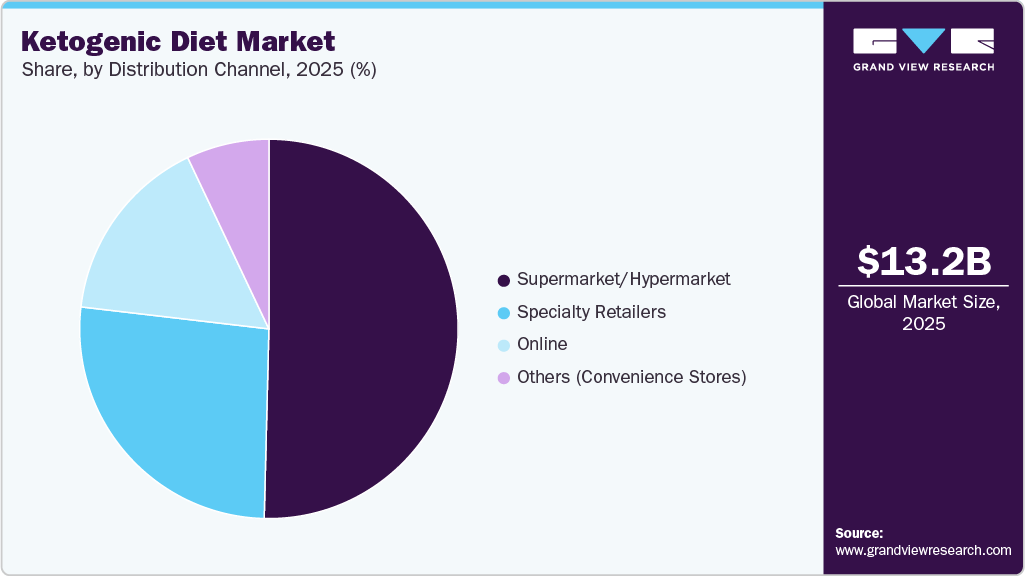
The sale of ketogenic diet through online channel is expected to grow at the fastest CAGR of 5.7% from 2026 to 2033. The increasing pace of Internet penetration and widespread adoption of smartphones has created a major avenue for companies offering keto-focused products to drive their sales. With the growing trend of online shopping among younger and working-class populations, various leading e-commerce platforms such as Amazon and Alibaba have increased the availability of ketogenic diet products on their websites. The availability of a wide range of products enables comparison of prices and health benefits. Moreover, features such as same-day shipping and discounts appeal to consumers, driving the use of online channels in the ketogenic diet industry.
Regional Insights
The ketogenic diet market in North America accounted for the revenue share of 37.50% in 2025 in the global market. The demand for the keto diet in regional economies such as the United States and Canada has surged over the past decade, becoming one of the most popular wellness trends. Consumers have become increasingly health-conscious, with many looking for ways to manage their weight, improve energy levels, and reduce the risk of chronic diseases, including obesity, Type 2 diabetes, and heart disease. The keto diet, known for promoting rapid weight loss, controlling blood sugar, and supporting mental well-being, has appealed to a wider health-conscious audience. Moreover, fitness influencers, health bloggers, and celebrities have publicly endorsed the keto diet over the years, helping to spread awareness and normalize it as a mainstream lifestyle.
U.S. Ketogenic Diet Market Trends
The ketogenic market in the U.S. accounted for a revenue share of 73.28% in the regional market in 2025. The economy has one of the highest obesity rates in the world, and as a result, the keto diet has been highlighted as a potential solution for weight loss. The emphasis of this diet on fat-burning, appetite suppression, and stable blood sugar levels caters to individuals seeking to address the obesity issue. Additionally, studies supporting the effectiveness of keto for diabetes management have contributed to its popularity among those diagnosed with or at risk for the condition. These products are also witnessing increased exposure, with supermarkets, health food stores, and online retailers providing a wide variety of keto-friendly products, including snacks, meal replacements, and supplements.
Europe Ketogenic Diet Market Trends
The ketogenic market in Europe accounted for a revenue share of 28.41% in the global market in 2025. The demand for the ketogenic diet in this region has experienced substantial growth in recent years, driven by a combination of health, fitness, and lifestyle trends. European food companies have increasingly adapted the keto diet to local tastes and ingredients. For instance, Germany has a strong tradition of bread and sausage, resulting in the extensive availability of keto-friendly bread alternatives. On the other hand, Italy, where pasta and pizza are highly popular, has seen the development of low-carb pasta and cauliflower-based pizza crusts that support health objectives. Furthermore, candinavian economies have embraced keto with innovations such as fat-based coffee drinks and keto-friendly dairy products.
A primary driver of the ketogenic diet market in Germany is the growing consumer awareness of health and wellness, particularly regarding metabolic health, weight management, and lifestyle-related conditions such as obesity and type 2 diabetes. As German consumers increasingly seek dietary approaches that align with preventive health goals, interest in low-carbohydrate, high-fat nutrition has expanded substantially, positioning keto as a science-oriented option for weight loss, sustained energy, and improved metabolic markers. This trend is reflected in rising demand for keto snacks, supplements, and meal replacements tailored toward functional benefits.
Asia Pacific Ketogenic Diet Market Trends
The ketogenic diet market in the Asia Pacific is expected to grow at a CAGR of 6.5% from 2026 to 2033. Increasing awareness about health, weight management, and chronic diseases has led to an increasing adoption of low-carb and high-fat diets such as keto among regional consumers. People are increasingly seeking alternatives to traditional high-carb diets, particularly in countries such as Japan, South Korea, and Australia, where fitness and wellness trends are followed widely. The rapid growth of the e-commerce sector in this region has further facilitated the availability and convenience of keto food products. Online platforms have made it easy for consumers to access keto snacks, supplements, and meal kits, increasing their accessibility and awareness in this region.
The ketogenic market in China accounted for a revenue share of 25.40% in the Asia Pacific market in 2025. Chinese consumers are becoming more aware of the benefits of low-carb, high-fat diets due to growing access to information via social media channels, influencers, and health platforms. A survey by Daxue Consulting found that 3.6% of the respondents tried the ketogenic diet in the country, with Millennials being the leading demographic exploring this diet. Chinese food manufacturers are beginning to adapt the keto diet to local tastes and ingredients. For example, low-carb snacks made from nuts, seeds, and soy products are becoming more common. Additionally, keto-friendly versions of Chinese dishes such as cauliflower rice (substituting rice with cauliflower) or almond flour-based dumplings are being developed to cater to the growing demand.
Key Ketogenic Diet Company Insights
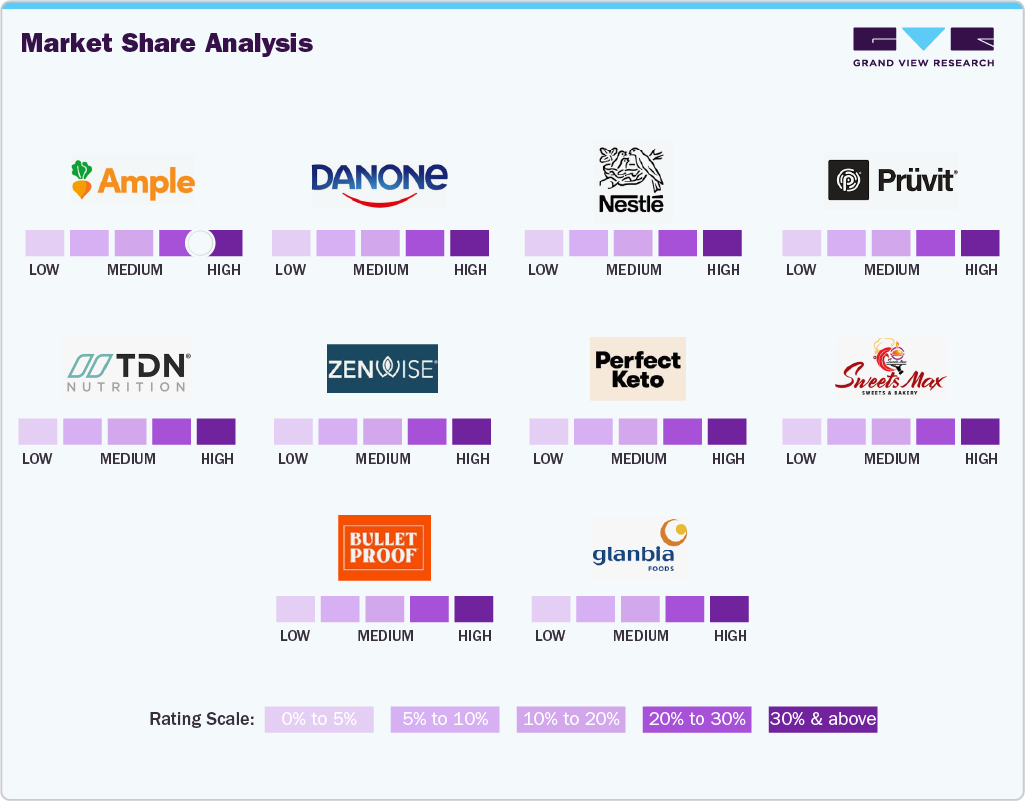
Some major companies involved in the global ketogenic diet industry include Ample Foods, Danone, and Zenwise, among others.
-
Ample Foods is a company that produces and sells ready-to-drink, complete meal replacement shakes designed to provide optimal nutrition with high-quality ingredients. The company has developed three formulas using natural ingredients without the incorporation of any artificial flavors or sugar alcohols. These formulas - Ample Original, Ample K (ketogenic), and Ample V (plant-based), are available in both 400- and 600-calorie versions and cater to the needs of health-conscious individuals.
-
Danone is a leading global food and beverage company that offers nutritional products through four segments - Dairy & Plant-based Products, Waters, Early Life Nutrition, and Adult Medical Nutrition. The company has launched several products in the keto-friendly category in recent years. For instance, in March 2021, the company introduced a plant-based creamer named ‘Honest to Goodness’, which is a vegan-certified, keto-friendly, and non-GMO project-verified gluten-free product.
Key Ketogenic Diet Companies:
The following key companies have been profiled for this study on the ketogenic diet market.
- Ample Foods
- Danone S.A.
- Nestlé
- Pruvit Ventures, Inc.
- TDN Nutrition
- Zenwise
- Perfect Keto Group
- Max Sweets
- Bulletproof 360, Inc.
- Glanbia plc
Recent Developments
-
In October 2025, Chunk Foods became the first plant-based meat producer to receive Ketogenic Certified status for its vegan steak, delivering high protein with minimal carbs - expanding keto offerings for plant-centric consumers.
-
In October 2025, Alta Foods launched a new low-carb, high-protein premium tortilla range under the Fiesta Fit brand, including sun-dried tomato basil and premium burrito options tailored to keto consumers.
Ketogenic Diet Market Report Scope
Report Attribute
Details
Market value size in 2026
USD 13.93 billion
Revenue forecast in 2033
USD 20.75 billion
Growth rate (Revenue)
CAGR of 5.9% from 2026 to 2033
Actuals
2021 - 2025
Forecast period
2026 - 2033
Quantitative (Revenue) units
Revenue in USD billion/million, and CAGR from 2026 to 2033
Report coverage
Revenue forecast, company ranking, competitive landscape, growth factors, and trends
Segments covered
Product, distribution channel, region
Regional scope
North America; Europe; Asia Pacific; Central & South America; Middle East & Africa
Country scope
U.S.; Canada; Mexico; Germany; UK; France; Italy; Spain; China; Japan; Australia; India; South Korea; Brazil; Saudi Arabia
Key companies profiled
Ample Foods; Danone S.A.; Nestlé; Pruvit Ventures, Inc.; TDN Nutrition; Zenwise; Perfect Keto Group; Max Sweets; Bulletproof 360, Inc.; Glanbia plc
Customization scope
Free report customization (equivalent up to 8 analysts’ working days) with purchase. Addition or alteration to country, regional & segment scope.
Pricing and purchase options
aAvail customized purchase options to meet your exact research needs. Explore purchase options
Global Ketogenic Diet Market Report Segmentation
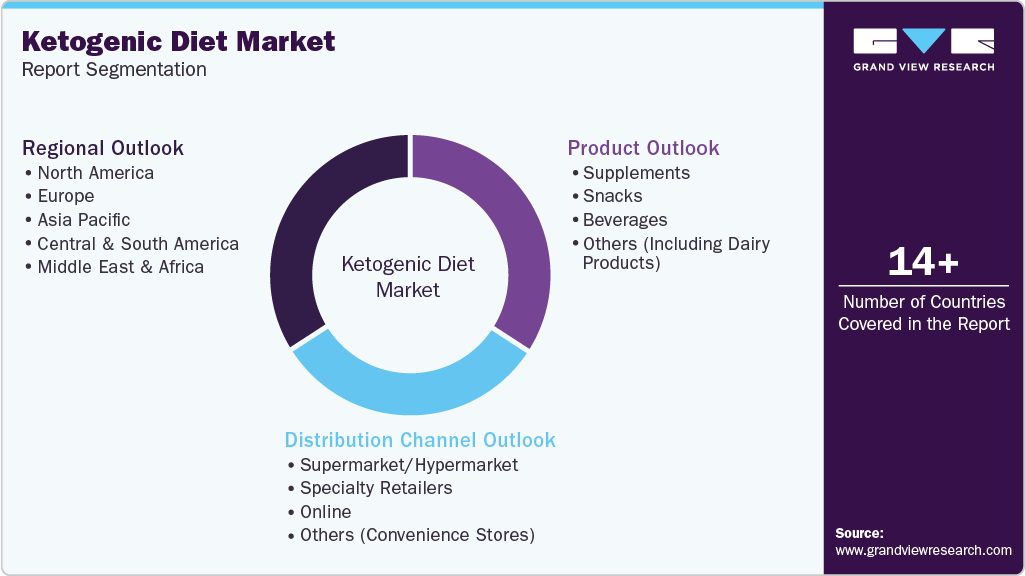
This report forecasts revenue growth at the regional and country levels and provides an analysis of the latest industry trends and opportunities in each of the sub-segments from 2021 to 2033. For this study, Grand View Research has segmented the global ketogenic diet market report on the basis of product, distribution channel, and region:
-
Product Outlook (Revenue, USD Million, 2021 - 2033)
-
Supplements
-
Snacks
-
Beverages
-
Others (Including Dairy Products)
-
-
Distribution Channel Outlook (Revenue, USD Million, 2021 - 2033)
-
Supermarket/Hypermarket
-
Specialty Retailers
-
Online
-
Others (Convenience Stores)
-
-
Regional Outlook (Revenue, USD Million, 2021 - 2033)
-
North America
-
U.S.
-
Canada
-
Mexico
-
-
Europe
-
UK
-
Germany
-
France
-
Italy
-
Spain
-
-
Asia Pacific
-
Japan
-
India
-
China
-
Australia
-
South Korea
-
-
Central & South America
-
Brazil
-
-
Middle East & Africa
-
Saudi Arabia
-
-
Frequently Asked Questions About This Report
b. North America dominated the ketogenic diet market with a share of 37.5% in 2025. This is attributable to the strong popularity of a healthy diet among the consumers of the U.S. and Canada.
b. The global ketogenic diet market size was estimated at USD 13.16 billion in 2025 and is expected to reach USD 13.93 billion in 2026.
b. The global ketogenic diet market is expected to grow at a compound annual growth rate of 5.9% from 2026 to 2033 to reach USD 20.75 billion by 2033.
b. Some key players operating in the ketogenic diet market include Ample Foods Danone S.A., Nestle S.A., Pruvit Ventures, Inc., Keto And Company, Zenwise Health, Perfect Keto, Know Brainer Foods, Bulletproof 360, Inc., and Know Brainer Foods.
b. Key factors that are driving the ketogenic diet market growth include the rising prevalence of overweight and obesity problems among the young generation, millennials, and the working-class population.


Share this report with your colleague or friend.
Need a Tailored Report?
Customize this report to your needs — add regions, segments, or data points, with 20% free customization.


ISO 9001:2015 & 27001:2022 Certified
We are GDPR and CCPA compliant! Your transaction & personal information is safe and secure. For more details, please read our privacy policy.
Trusted market insights - try a free sample
See how our reports are structured and why industry leaders rely on Grand View Research. Get a free sample or ask us to tailor this report to your needs.