- Home
- »
- Medical Devices
- »
-
India Injection Devices Market Size, Industry Report, 2035GVR Report cover
![India Injection Devices Market Size, Share & Trends Report]()
India Injection Devices Market (2026 - 2035) Size, Share & Trends Analysis Report By Product (Injector Pens, Auto injectors, Injection Pumps, Wearable Injectors/On-body Injectors), By Application (Diabetes Care, Oncology, Pain Management), And Segment Forecasts
- Report ID: GVR-4-68040-882-7
- Number of Report Pages: 125
- Format: PDF
- Historical Range: 2021 - 2025
- Forecast Period: 2026 - 2035
- Industry: Healthcare
- Report Summary
- Table of Contents
- Segmentation
- Methodology
- Download FREE Sample
-
 Download Sample Report
India Injection Devices Market Summary
The India injection devices market size was estimated at USD 312.0 million 2025, and is expected to reach USD 869.5 million by 2035, growing at a CAGR of 10.9% from 2026 to 2035. The growth is driven by the country’s expanding healthcare infrastructure, rising disease burden, and increasing adoption of advanced drug delivery systems.
Key Market Trends & Insights
- By product, the injector pens segment held a leading market share of 58.5% in 2025.
- By product, the wearable injectors/on-body injectors segment is growing at a second fastest CAGR of 12.4% during the forecast period.
- By application, the diabetes care segment held the largest market share in 2025.
- By application, the obesity segment is expected to grow significantly at the fastest CAGR during the forecast period.
Market Size & Forecast
- 2025 Market Size: USD 312.0 Million
- 2035 Projected Market Size: USD 869.5 Million
- CAGR (2026-2035): 10.9%
Injection devices, such as syringes, pen injectors, auto-injectors, and safety needles, are widely used in hospitals, clinics, and homecare settings to administer vaccines, insulin, biologics, and emergency medicines. With a large and growing population, India continues to demand safe, efficient, and cost-effective injection solutions. One of the major growth factors is the rising prevalence of chronic diseases, particularly diabetes. According to a BBC article published in June 2023, approximately 100 million people in India are living with diabetes, making it one of the largest diabetic populations in the world. This has significantly increased the demand for insulin delivery devices such as pen injectors and disposable syringes. The growing shift toward self-administration and home-based care is further accelerating the adoption of user-friendly injection devices.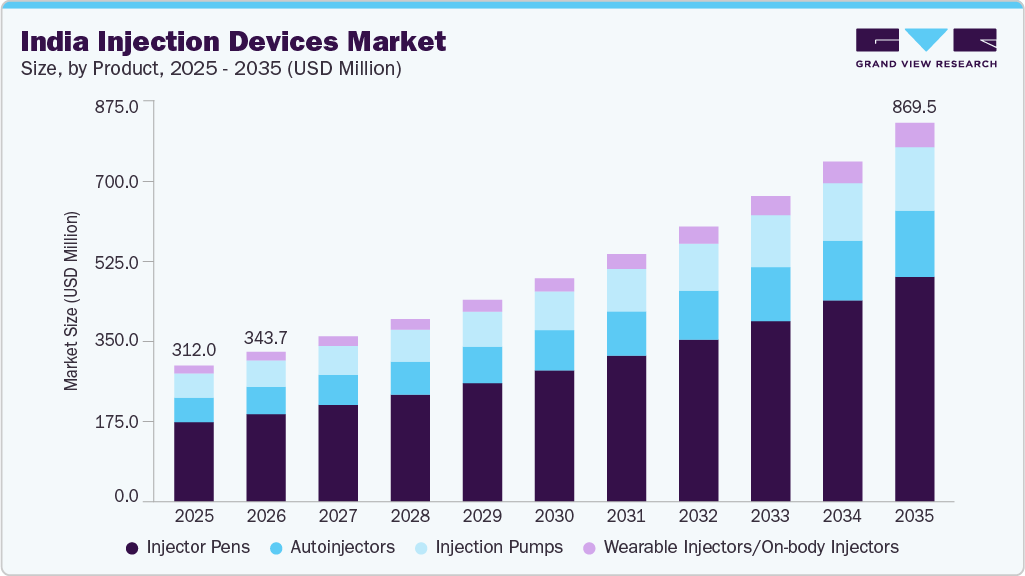
Another key factor supporting market growth is the government’s strong focus on immunization programs. Initiatives such as the Universal Immunization Programme have significantly increased the use of disposable syringes across the country. Expanding the use of injectable therapies across applications such as diabetes care, autoimmune diseases, obesity, pain management, hormonal & metabolic therapies, and oncology has consistently driven demand for safe and efficient injection devices. The increasing focus on safety and infection control is also driving the adoption of advanced injection devices. The use of safety-engineered injection devices is gaining traction to reduce needle-stick injuries and prevent reuse. The World Health Organization has recommended the transition to safety syringes for all injections, and India has been gradually aligning with these guidelines through policy support and awareness initiatives. This shift is expected to create long-term demand for technologically advanced injection devices.
A major factor supporting the growth of the India injection devices industry is the rapid expansion of domestic manufacturing capacity for injection devices. Manufacturers are increasingly investing in advanced production technologies, automation, and capacity enhancement to meet the rising demand from hospitals, vaccination programs, and homecare settings. This growth is further supported by government initiatives such as the Production Linked Incentive (PLI) scheme for medical devices, which aims to boost local manufacturing and reduce dependence on imports. In addition, policy efforts promoting “Make in India” and strengthening healthcare infrastructure are encouraging both domestic and international players to establish or expand manufacturing facilities in the country. As a result, India is steadily emerging as a key hub for cost-effective and high-volume production of injection devices, supporting both domestic consumption and export opportunities.
The high and recurring demand for injection devices in India’s healthcare system reflects the extensive use across hospitals, clinics, and vaccination programs. This high procedural volume ensures consistent demand for injection devices, particularly disposable and safety syringes. At the same time, the growing focus on healthcare worker safety and infection prevention is accelerating the adoption of advanced injection devices. The notable prevalence of needle-stick injuries among healthcare professionals in India has raised concerns regarding the transmission of infections such as hepatitis and HIV. Consequently, there is increasing demand for safety-engineered syringes, prompting manufacturers to invest in safer, cost-effective, and technologically advanced injection solutions suited to the needs of the healthcare system.
Overall, the India injection devices market is poised for continued expansion, supported by rising healthcare needs, government initiatives, increasing chronic disease burden, and advancements in drug delivery technologies. With ongoing improvements in manufacturing capacity, regulatory support, and patient awareness, the market is expected to evolve toward safer, more efficient, and patient-centric injection devices in the forecast period
Market Concentration & Characteristics
The India injection devices market is moderately fragmented, with a significant presence of key players such as Shaily Engineering Plastics Ltd, Mediscient Devices Pvt. Ltd, Otex Lifesciences Pvt. Ltd., BPL Medical Technologies, and AKAS Infusions. These companies offer a wide range of advanced injection devices, including insulin pens, safety syringes, and wearable injectors, catering to the growing demand for self-administration and chronic disease management in the country. The market is continuously evolving with technological advancements, particularly in prefilled and smart injector systems that improve dosing accuracy and patient convenience. This has also encouraged the entry of domestic and regional players focused on cost-effective, innovative solutions, further intensifying competition in the market.
The India injection devices industry is experiencing continuous innovation, supported by the growing focus on enhancing patient convenience, safety, and treatment adherence. The market is witnessing the rise of smart injector pens and connected devices that enable dose tracking, reminders, and better adherence, particularly for chronic conditions like diabetes. Additionally, wearable and patch injectors are gaining traction, enabling continuous, controlled drug delivery without frequent injections. Furthermore, domestic and global players are investing in cost-effective innovations tailored to Indian healthcare needs, improving accessibility across urban and rural settings. Overall, these technological advancements and product innovations are playing a crucial role in strengthening the efficiency and adoption of injection devices in India.
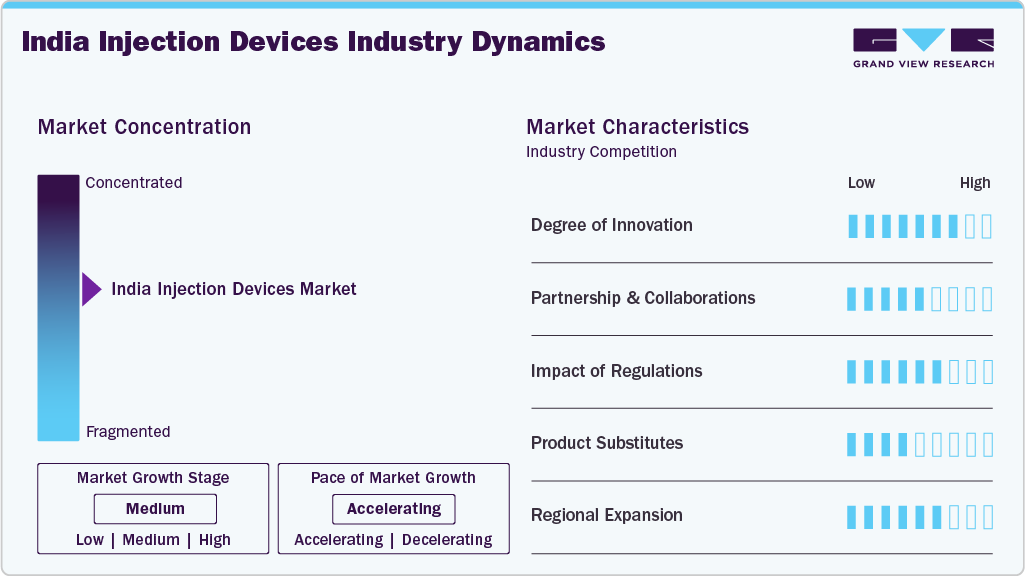
Partnerships and collaborations play a crucial role in expanding access to advanced injection technologies and improving patient care in the Indian market for injection devices. Companies are increasingly entering into strategic alliances with healthcare providers, technology firms, and government bodies to enhance the availability and adoption of innovative drug-delivery solutions. For instance, in September 2025, Novo Nordisk A/S partnered with Apollo Clinics to launch a comprehensive obesity management programme across India, focusing on structured care models, patient education, and improved access to treatment solutions, including injection devices.
The India injection devices market is regulated to ensure the safety, quality, and efficacy of medical devices used in drug delivery. In India, injection devices such as syringes, insulin pens, and related products are regulated by the Central Drugs Standard Control Organization under the Medical Devices Rules, 2017, which govern device classification, licensing, quality standards, and post-market surveillance. Manufacturers are required to comply with registration and approval processes, adhere to labeling norms, and follow quality management standards before launching products in the market. Such regulatory frameworks ensure that injection devices in India meet required safety and performance standards while supporting the adoption of advanced, reliable drug-delivery technologies.
The India injection devices industry faces competition from alternative drug delivery methods that reduce the need for injectable therapies. Oral medications remain the most common substitute, as they are non-invasive and easy to administer, particularly for chronic conditions such as diabetes and hormonal disorders. In addition, transdermal patches, inhalers, and emerging drug delivery technologies such as microneedle patches are gaining attention as patient-friendly alternatives that minimize pain and improve compliance. For instance, oral GLP-1 receptor agonists like Rybelsus have been introduced as an alternative to injectable therapies for type 2 diabetes, offering similar glycemic control without the need for injections.
The market is witnessing steady regional expansion driven by improving healthcare infrastructure and rising demand for chronic disease management across both urban and rural areas. Tier I cities continue to dominate due to better access to advanced healthcare facilities and higher adoption of innovative injection devices. However, Tier II and Tier III cities are emerging as high-growth regions, supported by government initiatives to expand healthcare access, increased penetration of private hospitals, and rising awareness of self-administered therapies. Additionally, domestic manufacturers are strengthening distribution networks to reach underserved areas, while digital health platforms are enabling remote patient management.
Product Insights
The injector pens segment had the largest market share of 58.5% in 2025. The growth is mainly due to the rising preference for convenient, easy-to-use, and self-administrable drug delivery systems among patients. Injector pens are widely used for chronic conditions such as diabetes, as they offer accurate dosing, portability, and reduced pain compared to traditional syringes, making them highly suitable for long-term therapy. The rising burden of diabetes in India and the shift toward home-based care are key factors driving the adoption of these devices. In addition, increasing awareness about patient-friendly treatment options and advancements in pen technologies, such as prefilled and adjustable-dose pens, are further supporting segment growth.
The wearable injectors/on-body injectors segment is growing at a second fastest CAGR of 12.4% during the forecast period. The growth is attributed to the increasing demand for convenient, continuous, and home-based drug delivery solutions. These devices are gaining traction as they allow patients to receive large-volume and time-controlled drug administration without frequent hospital visits, making them highly suitable for chronic conditions such as diabetes, cancer, and autoimmune diseases. The growing focus on reducing hospital burden and improving patient comfort, along with the rising adoption of advanced drug-delivery technologies, is further supporting segment growth. In addition, increasing awareness and the shift toward self-care and remote treatment management are accelerating the use of wearable injectors in India. Overall, these factors are collectively expected to accelerate the adoption of wearable/on-body injectors in India, thereby fueling the segment growth.
Application Insights
The diabetes care segment is expected to account for the largest share of the India injection devices market in 2025. The segment's growth is driven by the country’s rapidly growing diabetic population and the increasing need for long-term insulin therapy. India is home to over 100 million people living with diabetes, making it one of the largest patient pools globally. A significant proportion of these patients require regular insulin administration, which directly drives the demand for injection devices such as insulin pens and syringes. Technological advancements, including prefilled pens and smart insulin delivery systems, are further improving patient compliance and treatment outcomes. For instance, in July 2025, Eli Lilly and Company announced the rollout of its diabetes drug Mounjaro in a prefilled KwikPen format in India following regulatory approval, offering a once-weekly, easy-to-use injection device for patients. This development highlights the company’s focus on improving treatment convenience and patient adherence through advanced injection devices. Together, these factors are expected to sustain the dominance of the diabetes care segment.
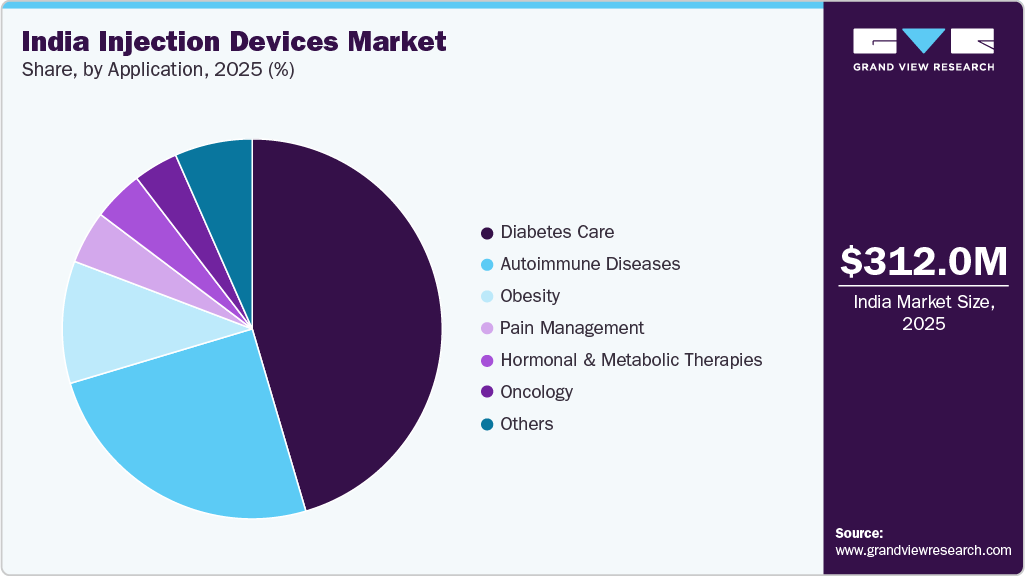
The obesity segment is expected to grow significantly at the fastest CAGR during the forecast period. The growth is primarily driven by the rapidly increasing prevalence of obesity and related lifestyle diseases. According to the Economic Survey 2025 - 26, obesity has emerged as a major public health concern in India, with nearly 24% of women and 23% of men classified as overweight or obese, largely due to sedentary lifestyles and rising consumption of ultra-processed foods. This growing patient pool is significantly increasing the demand for injectable therapies such as GLP-1 receptor agonists used for weight management and metabolic control. Supporting this trend, Eli Lilly launched its injectable weight-loss drug Mounjaro in India in March 2025, highlighting the country’s high demand for advanced obesity treatments. This development highlights the increasing need for injection devices for the weight loss drugs. Furthermore, increasing awareness and improving healthcare access are expected to further boost the adoption of injection-based therapies, thereby driving segment growth.
Key India Injection Devices Company Insights
The India injection devices market is highly competitive and has several key players. Companies are increasingly forming strategic partnerships with hospitals, clinics, and government healthcare programs to improve access to safe, advanced injection devices, particularly amid rising demand for vaccination and chronic disease management.
Key India Injection Devices Companies:
- Shaily Engineering Plastics Ltd
- Mediscient Devices Pvt. Ltd
- Otex Lifesciences Pvt. Ltd.
- BPL Medical Technologies
- AKAS Infusions
- Plenum Tech Private Limited.
- SMC Ltd
- Haselmeier India Private Limited
- Becton Dickinson (BD) India
- ARAYMOND LIFE
Recent Development
-
In September 2025, ARaymond India has laid the foundation for a new 38,650 sq. m. manufacturing facility in Talegaon, Maharashtra, marking a major expansion milestone. The plant will enhance production capacity for automotive, industrial, and energy sectors while emphasizing innovation and sustainability. As part of its green commitment, 137 trees were relocated to the site.
-
In December 2024, SMC’s India facility was recognized with the prestigious CII Industrial Innovation Award 2024, ranking among the Top 75 Most Innovative Companies in India. Presented in New Delhi, the award followed a rigorous evaluation of innovation of culture, governance practices, investments, and measurable impact. The Confederation of Indian Industry (CII), founded in 1895, promotes sustainable economic development and competitiveness. This achievement highlights the strong commitment and excellence of the India team.
India Injection Devices Market Report Scope
Report Attribute
Details
Market size value in 2026
USD 343.7 million
Revenue forecast in 2035
USD 869.5 million
Growth rate
CAGR of 10.9% from 2026 to 2035
Actual period
2021 - 2025
Forecast period
2026 - 2035
Quantitative units
Revenue in USD million and CAGR from 2025 to 2035
Report coverage
Revenue forecast, company ranking, competitive landscape, growth factors, and trends
Segments covered
Product, application
Key companies profiled
Shaily Engineering Plastics Ltd; Mediscient Devices Pvt. Ltd; Otex Lifesciences Pvt. Ltd.; BPL Medical Technologies; AKAS Infusions; Plenum Tech Private Limited.; SMC Ltd; Haselmeier India Private Limited; Becton Dickinson (BD) India; ARAYMOND LIFE
Customization scope
Free report customization (equivalent up to 8 analysts working days) with purchase. Addition or alteration to country, regional & segment scope
Pricing and purchase options
Avail customized purchase options to meet your exact research needs. Explore purchase options
India Injection Devices Market Report Segmentation
This report forecasts revenue growth at the country level and analyzes the latest industry trends in each sub-segment from 2021 to 2035. For this study, Grand View Research has segmented the India injection devices market report based on product and application:
-
Product Outlook (Revenue, USD Unit, 2021 - 2035)
-
Injector Pens
-
Autoinjectors
-
Injection Pumps
-
Wearable Injectors/On-body Injectors
-
-
Application Outlook (Revenue, USD Unit, 2021 - 2035)
-
Diabetes Care
-
Autoimmune Diseases
-
Oncology
-
Hormonal & Metabolic Therapies
-
Pain Management
-
Obesity
-
Others
-
Frequently Asked Questions About This Report
b. The India injection devices market size was valued at USD 312.0 million in 2025 and is expected to reach a value of USD 343.7 million in 2026.
b. Some key players operating in the India injection devices market include Shaily Engineering Plastics Ltd; Mediscient Devices Pvt. Ltd; Otex Lifesciences Pvt. Ltd.; BPL Medical Technologies; AKAS Infusions; Plenum Tech Private Limited.; SMC Ltd; Haselmeier India Private Limited; Becton Dickinson (BD) India; ARAYMOND LIFE among others.
b. The India injection devices market is expected to grow at a compound annual growth rate of 10.9% from 2026 to 2035 to reach USD 869.5 million by 2035.
b. The injector pens segment dominated the market in 2025, primarily due to the the rising preference for convenient, easy-to-use, and self- administrable drug delivery systems among patients. Injector pens are widely used for chronic conditions such as diabetes, as they offer accurate dosing, portability, and reduced pain compared to traditional syringes, making them highly suitable for long- term therapy.
b. Key factors driving the growth of the India injection devices market growth is driven by the country’s expanding healthcare infrastructure, rising disease burden, and increasing adoption of advanced drug delivery systems. Injection devices such as syringes, pen injectors, auto-injectors, and safety needles are widely used across hospitals, clinics, and homecare settings for administering vaccines, insulin, biologics, and emergency medicines.


Share this report with your colleague or friend.
Need a Tailored Report?
Customize this report to your needs — add regions, segments, or data points, with 20% free customization.


ISO 9001:2015 & 27001:2022 Certified
We are GDPR and CCPA compliant! Your transaction & personal information is safe and secure. For more details, please read our privacy policy.
Trusted market insights - try a free sample
See how our reports are structured and why industry leaders rely on Grand View Research. Get a free sample or ask us to tailor this report to your needs.