- Home
- »
- Medical Devices
- »
-
India Continuous Glucose Monitoring Devices Market, 2033GVR Report cover
![India Continuous Glucose Monitoring Devices Market Size, Share & Trends Report]()
India Continuous Glucose Monitoring Devices Market (2026 - 2033) Size, Share & Trends Analysis Report By Product (Sensors, Device/Readers, Applicators, Transmitters), By Connectivity (Bluetooth, 4G/Cellular, NFC), By Indication, By Distribution Channel, And Segment Forecasts
- Report ID: GVR-4-68040-718-6
- Number of Report Pages: 125
- Format: PDF
- Historical Range: 2021 - 2024
- Forecast Period: 2026 - 2033
- Industry: Healthcare
- Report Summary
- Table of Contents
- Segmentation
- Methodology
- Download FREE Sample
-
 Download Sample Report
India Continuous Glucose Monitoring Devices Market Summary
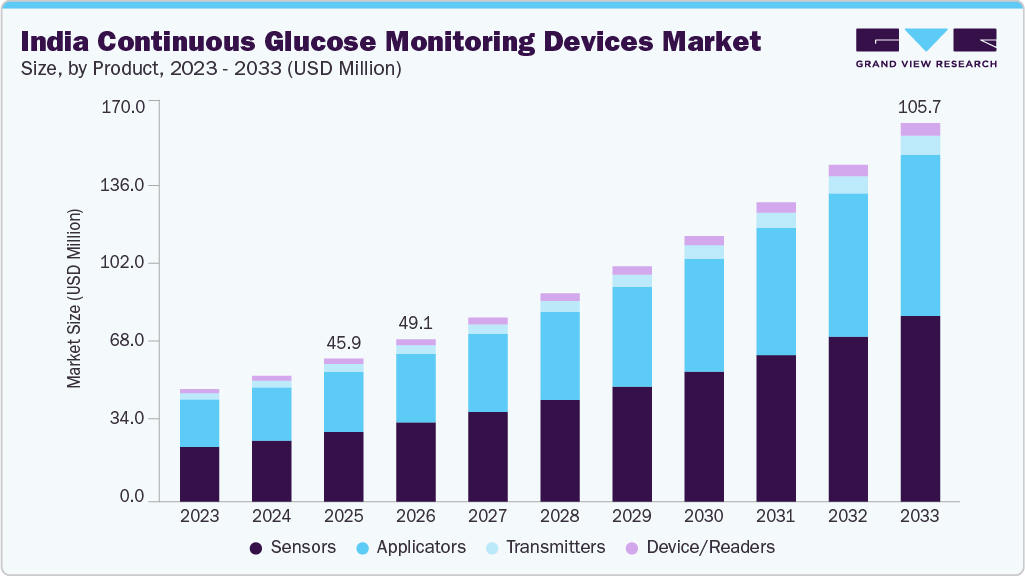
The India continuous glucose monitoring devices market size was estimated at USD 45.92 million in 2025 and is expected to reach USD 105.67 million in 2033, growing at a CAGR of 11.56% from 2026 to 2033. A shift toward proactive diabetes management and the adoption of digital health tools are fueling demand.
The rising geriatric population and sedentary lifestyles contribute to the disease burden, necessitating the development of advanced monitoring solutions. Furthermore, expanding healthcare infrastructure, the availability of CGM devices through e-commerce and pharmacies, and collaborations between global players and Indian healthcare providers enhance accessibility. Technological advancements like sensor accuracy, app integration, and data sharing further support market growth across urban and semi-urban areas.
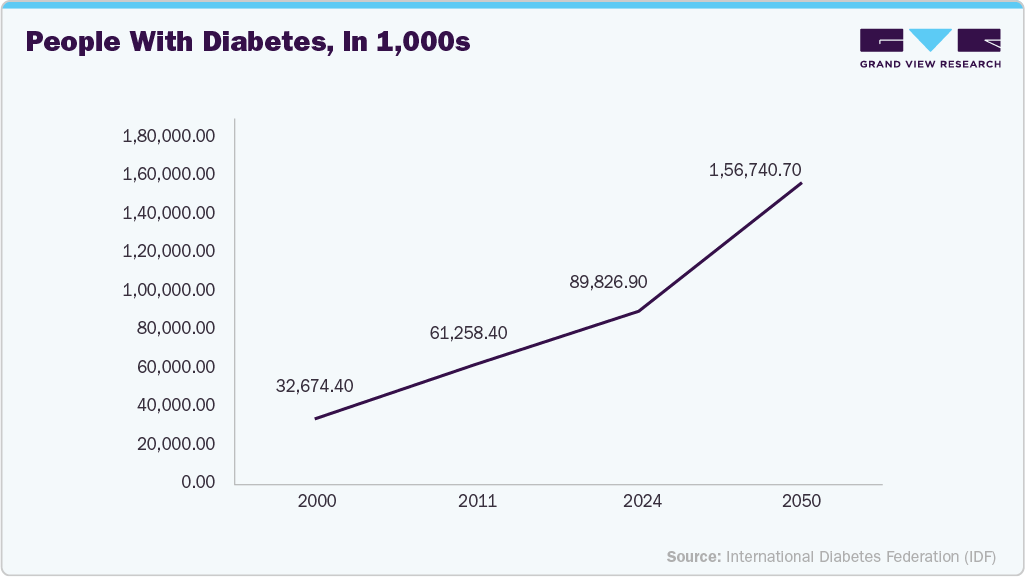
India, a key country in the International Diabetes Federation (IDF) South-East Asia region, is grappling with a growing diabetes crisis. Of the 589 million global cases of diabetes, 107 million are in this region. By 2050, the regional number is expected to rise to 185 million. India alone has a staggering 89.8 million adult diabetes cases, with a 10.5% adult prevalence rate among its 947 million adult population.
To raise awareness and promote better care, World Diabetes Day is observed every year on November 14. The 2024 theme, “Breaking Barriers, Bridging Gaps,” emphasizes collaborative action to improve diagnosis, treatment, and equal access to care. It also encourages health systems to address care disparities and foster inclusion.
Diabetes is a chronic disease caused by insufficient insulin production or improper insulin usage, leading to high blood glucose levels. Left uncontrolled, it can damage vital organs and cause severe complications, including heart disease, kidney failure, blindness, and nerve damage. Early symptoms include frequent urination, thirst, fatigue, blurred vision, and unexplained weight loss.
Preventing type 2 diabetes involves healthy lifestyle changes like regular physical activity, a balanced diet low in sugar and saturated fats, maintaining a healthy weight, and avoiding tobacco. Experts from the IDF School of Diabetes also highlight the increasing role of Continuous Glucose Monitoring (CGM) devices in proactive diabetes management.
CGMs are transforming diabetes care by offering real-time glucose readings and reducing the need for finger-prick tests. In India, three key CGM devices are making a notable impact:
-
Tracky by DrStore - India’s first Bluetooth-enabled CGM uses a reusable transmitter and a 14-day sensor. Tailored for Indian users, it offers affordability, real-time data, mobile app connectivity, and alerts for glucose spikes or drops.
-
Freestyle Libre by Abbott - This popular device offers 14 days of continuous glucose monitoring via a small sensor worn on the upper arm. It provides a comprehensive glucose profile through easy scanning, eliminating routine finger pricks.
Additionally, Trinity Biotech is preparing to enter the Indian CGM market in September 2024, through a partnership with Bayer. It plans to launch an in-country study to understand user and provider feedback, which will guide the refinement of its next-gen CGM product. This modular, cost-effective biosensor aims to increase CGM accessibility in India, where uptake remains limited but is growing. Trinity Biotech’s strategy focuses on affordability and ease of use, aiming to offer advanced diabetes care to a broader segment of the population.
India is witnessing a significant rise in diabetes cases, with over 101 million people currently affected, according to the ICMR-INDIAB study. Continuous Glucose Monitoring (CGM) technology is emerging as a vital solution in managing this growing burden. Experts emphasize that CGMs empower individuals with real-time data, improve glucose control, reduce complications, and enhance quality of life. These insights are supported by healthcare leaders across research, clinical practice, and public health, who advocate for CGM’s role in personalized diabetes care, better comorbidity management, and expanded healthcare accessibility. Their statements reinforce CGM's impact in transforming diabetes outcomes across India.
Designation
Key Insight
Head of Medical Affairs, Emerging Asia & India, Abbott
“CGMs simplify glucose monitoring without finger pricks and offer real-time data. The Time in Range (TIR) metric is life-changing for personalized diabetes care.”
President, Indian Academy of Diabetes; Consultant Endocrinologist
“CGMs allow people to maintain glycemic control for around 17 hours daily, enabling informed lifestyle and treatment decisions beyond clinical settings.”
The India Continuous Glucose Monitoring (CGM) devices market is evolving rapidly, with both Over-the-Counter (OTC) and prescription-based products gaining traction. While global players like Abbott and Medtronic dominate the clinical segment with prescription devices, Indian startups such as DrStore, Ultrahuman, and Actofit are pioneering OTC CGMs for fitness and preventive care. The growing availability of CGMs through e-commerce, pharmacies, and digital health platforms is expanding consumer access. This shift supports not only diabetes management but also proactive wellness tracking. The table below outlines leading companies, their CGM offerings, availability channels, and target users across India’s emerging OTC vs prescription landscape.
The table below compares key players in India’s CGM market based on their device type, availability, and target segments.
Company
Device Name
OTC / Prescription
Availability
Target Segment
Abbott Laboratories
FreeStyle Libre
Prescription
Pharmacies, E-commerce
Type 1 & 2 Diabetes, Clinically Monitored
Medtronic PLC
Guardian Connect
Prescription
Hospital Chains, Clinics
Advanced Diabetic Care
Ascensia Diabetes Care
Eversense (partnered with Senseonics)
Prescription
Specialty Clinics
Long-term Glucose Monitoring
Roche Diagnostics India
Accu-Chek CGM
Prescription
Pharmacies, Clinics
General Diabetes Management
Nemaura Medical
SugarBEAT
OTC (Globally)
Likely via E-commerce (India launch expected)
Preventive Care, Type 2 Diabetes
DrStore Healthcare (Tracky)
Tracky CGM
OTC
Online via Tracky website
Mass Market, Cost-sensitive Users
Ultrahuman
Ultrahuman M1
OTC
E-commerce, Direct
Health-conscious, Fitness-focused
Actofit
Actofit CGM (in partnership)
OTC (in testing stage)
Digital Platforms
Fitness, Biohacking
AmiciCare
Amici GluCare CGM (developing)
OTC/Potentially Hybrid
Not launched
Home-based Diabetes Management
Market Concentration & Characteristics
The India continuous glucose monitoring (CGM) devices industry is moderately concentrated, with key players like Abbott and Medtronic dominating market share through advanced technology and established distribution networks. The industry is characterized by rapid innovation, increasing demand for real-time glucose monitoring, and growing awareness of diabetes management. Local players and startups are emerging, supported by government healthcare initiatives and rising digital health adoption. The market sees frequent product upgrades, strategic partnerships, and expansion into e-commerce channels. High competition, regulatory standards, and pricing sensitivity also define the landscape, making innovation and affordability key to sustained growth and market penetration.
The India continuous glucose monitoring devices industry is evolving rapidly, marked by innovation such as Ambrosia’s launch of the nation’s first 24x7 real-time glucose and stress monitoring service in April 2025. Building on success in the U.S. and Europe, Ambrosia’s system uses wearable sensors, AI analytics, and remote access to offer continuous health tracking. Addressing India’s high diabetes and stress-related disorder rates, it fills the gap left by traditional intermittent testing and misleading flash sensor claims. Features like meal impact analysis, Dia-Buddy AI, smart alerts, and remote monitoring enhance safety and usability for people with diabetes, children, professionals, and fitness enthusiasts.
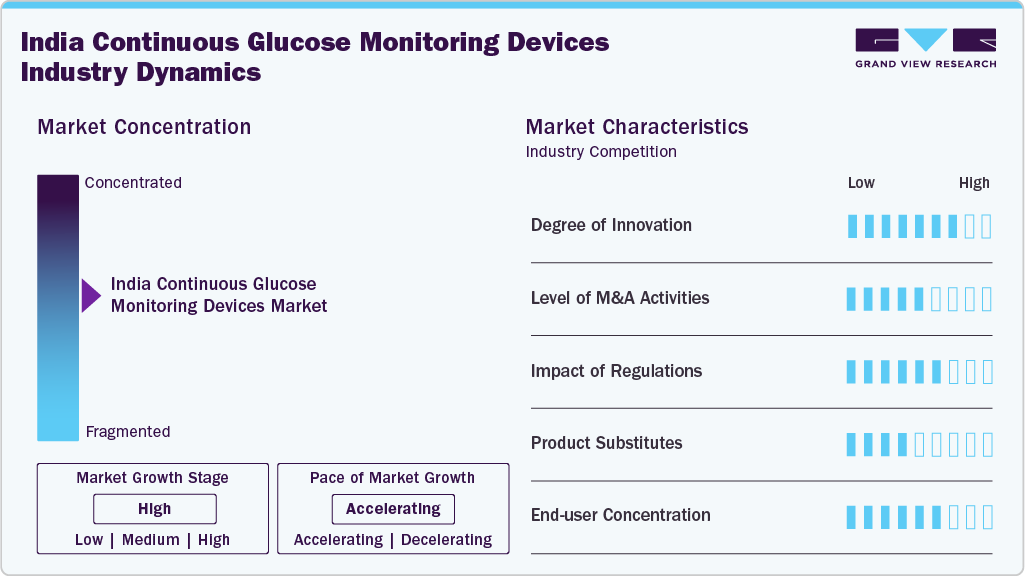
The India continuous glucose monitoring (CGM) market is experiencing moderate to high merger and acquisition (M&A) activity, driven by rising demand and the integration of digital health. Global players like Abbott and Medtronic have expanded through strategic partnerships with Indian firms, while local startups such as Health Arx Technologies Pvt. Ltd (BeatO) has acquired healthtech companies to strengthen AI and analytics capabilities. Investors show growing interest, with recent deals involving major healthcare and medtech companies targeting diabetes care innovation. These activities reflect increasing consolidation, technology transfer, and ecosystem development, as both domestic and international firms seek to tap into India’s large diabetic population and evolving digital health landscape.
Regulations significantly impact India’s continuous glucose monitoring devices industry by ensuring safety, quality, and compliance. Under the Medical Device Rules, 2017, CGM devices are classified as high-risk (Classes C or D) and require approval from the Central Drugs Standard Control Organization (CDSCO) for manufacturing and import. Since October 2023, stricter licensing norms mandate clinical validation, quality assurance protocols, and post-market surveillance. These regulations align India’s standards with global practices, improving product reliability and user trust. However, they also pose challenges for smaller manufacturers due to complex documentation and extended approval timelines, potentially slowing market entry while encouraging innovation and adherence to international norms.
In India’s continuous glucose monitoring (CGM) devices industry, key substitutes include traditional self‑monitoring of blood glucose (SMBG) through finger-prick glucometers, which remain widely used due to lower cost and easier accessibility. Flash glucose monitoring systems, which provide intermittent glucose readings without real-time alerts, are also alternatives. For some patients, periodic lab-based tests like HbA1c offer long-term glucose insights but lack immediacy. Emerging digital health tools, such as smartphone-integrated optical sensors and insulin pump algorithms, offer nascent competition, though they’re yet to match CGM accuracy. Despite these options, CGMs remain preferred for their real-time trend data, automated alerts, and enhanced disease management.
India’s continuous glucose monitoring (CGM) devices industry is expanding beyond major metropolitan areas into Tier-2 and Tier-3 cities, driven by increasing diabetes awareness, improved healthcare access, and rising disposable incomes. Urban regions remain the primary adopters due to better infrastructure and digital literacy. However, growth in smaller towns and semi-urban areas is accelerating, supported by telemedicine, mobile health services, and digital health platforms. Companies are focusing on regional customization, multilingual support, and affordability to penetrate underserved markets. As public and private healthcare investments rise, regional expansion is expected to play a crucial role in driving long-term CGM adoption across India.
Product Insights
The sensors segment dominated the India continuous glucose monitoring (CGM) devices market, accounting for the largest revenue share in 2025, primarily due to the recurring nature of sensor use and replacement. CGM sensors are the core component of the system, continuously measuring glucose levels in interstitial fluid and transmitting this data to connected devices, such as receivers or smartphone applications. Unlike transmitters and readers, which can typically be used for extended periods, sensors have a limited wear duration and must be replaced regularly, usually every 10 to 15 days, depending on the device. In India, the dominance of the sensors segment is further supported by the growing adoption of CGM systems among urban diabetic populations, increasing awareness of continuous glucose monitoring for better glycemic control, and the expanding availability of CGM products through hospital pharmacies, specialty diabetes clinics, and online platforms. As the installed base of CGM users continues to rise in the country, the demand for replacement sensors increases proportionally, reinforcing the segment’s leading share within the CGM device market.
The transmitters segment is expected to witness the fastest growth during the forecast period. Transmitters are a key component of CGM systems, responsible for wirelessly transmitting glucose readings from the sensor to receivers, smartphones, or other connected digital platforms. The increasing adoption of CGM devices in India, along with the growing use of smartphone-based diabetes management applications, is driving demand for advanced transmitters that enable seamless, real-time data sharing and remote monitoring. This growth is further supported by the expanding integration of CGM systems with digital health ecosystems, including mobile health applications, cloud-based monitoring platforms, and connected insulin delivery devices.
Connectivity Insights
The Bluetooth segment dominated the India CGM devices market in 2025, capturing the largest revenue share, driven by its widespread integration in modern glucose monitoring systems. Bluetooth-enabled CGMs allow seamless real-time data transmission to smartphones and wearable devices, improving patient engagement and facilitating remote monitoring by healthcare providers. This wireless connectivity supports better diabetes management through timely alerts and data-driven insights. Increased adoption of digital health platforms, rising awareness of connected care, and compatibility with telemedicine services further fueled this segment’s growth. Additionally, the reliability, low energy consumption, and user convenience of Bluetooth technology solidified its leading market position.
The NFC (Near Field Communication) segment is projected to grow the fastest during the forecast period, driven by its enhanced convenience and accessibility. NFC-enabled CGM sensors allow users to easily scan glucose readings via smartphones or dedicated NFC readers without needing Bluetooth connectivity, reducing device complexity and power consumption. This technology supports seamless data syncing with health apps, enabling trend tracking and caregiver monitoring. Its compatibility with popular smartphones promotes wider adoption, especially among tech-savvy consumers. Additionally, NFC integration supports offline functionality, enhances security, addresses data privacy concerns, and expands CGM access to underserved regions.
Indication Insights
The type 2 diabetes segment dominated the India continuous glucose monitoring (CGM) devices industry, accounting for the largest revenue share in 2025. India has approximately 77 million adults living with type 2 diabetes and nearly 25 million more at risk due to prediabetes. A major concern is that over half of these individuals remain undiagnosed, increasing the likelihood of severe health complications. Without timely detection and treatment, unmanaged diabetes can lead to cardiovascular risks, including a two- to three-fold higher chance of heart attacks and strokes. Growing awareness and early intervention are driving greater adoption of CGM devices among this population.
The type 1 diabetes segment is expected to grow at the fastest pace during the forecast period. T1D is a lifelong autoimmune condition that requires constant glucose monitoring, making CGM devices essential for effective management. India has the highest number of T1D cases globally, with the incidence rising at a rate of 6.7% annually. Early onset and the need for continuous care are driving demand for real-time monitoring solutions. CGM adoption among T1D patients is increasing due to the ability to reduce complications, improve glycemic control, and enhance quality of life through timely data and automated alerts
Distribution Channel Insights
The pharmacies segment dominated the India CGM devices industry in 2025, accounting for the largest revenue share due to their widespread accessibility and established distribution networks across urban and rural areas. Pharmacies offer trusted, point-of-care locations where customers can buy CGM devices without specialized prescriptions or lengthy waits. Their convenient hours and knowledgeable staff make setup and ongoing support more approachable. Additionally, pharmacies often bundle devices with promotions or loyalty programs, enhancing affordability. Integration with pharmacy-managed digital health platforms and in-store demonstrations further boosts consumer confidence. Together, these factors position pharmacies as the preferred retail channel for CGM adoption in India.
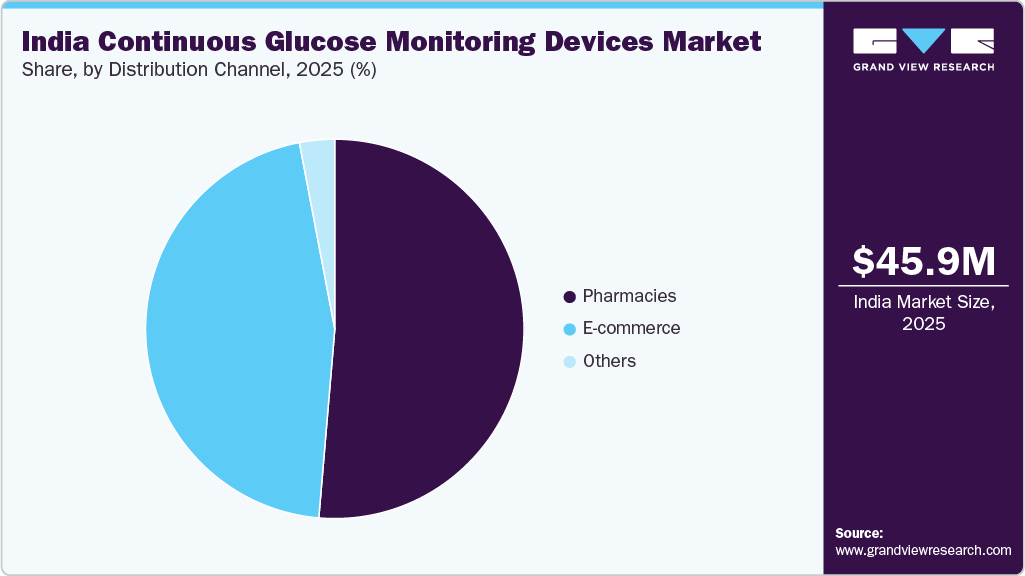
The e‑commerce segment is poised to achieve the fastest growth in India’s CGM devices industry, driven by several key factors. Firstly, convenient online purchasing allows users, especially in remote and semi‑urban areas, to access a wide range of CGM products without relying on local physical stores. Secondly, competitive online pricing, frequent promotions, and bundled deals make CGM devices more affordable. Thirdly, seamless doorstep delivery ensures an uninterrupted supply of sensors and accessories. Lastly, ease of comparing specifications, reading peer reviews, and accessing customer support via digital platforms builds user confidence, driving adoption across diverse demographic segments.
Key India Continuous Glucose Monitoring Devices Company Insights
Leading market players include Abbott and Medtronic, who have strengthened their position in India’s CGM market through innovation and competitive pricing. By focusing on affordability, user-friendliness, and expanded access, they have significantly driven CGM adoption across channels such as pharmacies, e-commerce, and personal health management, broadening reach and improving diabetes care delivery.
Key India Continuous Glucose Monitoring Devices Companies:
- Abbott Laboratories
- Medtronic PLC
- Sugar Fit
- Health Arx Technologies Pvt. Ltd.
- Healthify CGM
- DrStore Healthcare Services India Pvt Ltd
- GoodFlip
- Actofit
- AmiciCare
Recent Developments
-
In June 2025, Tracky, a healthtech brand by DrStore, launched India’s first Bluetooth-enabled CGM to enhance diabetes care. The device offers real-time, scan-free glucose monitoring via a mobile app, improving affordability and accessibility. Priced at ₹5,999 (USD 72), it supports lifestyle tracking and plans AI integration for personalized health insights and predictive alerts.
-
In January 2024, Trinity Biotech signed a non-binding Letter of Intent with Bayer to jointly launch a low-cost CGM biosensor in China and India. The partnership aims to enhance access to diabetes care in both countries, leveraging Bayer’s market presence to deliver innovative, affordable solutions amid rising diabetes prevalence and growing CGM adoption.
India Continuous Glucose Monitoring Devices Market Report Scope
Report Attribute
Details
Market size value in 2026
USD 49.13 million
Revenue forecast in 2033
USD 105.67 million
Growth rate
CAGR of 11.56% from 2026 to 2033
Actual data
2021 - 2024
Forecast period
2026 - 2033
Quantitative units
Revenue in USD million/billion and CAGR from 2026 to 2033
Report coverage
Revenue forecast, company ranking, competitive landscape, growth factors, and trends
Segments covered
Product, connectivity, indication, distribution channel
Regional scope
India
Key companies profiled
Abbott Laboratories; Medtronic PLC; Sugar Fit; Health Arx Technologies Pvt. Ltd.; Healthify CGM; DrStore Healthcare Services India Pvt Ltd; GoodFlip; Actofit; AmiciCare
Customization scope
Free report customization (equivalent up to to 8 analysts working days) with purchase. Addition or alteration to country, regional & segment scope.
Pricing and purchase options
Avail customized purchase options to meet your exact research needs. Explore purchase options
India Continuous Glucose Monitoring Devices Market Report Segmentation
This report forecasts revenue growth at the country level and analyzes the latest industry trends across sub-segments from 2021 to 2033. For this study, Grand View Research has segmented the India continuous glucose monitoring (CGM) devices market report based on product, connectivity, indication, and distribution channel:
-
Product Outlook (Revenue, USD Million, 2021 - 2033)
-
Sensors
-
Transmitters
-
Device/Readers
-
Applicators
-
-
Connectivity Outlook (Revenue, USD Million, 2021 - 2033)
-
Bluetooth
-
4G/Cellular
-
NFC (Near Field Communication)
-
-
Indication Outlook (Revenue, USD Million, 2021 - 2033)
-
Type 1 Diabetes
-
Type 2 Diabetes
-
-
Distribution Channel Outlook (Revenue, USD Million, 2021 - 2033)
-
Pharmacies
-
E-commerce
-
Others
-
Frequently Asked Questions About This Report
b. Key factors driving the growth of the India continuous glucose monitoring (CGM) devices market include the rising prevalence of diabetes, increasing awareness of advanced diabetes management, and growing adoption of minimally invasive, real-time monitoring technologies. Supportive government initiatives and expanding healthcare infrastructure further boost market penetration.
b. The India continuous glucose monitoring devices market size was valued at USD 45.92 million in 2025 and is expected to reach a value of USD 49.13 million in 2026.
b. The India continuous glucose monitoring devices market is expected to grow at a compound annual growth rate of 12.59% from 2026 to 2033 to reach USD 105.67 million by 2033.
b. The sensors segment dominated the market in 2025, primarily due to the recurring nature of sensor usage and replacement. CGM sensors are the core component of the system, responsible for continuously measuring glucose levels in interstitial fluid and transmitting this data to connected devices such as receivers or smartphone applications.
b. Some key players operating in the India continuous glucose monitoring devices market include Abbott Laboratories, Medtronic plc, Sugar Fit, Health Arx Technologies Pvt. Ltd., Healthify CGM, DrStore Healthcare Services India Pvt Ltd, GoodFlip, Actofit, and AmiciCare, among others.


Share this report with your colleague or friend.
Need a Tailored Report?
Customize this report to your needs — add regions, segments, or data points, with 20% free customization.


ISO 9001:2015 & 27001:2022 Certified
We are GDPR and CCPA compliant! Your transaction & personal information is safe and secure. For more details, please read our privacy policy.
Trusted market insights - try a free sample
See how our reports are structured and why industry leaders rely on Grand View Research. Get a free sample or ask us to tailor this report to your needs.