- Home
- »
- Biotechnology
- »
-
Immunogenomics Market Size, Share, Industry Report, 2033GVR Report cover
![Immunogenomics Market Size, Share & Trends Report]()
Immunogenomics Market (2026 - 2033) Size, Share & Trends Analysis Report By Type (Instruments, Consumables, Software), By Technology (Polymerase Chain Reaction, Microarray), By Application (Clinical Applications, Research Applications), By End Use, By Region, And Segment Forecasts
- Report ID: GVR-4-68040-869-1
- Number of Report Pages: 120
- Format: PDF
- Historical Range: 2021 - 2024
- Forecast Period: 2026 - 2033
- Industry: Healthcare
- Report Summary
- Table of Contents
- Segmentation
- Methodology
- Download FREE Sample
-
 Download Sample Report
Immunogenomics Market Summary
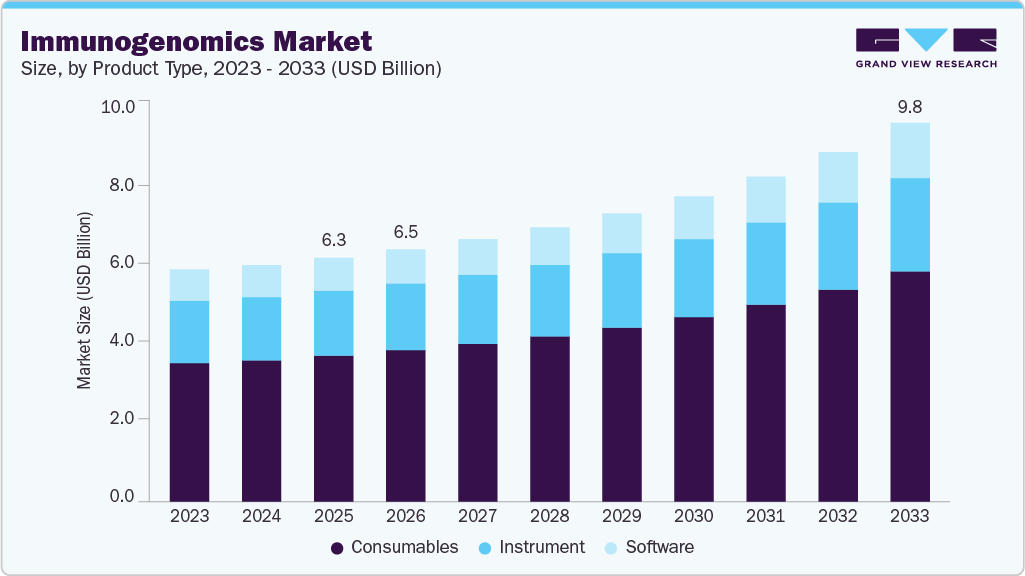
The global immunogenomics market size was estimated at USD 6.32 billion in 2025 and is projected to reach USD 9.82 billion by 2033, expanding at a CAGR of 5.97% from 2026 to 2033. The market growth is being driven by advancements in next-generation sequencing technologies, increasing demand for personalized medicine, and the rising prevalence of immune-related disorders.
Key Market Trends & Insights
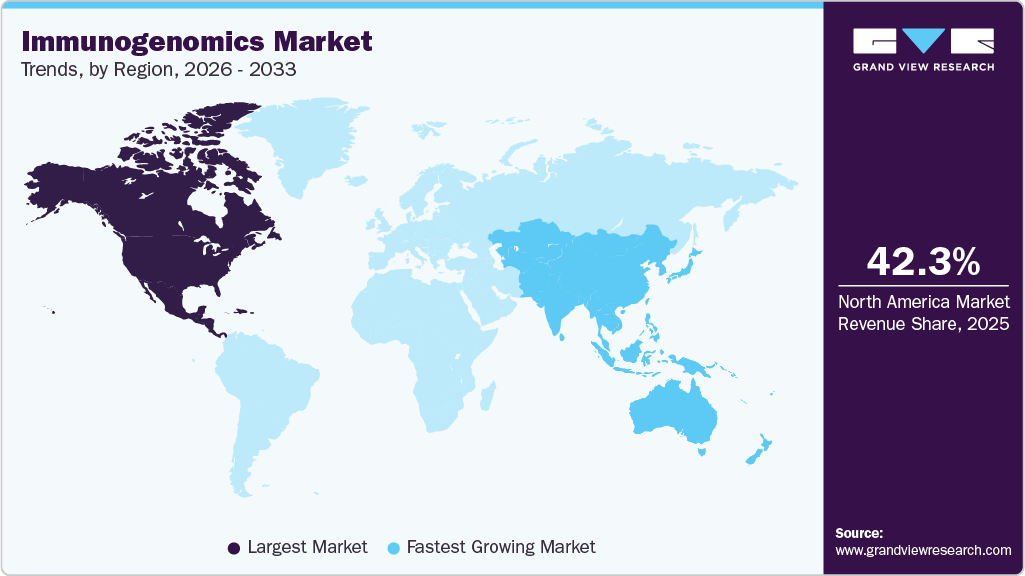
- North America immunogenomics industry held the largest global market share of 42.35% in 2025.
- The immunogenomics industry in the U.S. is expected to grow over the forecast period due to the expanding aging population.
- Based on product type, the consumables segment dominated the market with a share of 59.88% in 2025.
- Based on application, the research application segment dominated the market in 2025.
- Based on end user, the academic & research institutes segment dominated the market in 2025 with a revenue share of 39.31%.
Market Size & Forecast
- 2025 Market Size: USD 6.32 Billion
- 2033 Projected Market Size: USD 9.82 Billion
- CAGR (2026-2033): 5.97%
- North America: Largest market in 2025
- Asia Pacific: Fastest growing market
Advancements In Next-Generation Sequencing (NGS) And BioinformaticsThe immunogenomics market is growing because next-generation sequencing (NGS) and bioinformatics improvements enable scientists to conduct high-throughput genetic testing of immune system genes with accurate results at low costs. NGS enables scientists to conduct comprehensive studies of T-cell and B-cell receptor collections which helps them investigate immune systems and autoimmune diseases and cancer immunity. The research community and personalized medicine field are experiencing increased adoption rates because sequencing costs have decreased while workflow efficiency has improved.
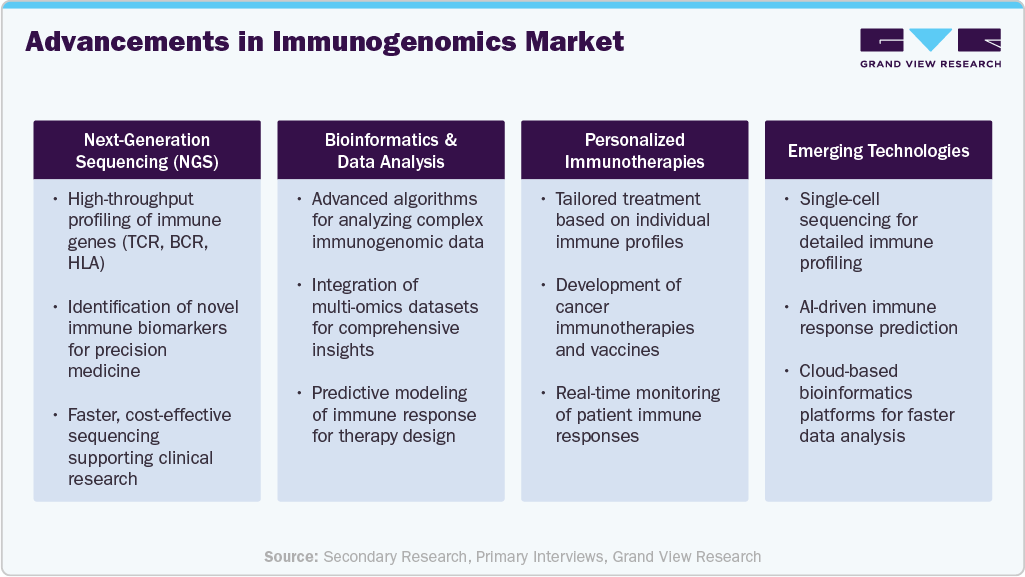
Bioinformatics tools help scientists understand complex immunogenomic data because they provide better analysis tools for their work. AI-driven analytics and cloud platforms enable scientists to combine multiple omics data sets while creating models of immune responses and discovering new biomarkers. The combination of NGS technology with bioinformatics tools supports diagnostic testing and vaccine research and development and precision medicine advancement, which drives market expansion.
Growing Prevalence of Immune-Related Disorders
The growing prevalence of immune-related disorders is a key driver of the immunogenomics market, as the rising incidence of autoimmune diseases, infectious diseases, allergies, and cancer increases the need for deeper immune system analysis. Conditions such as rheumatoid arthritis and multiple sclerosis require precise genetic insights for accurate diagnosis and targeted treatment, driving demand for immunogenomic profiling and biomarker identification.
The increasing emphasis on precision medicine today drives hospitals to implement immunogenomics for studying individual immune responses, which helps them choose appropriate treatments and forecast patient results. The current trend supports increased implementation of immunogenomic technologies for diagnostic purposes, immunotherapy development, and disease monitoring, which results in market expansion.
Market Concentration & Characteristics
The immunogenomics industry demonstrates a high degree of innovation, driven by advancements in next-generation sequencing, single-cell genomics, and AI-based bioinformatics. Technology enables accurate immune system analysis, which leads to discovering new biomarkers and creating customized immunotherapy treatments, so immunogenomics has become a fast-growing field in precision medicine.
The immunogenomics industry is seeing moderate to high merger and acquisition activity because companies want to build new technological capabilities, develop genomic data platforms, and improve precision medicine. Large pharmaceutical and biotech companies are acquiring smaller genomics and bioinformatics firms to strengthen immunotherapy pipelines, access advanced sequencing technologies, and integrate AI analytics.
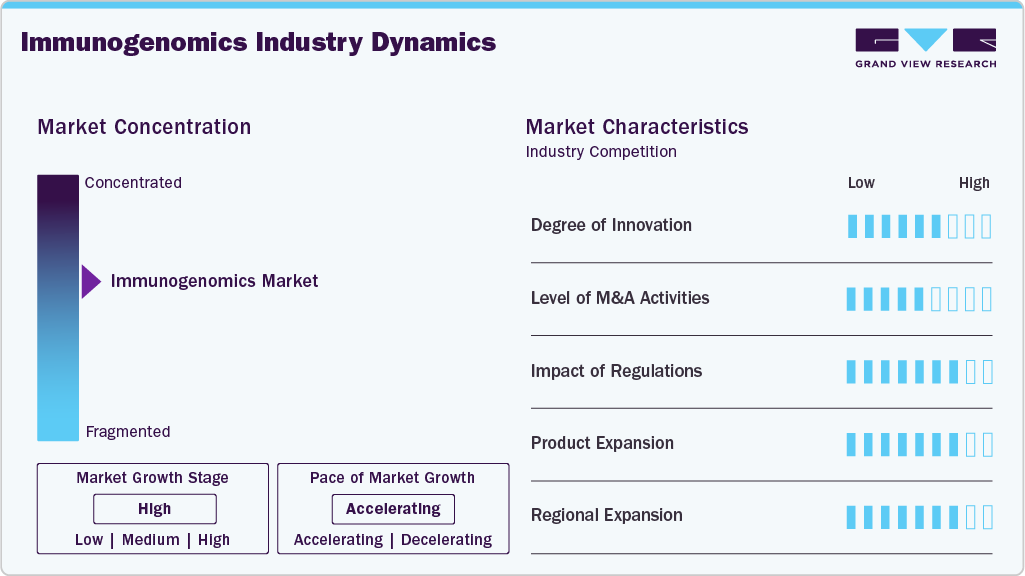
Regulations have a significant impact on the immunogenomics industry, as strict guidelines govern genomic testing, data privacy, and clinical validation of diagnostic tools. Regulatory frameworks from health authorities require rigorous approval processes to ensure accuracy, safety, and ethical handling of genetic information.
Product expansion in the immunogenomics market is driven by innovation in sequencing platforms, immune profiling assays, and bioinformatics solutions. Ongoing expansions are aimed at improving diagnostic accuracy, enhancing research capabilities, and supporting the growing demand for precision medicine applications.
The immunogenomics market expands into new regions because genomic research investments increase, healthcare systems develop, and precision medicine adoption grows across the globe. The Asia Pacific region experiences the fastest growth rate because of government funding support, expanding biotech companies, and better access to genomic testing technologies. Moreover, North America and Europe maintain their market leadership through their strong research and development systems and advanced regulatory frameworks.
Product Type Insights
In 2025, the consumables segment led the immunogenomics market with a share of 59.88%, driven by high demand for reagents and kits essential for NGS, single-cell analysis, and research. In addition, growing research in cancer immunotherapy, autoimmune disorders, and vaccine development continues to drive the need for consumables, making this segment a critical growth driver in the market
The software segment is the fastest-growing in the immunogenomics market because it enables efficient analysis of complex immune-genomic data. Advanced bioinformatics tools, often integrated with AI and machine learning, help identify immune cell populations, predict responses, and discover biomarkers, making them essential for research, clinical applications, and personalized immunotherapy development.
Technology Insights
In 2025, the next-generation sequencing (NGS) segment led the immunogenomics market with a share of 53.40%, and expected to grow with the fastest rate throughout the forecast period driven by its ability to rapidly generate high-throughput, precise immune-genomic data, enabling detailed analysis of immune cell repertoires, antigen-specific responses, and biomarker discovery for research and personalized medicine applications.
The other technologies segment is rapidly growing because it encompasses emerging platforms-such as single-cell sequencing, mass cytometry, and multiplex immunoassays-that provide deeper, high-resolution insights into immune system dynamics, enabling more precise biomarker discovery, immune profiling, and support for advanced immunotherapy research.
Application Insights
The research applications segment dominated the immunogenomics market in 2025, due to the growing use of immunogenomics in studying immune responses, identifying biomarkers, and advancing drug discovery, supported by the increasing adoption of high-throughput sequencing and bioinformatics tools in academic and pharmaceutical research.
The clinical applications segment is expected to register the fastest CAGR over the forecast period, driven by rising demand for personalized medicine, increasing use of immunogenomics in immunotherapy monitoring, disease diagnosis, and patient-specific treatment planning, which together enhances therapeutic efficacy and clinical outcomes.
End User Insights
In 2025, the academic & research institutes segment held the largest share of 39.31% in the immunogenomics market because these institutions are the primary adopters of advanced sequencing and bioinformatics technologies for immune system research, biomarker discovery, and development of novel therapeutics.
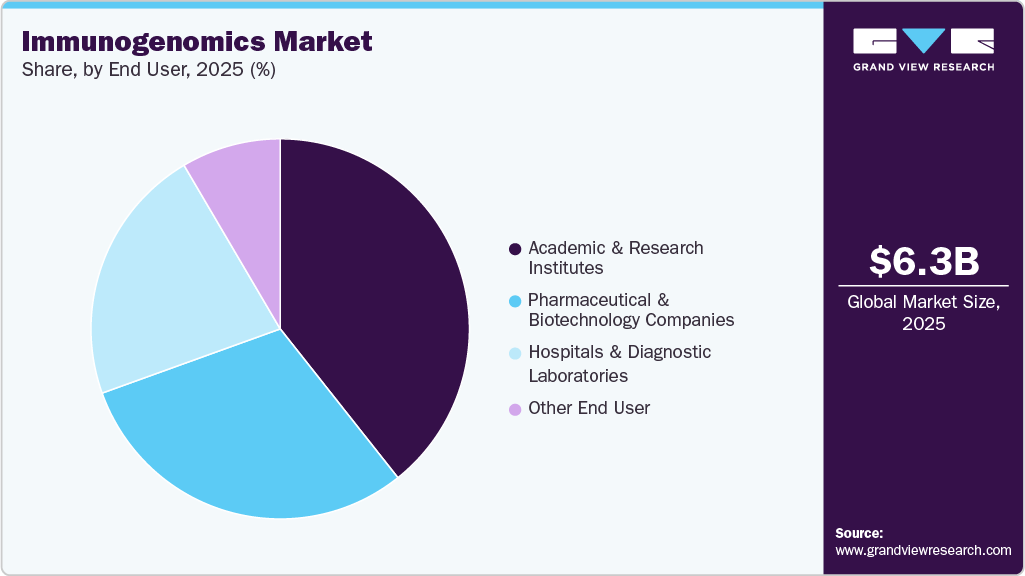
The pharmaceutical & Biotechnology Companies’ segment is expected to register the fastest CAGR over the forecast period, driven by increasing investment in immunogenomics-based drug discovery, growing development of personalized immunotherapies, and the need for advanced tools to analyze immune responses for targeted treatment strategies.
Regional Insights
North America led the immunogenomics industry in 2025 with a share of 42.35%, driven by the strong presence of leading biotechnology and pharmaceutical companies, advanced healthcare infrastructure, and high adoption of next-generation sequencing technologies. The region also benefits from substantial government funding for genomic research, widespread implementation of precision medicine initiatives, and increasing demand for immunotherapy and personalized treatment approaches. For instance, in March 2022, the CDC in the U.S. explored using immunogenetics to combat Ebola Virus Disease, investigating why some unvaccinated individuals exhibited natural antiviral activity. The initiative leveraged human genomic sequencing to identify immune mechanisms, aiming to develop targeted therapies and improve patient outcomes during outbreaks.
U.S Immunogenomics Market Trends
The U.S. immunogenomics market is driven by strong adoption of next-generation sequencing, expanding precision medicine initiatives, and high investments in immunotherapy research. Increasing use of immunogenomic profiling in oncology, biomarker discovery, and declining sequencing costs continue to support market growth. For instance, in June 2025, Vanderbilt Medical Laboratories launched the Histocompatibility and Immunogenetics Laboratory (HIL) in the U.S. to conduct in-house transplant matching and specialized testing. The lab integrated HLA sequencing into electronic health records, reducing turnaround times and supporting hematopoietic stem cell and solid organ transplantation, while enabling post-transplant monitoring and research opportunities.
Europe Immunogenomics Market Trends
The Europe immunogenomics market is driven by strong government support for genomics research. Countries such as the UK, Germany, and France are leading growth through large genomic initiatives and increasing use of genomic data in clinical decision-making, particularly in oncology and rare diseases.
The UK market is witnessing steady growth as increasing collaboration between research institutions, healthcare providers, and biotechnology firms is also supporting the continuous development and commercialization of immunogenomic solutions.
The Germany immunogenomics market is driven by strong government-backed genomic initiatives, growing integration of genome sequencing into clinical care, and significant biotech investments. National sequencing programs aim to improve disease diagnosis, personalized treatment, and patient monitoring, accelerating the adoption of immunogenomic technologies.
Asia Pacific Immunogenomics Market Trends
The Asia Pacific immunogenomics industry is projected to grow at the fastest CAGR of 6.74% during the forecast period, driven by increasing demand for advanced diagnostics, expanding genomic data, and greater involvement of regional biotech firms in global research. The region also benefits from affordable sequencing services, a large patient pool, and rising private investment in genomics and immunotherapy.
China is witnessing rapid growth due to its expanding genomics research infrastructure, strong government support for precision medicine programs, and increasing investments in biotechnology and sequencing technologies.
The Japan immunogenomics market is driven by rising demand for personalized therapies, a rapidly aging population, and robust investments from pharmaceutical companies and research institutions, which are accelerating innovation.
MEA Immunogenomics Market Trends
The Middle East and Africa market is growing steadily, driven by expanding access to advanced diagnostic services, rising partnerships with global genomics firms, and increasing focus on early disease detection.
Kuwait’s immunogenomics market is driven by growing precision medicine initiatives, wider use of genomic testing, and rising healthcare investments, along with increasing collaborations with global genomics firms.
Key Immunogenomics Company Insights
The immunogenomics industry features a mix of global leaders and specialized regional players competing through proprietary sequencing technologies, integrated bioinformatics platforms, and application-specific solutions. Key companies such as Thermo Fisher Scientific, Illumina, QIAGEN, F. Hoffmann-La Roche, Agilent Technologies, Bio-Rad Laboratories, Pacific Biosciences, Oxford Nanopore Technologies, Eurofins Scientific, and CareDx maintain strong positions due to broad product portfolios, advanced NGS platforms, and extensive expertise in genomics and immune profiling.
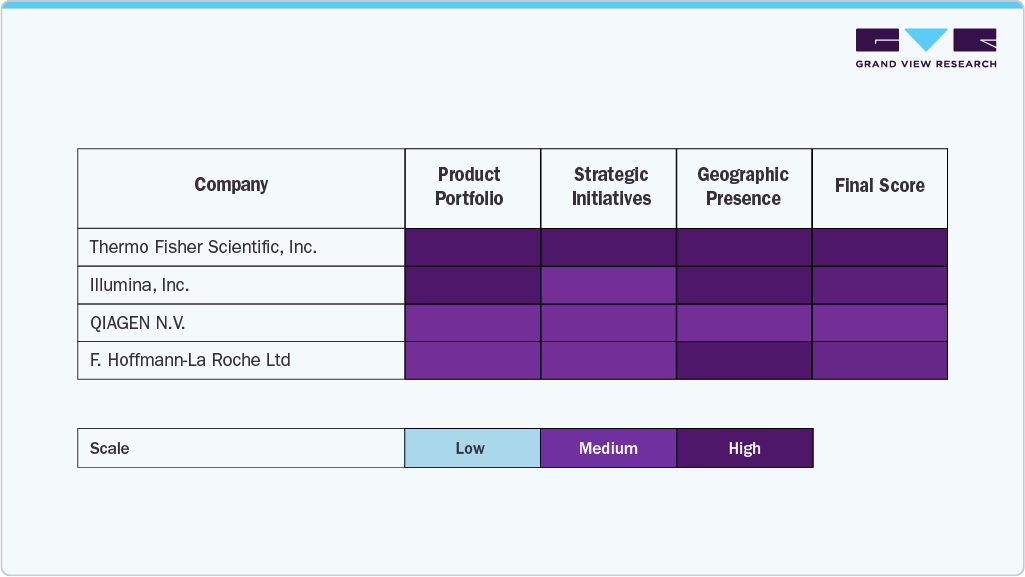
Leading firms are enhancing competitiveness through investments in software analytics, high-throughput sequencing, and scalable clinical solutions. Market growth is increasingly driven by technology diversification, regional expansion, and strategic collaborations with research institutions and biopharma companies.
Key Immunogenomics Companies:
The following key companies have been profiled for this study on the immunogenomics market.
- Thermo Fisher Scientific
- Illumina, Inc.
- QIAGEN N.V.
- F. Hoffmann-La Roche Ltd
- Agilent Technologies, Inc.
- Bio-Rad Laboratories, Inc.
- Pacific Biosciences of California, Inc.
- Oxford Nanopore Technologies plc
- Eurofins Scientific SE
- CareDx, Inc.
Recent Developments
- In August 2025, ARGI launched in India to advance precision immunogenetic solutions for unexplained infertility, recurrent implantation failure, and pregnancy loss, uniting clinicians and researchers to offer evidence-based, individualized fertility care.
In February 2025, Yemaachi Biotechnology launched The African Cancer Atlas (TACA) in Ghana with Roche, using immunogenomics, bioinformatics, and AI to study 7,500 African cancer patients. The initiative advances precision oncology, expands underrepresented genomic data, and strengthens global research collaborations.
Immunogenomics Market Report Scope
Report Attribute
Details
Market size value in 2026
USD 6.54 billion
Revenue forecast in 2033
USD 9.82 billion
Growth rate
CAGR of 5.97% from 2026 to 2033
Base year for estimation
2025
Historical data
2021 - 2024
Forecast period
2026 - 2033
Quantitative units
Revenue in USD billion/million and CAGR from 2026 to 2033
Report coverage
Revenue forecast, company ranking, competitive landscape, growth factors, and trends
Segments covered
Product type, technology, application, end user, region
Regional scope
North America; Europe; Asia Pacific; Latin America; MEA
Country scope
U.S.; Canada; Mexico; UK; Germany; France; Italy; Spain; Denmark; Sweden; Norway; Japan; China; India; Australia; Thailand; South Korea; Brazil; Argentina; South Africa; Saudi Arabia, UAE; Kuwait
Key companies profiled
Thermo Fisher Scientific; Illumina, Inc.; QIAGEN N.V.; F. Hoffmann-La Roche Ltd; Agilent Technologies, Inc.; Bio-Rad Laboratories, Inc.; Pacific Biosciences of California, Inc.; Oxford Nanopore Technologies plc; Eurofins Scientific SE; CareDx, Inc.
Customization scope
Free report customization (equivalent up to 8 analyst’s working days) with purchase. Addition or alteration to country, regional & segment scope.
Global Immunogenomics Market report Segmentation
This report forecasts revenue growth and provides an analysis on the latest trends in each of the sub-segments from 2021 to 2033. For this report, Grand View Research has segmented the immunogenomics market on the basis of product type, technology, application, end user, and region.
-
Product Type Outlook (Revenue, USD Million, 2021 - 2033)
-
Instruments
-
Consumables
-
Software
-
-
Technology Outlook (Revenue, USD Million, 2021 - 2033)
-
Next-Generation Sequencing (NGS)
-
Polymerase Chain Reaction (PCR)
-
Microarray
-
Other Technologies
-
-
Application Outlook (Revenue, USD Million, 2021 - 2033)
-
Clinical Applications
-
Oncology / Cancer Immunotherapy
-
Infectious Diseases & Vaccine Research
-
Autoimmune Disorders
-
Others
-
-
Research Applications
-
-
End User Outlook (Revenue, USD Million, 2021 - 2033)
-
Hospitals & Diagnostic Laboratories
-
Academic & Research Institutes
-
Pharmaceutical & Biotechnology Companies
-
Other End Users
-
-
Regional Outlook (Revenue, USD Million, 2021 - 2033)
-
North America
-
U.S.
-
Canada
-
Mexico
-
-
Europe
-
UK
-
Germany
-
France
-
Italy
-
Spain
-
Denmark
-
Sweden
-
Norway
-
-
Asia Pacific
-
Japan
-
China
-
India
-
Australia
-
Thailand
-
South Korea
-
-
Latin America
-
Brazil
-
Argentina
-
-
Middle East and Africa
-
South Africa
-
Saudi Arabia
-
UAE
-
Kuwait
-
-
Frequently Asked Questions About This Report
b. The global immunogenomics market size was estimated at USD 6.32 billion in 2025 and is expected to reach USD 6.54 billion in 2026
b. The global immunogenomics market is expected to grow at a compound annual growth rate of 5.97% from 2026 to 2033 to reach USD 9.82 billion by 2033.
b. North America led the immunogenomics industry in 2025, accounting for 42.35% of total revenue, supported by strong biotechnology infrastructure and advanced genomic research capabilities. Growth is further driven by rising adoption of precision medicine, expanding clinical sequencing programs, and sustained investment in oncology and immunotherapy development.
b. Some key players operating in the immunogenomics market include Thermo Fisher Scientific, Illumina, Inc., QIAGEN N.V., F. Hoffmann-La Roche Ltd., Agilent Technologies, Inc., Bio-Rad Laboratories, Inc., Pacific Biosciences of California, Inc., Oxford Nanopore Technologies plc, Eurofins Scientific SE, and CareDx, Inc. among others.
b. The immunogenomics market is expected to grow as precision medicine and immunotherapy approaches gain wider adoption, supported by advancements in next-generation sequencing and bioinformatics for immune profiling. Additionally, rising investments in oncology research, biomarker discovery, and personalized diagnostics are accelerating the integration of immunogenomic solutions across clinical and research applications.


Share this report with your colleague or friend.
Need a Tailored Report?
Customize this report to your needs — add regions, segments, or data points, with 20% free customization.


ISO 9001:2015 & 27001:2022 Certified
We are GDPR and CCPA compliant! Your transaction & personal information is safe and secure. For more details, please read our privacy policy.
Trusted market insights - try a free sample
See how our reports are structured and why industry leaders rely on Grand View Research. Get a free sample or ask us to tailor this report to your needs.