- Home
- »
- Homecare & Decor
- »
-
Hostel Market Size, Share & Trends, Industry Report, 2033GVR Report cover
![Hostel Market Size, Share & Trends Report]()
Hostel Market (2026 - 2033) Size, Share & Trends Analysis Report By Accommodation Type (Dormitory Rooms, Private Rooms, Family Rooms), By Guest Type (Backpackers & Solo Travelers, Students & Interns), By Booking Mode, By Region, And Segment Forecasts
- Report ID: GVR-4-68040-482-0
- Number of Report Pages: 110
- Format: PDF
- Historical Range: 2021 - 2025
- Forecast Period: 2026 - 2033
- Industry: Consumer Goods
- Report Summary
- Table of Contents
- Segmentation
- Methodology
- Download FREE Sample
-
 Download Sample Report
Hostel Market Summary
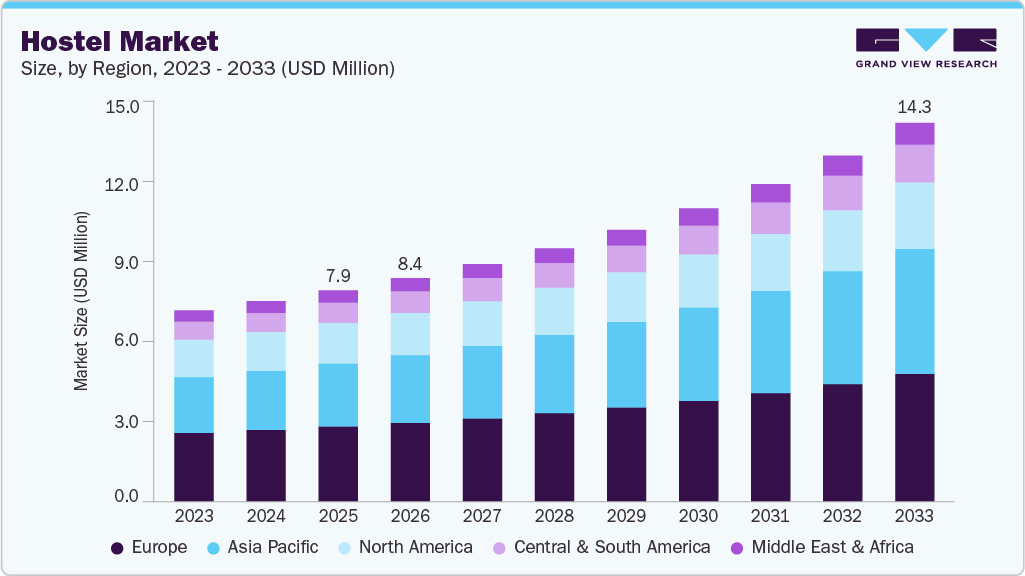
The global hostel market size was estimated at USD 7.97 billion in 2025 and is expected to reach USD 14.28 billion by 2033, growing at a CAGR of 7.8% from 2026 to 2033. The industry is growing due to changing travel preferences and evolving consumer expectations.
Key Market Trends & Insights
- Europe led the global hostel market and accounted for a share of 35.5% in 2025.
- By accommodation type, dormitory rooms led the hostel market and accounted for a share of 64.1% in 2025.
- By guest type, backpackers and solo travelers led the hostel market and accounted for a share of 55.7% in 2025.
- By booking mode, travel agents & online travel agencies (OTAs) led the hostel market and accounted for a share of 44.6% in 2025.
Market Size & Forecast
- 2025 Market Size: USD 7.97 Billion
- 2033 Projected Market Size: USD 14.28 Billion
- CAGR (2026-2033): 7.8%
- Europe: Largest market in 2025
Once focused mainly on backpackers, hostels have expanded to attract diverse traveler segments, including families, business travelers, and older tourists seeking affordable yet social accommodation. The shift toward experiential travel, combined with improved amenities, modern designs, and community-focused experiences, has helped hostels capture a larger share of the global lodging market.Modern travelers increasingly seek authentic experiences that foster cultural immersion and social interaction. Hostels, traditionally designed to promote communal living and shared spaces, perfectly align with this demand. By offering opportunities for social engagement through communal kitchens, lounges, and organized events, hostels have positioned themselves as ideal environments for travelers looking to forge connections with others, thereby enhancing their travel experience.
Additionally, the growing popularity of digital nomadism has further propelled the hostel market's growth. With more professionals working remotely, there is an increasing demand for flexible and affordable accommodations that allow for both work and leisure. Many hostels have adapted to this trend by providing reliable Wi-Fi, co-working spaces, and facilities catering to long-term stays. This shift not only attracts a new demographic of guests but also fosters a community of like-minded individuals who value collaboration and networking opportunities.
Additionally, the growing popularity of digital nomadism has further propelled the hostel market's growth. With more professionals working remotely, there is an increasing demand for flexible and affordable accommodations that allow for both work and leisure. Many hostels have adapted to this trend by providing reliable Wi-Fi, co-working spaces, and facilities catering to long-term stays. This shift not only attracts a new demographic of guests but also fosters a community of like-minded individuals who value collaboration and networking opportunities.
Rising travel costs and economic uncertainty have made travelers, especially students and young tourists, more price-conscious, increasing demand for budget-friendly accommodation such as hostels. According to data, in 2025, around 65% of travelers prioritize budget-friendly options while still being willing to spend more on unique and memorable experiences, encouraging hostels to offer low-cost stays combined with social activities, local experiences, and community-focused environments. As a result, hostels are increasingly positioned as value-driven accommodations that balance affordability with experiential travel.
Consumer Insights
Affordable pricing remains the critical factor influencing hostel bookings, particularly among students, backpackers, and young travelers. Consumers actively look for accommodations that offer the best value for money by combining low room rates with essential amenities such as free Wi-Fi, breakfast, lockers, and social activities. While travelers aim to minimize accommodation expenses, they still expect comfort, cleanliness, and quality service, making hostels an attractive option that balances cost savings with a satisfying stay.
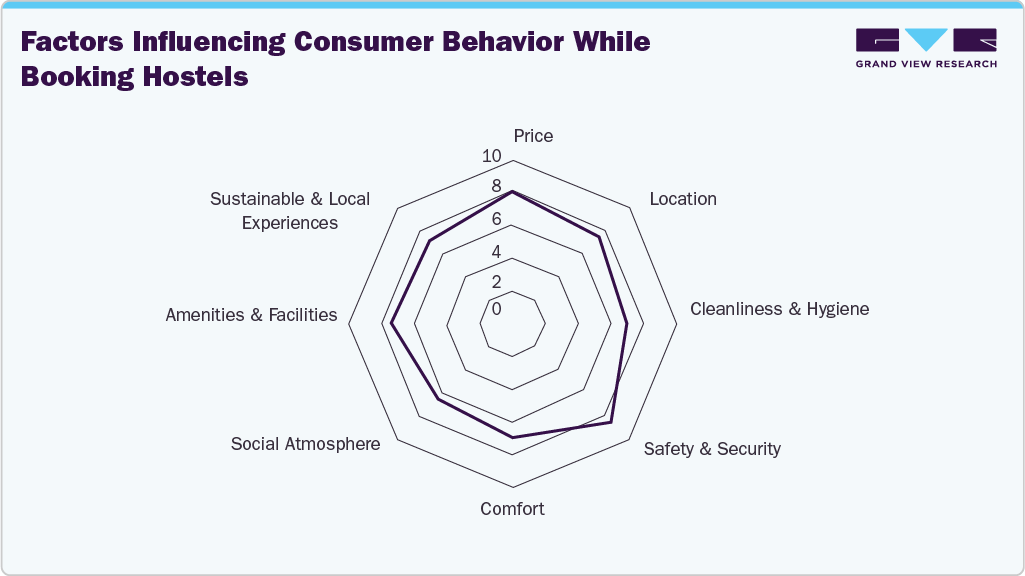
Location plays a crucial role in hostel selection, as travelers prefer properties situated near universities, city centers, tourist attractions, and public transportation hubs. Easy accessibility helps guests save time and reduce transportation costs, improving overall travel convenience. Safety of the surrounding area and proximity to restaurants, cafés, and nightlife also strongly influence booking decisions, especially for international students and solo travelers seeking both convenience and security during their stay.
Accommodation Type Insights
Dormitory rooms held the largest revenue share of the hostel industry in 2025, accounting for a share of 64.1%. Dormitory accommodations appeal primarily to budget-conscious travelers, particularly younger generations such as millennials and Gen Z, who prioritize affordability in their travel experiences. By offering shared sleeping spaces, hostels can provide lower-priced options that are particularly attractive for solo travelers or groups. Additionally, dormitory setups foster a communal atmosphere that encourages social interaction and cultural exchange among guests from diverse backgrounds.
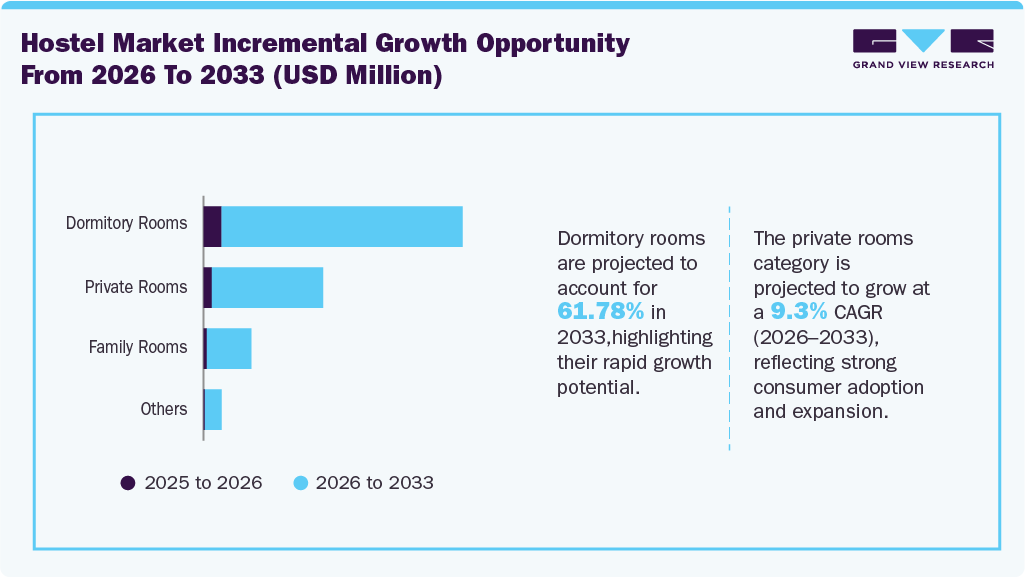
The private rooms segment is anticipated to witness a CAGR of 9.3% from 2026 to 2033. While hostels traditionally cater to budget travelers, there is a growing segment of individuals, including couples, families, and business travelers, who seek the affordability and community aspects of hostels while also desiring the privacy and comfort associated with private accommodations. Private rooms provide an attractive alternative, offering a balance between cost-effectiveness and personal space.
Guest Type Insights
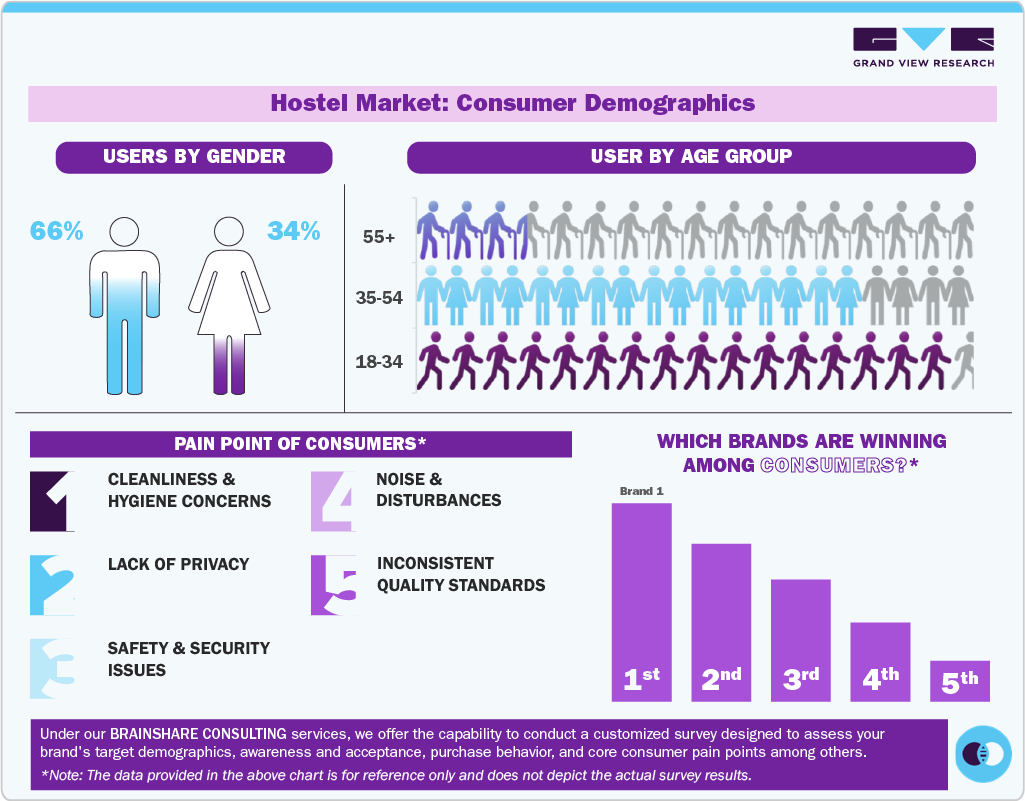
Backpackers and solo travelers held the largest revenue share of the hostel industry in 2025, accounting for a share of 55.70%. According to data published by The Broke Backpacker in 2025, around 45 million backpacking trips occur annually, highlighting the continued growth of budget travel worldwide. Most backpackers are solo travelers, which increases the preference for hostels that offer affordability and social interaction. Nearly one-third of backpackers rely on online reviews when choosing hostels, showing the importance of ratings and peer recommendations. Additionally, the primary motivation for backpacking is experiencing new cultures, making hostels appealing for their communal spaces that encourage cultural exchange while allowing travelers to save on accommodation and spend more on experiences.
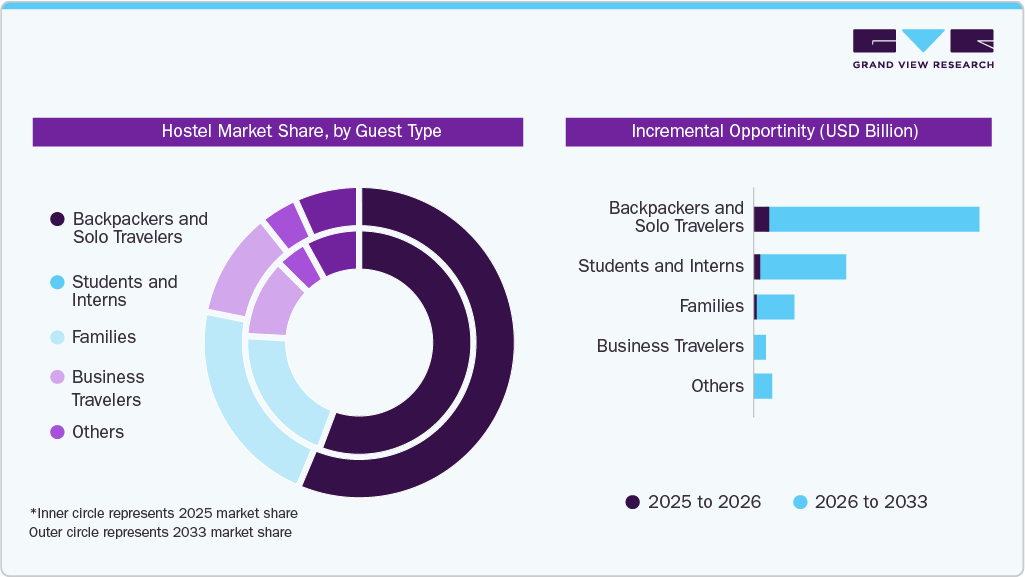
The demand for hostels among students and interns is anticipated to witness a CAGR of 8.8% from 2026 to 2033. Many students and interns are often navigating tight budgets, making hostels an appealing option that allows them to stretch their finances while still enjoying travel opportunities. Additionally, hostels are typically situated in prime locations that provide easy access to educational institutions, internship opportunities, and local attractions, thereby enhancing their convenience for this demographic. The communal living environment of hostels also supports social interaction, enabling students and interns to connect with peers from diverse backgrounds, thereby enriching their overall experience.
Booking Mode Insights
Bookings through travel agents and online travel agencies (OTAs) held the largest revenue share of the hostel industry in 2025, accounting for a share of 44.61%. The growth of hostel bookings by travel agents can be attributed to the rising demand for affordable, experience-driven accommodations among younger travelers and budget-conscious consumers. Hostels offer a unique blend of affordability, social interaction, and local immersion, aligning well with the preferences of millennial and Gen Z travelers. Travel agents, recognizing this shift in consumer behavior, are increasingly adding hostels to their portfolios to cater to a broader client base.
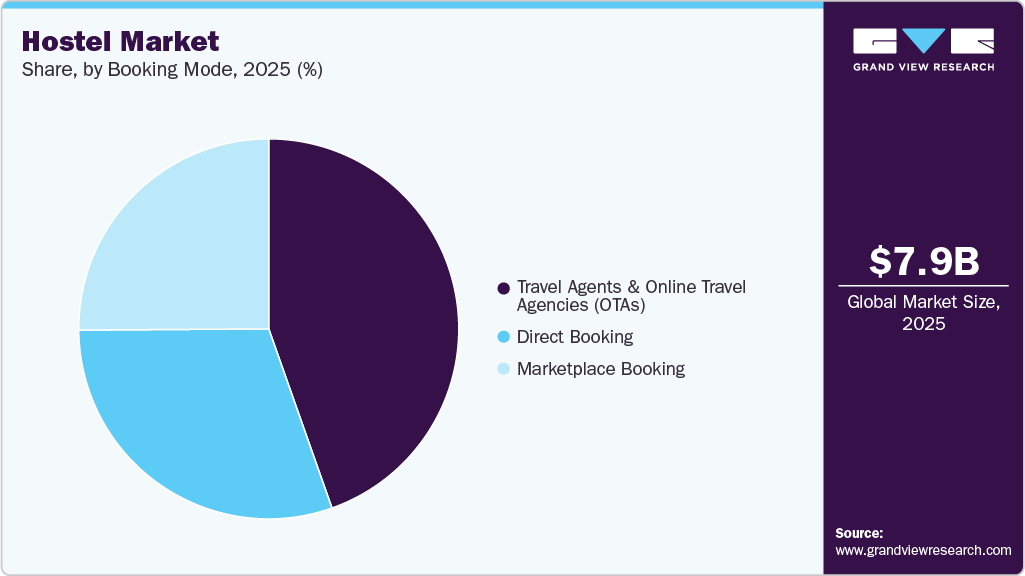
Hostel bookings through marketplaces are anticipated to witness a CAGR of 9.2% from 2026 to 2033. Marketplaces like Hostelworld and Booking.com aggregate listings, allowing users to easily compare prices, amenities, and locations, making them attractive for cost-conscious travelers. They also offer user reviews and ratings, building trust and improving decision-making. The digitalization of travel planning has expanded access to hostels in remote or niche locations, catering to diverse traveler preferences. Additionally, these platforms often provide deals or exclusive offers, incentivizing bookings. Their mobile-friendly interfaces and integrated payment systems further enhance the booking process, leading to increased adoption by younger, tech-savvy travelers who prioritize ease and flexibility.
Regional Insights
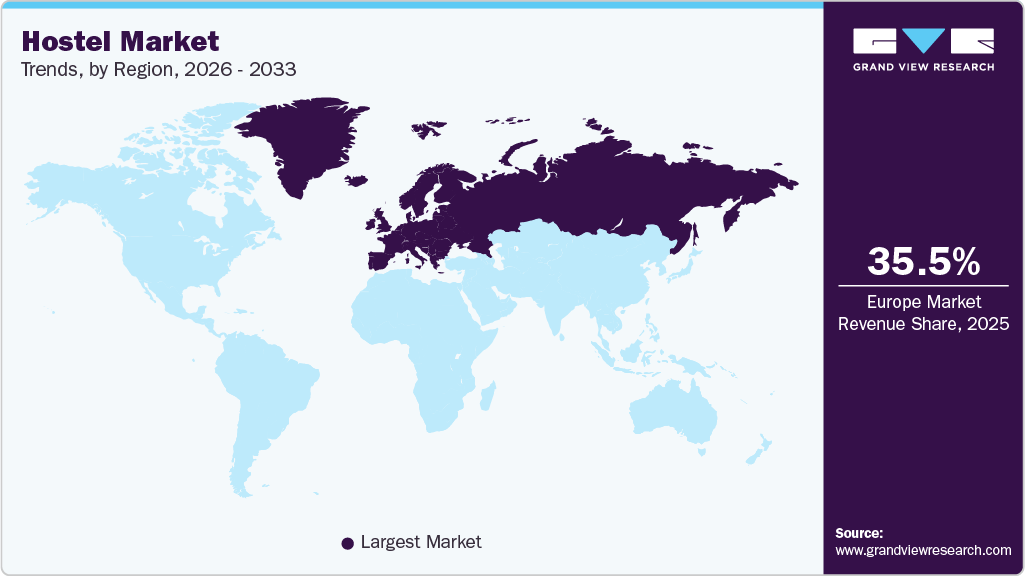
The Europe hostel market held the largest revenue share of the hostel industry in 2025, accounting for a share of 35.53%. Europe has long been a hotspot for budget travel, and demand for hostels is increasing due to its extensive network of low-cost transportation and rich cultural heritage. Hostels offer affordable lodging for students, backpackers, and cultural tourists exploring multiple countries on a single trip. In addition, the rise of experiential travel is driving demand for hostels that offer unique social experiences, including local tours and events. Hostel operators in Europe are innovating with hybrid models, offering private rooms and co-working spaces, thus appealing to a broader demographic, including digital nomads and budget-conscious professionals.
UK Hostel Market Trends
The UK hostel market is anticipated to witness a CAGR of 7.1% from 2026 to 2033. Domestic tourism plays a major role as local travelers increasingly opt for short city breaks, festival trips, and weekend getaways. Budget-conscious domestic tourists prefer hostels for their affordability, flexible stays, and social atmosphere, helping maintain consistent occupancy levels throughout the year. This strong local travel demand supports hostel operators by reducing dependence solely on international visitors and ensuring stable market growth.
The hostel market in France is anticipated to witness a CAGR of 7.3% from 2026 to 2033. Modern hostels in France are rapidly evolving into hybrid hospitality and lifestyle-focused accommodation models that combine hostel affordability with hotel-style comfort and design. The country now hosts around 65 hybrid hostels offering nearly 16,000 beds, reflecting travelers’ growing preference for stylish, experience-driven stays rather than traditional budget lodging. Strong investor confidence is also accelerating this transformation. According to the RYDGE report published, Queensgate Investments sold the Generator Hostels brand to Brookfield Asset Management for €776 million in 2025, demonstrating the rising valuation of hybrid hostel assets across Europe. These properties attract investors due to their resilience, blending the stable revenue performance of hotels with the social appeal and comparatively lower operating costs of hostels.
North America Hostel Market Trends
The hostel market in North America held a revenue share of 19.19% in 2025. In North America, beyond the U.S., the demand for hostels is being driven by the rise in adventure and eco-tourism, particularly in countries like Canada and Mexico. These countries offer access to natural landscapes, and budget-conscious travelers prefer hostels for their affordability and proximity to nature. Additionally, growing interest in backpacking and sustainable travel is boosting demand for hostels that provide eco-friendly accommodations. The expansion of hostel chains and independent operators in these regions is further facilitating access to affordable lodging for travelers looking to explore the cultural diversity and outdoor offerings of North America.
The hostel market in the U.S. is anticipated to witness a CAGR of 6.9% from 2026 to 2033. The demand for hostels in the U.S. is growing as younger travelers, especially millennials and Gen Z, increasingly prioritize budget-friendly, social accommodation options. As domestic tourism and solo travel rise, hostels provide affordable lodging while offering a unique cultural experience through communal spaces that encourage interaction. Furthermore, the rise of digital nomadism, supported by flexible work policies, has led to a demand for more cost-effective long-term stays.
Canada hostel market is anticipated to witness a CAGR of 7.0% from 2026 to 2033. The Canadian hostel market is increasingly moving toward experience-driven and socially engaging accommodation models as travelers prioritize meaningful travel experiences over traditional stays. Modern hostels are evolving into community-focused spaces that offer cultural events, group activities, co-working areas, and shared lounges that encourage interaction among guests. This trend is primarily driven by Millennials and Gen Z travelers who seek local immersion, networking opportunities, and authentic social experiences, positioning hostels as lifestyle destinations rather than budget accommodation options.
Asia Pacific Hostel Market Trends
The hostel market in the Asia Pacific is anticipated to witness a CAGR of 9.2% from 2026 to 2033. In the Asia Pacific region, the growing demand for hostels is primarily driven by the young international travelers, particularly backpackers and gap-year students, seeking affordable, social accommodations. Emerging markets such as Thailand, Vietnam, and Indonesia have seen a surge in budget tourism, with hostels serving as the preferred lodging option for those exploring the region's cultural and natural diversity. Additionally, the rise in intra-regional travel, driven by rising disposable incomes and affordable transportation options, has further boosted hostel demand. Many hostels in the Asia Pacific also offer modern amenities at lower price points, making them highly competitive against traditional hotels.
China hostel market is anticipated to witness a CAGR of 7.5% from 2026 to 2033. In China, travelers are increasingly prioritizing meaningful experiences, cultural exploration, and social interaction over traditional sightseeing. This shift has encouraged hostels to transform into lifestyle-oriented spaces, offering community events, creative interiors, and shared social environments, making them attractive to travelers seeking authentic, immersive experiences.
The hostel market in India is anticipated to witness a CAGR of 8.1% from 2026 to 2033. The Indian hostel market is witnessing rapid growth, driven by the expansion of organized hostel chains that offer standardized services, modern infrastructure, and professionally managed accommodations. Branded operators are scaling across major cities and tourist destinations through franchise and asset-light models, ensuring consistent quality, safety, and digital booking convenience. This organized expansion is improving consumer trust, attracting both domestic and international travelers, and transforming hostels from unorganized budget stays into structured hospitality assets.
Central & South America Hostel Market Trends
The hostel market in Central & South America is anticipated to witness a CAGR of 8.4% from 2026 to 2033. The hostel market in Central and South America is growing as demand for budget-friendly accommodation rises among backpackers, students, and international travelers. Price-sensitive tourists prefer hostels because they offer affordable stays, social interaction, and shared facilities, making them an attractive alternative to traditional hotels while supporting the region’s expanding tourism industry.
Middle East & Africa Hostel Market Trends
The hostel market in the Middle East & Africa held a revenue share of 5.82% in 2025. The hostel market in the Middle East and Africa is gradually expanding, driven by rising international tourism, growing youth travel, and increasing demand for affordable accommodation. Popular destinations such as the UAE, Morocco, South Africa, and Egypt are seeing increased inflows of backpackers and budget travelers, encouraging the development of modern hostels that combine affordability with cultural experiences and social travel environments.
Key Hostel Company Insights
Leading players in the market include Hostelling International (HI), a&o Hotels and Hostels GmbH, and Generator Hostels. The competitive landscape of the hostel market is becoming increasingly dynamic, driven by the growing demand for affordable, social, and experience-based accommodations. Hostel chains are expanding their footprint globally, leveraging technology to improve booking efficiency, offering unique experiences to attract younger travelers, and enhancing amenities to compete with budget hotels.
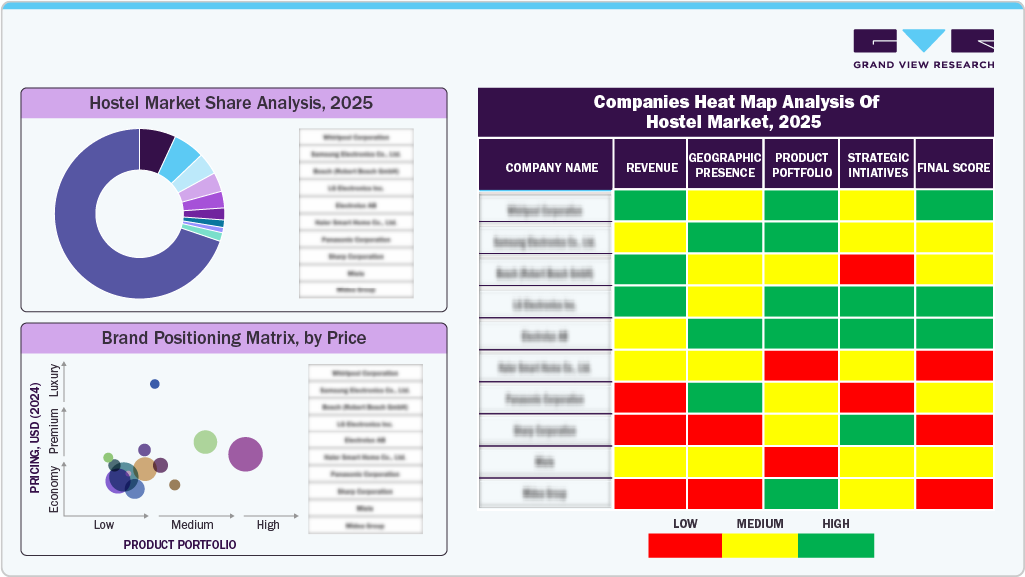
The market is characterized by a mix of large multinational chains, regional operators, and boutique hostels that cater to diverse traveler preferences. Key competitive strategies include digital marketing, partnerships with travel platforms, flexible pricing models, and incorporating sustainability practices to appeal to eco-conscious travelers. In this evolving landscape, brand reputation, customer service, and location are critical factors that differentiate market leaders.
Key Hostel Companies:
The following key companies have been profiled for this study on the hostel market.
- Hostelling International (HI)
- a&o Hotels and Hostels GmbH
- Generator Hostels
- St Christopher's Inns
- Meininger Hotels
- Selina Hostels
- Wombat’s Hostels
- CLINK Hostels
- Safestay Hotels & Hostels
- The Youth Hostels Association (YHA)
Recent Developments
-
In December 2025, Safestay announced its expansion into the Austrian Alps with the opening of its first franchised hostels in Kitzbühel, marking a strategic move beyond central European city locations into leisure and adventure destinations. The company launched Safestay Kitzbühel Centre and Safestay Kitzbühel Alpine, offering a combined total of 70 beds, with both private rooms and shared dormitories, at affordable rates starting around Euro 40 per night.
-
In December 2025, a&o Hostels announced the acquisition of Berlin-based Schulz Hotels as part of a Euro 500 million expansion strategy to transform budget travel across Europe. The deal adds the 1,000-bed Schulz property in Berlin to a&o’s portfolio and allows the company to diversify beyond traditional hostels into premium budget and hybrid accommodation formats.
-
In October 2025, a&o Hostels announced the acquisition of the former DoubleTree by Hilton Docklands Riverside in London, marking the brand’s first property in the city and third in the U.K. Located along the River Thames near Canary Wharf, the hotel targets value-seeking travelers, families, and groups by combining hotel-level comfort with hostel affordability.
Hostel Market Report Scope
Report Attribute
Details
Market size in 2026
USD 8.42 billion
Revenue Forecast in 2033
USD 14.28 billion
Growth rate (revenue)
CAGR of 7.8% from 2026 to 2033
Actuals
2021 - 2025
Forecast period
2026 - 2033
Quantitative units
Volume in number of beds; revenue in USD million/billion, and CAGR from 2026 to 2033
Report coverage
Volume & revenue forecast, company ranking, competitive landscape, growth factors, and trends
Segments covered
Accommodation type, guest type, booking mode, region
Regional scope
North America; Europe; Asia Pacific; Central & South America; Middle East & Africa
Country covered
U.S.; Canada; Mexico; UK; Germany; France; Italy; Spain; China; India; Japan; Australia & New Zealand; South Korea; Brazil; South Africa
Key companies profiled
Hostelling International (HI); a&o Hotels and Hostels GmbH; Generator Hostels; St Christopher's Inns; Meininger Hotels ; Selina Hostels; Wombat’s Hostels ; CLINK Hostels; Safestay Hotels & Hostels; The Youth Hostels Association (YHA)
Customization scope
Free report customization (equivalent to up to 8 analysts’ working days) with purchase. Addition or alteration to country, regional & segment scope.
Pricing and purchase options
Avail customized purchase options to meet your exact research needs. Explore purchase options
Global Hostel Market Report Segmentation
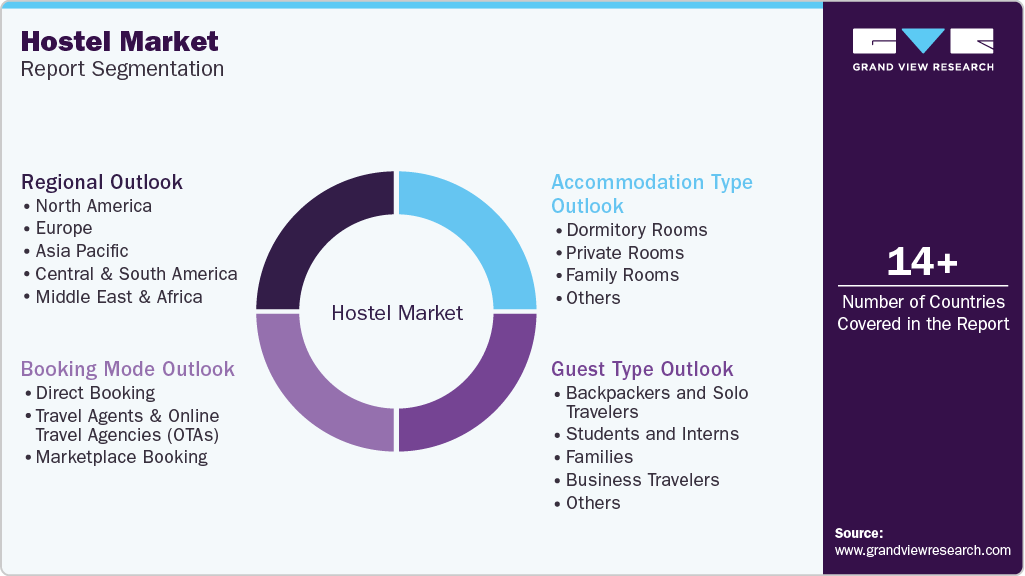
This report forecasts volume & revenue growth at global, regional & country levels and provides an analysis of the latest trends and opportunities in each of the sub-segments from 2021 to 2033. For this study, Grand View Research has segmented the global hostel market report on the basis of accommodation type, guest type, booking mode, and region:
-
Accommodation Type Outlook (Volume, Number of Beds; Revenue, USD Million, 2021 - 2033)
-
Dormitory Rooms
-
Private Rooms
-
Family Rooms
-
Others
-
-
Guest Type Outlook (Volume, Number of Beds; Revenue, USD Million, 2021 - 2033)
-
Backpackers and Solo Travelers
-
Students and Interns
-
Families
-
Business Travelers
-
Others
-
-
Booking Mode Outlook (Volume, Number of Beds; Revenue, USD Million, 2021 - 2033)
-
Direct Booking
-
Travel Agents & Online Travel Agencies (OTAs)
-
Marketplace Booking
-
-
Regional Outlook (Volume, Number of Beds; Revenue, USD Million, 2021 - 2033)
-
North America
-
U.S.
-
Canada
-
Mexico
-
-
Europe
-
Germany
-
UK
-
France
-
Italy
-
Spain
-
-
Asia Pacific
-
China
-
India
-
Japan
-
Australia & New Zealand
-
South Korea
-
-
Central & South America
-
Brazil
-
-
Middle East and Africa
-
South Africa
-
-
Frequently Asked Questions About This Report
b. The global hostel market was estimated at USD 7.97 billion in 2025 and is expected to reach USD 8.42 billion in 2026.
b. Some of the key players operating in the hostel market include Hostelling International (HI), a&o Hotels and Hostels GmbH, Generator Hostels, St Christopher's Inns, Meininger Hotels, Selina Hostels, Wombat’s Hostels, CLINK Hostels, Safestay Hotels & Hostels, and The Youth Hostels Association (YHA).
b. The hostel market has witnessed significant growth in recent years, driven by a rising demand for budget accommodations primarily among backpackers and young travelers, and the emergence of hostels that provide enhanced amenities and unique experiences that appeal to a wide range of guests.
b. The global hostel market is expected to grow at a compound annual growth rate of 7.8% from 2026 to 2033 to reach USD 14.28 billion by 2033.
b. Europe led the hostel market with a share of 35.5% in 2025. Europe has long been a hotspot for budget travel, and the demand for hostels is increasing due to the region's extensive network of low-cost transportation and rich cultural heritage. In addition, the rise of experiential travel is driving demand for hostels that offer unique social experiences, including local tours and events.


Share this report with your colleague or friend.
Need a Tailored Report?
Customize this report to your needs — add regions, segments, or data points, with 20% free customization.


ISO 9001:2015 & 27001:2022 Certified
We are GDPR and CCPA compliant! Your transaction & personal information is safe and secure. For more details, please read our privacy policy.
Trusted market insights - try a free sample
See how our reports are structured and why industry leaders rely on Grand View Research. Get a free sample or ask us to tailor this report to your needs.