- Home
- »
- Homecare & Decor
- »
-
Home Textile Market Size & Share, Industry Report, 2033GVR Report cover
![Home Textile Market Size, Share & Trends Report]()
Home Textile Market (2026 - 2033) Size, Share & Trends Analysis Report By Product (Bedroom Linen, Bathroom Linen, Carpets & Floor Coverings, Kitchen Linen, Curtains and Drapes), By Material (Polyester, Cotton, Silk), By Distribution Channel, By Region, And Segment Forecasts
- Report ID: GVR-3-68038-095-8
- Number of Report Pages: 130
- Format: PDF
- Historical Range: 2021 - 2025
- Forecast Period: 2026 - 2030
- Industry: Consumer Goods
- Report Summary
- Table of Contents
- Segmentation
- Methodology
- Download FREE Sample
-
 Download Sample Report
Home Textile Market Summary
The global home textile market size was estimated at USD 137.81 billion in 2025 and is projected to reach USD 231.40 billion by 2033, growing at a CAGR of 6.9% from 2026 to 2033. The home textile market is primarily driven by increasing consumer expenditure on home décor and interior aesthetics, supported by rising urbanization and growth in residential construction activities globally.
Key Market Trends & Insights
- The Asia Pacific home textile market accounted for a market share of 43.60% in 2025.
- By product, bedroom linen segment accounted for a market share of 45.5% in 2025.
- By material, polyester segment accounted for a market share of 37.1% in 2025.
- By distribution channel, sales through offline channels segment accounted for a market share of 65.6% in 2025.
Market Size & Forecast
- 2025 Market Size: USD 137.81 Billion
- 2033 Projected Market Size: USD 231.40 Billion
- CAGR (2026-2033): 6.9%
- Asia-Pacific: Largest Market in 2025
Expanding middle-class populations, particularly in emerging economies, are encouraging higher spending on premium bedding, bath linen, and decorative textile products. In addition, the rapid expansion of e-commerce platforms has significantly improved product accessibility and variety, enabling consumers to purchase home furnishing products conveniently. Growing consumer preference for sustainable, organic, and high-quality fabrics, along with increasing demand from the hospitality and real estate sectors, is further contributing to market expansion. Collectively, these factors are expected to support steady growth in the home textile industry over the forecast period. Changing consumer lifestyles and the growing importance of comfortable living environments are also strengthening demand for high-quality home textiles. With more people spending time at home due to hybrid work patterns and home-based leisure activities, households are prioritizing comfort, softness, and durability when selecting bedding, throws, and upholstery fabrics. Consumers are increasingly looking for breathable materials, temperature-regulating bedding, and easy-care fabrics that support everyday convenience. These preferences are encouraging manufacturers to introduce innovative materials such as moisture-wicking fabrics, wrinkle-resistant sheets, and performance textiles designed for long-lasting use in modern households.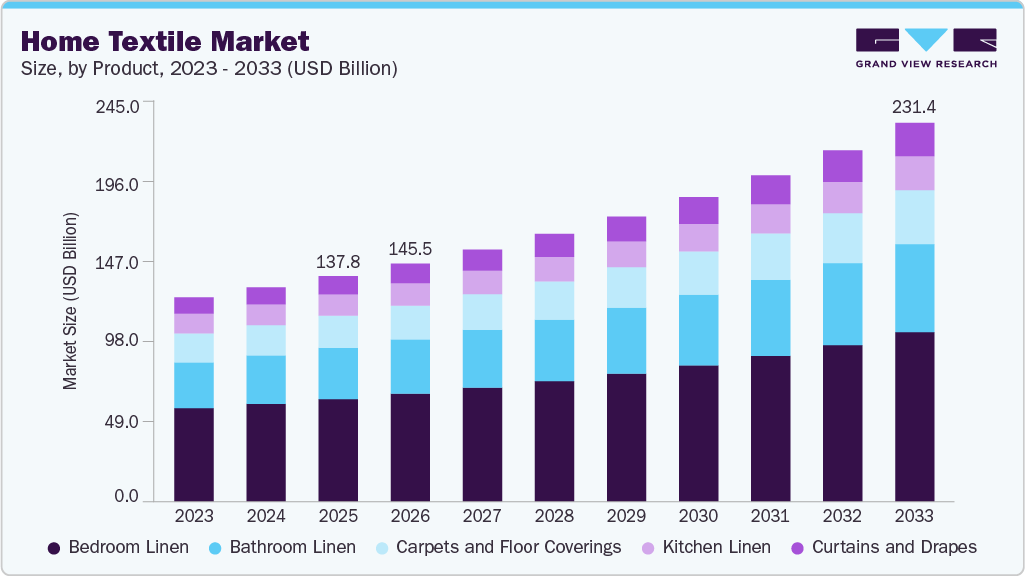
E-commerce and digital retail platforms have significantly improved accessibility to home textile products, expanding the consumer base worldwide. Online marketplaces allow shoppers to explore a wide range of designs, fabrics, and price ranges while comparing options from multiple brands in a single platform. Many retailers are also providing virtual room visualization tools, customer reviews, and personalized recommendations, making it easier for consumers to choose home textiles that match their décor preferences. The growth of direct-to-consumer home décor brands and the availability of home textile products through global online platforms have enabled manufacturers to reach customers beyond traditional retail channels.
Sustainability and responsible sourcing are becoming influential factors shaping purchasing decisions in the home textile market. Consumers are increasingly concerned about the environmental impact of textile production and are actively seeking products made from organic cotton, recycled polyester, bamboo fibers, and other eco-friendly materials. Manufacturers are responding by adopting sustainable manufacturing practices such as low-water dyeing techniques, biodegradable packaging, and ethically sourced raw materials. Certifications related to organic textiles and environmentally responsible production are also helping brands build consumer trust while differentiating their products in a competitive market.
Technological advancements in textile manufacturing are also transforming the home textile industry. Modern weaving, digital printing, and finishing technologies enable manufacturers to produce intricate patterns, vibrant colors, and customized designs on a large scale. Digital textile printing allows brands to quickly introduce new seasonal collections and respond to evolving consumer trends. In addition, smart textiles with features such as antimicrobial treatment, stain resistance, and odor control are gaining popularity among households seeking practical and hygienic solutions. These technological innovations are helping companies differentiate their offerings while improving product performance and durability in everyday home environments.
The growth of the home textile products market is closely linked with the expansion of the broader textile flooring market, as consumers increasingly seek coordinated interior solutions that combine comfort, functionality, and aesthetic appeal. Products such as carpets, rugs, and floor mats represent an important component of textile flooring, contributing significantly to household furnishing expenditures. Rising demand for decorative interiors, increasing renovation activities, and the growing popularity of soft flooring solutions are supporting the development of the textile flooring market, which in turn is creating complementary demand within the home textile products market for products such as curtains, upholstery fabrics, and bedding textiles.
Furthermore, innovations in materials, sustainable fibers, and advanced manufacturing technologies are transforming the textile flooring market and the wider home textile products market. Manufacturers are increasingly introducing eco-friendly textile flooring solutions made from recycled fibers and natural materials, aligning with the growing consumer preference for sustainable home furnishings. At the same time, the integration of design-led collections across rugs, carpets, bedding, and decorative textiles is strengthening cross-category demand within the home textile products market, while continued product development in textile flooring is enhancing durability, comfort, and aesthetic versatility.
Brand Market Share Insights
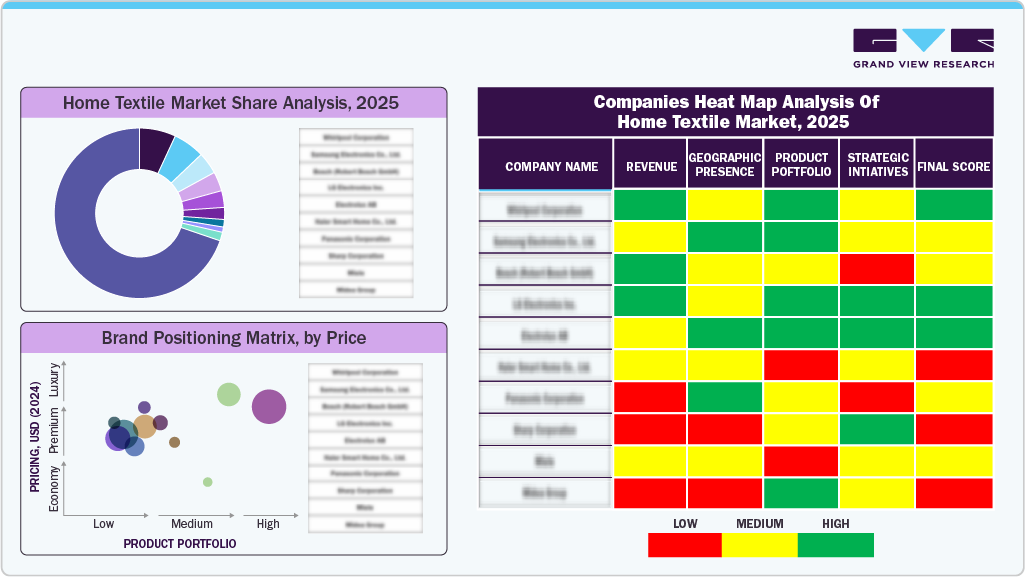
The global home textile market is characterized by a highly competitive landscape supported by the presence of large international manufacturers, regional producers, and emerging home décor brands. Established companies leverage strong brand portfolios, extensive global distribution networks, and continuous product innovation to maintain market leadership. Major players such as Welspun India, Trident Group, IKEA, Ralph Lauren Corporation, and Bed Bath & Beyond offer a wide range of products, including bed linen, bath textiles, curtains, carpets, and upholstery fabrics, enabling them to cater to both premium and mass-market consumers. Manufacturers are increasingly investing in advanced textile technologies, sustainable materials such as organic cotton and recycled fibers, and innovative fabric finishes to meet evolving consumer preferences for comfort, durability, and eco-friendly products. At the same time, private-label brands and digitally native home décor companies are gaining traction by offering modern designs and competitively priced collections through online platforms.
Consumer Insights
Consumer purchasing behavior in the global home textile market is closely linked to residential development, relocation activity, and household formation. Purchases of bed sheets, pillowcases, blankets, curtains, and bath linens often increase when consumers move into new homes, renovate bedrooms, or upgrade interior spaces. As a result, demand is frequently tied to housing market activity and seasonal home improvement cycles. Consumers also tend to purchase home textiles in coordinated sets, such as complete bedding collections or matching towel bundles, which increases overall basket size. Retailers often capitalize on this behavior by offering bundled product collections and bedroom or bathroom styling packages that simplify purchasing decisions.
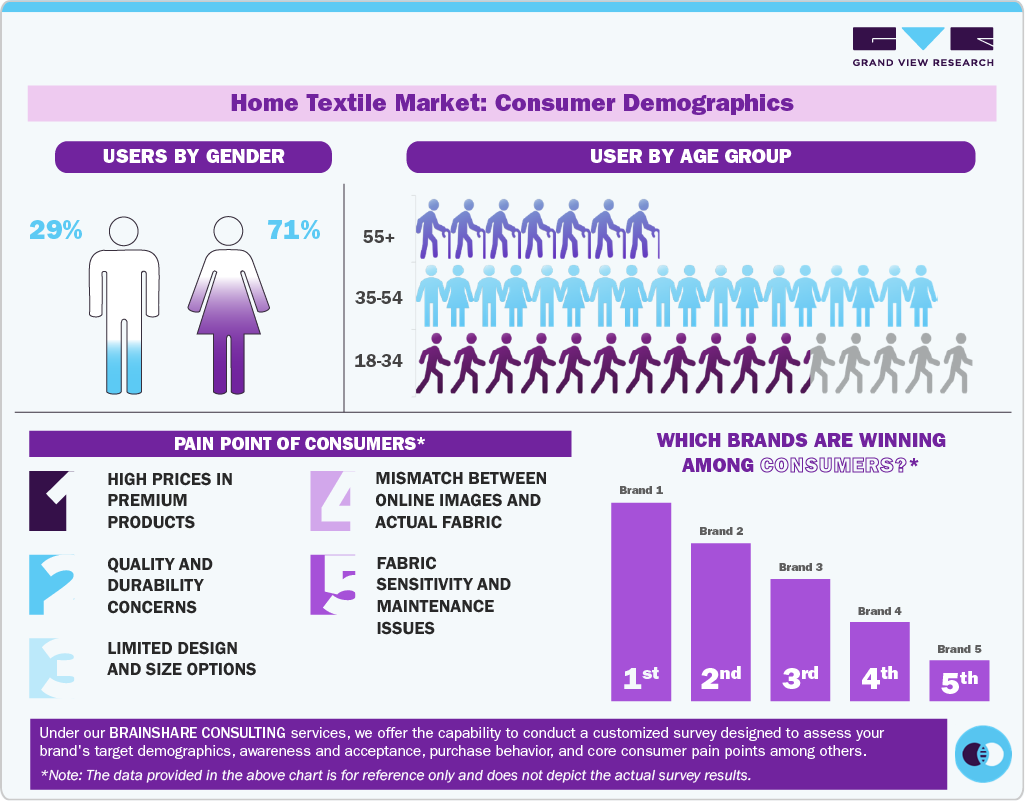
Material composition and functional performance play a decisive role in consumer selection of home textile products. Buyers increasingly evaluate thread count, fabric density, weave structure, and fiber type when purchasing bedding and bath textiles. For example, cotton percale and sateen sheets are often preferred for their softness and breathability, while microfiber products attract consumers seeking wrinkle resistance and affordability. In bath textiles, absorbency, fabric weight (GSM), and drying efficiency are key purchasing considerations. Climate conditions also influence buying patterns, with lightweight and breathable fabrics favored in warmer regions, while flannel bedding and heavier blankets are more commonly purchased in colder climates.
The growing role of design coordination within home interiors also shapes purchasing decisions. Consumers increasingly select home textiles that complement furniture, wall colors, and interior themes such as minimalistic, modern, or luxury décor. As a result, color palettes, pattern design, and seasonal collections have become important factors influencing purchase timing. Retailers frequently introduce limited seasonal collections aligned with spring, summer, or holiday décor themes to stimulate repeat purchases. In addition, the expansion of online visualization tools, room styling guides, and augmented reality features allows consumers to preview how specific textiles will appear in their living spaces, which has strengthened digital engagement and increased conversion rates in online home textile sales.
Product Insights
Bedroom linen accounted for the largest market share of 45.5% in 2025. Bed sheets, pillow covers, duvets, and comforters are regularly replaced due to daily usage, frequent washing cycles, and hygiene considerations, which drives consistent consumer demand. In addition, the growth of the hospitality sector, including hotels, resorts, and serviced apartments, has significantly increased bulk demand for durable and standardized bedroom linen products. The expansion of short-term rental platforms and vacation accommodations has also contributed to higher purchases of bedding sets and mattress covers. Furthermore, manufacturers are introducing wrinkle-resistant fabrics, easy-care materials, and machine-washable bedding products that appeal to consumers seeking convenience and low-maintenance household textiles.
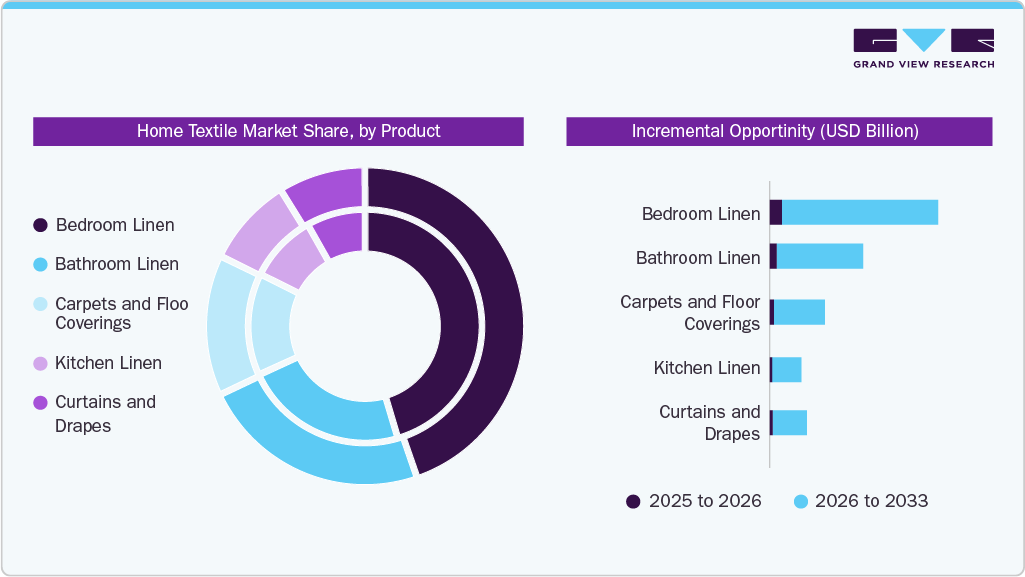
Curtains and drapes are anticipated to grow at a CAGR of 7.8% from 2026 to 2033, supported by increasing demand for interior décor products that enhance both privacy and aesthetic appeal. Curtains and drapes are widely used in residential spaces to regulate natural light, improve room ambiance, and complement interior design themes. Rising urban housing construction and apartment living have increased the demand for window covering solutions that are easy to install and available in a variety of fabrics, colors, and patterns. In addition, manufacturers are introducing curtains with functional features such as thermal insulation, dust resistance, and UV protection to improve indoor comfort. The growing popularity of customized home décor products and ready-made curtain collections available through home furnishing retailers and online platforms is further supporting the growth of this segment.
Material Insights
Polyester home textiles accounted for the largest market share of 37.1% in 2025. Polyester fibers are widely used in products such as bed sheets, curtains, upholstery fabrics, and cushion covers due to their high strength, color retention, and resistance to wear and tear. The material also offers advantages such as quick drying, lightweight construction, and resistance to moisture and mildew, making it suitable for daily household use. In addition, polyester can be easily blended with other fibers such as cotton to enhance durability and reduce production costs. The availability of polyester textiles in various textures, finishes, and printed designs has further increased their adoption.
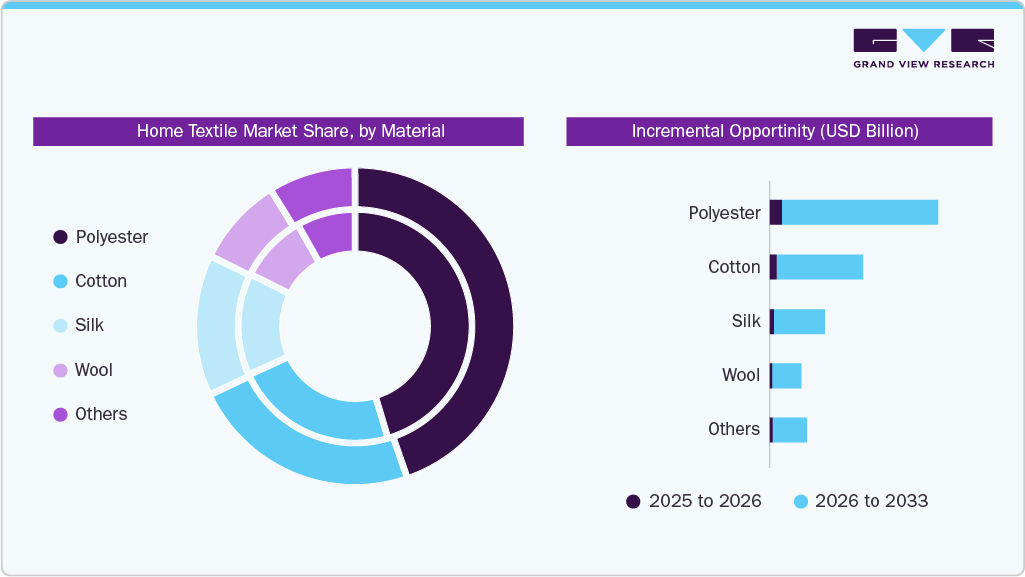
Cotton home textiles are anticipated to grow at a CAGR of 7.3% from 2026 to 2033, driven by strong consumer preference for natural fibers in products that come into direct contact with the skin. Cotton fabrics are widely used in bed linens, towels, and blankets due to their breathability, softness, and ability to regulate temperature, making them particularly suitable for bedding applications. Demand is also supported by the expansion of the hospitality sector, where hotels and resorts commonly prefer cotton-based bed sheets and towels for their comfort and durability. In addition, increasing consumer awareness regarding skin sensitivity and the need for hypoallergenic fabrics is encouraging the adoption of cotton home textiles over synthetic alternatives, particularly for bedroom and bath linen products.
Distribution Channel Insights
Sale of home textiles through offline channels accounted for the largest market share of 65.6% in 2025, driven by the strong presence of organized home furnishing stores and large-format retail chains that showcase a wide variety of bedding, curtains, and bath textiles under one roof. Consumers often prefer visiting physical stores to match fabrics with existing furniture, wall colors, and interior décor themes before making purchasing decisions. In addition, retailers frequently display fully styled bedroom and living room setups, allowing customers to visualize how specific home textile products will appear in real home environments. Seasonal in-store promotions, clearance sales, and bundled product packages offered by brick-and-mortar retailers also encourage higher purchase volumes, further supporting the dominance of offline distribution channels in the global home textile market.
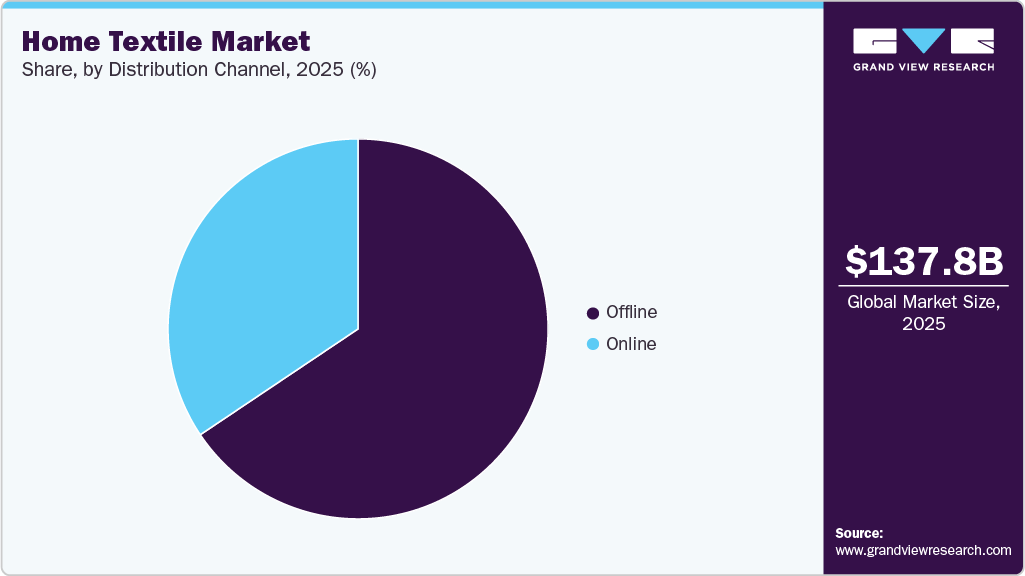
Sales of home textiles through online channels are anticipated to grow at a CAGR of 7.2% from 2026 to 2033. E-commerce marketplaces and brand-owned websites offer consumers access to a wide range of home textile products, such as bed linens, curtains, and towels, from both international brands and regional manufacturers. Online platforms enable consumers to compare product designs, materials, prices, and customer reviews before making purchasing decisions. In addition, digital retailers frequently provide home décor inspiration, styling guides, and bundled bedding or curtain sets that help consumers select coordinated products. The availability of doorstep delivery, easy return policies, and seasonal online discount campaigns is further encouraging consumers to purchase home textile products through online channels.
Regional Insights
North America Home Textile Market Trends
The North American home textile market accounted for the largest share of 20.99% of the global market in 2025. The North American home textile market is driven by strong consumer spending on home décor and household furnishings, particularly in countries such as the U.S. and Canada. Consumers in the region frequently upgrade bedding, bath linen, and decorative textiles to align with changing interior design trends and seasonal home décor themes. Demand is also supported by the expansion of residential renovation and remodeling activities, which often include upgrades to curtains, upholstery fabrics, and bedding collections. In addition, the presence of large home furnishing retailers, department stores, and specialty home décor outlets across the U.S. and Canada ensures wide product availability and encourages regular consumer purchases of home textile products.
U.S. Home Textile Market Trends
The home textile industry in the U.S. accounted for a revenue share of around 72.37% of the North America market in 2025. The U.S. home textile market is driven by strong demand for bedding, bath linen, and decorative textiles, supported by frequent home renovation and interior décor upgrades. Consumers in the country often replace bed sheets, comforters, towels, and curtains to match evolving home design trends and seasonal décor styles. Demand is also supported by the large hospitality sector, including hotels, resorts, and vacation rentals, which require regular procurement of bedding and bath textiles. In addition, the presence of large home furnishing retailers and department store chains across the U.S. ensures wide product availability and supports consistent sales of home textile products.
Mexico's home textile industry is expected to grow at a CAGR of 8.0% from 2026 to 2033. The Mexico home textile market is driven by the country’s strong textile manufacturing base and its role as a key production hub supplying home textile products to both domestic and export markets. Many manufacturers in Mexico produce bedding, towels, and decorative textiles for international brands, which strengthens the local industry ecosystem. Domestic demand is also supported by the expansion of the hospitality sector, including hotels and resorts in major tourist destinations that require large volumes of bedding and bath linen.
Europe Home Textile Market Trends
The European home textile market accounted for a revenue share of 22.57% in 2025. The home textile industry in Germany accounted for a revenue share of around 29.45% of the European market in 2025. The Germany home textile market is driven by strong consumer demand for energy-efficient household solutions, which has increased the adoption of functional textiles such as thermal curtains, insulated window coverings, and thicker bedding products designed to improve indoor temperature regulation. Consumers in the country are also increasingly purchasing home textiles made from certified sustainable fibers and eco-labeled fabrics as environmental awareness continues to influence purchasing decisions. In addition, Germany’s strong home improvement culture encourages consumers to periodically upgrade household furnishings, including bedding sets, table linens, and upholstery fabrics, which supports steady demand for home textile products across the market.
France home textile industry is expected to grow at a CAGR of 6.3% from 2026 to 2033. The France home textile market is driven by strong consumer interest in aesthetically designed household furnishings that complement interior décor and lifestyle preferences. Consumers in the country often invest in premium bedding, table linens, and decorative fabrics to enhance the visual appeal of living spaces. The market also benefits from France’s strong design culture and the presence of established home décor brands that regularly introduce new textile patterns and seasonal collections. In addition, the expansion of specialty home furnishing stores and interior décor boutiques across major cities continues to improve product availability and support growth in the home textile market.
Asia Pacific Home Textile Market Trends
The Asia Pacific home textile market accounted for a revenue share of 43.60% in 2025. The Asia Pacific home textile market is driven by rapid residential construction and large-scale urban housing developments across major economies such as China, India, South Korea, and several Southeast Asian countries. Growing middle-class populations and improving household incomes are encouraging consumers to spend more on bedding, curtains, and bath linens to improve home comfort. Demand is also supported by the region’s strong textile manufacturing base, which enables large-scale production and competitive pricing of home textile products. In addition, the expansion of organized home furnishing retailers and online home décor platforms is increasing product accessibility and supporting market growth across the Asia Pacific region.
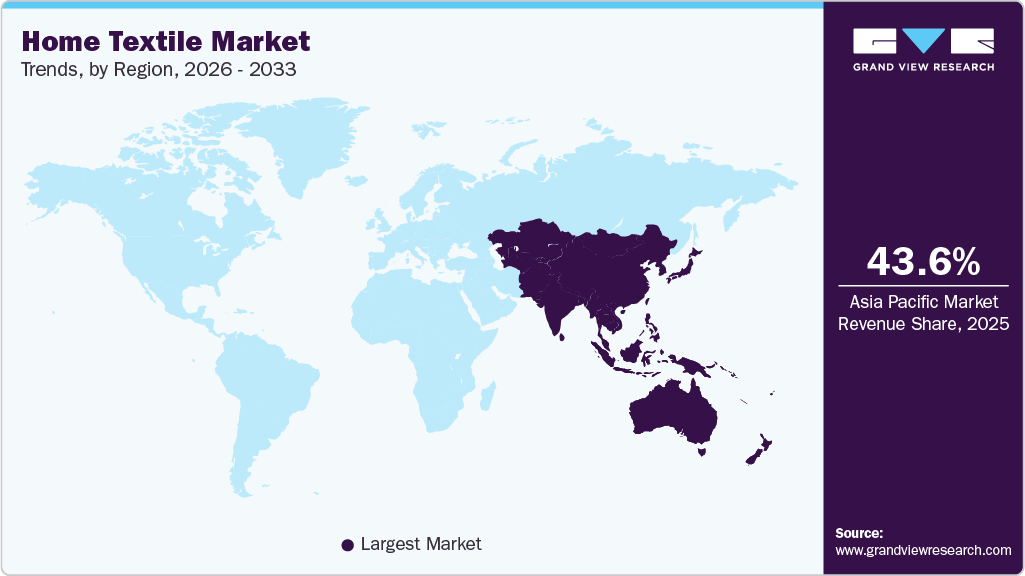
The home textile industry in China accounted for a revenue share of around 30.67% on the Asia Pacific market in 2025. The Chinese home textile market is driven by the country’s strong domestic manufacturing capacity and large-scale production of bedding, towels, and decorative fabrics for both local consumption and export markets. Rising apartment ownership and large residential developments across urban areas are increasing demand for bedroom and living room textile products such as bed sheets, curtains, and sofa covers. In addition, Chinese consumers increasingly purchase coordinated home décor products to create modern and visually appealing interior spaces.
India's home textile industry is expected to grow at a CAGR of 7.1% from 2026 to 2033. The India home textile market is driven by increasing consumer preference for cotton-based household fabrics due to the country’s warm climate, which encourages the use of breathable bedding, lightweight blankets, and absorbent bath linens. Demand is also supported by the growth of organized housing projects and gated communities that encourage residents to invest in coordinated interior furnishings. In addition, the expansion of local home décor brands and regional textile retailers across tier-2 and tier-3 cities is improving product availability and stimulating purchases of home textile products across a broader consumer base.
Central & South America Home Textile Market Trends
The Central & South America home textile industry is expected to grow at a CAGR of 10.5% from 2026 to 2033. The Central & South America home textile market is driven by rising residential renovation and interior decoration activities across urban households. Consumers in countries such as Brazil and Argentina increasingly invest in bedding, curtains, and decorative cushion covers to enhance the visual appeal of living spaces. The market also benefits from the region’s growing middle-class population, which is increasing spending on household furnishings and home comfort products. In addition, the expansion of domestic textile manufacturers and regional home décor retailers is improving product availability and supporting the growth of the home textile market across Central and South America.
Middle East & Africa Home Textile Market Trends
The Middle East & Africa home textile industry is expected to grow at a CAGR of 9.0% from 2026 to 2033. The Middle East & Africa home textile market is driven by increasing residential construction and large-scale housing developments across major cities in the region. Countries such as the UAE and Saudi Arabia are witnessing growing demand for products such as bedding, curtains, carpets, and decorative fabrics as new apartments, villas, and residential complexes are developed. The market also benefits from strong demand for luxury home furnishings among high-income consumers, particularly in Gulf countries, where premium interior décor is widely adopted. In addition, the expansion of large shopping malls and home furnishing retail chains is improving product accessibility and supporting the growth of the home textile market across the Middle East and parts of Africa.
Key Home Textile Companies:
The following key companies have been profiled for this study on the home textile market.
- Welspun Group
- Springs Global
- New Sega Home Textiles
- Ralph Lauren Corporation
- Shenzhen Fuanna
- Trident Group
- Marvic Textiles
- Shanghai Hometex, Honsun
- Hunan Mendale Hometextile Company Ltd.
- LLC Honsun Home Textile
Recent Developments
-
In August 2025, Welspun Living launched a new home linen campaign titled “Kyunki Farq Padta Hai” featuring Vidya Balan to highlight the importance of choosing quality home textile products. The campaign includes short films promoting items such as QuikDry towels and Purekot bedsheets, using a light-hearted horror-comedy storyline to show how better-quality linen can improve everyday comfort and durability. The initiative is being promoted across television, digital platforms, print, outdoor media, and social channels to reach households across India.
-
In January 2025, Alok Industries introduced several new bed and bath linen collections at the Heimtextil trade fair in Frankfurt, highlighting its focus on innovation and premium home textiles. The launch included performance-oriented bedding made with advanced fibers, luxury towels produced using Kasturi Cotton, and a design-led collection inspired by contemporary luxury trends. The new range reflects Alok Industries’ strategy to combine advanced materials, comfort, and sophisticated design to strengthen its presence in the global home textiles market.
Home Textile MarketReport Scope
Report Attribute
Details
Market size value in 2026
USD 145.45 billion
Revenue forecast in 2033
USD 231.40 billion
Growth rate
CAGR of 6.9% from 2026 to 2033
Base year for estimation
2025
Historical data
2021 - 2025
Forecast period
2026 - 2033
Quantitative units
Revenue in USD million/billion and CAGR from 2026 to 2033
Report coverage
Revenue forecast, company ranking, competitive landscape, growth factors, and trends
Segments covered
Product, material, distribution channel, region
Regional scope
North America; Europe; Asia Pacific; Central & South America; Middle East & Africa
Country scope
U.S.; Canada; Mexico; Germany; UK; France; Italy; Spain; China; Japan; India; Australia & New Zealand; Brazil; Argentina; Saudi Arabia; South Africa
Key companies profiled
Welspun Group; Springs Global; New Sega Home Textiles; Ralph Lauren Corporation; Shenzhen Fuanna; Trident Group; Marvic Textiles; Shanghai Hometex; Honsun; Hunan Mendale Hometextile Company Ltd.; LLC Honsun Home Textile
Customization scope
Free report customization (equivalent up to 8 analysts working days) with purchase. Addition or alteration to country, regional & segment scope.
Pricing and purchase options
Avail customized purchase options to meet your exact research needs. Explore purchase options
Global Home Textile Market Report Segmentation
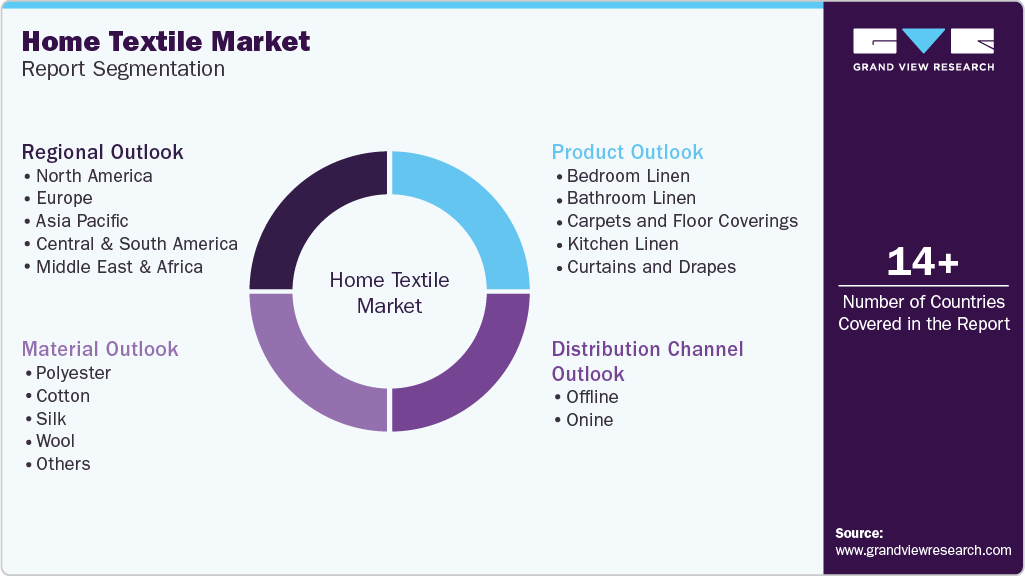
This report forecasts revenue growth at global, regional & country levels and provides an analysis of the latest trends and opportunities in each of the sub-segments from 2021 to 2033. For this study, Grand View Research has segmented the home textile market on the basis of product, material, distribution channel, and region.
-
Product Outlook (Revenue, USD Billion, 2021 - 2033)
-
Bedroom Linen
-
Bathroom Linen
-
Carpets and Floor Coverings
-
Kitchen Linen
-
Curtains and Drapes
-
-
Material Outlook (Revenue, USD Billion, 2021 - 2033)
-
Polyester
-
Cotton
-
Silk
-
Wool
-
Others
-
-
Distribution Channel Outlook (Revenue, USD Billion, 2021 - 2033)
-
Offline
-
Supermarket/Hypermarket
-
Specialty Stores
-
Others
-
-
Online
-
-
Regional Outlook (Revenue, USD Billion, 2021 - 2033)
-
North America
-
U.S.
-
Canada
-
Mexico
-
-
Europe
-
Germany
-
UK
-
France
-
Italy
-
Spain
-
-
Asia Pacific
-
China
-
India
-
Japan
-
Australia & New Zealand
-
South Korea
-
-
Central & South America
-
Brazil
-
Argentina
-
-
Middle East & Africa
-
South Africa
-
Saudi Arabia
-
UAE
-
-
Frequently Asked Questions About This Report
b. The home textile market was estimated at USD 137.81 billion in 2025 and is expected to reach USD 145.45 billion in 2026.
b. The home textile market is expected to grow at a compound annual growth rate of 6.9% from 2026 to 2033 to reach USD 231.40 billion by 2033.
b. Asia Pacific dominated the home textile market with a share of around 43.6% in 2025. This is owing to the highly competitive owing to presence of manufacturers with wide geographical presence, brand awareness, and vast distribution networks. Market players are expected to increase their focus on product innovation with increasing expenditure on research and development.
b. Some of the key players operating in the home textiles market include Welspun Group, Springs Global, New Sega Home Textiles, Ralph Lauren Corporation, Shenzhen Fuanna, Trident Group, Marvic Textiles, Shanghai Hometex, Honsun, Hunan Mendale Hometextile Company Ltd., LLC Honsun Home Textile
b. Key factors that are driving the home textiles market growth include a shift towards sustainable and environmentally-friendly products, and increase in spending on interior design and house decoration.

Share this report with your colleague or friend.
Need a Tailored Report?
Customize this report to your needs — add regions, segments, or data points, with 20% free customization.


ISO 9001:2015 & 27001:2022 Certified
We are GDPR and CCPA compliant! Your transaction & personal information is safe and secure. For more details, please read our privacy policy.
Trusted market insights - try a free sample
See how our reports are structured and why industry leaders rely on Grand View Research. Get a free sample or ask us to tailor this report to your needs.