- Home
- »
- Clothing, Footwear & Accessories
- »
-
France Cashmere Clothing Market, Industry Report, 2033GVR Report cover
![France Cashmere Clothing Market Size, Share & Trends Report]()
France Cashmere Clothing Market (2026 - 2033) Size, Share & Trends Analysis Report By Product (Sweaters & Coats, Pants & Trousers, Tees & Polo), By End Use (Men, Women), By Distribution Channel (Online/E-commerce, Offline), And Segment Forecasts
- Report ID: GVR-4-68040-880-7
- Number of Report Pages: 100
- Format: PDF
- Historical Range: 2021 - 2025
- Forecast Period: 2026 - 2033
- Industry: Consumer Goods
- Report Summary
- Table of Contents
- Segmentation
- Methodology
- Download FREE Sample
-
 Download Sample Report
France Cashmere Clothing Market Summary
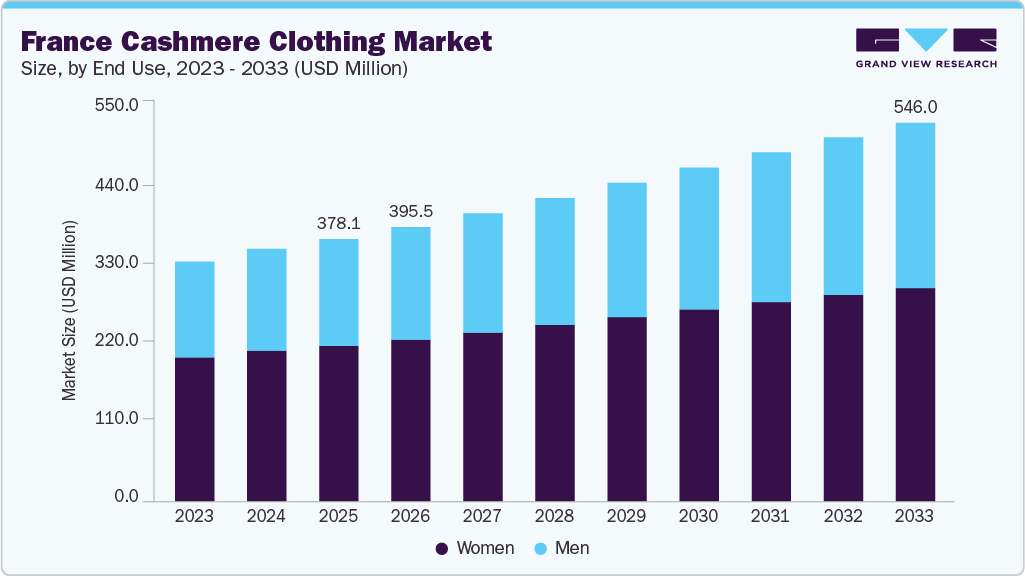
The France cashmere clothing market size was valued at USD 378.1 million in 2025 and is projected to reach USD 546.0 million by 2033, growing at a CAGR of 4.7% from 2026 to 2033. One of the primary drivers is France’s strong luxury fashion culture and demand for premium apparel.
Key Market Trends & Insights
- By product, sweaters & coats accounted for a market share of 51.2% in 2025.
- By end use, women accounted for a market share of 59.3% in 2025.
- By distribution channel, offline channels accounted for a market share of 68.5% in 2025.
Market Size & Forecast
- 2025 Market Size: USD 378.1 Million
- 2033 Projected Market Size: USD 546.0 Million
- CAGR (2026-2033): 4.7%
Cashmere is considered a high-end textile associated with craftsmanship and timeless style, which aligns closely with the French luxury positioning. Paris, in particular, is a global center for high-end fashion and knitwear design, attracting both domestic and international consumers seeking premium garments. Brands such as Éric Bompard, founded in 1984 and widely regarded as a leading French cashmere specialist, have built strong reputations around exceptional fiber quality and heritage craftsmanship, helping to popularize cashmere garments across France and Europe.The rising consumer demand for ethical and sustainable fashion has become a major driver for the France cashmere clothing market, encouraging brands to innovate with responsibly sourced fibers and recycled cashmere materials. Consumer surveys show that sustainability considerations are increasingly influencing clothing purchases across Europe. According to a YouGov study covering more than 11,000 consumers across 10 European countries, including France, 42% say it is important to them to buy ethical or eco-friendly clothing. This rising awareness has pushed fashion brands to integrate sustainability into their product development strategies, including the use of traceable fibers, recycled yarns, and lower-impact manufacturing processes.
Consumer behavior data also indicates that sustainability concerns are already influencing purchasing habits. A YouGov Omnibus survey across eight European countries found that 27% of consumers in France have already reduced their clothing purchases for ethical reasons, reflecting a shift toward more mindful consumption and higher-quality garments. Rather than buying large quantities of inexpensive clothing, many consumers are choosing fewer, higher-quality items that are more durable. This shift benefits premium natural fibers such as cashmere, which are often marketed as long-lasting investment pieces that align with sustainable fashion values.
A strong luxury fashion culture and long-standing demand for premium apparel in France are major drivers for the growth of the cashmere clothing market. France is widely regarded as one of the world’s leading luxury fashion hubs, supported by globally recognized fashion houses, heritage craftsmanship, and a strong domestic consumer base. Luxury fashion plays a central economic role in the country, with France’s luxury fashion market valued at about USD 18.21 billion in 2024, reflecting the continued importance of high-end clothing within the broader luxury goods sector. The market is expected to continue expanding in the coming years as consumers maintain a preference for high-quality and premium fashion items.
Domestic spending patterns further demonstrate the strong appetite for premium clothing in France. France also holds a dominant position in the European luxury apparel sector due to its strong couture heritage, fashion tourism, and concentration of luxury retail hubs such as Paris’ “Golden Triangle,” which generate lump-sum revenue from annual luxury apparel sales, much of it driven by international shoppers.
Luxury fashion consumption is also reinforced by strong brand influence and consumer loyalty to heritage French fashion houses. Iconic brands such as Chanel, Louis Vuitton, and Dior continue to dominate the domestic market and maintain strong demand among both local and international consumers. In France’s luxury goods market, clothing accounts for roughly 42.78% of total luxury sales, underscoring its position as one of the largest categories in the country’s luxury economy.
Luxury fashion houses are also continuing to invest heavily in new collections and retail expansion, reinforcing demand for premium materials such as cashmere.
For instance, French luxury brands regularly launch ready-to-wear collections featuring premium knitwear and high-quality natural fibres as part of their seasonal collections. These launches help reinforce the perception of cashmere garments as luxury wardrobe staples, aligning with consumer preferences for timeless and high-quality clothing. As France continues to serve as a global center of luxury fashion innovation and retail, the strong cultural association with premium apparel remains a key driver of growth in the French cashmere clothing market.
Brand Market Share Insights
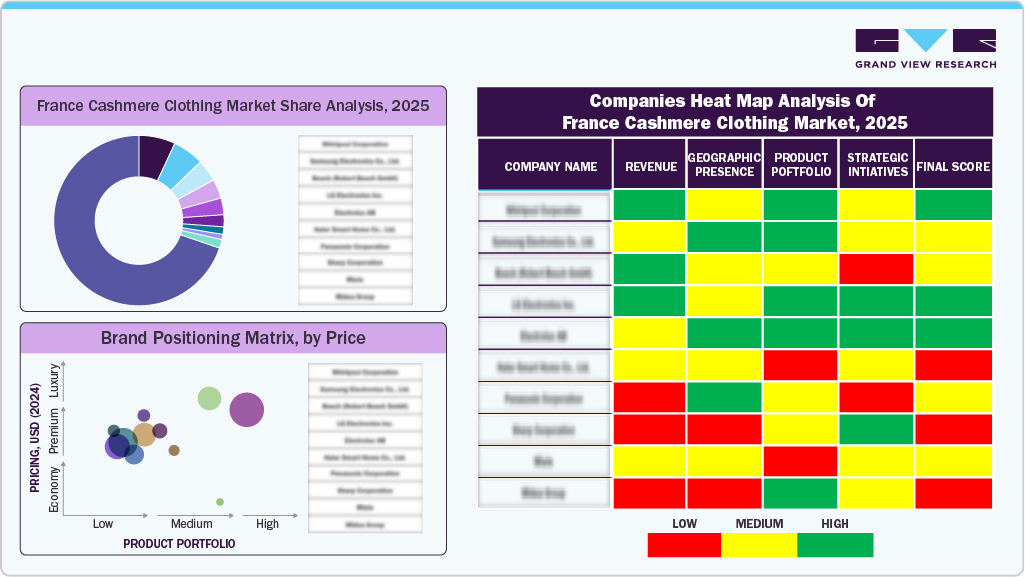
The France cashmere clothing industry is characterized by a competitive landscape supported by luxury fashion houses, premium knitwear brands, and specialized cashmere apparel manufacturers. Leading companies focus on high-quality materials, craftsmanship, and strong brand heritage to maintain their market positions. Major brands such as Loro Piana, Brunello Cucinelli, Eric Bompard, and Chanel offer a wide range of cashmere products, including sweaters, scarves, and outerwear. Continuous product launches, seasonal collections, and expansion into luxury boutiques and online platforms help these brands strengthen their presence and attract consumers seeking premium cashmere clothing in France.
Consumer Insights
Cashmere garments are widely appreciated for their softness, comfort, and premium appeal, making them popular among both male and female consumers. However, purchasing behavior, fashion preferences, and product variety differ significantly between genders, influencing how brands design collections and position their offerings in the market.
In 2024, the French fashion market reached unprecedented levels of activity, with consumers purchasing a record 3.5 billion new pieces of clothing, footwear, and home linen, about 42 items per person on average, up one item from 2023, and 2.8 billion of these were clothing items. The average price per item was approximately €15.60 (USD 16.48), reflecting both accessibility and sustained demand for mid- to premium-range apparel. Women continued to dominate the market, accounting for roughly 58.5% of purchases, with an average of 32 items per woman compared to 19 per man, demonstrating stronger overall engagement and a higher frequency of wardrobe refreshes. This heightened activity particularly impacts premium segments such as cashmere, where versatility, trend responsiveness, and luxury appeal resonate strongly with female consumers.
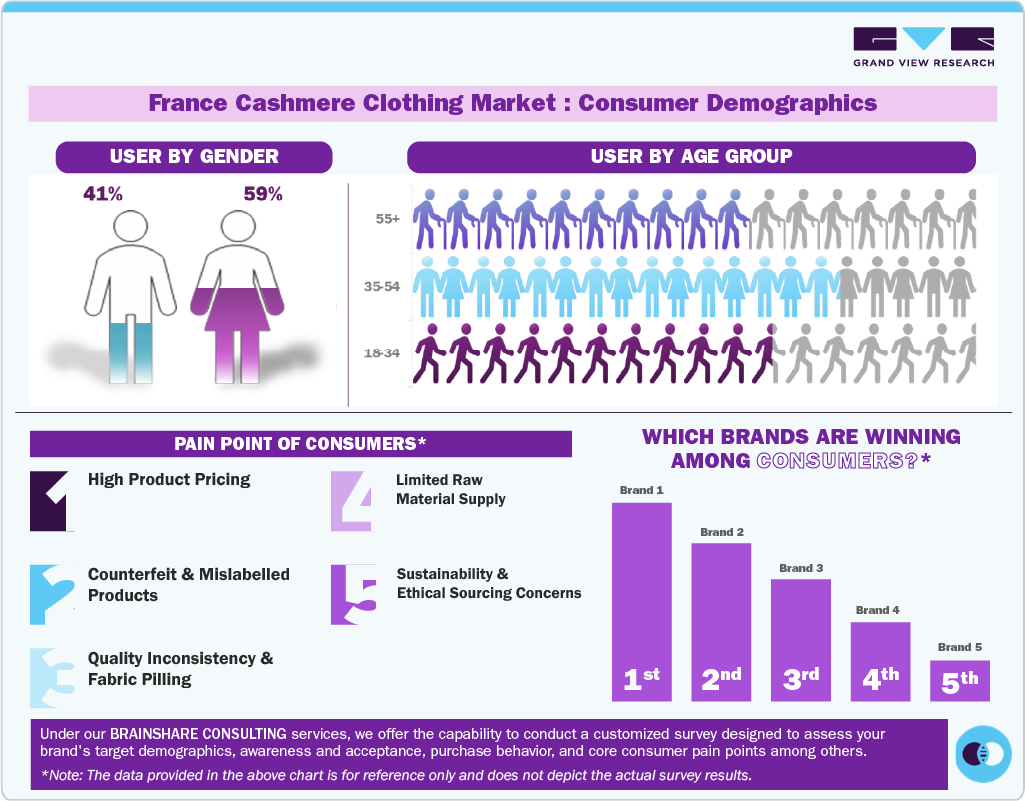
Men, while representing 41.5% of the market, still exert notable influence, especially in categories like casual knitwear and structured sweaters that align with contemporary menswear trends. Their purchases have been gradually increasing, reflecting a growing interest in quality, durable garments. Among cashmere consumers, men gravitate toward classic, functional designs that balance comfort with refined aesthetics, reflecting a preference for enduring wardrobe staples over trend-driven pieces.
The French knitwear market also reflects growing interest in versatile, high-quality garments, as imports of knitwear have risen significantly. They underline the country’s appetite for premium knit materials such as cashmere, prized for their softness and longevity. French consumers demonstrate a cultural preference for elegance and thoughtful dressing, even in casual contexts, making cashmere an ideal material for layering and trans-seasonal wear. Lightweight sweaters, short-sleeve knits, and capsule collections are increasingly popular, blending functionality with the effortless chic style that defines French fashion sensibilities.
Product Insights
The cashmere sweaters & coats market accounted for a revenue share of over 51.2% in 2025, driven primarily by strong consumer preference for versatile luxury knitwear. Cashmere sweaters are widely purchased for their softness, thermal insulation, and durability, making them premium wardrobe staples suitable for both casual and formal wear. The seasonless wardrobe trend has also expanded beyond winter, with lightweight cashmere knitwear increasingly used for layering across multiple seasons. Additionally, the casualization of luxury fashion in Europe has made cashmere sweaters a key item for everyday wear while still maintaining a premium aesthetic.
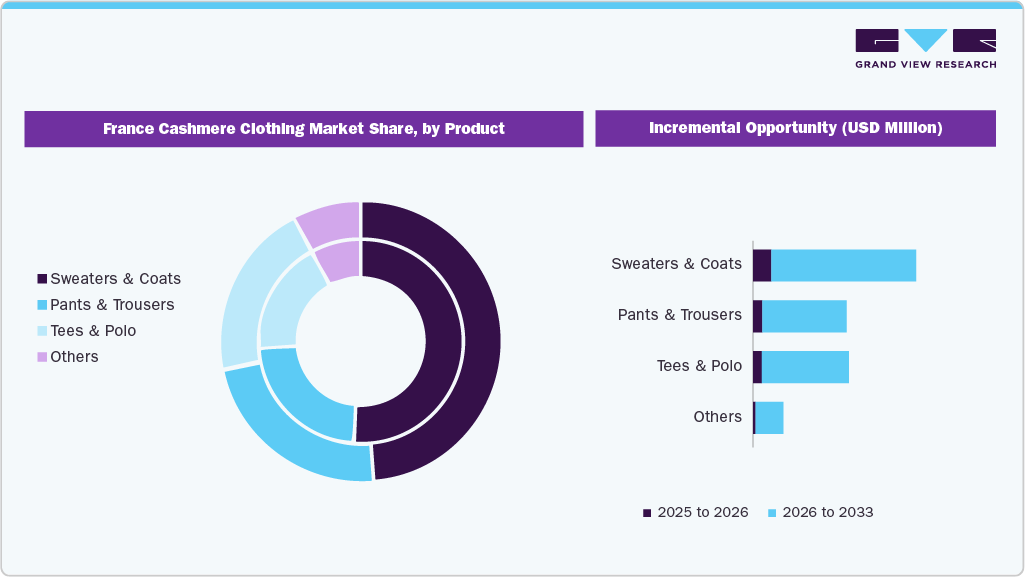
Cashmere tees & polo market is expected to grow at a CAGR of 6.2% from 2026 to 2033, driven by the growing demand for refined casualwear that blends luxury materials with everyday silhouettes. Cashmere tees and polos offer a polished alternative to traditional T-shirts, maintaining comfort and allowing them to be styled for both casual and semi-formal settings. Luxury fashion houses have increasingly incorporated these pieces into ready-to-wear collections to reflect changing consumer preferences for relaxed yet sophisticated apparel. For instance, Dolce & Gabbana offers an extra-fine cashmere polo shirt in its menswear collection, featuring a classic polo collar and a lightweight knit structure that balances urban elegance with everyday comfort.
End Use Insights
The women’s cashmere clothing market accounted for a share of about 59.3% in 2025, driven by growing demand for coordinated knitwear sets and relaxed luxury silhouettes in women's wear collections. Many brands are designing cashmere garments to match ensembles, such as cardigans paired with knit skirts or trousers, encouraging women to purchase multiple pieces from the same collection. These sets align with the broader shift toward capsule wardrobes built around interchangeable garments that offer both comfort and sophistication. In addition, oversized silhouettes, belted cardigans, and soft knit dresses made from cashmere are increasingly favored by women seeking garments that provide both warmth and a relaxed fit without compromising style.
Recent product launches highlight how fashion brands are expanding cashmere offerings tailored to women’s styling preferences. For instance, Aman Essentials introduced a women’s cashmere ready-to-wear collection featuring knit dresses, sweaters, and layering pieces, all designed with minimalist silhouettes and neutral tones for versatile styling. The collection reflects the rising demand among women for elevated wardrobe staples crafted from premium natural fibers.
The men’s cashmere clothing market is expected to grow at a CAGR of 5.6% from 2026 to 2033. The men’s segment is expanding as male consumers increasingly prioritize high-quality knitwear that offers thermal efficiency without heavy layering, particularly during winter and transitional seasons. Cashmere’s lightweight insulation allows men to wear thinner sweaters or knit jackets under tailored coats and blazers, which aligns well with the structured, yet minimalist aesthetic commonly seen in French menswear. As a result, cashmere garments are frequently purchased as refined layering pieces for professional and urban wardrobes, enabling men to maintain a polished appearance while remaining comfortable in colder climates.
Distribution Channel Insights
The sale of cashmere clothing through offline channel accounted for a revenue share of over 68.5% in 2025, supported by the role of luxury boutiques in providing styling consultation and garment education, which helps consumers understand differences between cashmere grades, blends, and craftsmanship. Sales associates in specialty knitwear stores often guide customers on how to style cashmere pieces, care for them, and build coordinated outfits from seasonal collections. This personalized interaction is particularly valuable for premium garments such as coats, cardigans, and tailored knitwear, where consumers may seek advice on fit, layering, and long-term wardrobe use. Consequently, brick-and-mortar stores remain an important channel for brands aiming to communicate craftsmanship and build trust with consumers purchasing luxury fibers.
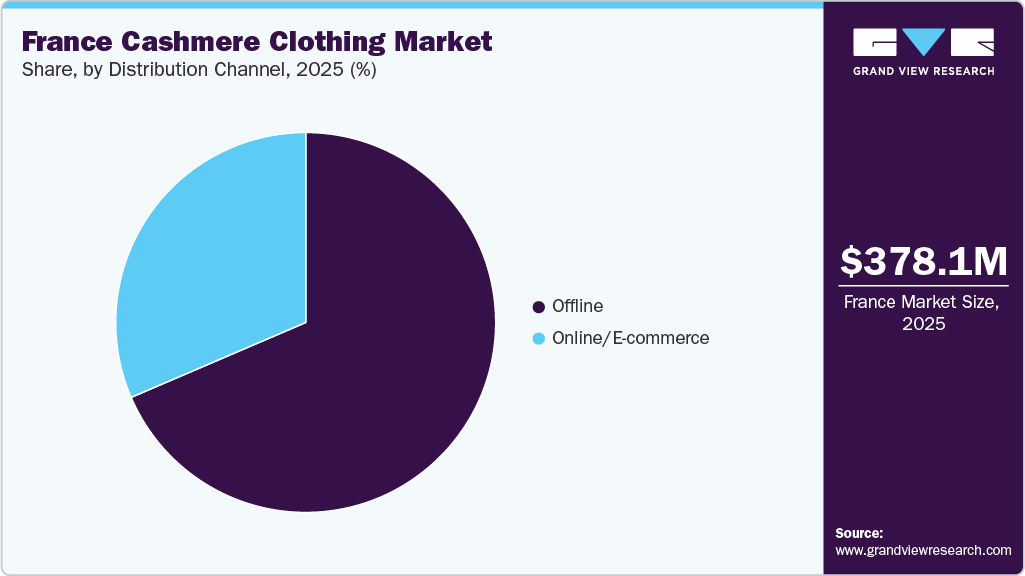
The sale of cashmere clothing through online/e-commerce channels is expected to grow at a CAGR of 6.7% from 2026 to 2033, as consumers increasingly rely on digital platforms to access niche cashmere brands and wider product assortments that may not be available in physical boutiques. Many premium and emerging cashmere labels operate primarily through e-commerce or maintain limited retail footprints, making online platforms a convenient way for consumers to explore specialized collections. In addition, multi-brand luxury e-commerce platforms allow shoppers to compare fabric compositions, price points, and design variations across brands before making high-value purchases. This ability to evaluate detailed product information, such as fiber origin, knit gauge, and garment construction, has made online platforms particularly attractive to consumers purchasing premium knitwear, such as cashmere.
Key France Cashmere Clothing Companies:
- Éric Bompard SA
- Kujten SAS
- Notshy Cashmere SAS
- Hircus SAS
- Le Kasha Paris SAS
- From Future SAS
- Lucien Pellat-Finet SAS
- Loro Piana S.p.A. (94% stake owned by LVMH)
- Brunello Cucinelli S.p.A.
- Malo S.p.A.
- Ballantyne Cashmere S.p.A.
Recent Developments
-
In November 2025, French luxury house Hermès acquired a 15% minority stake in Italian cashmere and fine-fibre manufacturer Lanificio Colombo, strengthening its vertical integration strategy and securing long-term access to high-quality materials while maintaining the supplier’s family-controlled governance.
-
In August 2025, French cashmere brand Kujten announced it would enter the U.S. market by opening its first flagship store on Madison Avenue in New York City, expanding its European boutique network, and showcasing full women’s, men’s, and accessories collections.
-
In July 2025, French cashmere house Eric Bompard opened its first flagship in Madrid and emphasized Spain as a strategic priority for international growth, reinforcing its European expansion plans and targeting premium clientele beyond France.
France Cashmere Clothing Market Report Scope
Report Attribute
Details
Market revenue in 2026
USD 395.5 million
Revenue forecast in 2033
USD 546.0 million
Growth rate (revenue)
CAGR of 4.7% from 2026 to 2033
Actuals
2021 - 2025
Forecast period
2026 - 2033
Quantitative units
Revenue in USD million and CAGR from 2026 to 2033
Report coverage
Revenue forecast, company ranking, competitive landscape, growth factors, and trends
Segments covered
Product, end use, distribution channel
Country scope
France
Key companies profiled
Éric Bompard SA; Kujten SAS; Notshy Cashmere SAS; Hircus SAS; Le Kasha Paris SAS; From Future SAS; Lucien Pellat-Finet SAS; Loro Piana S.p.A. (94% stake owned by LVMH); Brunello Cucinelli S.p.A.; Malo S.p.A.; Ballantyne Cashmere S.p.A.
Customization
Free report customization (equivalent up to 8 analysts working days) with purchase. Addition or alteration to country, regional & segment scope.
Pricing and purchase options
Avail customized purchase options to meet your exact research needs. Explore purchase options
France Cashmere Clothing Market Report Segmentation
This report forecasts revenue growth at the country levels and provides an analysis of the latest industry trends and opportunities in each of the sub-segments from 2021 to 2033. For this study, Grand View Research has segmented the France cashmere clothing market report based on product, end use, and distribution channel:
-
Product Outlook (Revenue, USD Million, 2021 - 2033)
-
Sweaters & Coats
-
Pants & Trousers
-
Tees & Polo
-
Others
-
-
End Use Outlook (Revenue, USD Million, 2021 - 2033)
-
Men
-
Women
-
-
Distribution Channel Outlook (Revenue, USD Million, 2021 - 2033)
-
Online/E-Commerce
-
Offline
-
Frequently Asked Questions About This Report
b. The France cashmere clothing market size was estimated at USD 378.1 million in 2025 and is expected to reach USD 395.5 million in 2026.
b. The France cashmere clothing market is expected to grow at a compound annual growth rate of 4.7% from 2026 to 2033 to reach USD 546.0 million by 2033.
b. Sweaters & coats accounted for a revenue share of over 51.18% in 2025, driven by consistent demand for winter wear and layering essentials across seasons. This is supported by strong consumer preference for premium, high-quality knitwear and outerwear, along with frequent product refreshes by luxury and heritage fashion brands.
b. Some key players operating in the France cashmere clothing market include Éric Bompard SA; Kujten SAS; Notshy Cashmere SAS; Hircus SAS; Le Kasha Paris SAS; From Future SAS; Lucien Pellat-Finet SAS; Loro Piana S.p.A. (94% stake owned by LVMH); Brunello Cucinelli S.p.A.; Malo S.p.A.; Ballantyne Cashmere S.p.A.
b. The France cashmere clothing market is driven by strong demand for premium and luxury apparel, supported by high consumer preference for quality, craftsmanship, and heritage fashion brands. Seasonal demand for winter wear, rising interest in sustainable natural fibers, and frequent product launches across sweaters, coats, and knitwear collections further support market growth.


Share this report with your colleague or friend.
Need a Tailored Report?
Customize this report to your needs — add regions, segments, or data points, with 20% free customization.


ISO 9001:2015 & 27001:2022 Certified
We are GDPR and CCPA compliant! Your transaction & personal information is safe and secure. For more details, please read our privacy policy.
Trusted market insights - try a free sample
See how our reports are structured and why industry leaders rely on Grand View Research. Get a free sample or ask us to tailor this report to your needs.